Rising Darkness

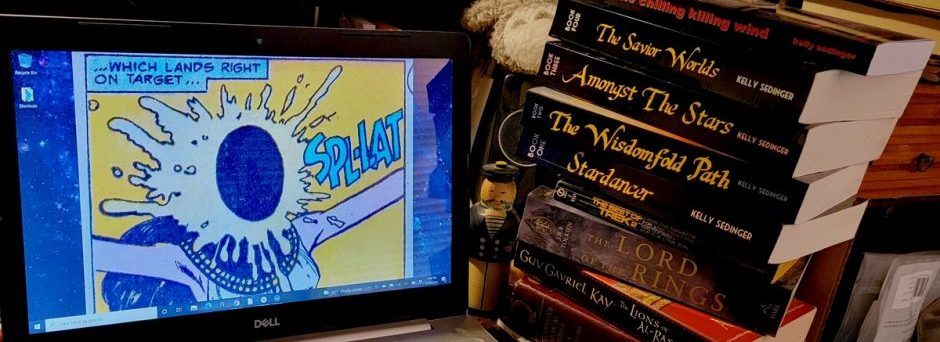
The Daughter and I recently finished working our way through Susan Cooper’s Dark Is Rising Sequence, a five-book series where each novel tells a distinct story that is part of a larger whole, depicting the final battle between the Old Ones, who serve the Light, and the servants of the Dark, who would seize the magic of the world and dominate the lives of men forever, or something like that. The books are interrelated, so that reading them out of order is not advisable, as each one assumes knowledge of what has gone before. However, the books don’t exactly tell the entire story in strict sequence, which took some getting used to. There are two different sets of viewpoint characters, and the novels switch back and forth between the two, to sometimes odd effect.

I’m probably already giving the impression that I didn’t like the series, and I don’t want to give that impression, because I did. It’s full of great stuff. But for some reason I never found myself really drawn in. It never really involved me, and I’m not sure why. So what to do? Why, a rambling blog post! (Which is filled with spoilers, by the way.)

The series opens with Over Sea, Under Stone, in which three siblings – Simon, Jane, and Barney – go to spend a summer at their Uncle Merriman’s house in a town in Cornwall, where they find themselves involved in a modern-day quest for the Grail. The term “Holy Grail” is never used, nor is the history of the Grail ever much discussed in full. (That sets a tone for the entire series, which surprisingly assumes a knowledge of the Welsh and British folklore that forms the underpinning of all five books.) Their Uncle Merriman, whose last name is Lyon, soon turns out to be more than he seems, and in the second book, The Dark is Rising, he reveals himself to Will Stanton as an “Old One”, the magical race who stand forever opposed to the actions of The Dark. The point in this book is for Will’s powers to be awakened, as he is to be the last of the Old Ones, after whose birth and awakening everything is to begin building toward the final battle between the Light and the Dark. Will’s goal in this book is to find the “Six Signs”, magical talismans with powers to be revealed later on.

Book Three, Greenwitch, brings Will and the three children from the first book together, where they must assist the denizens of the Cornwall village from the first book in a very clearly pagan tradition: the construction of the Greenwitch, a wooden idol that is always offered to the sea, and then must recover an object lost at the end of the first book. Book Four, The Grey King, has Will traveling to Wales where he meets an albino boy named Bran who also turns out to be much more than he seems, and who is to be another ally in the battle against the Dark. Finally, the fifth book, Silver on the Tree, brings everything together: Will, Bran, the Drew children, Merriman, and everyone else for the last battle against the minions of the Dark.

The entire series is full of startling imagery, good characterizations, and some very lyrical prose. Reading these aloud, I found myself amazed by some of the most gorgeous passages I’ve read in a long time. Here’s a sample, from The Dark is Rising:

Will was never able afterwards to tell how long he spent with the Book of Gramarye. So much went into him from its pages and changed him that the reading might have taken a year; yet so totally did it absorb his mind that when he came to an end he felt that he had only that moment begun. It was indeed not a book like other books. There were simple enough titles to each page: Of Flying; Of Challenge; Of the Words of Power; Of Resistance; Of Time through the Doors. But instead of presenting him with a story or instruction, the book would give simply a cnatch of verse or a bright image, which somehow had him instantly in the midst of whatever experience was involved.

He might read no more than one line — I have journeyed as an eagle — and he was soaring suddenly aloft as he winged, learning through feeling, feeling the way of resting on the wind and tilting round the rising columns of air, of sweeping and soaring, of looking down at patchwork-green hills capped with dark trees, and a winding, glinting river between. And he knew as he flew that the eagle was one of the only five birds who could see the Dark, and instantly he knew the other four, and in turn he was each of them….

He read: …you come to the place where is the oldest creature that is in this world, and he that has fared furthest afield, the Eagle of Gwernabwy…and Will was up on a bare crag of rock above the world, resting without fear on a grey-black glittering shelf of granite, and his right side leaned against a soft, gold-feathered leg and a folded wing, and his hand rested beside a cruel steel-hard hooked claw, while in his ear a harsh voice whispered the words that would control wind and storm, sky and air, cloud and rain, and snow and hail – and everything in the sky save the sun and the moon, the planets and the stars.

Then he was flying again, at large in the blue-black sky, with the stars blazing timeless around his head, and the patterns of the stars made themselves known to him, both like and unlike the shapes and powers attributed to them by men long ago. The Herdsman passed, nodding, the bright star Arcturus at his knee; the Bull roared by, bearing the great sun Aldebaran and the small group of the Pleiades singing in small melodic voices, like no voices he had ever heard. Up he flew, and outward, through black space, and saw the dead stars, the blazing stars, the thin scattering of life that peopled the emptiness beyond. And when he was done, he knew every star in the heavens, both by name and as charted astronomical points, and again as something much more than either; and he knew every spell of the sun and moon; he knew the mystery of Uranus and the despair of Mercury, and he had ridden on a comet’s tail.

But as I note above, I still found it hard at times to really get emotionally involved in the stories. I think that it’s because of the way Cooper frames her story: everything that is transpiring is doing so according to ancient prophecies, and all of the wise old people in the stories are constantly making it sound as though various outcomes along the way are preordained. This event will happen, because it must happen before the next event can happen, which we already know will happen. Also, the children are constantly told that the Dark can do them no real harm, so there’s a sense in which the books undermine any sense of danger that you really need in a story involving the final, cataclysmic battle between Good and Evil. The books never really have that sense of risk, the feeling that even if victory is to be achieved, a heavy price must, and will, be paid. Come to that, there really isn’t a great sense of what happens to the world if the Dark wins out.

For this reason, the most effective parts of the series, for me, were those which did not deal with the actual lead protagonists, but rather those that dwelt with the normal people, the non-magical folk, who found themselves drawn through no fault of their own into a conflict that has been raging through the centuries. It’s here that the Dark is Rising Sequence finds it most effective voice. Some of these characters – most notably, Caradog Lewis and John Rowlands – endure outright tragedies, their individual responses to which shape greatly what is to come later on. I suppose that’s my major problem with the series: the moments in the books that are the most emotional are the ones that deal with supporting characters whom I didn’t know well enough to really be invested in. But come to that, those parts of the books tend to have that Greek Tragedy feel to them, in which people suffer because they have no choice but to suffer. That’s well and good, but I tend to prefer the Shakespearean approach to tragedy, where people suffer because of the choices they make. (That’s not a rigid distinction, mind you.)

There was one other aspect of this series that bothered me greatly: the ending. I’ll yellow this next bit out, if you’re reading the series and want to avoid the spoilers:

There’s a particular problem that faces any writer who crafts a story in which the real world, the world in which we live, is threatened by magical forces: namely, that at the end, when the battle is won, what does one do with the characters who have just saved the world and now have to live the rest of their lives knowing what they’ve done and not being able to really discuss it? Guy Gavriel Kay faced this problem in his Fionavar Tapestry, and he showed his solution – which wasn’t entirely satisfying, in my opinion – in last year’s Ysabel. But in the Dark Is Rising Sequence, Susan Cooper does something else: at the end of the series, when the battle has been won and the Dark defeated, all of the children’s memories, save Will’s, are ‘erased’, so they will live the rest of their lives with no knowledge at all of the things they’ve done and their actions in that final war.

I hated this development. Hated it. It just seems so wrong somehow, like having a contest where the prize is that you get to carry around a briefcase filled with one million dollars for a single day, but you can’t spend any of it and when the sun goes down the briefcase is taken away and all you are is the person you were at the beginning. Inducing magical amnesia may have been the right thing to do for John Rowlands, who is the one character who really does pay a heavy price in the tale in order to allow the victory of the Light; to wipe the memories of all the children struck me as cruel. I found this a serious mis-step, and it bothered me tremendously. It left a seriously bad aftertaste in my mind after I set the book aside the last night we read it.

I was reminded of the movie Heaven Can Wait: if Warren Beatty is brought back from the dead by taking over some other guy’s body, but the other guy’s memories and personalities are what remain and Warren Beatty’s are allowed to vanish utterly, in what possible way can the guy who’s alive at the end of the movie be thought of as the original Warren Beatty character at all? He’s not, he’s some other guy we don’t give a crap about. Well, ditto with the magical amnesia in The Dark is Rising.

But the books are still very much worth reading, because they are deeply steeped in the ancient folklore of Britain, and Cooper is able to draw on that folklore without giving us long infodumpish passages of exegesis; the spectre of King Arthur looms over the entire series, but there’s never anything so ham-handed as the story grinding to a halt while someone talks about who Arthur was and the glory of Camelot and all the rest of it.

I do recommend this series; after all, we’re talking about a series that boasts not one but two Newberry awards. There’s a lot of wonderful stuff here, and it’s a journey well-worth taking, even if it felt for me like a journey observed rather than a journey shared.

Share This Post

Sentential Links #167

Click, or the puppy gets it.

:: I think a good case can be made that starting with Gerald Ford’s pardon of Nixon, moving forward into George H.W. Bush’s use of the pardon power to kill off the Iran-Contra investigation, and now shifting toward the present day when it’s apparently become a fringe left position that the laws of the United States of America should be enforced that we’ve moved through a dangerous cycle of impunity. It seems to me that, in effect, Nixon’s dictum that “if the president does it, it’s not a crime” has been entrenched into American customary law. (Unless, of course, we’re talking about a Democratic President receiving fellatio. Then, by God, we’re talking Crimes That Threaten The Existence Of Our Country.)

:: Why does she, and her cousin Diego, seem to YELL all the time. “WHAT WAS YOUR FAVORITE PART OF THE STORY?” And they are so damn earnest, too.

:: It is an interesting thing to contemplate – and as our children are both our imitators and the opposite of ourselves, I see both trends in my children. (The Daughter likes to read, but she doesn’t push herself enough, in my opinion. But then, neither did I….)

:: It is surprisingly hard to make a list of favorite fantasy movies. (And yet, he did just that! I will, of course, make my own.)

:: Peter is proud of his work. (Oh, I can’t remember who linked this! Lynn, maybe? It’s so darkly funny — reminds me of The Gashlycrumb Tinies.)

:: But for the most part, Shakespeare put all of the stage directions INTO the language. Fascinating. If someone needs a torch to see through the darkness, Shakespeare will have the character say something along the lines of, “I can’t see. It’s too dark. Hand me that torch.” (Why don’t I pick up on things like this?)

:: Dammit, I could play it. I could play it just fine. (I had this happen to me once, also in a piano recital. My piano teacher’s lessons ran during the school year, and she’d have a recital at the end of the year. One year I was doing Mozart’s Sonata in C Major, K 545, first movement (listen here). I loved the piece — I love it still, actually; to me it’s a wonderful summation of Mozart, sounding at first like a friendly little piece of cute classical music but containing some really interesting stuff for those who want to listen deeper — but there was one passage that I just couldn’t get my fingers to make their own, for the life of me, no matter how much I practiced it. I was terrified of that passage when recital time came — and sure enough, I screwed it up. Horribly. The usual advice music teachers give is “Keep going, since few listeners are astute enough to realize that something’s gone awry at all”, but when you’re a fairly inexperienced performer, it’s awfully hard to keep going when you hit a mistake, especially when your mistake is of the “Wow, did that piece ever go off the rails badly” variety. I stopped completely and sat there for a few seconds, until my teacher prompted me to pick up where I’d left off, which I did. On to the end of the piece I went, after which I wanted nothing more than to sprint from the piano into the Sweet Embrace of Death.

So what happened after that? Not much. I went home, licked my wounds, returned for lessons the next year, and a year later, I gave a pretty kick-ass perfomance of “Scotch Poem” by Edward MacDowell (listen here). Believe me, nothing feels better than rocking a performance when the last one was a bad one.

Later, in college, I would become good enough — and experienced enough — at the trumpet to be able to commit massive blunders and simply continue on my way as if nothing had gone wrong. I never got that good on the piano, but that wasn’t my main instrument anyway. But I never got good enough as to not screw up in performance occasionally, because nobody gets that good. Vladimir Horowitz gave some legendary recitals in which he missed lots of notes. It happens. Learning to accept it and move on is the hardest of all lessons for a budding musician.)

:: And, yeah, that’s meant as an opening for someone to come along and make the case for Dances With Wolves. (Well, I was on the case several years ago. Dances With Wolves is a great film which deserved its plaudits at the time, and does not deserve the wicked backlash that’s existed against it for nearly twenty years.)

More next week!

Share This Post

Unidentified Earth #65

Once again, I’m a day late. This time, I have an excuse. But I’m not telling you what it is. Ha!

Anyway, the usual bookkeeping first: UI 62 was finally pegged, after a few hints, as Mill Ends Park in Portland OR. This is recognized by the fine folks at Guiness (and not the oatmeal stout people, either) as the world’s smallest city park. The park is the bush in the middle of that little concrete thing in the middle of the street. And last week’s UI 64 was identified quickly as Biosphere 2 in Arizona. Hooray! We’re all caught up.

And now the new puzzler:

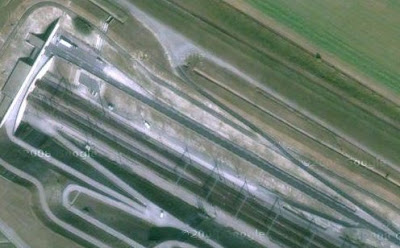
Where are we? Rot-13 your guesses, please!

Share This Post

Sunday Burst of Weirdness (a special literary edition)

Oddities abound!

I’m going to do something different this week: instead of a couple of links to weird things, I present below one of the oddest literary passages I’ve ever read in a book. The book is The Coming of the King by Nikolai Tolstoy. (Yes, he’s related to Leo.)

Published in 1989, The Coming of the King is the first book in what was to be a trilogy detailing the life of Merlin. That trilogy has to date never come to pass, owing apparently to legal difficulties that Tolstoy faced around that time. Legal fees and judgments against him left him bankrupt, and any proceeds from further writings would have apparently gone to his creditors, so he has yet to write the second and third volumes. (This is the story that used to appear in the FAQ for the rec.arts.sf.written newsgroup.)

Obviously, the book is Arthuriana, which is why I bought it. In my college years I went through a massive Arthurian phase in which I bought and either read or attempted to read every Arthurian-related book I could find. The Coming of the King is one of the books I attempted, but failed, to finish; at the time I found its language entirely too stuffy and lofty for my tastes, but it occurs to me that I’d probably like it now just fine. I don’t know if I’d make the effort, though, knowing that the second and third volumes in the trilogy are unlikely to be forthcoming.

But anyway, the weird passage I referred to above. Early in the book there is a reception in the hall of King Gwydno, a great feast with lots of entertainment. Tolstoy describes the entertainers at some length, with one group of entertainers turning out to be…well, here it is. I can’t decide if I want this to have had a basis in reality or be a complete fabrication.

Not finished yet was King Gwydno’s entertainment, and the seven solemn-faced men in short kirtles who entered were recognized by all as being as skilled in their special art as were the hummers in theirs. Long-snouted and sharp-heeled were they, foxy-faced and bald.

Low before the king bowed the seven newcomers; and bowed low they remained, with buttocks bare gleaming from the ruddy glare of the king’s hearth. For they were the far-famed farters of the Island of the Mighty, whose skill in farting surpassed any that might be found in Prydyn, or Ywerdon, or distant Lydau across the Sea of Udd.

Wonderfully loud was the farting of the royal farters at the feasting of King Gwydno Garanhir upon the Kalan Gaeaf; wonderfully loud, skillfully sonorous, and evil-smelling beyond the achieving of all others of their calling. At first they emitted with rare delicacy the seven notes of the scale, moving up and down the line in harmony, high and low. Then they blew forth tunes such as cowherd and milkmaids sing. They whistled high and they whistled low in semblance of the whistling of the keepers of the king’s kennels, or of unseen birds that pipe in the brake.

But these wonderful feats were as nothing to waht followed, and an ecstasy came upon the Men of the North as each of hte performers exceeded his fellow with some new and marvelous display of art and skill Marvelously true to reality was the snorting of the war-horses, the braying of trumpets, the roaring of stags, the rumble of thunder, the bellowing of bulls, the snarling of wildcats, and the long, low drone of a homing cockchafer on a summer’s eve.

Well-fed were the performers upon dulse and lentils and beans, but not beyond the space of half an hour were they able to sustain their skillful performance. There came a moment when their consuctor gave vent to a long, low whistling sound like a serpent retiring to its heathery lair; so sibilantly soft, stealthy-sounding, and stately stinking as to instill an awe silence upon the assembled company. It was a signal for the departure of the troop, and with a final effort of mind and spirit and body they thundered forth a fanfare of such loudness and force and vigor that men swore afterward it set the goblets rattling upon the royal board, and all but extinguished the pine torches flaring in their sockets and even the great hearth burning beneath the royal cauldron.

Like a gale before which no man is able to stand upright, which blows without ceasing from the mouth of that Cave in the land of Gwent which men call Chwith Gwynt, was that mightiest of farts which was in the North at that time. There were those in the king’s hall, however, who feared lest the performance might arouse storms and tempests in the winter sky, avowing they could hear afar off in the mountains the rolling of Taran’s Wheel.

It was amid smoke and confusion and stench that the king’s farters flew from the banquet hall to the hostel set apart for them. It was long before the pleasure passed and laughter died away and tongues were stilled, so delightful was their performance to the Men of the North.

For some reason, I didn’t get much farther in the book beyond that point….

More weirdness next week!

Share This Post

“Let it be done with love.”

After finishing my recent re-read of The Fionavar Tapestry a month or so back, I found myself not having a whole lot new to say about it, mainly because of all of Guy Gavriel Kay’s books, Fionavar is the one with which I am the most familiar, having re-read it more frequently than any other. But I did have a couple of new ruminations of late (Spoilers follow):

:: GGK has noted that in this trilogy he wanted to play with the standard tropes of epic fantasy a bit, stand them on their head a bit. His model, most clearly, as Tolkien’s mighty Lord of the Rings. How does it compare directly, though?

Well, Fionavar is more of a “trilogy” than LotR is. LotR is, at its heart, a single book chopped for editorial reasons into three parts, where the three contituent volumes of Fionavar are more of a trilogy with three distinct parts that still tell a single story. Each book has its own part of the tale to tell.

GGK has openly discussed the “middle book” problem with trilogies — i.e., that Book Two can often suffer by the fact that it neither begins nor finishes the story. GGK solves this by creating a specific task that must be accomplished (in Book Two) before the BIG challenge, the confrontation with Rakoth Maugrim, can be addressed. It’s not dissimilar from what transpires in The Two Towers (although more in the movie version than the book version): Saruman must be dealt with before they can turn their attention to Sauron. There’s a similar motivation at work here, but it’s a bit more sharply drawn.

:: As a world, Fionavar somehow feels smaller than Middle Earth. I’m not sure why that is. It’s a similar fault I found with the LotR movies, as opposed to the books; Tolkien is able to convey that Middle Earth is pretty vast, where the movies sometimes make it seem as though all locations are within a day’s ride of each other. Tolkien refers, if memory serves, to the lengths of time involved in the journeys from one place to another, where GGK doesn’t do this as much; more than that, a look at the maps of the respective worlds shows something important. In GGK’s books, we visit virtually every single location named on the map. This isn’t true of Middle Earth; a look at Tolkien’s map reveals that in the tale of LotR the reader actually sees a relatively small portion of Middle Earth. Tolkien is stronger at suggesting the huge amounts of story that take place outside the peripheries of the one he’s telling at once.

:: Paul Schaefer and Galadan are presented as “two sides of a coin”: both are tortured by the deaths of their beloveds, and both are angry at the world. Paul’s anger is directed inward, though, while Galadan’s is directed outward, which is what makes Paul’s redemption and triumph over his anger more believable, or satisfying, than Galadan’s. Galadan takes his rage out on the world, which leads to him allying himself with evil for a time, and when his redemption comes, it comes almost completely out of the blue. To this day, Galadan’s redemption is the part of the book that troubles me the most.

:: Kevin Laine’s act of self-sacrifice — giving up his own life so he can end the unnatural winter — is still one of the most memorable episodes of the book, but I do wish it had been set up a little better. The problem, I think, is that there is little sense of what “Liadon” means until we are on the very cusp of that part of the story.

:: That said, Kevin’s motivation — his feeling of nearly complete impotence in the face of a war that could determine the fate of all the worlds — stood out for me a lot more upon this re-read than it ever did before. I’m not sure why, but it did. Especially his vow to “make answer” to Rakoth Maugrim’s crushing of Jennifer Lowell, a vow which seems fated to be useless until Kevin finally discovers his way to make it true.

And that should about do it.

Share This Post

Oh, the glorious carbs!

One of my favorite places nowadays is Panera Bread. Yeah, it’s a chain restaurant, but I don’t think that “chain” equals “bad”, and in any case, some chains know what they’re doing, and Panera seems to have their act down.

Case in point: I’m writing this post at 7:00 pm on Friday night at Panera Bread in my hometown (Orchard Park, NY). Every so often I get the chance to be by myself on a Friday night, and I usually end up coming here (or the one over by McKinley Mall). Why? Well, there’s the obvious: food and the free WiFi. But I also love the atmosphere, especially at the one nearest Casa Jaquandor.

I walk in at 6:00, and the dining room is reasonably full. Now, an hour later, the place has emptied out a bit, but it hasn’t gone dead. The music is pleasant jazz, and the tables are all comfortable. In warm months there is outdoor seating, but I haven’t used any of that yet. The dining room is cast in warm colors — oranges, blues, mustard yellows and the wood of the chairs, and there are differing styles of tables: a few “intimate” booths, a few booths that aren’t quite so intimate, a couple of large round tables beside a gas fireplace, and so on. It’s not at all like sitting in a McDonald’s, where every table feels the same. (Was there ever anything so bizarre as the old people who sit in the same table at McDonald’s every morning?)

What I like best of all about this joint is the mix of people eating here, though. Over here is a table of teenage girls, all laughing giddly as they eat. Over there is an older guy who looks like Leonard Bernstein and who is doing the crossword puzzle so quickly that I half suspect he’s just filling in random letters. There’s a family over there, mom dad and two kids, with the younger kid jabbering excitedly about how good the tomato soup is. A really pretty girl just walked in with her date, who looks like a complete dork. There’s an older couple just two tables over, who are reading books. The wife is reading the book the husband just finished, apparently, because he’s taunting her with spoilers. There’s a man in his fifties who is sipping coffee and reading some magazine about art, and there’s a tall girl with long dark hair who is very skinny and is already wearing her Daisy Dukes. She’s tucking into a turkey sandwich, so no metabolism problems for her. And later on, I listen in as the manager on duty gives the incredibly nervous-looking sixteen year old employee his performance review. It’s probably the first one of his life. Welcome to the real world, kid.

I’m sitting at a table right by the front window. The sun’s not down yet, but it will be soon. It doesn’t matter, since the path of its setting precisely lines up with a bunch of tall pines in a row across the street, so I’m not getting blinded (or, worse, suffering glare on the computer screen). It’s one of those spring nights where the air is almost crystalline, and the number of clouds in the sky is the number required to call it “partly cloudy”, minus one. Earlier, even though the sun was shining, there was a five minute downpour as the cloud overhead apparently decided it could hold back no longer. The sun is now shining on the puddles on the sidewalk which are smaller every minute.

It’s a nice night, here at Panera Bread.

Share This Post

Something for Thursday

One of the better-known bits of 1980s pop-culture trivia is that Tom Selleck was originally slated to have played Indiana Jones in Raiders of the Lost Ark, but was unable to get free of his contract to CBS and Magnum, PI. So Harrison Ford got the role and used it to break free of any potential Star Wars typecasting, and Selleck saw his own movie-star career pretty much end. Selleck would do movies, but he would never be the big movie star. I doubt he minds this all that much; Selleck has enjoyed a long and admirable career shuttling between movies and teevee.

However, he did get a consolation prize a few years after Raiders, in the form of a movie called High Road to China. Selleck is a drunken ex-World War I flying ace who is hired by Bess Armstrong to fly her to China, in search of her father, who has disappeared. (This has something to do with an inheritance or some such — it’s been well over fifteen years since I saw the movie.) Various adventures ensue as they fly in a pair of biplanes (Selleck has a buddy who tags along) from Cairo to China. As movies go, High Road to China is a nice work; not great but not awful either. Aside from its leads, its most notable features are the gorgeous cinematography and the lush romantic score by John Barry, which gives us this love theme.

Share This Post

Journalism FAIL

An article from today’s Buffalo News regarding last night’s performance in Buffalo by the Dead commits a bunch of sins.

The Scott Street lot, near Michigan Avenue, was turned into a staging ground Tuesday for hundreds — perhaps thousands — of fans waiting to see a concert at HSBC Arena by The Dead, former members of the Grateful Dead minus the late Jerry Garcia.

Which is it? Hundreds? Thousands? A bunch? A few?

But the crowd of young jam-band enthusiasts and aging hippies — thought to be particularly environmentally conscious — left behind a parking lot strewn with beer and wine bottles, cans, bags, pizza boxes and hundreds of balloons used to get high with nitrous oxide.

Wow. I’m not sure I’ve ever seen more negative stereotyping and tut-tuting packed into a single sentence.

But after we’ve spent that long castigating Those Dirty Hippies, here comes the money quote:

Noticeably absent were any trash cans that could have given people a place to throw things away.

Huh. I wonder if that was a factor in all the garbage being tossed all over?

Nah, couldn’t be. Must’ve been the dirty hippies.

Share This Post

Fixing the Prequels: Attack of the Clones (part six)

part one
part two
part three
part four
part five

Yes, it’s been a while since we got into this; sorry about that. But now we’re back, so it’s time to return to Naboo and Coruscant for further examination of Attack of the Clones!

When last we left our Star Warring heroes, Obi Wan Kenobi was starting to dig a bit into the mystery of the assassination attempts on Senator Amidala, while Anakin Skywalker had been sent as Padme Amidala’s bodyguard back to Naboo for safekeeping. That’s where we start!

So Obi Wan Kenobi has learned that the toxic dart originated on a planet called Kamino, a planet whose chief industry is the creation of clones. However, in trying to further investigate this Kamino business, he discovers that the vast Jedi Archive contains nothing at all on Kamino, and what’s more, the librarian there is really unhelpful and gets annoyed when Obi Wan suggests that maybe her archive isn’t complete.

And that’s where we pick up, with one of my favorite scenes in any Star Wars movie: Obi Wan goes to see Yoda about this, interrupting Yoda’s session of Lightsaber 101 with a bunch of four-year-old Jedi younglings. Here’s the scene as written, which is, aside from a couple of lines of dialogue’s difference, pretty much exactly what happens onscreen (RED text indicates stuff not in the movie):

INTERIOR: JEDI TEMPLE, MAIN HALLWAY – DAY

OBI-WAN walks through the main hallway to the training area.

INTERIOR: JEDI TEMPLE, TRAINING VERANDA – DAY

OBI-WAN comes out onto the veranda and stops, watching TWENTY or so FOUR-YEAR-OLDS doing training exercises, supervised by YODA. They wear helmets over their eyes and try to strike little TRAINING DROIDS with their miniature lightsabers. The DROIDS dance in front of them.

YODA: Don’t think… feel… be as one with the Force. Help you, it will. (he sees Obi-Wan) Younglings – enough! A visitor we have. Welcome him.

The CHILDREN turn off their lightsabers.

YODA: Master Obi-Wan Kenobi, meet the mighty Bear Clan.

CHILDREN: Welcome, Master Obi-Wan!

OBI-WAN: I am sorry to disturb you, Master.

YODA: What help to you, can I be?

OBI-WAN: I’m looking for a planet described to me by an old friend. I trust him. But the system doesn’t show up on the archive maps.

YODA: Lost a planet, Master Obi-Wan has. How embarrassing… how embarrassing. Liam, the shades. An interesting puzzle. Gather, younglings, around the map reader. Clear your minds and find Obi-Wan’s wayward planet, we will.

The reader is a small shaft with a hollow opening at the top. The CHILDREN gather around it. OBI-WAN takes out a little glass ball and places it into the bowl. The window shades close, the reader lights up and projects the star map hologram into the room. The CHILDREN laugh. Some of them reach up to try and touch the nebulae and stars. OBI-WAN walks into the display.

OBI-WAN: This is where it ought to be… but it isn’t. Gravity is pulling all the stars in this area inward to this spot. There should be a star here… but there isn’t.

YODA: Most interesting. Gravity’s silhouette remains, but the star and all its planets have disappeared. How can this be? Now, younglings, in your mind, what is the first thing you see? An answer? A thought? Anyone?

There is a brief pause. Then a CHILD puts his hand up. YODA nods.

JEDI CHILD JACK: Master? Because someone erased it from the archive memory.

CHILDREN: That’s right! Yes! That’s what happened! Someone erased it!

JEDI CHILD MAY: If the planet blew up, the gravity would go away.

OBI-WAN stares; YODA chuckles.

YODA: Truly wonderful, the mind of a child is. The Padawan is right. Go to the center of the gravity’s pull, and find your planet you will.

YODA and OBI-WAN move away from the CHILDREN. With a hand movement, OBI-WAN causes the star map to disappear. OBI-WAN uses the Force to call the glass ball back to his hand as
the two walk into an adjoining room.

OBI-WAN: But Master Yoda who could have erased information from the archives? That’s impossible, isn’t it?

YODA: (frowning) Dangerous and disturbing this puzzle is. Only a Jedi could have erased those files. But who and why, harder to answer. Meditate on this, I will. May the Force be with you.

In the past I’ve seen some criticism of this scene on the basis that Obi Wan shouldn’t need the children to figure out that the Jedi archives have been tampered with, but I don’t think that’s what’s going on here; I think that Obi Wan has clearly already figured that out and is going to bring this matter to Yoda’s attention. Yoda simply decides to make it a teaching exercise for the younglings. (Love that word, by the way. “Younglings”.) Note that Yoda and Obi Wan move away from the children to further discuss the fact that the erasure of the archive data indicates a deeper problem. (A deeper problem, I might add, that never gets mentioned again. That’s an error we’ll be correcting at some point.)

And aside from all that, this is just a lovely scene to behold. The music for this scene is gentle and wonderful, and I’ve long believed that if I could own one non-weapon gizmo from the Star Wars movies, Obi Wan’s pocket holographic planetarium would be the one. Who wouldn’t want to be able to walk through a room full of stars? I would have liked to see the kids responds more; Lucas scripted it that way, so why didn’t he film it?

So, Obi Wan’s next move is plain: he has to actually go to Kamino. Meanwhile, Anakin and Padme have arrived on Naboo and are proceeding to the Palace to meet with the current Queen.

There is a lot of material from the Naboo arrival sequence of the film that didn’t make it into the final cut. It’s all available on the extra material on the DVDs, and in every single case, producer Rick McCallum says the same thing: these scenes, while nice, were all cut because they didn’t move the action along. Once again, I can sympathize with this somewhat, but again, I think that mistakes were made here. There are times when moving things along is called for, and there are times when you need more time for things to unfold. Specifically, the major fault I find with AOTC is that Padme falls in love with Anakin too quickly. She seems to go very quickly from seeing him as the child she once knew to the man she loves. Preserving some of this material would help that along, I think; it would show her coming to see him in a new light. (Plus a couple of other changes I would make along the way.)

Additionally, I think these scenes were well done; the acting’s good, and maybe the general perception of Anakin would be different had these scenes been preserved, since he’s not terribly whiny in them. Yes, once again I’m lobbying for a significantly longer movie, but once again, I think that George Lucas simply got too attached to the idea of a specific running time.

So here are the scenes as in the script, with occasional comment scattered within:

EXTERIOR: NABOO PALACE, GRAND COURTYARD – AFTERNOON

The speeder bus pulls up and stops. PADMÉ, ANAKIN, and ARTOO get out. The great courtyard stretches before them, and they see the rose-colored domes of the palace on the far side. ARTOO WHISTLES. They pick up their gear and start to cross the courtyard. ARTOO trundles behind them.

ANAKIN: If I grew up here, I don’t think I’d ever leave.

PADMÉ: (laughing) I doubt that.

ANAKIN: No, really. When I started my training, I was very homesick and very lonely. This city and my Mom were the only pleasant things I had to think about… The problem was, the more I thought about my Mom, the worse I felt. But I would feel better if I thought about the palace – the way it shimmers in the sunlight – the way the air always smells of flowers…

PADMÉ: …and the soft sound of the distant waterfalls. The first time I saw the Capital, I was very young… I’d never seen a waterfall before. I thought they were so beautiful… I never dreamed one day I’d live in the palace.

ANAKIN: Well, tell me, did you dream of power and politics when you were a little girl?

PADMÉ: (laughing) No! That was the last thing I thought of, but the more history I studied, the more I realized how much good politicians could do. After school, I became a Senatorial advisor with such a passion that, before I knew it, I was elected Queen. For the most part it was because of my conviction that reform was possible. I wasn’t the youngest Queen ever elected, but now that I think back on it, I’m not sure I was old enough. I’m not sure I was ready.

[See, I like this whole conversation. Does it whisk the plot along? No, but a lot of this fleshes out what’s gone on since TPM, and it fleshes out Padme’s character quite a lot. I would like a bit of exploration into a society that actually has children capable of governing an entire planet, but I never had much problem with that notion to begin with, so….]

ANAKIN: The people you served thought you did a good job. I heard they tried to amend the Constitution so you could stay in office.

PADMÉ: Popular rule is not democracy, Annie. It gives the people what they want, not what they need. And, truthfully, I was relieved when my two terms were up. So were my parents. They worried about me during the blockade and couldn’t wait for it all to be over. Actually, I was hoping to have a family by now… My sisters have the most amazing, wonderful kids… So when the Queen asked me to serve as Senator, I couldn’t refuse her.

ANAKIN: I agree! I think the Republic needs you… I’m glad you chose to serve. I feel things are going to happen in our generation that will change the galaxy in profound ways.

PADMÉ: I think so too.

ANAKIN and PADMÉ walk toward the palace. ARTOO continues to follow.

INTERIOR: NABOO PALACE, THRONE ROOM – AFTERNOON

QUEEN JAMILLIA is seated on the throne, flanked by SIO BIBBLE and a COUPLE OF ADVISORS. FOUR HANDMAIDENS stand close by, and GUARDS are at the doors.

QUEEN JAMILLIA: We’ve been worried about you. (takes her hand) I’m so glad you’re safe, Padmé.

PADMÉ: Thank you, Your Highness. I only wish I could have served you better by staying on Coruscant for the vote.

SIO BIBBLE: Given the circumstances, Senator, you know it was the only decision Her Highness could have made.

QUEEN JAMILLIA: How many systems have joined Count Dooku and the separatists?

PADMÉ: Thousands. And more are leaving the Republic everyday. If the Senate votes to create an army, I’m sure it’s going to push us into a civil war.

SIO BIBBLE: It’s unthinkable! There hasn’t been a full scale war since the formation of the Republic!

QUEEN JAMILLIA: Do you see any way, through negotiations, to bring the separatists back into the Republic?

PADMÉ: Not if they feel threatened. The separatists don’t have an army, but if they are provoked, they will move to defend themselves. I’m sure of that. And with no time or money to build an army, my guess is they will turn to the Commerce Guilds or the Trade Federation for help.
[Some of this is in the movie, and some of it isn’t. I can’t recall exactly, so I’m not color-coding everything. Suffice it to say that this discussion of the political situation in the Republic is truncated a bit in the movie.]

QUEEN JAMILLIA: The armies of commerce! Why has nothing been done in the Senate to restrain them?

PADMÉ: I’m afraid that, despite the Chancellor’s best efforts, there are still many bureaucrats, judges, and even Senators on the payrolls of the Guilds.

SIO BIBBLE: It’s outrageous that, after all of those hearings, and four trials in the Supreme Court, Nute Gunray is still the Viceroy of the Trade Federation. I fear the Senate is powerless to resolve this crisis. Do those money mongers control everything?

QUEEN JAMILLIA: Remember, Counselor, the courts were able to reduce the Federation’s armies. That’s a move in the right direction.

PADMÉ: There are rumors, Your Highness, that the Trade Federation Army was not reduced as they were ordered.

QUEEN JAMILLIA: We must keep our faith in the Republic. The day we stop believing democracy can work is the day we lose it.

PADMÉ: Let’s pray that day never comes.

QUEEN JAMILLIA: In the meantime, we must consider your own safety.

SIO BIBBLE signals. All the OTHER ADVISORS and ATTENDANTS bow and leave the room.

SIO BIBBLE: (to Anakin) What is your suggestion, Master Jedi?

PADMÉ: Anakin’s not a Jedi yet, Counselor. He’s still a Padawan learner. I was thinking…

ANAKIN: (nettled) Hey, hold on a minute!

PADMÉ: Excuse me! I was thinking I would stay in the Lake Country. There are some places up there that are very isolated.

ANAKIN: Excuse me?! I am in charge of security here, M’Lady.

SIO BIBBLE and QUEEN JAMILLIA exchange a look. Something is going on here.

PADMÉ: Annie, my life is at risk, and this is my home. I know it very well… that is why we’re here. I think it would be wise for you to take advantage of my knowledge in this instance.

ANAKIN: (takes a deep breath) Sorry, M’Lady.

QUEEN JAMILLIA: Perfect. It’s settled then.

[This is one of my favorite “character” moments in AotC. I love the little seed of conflict planted here, borne of the fact that Padme still refuses to see Anakin as something more than the resourceful little kid she had known years before. I also think that this exchange could have set up a more effect event later on. That’s something I’ll get to in due course. I’ll also note that the actress playing Queen Jammillia, Ayesha Dharker, is very beautiful and does a great job in her brief screen time in creating a Queen who, despite the funky makeup, is distinct from the former Queen Amidala.]

ANAKIN glares at PADMÉ. Then QUEEN JAMILLIA gets up, and they all start to leave.

QUEEN JAMILLIA: Padmé, I had an audience with your father yesterday. I told him what was happening. He hopes you will visit your mother before you leave… your family’s very worried about you.

PADMÉ: Thank you, your Highness.

PADMÉ looks worried. They ALL exit down the main staircase.

One might be tempted to wonder why they bothered traveling as refugees if they were simply going to make contact with the Queen when they arrived on Naboo; that’s not much of a way to maintain cover if they’re trying to avoid being found by whomever is behind the assassination attempts. I assume, then, that the “traveling as refugees” bit was just to keep them safe while they were on their journey, and was always intended to be dropped as soon as they arrived on Naboo.

In the film, we now cut to Obi Wan landing on Kamino, but in the original script there are several scenes following the reception with the Queen, still on Naboo, in which we meet Padme’s family. It’s fairly unremarkable stuff, but frankly, that’s why I like it. These scenes are available on the DVD’s special features, along with the reason for their cutting from the film: that old bagaboo, running time and the desire to keep the action moving. The problem here is that while yes, the scenes would lengthen the movie a bit and slow down the pace, I think they would also serve several pretty useful purposes. First, it would allow the fleshing out of Padme a bit, and second, the scenes give Anakin a chance to do something aside from appearing stalkerishly attached to Padme or teetering on the edge of Vaderhood.

Ultimately, I think that the Anakin-Padme love story needed more time to unfold. Padme seems to go from rejecting Anakin’s advances to accepting them fairly quickly; in these scenes, we are allowed to see that the seeds of her attraction to him are already well in flower, probably before she has even had a chance to realize this herself. The love story actually unfolds when this material is included, as opposed to simply happening when Lucas adheres rigidly to his internal demands for a specific running time.

I like these scenes quite a bit, and I’d restore them, since I don’t think they add much more then seven or eight minutes total to the movie, and sometimes that makes a ton of difference. Here are the scenes, as taken from the script:

EXTERIOR: THEED, RESIDENTIAL AREA, SIDE STREET – AFTERNOON

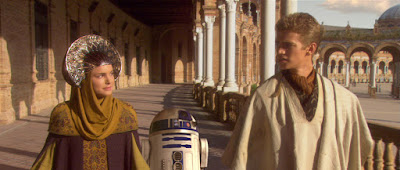
PEOPLE are passing through the little street, OLD MEN are sunning themselves, WOMEN are gossiping, KIDS are playing. ANAKIN, PADMÉ and ARTOO turn onto a side street. ANAKIN is back in his Jedi robes. PADMÉ wear a beautiful simple dress. She stops, beaming.

PADMÉ: There’s my house!

PADMÉ starts forward; ANAKIN hangs back.

PADMÉ: What? Don’t say you’re shy!
ANAKIN: (untruthfully) No, but I…

Suddenly, there are shouts from two little girls, RYOO (age 6) and POOJA (age 4). They come running toward PADMÉ.

PADMÉ: Ryoo!! Pooja!!

PADMÉ scoops up RYOO and POOJA and hugs them.

PADMÉ: Go wake up Artoo.

RYOO & POOJA: Artoo!!!

As they see the droid, they hug him. ARTOO WHISTLES and BEEPS. PADMÉ laughs. ANAKIN and PADMÉ go on toward the house. The GIRLS stay and play with ARTOO.

INTERIOR: PADMÉ’S PARENTS’ HOUSE, MAIN ROOM – AFTERNOON

SOLA, PADMÉ’S beautiful older sister, comes in from the kitchen carrying a big bowl of food.

SOLA: (over her shoulder) They’re eating over at Jev Narran’s later, Mom. They just had a snack. They’ll be fine.

SOLA puts the bowl down on the table, where ANAKIN, PADMÉ and RUWEE NABERRIE (Padme’s father) are coming into the room.

SOLA: Padmé! (hugging her) You’re late. Mom was worried.

PADMÉ: We walked. Anakin, this is my sister, Sola.

SOLA: Hello, Anakin.

ANAKIN: Hello.

SOLA sits, as JOBAL NABERRIE (Padme’s mother) comes in with a heaped bowl of steaming food.

PADMÉ: …and this is my mother.

JOBAL: You’re just in time for dinner. I hope you’re hungry, Anakin.

ANAKIN: A little.

PADMÉ: He’s being polite, Mom. We’re starving.

RUWEE: (grinning) You came to the right place at the right time.

EVERYONE sits and starts passing food.

JOBAL: (to Padmé) Honey, it’s so good to see you safe. We were so worried.

PADMÉ gives JOBAL a dirty look. RUWEE smiles as he watches.

RUWEE: Dear…

JOBAL: I know, I know… but I had to say it. Now it’s done.

SOLA: Well, this is exciting! Do you know, Anakin, you’re the first boyfriend my sister’s ever brought home?

PADMÉ: (rolls her eyes) Sola!! He isn’t my boyfriend! He’s a Jedi assigned by the Senate to protect me.

[If preserving this, I’d put in a reaction shot here from Anakin. Something subtle – maybe he hesitates in taking a bite of food or glances at Padme quickly or something like that. But no man who is genuinely interested in a woman enjoys hearing her say that they’re just friends or whatever.]

JOVAL: A bodyguard?! Oh, Padme! They didn’t tell us it was that serious!

PADMÉ: It’s not, Mom, I promise. (glances at Jobal) Anyway, Anakin’s a friend. I’ve known him for years. Remember that little boy who was with the Jedi during the blockade crisis?

They nod.

PADMÉ: He grew up.

JOBAL: Honey, when are you going to settle down? Haven’t you had enough of that life? I certainly have!

PADMÉ: Mom, I’m not in any danger.

RUWEE: (to Anakin) Is she?

ANAKIN: …Yes …I’m afraid she is.

[As they filmed this, in the deleted scenes on the DVD, Hayden Christensen delivers this line softly and a little sadly. It’s nicely done, and it’s the kind of moment that might have helped the general perception of Anakin.]

PADMÉ: (quickly) But not much.

EXTERIOR: PADMÉ’S PARENTS’ GARDEN – AFTERNOON

ANAKIN and RUWEE are walking.

RUWEE: Sometimes I wish I’d traveled more… but I must say, I’m happy here.

ANAKIN: Padmé tells me you teach at the university?

RUWEE: (nodding) Yes, and before that, I was a builder. I also worked for the refugee relief movement when I was very young.

INTERIOR: PADMÉ’S PARENTS’ HOUSE, MAIN ROOM – AFTERNOON

PADMÉ, SOLA and JOBAL are clearing the table.

SOLA: Why haven’t you told us about him?

PADMÉ: What’s there to talk about? He’s just a boy.

SOLA: A boy? Have you seen the way he looks at you?

PADMÉ: Sola – stop it!

SOLA: It’s obvious he has feelings for you. Are you saying, little baby sister, that you haven’t noticed?

PADMÉ: I’m not your baby sister, Sola. Anakin and I are friends… our relationship is strictly professional. (to Jobal) Mom, would you tell her to stop it?

SOLA: (laughing) Well, maybe you haven’t noticed the way he looks at you. I think you’re afraid to.

PADMÉ: Cut it out.

JOBAL: Sola’s just concerned… we all are.

PADMÉ: Oh, Mom, you’re impossible. What I’m doing is important.

JOBAL: You’ve done your service, Padmé. It’s time you had a life of your own. You’re missing so much!

EXTERIOR: PADMÉ’S PARENTS’ GARDEN – AFTERNOON

ANAKIN and RUWEE are walking in the garden. RUWEE stops and faces ANAKIN directly.

RUWEE: Now tell me, son. How serious is this thing? How much danger is my daughter really in?

ANAKIN: There have been two attempts on her life. Chances are there’ll be more. My Master is tracking down the assassins. I’m sure he’ll find out who they are. This situation, won’t last long.

RUWEE: I don’t want anything to happen to her.

ANAKIN: I don’t either.

INTERIOR: PADMÉ’S PARENTS’ HOUSE, PADMÉ’S ROOM – AFTERNOON

PADMÉ throws some things into a bag.

PADMÉ: Don’t worry, this won’t take long.

ANAKIN: I just want to get there before dark.

PADMÉ goes on packing. ANAKIN looks around the room.

ANAKIN: You still live at home.

PADMÉ: I move around so much, I’ve never had a place of my own. Official residences have no warmth. I feel good here. I feel at home.

ANAKIN: I never had a real home. Home was always where my Mom was.

ANAKIN picks up a framed hologram.

ANAKIN: Is this you?

The hologram shows PADMÉ at age seven or eight surrounded by forty or fifty little green creatures. She is holding one in her arms. They are all smiling hugely.

PADMÉ: That was when I went with the relief group to Shadda-Bi-Boran. Their sun was imploding, and the planet was dying. I was helping to relocate the children. See that little one I’m holding? His name was N’a-kee-tula, which means sweetheart. He was so full of life. All those kids were. They were never able to adapt… to live off their native planet.

ANAKIN picks up another hologram. It shows PADMÉ at age ten or eleven. She is wearing official robes and standing between two robed legislators. Her expression is severe.

PADMÉ: My first day as an Apprentice Legislator. Notice the difference?

PADMÉ pulls a face. ANAKIN grins. She continues packing.
ANAKIN sets the two holograms down side by side – the
beaming little girl, and the stern, unsmiling adolescent.

And with that, I’ll wrap up this installment. Next time we’ll look into Obi Wan Holmes and the Hound of the Kaminovilles, and at the further exploits of a lovelorn Jedi and his older object of affection. Tune in, Star Warriors!

Share This Post

Readin’

Since I’m going to finish my re-read of Tigana this evening, I’ve closed my “What to read next” poll. There were only ten votes, with Dan Simmons’s The Terror taking six votes over Stephen King’s It. So there it is. I haven’t read Simmons before, so this will be interesting, I hope.

After The Terror, I need to plow through a couple of books for the sake of obligation, and then it will be back to GGK and A Song for Arbonne. And when I get to that, a new reading poll will appear. Thanks, voters!

Share This Post