
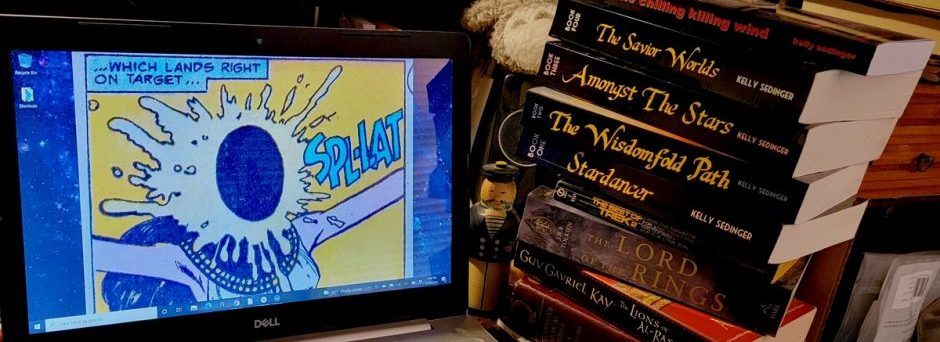

Talk about a photo saying it all….
A random observation
We’re watching a UK-edition episode of Kitchen Nightmares on Netflix right now. It’s amusing that the swear words aren’t bleeped. It’s even more amusing that I often don’t even recognize the swear words as swear words, owing to pronunciations and accents. I hear these folks say things like “Give me the fookin thing”, where ‘fook’ rhymes with ‘book’, and I wonder, “What is a ‘fookin’ thing”?
Anyway….
Share This Post
Something for Thursday (Friday edition)
We are….
Gregg Easterbrook writes in typically overwrought fashion about the Penn State scandal — he opines that PSU should just terminate its football program, which seems over the top even to me, and I’m about as disgusted by this as one can get — but I did like this:
[Interim PSU President] Erickson closed the commercial by declaring, “We are Penn State.” Supporters of Penn State have used this phrase for decades, commencing at a time when the words reflected well on the college. How can the phrase be appropriate here, if Penn State acted dishonorably?
In recent years the “we are” formulation is best known from “We are Marshall” and “We are Columbine.” In neither case, the 1970 Marshall plane crash nor the 1999 Columbine mass murder, was there any moral failing on the part of authority at either school. By contrast, at Penn State several people in high authority stand accused of criminality and substantial moral failings.
For the college’s interim president to say “We are Penn State” expropriates a noble expression in order to suggest that the Penn State of today deserves the kind of empathy accorded to Marshall and Columbine, or to Penn State when it opposed segregation. Unless it is shown the Penn State charges are false, and the school’s own interim president appears to believe the charges are true, Penn State has no business wrapping itself in the language of nobility. If the charges are true, “We are Penn State” should be replaced with “We are ashamed to be Penn State.”
I’ve been troubled by the solidarity PSU folks are showing throughout this whole thing. On the one hand, it’s got to be traumatic to have your school thrust into this kind of spotlight, and it’s got to be even tougher at a place like PSU, which seems to be one of those schools that inspires a larger than usual amount of pride in the people who go there. And there really is the truth that you can’t really hold any of this against, say, some junior who is majoring in architecture.
But here’s the thing. First, it’s going to get worse before it gets better. Things like this always do. We haven’t heard everything, and it’s going to get a lot uglier. There’s an extent to which the whole “college is a world in itself” thing is good, but it really tends to go too far, and this whole affair is a result of that mindset.
And secondly, nothing happened TO PSU. Penn State has zero claim to victimhood here; or rather, if it does, it is of such order of magnitude less than the actual victims of Sandusky’s alleged sexual assaults that it’s as if we took time from prosecuting a murder to feel sorry for the guy whose front lawn got chewed up when the murder suspect drove across it.
Some folks are taking the “Oh come on, you don’t know what you would have done” tack here, but I find that entirely unconvincing, on several levels. First, I have a pretty good idea what I would do if I walked into a shower and saw what was going on. Second, even if that’s true and there’s an actual strong chance I’d cover it up too, what does that say? Is this whole collegiate-omerta thing supposed to be a good thing now? Are we really to believe that this is an actual mitigating circumstance? “I would have done the right thing, but….” still reduces in the end to “I didn’t do the right thing.”
Another good article on PSU, this one by Charles Pierce:
It no longer matters if there continues to be a football program at Penn State. It no longer even matters if there continues to be a university there at all. All of these considerations are trivial by comparison to what went on in and around the Penn State football program.
(Those people who will pass this off as an overreaction would do well to remember that the Roman Catholic Church is reckoned to be a far more durable institution than even Penn State University is, and the Church has spent the past decade or so selling off its various franchise properties all over the world to pay off the tsunami of civil judgments resulting from the raping of children, a cascade that shows no signs of abating anytime soon.)
There will now be a decade or more of criminal trials, and perhaps a quarter-century or more of civil actions, as a result of what went on at Penn State. These things cannot be prayed away. Let us hear nothing about “closure” or about “moving on.” And God help us, let us not hear a single mumbling word about how football can help the university “heal.” (Lord, let the Alamo Bowl be an instrument of your peace.) This wound should be left open and gaping and raw until the very last of the children that Jerry Sandusky is accused of raping somehow gets whatever modicum of peace and retribution can possibly be granted to him. This wound should be left open and gaping and raw in the bright sunlight where everybody can see it, for years and years and years, until the raped children themselves decide that justice has been done. When they’re done healing — if they’re ever done healing — then they and their families can give Penn State permission to start.
If that blights Joe Paterno’s declining years, that’s too bad. If that takes a chunk out of the endowment, hold a damn bake sale. If that means that Penn State spends some time being known as the university where a child got raped, that’s what happens when you’re a university where a child got raped. Any sympathy for this institution went down the drain in the shower room in the Lasch Building. There’s nothing that can happen to the university, or to the people sunk up to their eyeballs in this incredible moral quagmire, that’s worse than what happened to the children who got raped at Penn State. Good Lord, people, get up off your knees and get over yourselves.
Yup. “We are Penn State”? Really?
Share This Post
A Random Wednesday Conversation Starter
All heckling to be done by Statler and Waldorf, of course.
Apparently there’s a grassroots movement afoot to get the Muppets brought in to host the Oscars. I endorse this without reservation, because it would be awesome.
Share This Post
Occupations
Kevin Drum has a great post on Occupy Wall Street. Here’s the money shot:
None of this is easy. But the truth is that it’s increasingly impossible to sell people transparently self-promoting fairy tales that plainly don’t reflect how the real world works. If you want them to believe that hard work and discipline are important, then hard work and discipline have to really be important. Not just modestly helpful. Not mere drops compared to the obviously undeserved piles of so many of the super rich. If we want people to believe, we have to believe too. We have to believe that America should be a country where everyone prospers, not just the cognitive elite and the super lucky. Until we all believe this — until conservatives believe this — the notions of responsibility and discipline that conservatives talk about so much are probably going to continue fading. In recent decades they’ve simply dedicated too much of their lives and too much of their energy to patent unfairness to be surprised any longer that belief in being fairly rewarded is on the wane.
That’s the lesson of Occupy Wall Street.
Share This Post
The Prez abides, man

I have a long love of photos of US Presidents looking goofy, and this one’s a classic. President Obama looks like he’s stoned here and is seeing the most amazing thing any stoner has ever seen:

“Whoa! Those Legos are awesome! Hey, didja know I work in an office with no corners? Hey! Do you like Cheetos?!”
Share This Post
Mr. Williams
Check out this list of Top Ten John Williams filmscores, which actually picks some very interesting scores, including a couple from Williams’s very early career. I haven’t even heard all of them! There are two here that are completely new to me.
The list’s writer, Matt Zoller Seitz, does make a couple of minor errors along the way, but in his defense, only a true film music geek would catch them. (Ahem.) In discussing Superman, he says this:
Williams revamped this score in “Superman II” and “Superman III.” Alexander Courage (“Star Trek: The Original Series) stepped in for “Superman IV” but based his work around Williams’ familiar themes.
This is actually incorrect; Williams had nothing to do with Superman II or III; instead, in a cost-cutting move, the producers had a composer named Ken Thorne come in and provide scores based substantially on Williams’s themes from the first film. (With a much smaller orchestra, also, which is why the score to Superman II sounds, well, really bad in my ears.) Thorne would get to do some more original work for III.
And then, in praising Williams’s score to Star Wars Episode III: Revenge of the Sith, Seitz says:
Greater still is the moment where Anakin becomes a hero (and the Sith lord Palpatine’s latest catch) by piloting the emperor’s crumbling starship back to Coruscant. Williams superimposes “Duel of the Fates” — the prequel cue that expresses the tension between the dark and light sides of the Force — over the optimistic “The Force Theme,” which we associate with Luke in chapters IV-VI; this cue foreshadows both Anakin’s moral failure in the second half of “Sith” and his belated redemption in the “Return of the Jedi.”
What’s wrong here is that the music in question was actually written for The Phantom Menace, and was re-used for this scene in Sith. There are several places in Attack of the Clones and in Sith where music is tracked in from TPM (and come to that, there are a couple places in Return of the Jedi which use tracked-in music from The Empire Strikes Back).
But those are mere quibbles. Check Seitz’s list out — it’s a good selection of Williams, and it doesn’t always stick to the obvious stuff.
Share This Post
An image that fills me with a quiet sensation of unease


