
Sorry to be so late with this today, folks! Anyhow: assume money is no object, nor are materials or props. What costume would you choose right now?
A note on Halloween and Pizza
This is a repost, but it always bears repeating!
Hey folks, I’ve mentioned this before on some previous Halloween’s, but I think it bears repeating. I write from my experience as a one-time employee of one of our nation’s many fine pizza-serving and delivering establishments. Basically, tonight’s Halloween, so you might consider refraining from ordering a pizza for delivery this evening. Why?
For one thing, since there are tons of kids about on the streets, with many of those dressed in dark clothing, many pizza delivery places will be quoting abnormally long delivery times, both because business might be up and because they may well be instructing their drivers to take as long as they need to deliver. Halloween is NOT the night to order a pizza and expect quick service. Believe me.
Secondly, if your household is not observing Halloween and will therefore be leaving all of your outside lighting off in order to dissuade trick-or-treaters, please oh please don’t order a pizza for delivery. Delivering pizzas at night isn’t rocket science, but it’s not ridiculously easy, either, and running deliveries on Halloween is actually pretty stressful when you’re trying to watch out for kids and figure out what house to go to. And if your lights are off, it makes your house even harder to find.
If you still feel that you just must order a pizza for delivery, despite the above, then at the very least, have some sympathy for the driver and increase your tip accordingly. Or just give him a tip at all, for you cheap jerks out there.
Or, you could just go get a pizza yourself, showing up early at the pizza place so you can eat before going out trick-or-treating or whatever. But if you do that, remember, you’re not the only person thinking along those lines; the pizza place will likely be getting an abnormally large number of orders significantly earlier than usual, which will have the expected slowing effect on service.
So, if pizza is on the menu tonight, adjust your service expectations accordingly and don’t be jerks. Or, just make it yourself!
Share This Post
The Balance in the Blood, conclusion (a fiction repost)
Part seven of eight (1 2 3 4 5 6 7)
Old Willem Schliemann watches the sun drop beyond the Argentine hills. “It won’t be long now,” he says to no one at all, and it isn’t. The sky in the west is still violet when suddenly she is there before him. Her clothes are different, of course; fashion has advanced quite a lot in the fifty years since he’s seen her last. But she still looks the same: the gently curling hair, the unnaturally pale skin. In her right hand she holds a leather satchel that Willem has seen before, but not since that night when he last saw her. She does not smile. He wonders if she has ever smiled at all, through all the years since the Nazis came.
“I’ve brought you something,” she says in perfect German. She holds out the satchel, and he takes it. He does not look inside. “Should I call you ‘Father’? You gave me this life.”
“Life?” Willem chuckles at that. “Such as it is. You may call me that, if it pleases you. I always wanted a daughter.”
“Do you have sons?”
“I did, once. Maybe I still do.”
She sits down beside him. He hears something strange about her breath, and he realizes that she only breathes to talk. Do vampires respirate? he wonders, ever the scientist.
“What happened after the camp?” she asks.
“We went to Switzerland,” Willem says. “Doktor Muething’s brother – who controlled the money, being first-born and all that – had been quite the drunkard, which made it easy for the Doktor to steal enough of the family fortune to establish himself in Zurich when we got there. He told me then that he had no further use for me, and that I would be safer away from him in any case. So he paid my passage to Barcelona, and from there I was able to get passage on a steamer to Buenos Aires in exchange for my medical services on the journey. We were boarded twice by Allied patrols, but no one paid any heed to a German boy playing medic. I’ve been here ever since.”
“I know you have,” she says. “Except for your trips abroad. I’ve followed you everywhere. Except Cairo, of course. There is too much sun in Egypt.”
Willem only shrugs.
“I found him there, you know. In Zurich. He died there.”
Willem looks at her.
“Did you kill him?”
She shakes her head. “Heart attack. December 11, 1957. He took up smoking and became quite the drunkard as well after the war, you know. I did talk to him before the end, though. Did you know he was half-Jewish?”
Willem closes his eyes and nods, once. It is painful, even now. He still has that letter, the only one the Doktor ever wrote to him, despite the fact that it is evidence of his status as a war-criminal. “His father had a mistress, a young Jewish girl. She became pregnant at the same time as his mother – his father’s wife. The Jewish girl died in childbirth, and the wife miscarried. So they introduced the illegitimate child as both of theirs, and no one ever knew. Doktor Muething didn’t know until his father told him just before dying.” Willem shakes his head.
“He wanted to save us,” she says. “He believed that perhaps through vampirism the Jews could have power and freedom, which they had never had.”
Willem nods. The Reich is dead, and yet the hatred remains, Wolf Muething wrote in that letter. It will always remain.
“Am I to become one of your victims?” Willem asks.
“No. For something else.” She gestures to the satchel.
Willem opens the satchel and draws out a hammer and a wooden stake, one end of which is honed to a lethal point. He looks up at her.
“No balance lasts forever,” she says with a shrug. She stands and walks a few steps away from him. Her form is silhouetted against the deepening purple of the night sky. “They came for me in the dark of night. They came for us all, took us all away. They took away the world. You gave it back to me. For that I am ever grateful. But it must end.”
“I made you a vampire,” he says. “I gave you only the night.”
“It was the only way,” she replies. “There was no other. You could not give me Life after I was shot. But you could stay Death’s hand, at least for a time. I have walked the world for fifty-four years, and now I am tired. I want no more of night and dark. I want no more of blood, of corpses, of feasting upon death.” She turns to face him as a cool breeze stirs. “We are trapped in the cycle of death that they created. You can give me release. You can end the cycle.”
“That cycle never ends,” Willem says. He looks down at the implements in his hand, the hammer and the stake. Then he rises and walks over to her. She lies down on the ground in front of him, her hands at her side.
“No, I suppose it doesn’t,” she says.
He kneels down beside her and places the tip of the stake on her chest, directly over her heart. The palsy in his hands makes it shake. He lists the hammer, and then he hesitates. Tears form in his eyes, and one rolls down his cheek.
“Please,” she says.
He closes his eyes and is transported back to the night of her creation as clearly as if it were the night before. He and Doktor Muething had fled without the possibility of knowing what had become of their creation. He has known, since that very night of killing and creation, that she would someday come. And he has always been certain of why she would come, but this isn’t the reason. Not this. Never this.
“Our Father,” Willem says. “Our Father….who art….Our Father who art….” He searches for the words but they do not come. He wonders if Uncle Gunther would approve. He wonders what Uncle Gunther would say, what he could possibly say.
“Sometimes, Willem, all we can do is end the pain.”
And there, as he has done so often in his misbegotten life, Willem Schliemann finds the answer he needs in the words of his uncle. He lifts the hammer again and brings it down with all his strength. The stake drives through skin and bone, impaling the undead heart beneath. Blood, living and dead, erupts from the wound, gushing out in an impossible amount. She screams in agony and release, and when her scream ends her body ages again at last, accumulating fifty-four years in mere seconds. And then she is gone.
An hour passes as the sky darkens and Willem makes the preparations, and then he stands before the pyre as the flames consume his vampire. The words he recites are unheard by anyone, and yet he recites them just as he has practiced them for years. After all, the words are not for the living. They are for God.
A new century dawns as a Nazi says Kaddish for a Jew whose name he has never known.
Share This Post
The Mouse and the Lightsaber: Random Thoughts on the Disney-Lucasfilm Deal
When I got home from work today, I walked in the door, took care of the mail, unpacked my lunchbox, changed my clothes, and checked the news…to learn that George Lucas has sold Lucasfilm to Disney…including Star Wars. This news really stunned me at first, but as I thought about it, some things crystalized in my head.
:: For years I’ve read and heard people pining that the Star Wars franchise would go the way of James Bond, with different directors getting cracks at it. That seems pretty possible now, for better or for worse.
:: I don’t really have a problem with Disney owning Star Wars or taking the franchise into the future. I think that Lucas has long made it clear that he’s made all the Star Wars movies he wants to make, but that doesn’t rule out the idea of any new ones being made at all. That’s a big universe he’s created there. Why not?
:: For all the complaints heaped upon Disney over the years, fact is, they’re still responsible for an awful lot of really good stuff.
:: I’ve got to think that Disney will be a lot less reticent about the whole “releasing the original versions on DVD” thing than Lucas himself was. I’ve never been one of those fans, but they’re out there, and boy, are they vocal.
:: This also pretty much guarantees that the last set of changes to the Original Trilogy are almost certainly the last set of changes to the Original Trilogy, doesn’t it?
:: For all that…this idea of a new Star Wars movie every few years feels kind of odd to me. One of the big appeals to me about Star Wars is that it’s always been a single story (at least as far as the movies go), this tale of the two generations of the Skywalker family and how one fell into darkness and found redemption at the hands of the next. By necessity, now, the story will become more than that, and with each new tale, that original story becomes a smaller piece of a greater whole. I’m not sure how I feel about that.
:: I had a conversation on Twitter a week or two ago with a friend who had decided that all the various new Star Wars products just weren’t for him anymore, and as a result, his fandom was waning. The point that I made is that Star Wars has become so large in terms of product that one can literally decide what kind of fan one wants to be. That seems very cool to me. I adore Star Wars, but my fandom turns out to be very limited: it pretty much starts and stops with the six existing movies. I read the ‘Expanded Universe’ novels when they started coming out (and I still have quite a lot of love for the Timothy Zahn books, as well as quite a few of the comics, with special love reserved for the Marvel Star Wars title that ran from 1977 to 1987), but I’ve long since stopped following all of that. And I’ve never really gotten around to watching much of The Clone Wars beyond the first couple of episodes (which I actually found pretty solid pieces of entertainment).
Why is this? Well, mostly I suppose it’s because I’m so scattershot in my various fandoms. I’m easily distracted by The Shiny, and I want to fill my life with as much Shiny as possible. I’m just not wired to focus my energies on any one particular variety of The Shiny. But there’s just too much Star Wars out there for me to keep track of, and it’s aimed all over the map. There’s Star Wars for grown-up readers, and there’s Star Wars for kids. Which is why, for me, I’ve pretty much stopped at the movies. I’ll watch what comes, as an observer. And I’ll almost certainly see new movies.
:: I don’t hate the guy. I really, truly don’t. But if Hans Zimmer ever writes the score for a Star Wars movie, I will show up at the theater, consume an entire large popcorn, and then wash it down with ipecac.
:: This isn’t really relevant to the topic at hand, but…f*** Red Letter Media.
:: Some small part of me — the part that’s the writerly equivalent of the kid playing pick-up baseball on the sandlot with a couple of buddies, whispering “It’s the bottom of the ninth in Game Seven…we’re down by three, bases are loaded, two outs and I step up to the plate….” as he awaits the pitch from his older brother — has lazily daydreamed about getting Princesses In SPACE!!! (not the actual title) published, and then a sequel, and then turning the following universal acclaim into being asked by George Lucas to personally write Star Wars Episode VII. That dream has now been taken from me. Sigh….
:: No matter the result, the fact that George Lucas is willing to let Star Wars go, after it’s been the labor of his life, is really something. If it wasn’t obvious, I love this guy and this just helps that right along. What a great thing to do.
:: Speaking of which: as a Buffalo Bills fan, the symbolism of an amazingly rich man selling to someone else the thing that brought him untold riches, that its future might be assured and in good hands, is not lost on me. I hope someone at Ralph Wilson’s house leaves a newspaper on the table, turned to this story….
:: SamuraiFrog has some thoughts, as I figured he would. So does John Scalzi, but when it comes to George Lucas and Star Wars he’s pretty much full of bird poop, so ’tis best to set your phasers (wrong franchise, I know) to ‘ignore’.
:: All that said…I’m really not sure how ready I am to see Princess Leia included amongst the lineup of Belle, Snow White, Sleeping Beauty, and all the rest!
Share This Post
The Balance in the Blood, part seven (a fiction repost)
Part seven of eight (1 2 3 4 5 6)
“Doktor Muething,” Willem said. His skin tingled; he felt cold all over. “You missed a variable.”
“What?” Doktor Muething said, in the listless tone of someone not really listening.
“Listen to me!” Willem grabbed the Doktor’s arm. “Uncle Gunther wrote that vampirism is balance. Life and death together. But there are other opposites that can be in balance, aren’t there? You never switched the vials!”
Doktor Muething stared at Willem, and then at the dead girl on the ground. Finally the light of realization formed in his eyes as well. “I only injected the men with blood from the male vampire….”
“And the women with that of the woman vampire! But the most reliable accounts in all your research are those of male vampires turning women, and woman vampires turning men. Vampirism isn’t just a balance of life and death; it is a balance of male and female.”
The Doktor glanced at the young woman’s body, and then turned back to Willem. “Get a syringe,” he said.
Willem sprang away and into the laboratory, where he quickly found a syringe and filled it with the very last of the blood from the male vampire. Then he ran back outside, to where Doktor Muething knelt beside the young woman’s body. Sirens and klaxons began to blare.
“Air raid,” the Doktor said. “Perhaps being out here isn’t the best idea.” There were explosions in the distance, but they were still much nearer than they had been in recent days. The Allies were coming. The Doktor lifted the woman’s arm and tapped it, looking for a vein. “And these are hardly the correct conditions…Here, I have a vein.”
Willem slid the needle in and depressed the plunger, sending male vampire blood into the young woman’s body. The Doktor then kneeled over her and began chest compressions.
“Masculine and feminine,” the Doktor said, shaking his head. “I must be blind.” He continued the compressions, forcing the vampire blood through the woman’s body.
“Get out of the street!” a soldier shouted from the sidecar of a motorcycle that rumbled past. Willem and the Doktor ignored him, for the transformation had begun.
It was less violent than the previous two. The dead woman began to slowly writhe and moan. Her flesh filled in and took on an appearance of health. The gaping wound in her back healed as though it had never been there at all. Her hair, roughly shorn by the impersonal barbers of the Reich, became long again and more lustrous. Then her eyes opened. They glowed with a pale, green light. Willem and Doktor Muething moved back as the woman climbed to her feet. She was unsteady in her stance, and her eyes flicked around nervously.
“My God, it is so beautiful.” There were tears in the Doktor’s eyes.
“What do we do now?”
“She is weak. She will need nourishment.”
Willem looked down at the woman. The look in her eyes was most definitely hunger, the same look he hadn’t been able to recognize in their previous failed experiment. How could he have missed it, surrounded as he was by hunger on a daily basis? The woman stared imploringly at Willem and Doktor Muething, but she would not come more than a few paces closer. Willem remembered the Crucifix around his neck. If not for that….
“MUETHING!”
It was Commandant Reger, who was approaching from the Officers’ Quarters with two guards in tow. His uniform was muddy and his hair was unwashed; he had obviously not been to bed in some time. Willem recognized the two guards; these two men – boys, really – had stood attention beside him on his first day in the camp.
“What is it, Commandant?” the Doktor asked pleasantly.
“You know damned well that the Allies will be here tomorrow,” Reger snapped. “It is time for you to leave – who the hell is this?” He gestured to the young woman, who was staring up at him with wide eyes. “Herr Doktor, is this prisoner troubling you? And what is a prisoner doing here anyway? I ordered them gathered and taken to…no matter, I will deal with her myself.” He unsnapped his holster and drew his Luger pistol.
“She is no trouble at all, Herr Commandant,” Doktor Muething said as he stepped forward and grabbed Reger’s arm. “Do not shoot her.”
“Get back, fool. I should shoot you as a Jew-lover.” He shoved Doktor Muething aside and raised his pistol – but then the woman was on him. His pistol dropped to the ground as he grabbed her wrists. She bared her teeth and panted horribly as she grasped at him with white fingers. Her strength was as unnatural as her new life, and it was all the Commandant could do to keep her at bay. Her eyes glowed brighter, and it swiftly became apparent that she was too strong for him. She forced the Commandant down to his knees, and terror filled his eyes.
“Shoot her, you idiots!” he screamed, and the two boy-guards awkwardly whipped their rifles around to shoot the woman. After a few seconds of handling their guns as though they were live snakes, both boy-guards fired. One rifle shot tore into the woman’s leg; the other bullet grazed the Commandant’s forehead. The woman barely noticed the wound, which healed over almost immediately. Blood streamed down the Commandant’s forehead.
“Relax, Herr Commandant,” Doktor Muething said as he stepped in close behind Reger and laid a hand on his shoulder. “She cannot harm you when I am this near to her.” As if on cue the woman shrank away, repelled by the crucifix around the Doktor’s neck.
“What have you done here, Muething?” Commandant Reger wiped blood out of his eyes with the back of his hand, and then he stared at the woman.
“I think you know,” Doktor Muething said.
“It’s not possible,” Reger said. “They don’t exist. You’re a fool and you’ve wasted your time on a fool’s task.” The woman panted even louder, and the Commandant lost his temper. To his guards he shouted, “Would you two PLEASE KILL HER!”
Willem shook his head silently. These boys had never once seen death this close. Willem had seen enough for a lifetime. They raised their rifles….
“Don’t,” Doktor Muething said. In his hand was the Commandant’s dropped Luger pistol, and his hand was steady as he leveled it at the two boy-guards. “I assure you, my young friends, I have no desire to kill the youth of the Fatherland – but I will do just that if you don’t put those guns down and get away from here.” And then he raised his other hand in a fist and brought it down, hard, on the base of the Commandant’s skull. Reger flattened to the ground, moaning. “Go, boys,” the Doktor said. “You do not want to see what is going to happen next.”
Willem glanced at the two boy-guards who stood beside him now, just as they had two months before. He remembered their names at last: Georg on his right, Herbert on his left. The young woman stared at them, eyes gleaming, as they nervously pointed their rifles at her. Willem took a quiet step back, and then two or three steps away. The woman crept closer to the two boys, and they dropped their rifles at the same moment and ran. The woman rose to follow them, but Doktor Muething called out to her.
“Don’t go, my dear. I have what you need.”
She turned back to Doktor Muething, who had tied the Commandant’s arms behind his back with the Commandant’s own belt.
“Muething,” Reger mumbled. “What are you doing?”
“She needs sustenance,” the Doktor said. There was a strange look in his eyes. The Commandant began to struggle, but Doktor Muething appeared to have far greater physical strength than Willem had ever given him credit for.
“No!” The Commandant’s eyes were wide and he kicked and squirmed to no avail. He could not get away. Willem’s flesh went to ice.
“Come, my dear!” Doktor Muething’s voice was calm, malevolent. “Your first meal awaits you.” He stuffed the Luger pistol into his belt and lifted the Commandant to his knees. Willem’s eyes were wide as he looked on. He saw the Commandant’s pants become wet inside the legs.
“Muething, no!” Reger’s voice, always so arrogant, now sounded of nothing but childlike terror. “You can’t do this to one of your own!”
Doktor Muething laughed at that. He actually laughed, a deep-throated laugh from the depths of his belly that was still harsh and without the slightest hint of mirth. “One of my own, Reger?” He stopped laughing suddenly, and his eyes glistened as he leaned forward and said through clenched teeth: “She is one of my own.” And with that, he shoved the Commandant forward. The Commandant landed with a thud on the ground just two or three paces from the woman. She looked up at the Doktor, who nodded once and then took four steps back. The woman sprang then, and Commandant Reger could do nothing but scream as she took him in her arms, pushed his head back, and sank her teeth into his waiting neck. His shrieks only blended in with the blaring klaxons, the air-raid sirens, the distant exploding bombs, the reports of gunfire from the newly-consecrated execution fields. Reger’s screams as he perished at the hands of a vampire were just one more voice in a fugue of death.
The Doktor turned away from the woman who fed on the Commandant and grabbed Willem by the elbow. “Come, young Schliemann. We will not be welcome here with either our own or with the Allies.”
Willem obediently followed the Doktor, finally managing to tear his gaze from the vampire they had created. “Switzerland?”
“The only remaining haven in Europe for men such as I,” the Doktor said. “How fortunate that I was assigned to the camp nearest the Swiss border, don’t you think? My mother’s diamonds were able to buy me that much.” A knowing smile played at the edge of his lips, and Willem understood.
“We murdered one of our countrymen,” Willem said.
“As I said before, he wasn’t entirely my countryman. As for yourself, I am sure the feelings of guilt will fade in time.”
Instead of going inside the officer’s quarters, Doktor Muething led Willem around the building to a low maintenance shed. There, under a tarpaulin, was a fully-fueled motorcycle complete with sidecar and two packed rucksacks.
“So my worldly belongings are in the end reducible to one of these bags,” the Doktor said. “Oh well. I shall start anew. It seems a good time for it, at any rate.” He pulled on a leather jacket and a helmet, and gestured for Willem to do the same. “You drive.”
Willem climbed onto the cycle, and the Doktor boarded the sidecar. Willem looked at the Doktor for a moment, and then he shrugged. “Reger was a pig,” Willem said. “The Allies would have executed him anyway.”
Doktor Muething gave Willem a squeeze of the shoulder. “Drive, Willem.” he said. “You are not so young anymore, I think.”
Willem kicked the motorcycle to life and drove off. They went unchallenged through the camp gates; there was a lot of coming and going these days. Willem knew the roads around here very well, and soon they were headed south. He took the smallest roads, the ones that wound up into the mountains and through tiny villages where he had come with his uncle to heal the sick. Eventually they came to the border, where a single guard merely nodded and opened the single wooden barrier across the road.
Anonymous-looking Germans heading to Switzerland were common enough, it seemed. Willem and the Doktor rode through the gate, out of Germany. Neither would ever return.
Share This Post
The Weather I Remember
As I write this, we here in the Buffalo Niagara region are awaiting the increased pounding we’re going to receive as Hurricane Sandy’s course takes her on a path that will give us what is, compared to what the Jersey Shore and NYC Metro areas are receiving, a glancing blow. But a glancing blow from a hurricane, even as it diminishes to a tropical depression, can be quite a hairy thing.
At this point, what we’re expecting is high wind and a lot of rain. The ground is already wet from rains in the days ahead, and quite soft; the trees have grown their root systems to anchor against usual winds from the south and west, whereas this storm will be giving us winds from the north. So there’s quite a lot of potential for ugliness as this storm unfolds. Currently, its path is forecast to take the center of the storm on a course about sixty miles east of Casa Jaquandor.
As this happens, I’m thinking back on some weather events I recall from years past….
:: The Ash Rain of Portland. I have no idea what date this was, save that it happened either in 1980 or 1981. It was a cloudy, rainy day in the Portland, OR area, which isn’t all that remarkable in itself…except that Mt. St. Helens had just erupted, so the rain deposited about an inch of wet volcanic ash on everything. Dad was off at work, so it fell to me to shovel and hose all that ash off our driveway. This, as I recall, took me most of the day.
:: The tornadoes of Kane, PA, in 1985. Kane is a town about an hour south of Allegany, NY, where I grew up, and on one night in late spring, there was some volatile weather that led to tornadoes down there. At some point not too long after that, we drove through Kane on our way to Pittsburgh to see some relatives and family friends, and for the first time I saw actual tornado damage. It was something to behold. I’d always envisioned tornadoes as just destroying tons of stuff, and it did, but I hadn’t realized how localized the destruction was. We’d drive through quarter-mile-wide sections of forest that were leveled, and then we’d pass through a sharp line back to forest again. Ditto the houses; you’d see a house leveled next door to one that had lost a few windows. It was really amazing…and scary.
:: The Storm of the Century, 1993. This happened on a weekend that I was supposed to go back to college, from a spring break at home. An enormous storm formed that blanketed half the country, it felt like. My parents drove me to Clarion, PA, where I was to rendezvous with a guy I knew, with whom I would drive back to school in Iowa. The snow was already quite heavy as we drove what was normally a 90 minute trek to Clarion, and this was while the storm’s center was still in Georgia. Yup, it got worse. A lot worse.
The guy and I ended up staying in a hotel overnight in Clarion as the storm pounded the hell out of the entire Eastern seaboard; I’d later learn that it took my parents something like six hours to get home. The next morning it was all over but the digging, so we set out for Iowa, going very slowly at first. All the Interstates were closed in PA, and I remember crossing into Ohio near where I-80 enters PA, and seeing hundreds of semis and cars waiting for the road to open. What was really weird about that storm was that we didn’t really have to drive far to get out of the big snowfall region, and that it all melted in days anyway, since the storm was so late.
:: The Storm of November 2000. This one hit Buffalo not long after we moved here from the Southern Tier, and it was a doozy, resulting in kids snowed in at their schools, disastrously snarled traffic downtown, and The Wife, who was starting her new job, snowed in there, as well. It was the first time she’d been apart from me since The Daughter had been born. I wasn’t working at the time, so it wasn’t an enormous trainwreck, but wow…that one was brutal.
:: And then, a year later, it happened again, as something like seven feet piled up right where we lived at the time. Ouch. Worse was that The Wife was snowed in again at work! We were OK at home, since I was snowed in with my Mother-In-Law, who was visiting at the time. As I recall, we didn’t leave the apartment for three whole days. For years we would have a running joke that my in-laws never once visited Buffalo when the weather was any good. Even when they visited in summer, it was during a rainy cold snap.
:: The October Surprise storm. This is the most recent of the notorious Buffalo storms, happening in 2006. It was a lake-effect storm that dumped quite a bit of snow, although as I recall, the snow amounts themselves weren’t unheard of. What was harsh this time was that it happened in early October, before most of the trees had managed to drop their leaves, so the branches ended up getting piled with snow. As the weight increased, branches began breaking…on thousands of trees throughout the region. This resulted, of course, in huge power outages that lasted longer than a week in some places.
On the morning after the storm, I was driving to work. It was slow going, but I was moving along fine until I reached the top of a bridge right by The Store and got hung up on a big hunk of ice and snow. I wasn’t budging from there. The guy behind me is in an SUV and says, “I gotta get through…do you mind if I nudge you with my bumper?” I weighed the option, considered that the car wasn’t really my favorite anyway, and said, “Sure, bring it.” Which he did. I gave the guy the green-light to rear-end me. And it worked! Huzzah!
So, what weather-related adventures have you all had?
Share This Post
The Balance in the Blood, part six (a fiction repost)
“He is dead,” Willem said, looking up from the corpse.
“Then let us begin.” Doktor Muething injected the vampire blood into the second dead Jew. This one was an older man than the first, with a face that had been careworn even before the Nazis had come. Willem studied the man’s features as they waited for the vampire blood to take effect.
“Do you ever wonder about the lives they led before we took them?”
“Always.” Doktor Muething nodded. “Many insist that we shouldn’t think of such things, that concerns such as those have no place in the advancement of science. But yes, I do think of them.”
Willem stared at the dead Jew, and then it began.
With the shock of the first experiment behind him, Willem was now able to concentrate on the details. They were much the same as the last time. The second dead Jew’s eyes formed the same commanding stare as the first one, but now Willem was already wearing the Crucifix and thus felt none of the compulsion he had experienced before. He was able to watch without fear as the second dead Jew opened his mouth, revealing canine teeth that had certainly not been there before. He didn’t even notice the Doktor standing close behind him.
“Yes,” Doktor Muething whispered. “Yes…see the world through new eyes, my friend.” Willem was startled at the words, and he was not sure if they were meant for him or for the second dead Jew.
Now that Willem was protected from the vampire Jew’s horrible gaze by the power of God, it seemed to him that there was something else in that gaze, something beside malevolence and bloodthirst. What was it, though? Longing? Sadness? A passionate yearning for freedom? Willem pondered that gaze, and it was then that the reaction began to sour.
This, too, was much like the first experiment: the vampire Jew convulsed violently, hurling his body against the double set of bonds; his shrieks pierced the air which filled with the stench of rot.
“Damnation!!” Doktor Muething slammed his palm against the wall. “This cannot be!”
The vampire Jew’s convulsions became so ragingly brutal that the surgical table itself began to rock against its moorings. The shrieks were so loud and so piercing that Willem’s ears hurt even with his hands clasped over them. He looked at the Doktor, who was already moving for the window. A flood of golden sunlight, several moments of horrible decay, and it was over. The vampire Jew was dead, just as before.
“I don’t understand,” Doktor Muething said. “I don’t understand. It has to work. I can’t think of anything else to try!” He clenched his fist, and his body trembled. His calmness, his icy detachment was gone. Was it the voice of a man who keeps falling short of a goal years in the making? or was it something more than that? Why this goal, and not some other?
Willem stared at the dusty remains of the dead Jew as sirens began to blare outside.
“We are confident that our local forces will be able to turn the Americans and the British troops aside,” Commandant Reger said. “Until then, we will step up the pace of our operations here.” Thus he ordered the round-the-clock operation of the ovens. They would burn twenty-four hours a day until they were shut down by the Allies themselves. The Allied armies were sixty or seventy miles away; soon they would be at Hamerstadt – unless the tattered remnants of Der Fuhrer’s army were able to turn them aside. Noting the mournful expression on Commandant Reger’s face, Willem concluded that any such outcome was so unlikely as to be impossible. Doktor Muething had been right: the thousand-year Reich would die in mere weeks.
Willem paid almost no attention at all to the meeting. His thoughts kept returning to the pleading desperation that had formed in the Doktor’s eyes after their failure that morning. Why was this so important to him? And most importantly, what were they doing wrong?
After the meeting adjourned Willem went to the laboratory, where he learned that the Doktor had gone to town again on urgent family business. There he found all of Doktor Muething’s notes and journals from all his years of research. Unable to resist, Willem began to read. He found one book particularly interesting: it was Doktor Muething’s personal journal of all the experiments he had conducted, in all the camps, in the course of the war. He had performed a hundred such experiments on Jews from all over Germany. At the end of the notes on each experiment Doktor Muething had written, “God forgive me.” Was he seeking absolution even as he plumbed the depths of death?
And why did it always fail?
Willem studied for hours, reading all of the old accounts of how vampires had created their….”offspring”. Perhaps there was something in these papers, something even the Doktor’s brilliant mind could not remember; perhaps there was a missing connection somewhere. Perhaps a pair of young, fresh eyes coupled with a young mind could find whatever it was that had been overlooked. But as the hours went by, Willem despaired of finding any such master stroke. There was nothing here that he could see – but there had to be! Why couldn’t he see it?
“Young Schliemann?”
Willem awoke with a start to find Doktor Muething standing over him. It was dark outside the laboratory, and the only light came from the streetlights. Sirens blared, and Willem hadn’t even heard them until now. Willem rubbed his eyes.
“It is not there,” the Doktor said. “Do not trouble to look for it. The experiments will not succeed, and our time is up. We have failed.”
“It must be here somewhere, Herr Doktor!” Willem straightened up and rubbed his stiff neck.
“The answer—”
“There is no answer, Willem.” Doktor Muething shook his head. “The only conclusion possible is that Gunther’s hypothesis is wrong. The vampire blood is not sufficient to complete the transition. I’ve tested all the variables. It is over.”
“No!”
“It must end now. I have failed, and there are things to be answered for. That monument to pomposity Commandant Reger won’t tell you, but I know that this camp will be liberated within two days. I spent today making my travel arrangements.”
Willem blinked. “Travel? Where are you going?”
“South.”
“Switzerland?”
Doktor Muething nodded. “I do not wish to explain this to the Allies. It will be difficult enough explaining it to God.” He looked at the notes on the table and sighed. “This wasn’t meant to be. There truly are areas where we are not meant to dabble. I see that now.”
“You don’t truly believe that!”
“The luxury of choosing what I believe is no longer mine.”
Willem groped for a reply, something to say that would convince the Doktor to reconsider. He was still thinking when a loud commotion arose from outside. A truck had pulled up, and there were shouting voices.
“Now what could that be?” the Doktor said, and the two went outside. In the middle of the street was a truck which was full to overflowing with prisoners. Guards no older than Willem stood about brandishing guns, and one officer – Willem recognized him as one of the Commandant’s key assistants – was barking orders at the others. This officer saw the Doktor, and marched right up to him.
“Stand aside, Herr Doktor,” the man said. “I am on the orders of Commandant Reger.”
“Of course you are, Lieutenant Spengler. We are all on someone’s orders.” The Doktor stood aside, allowing ten guards to go past and into the tiny barracks behind the laboratory that contained the remaining four of the six prisoners that had been originally assigned to Doktor Muething’s scientific program.
“What is happening?” Willem asked.
“They are taking our research subjects,” the Doktor said. As if on cue the guards began reemerging, pushing the prisoners ahead of them. “They will all be killed here, probably by mass firing squad. They won’t have time to gas them all. And the bodies will be left where they fall. No more neat, orderly stacks of the dead.”
They watched as the four prisoners were pushed, one by one, onto the truck. The last one was the young woman, the one Willem had thought would be lovely if she was not….No. She was lovely, even now with her hair roughly shorn and her body emaciated, even as she walked with the starved listlessness that afflicted every one of the other thousands of prisoners in the camp. A sick feeling formed in Willem’s stomach.
“Move!” Lieutenant Spengler shouted, and the truck began to move – before the young woman, being the last of the prisoners, had climbed all the way inside. Whether from the cold air or from he weakened state Willem could not be sure, but all the same she lost her grip. As the truck rolled away she tumbled off the back end, landing on the ground in a heap. In seconds three guards were around her screaming for her to get up, the remaining guards having jogged off after the truck. She tried to push herself back up but the ground was muddy and she slipped again. Willem took an involuntarily step forward, but Doktor Muething restrained him.
“Don’t,” the Doktor said.
Lieutenant Spengler came back now to see what was going on, and when he did he shook his head in frustration. He gestured for the guards to step back, and then he drew his pistol and shot the young woman in the back. She flattened to the ground. Willem felt his gorge rising. Doktor Muething shook his head at the bitter tragedy playing out just twenty feet away. Willem swallowed several times in succession, forcing the bile in his throat back down. The guards laughed and congratulated Spengler on a good shot as they walked away after the truck. Willem stared at the young woman’s body, her blood spreading across the ground. Her blood, spreading across the ground….
Her blood….
And there it was.
Share This Post
The Balance in the Blood, part five (a fiction repost)
If Death is the absence of Life, Gunther Schliemann wrote, and if Life is the absence of Death, then Vampirism is the absence of both.
Willem was so absorbed in the book that he missed the noontime meal completely. It was as if Uncle Gunther was speaking from beyond the grave – the turns of phrase and attitudes were unmistakable. But it was also as if there were another Uncle Gunther, some sort of doppelganger who moved in a world of graves and blood. He had spent years studying vampires, traveling from Amsterdam to Istanbul to Athens to Lisbon and back again following the trails of vampire folklore wherever they led. Gunther had not been content to merely study the legends themselves; he had been looking for the truths behind the tales. He had been seeking a real vampire. Uncle Gunther had been convinced that they existed. And how had he come to such a belief? At the University of Hamburg he had met Wolf Muething.
After completing their degrees the two friends had worked together, searching for vampires. Gunther wrote of many places where they had found that mysterious creatures had once existed, creatures which might have been vampires – but the trails were always cold, and a real vampire was never found. There was something terribly elusive about them, as if like the dimmest stars they vanished when looked upon directly. They searched towns in Poland and villages in the Carpathians. They journeyed to Transylvania and found no more evidence of real vampires than they had in any other place. Everything they learned, every lead they followed, every tale they traced was written in Gunther’s book: stories of the begetting of vampires, speculations on the nature of the secret vampiric society they believed to exist, hypotheses on the nature of vampirism itself – but no accounts of actual encounters. Those eluded them, and continued to elude them for years even as they lived off the money that Wolf Muething borrowed, cajoled and outright stole from his rich family.
It ended in part when Wolf Muething’s father died, and Wolf returned home to help his brother run the family. Gunther, though, continued the search on his own, earning money for his travels in exchange for medical treatments. He collected vast amounts of folklore relating to vampires, and as he studied them he began to discover parallels in all the accounts that led him to his own theories as to how they came to be. In one chilling passage he devised a simple experiment. It seems, he wrote, that the folklore leads to one conclusion: that vampirism begins by mixing the blood of a vampire with that of a person freshly dead. Would that I had the means to test this hypothesis.
Two years after Wolf Muething left the chase, Gunther found his most promising lead in a village near Salzburg. Here his prose became excited, even urgent: It must be nearing the end. How thrilling to at last approach the terminus of this great and awful road! And with those words, the book ended.
Willem turned the page and found only two blank flyleaves. He sat back, astounded, letting the book fall to his lap. There was nothing at all of the trip to Salzburg; had Gunther found what he had been looking for? Had he found the vampire? There were no answers. The questions filled Willem’s head as he headed out to dinner.
“You’re a faster reader than I,” Doktor Muething said as Willem entered the laboratory. “It took me two days to read that book. I often wonder who Gunther had print it. What must that person have thought?”
“He probably thought it was a novel,” Willem said as he came over to the table.
The Doktor raised his eyebrows. “Good Heavens, was that a joke?”
Willem only shrugged. “Another attempt?” he asked, pointing at the corpse.
“No,” the Doktor said as he used a scalpel to cut through chest tissue. “This man was fairly healthy when he was gassed. There are no shortages of opportunities to refresh my knowledge of anatomy here. Or yours, for that matter. Come closer, he’s dead and won’t bite. Rub some of that cream under your nose. It will help the smell.”
Willem took a dab of cream from a jar and rubbed it under his nose. The stuff smelled horrible and was very strong, but it did mask the scent of the corpse. He stepped closer and watched as the Doktor opened the man’s chest cavity.
“’Prick us, do we not bleed? Poison us, do we not die?’ What’s the last part – oh yes, ‘Wrong us, shall we not avenge?’” He chuckled. “If the Bard had only known what was to come. You look like you have a question for me, young Schliemann.”
He is always ahead of me, Willem thought. He asked his question. “How do you do it?”
“Do what?”
“How do you reconcile the oath that a Doktor takes with the fact that here we mete out death in huge quantities, and that we profit by it?”
“Science is not an adequate answer to that, is it?” The Doktor shook his head slowly. “The heart has reasons that are unknown to the mind,” he said as he turned back to the autopsy subject. “In this man’s case, we probably did the right thing for the wrong reasons. His lungs are a cesspool of cancer.”
Willem couldn’t help but notice that Doktor Muething had not answered the question and he could see that it would be useless to bring it up again, so he decided to ask something else that was bothering him. “Doktor, do you really believe the things in that book?”
“My, you do like to change the subject! That’s good. It shows an inquisitive mind.” Doktor Muething picked up the scalpel and began cutting more tissue. “Science is about considering the possibilities. Gunther was a scientist, purely and truly. Before he became a physician, that is. He had no choice in that, you know. The reason the book ends in Salzburg is that Gunther was there when he received a letter from home. That was March of 1931. Do you understand?”
Willem nodded. That was when his father had died, and he had gone to live with Uncle Gunther.
The Doktor began cutting the blood vessels around the dead man’s heart. “Gunther received an urgent letter the day after he arrived at Salzburg, and he knew that he had to return home at once. He wrote to me explaining what had happened, and that he could no longer carry out our work. It broke his heart, at first, to have been so close to unraveling the mystery, but the heart can be strong in ways no one can expect. In time he came to accept his new life. And, I might add, his new family – such as it was.”
Willem stepped forward and looked down into the man’s chest cavity as the Doktor extracted the heart.
“So,” the Doktor went on, “we forgot all about vampires – or rather, your uncle did. He put that part of his life behind him. Whenever I asked him about it after that, he would only recite that passage from the Bible – the one about giving up childish things.”
Willem nodded. That had been one of Uncle Gunther’s favorite passages.
“I, on the other hand, saw nothing childish about our former quest, so I continued on as best I could. I taught at the University and studied the human body. I was able to conduct certain experiments, plumbing the limits and nature of death. Physicians study every way in their power to stave off death, but none ever actually study death itself. It is a fascinating subject. I have learned much since these camps were built. Of course, I doubt that the Allies will take a very kindly view when they arrive.”
“Do you really think they will?”
“I am counting the days,” Doktor Muething said in a voice that made Willem shudder. And then the Doktor continued. “Gunther and I corresponded through the years. He wrote a great deal about his wonderfully gifted nephew who was bound to be a fine physician in his own right. He wrote about things he learned from the old and the weak, and he wrote about all the wonderful little villages where he went to heal the sick. Those letters were far less dark than the ones he had written to me before. All of them, that is, except one he sent to me about two years ago about a village called Ganenpunkt. Do you know this village?”
Willem remembered it all too well, and he paled at its mention. It had happened two years before, when Gunther had heard of a disease that was ravishing the tiny village of Ganenpunkt. Gunther had taken Willem up there to help. Upon their arrival they had found six other physicians from around the region grappling with the disease. Every living thing in the village, it seemed, was wasting away and there was nothing anyone could do to stop it. Willem remembered the gaunt and lethargic livestock in the fields, and the sick people in the homes. He had never seen a town so afflicted, and just remembering all those pale and sunken faces brought the feelings of dread back as if two years had never passed.
But then Willem remembered something else. One of the other physicians there had voiced dismay at Uncle Gunther for bringing a child – Willem – into the midst of such disease, but upon looking at the very first patient he examined Gunther had whispered to Willem: “This is no contagion.” It had not struck Willem at the time, but now….
“God in Heaven,” Willem said.
Doktor Muething nodded. “Gunther wrote me a letter all about that mysterious affliction.”
“He sent me home at once,” Willem said, “but he stayed behind to try and give treatment. He told me that he feared for my safety if I stayed. When he came back he told me that the illness had been dealt with, but he wouldn’t say anything more than that.” Willem shuddered when he recalled the expression that had been on Uncle Gunther’s face for days after that.
“There were vampires there – two of them, actually. While the other physicians worked with ineffectual medicines, Gunther went to the graveyards. It did not take him long to find them. They had been townsfolk who had died just a few weeks before, both having wasted away quickly and died, the same disease that was now afflicting the town. Gunther did what had to be done.”
“A stake through the heart?”
The Doktor shook his head as he examined the man’s liver. “There are a number of ways to do it; staking is merely one of them. It is also not entirely reliable, as some less-than-successful vampire hunters throughout history have discovered.” He chuckled. “You see, staking the heart – the theory goes – destroys the balance between life and death that exists in a vampire. And when that balance is tipped, death always wins.”
Willem pulled up a stool and sat down. “Why is staking dangerous?”
“Because it takes time for that battle – between life and death – to end. During that time, the vampire can still strike. That’s assuming, of course, that the intrepid hunter hits the heart on his first try. Woe to the hunter who misses the mark. Did you know that some vampires sleep with their eyes open?”
“Then how did Gunther do it?”
“The best way: he doused them in kerosene and set them on fire. Fire cleanses and consumes; and it is much faster than staking. Fire completely destroys the life-death balance.” Doktor Muething set the liver aside and probed at the man’s kidneys. “Incidentally, the life-death balance is also why vampires are warded by Crucifixes. Christ is, after all, the ultimate symbol of Life and Death. He transcends both, and nothing so earthly as ‘balance’ applies to Him.” He cleared his throat before continuing. “The vampires had been a minister and his maid. So many vampires were priests or clerics in life, which seems strange: how odd that holy people so often succumb to the unholiest of fates. After Gunther destroyed them he looked through the papers the minister had left behind. Approximately a month before there had been two visitors to the parish, a man and a woman from Spain. They arrived before sunrise, claiming to be refugees of some sort – hardly uncommon in those days, but still I wonder if that poor minister ever regretted not asking just what they were refugees from.” He smiled wryly, and then continued. “The visitors left three nights later, heading for Seville. It was then that the minister and his maid fell ill. They became vampires, and they proceeded to do as vampires do: they fed from their surroundings. Gunther was able to surmise all this from the minister’s journal. It was the breakthrough he had always sought, but circumstances being what they were”—he looked at Willem—“he wrote to me. Thus, two years ago at Gunther’s behest I went to Spain.” Doktor Muething slit the dead man’s stomach and looked inside. “We never feed these people before we gas them. Doesn’t that seem overly cruel?”
Willem leaned forward, completely ignoring the presence of the vivisected body. Only the Doktor’s narrative mattered. “You found them, didn’t you?”
“I did indeed, although it took a long time and a great deal of work, the telling of which I will spare you. The problem with vampire hunting is the drudgery of looking through cemeteries. I searched every damnable burial yard in Seville and found nothing. I despaired of finding these two until, purely by chance, I learned of a wealthy family whose scions were all buried on the family grounds. This was my answer, it had to be – and sure enough, I found them there. I broke into the tomb in broad daylight – a necessity with them, you realize – and after a moment to admire them as they slept with their eyes open, I destroyed them by staking.” He shrugged. “I didn’t miss, fortunately. But before I killed them I was able to collect some of their blood, one pint each.”
Willem’s eyes went wide. “Uncle Gunther wrote that vampires are made by mixing living blood with vampire blood.”
“Go on.”
“And you’re testing it by….by injecting these people with vampire blood. That’s what’s in those vials!”
Doktor Muething nodded as he pushed himself away from the surgical table. “I think I am done here for tonight,” he said. “I am tired.”
“When will our next attempt be?”
“Our next attempt?” The Doktor smiled. “Tomorrow morning. Five o’clock.” He turned on the water to the sink and began scrubbing his hands.
Willem headed for the door.
“Young Schliemann?”
Willem stopped and looked again at the Doktor.
“What is right is many times concealed behind a veil of tears and blood,” Doktor Muething said. “Perhaps one day you will understand.”
Willem said good night to Doktor Muething and then left. As he walked across the street he heard the distant rumble of far-off thunder. It was the strangest thunder he had ever heard: the booms perfectly timed and identical. Only when he was almost asleep did he realize that the thunder was actually the rolling sound of exploding bombs.
Share This Post
Sunday Burst of Weird and Awesome (Halloween edition)
Oddities and Awesome abound…and never more so than around Halloween!
:: Cal had a link a while back that really gave me the willies. It’s a practice I’d read about and then promptly forgotten, because it was creepy and ghoulish and in complete defiance of my usual ability to be able to think along the lines of, “Yeah, while I’m glad we’re not doing that anymore, I can kinda sorta see how someone thought that was a good idea.” We’re talking about the Victorian practice of photographing their dead — and not just taking photos of the dead in their caskets, but elaborately posing their dead, sometimes as if they’re very much alive in the family photo.
:: Cracked.com opines on what they think is the scariest book ever written. I’ve never read this…don’t even recall ever seeing it. Maybe I’ll look into it one of these days.
:: Want some spooky classical and film music? Sure you do!
Rachmaninov, The Isle of the Dead:
Berlioz, Symphonie fantastique, Movement V: “The Dream of the Witches’ Sabbath”.
John Williams, Indiana Jones and the Temple of Doom: the Sacrifice.
Howard Shore, The Silence of the Lambs:
Jerry Goldsmith, Alien:
Have a spooky week!
Share This Post
Saturday Centus
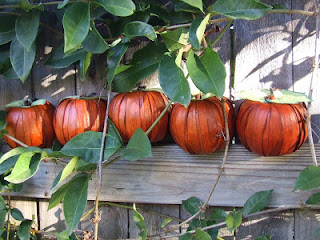
Another picture prompt this week:
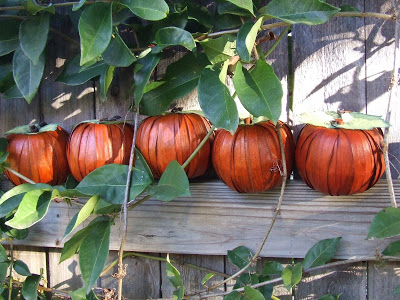
“I guess we’re the lucky ones, huh?”
“Ayup. After what they did to poor Fred, all we’re doing is sitting on top of this fence.”
“Do you think that Fred felt it when they stuck that knife in his head?”
“I don’t wanna think about it.”
“I can’t STOP thinking about it!”
A few minutes later….
“Do you think he felt it when they started scooping out his–”
“What did I JUST SAY!!!”
“Sorry.”
A few minutes later….
“Do our seeds really taste like chicken?”
“I hate you.”
