:: Want to buy an Uruk-Hai scimitar but you can’t think of why you might need such a thing? This woman has you covered. This may be the best thing I see all year. (Lots of other folks thought so…apparently this has shot through the Tumblrsphere like fire on a dry prairie.)
:: Those of us who grew up seeing lots of movies first via their teevee-edited versions will find this article (link fixed) a trip down funny-memory lane. Creative edits for swearing in movies! The very first one on the list tickles me especially, as I literally thought that was the actual line in the movie until just three or four years ago when we watched that particular movie on DVD as a family!
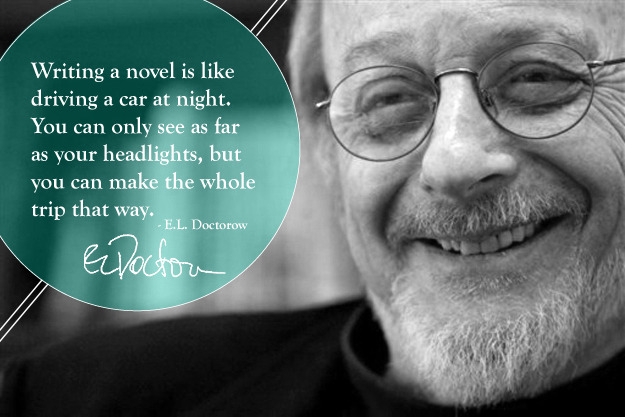
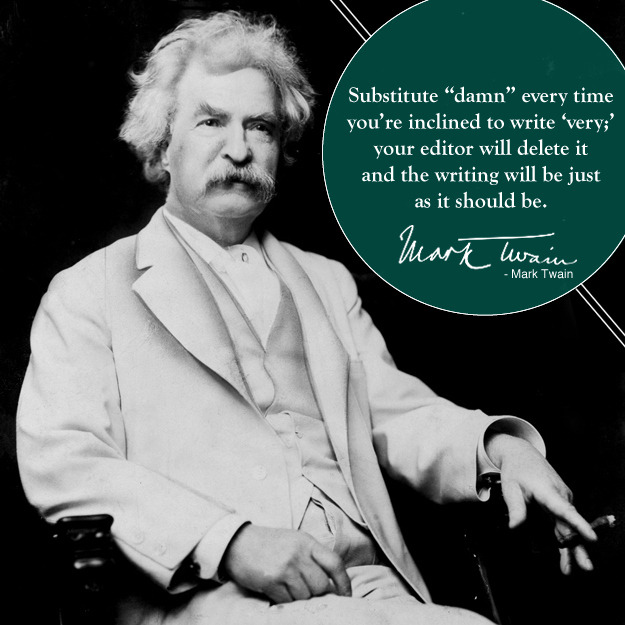
:: 30 Indispensable Writing Tips From Famous Authors. Oddly, I don’t see “Keep a list of the names of everyone who rejected you so can glory in their failure once you hit it big” anywhere on the list. Maybe I should delete that list….
I haven’t done this in a while, and it’s something I do sporadically, so…it’s Delurking Week here on Byzantium’s Shores! For this week and this week only (unless I get flooded with spam and have to cut things short), I’m changing the comment settings to allow anonymous commenting. In order to hopefully keep the spam down, I’m turning back on the annoying CAPTCHAs. Don’t worry, after this week I’ll return to normal commenting procedure, which will mean deactivating the CAPTCHAs and again requiring Google or OpenID accounts. But for now, if you’re a lurker here, say something! Just a quick “Hello from Kalamazoo!” or whatever.
(Just don’t go into politics, please. I’m trying to avoid politics like the plague.)
I have replaced the ‘100 Things About Me’ post with an actual page on the site. It’s in the sidebar at the top, or here, for those who don’t like to look for stuff. Huzzah!
I’m not all about Romanticism and what’s traditionally taken for ‘beauty’ in music. I am also fascinated by a lot of what has transpired in classical music since the early-20th century breakdown in tonality. I’m talking about music that explores the very boundaries of what can even be considered structured, formal music in the first place; music that eschews standard concepts of melody and harmony. Thus, the music of today’s composer, the modern Hungarian master Gyorgi Ligeti.
Like many people, I first heard Ligeti’s music in the context of the film 2001: A Space Odyssey, in which Stanley Kubrick used carefully-chosen classical works to score his film in amazing ways.
(ASIDE: As amazing and great as the results of Kubrick’s music selections for 2001 are, the processes by which Kubrick attained those results were…well, let’s just say it outright. He was a dick. First, he actually brought in composer Alex North — one of the great film composers, who wrote the magnificent score to Spartacus, for example — to composer an original score for the movie. But then Kubrick decided to abandon North’s work in favor of his ‘selections from classical music’ notion. Now, rejected scores are not at all unheard of in the film music world, but generally speaking, composers are told when their work is being replaced. Not so Alex North; he had no idea his music has been dumped until he saw the movie in release. And in the case of Ligeti, Kubrick used the music without getting full permission, which prompted Ligeti to sue for copyright infringement.
Oddly, in my years of participating in various film music forums online, I would often come across people who genuinely believe that the resulting film would have been better with North’s score instead of Kubrick’s now-iconic classical selections. This utterly baffles me, but film music fans are a baffling bunch.)
The piece below, Atmospheres, has no melody, no theme, and no rhythm, either. It is simply a series of sonic masses that shift and slide into one another, almost like a cacophonous sonic kaleidoscope. A look at a page from the score shows what Ligeti is up to:
The notation at the bottom of the page makes things clear: No melodic line is to come through. There is to be no hint, no intimation no matter how brief, of any melody at all in this work. As this recent article makes clear, performing this work has its own difficulties, for how do you conduct a work with no melodies, rhythms, or any of the usual things which mark the passage of musical time?
What this sort of music looks like on paper is no less peculiar. Where other composers evoke such complexity by offering only vague instructions to their performers, Ligeti took the opposite approach, writing out separate, detailed parts for each member of a large orchestra.
The result? Page after page of musical notation so dense, no human conductor — not even music director laureate Christoph von Dohnanyi, who’ll present the work here next month — can truly process it all in the act of performance.
“The conductor can only shape it,” Fitch said. “There’s no way to cue every single person . . .
“In the end, it should sound like a placid surface with tremendous activity going on underneath.”
And yet, for all that, I don’t find Atmospheres hard to listen to. As music, it’s like being in the midst of a crowd of people and just attending to the sounds they make; at times it can get to the point where you know that conversations are taking place, but you can’t even pick out a single word, so thoroughly do all the voices blend together. The music sounds, at first, like some kind of stereotypical ‘scary mood music’, but I find that the longer I listen to this work, the farther I get into it, the less I perceive a sensation of fear at all. Ultimately I don’t think I can ascribe a particular mood to this work at all: it just is.
Here is Gyorgi Ligeti’s Atmospheres.
On Monday: You know, I have no idea. There are a lot of M composers to choose from!
(Afternote: Did you ever notice how every single beverage in the world has its own sound when it’s being poured? Interesting how the ingredients of a given beverage impact things like the acoustics of its pouring.)
Vasili Kalinnikov is mostly unknown these days, mainly because he was really only starting to show his potential when he tragically died of tuberculosis when he was only 35 years of age. Still, a few of his works are still heard today, with the most familiar (if ‘familiar’ is even a word that can be applied to him) to his Symphony No. 1 in G minor, which is the work on tap today.
This is one of my favorite of all Russian symphonies, because it just oozes “Russian symphony-ness”. Yes, that’s a term I just made up, but if you know what I’m talking about, then you get it! Everything you’d ever want in a Russian symphony can be found here: gorgeously lyrical melodies (including one that’s incredibly ear-wormy), a cyclic structure that sees melodic material from previous movements referenced and recast, terrific orchestration that uses the full complement of the modern orchestra and yet is very clear and precisely classical in its application, and most of all, that wonderful Russian fatalistic brooding that is yet somehow not entirely divorced from optimism. It’s not a challenging symphony, but it is a rewarding one, sure-footed and confident; it’s good enough that I think it should be heard a lot more than it is, and it’s good enough that I wonder what Kalinnikov’s later symphonies, say his fifth and sixth ones, might have been like had he lived to write past the second one.
OK, as I write this it’s late and I don’t want to miss the day, so here’s the Symphony No 1 by Kalinnikov. I will update this post tomorrow with a few more annotations, though, so tune back in!
UPDATE 4-13-13: OK, here are a few annotations. The symphony’s introductory passage sets the brooding mood quire nicely, and as you listen, make careful note of that first theme, because it will recur at the beginning of the fourth movement. Of particular note in the first movement, however, is the second theme (which in this recording comes at about the 1:07 mark). This lyrical tune, sung first by the cellos, sounds nice at first, but I have found over the years that after the movement is done, that melody lodges in the brain like few others. There then follows a third figure, similar to the first, that leads the movement into the development passage (after a repeat).
The second movement, the slow movement, is utterly lovely. I don’t like to indulge visual metaphors much when I discuss music, but the second movement suggests to me the lovely delicacy and fragility of something like, oh, a painted egg. Again, make careful note of that main melody, heard first by the oboes and the violins(at 14:11) and then echoed immediately by the lower strings, because that very melody will return as well in the last movement.
The third movement is a finely constructed scherzo, but the last movement is where everything comes together. After a reprise of the symphony’s opening bars, Kalinnikov launches into a brisk tune that almost has a folk-dance character (27:52) which almost immediately gives way to a more lyrical, but also dance-like, tune (28:09). And then, at 29:49, we hear that wonderful lyric theme from the first movement again, before being plunged right back into the dance. All this interweaves for a while, until Kalinnikov suddenly gets everything building up to the 33:20 mark, when the brass section starts to peal out that delicate, gossamer theme from the slow movement! No more ‘fragile painted egg’; instead now that same melody has all the force of great church bells. Things calm back down, as if Kalinnikov senses that we’re not quite ready for the church bells, so he builds again, starting at 34:16, but this time to gathering energy is undeniable, and again we crash into that slow movement theme, again pealed out by the brass, but if anything it’s even more bell-like (35:01).
Musical moments like the closing pages of the Kalinnikov Symphony No. 1 are why I love the Russian masters so much: the best of them seem to have an internal sense of dramatic pacing that allows them to close things out in the most satisfying of ways. This is a great symphony!
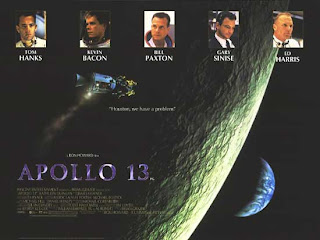
It’s been way too long since I watched this movie. I love this little scene, early in the film, after the party at Jim Lovell’s house has ended and the first moonwalk in history is over. Jim and his wife, Marilyn, are in the backyard.
MARILYN LOVELL: You’re drunk, Lovell.
JIM LOVELL: Yeah, I’m not used to the Champagne.
MARILYN LOVELL: Me neither. I can’t deal with cleaning up. Let’s sell the house.
JIM LOVELL: All right. Let’s sell the house. They’re back inside now, looking up at us. Ain’t that something?
MARILYN LOVELL: I bet Jenny Armstrong doesn’t get a wink of sleep tonight. Ah, when you were on the far side on Eight, I didn’t sleep at all. I just vacuumed over and over again.
JIM LOVELL: Christopher Columbus, Charles Lindbergh and Neil Armstrong. (laughs) Neil Armstrong! From now on we’ll live in the world when man has walked on the Moon. It’s not a miracle. We just decided to go. Apollo 8 – we were so close. Just sixty nautical miles down and… Mmm. It was like just step out, and walk on the face of it. I wanna go back there.
That is so true: “It’s not a miracle. We just decided to go.”
It’s amazing to me what we as a species are capable of when we somehow manage to get ourselves on the same page and decide, “We want to do that.” The Moon’s still there. Mars is there. All our planets are there. The stars are there. When are we going to decide to go?
Wow…I’m kind of late to the game with today’s post. Sorry, but I just had a really unmotivated evening. It happens. Anyway, here we go, with another piece that I’ve never heard before, but by a composer that I have: the always-fascinating Czech composer Leoš Janáček. Janáček lived from 1854 to 1928, and while generally considered Czech, he was more properly a Moravian, coming from one of those European ethnic regions that has never had a nation of its own. Moravian folk music forms the backbone of Janáček’s musical output, perhaps even more strongly than Czech music forms the backbone of Dvorak’s.
Living as he did during the end of Romanticism and the beginning of Modernism, Janáček turns out to be one of those fascinating composers whose work seems to straddle the lines between a lot of different categories. As such, his music always has a very fresh sound, like it is at once old and new. The piece I’m using today was first performed just 11 years after yesterday’s Symphony by Andres Isasi, but it sounds so much more fresh and wonderful and exciting and new. Harmonically he is not willing to completely break with tonality as the Schoenbergs and Weberns of the world were in the process of doing, but neither was he interested in continuing the traditions of Romanticism. And he wasn’t interested much in an academic approach to music, either, choosing instead to focus on the folk character of his material and to compose it in ways that are so different from anything else being written at the time. His music is full of passages that churn and heave, with soaring segments of melody rising above ostinati that create an almost hypnotic effect.
Today’s work is Janáček’s Sinfonietta. It is scored for a full orchestra, but with the trumpet section expanded to fourteen trumpets. (Normally, a fully orchestrated work for an entire orchestra will use four trumpets.) As a former trumpet player, this is fascinating and appealing to me just on an instinctive level. But the orchestration is fascinating and subtle, and the piece is on the whole a wonderful and short (about twenty-five minutes long) exercise in musical drama. In his book The Essential Canon of Classical Music, David Dubal says that the Sinfonietta, “once heard, cannot be forgotten”. I’d agree with that. I listened to this work for the first time yesterday, and it’s been on my mind ever since.
This is a wonderful live performance, by the way. As always, pay close attention to the trumpet players. They are the key to everything in music!
UPDATE: Just listened to the piece again, and I must say, the applause from this audience seems awfully tepid in light of the quality of the performance they have just heard. What gives!