With delurking week pretty much over, I’m resetting comments so anonymous comments are no longer allowed. This is purely an anti-spam thing.
Resuming life as we know it….


The official site of Kelly Sedinger: Reader, writer, photographer, and dreamer
Time to disappear again down the photographic rabbit hole!
Let’s get the Flummoxing Felines out of the way first, shall we?






And then there’s some recent food and such. The Daughter nagged me into deep dish pizza (I already don’t make it all that often because it’s fairly labor-intensive, and I make it even less now that The Wife is on a gluten-free diet and this is a virtual memorial statue to gluten):


Ramen with fried egg. I only have Ramen a few times a year, because of the salt. But I do love it once in a great while. (Hey, you know what makes Ramen really awesome? Having it with some buttered rye crispbread on the side. You dip the rye crisp into the broth and it’s heavenly. That’s a combo I learned from my father, way way way back when. To really be emotionally authentic, it has to be the round rye crisp, with the hole in the middle. It comes wrapped in paper and you break off the piece you want. Not the nicely-cut rectangular rye crisp! That gives you the right flavor, but shapes matter, folks!)

I really love sugar-sweetened Dr. Pepper. It’s pricey (almost four bucks for a four-pack), but it’s a bit of a luxury. Just awesome stuff, though.

Labels on Asian food products make me happy.

The coming of fall means the reappearance of candy that isn’t easy to find other times of year, like Oh Henry bars.

The Daughter also confronted her first day of tenth grade with the requisite enthusiasm.

Fall is coming quickly! September was, like the months before it, cooler than usual (after an odd burst of hot weather to start the month). As the weather starts to turn cool, my fascination with the sky usually fires up a bit. I love the sky, and my normal shift at work starts each day when the sky is often doing some amazing things….






I don’t want the earth to feel neglected as I look up at the sky a lot, so here’s the ground.

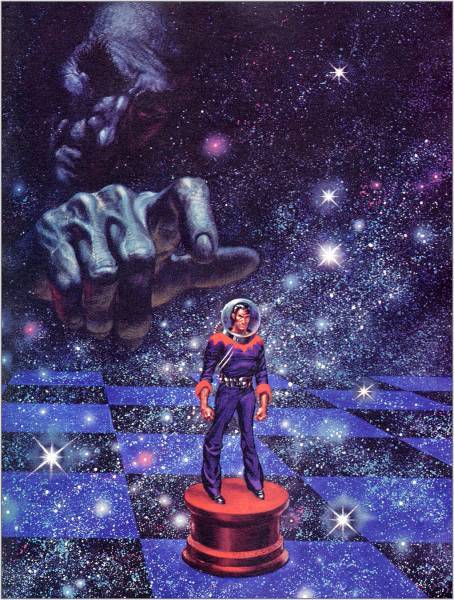
I continue to do stick-figure doodles in my occasional free time at work. I make no claims to the genius of xkcd, but it’s a good way to make a few little points here and there. For instance, there’s a trope that shows up in fantastic fiction now and again that irritates the hell out of me:

(I’m looking at you, The Dark is Rising sequence!)
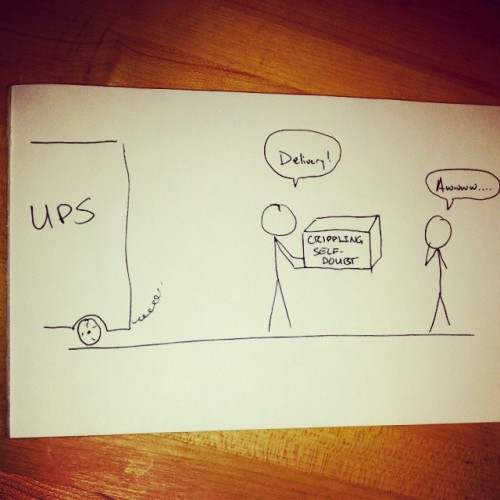
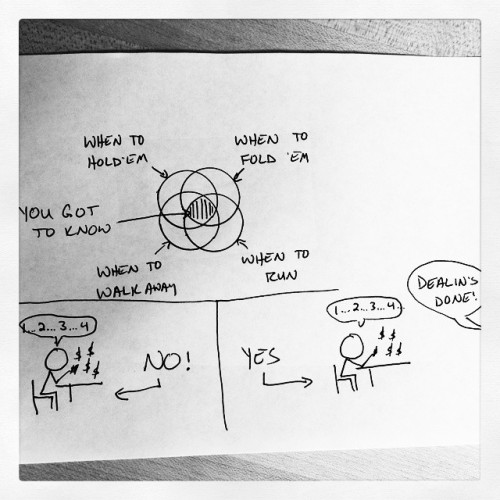
Diagramming the wisdom of Kenny Rogers:
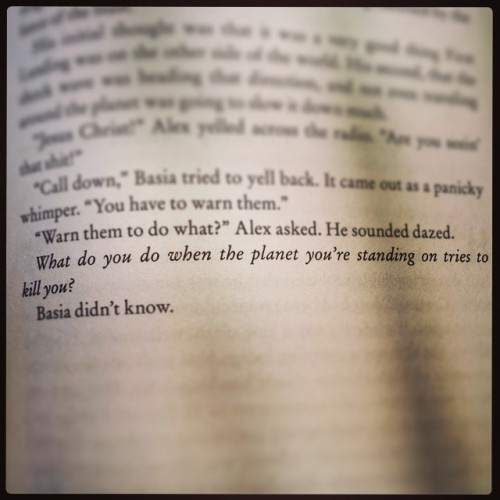
I’ll be posting a review at some point, but this one sentence perfectly sums up my love of science fiction in general and my admiration for the series The Expanse in particular:
Patience, grasshopper!

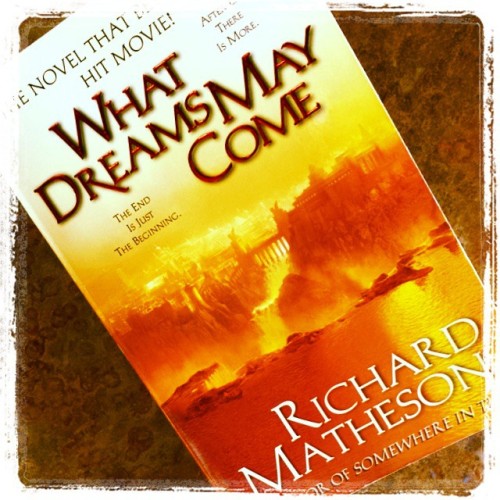
I didn’t care for this book:
Our next door neighbors are doing construction on their house. Looks like they’re adding on so their elderly dad or dad-in-law can move in with them. It started with the removal of a couple of trees that would have encroached upon their house’s expanded footprint. Which meant…lumberjacks!
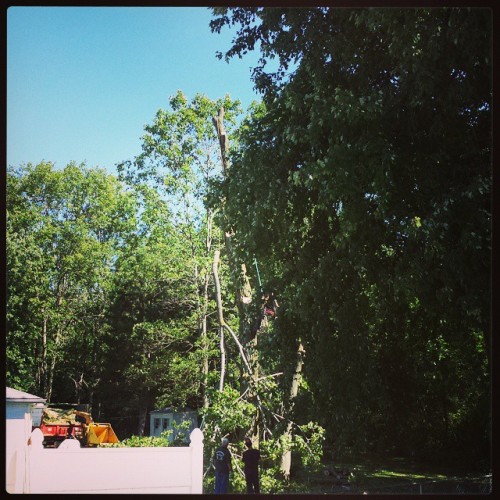
And let me tell you, folks, it’s always fun to listen to guys like this talk. No swearing, just a funny run of comment through the job. At one point, a fellow who has climbed thirty feet up and is cutting branches off shouts down, “Uh, I think I cut the wrong thing!” Whoops.
My next car will likely be something bigger than my current Buick Century sedan (although not monstrously huge, just a bit bigger). Still, if I had money right now, I’d find this jalopy enticing. It’s sitting at a VW dealership just down the road.

I sorted my washers and bolts. Actually, I didn’t sort all my bolts, just the quarter-inch, twenty-count thread ones, because that’s what I use the most at work. This is exciting shit, folks.


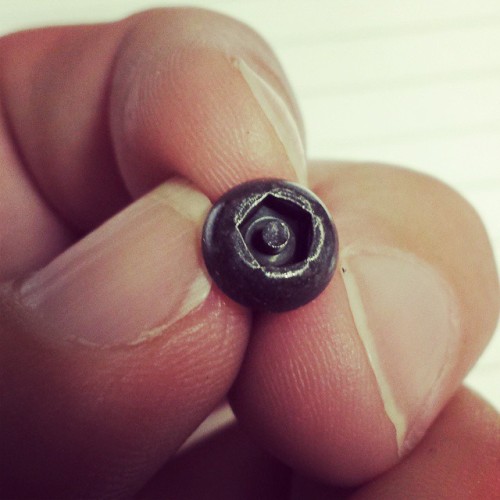
Here’s a screw I ran up against at work. I have a set of bits for tamper-resistant screws, which are basically normal screws with really oddball heads so they’re tamper-resistant simply by virtue that very few people own the drivers to budge them. This thing was even too obscure for me, though. I got it off using needle-nosed locking pliers and a lot of salty language. I don’t recall what it was on, but there was nothing about the gizmo that screamed out “Holy shit, we gotta keep the riffraff from removing this screw! Grab that center-pegged pentagon screw! That’ll stop ’em!”
I knocked off one major project at New Casa Jaquandor: replacing the dining room light fixture with something better. The old fixture was a perfectly nice fixture, but it was misplaced. It wasn’t well-suited for hanging above a dining table, being a low-hanging fixture with a single halogen lamp that shone straight down, casting a fairly small pool of light on the table instead of illuminating the room. No such problem with the new fixture, which is (a) awesome, and (b) so bright that the next big project will be converting the existing switch to a dimmer.

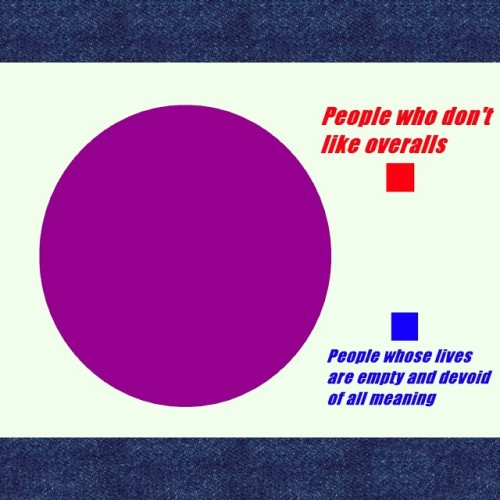
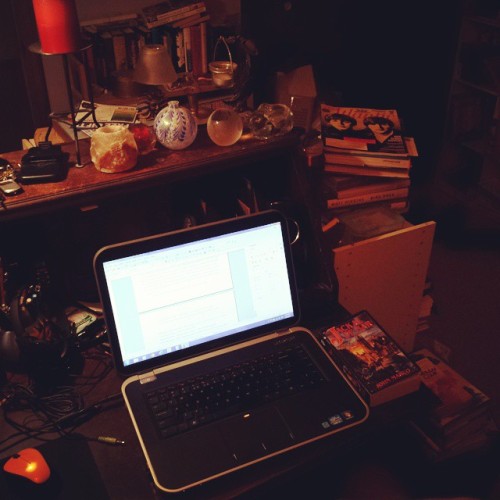
And, of course, there’s the usual stuff of my life…writing, overalls, writing in overalls, et cetera and so forth.













A reader asks a good question:
How much should a 10-year-old trumpet player practice daily?
As in all such things, it depends. Such guidance should really be given with the advice of the kid’s music teacher, who knows a lot better than I what kinds of material are being practiced, what skill level the kid has reached at this point, and so on.
For instance, 10 years old put a kid roughly in the area of 5th grade, which likely means they very likely have no more than one year of trumpet playing under their belt. That’s not a lot. If they started in 4th grade and have been playing a year, then twenty minutes a day is probably reasonable. If they’re just getting started this year, then twenty minutes a day is probably more of a goal to reach by the end of the year than a perfect starting point; for beginners, fifteen minutes is probably a good starting point. I would try to get to twenty minutes by the end of the year, and then try to reach 30 minutes a day by the time they’ve reached junior high. If they’re still playing in high school, and if the kid is showing real interest in playing, then the target should be an hour a day. And all this might well be tossed out if it turns out that the kid has some serious passion for music, because then they’ll want to practice more than any arbitrary goal anyway.
Studying a musical instrument is something that requires discipline, but it also requires motivation. It’s easy for practice, especially for beginners, to settle into a drudgery that’s just something to get through as quickly as possible. For most kids, music lessons start as a social thing, in school, as part of a band; the act of sitting in a room by oneself “practicing” isn’t really something that a 10 year old kid has a great deal of experience with, so it’s hard for them to get the habits down, and learn how to practice. My own experience was that I spent the better part of a year or two just flailing around, not really practicing much, until teachers and my older sister took some time and showed me how to practice. Giving a kid a piece of music and saying “Work on this” is well and good, but if the kid doesn’t know how to work on it, then practice time becomes a boring exercise in playing through a piece badly a few times and then putting the horn back in the case.
I had a teacher once who had me working on some concerto or other — maybe the Haydn, maybe the Arutunian — and he said to me, “You can play this concerto just as well as Maurice Andre can. (Maurice Andre was one of the greatest trumpet players of all time.) You can play every note just as cleanly and precisely as he can. You know what the only difference is? He can do it faster than you can.” This teacher taught me to slow a piece down to the point where I could play it perfectly, even if that meant slowing it down so much that it was unrecognizable. Then, he said, gradually increase the speed. If you find you can’t play it perfectly at a certain speed, back it off again and work at it until you can. Eventually you get it so you can play it up to tempo. (And at the same time, this process develops all the various skills along the way so the next piece won’t take so long to get to tempo.) That’s what I mean by teaching how to practice. This guy, Mr. Rudgers at the Bristol Hills Music Camp, showed me a good way to work at a piece. It helped.
Another thing is that you never know if, or when, the motivation is suddenly going to strike. A kid might frankly suck at the trumpet for two, maybe even three, whole years before they wake up one morning and decide that they’d rather not suck anymore, or that Wow, that other kid is really good and hell, I can be just as good as that kid if I work at this and hey, maybe practicing isn’t so bad in the first place. I know that can happen, because that’s the way it was with me: I was a shitty trumpet player and got made fun of relentlessly by the other kids in band because I was shitty until I decided “OK, I am now going to work on not being shitty.” That’s not a decision you can make for your kid. Eventually everybody decides they’re going to be good at something. If it’s music, great. If not, then at least they’ll hopefully learn enough to have a greater appreciation for music in the future. And besides, a person can be passionate about more than one thing. My active life in music is long over, and occasionally that’s a source of rare regret for me, but had I stayed in music, it well may be that a couple of princesses never take to the stars. Who knows.
I’d also suggest that parents should not treat practice time as a daily home recital. All the parent should really do is enforce the agreed-upon duration of the practice session, and that’s about it. Unless you’re a musician yourself, don’t say anything, other than an occasional “Hey, I can hear that your sound is getting a lot better!” Do not say anything like “Gee, Timmy, that one piece you played sounds like you need to work a lot more on it.” Believe me, Timmy knows, and shame is not the emotion you want Timmy carrying into his interactions with music. And even if you do know a lot about music…back off anyway. It’s really for the best. Parental expectation is also not a great thing to have to struggle with when you’re also trying to remember the fingerings for D-natural and A-flat. (Along these lines, unless the instrument is the piano and therefore the thing is wherever it is, let the kid practice in their room or some other room with a door. Don’t make them practice in the living room while you’re there paying bills or watching the evening news or making dinner in the adjoining kitchen. Practicing should not be done with an audience, and the only reason practicing should be heard by parents at all is to know that it’s getting done.)
Let’s see, what else? Oh, yeah — when I say “twenty minutes a day” or “an hour a day”, I don’t mean each and every day. Practicing seven days a week isn’t wise, in my opinion. Now, passion may arise and then the kid will practice every day because they love playing, but even then, I’m of the view that a day off is good. It’s good mentally, for what I hope are obvious reasons, but it’s also good physically. Playing an instrument involves the use of muscles, and in quite a few cases (especially among the wind instruments), the muscle use is strenuous indeed. If you don’t believe me, watch a great trumpet player sometime, or a horn player, or an oboe player, or any instrument. Making air vibrate the way it’s supposed to inside a wind instrument requires making the muscles of one’s face and neck do things that they don’t normally do. Those muscles are collectively referred to by the word embouchure, and like all such muscle groups, they can be overstressed, injured through misuse, and worn out. The effects of a hard practice session or rehearsal on a trumpet player’s embouchure are similar to the effects on a weight-lifter’s muscles after a lifting session, so for the exact same reason, wind players should take a day off here and there, or if they do play, it should be something low-stress, like long tones in the low register. That’s more the equivalent of stretching than exerting. I always found, though, that after a week of playing several hours a day (between group rehearsals and practice sessions), taking a day to not play at all (often Saturdays while I was in college) made me a lot stronger when I played again on Sunday.
For a 10-year-old, it’s probably best to set a daily time as practice time, as much as that’s possible. Eventually it will hopefully become sufficiently ingrained that they’ll practice on their own, but to start with, the expectation that every day at, say, 5:30 they are to go practice for their fifteen or twenty minutes will help. Maybe let them not practice on Fridays or Saturdays, or some other weekday if they’re on a soccer team or something like that.
And finally, maybe try not calling it practice. I once knew a drummer who said, “I don’t practice. I play.” The word “practice” just has the sound of required daily boring routine. Saying “Hey, Timmy, it’s 5:30! You need to go play your trumpet for a while!” simply sounds better than “Hey, Timmy, it’s 5:30, you need to practice.” Practicing sounds like what you do until you’re good enough to play. Maybe we’d have better luck with our kids and their music lessons if we enforced the idea that it’s all an act of play. I have a notion that we call it practice because in that way we can trick our ever-so-Puritan American minds that we’re not actually wasting time learning to play music, and I say, the hell with that. It’s all play. Playing is good.
So let your kid play.


Well, thank God that’s over.
Seriously, this was just a terrible season of MasterChef. There were some fun moments and some contestants I liked enormously, but as the season ground on, it really took on an air of relentlessly shuffling toward a preordained conclusion: the coronation of Courtney. That’s pretty much exactly what happened.
Look, I wasn’t there and obviously didn’t taste the food, so it’s entirely possible that Courtney really did get through the entire season of MasterChef competition without ever making a single misstep. But the constant adoration piled upon her by the judges, coupled with her unimaginably irritating displays of self-love, got more and more annoying with each successive episode, culminating in last night’s finale. Joe Bastianich, of all people, turned in the most incoherent commentary of praise for Courtney of the season when he praised a dessert that Gordon Ramsay panned, saying that her dish of meringue cookies with some sauce and cherries with a bit of salt added “pushed the limits of a dessert”. Umm…OK, Joe. The whole thing reeked of desperation on Joe’s part to continue the season-long tongue-bath of the most irritating contestant in the show’s history. (And that’s saying something. You know I love you, Joe, but ye Gods.)
Of course, none of that might have even come to pass had my favorite contestant, the borderline-manic Leslie, not mistaken salt for sugar in his final cake. Oops. (Although this confuses me — would a cup of salt instead of a cup of sugar result in a cake that one can chew thoughtfully and then swallow with a look of puzzlement, as Gordon Ramsay did? I’ve no idea, but it seems to me it should have resulted in a case of “GAHHH get this out of my mouth ptoooie!”
Anyway, as I say, thank God that’s over. This does mean, however, that we’re going to see Courtney sporting her insufferable Dolores Umbridge-in-her-twenties act at least once next season, so there’s an episode I’ll make sure to attend with lots of reading material. I’d also like to see the show get away from the team competitions, particularly the ones where they run a kitchen someplace. I watch Hell’s Kitchen to see chefs trying to run a kitchen; I don’t care if any of these “home cooks” can run a kitchen. But if they’re going to have team competitions, I’d like the losing captain to not be able to save themselves from elimination. That’s pretty bogus, and it did provide the moment the cemented Courtney as an asshole in my opinion this year, when she saved herself after helming the losing team; she said something like, “Well, our problem was clearly not the fine leadership I provided, so I’m saving myself.” Ugh.
So anyway, there’s that. Not the best year for MasterChef, alas. Not every season can have the greatness that is Monti Carlo, but still — did I have to endure the cooking competition show’s answer to Boston Rob?
(Don’t forget to delurk, people! Say hello! Say something!)

I haven’t done this in a while, so here goes: it’s Delurking Week! Say something. For the next few days I’ll open things up to anonymous comments (although if spammers start swarming, I may need to cut things off early). I’ll still leave the moderation on and CAPTCHA thingie on, though. One can’t be too careful.
Say hello!
(No politics, please — just spread some good cheer. Thanks!)
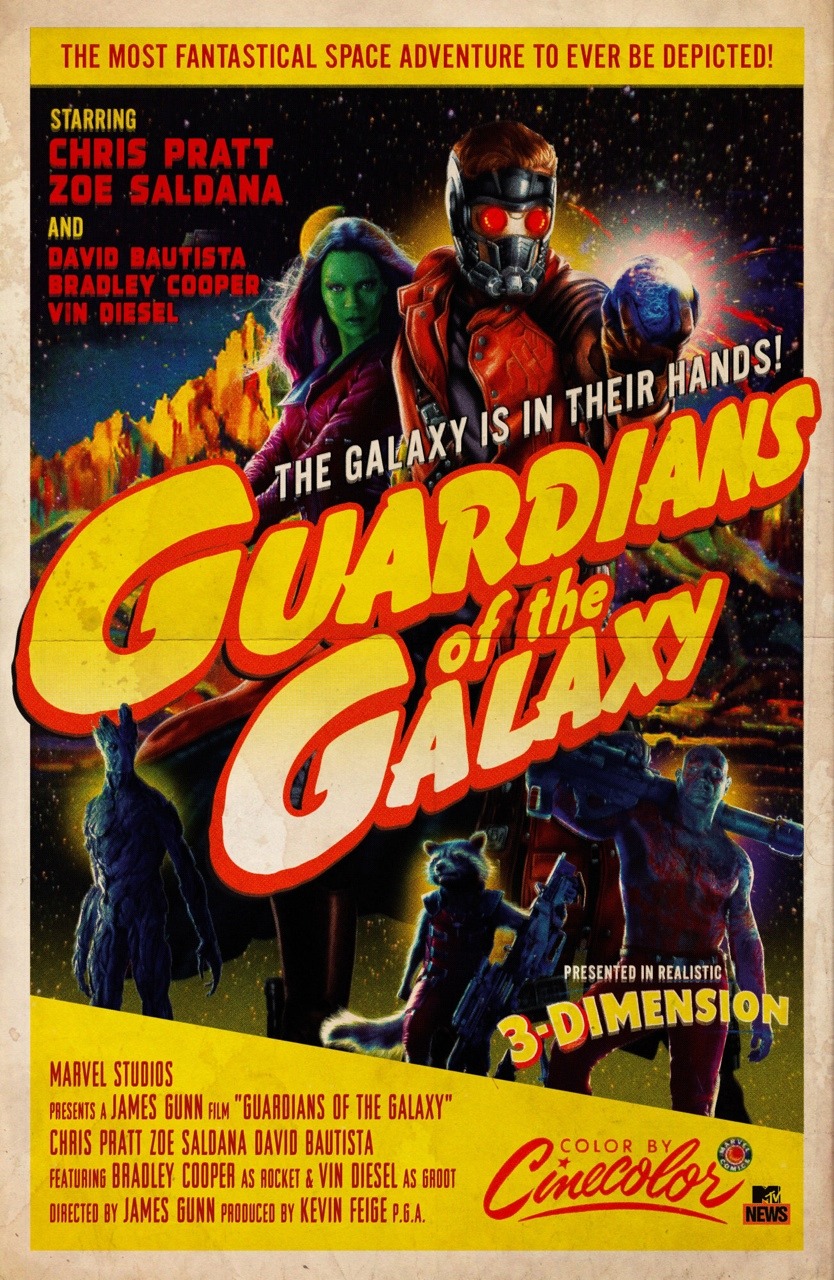
If I were to offer a capsule review of Guardians of the Galaxy, it would be this: It’s the first movie that I have seen twice in a theater since Star Wars Episode III: Revenge of the Sith. That means something, folks. I don’t get to the movies very often anymore, because it’s become a significant enough expense that it has to be something I most definitely want to see. Yes, there have been movies I’ve wanted to see again, but until now, none of them actually managed to get me to again.
Guardians of the Galaxy did.
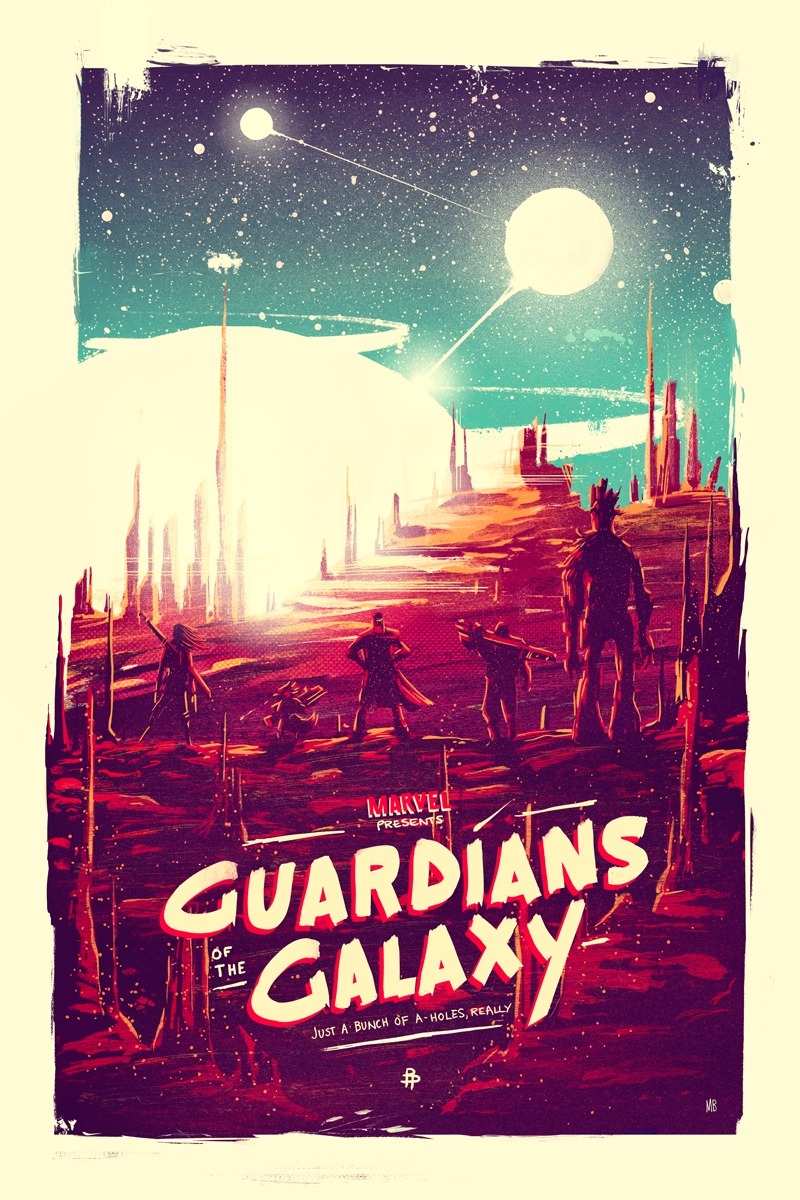
Like many a person who went to see this movie, I never really heard of the Guardians of the Galaxy until I learned that this movie was in production. I did read some of the comics on a catch-up basis, and I enjoyed them, although I admit that I was a bit confused as to how this property would translate to the screen, especially being a part of the Marvel Cinematic Universe.
OK, for those out there not up on this jargon at all, here’s a brief explanation. Marvel Comics, like DC Comics before it, had a bunch of successful comics featuring popular superheroes. They quickly realized that they could make their entire line more successful if they had their superheroes team up with one another on occasion, which meant therefore that the Fantastic Four existed in the same “world” as Spider Man. Over time, the Marvel Universe got really big, with lots of heroes and hero-teams doing heroic stuff all over the place.
Interestingly, some of these titles had their own internal “mythologies” that were also part of the larger mythology, and there were differences in focus, too. Spider Man pretty much stuck to New York City most of the time, but then you had the X-Men occasionally going off to space, and the Fantastic Four facing giant cosmic threats, and so on. The Marvel Cinematic Universe is a filmed approach to this same notion, albeit with scaled down numbers of characters. Here, too, you have different things going on: Iron Man seems to exist in the techno-spy-thriller arena, whereas with Thor we have a hybrid of Norse myth and space opera. And with Guardians of the Galaxy, that’s straight-up space opera.
So that’s why I gravitated to Guardians of the Galaxy, obviously: because it’s a space opera, straight-up. Aliens, spaceships, ray guns, lost artifacts on deserted planets, space prisons, a bad guy who apparently sits on a rock in space as he plans, a peaceful happy planet under threat of annihilation by a villainous alien who has found a cataclysmic weapon. To quote the movie’s talking raccoon, “Oh, yeah.”
And yes, this is a movie that sends you out into the night quoting a talking raccoon.

When I was reading comics, the X-Men titles were written by Chris Claremont, who was good at creating a big sense of scale with very high stakes in his stories. Guardians of the Galaxy, as a franchise and now as a movie, seems to me best described as a good Chris Claremont story…as directed by Chuck Jones. Guardians of the Galaxy is full of heart and good cheer, creating a cast of flawed characters who have their own reasons for feeling like outcasts, and who then have to come together in order to save everybody else. What this film does in terms of its characters is a pretty amazing achievement.
The tone is struck early on. Before we even get the flipping-comic-pages Marvel logo, there’s a scene in which a ten-year-old boy has to say goodbye to his dying mother minutes before a spaceship comes to whisk him away. After that we cut to this same kid, now an adult, landing on a mysterious, damp, and rocky planet. He’s clearly looking for something, but before he does, he has one bit of business to attend to. He puts on a pair of earphones from 1985, clips an old Walkman to his belt, presses “play”, and as the strains of “Come and Get Your Love” by Redbone take over, he enters the cave in a sequence that feels partially reminiscent of the opening sequence of Raiders of the Lost Ark, only our hero, Peter Quill (who reasons we won’t find out until the very end of the movie also calls himself “Starlord”) seeks out the artifact he’s been hired to find. Only he does it in dance-step to the song, kicking rodents out of the way to the beat and then grabbing one to use as a prop microphone. That’s what kind of movie this is: a space opera about a thieving outlaw whose emotional center is the mixtape his mother gave him years before.

Guardians of the Galaxy does very little exposition that isn’t part of something else happening, which is part of how it seems shorter than it is. The film has very few infodumps, and really, it only tells you exactly what you need to know to understand what’s going on. Other than that, it’s illuminating to look back at the end and realize just how much the filmmakers have held back. Is Groot’s species ever named? His planet of origin? Rocket cries that he didn’t ask to “be made”, but who made him? We’re never told. Do we need to be? Probably not, because who hasn’t known what it’s like to carry around a burden that’s all your own, that nobody else understands?
A lesser movie might have given long flashbacks to some, or all, of the characters. We might have seen Peter Quill growing up on Yondu’s ship. We might have seen something of a raccoon being made sentient and, therefore, a freak. We might have seen where Groot comes from, and we might have seen Drax’s family being killed. We don’t see any of those things, because the film’s script keeps its eyes on the prize the whole way. That’s not to say the story isn’t complex, because it is, but the story is very tightly constructed. Each thing leads logically to the next thing that happens, and each character’s motivations are mostly clear. There is some muddiness, mainly in the villains’ backgrounds and motivations. No one, in any of the Marvelverse films, has yet asked the million dollar question, “What does Thanos want with all the Infinity Stones?” I imagine we’ll get there eventually.

What this film has to do, along with all the other Marvelverse movies, is set itself into that larger universe where this smaller story is a part of something much bigger that’s going on. The Marvelverse films all seem to be slowly laying the foundation for an eventual cataclysmic encounter with Thanos, and I wonder how that’s going to go – is there a Really Big Movie slated for, say, 2019, in which everybody shows up? I suppose we’ll see. For now, we’ve got this one. One thing that was always so great about Marvel comics is that they always acknowledged, at their best, that they took place in a larger world, with which the main characters or heroes had to interact. That was always what informed their desire to do good, motivating all the world-saving they did. And there is a larger world in this movie, with real lives that intersect with those of our main heroes.
What I ultimately liked most about Guardians is that it tells a story depicting a cheerful world. The main planetary setting is bright and sunny, and even some of the other “darker” locations aren’t entirely dystopic horror shows. This movie, along with the two recent Star Trek films (even with their faults) make me wonder, and hope, if a shift toward a brighter tone of storytelling may be in the offing.

Guardians of the Galaxy is ultimately, for me, a movie that gets everything just about completely right. It’s hard for me to find a real flaw in it, at least, anything that really stands out. I love how the team comes together – the criminals that get arrested together end up staying together out of sheer desperation, only admitting toward the end that there’s any kind of factor involving liking one another. Peter Quill becomes a leader without ever having any Big Moment In Which He Confronts His Own Darker Nature, which I appreciate. That’s what this movie does so well: it’s a nearly perfect example of what might be the most often-cited bit of advice for writers.
Show, don’t tell.
Guardians of the Galaxy shows things. It doesn’t slam on the brakes to tell you things.



A few random thoughts:
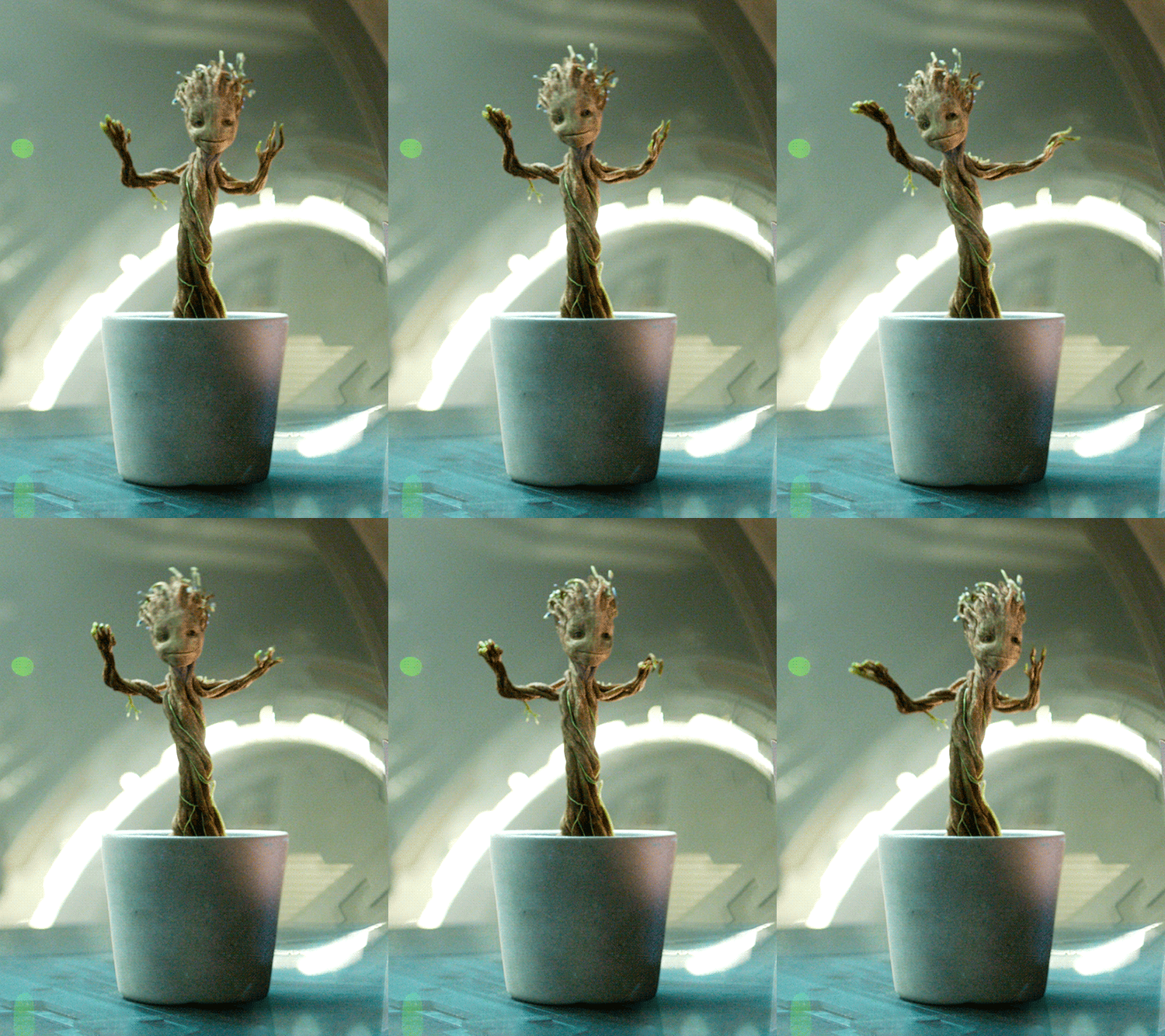
:: People who whine about “soulless CGI effects” whilst pining for the good old days of rubber costumes and model spaceships really need to shut up after this film, which proves, I think, that effects themselves either have “soul” or don’t on the basis of the screenplay, and not the effects. The most emotional moments in this movie involve a purely digital character whose dialogue consists of just five words. From now on, if you want to talk about soulless CGI, there’s the door. Talk about soulless writing.

:: Space opera movies should be a visual treat, and this one is. It has a look all its own, with swirling clouds of space gas and ships with neat geometry.


:: There are a couple of scenes where Rocket responds to Groot as if he’s said something other than “I am Groot”, which makes me wonder – is this like a Han-and-Chewie thing, where Han can totally understand Chewie’s grunts? Is Groot actually saying things, or is Rocket just plugging in meaning where he sees fit? Interesting.
:: Tyler Bates’s score didn’t impress me the first time I heard it (before I saw the film), but when heard in the proper film order, with the classic rock songs mixed in, it becomes a very entertaining listen indeed. This isn’t great film music by any means, but it’s fun to hear. Those songs are perfectly chosen, by the way; each one hits the mood dead-on when it comes up in the movie. If you want to program a playlist for the score and songs in proper order, someone on the FSM boards figured this out. I knew there was a reason I still visit that site a couple times a week!
:: Great details abound in this movie. When the Guardians do their stereotypical “slow heroic walk down the corridor”, Gamora is yawning, Rocket is adjusting his nethers. Also, there are so many tiny character moments that add up to great stuff. Frequently these involve Rocket, such as when he throws a damp blanket on Drax’s self-pity, a favor which Drax returns at the end of the film when Rocket is suffering his own brand of heartbreak. And notice Rocket’s response: it’s like he’s never had his fur stroked at all, which he probably hasn’t. When Gamora starts to dance, it’s not a full-fledged dance, just a slight rhythmic swaying. And when Peter gives Yondu the orb, it’s interesting to me that Yondu waited as long as he did to see what was inside. Judging by his smile, he seems to have known – and not only that, he seems to be just a little bit pleased. Yondu is presented as some kind of father figure to Quill, and there’s something in his smile that says, “Yeah, that little shit turned out all right.”
:: Yondu’s pretty interesting on his own, and that’s something I always liked about the Marvel comics: the way the heroes could fight the villains one issue and have to team up with them the next. The line between hero and villain is more interesting when it’s moving around, isn’t it?
:: So where do the Guardians of the Galaxy go from here? In all honesty, I hope they stay where they are: out on the far-flung frontiers of the Marvel Universe, only having the briefest and most tangential contact with the rest of it, if any at all. It’s a big Galaxy, after all; somebody’s got to guard it!