Symphony Saturday

Brahms.

Johannes Brahms is one of the giant figures of late 19th-century music, and his symphonies are of sufficient import that they tend to fall into the “No classical music collection is complete without them” category. I personally consider them as such: they are amazing, tremendous works that look back to Mozart and Beethoven (and earlier) with their skillful handling of form; they combine moments of muscular defiance with heartfelt lyricism; they have moments that want to linger and other moments that propel the listener with such force that it feels as if Nature herself is taking a hand.

Brahms was, at heart, a classicist, and his music stands in high contrast with the other dominant school of thought in Western (and German) music at the time, the fiery Romanticism of Richard Wagner. Brahms and Wagner were rivals, and even though it was Wagner who “won out” by having the greatest influence on the history of music as it unfolded after both men were gone, Brahms has never been forgotten, and indeed, as the pendulum inevitably began to swing back the other way after Wagnerism began to give way, Brahms’s music found even greater acceptance.

Brahms himself was a troubled figure. He never married, and it’s almost certain this is because his lifelong love was actually Clara Schumann, wife of his good friend, composer Robert Schumann. Some of his music is deeply spiritual (particularly his German Requiem), but his known religious beliefs bordered on pure agnosticism. Brahms was musically conservative, and yet there are moments of his that sing with the voice of any of the Romantics, and in his works live the spirit of the Viennese woods that he loved deeply. He had a reputation for being a gruff and introverted man, and yet the friends he made were fiercely loyal and lifelong.

Brahms’s First Symphony, in C-minor, was one of the works he found most vexing in its composition. It took him over twenty years to compose it, from the first sketches to its premiere performance. Why did it take so long? Well, Brahms was a perfectionist (to the point that he personally destroyed some of his own works), and there was social pressure on him as well, applied by his musical contemporaries, for Brahms to basically pick up where Beethoven had left off. Even for a musical genius who would achieve his own place in the pantheon, this was probably too much to ask of the man, and the result was the tortured creation of a First Symphony that saw some material rejected and reused in a piano concerto, other material unused outright, and a twenty-year journey of composition. Did it pay off? Indeed it did, and not just because an over-excited colleague introduced the work, upon its long-awaited first performances, as “Beethoven’s Tenth”.

The symphony begins with a fascinating introduction as the high strings and winds pursue a melodic line that climbs upward, while the lower strings and winds undertake a line that marches downward (both doing this as the timpani pounds a relentless drumbeat in the background). The result is a work that starts with two lines pulling against one another, and a mood of tension from the opening bars. Leonard Bernstein used the opening bars of this symphony in a televised lecture on conducting and the issues that face the modern conductor, many years ago; these bars pose a number of such problems for the conductor to solve. The two lines have to be balanced so as the create the right sense of tension, the tempo must be right, and so on.

The first three movements of this Symphony are amazing, but for me, the real magic comes in the fourth and final movement. Again, an introduction that creates tension and mystery — but this time, suddenly, it’s as if (and I hate using metaphors like this in discussing music, but sometimes it can’t be helped) the clouds part. The horns sound a call that, according to Brahms, is an echo of an Alpine horn call he once heard while walking in the woods, and it certainly sounds like that. Then, after the horn call is finished, the high woodwinds repeat it (listen for the single trumpet in the background here, sounding just four descending notes, in a spot that Chicago Symphony trumpeter, and personal hero of mine, Adolph Herseth once claimed as his favorite spot in all of music). Then the low brass sounds a chorale theme that sounds almost liturgical in nature…and the movement’s main section begins, with a major-key melody whose resemblance to the famous “Ode to Joy” theme in Beethoven’s Ninth Symphony has inspired much comment over the years.

This last movement is one of the grandest movements of symphonic music that I know. It is a model of power and majesty, perfectly cast with not a single note out of place, and when the payoff finally arrives at the end — with the orchestra’s entire brass section sounding out the Chorale theme in a magnificent fortissimo — the effect is as overwhelming as any I know in music.

Here is the Symphony No. 1 in C-minor, by Johannes Brahms.


Next week: The sunniest of Brahms’s symphonies, the Symphony No. 2.

Share This Post

Your Daily Dose of Christmas

I’ve never been able to decide if I like “The Twelve Days of Christmas”, or if I find it really irritating. This version’s pretty fun, if you happen to have been a brass player at some point in your life.


Heck, you often can’t go wrong with comedic versions of “Twelve Days”…here’s a version Johnny Carson did (embedding is disabled, so you have to follow the link, and excuse the awful video as it’s a rip from an old VHS tape — sound is fine, though).

And then there’s this:


I include that mainly for the fact that they incorporate two of the “Chicken Dances” from Arrested Development.

And then, of course, the Muppets:

Share This Post

A Random Wednesday Conversation Starter

Where were you when you heard that John Lennon had been killed?

(For me, it was the next morning. I can’t remember if I heard it first on a Good Morning America kind of show or not, but I remember that my father drove me to school that morning for some reason, and that the news was on the radio. At the time, I honestly didn’t know anything at all about the Beatles.)

Share This Post

Question about Ads

Is anyone experiencing a problem with ads playing when I embed YouTube videos? Somehow my Google account has become eligible for “YouTube Red”, which means (among other things) that I never have to watch ads when I’m viewing YouTube while logged into my Google account, which is pretty much always. So I have no way of knowing what ads are running for people who are not logged in while watching the videos here.

I’m honestly not sure what I can do to solve this problem, but I would like to know if it is a distraction with a high annoyance factor.

Share This Post

Your First Draft is NOT Crap!!!

first draft

There seems to be a common school of thought among writers, at least so far as I’ve seen, that holds that your first draft of anything – story, novel, poem, whatever – is always bad. But I gotta be honest here, folks: I don’t like the idea that your first draft is crap. In fact, I dislike this notion with some intensity.

Actually…I hate it. Hate hate hate it.

Your first draft is not crap. It just isn’t. Is it “publishable”? Almost certainly not. Is it “ready”? Almost certainly not. But…is it crap?

Almost certainly not.

Look, when you write, you pour a lot of yourself out onto the page. How can that be “crap”? And even if there a lot of things that need fixing, either in terms of phrasing or pacing or characterization or any other concern one might have about a piece of writing…there’s still a lot that’s good, right? Unless you quite literally replace every word in your first draft during your edit, your first draft is not “crap”. Neither is it “junk”, or “bad”.

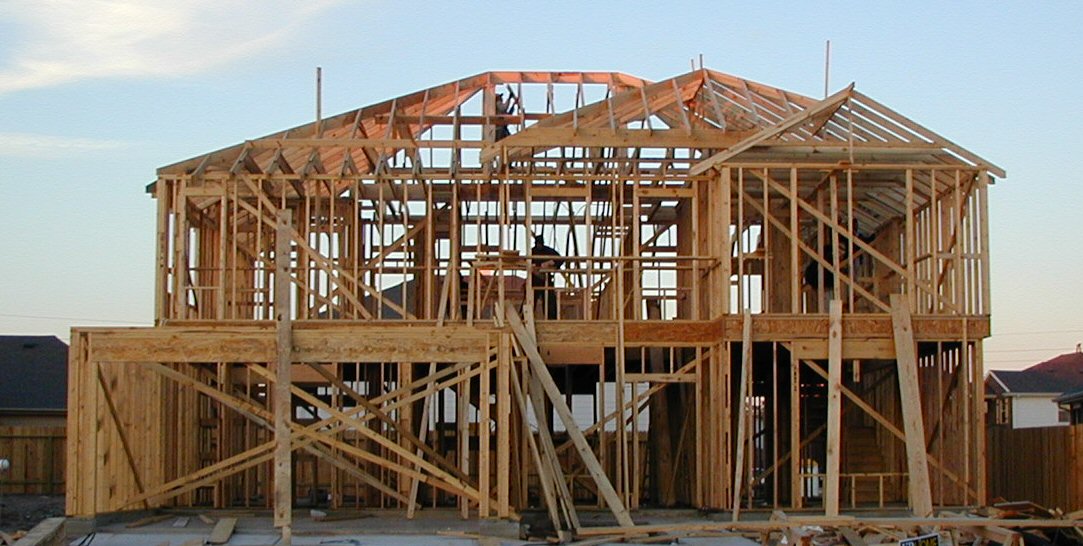
I think that what’s called for here is a different metaphor. So: if we think of a finished book as a building, then this is what your first draft is:

OLYMPUS DIGITAL CAMERA

That’s right. It’s not crap; it’s an unfinished building. You still have to put up walls and run plumbing and electrical and install window frames and put up the glass windows and doors and you have to paint the walls and finish the exterior and trim out the woodwork and lay carpet and all the other stuff that comes with building a building. But a building without a frame is a pile of stuff from Home Depot, and that’s not much use to anybody. Without the frame, there is no building; it’s the frame that defines the building.

Your first draft is pretty much the same. Without a first draft, you don’t have a story because you don’t have a sense of things. You don’t have a clear idea your arc or what it is that your characters are trying to accomplish or what problem they’re trying to solve. You don’t know what it is they need to learn, or how they need to change, or what things are going to happen to change them. Without the first draft to give you some idea of the story’s structure, you don’t know what kind of story it is.

So a first draft is not a pile of crap, and it does not suck. It’s an incomplete framework. You’d never try to live in a house that was just a frame on a lot, and you wouldn’t want to read a story that’s in its first-draft stage. But that’s not because the first draft sucks! It’s because the first draft is missing things, like drywall and paint and plumbing and electrical and windows and doors and trim work. There’s a reason that carpenters talk about “rough carpentry” and “finish carpentry”: the rough carpentry is the framing and basic layout, and the finish work is what makes the thing a house or a store or an office building or whatever. No carpenter ever says, “Your frame should be crap!” because that’s not how they look at these things.

That’s the way it should be for writers, in my opinion. Even the terminology is compatible: rough carpentry, rough draft. Finish carpentry, finishing work on the story. This seems to me a much more productive and healthy way to look at one’s writings-in-progress. When you finish a rough draft, you haven’t produced something that sucks; you’ve produced the frame of an eventual finished story.

Now, obviously this analogy isn’t perfect. Sometimes when we do the finish work on a rough draft for a 30-chapter novel, we might find ourselves condensing things to the point where we literally get rid of chapters 3, 5, 10, and 22. An architect supervising the construction of a 30-story building, however, isn’t going to wait until the frame is built and then decide, “OK, we’re actually going to ditch the third, fifth, tenth, and twenty-second floors.” But no analogy is perfect, and even an imperfect analogy using carpentry as its motif has got to be better than one that uses poo, right?

Share This Post