David Baker (1931-2016) was a Black composer who was a deeply skilled jazz musician and teacher whose career spanned decades, first as a jazz musician playing the trombone. An automobile accident left him unable to play the trombone, so he switched to the cello and ended up at Indiana University. His first teaching job, in the mid-1950s in Missouri, ended with his resignation when he married a white opera singer. Missouri still banned inter-racial marriage at that time. Baker would not return to the classroom for more than ten years, when he finally arrived at Indiana University. There he started the university’s Jazz Studies program, which he chaired for more than 40 years. All through this he composed influential works in jazz and in the interstitial area between jazz and classical music.
You say tomato, I say….
Tastes change as we get older, don’t they? There are many foods I loved as a kid that I find myself kind of grossed-out by when I sample them as I get older (most of it mass-produced sweet shit, so this isn’t a bad thing). On the flip side, there are quite a few foods that I disliked in my younger years that I find myself coming to like a great deal. Many of these are vegetables, which is a good thing! I don’t see myself ever turning the corner on broccoli–that one will always be a bridge too far for me–but over the last ten to fifteen years I’ve taken more and more a liking to olives, mushrooms, and even asparagus! Preparation helps a lot: I’m not likely to ever like steamed asparagus much, but grilled asparagus, brushed with olive oil and dusted with kosher salt prior to grilling? That’s good stuff.
The tomato sandwich is, in my opinion, both under and over-appreciated, depending on the camp you fall into. Some just don’t appreciate the magic of a perfect tomato sandwich, while others, like me, think about it more often than is technically healthy. (I figure if fantasizing about tomato sandwiches is among the worst of my vices, I’m probably okay.) When tomato season is in full swing I tend to have a tomato sandwich for lunch at least three days a week.
It’s nothing fancy, but over the years I tweaked until I came up with the tomato sandwich that best suits my taste: two pieces of whole grain toast spread with mayo and stuffed as generously as possible with slices of ripe tomato, plus some salt and coarsely ground black pepper.
Share This Post
Something for Thursday
Tone Poem Tuesday
Share This Post
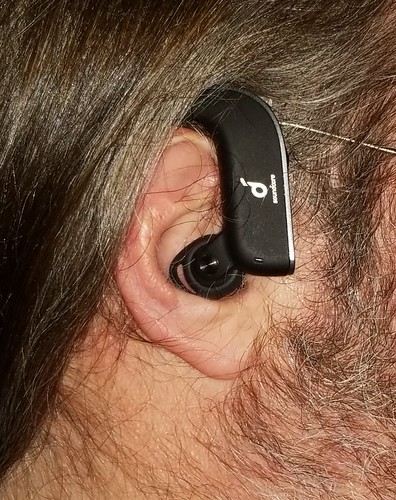
A convert to earbuds

I’ve never been a fan of earbuds…until now. My preference for personal music listening has always been “over-the-ear” headphones, and I have several pairs of them, including a nifty Bluetooth pair that dispenses with the cord. I’m actually a fairly late adapter to the whole Bluetooth thing, for reasons that I honestly couldn’t describe for you beyond the simple aesthetic: I tend to like a cord. But once you start to get used to cordlessness, well…it’s awfully hard to go back.


Share This Post
Something for Thursday
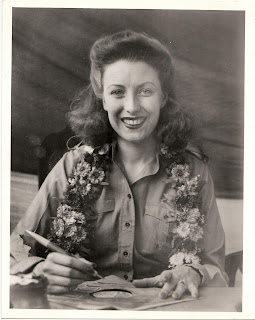
Dame Vera Lynn has died at the age of 103.
Share This Post
Tone Poem Tuesday
Florence Price was a Black composer who lived from 1887 to 1953. Her work was always held in fairly high regard–she was the first Black woman to have a work performed by a major symphony orchestra, in 1933, when her Symphony in E minor was played by the Chicago Symphony.
And yet, her work was also neglected, much of it forgotten, and quite a bit of it almost destroyed.
In an article in The New Yorker, Alex Ross relates this anecdote that is both shocking and not the least bit surprising in any way, assuming one knows something about the history of art, of music, and of race in the United States:
n 2009, Vicki and Darrell Gatwood, of St. Anne, Illinois, were preparing to renovate an abandoned house on the outskirts of town. The structure was in poor condition: vandals had ransacked it, and a fallen tree had torn a hole in the roof. In a part of the house that had remained dry, the Gatwoods made a curious discovery: piles of musical manuscripts, books, personal papers, and other documents. The name that kept appearing in the materials was that of Florence Price. The Gatwoods looked her up on the Internet, and found that she was a moderately well-known composer, based in Chicago, who had died in 1953. The dilapidated house had once been her summer home. The couple got in touch with librarians at the University of Arkansas, which already had some of Price’s papers. Archivists realized, with excitement, that the collection contained dozens of Price scores that had been thought lost. Two of these pieces, the Violin Concertos Nos. 1 and 2, have recently been recorded by the Albany label: the soloist is Er-Gene Kahng, who is based at the University of Arkansas.
The reasons for the shocking neglect of Price’s legacy are not hard to find. In a 1943 letter to the conductor Serge Koussevitzky, she introduced herself thus: “My dear Dr. Koussevitzky, To begin with I have two handicaps—those of sex and race. I am a woman; and I have some Negro blood in my veins.” She plainly saw these factors as obstacles to her career, because she then spoke of Koussevitzky “knowing the worst.” Indeed, she had a difficult time making headway in a culture that defined composers as white, male, and dead. One prominent conductor took up her cause—Frederick Stock, the German-born music director of the Chicago Symphony—but most others ignored her, Koussevitzky included. Only in the past couple of decades have Price’s major works begun to receive recordings and performances, and these are still infrequent.
The musicologist Douglas Shadle, who has documented the vagaries of Price’s career, describes her reputation as “spectral.” She is widely cited as one of the first African-American classical composers to win national attention, and she was unquestionably the first black woman to be so recognized. Yet she is mentioned more often than she is heard. Shadle points out that the classical canon is rooted in “conscious selection performed by individuals in positions of power.” Not only did Price fail to enter the canon; a large quantity of her music came perilously close to obliteration. That run-down house in St. Anne is a potent symbol of how a country can forget its cultural history.
Early in her life, Price knew that the world would be prejudiced against her, as a Black person; so she decided on a course that she hoped would help allay those prejudices. For a time she identified as Mexican. Her early years were spent in Arkansas, but when the situation of living in the South as a Black person (and family) became untenable, she and her family relocated to Chicago.
This piece, which I just heard for the first time several days ago and have been listening to repeatedly since, is a startlingly effective three-movement tone poem that includes elements of late Romanticism, jazz, and even hints of African chant. It is entitled Ethiopia’s Shadow in America. The movements are delineated as follows:
I. Introduction and Allegretto: The Arrival of the Negro in America when first brought here as a slave
II. Andante: His Resignation and Faith
III. Allegro: His Adaptation. A fusion of his native and acquired impulses
I have not been able to find much information at all about this piece, beyond what I’ve cited above. It has only been performed in its entirety in just the last few years, which I find astonishing because it’s a very compelling piece! Its middle movement, which takes on an almost hymnlike spiritual quality, is flanked by two movements of tragic brooding on the one hand and energetic optimism on the other.
Share This Post
Something for Thursday
Tone Poem Tuesday
This, by Black composer William Grant Still, is one of the most evocatively titled works I’ve ever heard, and I only heard it for the first time yesterday. Its title makes clear why I am featuring it today, after I found it simply by searching YouTube under the composer’s name. The piece is called And They Lynched Him On A Tree.
And let’s not marginalize William Grant Still. I’m not equipped right now to do a deep assessment of his work, but after listening casually to an array of pieces over the past week, I’d say he’s way overdue for a revival. Music written with great skill, immediately attractive, often (but not always) populist, often (but not always) depicting African-American life. And he’s a master orchestrator. Has a major catalogue of work — five symphonies, eight operas, much more.
He hated being called, as he often was, “the dean of black composers.” If he was called that, he’d say (with, I can imagine, such disdain), why wasn’t Copland the dean of white composers?
It’s time to honor that thought, and take the label “black composer” away from Still’s memory. He’s an American composer, who along with Roy Harris, Copland, Walter Piston, Howard Hanson, Virgil Thomson, and many others we all can name, was a major figure of his time. He should be ranked with the others.
Share This Post
Yes, #BlackLivesMatter
Well, you can’t escape what’s been going on. You can’t ignore it, short of completely disconnecting and retreating to the wilderness somewhere. And that’s the point, isn’t it? Anyone who has at least the possibility of escaping what’s going on, even in a momentary dream, is a person indulging the perk of privilege.
But I’m also rather annoyed with white liberals who are shocked, SHOCKED that police abuse still takes place. Haven’t you been paying attention? And they’re sending me solutions – “this is a chance for REAL dialogue!” I’ve been having “real dialogue” at least since my sister Leslie and I, as high schoolers, went to the nearly lily-white Vestal (NY) Junior High School to talk to the choir kids.
People Need to STOP Saying “All Lives Matter”. And they REALLY need to quit with, “That’s not what Martin Luther King, Jr. would do.” Remember, they killed him, too.
The transformation began after the 2012 homicide spike. The department wanted to put more officers on patrol but couldn’t afford to hire more, partly because of generous union contracts. So in 2013, the mayor and city council dissolved the local PD and signed an agreement for the county to provide shared services. The new county force is double the size of the old one, and officers almost exclusively patrol the city. (They were initially nonunion but have since unionized.) Increasing the head count was a trust-building tactic, says Thomson, who served as chief throughout the transition: Daily, noncrisis interactions between residents and cops went up. Police also got de-escalation training and body cameras, and more cameras and devices to detect gunfire were installed around the city.