Composer Focus: Jean Sibelius (part two)

 Returning to Sibelius!

The land of Karelia is a region in northern Europe that currently comprises sections of Eastern Finland, and Northwestern Russia. Like Alsace-Lorraine between France and Germany, Karelia is a land that has been disputed for centuries, and the scene of many armed conflicts as powers east and west of it struggled to hold it. Today the region of Karelia is split in two.

Sibelius, in his early years of composing, was also fiercely invested in Finnish nationalism and independence, so he was happy to accept a commission from a students’ organization in the Viipuri province, a part of the Karelian region. At first he wrote a tableau of eleven movements, each one with a specific folk-like and rustic character designed to appeal to the nationalistic feelings of the region. Later, Sibelius condensed the larger work down to the Karelia Suite, which is one of his most enduring works.

Unfortunately, the original version of the larger tableau is lost, the score having been burned by Sibelius’s own hand. But most of the orchestral parts survived, allowing a reconstruction in the 1960s, with the missing parts being completed by Finnish musicologists. Luckily the Suite has survived. It comprises two march-like movements, brassy and bold and thrilling, bracketing a Ballade that is evocative and lyrical.

Here is the Karelia Suite by Jean Sibelius.

Share This Post

Liberatopia isn’t seeming like much of a topia these days

 Former Texas Governor and former US Secretary of Energy Rick Perry was quoted the other day as saying this:

Texans would be without electricity for longer than three days to keep the federal government out of their business.

Well, now.

This, right here, is a perfect illustration of why I have always rejected libertarianism.

Whenever I ask how social issues and problems will be solved in a libertarian system, the answer always starts with what I call “the Soft Libertarian Formulation”: the market will solve all problems. Freedom will solve all problems. In all cases, the markets in their free wisdom will always be better suited to solving specific social problems than the government.

My reply to this is always, “But what if it doesn’t?”

No, really. Think about it. What if something, some problem, some disaster, comes down the pike that the free markets just can’t fix? And what if that problem just persists, going on and on, getting worse and worse, possibly even to the point where people are dying?

The market will solve all problems better than the government…but what if it doesn’t?

This possibility is never admitted, never considered. There is simply no problem that can’t be fixed through freedom and markets and zero government interference!

But now, look what’s happening in Texas. They wanted to be free of federal interference. They wanted their own power grid, with their own authority to manage their electrical needs in any way they wished. And they got their desire! Only problem is, they did it in the finest capitalist free-market way, taking the cheap way out at every opportunity. Texas does have winter storms now and then, so obviously it would be a good idea to winterize things, right? Only, that would cost money, and what rich capitalist wants to spend money they don’t have to, right?

And now Texas is in a world of hurt.

Here comes Rick Perry, presumably asked if maybe Texas’s weird obsession with energy independence from Washington policy makers has proven a bad idea.

Because here, Mr. Perry, is a bad social problem that the Free Market not only can’t solve, it actually created.

And Mr. Perry says, “Nope, we’re good being without electricity for days on end if it means we stay the way we are.”

This is a version of what I call “the Hard Libertarian Formulation”: It does not matter what problems come along. The Markets and the Freedom are so inherently good, all by themselves, that preserving them is preferable over any alleviation of human suffering by way of government. By way of collective action.

It’s my experience that eventually every libertarian will eventually land on this position. Collective thinking is always bad. No problem can ever be approached in any kind of collective way, and if a problem arrives that can only be solved through collective action, through government, well then: the problem must not be solved. Individuals should simply swallow their emotions and live–or die–with the new facts of life, because nothing, nothing, is more important than avoiding government and collective action.

This is, incidentally, why I think you find climate change denialism so strongly ensconced in the political right: because climate change actually is a problem that has no solutions coming from the free markets, and they know this. Because libertarianism cannot be wrong, there can be no problem that libertarianism can’t solve. And if there is, then the problem must not exist.

This isn’t the first time Perry has said things like this. One time he said (I think he was running for President at the time, maybe in 2012) something along the lines of “No government has ever created a single job.” This will, of course, come as news to anyone living in a city with a major military base. Or in a town with a state-run college. Or…in Washington, DC.

(I wrote this two nights ago and have had it in drafts since then. In the meantime, news is coming out that Texas’s utility companies, in the great and wonderful tradition of unregulated capitalism, are gouging the hell out of their customers by issuing electricity service bills totaling in the THOUSANDS of dollars. People who are without power, heat, water, and easy access to food are getting electric bills for up to $10,000. This is what unfettered, unregulated capitalism will get you, each and every time. It continues to amaze me that people who don’t have a prayer of ever being in the small club of capitalists who get to benefit from its inherent tendency to funnel wealth upward still advocate for its adoption, because of the Hard Libertarian Formulation.)

[Comments closed on this post]

Share This Post

I raise a glass to you, Dr. Vishniac

 It’s amazing what stories stay with us through the years. Some stick for obvious reasons, but some do not; some just stick all on their own. When I was in fourth grade, more than forty years ago, I watched the first broadcast of Carl Sagan’s science show Cosmos. In the fifth episode, entitled “Blues for a Red Planet”, Sagan discussed at length Mars and our human relationship with that planet, up to and including the Viking Lander.

In the midst of that episode, while discussing the possibilities for life on Mars, Sagan related a story about a friend of his, a microbiologist named Wolf Vishniac, who developed experiments that a robot ship sent to Mars might be able to perform, testing the soil for the presence of microbial activity.

Here is the excerpt in question. I have remembered this story, the sad story of Wolf Vishniac, to this day. I think of Dr. Vishniac, a man born almost a hundred years ago and dead almost fifty, often when I am reading or thinking about the current state of Martian exploration. On this day, when NASA landed another rover on the Red Planet whose primary mission involves testing for evidence of life, I honor his contribution to the quest for an answer to a simple, but profound, question: Was there ever, or is there now, life on Mars.

Share This Post

2021 in the Books: Greeks by any other name, and how I learned to stop fearing the budget deficit!

 More reading!

::  Lloyd Alexander has been one of my favorite authors since I was a kid, but that assessment is basically on the strength of just two of his series: the Prydain Chronicles (which are a classic of 20th century fantasy), and the Westmark Trilogy (which I also consider a classic of “historical fantasy”, the genre that my favorite author of all time, Guy Gavriel Kay, calls home). I had never read much beyond his output in those works, so I read The Arkadians.

The Arkadians, Lloyd Alexander

Alexander was definitely drawn to the trope of the earnest young man thrown into the deep end of adventures involving the powerful (and usually nasty) people of his world, and this book is no exception. Lucian is basically an accountant, a bean-counter in the King’s court, when he manages to overhear the King’s soothsayers plotting against the King. Just like that he is forced to flee, and like other Alexander protagonists, he travels the world looking for a way to get his life back while he finds friends along the way. Here he meets a poet who has been turned by curse into a donkey, and a girl who has secrets of her own. Lucian embarks on adventures that recall the Greek epics, albeit with more gentle humor and a lot less violence.

The Arkadians is steeped in Greek mythology, but Alexander doesn’t beat you over the head with it, which is something I remember from the Prydain books: the Welsh myth in those books was very muted, something you almost had to look for. It’s the same here, and Alexander’s prose style makes for a fun and breezy read. There’s none of the emotional heft in this book that you find in Prydain or Westmark, but that’s not a complaint at all.

::  Americans tend to worry a lot about the Federal budget deficit and the national debt, and rightfully so.

Or…do they rightly worry about those things?

What if we’re worry about the wrong thing? And what if, by worrying about those things, we handicap our own governmental response to the issues of the day?

Hence Stephanie Kelton’s book The Deficit Myth.

The Deficit Myth, Stephanie Kelton

I am the first to admit that I don’t have the strongest foundational of knowledge when it comes to economics, but I have felt a vague sense for years that our discussions of these issues is based on a whole damn lot of faulty assumptions. We talk about dollars that only exist as ones and zeroes in certain columns on a computer drive somewhere as being genuinely real dollars, and we constantly kvetch about government debt and deficits. (Well, we sometimes kvetch about those things. It usually depends on which party is in control of the levers of power in Washington.

I’ve also been hearing for years that “Government should be run like a business!” and “Government has to live within its means, like a household budget!” and so on. I’ve always had the vague feeling that these sentiments are completely wrong, but I could never really articulate just why I thought those sentiments were completely wrong. Along comes this book, The Deficit Myth, by Stephanie Kelton, an economist at Stony Brook University who has also worked for Senator Bernie Sanders. Her central argument is that deficits and the debt don’t really matter, not really, for many reasons, the most important being that the United States is monetarily sovereign and its government is an issuer of its own currency, so by definition, the US government cannot go broke. The things to focus on, for Kelton, are employment and inflation.

I found Kelton’s arguments interesting and even convincing a great deal of the time, even if I didn’t always understand the more technical, nuts-and-bolts aspects of her positions. She focuses quite a lot on a “job guarantee” program administered at the Federal level, which would maintain full employment even in times of economic downturn, which is an interesting approach. I did find myself wondering how this will work as automation takes over more and more of the typical work of human beings. I count myself among those who believe that we are rapidly approaching a point where there simply won’t be enough work for humans to do, and that’s going to pose serious problems. Will we start transitioning to an economy that is not based on work? Or will we prop up the work economy by simply creating busy work? These issues don’t come up in Kelton’s book, and I found myself wondering about them.

Still, this book is an engaging and even interesting read.

Share This Post

An Exercise in Geek Fashion

 There’s a vintage advertisement for the fantasy role playing game Dungeons and Dragons that makes the rounds once in a while, so this time I decided to play a game of “Who Wore It Better”. I think I did it pretty well!

This old D&D ad comes around every so often, so I figured I'd take a whack at it. I don't have a mustard yellow T-shirt, so I made do with my yellow sweater. I'm happy that I could wear the same brand of overalls, though! . Second pic: Carla wanted in on

I’m happiest that I was able to be accurate down to the brand of overalls the kid is wearing. Score!

Share This Post

“What Happened Was….” (Thoughts on the Film)

 I suppose I am lucky that I never had to negotiate the world of dating as a single adult, out there in “the wild”. My dating life was mercifully short, and it took place in the context of the sheltered existence of college. It was also by the greatest good luck that the last person I dated in college ended up being the last person I dated at all, because we’re still together now.

What Happened Was is a movie that not about dating, but it’s about one specific date, and that’s it. Ninety minutes that track the entirety of a single date between two people who work in the same New York City law firm. He ((Michael, played by Tom Noonan, the film’s writer and director) is a paralegal  and she (Jackie, played by Karen Sillas) is an executive assistant. The movie was made in 1994, so he can make a crack about “That’s what they’re calling secretaries now.” He’s a very tall, gangly man, bald except for around the edges. She wears her red hair tied back, but loosely. The entire date takes place in her apartment (one set, which fits since the film is an adaptation of a stage play). She has made dinner. They eat, they drink, and gradually they bare their souls to one another, with results that disappoint each, in each other and in themselves.

I wouldn’t have even known this movie exists if not for Sheila O’Malley, who wrote glowingly of it last week (and previously in her paid column which I hope returns one day). Apparently the film was released in 1994 to some acclaim, and then it managed to disappear into the memory hole pretty completely. It had a VHS release but never a DVD, and the version that was haltingly available on streaming services wasn’t in great shape. But a restoration has taken place and now that version is in release and is getting wider streaming access. I watched the film on YouTube, as a rental, but I’m not sure which version I saw, the restoration or the earlier, cruddier print. (I did try to watch the restored one on Fandango, but for some reason Fandango’s credit card interface wasn’t working at all, prompting me to correct my information even though it was correct each and every time. YouTube, being a Google company, uses Google Pay, which makes that sort of thing much easier.)

Here is Sheila on What Happened Was:

In her 2016 book The Lonely City: Adventures in the Art of Being Alone, an essential entry in the sparse study of loneliness, Olivia Laing writes, “What does it feel like to be lonely? It feels like being hungry: like being hungry when everyone around you is readying for a feast. It feels shameful and alarming, and over time these feelings radiate outwards, making the lonely person increasingly isolated, increasingly estranged.” When I read Laing’s book, I thought of 1994’s What Happened Was, written and directed by Tom Noonan, one of the great films about loneliness, in particular loneliness of the urban variety. The film unnerved me so much when I saw it in its initial release—25 years ago—that it was a long time before I re-visited it. Images from it haunted me for years. Marketed as a meet-cute gone awry, What Happened Was… is, instead, an unblinking look at the havoc loneliness can wreak on humans. It’s only 91 minutes, but every minute is excruciating.

The description–a movie unfolding in real time with just two people on a date–made me think of another classic film of the same general description, which came out right around the same time, Before Sunrise. But where that film is about the fire of youthful lust between two people who are walking around Vienna, What Happened Was is about older people who have been adults long enough to feel some disappointment that their adult lives have not tracked their younger dreams, but they haven’t given up the dreams yet, either. It’s harder for them to open up, and when they do, the results are much, much, much messier. This movie plays out almost like a psychological thriller, but the thrills are purely internal. Don’t read anything into the brief moment where she brandishes a knife at him. She laughs, saying “I’m kidding!” She does this a lot: saying something to provoke him or push him off kilter, and then laughing and assuring him (and us) that she’s joking. It never really quite defuses the tension, though. He does it too, and it doesn’t work for him, either.

We first see her sleeping, naked, face down, on a mattress with no pillows and only a sheet wrapped around her waist. Her phone–the kind of cordless handset once found in every home in America, though this one’s pink–lies on the bed next to her and she is clutching a ceramic cat. Why? We don’t know. Minutes later she’ll drop the cat and break it while in her last frantic moments of getting ready for the date. She picks up the pieces and drops them in the fish tank. Nothing is ever explained of the ceramic cat. This isn’t the kind of movie where characters linger over personal belongings: “Oh, that. My grandmother bought that for me at a flea market when she was traveling through Dubuque. She always loved the Mississippi River….” Nope; none of that. Oddly this makes the apartment seem like a real place for me. All of our personal spaces have things in them that only make sense to us.

Her apartment is oddly large, for someone living alone. I wonder what it costs. She has a sitting area with enough space for four or five people, but a separate dining area just for two. She has a dressing area cordoned off by drapes, and a mannequin that is draped with scarves. The mannequin shows up throughout the film, coming and going from the background shots, almost like a third person, silently watching the night’s events unfold. Others seem to watch, too: she has a poster of Martin Luther King and the famous “cat’s eyes” poster from the musical Cats. These posters, along with the mannequin, create almost a constant presence of other eyes, watching Karen and Michael throughout their evening (the only other piece of wall art in Jackie’s apartment is a print of album cover art from the band Asia)…and the film also establishes that Karen’s apartment has a view into other apartments across the streets. She needs to live in a place with a view, she tells Michael several times. No one seems to be looking from their own views into her apartment, though.

I notice that the layout of the apartment is such that the Cats and the MLK posters don’t have a direct line of sight into the kitchen, though. They can’t see into there, and that’s where the Asia cover-art print hangs. It’s almost as if Jackie has constructed her life as to leave her kitchen as private as she can. 

(A beautiful time-lapse shot during the credits shows one of the other buildings, viewed from Jackie’s apartment, as the day fades and the various apartment lights come on.)

We next see her returning home from work; she has bought wine and a cake for the night. A fluorescent light in the hallway outside her front door is constantly flickering, and she finds it annoying enough to smack it a few times, with no result. When Michael arrives he comments on it, and she gives him the usual excuse: the landlord won’t fix it. But before he arrives, she is already sipping from the wine, and a few minutes earlier, when her alarm clock went off, we see an unfinished glass of wine next to it. Jackie drinks a lot, apparently. This is never really commented on, but it’s always there, and Sillas has to trace Jackie’s mannerisms throughout the evening as the alcohol takes its grip on her.

We see her getting dressed for her date, in the not-quite-private dressing area. She tries on a few items, rejects them; she touches her own face in a gesture that will be reprised later by Michael, and she has an expression throughout all of this that is very hard to read. Is she afraid? Nervous? Is she questioning herself? I don’t know. We’re not given any internal (or external) monologue. All we can do is watch…but as she is clearly struggling with something, the mannequin is looking away.

I seem to be focusing a lot on the visual nature of this film, don’t I? But that’s because…well, a movie is a visual thing, and a movie doesn’t have to be some gigantic blockbuster filled with million-dollar digital effects to be a visual masterpiece. What Happened Was relies on visuals to create its story every bit as much as it does its dialogue and acting. All of this creates mood, all the way down to the lighting. Jackie is very particular about the lighting. She has different kinds of lights all over the apartment. Normal lamps and lamps with cloth draped over for color. Cannister track lights over the bar separating the kitchen from the rest of the place. Candles. A chandelier over the dining table. The light in the aquarium. And, eventually, a light-up Mother Goose. Jackie is forever turning this light off and that one on, dimming this and brightening that. And then there’s the light out there in the hallway, the one that flickers so garishly you think it might cause seizures.

Michael arrives, and the first minutes of the date are incredibly awkward. He is carrying his briefcase and the requisite bottle of wine that you bring to someone’s house; when he offers it he stands there for a few seconds, clearly trying to will himself into action, and then he says, “Oh, I brought this wine!” as if he’d forgotten about it…which he very clearly had not. His collar is open and he’s wearing a sweater vest; his necktie is hanging from his jacket pocket. Throughout the first half of the movie, there is usually something between Jackie and Michael: a dining table, a coffee table, the kitchen bar. When they finally reach a point where there’s nothing between them, first on the couch and then later in a part of the apartment we don’t even know is there at first, it feels…neither quite right nor quite wrong.

And there’s the movie’s master stroke, right there, in addition to the brilliant visual construction of the film itself: We never really have a sense of how this date is going. Is this two awkward people being awkward at first and gradually feeling at ease with each other? Or is the awkwardness permanent and these people are a disaster who should never ever date again? We never know. Not even after the film has ended. That’s what makes it linger.

As Jackie and Michael talk through the first half of their date, some things–themes–emerge, and their dialogue is intriguingly constructed. Each says things that they repeat a few times, like how Jackie likes to live with a view. It’s almost like they feel the need to return to conversational safe space as they feel themselves starting to drift toward a confessional space. Michael seems to get there first, opening up about how he is gathering information for a book he’s writing about the law firm; this catches Jackie’s ear, because her own dialogue conveys a strong sense that even at the firm she feels like she’s on the outside looking in, a little.

At first Michael definitely comes off as being the stranger of these two people. One of his early confessions is that he hears his own name mentioned subliminally in a Beatles song. Jackie is briefly taken aback by this, but she recovers by claiming that “Oh yeah, something like that happened to me once!”, but she gives no details. Her own awkwardness is less overt: she has invited this guy over to dinner at her place, so she’s cooking for him–but she does all her cooking on the weekend and freezes everything to be microwaved through the week, so her big dinner for him is a microwaved scallop dish that she literally serves to him from the Tupperware container she nuked it in. He grins through this, in a way that seems a little mocking–but then he says weird shit like “I hate the word ‘seafood’,” so it’s hard to tell just where he’s landing on all this. Meanwhile, she keeps drinking and filling his glass. She almost forgets that she has rolls on the table, and she doesn’t serve the salad until after they’ve been eating for ten minutes.

Michael’s book-writing sounds like real social crusader stuff: he wants to get the truth out there, let the people know what’s going on! But it’s all vague and he says things about publishing that seem…wrong, made-up. He pulls out a little notebook at one point to jot something down, but he doesn’t tell Jackie what he’s written, and we never do find out. There are a lot of such moments in What Happened Was: tiny moments that might be meaningful or might not be, and all we can do is watch it all play out and decide for ourselves, later on.

Jackie, it turns out, also writes. She writes stories, and she has even published a few–but that turns out to have been a vanity publisher. Michael seems to know this, but he’s got enough kindness not to squash her on that basis, and eventually he gets her to read one of her stories to him. She tells him that it’s a kid’s story, but it very much…is…not. She reads it to him in another room, separated by a curtain. She keeps her notebooks in a lockbox (the same kind of notebook, albeit larger, as the one in which he had jotted his secret note earlier). She reads a story that starts off sounding awkward, stilted; I have to note Sillas’s performance here as she starts the reading haltingly, in the manner of someone who is reading their work aloud for the first time (and yes, I know what that feels like). But she gets over that and reads…and reads…and reads. The story is quite a bit longer than we (or Michael) expected, and it’s here that the movie makes its most use of close-ups. The reaction shots on Michael are disorienting, in the dim light of this secret space that’s illuminated by a Mother Goose lamp.

Returning to visual elements, the use of color in What Happened Was is pretty amazing. The palette seems muted early on, but aspects of the set take on a more saturated appearance as we proceed. Even the Asia poster in the kitchen shows this: in the last scene, it has red highlights that aren’t there in the opening scenes. The visuals are more and more stark as the emotions our characters are plumbing become more and more stark.

I don’t want to spoil too much of this, but in the end, the date doesn’t end particularly well. Nor does it end spectacularly badly, either. Jackie may eventually be too drunk to make sense of what’s gone on (though she’s not wrecked, either) and Michael makes a final confessional that feels like a desperate attempt on his part to salvage a night that has not gone the way he may have hoped…but then, he never really seemed to bring much by way of hope into the night to begin with. Michael’s final confessional might be the part of the film I liked least, because…it’s honestly the one thing that happens in this movie, the one thing said by either character, that’s not surprising. I’ll just leave it at that. But as the movie ends, we’re not sure really if the situation between Jackie and Michael is completely doomed, or if it can be repaired (they’re going to see each other Monday morning, right?), or if they’ll exist in some kind of relational limbo for a while. But it’s worth noting one last visual cue: when Michael leaves for the night, as he heads out into that hallway, the formerly flickering garish light is no longer flickering. It’s just garish.

Sillas and Noonan are both incredibly effective in these roles. Noonan even makes use of his own incredibly long fingers for some shots, like when he picks a piece of lettuce off the table (it fell out of his salad bowl when she overfilled it) and puts it in his mouth after a second or two of clearly thinking, “I’m not sure what to do with this.” Sillas tracks quite the emotional journey here as she hurries to get ready for this date, then pours herself into it, then opens herself up, and then has to process her deep disappointment that it hasn’t gone the way she had hoped, though we never really know what she hoped for this night. Meanwhile, Noonan’s Michael seems like a guy who has a lot of initial bluster, then some retreat, then some more bluster, followed by defensive retreat…and when he finally decides to commit to his own feelings in any way, it may be too late. In the end he finally admits that he has no idea what he’s doing, and Jackie has to clarify that for him.

In the two days since I watched What Happened Was, I keep thinking about it and about these two characters. I wonder what happened for both of them. I have my thoughts on that (I think this night ends up a one-off that they never even mention again to anyone), but maybe I’m wrong. Maybe. I keep thinking about it, and I suspect that’s the entire point.

ADDENDUM: In Sheila’s article above, she also mentions that the film’s marketing campaign did it no favors, and after looking into that a little, Holy SHIT, is she right. The trailer really does make it look like an erotic thriller, and the poster makes it look like…I don’t even know what you’d expect from a movie with this poster, but it sure isn’t what the movie ends up delivering.

I wonder if the movie’s 1994 vintage hurt it a bit. This was when the “rise of indie film” in the 90s was just starting to gather steam, and I suspect that the people in charge of marketing this film just simply had no idea at all of how to do that. So, they came up with a terrible campaign that likely gave audiences the complete wrong idea, so any word of mouth was likely not great. That’s a shame.


Share This Post

Composer Focus: Jean Sibelius (part one)

 So here’s something new I’ll be trying for a bit, based on my experience in 2020. I wrote a lot last year about Ludwig van Beethoven, which was fitting since 2020 marked his 250th birthday. I don’t plan to focus on a specific composer every year (or every day or every month) for their particular anniversaries, but I did greatly enjoy spending a lot of time in a specific composer’s sound world, so that’s what I’m going to try to do for a while: spending several months focusing on a particular composer. This isn’t to say that I’ll only be listening to the music of a particular composer, but I’ll be focusing that way.

I’m going to start with Jean Sibelius.

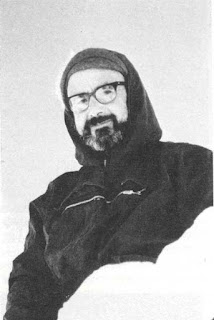
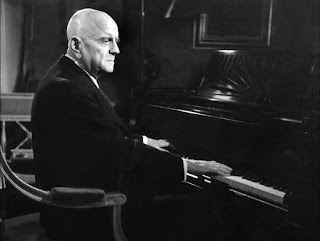
Quite a stern looking fellow, wasn’t he? (Obviously the second photo is Sibelius as a younger man. I screwed up the uploading and decided to leave it.)

Sibelius is known as Finland’s greatest composer, and there’s some good reason for that. From what I’ve read, Sibelius’s reputation has waxed, waned, and waxed again in the almost a hundred years since his main period of active composition came to an end. After the mid 1920s, Sibelius’s output dried up almost completely, and he lived out the remainder of his years–thirty of them, until he died in 1957 at the age of 91–composing little. As David Dubal notes in his book The Essential Canon of Classical Music, “[Sibelius’s] lifespan far exceeded his ability to fathom new artistic developments.”

Sibelius, like Rachmaninov (whose own long lifespan took place within the boundaries of Sibelius’s), straddled the transition from Romanticism to Modernism, and thus the transition from traditional tonality to the various systems that followed it. While Rachmaninov kept composing music that made him seem more and more anachronistic as his life progressed (though it did his reputation no harm), Sibelius’s music is more individualistic, so his reputation has had a harder time. Dubal, again:

Sibelius’s place in music history was once more secure than it is now. Around 1920 in various quarters, he was proclaimed the ideal modern composer and an antidote to the seeming chaos of Schoenberg, Stravinsky, and Bartok. But by the late 1940s, his reputation had begun to decline. The composer Virgil Thompson, listening to the great Seventh Symphony, wrote, “I do not believe for a moment that its gray and dirty-brown orchestral coloring is a depiction of either the Finnish soul or the Finnish landscape…I think Sibelius just orchestrates badly.” Thirty years later Harold Schoenberg called Sibelius “a dated bore” but conceded for him “an honorable place among the minor composers,” while giving to the Danish Carl Nielsen “as much sweep, even more power, and a more universal message.”

I cannot at this point comment on Thompson’s impression of Sibelius’s Symphony No. 7, as I haven’t heard it yet. We’ll see. And I may decide that Schonberg is incorrect; again, we’ll see. I do like Carl Nielsen a great deal, but that’s for another time.

In my college years, I only played two works by Sibelius, on the same program, in my freshman year. The big one was the Violin Concerto, which I disliked quite a bit at the time. It was a hard setting in which to get to know a piece of music, though, and I fully grant that my view at the time was very poorly informed. At that point, the orchestra in college didn’t even have a full complement of players until just before the performances, when our music director (my beloved Dr. Janice Wade) would bring in musicians from surrounding towns to fill out the group. On the one hand, I didn’t know shit, being only 17 (I certainly thought I knew shit, but believe me, I most certainly did not), but on the other hand, that’s also a very difficult scenario under which to form a fair impression of a work.

The other piece was Finlandia, which is by far Sibelius’s most well-known and popular work. It is literally a musical love-letter to Sibelius’s own homeland, and it chock full of orchestral color, some deeply exciting material (the middle section somehow feels march-like without being a march), and then a deeply beautiful hymn-like melody that sounds like a folk anthem (even though all the melodies in the piece are of Sibelius’s own invention). Finlandia has become as beloved in Finland as The Stars and Stripes Forever has to Americans, and it’s as good a place as any to enter Sibelius’s sound world. This particular performance adds a choir to the proceedings, for stirring effect.

In future weeks I’ll look at Sibelius’s tone poems (many inspired by the folk epics of Finnish legend), his symphonies, and, yes, that Violin Concerto that vexed me at seventeen. Stay tuned!

Here’s Finlandia.

Share This Post

2021 in the Books: Beethoven, Merlin, and the Hardy Boys meet Veronica Mars

 Here’s some of my recent reading!

::  Beethoven: The Relentless Revolutionary by John Clubbe is simply superb. I wanted to get this one done in time to blog about it during 2020, but getting it done this year is fine.

Beethoven: The Relentless Revolutionary, Clubbe

While not really a “life and works” biography, Clubbe’s book has enough of that within its pages that it would suffice if one was looking for a single-volume account of Beethoven’s life. Clubbe is more interested in tracing through Beethoven’s life and music the influences of late-18th and early-19th century revolutionary history and politics. Beethoven emerges not just as a towering figure in art, then, but as an important historical figure in his own right. Many histories of music and biographies of artists don’t really do this kind of heavy lifting; any history is often treated as incidental. Mozart, for example, is often shown not as a part of history, but as a force of his own, only occasionally interacting with history, such as in his dealings with Emperor Joseph II of Austria.

Beethoven, on the other hand, was profoundly impacted by history, and Clubbe shows this readily by tracing Beethoven’s artistic influences and artistic goals in the light of the revolutions in human rights and political philosophy that shaped that time. Napoleon Bonaparte turns out to be a deeply important figure in Beethoven’s world, going far beyond the famous anecdote of the great composer initially dedicating his Symphony No. 3 in E flat major to Napoleon, and then ripping the dedication away when the Frenchman declared himself Emperor.

Clubbe writes:

Beethoven’s music thus reflects both the turmoil of the age in which he lived and no less the turmoil within himself. As he matured, he affirmed ever more passionately the ideals in which he believed. By focusing on the revolutionary origins of his music, itself a response to the revolutionary age in which he lived, we enter the heart of his genius. For listeners, past and present, who have yearned for political and social change, Beethoven’s music has been and remains an inspiration.

This book is outstanding and I highly recommend it.

::  The Crystal Cave, by Mary Stewart.

The Crystal Cave, Mary Stewart

This was a re-read of the first book in Stewart’s Merlin trilogy, which I first read almost thirty years ago when I went on a massive Arthurian binge during my collegiate years. I was obsessed with “the Matter of Britain” back then, and those stories have held a special place in my heart ever since. I remember finding Stewart’s trilogy, with a fourth book she added on later, in a boxed set in a shopping mall bookstore while on a tour with my college band, someplace in Wisconsin, and I read the four books the following summer. I remember loving them as I read them, but I never re-read them until now, although I’ve intended to re-read them for several years now. Time to get that job done!

Stewart wrote The Crystal Cave in 1970. How does it hold up fifty years later? Quite well, in all honesty. Stewart writes a very historically-focused story here, keeping the fantastical elements to a minimum. The Arthurian saga has always presented problems to those who would write stories based on it, seeing as how there is no single “Arthurian saga”; what we call that, or “the Matter of Britain”, is a collection of tales and stories that accrued and gathered and evolved over hundreds of years. This can result in a lot of versions to take on a disjointed feel, which Stewart avoids by making Merlin, not Arthur, her main character; in fact, Arthur himself doesn’t arrive on the scene, and then only by virtue of being born, until the very end of The Crystal Cave. Everything up to then is Merlin’s story: his questionable birth, his entry into the world of post-Roman Britain mysticism, and his dealings with the pre-Arthurian Kings like Vortigern and Uther.

Stewart’s prose is cooler than I remember, heavy on description and with long paragraphs. In this she might not appeal quite as much to modern readers, but I like this Tolkienesque approach. Her characters are sharply drawn, though, and Merlin’s adventures are interesting throughout. There’s a lot of military maneuvering in this book as armies tromp all over Wales, which is something I didn’t remember from my first reading, but then…it’s been a while!

I will be reading the other two books in the trilogy later this year.

::  The Montague Twins: The Witch’s Hand, by Nathan Page and Drew Shannon.

I checked this out of the library on a whim, because I like to use graphic novels as way to cleanse my reading palate from time to time. This one is an absolute delight. I loved it!

The Montague Twins: The Witch's Hand, Page and Shannon

Basically, what you have here is something that reads like The Hardy Boys mashed up with Veronica Mars, set in a small New England town in the 1960s, with magic and witchcraft thrown in. Actual magic and witchcraft, mind you, not the Scooby-Doo fake magic-and-monsters that always turns out to be Old Man Carruthers in a rubber suit and latex mask, who “woulda got away with it if it hadn’t been for you meddlin’ kids.”

Our leads here are, yes, “the Montague twins”, but they have a larger supporting cast to the point where it seems like actually calling the book The Montague Twins feels like a bit of a misnomer. But they’re two late-teen twin brothers who wear their hair in stylish pompadours and who investigate local crimes. As the book opens, they’ve successfully located the missing dog of the local Very Rich Family Who Owns Everything, and yet oddly, the Very Rich Family doesn’t seem quite as happy with this as they should, which does play in later in the book. There’s a lot of bad-blood history in this book that comes out over the course of its story, not all of which is exactly surprising but a lot of which is satisfying in the “A-ha, I knew it!” way.

What I loved most about this one is that it takes its time. We live in a storytelling epoch in which pacing is seemingly everything, in the sense that the faster-paced the better. One bit of writing advice I see all the time is “Every word must advance your story, and if it doesn’t, cut it!” This has resulted in stories that are constantly rush rush RUSHing their way through their plot beats, with no time for the reader to digest or think or linger in the world or enjoy a quiet moment here or there with characters. The Montague Twins: The Witch’s Hand does not rush, which pleased me greatly. Not every story has to whip by like a damn episode of a CBS procedural, folks!

I read that a sequel is forthcoming to this book. I hope it’s a success and there are more to come!

Share This Post