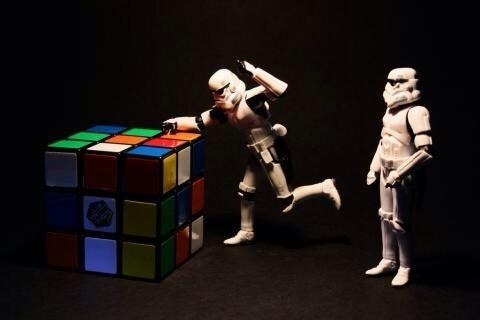
Tone Poem Tuesday

 The operas of Giachino Rossini are staples of the operatic stage, and the overtures from those operas are staples of the concert world. But even within Rossini’s well-known work, some works are more well-known than others. William Tell and The Barber of Seville are some of the best-known works of all time, including their overtures, which have enjoyed (or endured!) second lives in popular culture outside of the context in which Rossini originally wrote them. Less well-known, but still a staple of the repertoire, is Rossini’s take on the Cinderella folk tale, La Cenerentola.

La Cenerentola was Rossini’s follow-up after the huge success of The Barber of Seville, and its success was more uneven than the earlier opera’s. La Cenerentola did not open particularly well, but it grew quickly in popularlity through the 19th century. However, the style of singing its music required did fall out of favor, and thus La Cenerentola fell into relative obscurity. The opera was revived in the mid-20th century and has enjoyed stable popularity and performance ever since.

The overture is pure Rossini, starting with an air of subdued mystery before giving way to the kind of infectious energy and earworming, propulsive melody that is his hallmark. I’m always interested in how many of Rossini’s overtures don’t start with any kind of Bang!, instead starting pensively and building up their energy.

Here is the overture to La Cenerentola by Giachino Rossini.

Share This Post

Something for Thursday (Friday edition)

UPDATE: The video for the performance I chose, for some reason, won’t embed here, so click through to hear the music.

 A day late, but not my usual excuse this time! I wasn’t too busy…in fact, I was all set to post, but I couldn’t pick out a piece of music for this.

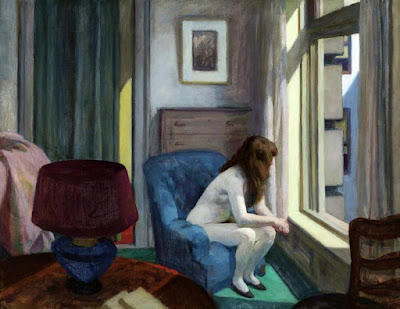
You see, yesterday Sheila O’Malley posted about the work of painter Edward Hopper, the artist behind Nighthawks and other famous paintings that suggest urban loneliness and solitude. In Sheila’s words:

I love the loneliness in Edward Hopper’s work. The insomnia. The urban midnights. The voyeurism. The emptiness. If you’re heartbroken, Hopper is your kindred spirit. I find his paintings very sad, sadness you can wallow in. Many (most?) people do what they can to avoid loneliness. I have never been able to pull it off. All the lonely people, where do they all come from?

Living in a major metropolitan area, you are constantly up against other people’s lives. People have private moments in public. You can peek into people’s windows as you walk by. You give each other privacy as best you can. People can weep on the subway, and nobody freaks out. Everyone clams up, goes into their own private head-space, and the weeping person may as well be in her own room for all the attention she gets. Believe me: having been that weeping person, there’s a comfort in anonymity. There is nothing quite like the freedom to be left alone.

At the same time, there is the sense of being privy to other people’s secrets. There are just so many damn windows. How do other people live? How are they managing?

Here are a few of Hopper’s paintings, including, of course, his most famous painting, Nighthawks.

A lot has been said and written about Nighthawks, and those four people in that cafe…but what catches my eye is the storefront across the street. There’s no merchandise on display in the window. Nothing at all. If the couple from Phillie’s wants to window shop, there’s nothing there to look at. Just a cash register, and a printed bill in the window that we can’t read from this distance, so we don’t know if simply says “closed”, or “closed forever”, or “seized by the IRS”, or…anything at all. And above the storefront…equally vacant windows into offices or apartments.

So, back to the music. I read Sheila’s post and wanted a piece of music that conveys the sense of loneliness that Hopper creates in many of his paintings, and that’s where I struggled. I could have picked a song, maybe the title track, from Frank Sinatra Sings For Only The Lonely, but I just wrote about that album recently and wanted something else. Slow ballads, maybe…or songs about urban life, like Glenn Frey’s 80s potboiler “You Belong To The City”…but nothing really fit, and I’m not sure this piece fits either, but I’m going with it.

Enter Claude Debussy.

Debussy, like Bach and Chopin, wrote a series of short pieces for keyboard that he called Preludes. Where Bach and Chopin used their Preludes to explore each key in the chromatic scale, Debussy did not. This Prelude was written in D minor and is titled “Footsteps in the Snow”. Its character is cold and austere, with one particular motif recurring throughout in almost chant-like fashion. About halfway through we get a genuine break into lyricism, but the mood shift is short before the lyrical melody carries us right back to the work’s core motif, a sad and insistent motif indeed.

Does “Footsteps in the Snow” suggest the same kind of loneliness that Edward Hopper suggests in his paintings? Well…I suppose that’s for the listener and the viewer of the art to decide, isn’t it? Debussy is definitely conveying some kind of cold, quiet, hushed solitude.

Maybe it’s odd to be thinking of quiet urban solitude in the bright summery suburban days of my life right now, but the cold is always coming….

Share This Post

Tone Poem Tuesday

 A contemporary work today, by Belize-born British composer Errollyn Wallen.Wallen’s family moved to London when she was just two, and it was there that she grew and matured into her professional life as a prolific composer and teacher.

Of this work, Wallen says:

Composing for the orchestra is my favourite challenge, [and this] work is an especially important one for me. It is an innate human instinct to be free, just as it is a low of nature that the river should rush headlong to the sea. That is the concept behind Mighty River.

Slavery claimed the lives of countless people, but somehow my ancestors found the grit and determination to persist in spite of the conditions in which they found themselves. I dedicate Mighty River to my great-great-great-great-great-great-grandmother. Though I never kner her, I am driven on by her courage in the face of dreadful dods and am inspired by her example not merely to survive, but to thrive.

I first heard this piece the other day, and it’s quite amazing. This performance by the National Youth Orchestra is quite something, and I’m discovering a keen apprecation for the music-making that comes from youth orchestras and ensembles these days. What they sometimes lack in technical polish they often make up for in an ability to make accessibile to emotional heart of a work. I’m less and less drawn to the musical restraint of maturity as I get older.

Mighty River opens with a solo horn quoting “Amazing Grace”, and then as the rest of the orchestra joins in, the piece genuinely does settle into the kind of constant flowing motion that is suggestive of a river on its way to the sea. But throughout the piece, with all its rocking and flowing rhythms, bits and pieces of other spirituals are heard, including more quotes from “Amazing Grace”. The music takes several darker, more introspective turns, but somehow it always finds its way home to that rocking ostinato, and ultimately back to “Amazing Grace” before ending on a gentle major chord. One senses the constance of Black persistence and forced endurance mirroring against the constance of the river’s motion.

Here is Mighty River by Errollyn Wallen.

Share This Post

WNY Love Letter: The Dumas Bridge

 First things first: it’s not a bridge. Also, I am quite literally the only person who calls it the Dumas Bridge.

Let’s back up.

One of my favorite locations for nature walks in my neck o’ the woods is Knox Farm State Park. This park is located in East Aurora, NY, and it constitutes the house, stables, farm buildings, and grounds of the old Knox Estate. The Knox family was, for a time, one of the richest families in the region (if not the richest family in the region). Seymour Knox was one of the founders of the famed Woolworth Company, the chain of five-and-dime stores that used to be prominent in American retail. Other members of the Knox family were high-ranking bank officers, and Seymour Knox III was the first owner of the Buffalo Sabres.

I honestly don’t know where the Knox Family has gone since then. There may still be Knox descendents in the area, but if there are, they don’t seem to be nearly as eminent in the community as they were “back in the day”. The family’s old country estate has since become a park, first a local park, and later part of New York’s State Park system.

Knox Farm is itself a wonderful place, with the feel of an old English estate: the main house still stands and before COVID was the site of many wonderful events, including a craft sale where I used to go Christmas shopping each year. But there are also the outlying woods, surrounding the estate, through which well-maintained trails run. Walking in the Knox Farm woods is always a peaceful return to nature, and while there’s enough variance in the topography to make different parts of the park feel differently from one another, it’s not at all a demanding place to walk, like some of the other local nature parks located in the hillier regions.

I’ll say more about Knox Farm in a future post, but for right now, I single out a single spot on one of its many trails:

It’s not so much a bridge as an earthen embankment build to allow transit over a narrow bog through which the higher meadows drain into the lower ones. A culvert runs beneath the “bridge” to allow flow, but it’s not like there’s a stream there, just a slow occasional flow of dampness. Instead of a drop on either side, like you might expect from a bridge, there’s a slope, so if you jumped you’d roll about six feet down on the northern side, and maybe ten feet on the southern side. The worst that might happen is a sprained ankle and you’d get muddy.

So no, it’s not much of a bridge. But it has wooden fenceposts on either side that are of particularly rustic construction, and between those posts, and the fact that the bridge is far away from any visible buildings on the estate, and the wooded path that approaches it with its gentle S-curve, the bridge seems to me to always feel like something from a much earlier age. In fact, for me it suggests something quite specific: this bridge looks like a location out of The Three Musketeers, which is why I call it the Dumas Bridge. Every time I am here, I imagine our heroes–Athos, Porthos, Aramis, and D’Artagnan–galloping around the bend and over the bridge on their way to thwart some scheme of Milady de Winter or Cardinal Richelieu.

Or perhaps D’Artagnan and Constance meet by moonlight on the bridge, for a secret tryst. Or perhaps Milady’s agents meet on the bridge by torchlight to exchange secret information.

Who knows…but it’s nice to have an imagination that I can bring to bear on my walks in the woods. I could as well think of this place as the Alexander Bridge, imagining Taran and Eilonwy and Fflewdur Fflam crossing the bridge on one of their adventures. Or maybe there’s a place like this in The Shire, a place in the back woods that Frodo, Sam, Merry, and Pippin pass as they make their way in secret to the Old Woods and Bree beyond whilst evading the mysterious Black Riders.

Or maybe young Aeric Seaflame finds a bridge like this on one of the back roads of Frobish Forest as he flees the agents of Lady Perris Winterborne…but to learn about that, you’ll have to wait until I finish writing the book in which those exploits take place.

For now, we’ll stick with Dumas.

All for one, and one for all!

Share This Post

Something for Thursday

 For some reason I have Jim Croce on the mind, so here are two of my favorite songs of his. Both are sad songs about the endings of relationships. “Operator (That’s Not The Way It Feels)” is the better known of the two. It’s one side of the conversation between someone who is pining for a lost love, and the operator on the other end of the phone line as the singer searches for that lost love. Why? Not to catch up with them or to learn about their new life and new relationship (with “my best old ex-friend Ray”), but from a standpoint of vengefulness. He just wants to show them that “I’ve overcome the blow, I’ve learned to take it well”…but in the very same breath, without even a pause, he admits that he wishes his words could convince himself. He sings all this in a kind of breathless rush; Croce was very good at using different melodies and even different rhythms to suggest complex meanings in his songs.

Ultimately, he doesn’t make the call, concluding “There’s nobody there I really wanted to talk to.” He closes the call by telling the operator “You can keep the dime,” which I suppose is something that would have to be explained to listeners today, like, oh, that line from “Easter Parade”: “You’ll find that you’re in the rotogravure.”

The other song might be sadder. “Photographs and Memories” isn’t sung to some third party, like a telephone line operator. It’s addressed to a lover long gone, though it’s clear from the lyrics that the lover isn’t there to hear it. Is the singer going through old belongings and thinking about how that’s all that’s left? Maybe.

Photographs and memories
Christmas cards you sent to me
All that I have are these
To remember you
Memories that come at night
Take me to another time
Back to a happier day
When I called you mine
But we sure had a good time
When we started way back when
Morning walks and bedroom talks
Oh how I loved you then

There’s a beautiful sadness to the tune in the first two verses, but then Croce does something else with the chorus: he adopts a more cheerful tune as he remembers that “We sure had a good time….” But the verse ends on an unresolved chord, and so does the song. It’s like he can only get so close to finding happiness in his old memories before he returns to sad reverie. There’s something about sad memories of relationships that ended badly, isn’t there? You can remember the good times, but somehow the sadness takes them over and you almost feel guilty for remembering the earlier times with a smile.

Anyway, here’s Jim Croce with “Operator (That’s Not The Way It Feels)” and “Photographs and Memories”. Oh, and pay attention to Croce’s guitar work. There’s some very deft playing here, especially in “Operator”, where the guitar almost forms a kind of countermelody to the tune he is singing.

Share This Post

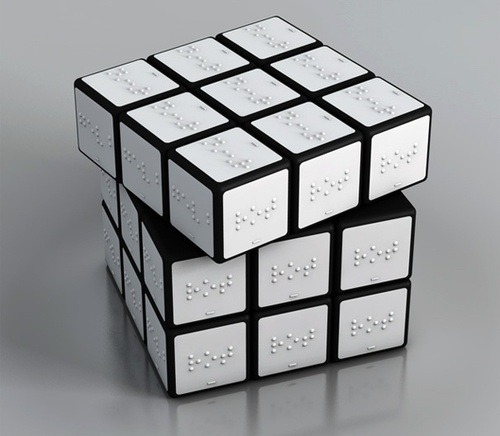
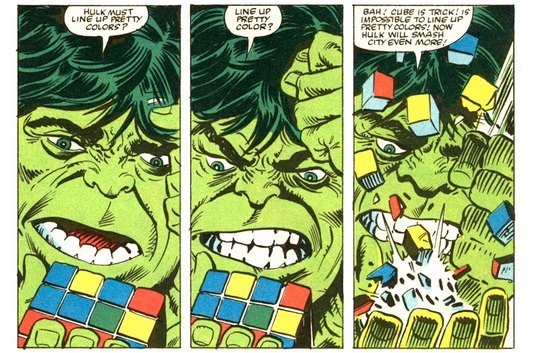
Repost: From the Books: Douglas Hofstadter on the Rubik’s Cube

A repost, first published in 2014, on the occasion of the anniversary yesterday of inventor Erno Rubik’s birth on July 13, 1944. Thank you for all the puzzling fun and intrigue, Professor Rubik!

And as noted below, I *still* need a Megaminx, because of its dodecahedral shape….

My uncle Jerry once told me an awful joke:

What goes, “Click–do I have it yet? Click–do I have it yet? Click–do I have it yet?”

Answer: Stevie Wonder doing a Rubik’s Cube.

I know. Awful.

Anyway, many squeals of delight reverberated through the online world yesterday as Google’s doodle turned out to be a quite-functional Rubik’s Cube, in honor of the puzzle’s 40th anniversary. That’s amazing to me, another milestone of a passage of time that just doesn’t feel that long. I remember the first times I saw the puzzle, in the toy store of the Beaverton Mall in Portland, OR. This was late 1980 or early 1981, when the Cube was just starting to become the most popular thing going.

Eventually I got one, courtesy my parents, and I fiddled with it a lot until I could get two sides complete at the same time. But I was never able to crack the thing entirely, and I think my father was intrigued by the puzzle’s mathematical nature, so he sprang for a solution book, through which we pored until we both saw how the thing worked and how it could be returned to its pristine state, usually in a smaller-than-expected sequence of moves. The logical approach to solving the Cube, which I have long since forgotten, was really quite elegant, and I occasionally want to revisit it, now that I’m old enough to appreciate such things. At the time, for an awkward fifth grader in a new school, the ability to solve a Rubik’s Cube turned out to be quite the ice-breaker. (It may have also cemented my reputation as a soft and nerdy kid, but hey, it wasn’t like I was going to be on the football team anytime soon, anyway.)

Years later, in college, I bought a book by Douglas Hofstadter called Metamagical Themas, which was the title of a series of columns Hofstadter wrote for Scientific American back in the day. Hofstadter is an interesting person, although frankly whenever I read him (and I haven’t read him in too, too long), I got the feeling that I was peeking through a knothole in a fence into an awfully grand universe. In short, he was often way over my head. But he did write two columns about the Rubik’s Cube, which he found appealing as a puzzle and as a mathematical object. Both columns are presented in the book, and I excerpt the first of them here:

The Magic Cube is much more than just a puzzle. It is an ingenious mechanical invention, a pastime, a learning tool, a source of metaphors, an inspiration. It now seems an inevitable object, but it took a long time to be discovered. Somehow, though, the time was ripe, because the idea germinated and developed nearly in parallel in Hungary and Japan and perhaps even elsewhere. A report surfaced recently of a French inspector general named Semah, who claims to remember encountering such a cube made out of wood in 1920 in Istanbul and then again in 1935 in Marseilles. Of course, without confirmation the claims seem dubious, but still titillating. In any event, Rubik’s work was completed by 1975, and his Hungarian patent bears that date. Quite independently, Terutoshi Ishige, a self-taught engineer and owner of a small ironworks near Tokyo, came up with much the same design within a year of Rubik and filed for a Japanese patent in 1976. Ishige also deserves credit for this wonderful insight.

When I first heard the cube described over the telephone, it sounded like a physical impossibility. By all logic, it ought to fall apart into its constituent “cubies” (one of the many useful and amusing terms invented by “cubists” around the world). Take any corner cubie — what is it attached to? By imagining rotating each of the three faces to which it belongs, you can see that the corner cubie in question is detachable from each of its three edge-cubie neighbors. So how in the world is it held in place? Some people postulate magnets, rubber bands, or elaborate systems of twisting wires in the interior of the cube, yet the design is remarkably simple and involves no such items.

In fact, the Magic Cube can be disassembled in a few seconds, revealing an internal structure so simple that one has to ponder how it can do what it does. To see what holds it together, first observe that there are three types of cubie: six center cubies, twelve edge cubies, and eight corner cubies. Each center cubie has only one “facelet”; edge cubies have two, corner cubies have three. Moreover, the six center cubies are really not cubical at all — they are just square facades covering the tips of axles that sprout out from a sixfold spindle in the cube’s heart. The other cubies, however, are nearly complete little cubes, except that each one has a blunt little “foot” reaching toward the middle of the cube, and some curved nicks facing inward.

The basic trick is that the cubies mutually hold one another in by means of their feet, without any cubie actually being attached to any other. Edge cubies hold corner cubies’ feet, corner cubies hold edge cubies’ feet. Center cubies are the keystones. As any layer, say the top one, rotates, it holds itself together horizontally, and is held in place vertically by its own center and by the equatorial layer below it. The equatorial layer has a sunken center track (formed by the nicks in its cubies) that guides the motion of the upper layer’s feet and helps to hold the upper layer together. Unless you’re a mechanical genius, you can’t really understand this without a picture, or better yet, the real thing.

It is likely that many people will buy cubes, little suspecting the profound difficulty of the “basic mathematical problem”. They will innocently turn four or five faces, and suddenly find themselves hopelessly lost. Then, perhaps frantically, they will begin turning face after face one way and then another, as it dawns on them that they have irretrievably lost something precious. When this first happened to me, it reminded me of how I felt as a small boy, when I accidentally let go of a toy balloon and helplessly watched it drift irretrievably into the sky.

It is a face that the cube can be randomized with just a few turns. Let that be a warning to the beginner. Many beginners try to claw their way back to START by first getting a single face done. Then, a bit stymied, they leave their partially solved cube lying around where a friend may spot it. The well known “Don’t touch it!” syndrome sets in when the friend innocently picks it up and says, “What’s this?” The would-be solver, terrified that all their hard-won progress will be destroyed, shrieks, “Don’t touch it!” Ironically, victory can come only through a more flexible attitude allowing precisely that destruction.

In a postscript, Hofstadter adds:

I finally must confront the matter of the cube fad’s passing. David Singmaster’s Cubic Circular is going under after Volume 8. Many thousands of Megaminxes [a puzzle similar to a Rubik’s Cube, but dodecahedral in shape] were melted down for their plastic. Uwe Meffert’s puzzle club seems to have been a flop. The Skewb and many other wonderful objects I described never hit the stands. A few that did were almost immediately gone forever. So…have we seen the last of the Magic Cube? Are those cubes you bought going to be collector’s items? Well, I am always loath to predict the future, but in this case I will make an exception. I am bullish on the cube. It seemed to seize the imagination wherever it went. Despite the line concluding my second cube column, the cubic fad finally did spill over into the Soviet Union.

In my opinion, the world simply overdosed on cube-mania for a while. We humans are now collectively sick of the cube, but our turned-off state won’t last too long — no more than it lasts when you tell yourself “I’ll never eat spaghetti again!” after gorging on it. I predict that cubes will resurface slowly, here and there, and I am even hopeful that some new varieties will appear now and then. This is Mother Lode country. There may never again be quite the Gold Rush we witnessed a couple of years ago, but there’s still plenty of gold in them thar hills!

I’ve just decided that I needed a Megaminx. Among other things, the shape of the dodechedron plays a role in the Princesses In SPACE!!! (not the actual title) series.

Long live the Cube!

Share This Post

Tone Poem Tuesday

 This one I owe to YouTube, which served this up as a completely random suggestion based on however their algorithms work.

In 1950, conductor Arturo Toscanini had plans for a large-scale symphonic suite inspired by New York City, but he never got the project finished. Before the idea foundered, though, he commissioned a part of it from Duke Ellington, who is only one of the great jazz musicians of all time–in fact, Ellington might well be the greatest jazz musician of all time.

The result of this was a symphonic work titled, simply, Harlem. Ellington intended the work as a musical tour of Harlem, exploring its character through musical interludes and sonic pictures. The work is jazzy, obviously, but unmistakably urban in its sound, as it takes us from a bluesy beginning to bustling streetscapes to percussion dances to mournful funereal passages. It’s quite a work, and I had never heard it until YouTube’s algorithm suggested it to me.

This performance is by my own local band, the Buffalo Philharmonic Orchestra, conducted by JoAnn Falletta. Here is Duke Ellington’s Harlem.

Share This Post
Round about we go….

 OK, here’s a question regarding driving behavior and roundabouts: Do you use your turn signal when entering one?

But before I get to that, let me just note that I love roundabouts. I find them civilized and much less prone to idiotic bullshit than your typical 4-way intersection. There’s no running red lights, and there are no pesky left turns which always gum things up. Studies a-plenty have demonstrated that roundabouts are not only safer (producing far fewer accidents per capita than standard intersections), they also move more traffic through an intersection in a given time than lights or the combination of four-way stops and relying on people to know the right-of-way rules will.

(On that last topic: People suck at right-of-way these days, and it’s only getting worse. What happens at YIELD signs always irritates me: if you have no sign and I’m sitting at a YIELD, what happens is YOU GO, and I wait until you’ve passed to do anything. What is not supposed to happen is you coming to a complete stop and waving at me to go. The same similar thing happens at 4-way stops all the time. If two cars arrive at the same time, the one on the right is supposed to go. What actually happens, if I’m the car on the left, is that the nitwit on the right starts waving at me to go. This shit drives me crazy and my approach is to ignore the waving and look the other way until they go. But anyway, back to roundabouts.)

I see more and more roundabouts in my travels these days. There’s been on in the village of East Aurora for years, and now there are several in the village of Hamburg (more on that below). I’ve even learned, via Facebook, that my old hometown of Olean has several roundabouts in its downtown! I’m sure this went over very poorly down there, just from what I remember of that city’s denizens: it’s a very conservative area that tends to be deeply resistant to change. Sure enough, a Facebook group I occasionally check out about Olean’s history had a thread recently about the roundabouts, and there was comment after comment to the effect of “I HATE THE ROUNDABOUTS!” And one fellow actually said my favorite talking point when people want to resist change: “Roundabouts work great in Europe, but they’re not for Americans!”

I always wonder just why such people think that “Americans are too dumb and/or stuck in their ways to do anything new at all, ever” is such a virtue, but again, I digress.

So, back to the roundabouts in Hamburg. There’s one right in the village core, and as we travel to Hamburg every week for a trip to a bakery there and to the Farmers Market in the summer months, we go through this roundabout more than any other. On this past Saturday we drove through there, and something odd happened. Here, via Google Maps, is the roundabout in question:

We were at the spot labeled B in the pic, heading west, into the village. Ahead of us was another car (who had already done a couple of confusing things, which made all this stand out in my head). This car was at position A, just about to enter the roundabout and therefore bear right, when they turned on their left turn signal. This is because they were heading for position C.

And I thought, “What the hell are they signaling for?!”

Now, I can see the logic, sort-of. If this was a 4-way intersection with a light or STOP signs, the driver at A would have been making a left turn, hence the left signal. But this is not a 4-way intersection! It’s a roundabout, and since it keeps traffic moving at all times and since each act of exiting is a right turn, I maintain that there is no need to signal at all when negotiating the roundabout, no matter which way you’re going. If you’re in front of me in a roundabout, it does not make any difference at all where you’re turning. There are only two possibilities in a roundabout: exit, or keep going around. Which one you’re doing at each exit point does not matter to me at all. There is nothing for me to do with that information.

What say you, folks? Am I all wet (and guilty possibly of crappy driving)? Should I be signaling my way into and through the roundabout?

(Note that this is only about this kind of roundabout, not the more complex ones you find in larger cities where there are things to contend with like lane changes.)

Share This Post