This lovely film music cue has been on my mind the last few days because for some reason, the YouTube algorithm served up a clip from The Karate Kid Part II, and because I like that movie (it’s not as good as the first one, but it’s still quite watchable and it’s gorgeously filmed), the YouTube algorithm proceeded to give me more of it to watch. So here’s a wonderful cue that’s from a scene toward the end, just before the movie’s climactic action starts to unfold. Daniel is set to leave Okinawa and return home, but before he does, he visits the Okinawan girl he’s been hanging around with in an old warehouse, where she performs a tea ceremony for him. It’s a frankly wonderful scene, wordless as the music plays. I featured this cue here before, but it’s been a bunch of years, so here it is again: “Daniel Leaves” by Bill Conti.
(The cue ends suddenly because at that moment the wind whips up, blowing out the candle hanging above them and alerting them to the coming cyclone.)
Continuing our brief survey this month of classical works that debuted one hundred years ago this year, in 1925, we have one of George Gershwin’s major works, and one that gives some clear idea of the direction Gershwin was moving as a composer. The Concerto in F, as it is officially titled, teems with jazzy, urban energy. It feels like what it is: a more structured and more compositionally-assured successor to works like Rhapsody in Blue, where the musical structure is simple to the point of being almost absurd. The Concerto is still a work of youth, with compositional imperfections, but when heard in context you can clearly see Gershwin’s development from a genius of melodies toward being a genius composer. More on this here.
The Concerto follows the traditional form, being in three movements of the fast-slow-fast variety. Opening with four sharp timpani strikes, the temptation might be to compare this piece to Beethoven’s Violin Concerto, which also starts with four taps on the timpani. Gershwin is doing something much more overtly energetic here, which suits his background; his ongoing use of wonderful melodies loads the work with propulsive energy. The work never seems to lose its dancing nature, even if the nature of that dance is at times playful and at times sultry and seductive.
This performance, featuring soloist Wang Yuja, is conducted by Michael Tilson Thomas, the recently retired conductor of the San Francisco Symphony who was once, in his own musical youth, music director of the Buffalo Philharmonic.
Continuing our look back at the classical music of one hundred years ago, we have a work for solo piano that was written in 1925. Henry Cowell lived from 1897 to 1965, and he was a largely self-taught composer and performer who found himself heavily in the avant-garde school. It’s a roughly five-minute piece in which the pianist never touches the keyboard. Instead, the performer reaches into the string chamber and manipulates the strings directly through various means: brushing the hand over them, plucking them, and dragging the nails of a finger along them. The effect is otherworldly and haunting; it almost sounds like the kind of atmospheric soundscape-type music that is often heard during old science fiction movies and horror movies of all eras. Here is a good post with more information on this eerie, haunting work.
In times like this I often turn to optimistic art that reminds me that the world doesn’t have to be the way it is, and that it won’t always be like this.
In that spirit, here is “Another Day of Sun”, the opening number from La La Land.
I was trying to come up with a theme for this month’s Tuesday selections, since themed groupings are fun and this month is good because it has five Tuesdays instead of the usual four. (Actually, come to think of it, I’m not sure if it’s more frequent for a month to have four Tuesdays or five….) So, what we’re going to do is look back one hundred years! Every Tuesday Tones work this month is a piece that premiered in 1925. We’re basically looking at where classical music was a century ago.
We’ll start with a piece I actually featured a year ago! But it’s a good piece, and I have no problem featuring good works more than once, so let’s listen again to Manuel de Falla’s wonderfully sensual, exotic, and fiery ballet El amor brujo. The ballet tells the story of a woman who is haunted by her dead husband’s ghost as she goes to marry another, and it really is one of the few outright sexual works of classical music that I know. I always have difficulty when people describe specific works as “sexy” or “sexual”; most times I just can’t hear it in that music, which inevitably leaves me to wondering if I’m not…well look, you know what I’m getting at. Ravel’s Bolero is often mentioned as a sexual and erotic work, and yet every time I hear it, I want to ask the people citing that one just how boring their sex lives really are.
But I digress. Let’s get to the music. This ballet is by turns energetic, gorgeous, moving, exciting, and downright sensual. I love this aspect of the music of a century ago.
If not for Monty Norman and John Barry’s work on the James Bond Theme, the most famous theme for an action-packed spy series would almost certainly be Lalo Schifrin’s theme to Mission: Impossible.
Schifrin passed away today at the age of 93. He was one of the bigger names in film music, and he had a long and distinguished career composing for film. His voice will endure, though. It absolutely will endure.
Here is Mr. Schifrin himself, leading a performance of what might be his most famous work. I honestly had no idea he was this good a pianist!
Lou Harrison (1917-2003) was a prominent 20th century voice in American music, as well as gay art. He explored homosexual themes in his work, which was strongly modernist to the point of being avant-garde at times. He was heavily influenced by Asian music and Asian sounds, and he incorporated those sounds and tonalities into much of his own work. Harrison was one of the most important gay musicians of the last century, and he was open during his life about the influence his own homosexuality had on his art and how it informed much of what he had to say through his art. How difficult that must have been, even as he watched acceptance of homosexuality slowly, ever so painfully slowly, grow in America. And that struggle has by no means ended.
Today’s work, Pacifika Rondo, features that fascination with Asian sound. Here are some notes I found about it (via):
British poet Rudyard Kipling wrote: “Oh, East is East, and West is West, and never the twain shall meet.”
But on today’s date in 1963, East did meet West at the premiere performance of a musical work by the American composer Lou Harrison, Pacifika Rondo Written for an Orchestra of Western and Oriental Instruments, at the East-West Center at the University of Hawaii.
For Lou Harrison, it was just one more stop on a journey he had begun decades earlier.
In the spring of 1935, when he was a teenager, Lou Harrison enrolled in a course called “Music of the Peoples of the World” at the University of California extension in San Francisco. The course was taught by American composer Henry Cowell, who became Harrison’s composition teacher. Cowell urged his pupils to explore non-Western musical traditions and forms. Javanese gamelan music became a big influence in Harrison’s music, and, in 1961-62, a Rockefeller Foundation grant made it possible for him to study Asian music in Korea.
The movements of Harrison’s “Pacifika Rondo” refer to various sections of the Pacific Basin.
Like many modernist works, it is a fascinating listen, a study in pure musical color and mood.
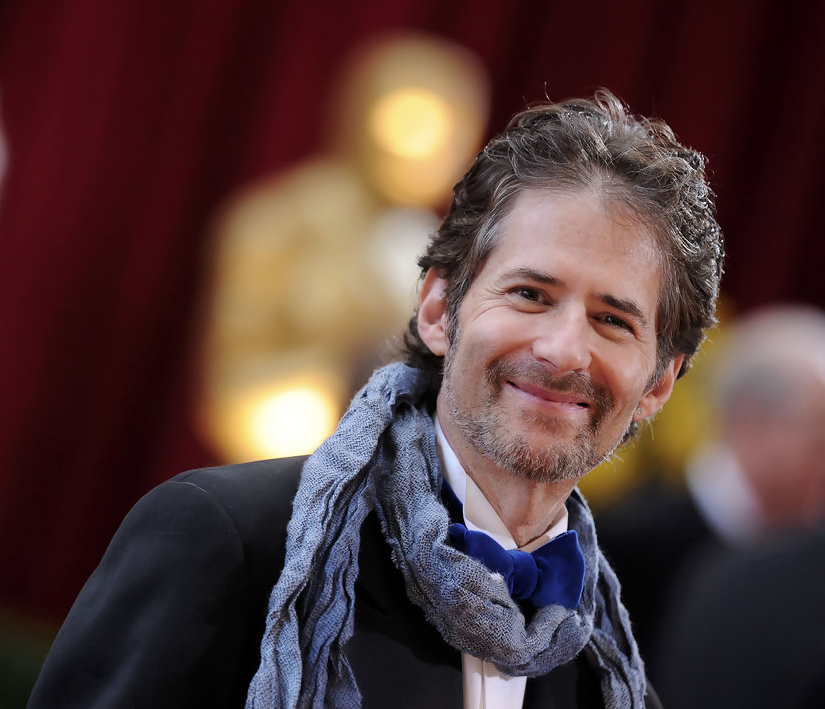
(This is a repost of what I wrote when composer James Horner died ten years ago, very prematurely, in a plane crash. Apparently Horner had been an amateur, hobbyist pilot. My relationship with his music through the years was complicated, but I wouldn’t ever say it was complicated to the point of being “love-hate”. Horner was one of the most important and notable film composers from 1980 until his death, after all, and as prolific as he was, I wish he was still around.)
Composer James Horner died the other day when the airplane he was piloting crashed. He was the sole passenger.
This is, quite simply, the worst news to hit the film music world since Michael Kamen, Jerry Goldsmith, and Elmer Bernstein all died within a year of each other.
For me, though, the hit is more directly personal. Although my relationship with Horner’s music has been rather complicated over the years, he still wrote a fair number of my favorite filmscores of all time, and when a score of his connected, it connected. He had the ability to hone in on the precise moment of a given scene’s emotional high point and construct his music to reach its high at the same moment. All film composers strive for this, but Horner’s gift for this was something else.
Moreover, I saw Horner’s career take flight, as he rose from obscurity to, well, stardom in his small corner of the film world. He started writing for films in the late 1970s, and I first encountered him in his fifth film, the Roger Corman space opera flick Battle Beyond the Stars. This is the first James Horner music I ever heard:
That score is still a fun listen to this day, even with all its minor faults: its heavy debt to Jerry Goldsmith (one of Horner’s strongest early influences), its occasionally awful orchestration (there is a track called “Cowboy and the Jackers” when you can hear the trumpet section slowly die), and occasional transitional missteps. Horner wrote a swashbuckling score that was better than the film it accompanied (although the film really is not all that bad, as long as you don’t ask too much of it).
When next I encountered the music of James Horner, it was for another science fiction film: Star Trek II: The Wrath of Khan.
Gone was Jerry Goldsmith’s brightly optimistic bombast from The Motion Picture, and in its place was a lyrical score that had an older and more seafaring quality to it.
It wasn’t all lyricism, though; Horner’s action writing was impeccable, and the film’s climax gives a great example of Horner’s skill for matching the music to the exact visual and the emotional beats of the scene. Here is the music, titled “Genesis Countdown”:
And here is a portion of the scene as scored, starting with the Enterprise backing away from Khan’s crippled Reliant:
This entire cue is a clinic in how to spot a film: you hear the desperation as the ship begins to move so painfully slowly, the drive as Spock climbs down through the ship toward Engineering, a snippet of Horner’s theme for Spock himself as he mind-melds with McCoy, the desperate ticking down of the seconds as the bridge crew realizes they’re doomed, Khan’s final expressions of hatred. When Horner was on, this is what he could do.
Horner would return to Star Trek for the next film, The Search for Spock, but he never did any more Trek after that. This always seemed to me a pity. I would have liked to hear, perhaps, a more light-hearted take on his themes from Treks II and III in IV, perhaps, or maybe his take on the adventures of the Next Generation in any of their films. Alas, it didn’t happen. I next encountered Horner via his score to the SF film Brainstorm, which is notable mainly for being Natalie Wood’s last film and, well, for Horner’s score.
It’s amazing to hear the progression in Horner’s sound from Battle to the Treks to Krull and beyond. You can really tell how much he was learning along the way, and his development along these lines culminated in 1988’s Willow.
One can detect a certain amount of the common lot of the film composer: often the scores are, on balance, better than the films. Not everyone can be John Williams, with a partnership with Steven Spielberg.
Horner was also able to do a lot more than genre films. He scored everybody’s favorite gentle baseball film Field of Dreams, in which he flexed his Americana muscles without quite aping the typical Coplandesque sound, and a couple years later he scored the Robert Redford caper flick Sneakers.
In the mid-90s, Horner reached what was almost certainly the height of his powers, and his filmography from about 1993 to 1998 basically includes one fine score after another, with three that were truly wonderful and one other which would become his single most famous work.
For Ron Howard’s Apollo 13, Horner managed to capture both the optimism of the Apollo moon missions and the elegiac sense, looking back, that that was as far as we were willing to go at that time and for quite a long time afterward. Horner infused that entire film with amazing energy, never moreso than during that film’s incredible rocket launch sequence:
Then there was Braveheart. Horner’s score for this film is amazing, one of my favorites of all time, and I consider its first half to be some of the finest film music ever written. It’s really quite something, what Horner did here. Mel Gibson’s film takes a fairly ‘dreamy’ approach to its subject matter, with long, lingering shots and scenes that feel like meditations. Horner accompanies all this amazingly, never better than in the “Secret Wedding” sequence. This love music is more complex than it seems, with a main melody that is subtly varied through a number of different stepwise progressions, and as the scene becomes more and more intimate in the film, so too does Horner’s score, boiling down to the utter simplicity of the rhythm being set by an ostinato harp. The first half of this score amazes me each time I listen to it.
Also in this same period came what I consider to be Horner’s finest score, Legends of the Fall. This melodrama is actually a favorite film of mine, and Horner’s approach to its big emotions is to basically say, “To hell with subtlety”. It’s a choice that works amazingly well, as Horner moves from big moment to big moment. This is a movie that blends World War I tragedy with Native American mysticism and Depression-era bootlegging with the generational drama of a family of strong-willed men and women underneath the Big Montana Sky, and Horner turns in a lush, Romantic score that proves that sometimes less is not more.
And then, in 1997, Titanic arrived.
Oddly, while I love the movie Titanic to this day, I’m not a huge fan of its score. It does, though, have a number of great moments. Horner would win his only Oscar for Best Original Score for Titanic (he also won Best Original Song that year for “My Heart Will Go On”). Titanic seems to be mostly laughed-at these days, which I always find unfortunate, but Horner did play a crucial part in its success, from the wonderful energy of “Southampton” to the way he scored the scene where Jack shows Rose how to “fly”. Note, in the latter scene, how the music seems to swell, only to swell again, with an upward modulation, when Rose lifts her hand to Jack’s neck, making the kiss all the more intimate.
One thing that’s always struck me about Horner’s Titanic score is how unobvious it is. He doesn’t go for the type of “seafaring” sound that one might expect from a disaster-at-sea film; nor does he particularly try to capture a “British” feel with proper Elgarian pomposity. Horner’s score, even if it’s not one of my favorites of his, still does manage to somewhat lift the film from its period setting, thus helping make the love story a bit more eternal, if that makes any sense.
The best part of this score, though, comes when Horner sends the orchestra home and uses a simple solo piano for the scene when Jack draws the portrait of Rose. It’s the film’s most intimate scene, and the solo piano is an inspired choice. You can hear that track here. (I’m having trouble embedding it because this post was originally written for the old BlogSpot iteration of this site, and the copying-and-pasting of entire blocks of text-and-video doesn’t always play well with WordPress’s “blocks”.)
Listening to all these selections, I’m struck by something I’d never totally noticed before, with regard to Horner’s melodies. He leans toward long melodies that seem at first to meander, before settling into an internal logic that makes a lot of sense.
Since the late 90s, I’ve lost track of Horner a bit. Partly this is because I stopped seeing as many movies, and he wasn’t scoring as many films that I actually wanted to see. Also, it seems that he wasn’t scoring as many films in general. He was active right up to the end, but he wasn’t getting as many of the blockbuster assignments and high-profile films, as tastes in film music have shifted toward the kind of tuneless soundscapes of Hans Zimmer and the like. I think Horner’s style has somewhat fallen out of favor, but he didn’t disappear entirely. The last new score of his that I heard to any significant degree was his music for James Cameron’s Avatar. I didn’t care for it all that much at first, but it has grown on me on repeated listens.
Horner had his detractors, of course, and sometimes they had cause. Over time, it became clear that Horner had little sonic “tricks” that he liked to use repeatedly throughout his scores — a particular motif to indicate that something bad was in the offing, for instance; film music fans would sometimes call this the “Danger Motif”. Another is what I came to call the “James Horner Rolling Chord of Melodic Punctuation”. More than a few times I would see a film with a Horner score and notice these very tricks playing out, and though it wouldn’t much faze the general audience, I knew what was going on.
Horner’s gifts of melody and his skill at spotting a film were always in evidence, however, and I can’t name a single film that he didn’t enhance with his music. After John Williams and Jerry Goldsmith, James Horner’s music was the most familiar to me growing up. His musical storytelling, in its finest moments, stands with any film composer who has ever put pen to paper.
And his voice will be missed. I may not have heard much of his music of late, but I don’t like knowing that there will be no more to discover. I didn’t like everything he did, but I liked most of it and loved a lot of it. Seeing his name attached to a film was always exciting.
So thank you, James Horner. Your music is part of the soundtrack of my life.
Given how highly I value this song, I’m surprised to see that I haven’t featured it much in this space. It’s a song about homesickness, written by Scottish master Dougie MacLean, and it’s one of his biggest hits and signature songs. Here it’s performed beautifully by Voces8.
And by comparison, because why not, here’s Mr. MacLean himself, performing the original.
An old favorite, in two ways: first, because the music is obviously amazing, and second, because the accompanying animation is also amazing. Here is Gershwin’s Rhapsody in Blue, as performed and animated for the Disney film Fantasia 2000.