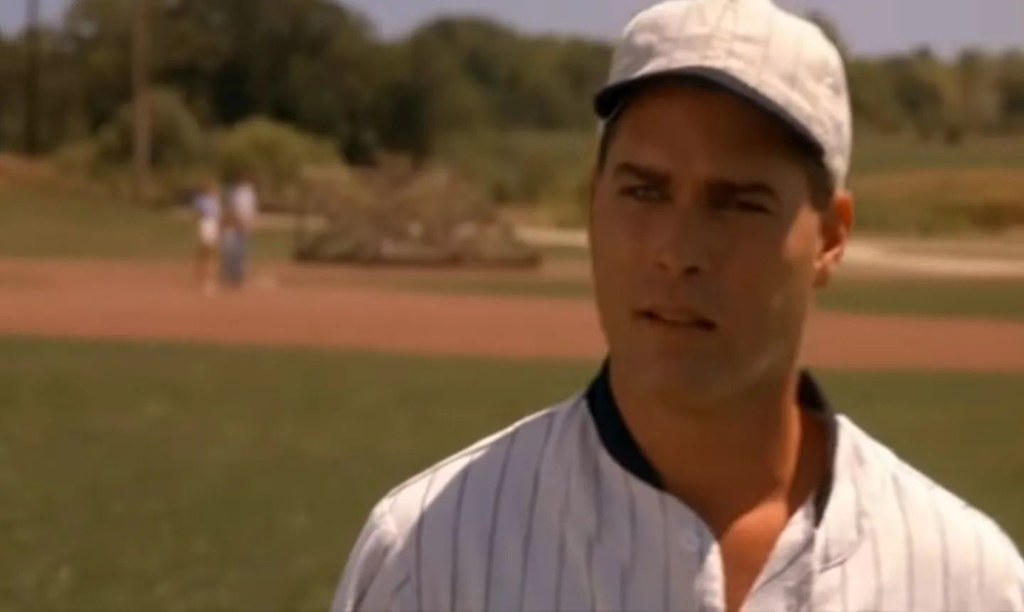

Bob Lanier

I remember when we moved to Allegany, NY in 1981, I started hearing the name “Bob Lanier” a lot. He had been, as far as I could tell, a very good basketball player who had attended St. Bonaventure University, where my father had just started teaching. Even though he’d been gone for ten years by the time we got there, his star was sufficiently bright to still be lighting up local college basketball talk. Lanier led SBU to its only appearance in the NCAA Final Four, and many are convinced to this day that SBU had a very real shot at winning it all that year, until Lanier was injured in the tournament.

[Aside: One of the common clichés of sports opinion is that you can’t, or shouldn’t, blame injuries for your defeats. This is such obvious nonsense that I can’t believe it’s still accepted as true by sports fans and commentators the world over.]

Anyway, Lanier was a huge name in the Southern Tier, and in Western New York in general. I didn’t realize just how big a name he was beyond my local home region, though, until I went to college in 1989. I was in Iowa, a thousand miles (maybe minus a hundred) from home, in a place where if I told people I was constantly explaining that my residence in New York State did not translate to a proximity to New York City. But one night I was at a season-opening dinner for the college orchestra (which also used local musicians from town), and I ended up sitting near an older guy, one of the trombone players, maybe. He asked me where I was from, and I told him, “Near Buffalo, NY.” He asked why I was in small-town Iowa, and I told him it had to do with my father being a professor at St. Bonaventure.

The guy’s face lit up and he said, “Ahhh! Bob Lanier!”

By this time, Lanier’s college days were twenty years in the past and his pro career five, but he was still well-known, that long afterward. Now, sure, Iowa is a state where college basketball is a part of local religion and thus the locals will tend to know their sport a lot better than in other places, but still, that’s impressive.

I’ve read a lot about Lanier’s outreach work after his retirement from the game, and he seems to have been a genuinely good man as well as a gifted athlete. He’s one of Western New York’s better exports out into the world, and I’m sorry to see him go.

(photo credit)

Share This Post

“I’d rather have fewer spectacular theaters than tons of cheap little multiplexes.” –Douglas Trumbull

Filmmaker and special effects guru Douglas Trumbull died earlier this month. His body of work is not large, but its influence is gigantic. For filmgoers of a certain age and a certain disposition to genre–say, 50ish and inclined to fantasy and science fiction–Trumbull’s work is likely as big an influence on how such stories are visualized as George Lucas’s Industrial Light and Magic.

Trumbull was instrumental in the look and feel of such films as Close Encounters of the Third Kind, Star Trek: The Motion PictureBlade Runner, and, probably the granddaddy of them all in terms of lasting influence, 2001: A Space Odyssey. Trumbull also dabbled in directing, with a number of short films and two features, Silent Running (a rather dour environmental allegory that actually makes you care about some robots) and Brainstorm, the infamous sci-fi thriller about a scientist who invents a way to plug memories and images directly into the brain. Brainstorm isn’t a bad film, nor is it a great one, but it certainly deserves better than to be chiefly remembered as the film Natalie Wood was almost done making when she drowned.

Trumbull’s experience on Brainstorm led to him never directing a feature film again, and it’s not hard to see why, given the tragic death of Wood and the subsequent attempts by MGM to kill the production entirely. I can’t assess Trumbull’s directorial skill on the basis of just two movies, but I do know that he was a huge part of the visualization of science fiction at the time I was being shaped most strongly by it. Trumbull’s work tended to be on the less action-oriented side of the genre; he wasn’t much for the “Explodey Spaceshippy Goodness” side of things, but rather he was an excellent visionary at creating futures that were plausible and beautiful. Even in the case of Blade Runner, a noir thriller that takes place in a rain-soaked Los Angeles of seemingly unending darkness, Trumbull infused the bleak cityscape with a type of beauty.

Trumbull’s work on Close Encounters of the Third Kind is particularly legendary, in the way he uses bright bursts of colored light throughout to suggest the UFOs until the film’s climax, when he gives us the Mothership in all its glory:

I can look at this image and fill in the exact chord from the John Williams score at this moment….

You can watch this scene here. Remember that none of the actors had any idea what they were reacting to, so it was up to Trumbull to make their reactions worth it. Obviously, he nailed it.

And then there is his now-legendary work on Star Trek: The Motion Picture, a film whose reception was mixed at the time (and remains so to this day), a film whose transition from planned teevee series to feature film was no doubt pushed along by the wild success of Star Wars two years before. But ST:TMP was a different kind of movie than Star Wars, a film in which there’s no “pew pew” action, and in which the main developments are all conceptual. Trumbull’s effects work had to carry a disproportionate amount of the film’s emotional heft, and for me, they rose to the occasion. One sequence that occasionally gets cited as an example of the film’s visual excess is the long fly-by of the Enterprise, but I have never been one of that sequence’s detractors. Here’s a video where Trumbull discusses his approach to that scene, as well as the lighting of the Enterprise itself:

That is fascinating stuff: Trumbull discusses the technical aspects of the shot, but also the thinking that went into it, the nature of the sequence in terms of the film’s storytelling, and he even singles out Jerry Goldsmith’s amazing contribution.

Douglas Trumbull’s innovations and achievements may seem a bit quaint in this day of computers being able to shape just about any scene a human can imagine, but they were innovations. Before 2001: A Space Odyssey, the idea of a film showing a starfield that actually looks like what you see when you go outside on a cloudless night and look up, and then being able to pan across that starfield, was unheard of. Every Star Wars movie’s opening pan across the stars, after the opening crawl, is owed to Douglas Trumbull.

When I started looking up Trumbull’s career information for this post, I remembered his body of work being larger than it was. That shows just how big the man’s influence was. You really can’t tell the story of science fiction and fantasy filmmaking of the last sixty years without giving Douglas Trumbull a big credit for how things look and feel. His reach will endure. I know this because it already does.

Finally, I note that films to which Trumbull was attached, either as director or visual effects supervisor, always seemed to boast great filmscores. I leave with two examples.


Share This Post

For Mr. Teachout

I’ll take an earnest person over a hip person every day, because hip is short-term. Earnest is long-term.

–Randy Pausch, “The Last Lecture”

Terry Teachout died the other day, at the age of 65.

Mr. Teachout was a critic, playwright, and commentator on the arts, primarily for the Wall Street Journal, but he was also a blogger from the early heyday of the format until his last entry, eight days ago. His blog was a daily read of mine for a long time, but as blogging went from Hot New Thing to Quaint Old Pastime in less than ten years, I regret to say that I lost touch with his work. A few years ago I suddenly remembered him not randomly, but when someone re-tweeted something of his on Twitter. I immediately followed him there and started reading his blog again, and my life was better for it.

Better writers than me have talked about Terry Teachout’s skill and perceptive criticism, and his enthusiasm for the theater and his other interests. Teachout was not the kind of critic to constantly hurl verbal knives and barbs at objects of his disdain. No, he was the kind of person to talk with endless and infectious enthusiasm about the things that moved him, the things that he loved. This is not to say that he loved everything, because he most certainly did not; but Terry Teachout was the kind of critic who even after his many years of doing the job, still seemed to approach each and every new thing he encountered as if it would be the next thing to change his life.

Teachout was also known for keeping a wide view of the theater world. He could have simply focused on the New York theater scene and left it at that; after all, the New York theater scene has riches aplenty for an entire life. Instead, Mr. Teachout would regularly travel and report on what he found in regional theater companies, in other cities, in places beyond the limits of Broadway and its environs. Even though he often wrote about things that I know very little about (if anything at all), his erudition and infectious curiosity and enthusiasm always shone through. His attitude toward the arts were a model for me.

Terry Teachout was devoted, openly so, to his wife, even through terrible health struggles that had her on the lung-transplant list for years. He frequently wrote about how they had to be prepared for them getting “the call” at any moment, at which time they would have to drop everything and rush to the hospital so Mrs. Teachout could get the transplant. This eventually did happen…but there was no happy ending, sadly; Mrs. Teachout died, and still, Terry Teachout soldiered on, taking in art and music and sharing the things that he found to try to keep some form of light in his life. It was the kind of poignant courage that often boggles the mind, even for those of us who have endured very awful things.

But then, just in the last year or so, Terry Teachout found love again. His life was again blossoming, and he wrote with new joy about the partnership he’d just found that was bringing light and love to him again. It really seemed like he was about to find some kind of happiness…

…but instead he died suddenly the other day. Word of his passing hit social media like a bomb, and the outpouring of love for him was astonishing. I am by no means alone in my admiration for Terry Teachout. Here is just one remembrance, from Alex Ross:

Terry had a great deal to do with the fact that I started this blog back in 2005. I saw him seldom in person, but he was a constant presence in my life nonetheless, through his writing and through social media. He was, as Ethan Iverson comments, an uncommonly generous soul who seemed incapable of holding a grudge. His inexhaustible attention to theater across the country was a model for me as a critic.

I like Mr. Ross’s initial point there: I forget it now, but Terry Teachout’s early entry into the blogging world did enormous good in demonstrating in an odd political time that blogs didn’t have to be about politics only. In the early 2000s, blogging was almost exclusively the purview of people arguing the merits of war in Iraq. Terry Teachout did something different, and he enriched the online world immensely in doing so. (Oh, and read the Ethan Iverson piece Mr. Ross links.)

I close, as Mr. Teachout liked to close most nights on Twitter, with a musical offering. I honestly have little idea how he felt about Ralph Vaughan Williams, although this article offers a hint. I’m offering this, anyway, as a reminder of the need to seek out quiet beauty in a world of noise. I think he’d approve. I hope he would, anyway.

Here is The Lark Ascending by Ralph Vaughan Williams; Sir Neville Marriner conducts the Academy of St. Martin in the Fields, with Iona Brown as violin soloist.


Share This Post

Tony and Patsy

Two giants of my early eating and drinking life, Tony Marra and Patsy Collins, died in 2021.

Patsy ran a bar. Tony ran a restaurant.

Patsy’s bar was called The Burton Hotel, or The Burton for short. It’s located on a street corner in Allegany, NY, and it was one of my parents’ favorite watering holes for much of the time they lived down there. I spent quite a lot of time sitting in The Burton with my parents as they quaffed beers and I quaffed grapefruit soda right along with them (at least until I turned 21).

I suppose The Burton was what you would call a “dive bar”, though I confess that I used to think describing a bar as a “dive” meant something disparaging: it indicated a place that was kind of dingy and crappy, dirty and dark and not a very nice place to be.

Not so, obviously. A dive bar is an unpretentious bar, and might be quite a few years–or decades–old. A dive bar is the place frequented by locals, and often you can tell where a dive bar is less by the bar’s sign than by the neon (or, nowadays, LED) beer signs decorating the outside. The clientele of a dive bar tends to be the locals; it’s the kind of place where, well–where everybody knows your name, if you go there with any frequency. It’s not the kind of place where you’ll get the best drinks ever, or where you’ll find cutting-edge mixology where bartenders experiment with smoke and a dozen kinds of bitters and CO2 canisters–but it is the kind of place where the beer is always cold, where there are packages of Beer Nuts for sale, where the game (or a game) is always on teevee.

The Burton is apparently well-known for its burgers–very well-known, as in, “often cited on Best Burger lists” well-known–though I never had one when we were going there. Apparently back then their kitchen was not open very often. Nights at The Burton would often go longer than expected, and there were more than a few educational conversations directed at me on the way home after such nights. It’s a dark underbelly of such places that…well, sometimes bar talk in places that are fairly rural, completely white, and generally conservative can veer into unpleasant areas. I’ll just leave it at that.

But things changed as St Bonaventure University, the local college, stared developing a reputation as a party school. The Burton was–and maybe still is!–the bar closest to campus, and as such at some point it started filling up with college students. Patsy Collins had been running a successful bar up until then, but after that he was running a local institution. The Burton was, first and foremost, a beautiful bar. I mean, look at this bar!

It was hard to find photos of the entire bar, but these give an idea. It’s changed a bit since I was going there with my parents, but…not really a whole lot. I don’t recall any signage listing available beers at the time, when the bar was frequented by locals who knew what they wanted to drink.

And here’s a better look at the Art Deco lights that flank the main body of the bar:

Like all such lights, they’re more effective at night, in the dimmer light of the bar itself, but how bad can a bar be if it has Art Deco tasteful nudes as part of its decor? Not bad at all, that’s how.

The Burton is still chugging along, keeping synapses of the Southern Tier well-lubricated. Patsy Collins’s legacy lives on.

Patsy Collins himself was a kind man who laughed a lot–I remember well his rich baritone laugh, there was always lots of laughter in that bar!–and who by the time we knew him was tending bar less; his son Chuck had taken over the majority of those duties. But Patsy was there a lot, holding forth on various items of interest from one of the stools in his low voice. He did not have a long commute: he lived on the opposite side of the same street, a few doors down. His house was quite lovely, and his wife did a great job of converting it to a virtual “gingerbread house” each Christmas. (If I can find a picture of that online, I’ll post it.)

When Patsy Collins retired, he gave over the Burton to son Chuck and his daughter Crisanne. Just last year (or maybe the year before) Chuck and Crisanne decided it was time for them to get out of the bar game, so they sold The Burton to a couple of investors who are St. Bona alumni. From all reports, they are still running the place true to what it always was.

And I’m still wondering about those burgers.

Then there was Tony Marra, who along with his wife Marilyn ran for many years a bar and restaurant on the same street as The Burton, just a few blocks down. Their place was called The Bird Cage. In retrospect, maybe it was a dive bar too–though it did have a beautiful dining room. We didn’t go in the dining room much, but it was a lovely place, decorated with all manner of avian bric-a-brac in keeping with the place’s name. Marilyn served and ran the bar; Tony did most, if not all, of the cooking.

We ate there pretty much once a week, every week, while we lived in the Southern Tier. We went on Thursday night most weeks, because The Bird Cage ran a special on chicken wings on Thursdays. I don’t remember what the prices were, but we’d get both breaded and Buffalo wings, along with some other deep-fried delight–Tony made “Irish Wings”, which were steak fries tossed in Buffalo wing sauce–and wash it all down with, well, more beer than we probably should have been consuming. (Our beer at the time was an ale called Red Wolf, which was discontinued a few years later, sadly enough. This may have been a good thing, though. Red Wolf certainly wasn’t a great beer, but it was smooth and very drinkable, especially in large quantities with deep-fried bar foods.)

Until we moved away from Allegany in fall 2000, we were weekly (or more than weekly) regulars at The Bird Cage. How regular? Well…The Daughter was born not long after midnight on a Saturday. The very next Thursday? We were at The Bird Cage, with our five-day-old kid along for the ride. This worked out pretty well, as there were plenty of folks among the bar crowd who were willing to hold a baby for a bit.

Before Tony and his wife, Marilyn, opened The Bird Cage, they worked for a restaurant down the way called Antonio’s. Antonio’s was a nice place that I remember fondly, especially its cocktail lounge section with plush leather chairs, low tables, and a sunken bar. Here’s what Antonio’s looked like:

It’s hard to tell in the photo, but those shelves are a massive collection of liquor bottles. I’m a bit fuzzy on the ownership of Antonio’s; I don’t think that Tony Marra actually owned it, but I may be wrong. Eventually Antonio’s changed ownership completely, becoming a place called Pasta Luigi, and Tony and Marilyn took ownership of a bar once called The Village Inn. This became The Bird Cage. The Marra family was once a major family in the Olean region’s restaurant community, but that dwindled until Tony and Marilyn were the last ones running a restaurant. All eras end, sadly.

As for Antonio’s/Pasta Luigi: the latter restaurant eventually closed too, and the building was demolished. Now, from what I can tell, a beverage-redemption place stands on that spot [that’s a store where you can buy beer and redeem all your cans and bottles for $.05 each, thanks to New York’s bottle law]. About a half mile up the road used to stand Olean’s once-beloved Castle Inn, which is also now but a memory.

I know that The Bird Cage actually moved some years after we left the region, shifting into a location across the street, and finally the place had to close entirely when Tony was diagnosed with cancer. This article, from Olean’s newspaper, indicates that Tony and Marilyn were holding out hopes of returning to their restaurant when Tony returned to health, but…it wasn’t to be.

Since we left the Southern Tier more than twenty years ago, we’ve never found a bar/restaurant to fill the same role in our lives that The Bird Cage or The Burton once did. That’s for various reasons: finances, family stuff, and later on, The Wife’s celiac disease. We’re just not “bar people” anymore. But I have a lot of great memories, some sharp and some that are admittedly pretty hazy (remind me not to write about “Pig Roast Weekend” at The Bird Cage any time soon, because let’s just say that if we didn’t manage to convince Annheuser-Busch to keep Red Wolf Ale in production after those three nights of consumption, nobody was going to do so), of the handful of years when we were bar people. Tony and Marilyn Marra also helped send The Wife and I off in the first place: Who else would we have trusted to cater our wedding?

I think that in 2022, though, I’m going to at least try to figure out how to make Irish Wings. I think that would make Tony happy. 

(Oh! And Tony was a Seattle Seahawks fan! At least he got to see his team win a Super Bowl!)

Photo credits: The photos of The Burton are from here and here. I found the photo of Antonio’s on a Facebook group called “Olean Memories Back In Time”, which is exactly what it says: a group dedicated to nostalgic remembrances of a once vibrant small city in a region that the world has mostly left behind. I wasn’t able to find any photos online of The Bird Cage in its original incarnation, the one I knew so well before we moved.


Share This Post

Farewell, Paddy Moloney

Paddy Moloney, 1938-2021 (image: stereogum.com)

Paddy Moloney, the great front-man for the Celtic band The Chieftains, has died. He was 83.

In my musical life, Paddy Moloney ranks very high. Very high. When I list musical figures who shaped my world and the way it sounds in my heart, Paddy Moloney is right up there with John Williams, Hector Berlioz, Sergei Rachmaninoff, Leonard Bernstein, Annie Lennox, and Sam Cooke. I can tell you when I first heard each one of those artists, and I can tell you when I first heard Paddy Moloney and The Chieftains.

I don’t know why I remember this with such clarity, but remember it, I do. It was late in my high school career, maybe my senior year, or it was in my first college year, when I was home. We had taken a day trip like we often did to Erie, PA, and a shopping mall there. After the hours at the mall, there was another store in an outparcel that my parents wanted to visit, but I opted to sit in the car, reading and listening to Erie’s classical music station. At this time, living in Allegany, NY, classical music on the radio was a rare luxury that involved driving an hour in any direction. Before the Internet, before cell phones.

At this point in the day, there wasn’t actual classical music playing on that station. Instead there was a weekly program called Thistle and Shamrock, that featured something called “Celtic” music. I had no idea what this music was. I would later learn that it was a larger genre that included an artist whom I had discovered not long before, a singer named Enya (wait a minute! If this is post-Enya, then this is during my college years, because I remember with equal clarity when I first heard Enya: in the record store in a shopping mall in LaCrosse, WI, where we stopped on a college visiting trip. Thanks, memory!). But it took all of five minutes of listening to Thistle and Shamrock (hosted to this day by Fiona Ritchie) to realize that Celtic music was much, much, much more than the New Age-tinged dreaminess of Enya.

I would later buy a Chieftains CD as part of one of my orders to the BMG Classical CD Club (the less said about my experiences with fiscal insanity that were driven by my several memberships in BMG, the better). The CD was Celtic Wedding, and from that one disc sprang a love of Celtic music that has lasted me in all the days from that to this. This genre ranks just behind classical and film music in my heart, and I often find that a rough mood is soothed by listening to some wonderfully melodic and rhythmic Celtic music. All of this came from hearing The Chieftains, and Paddy Moloney.

Paddy Moloney, and by extension The Chieftains, were extremely versatile and dedicated to exploring every byway of Celtic music they could. Albums were coming out constantly, sometimes more than one a year, and the focus was always something new. There was a holiday album that nevertheless broke new ground, and there were duet albums with the likes of Van Morrison. Moloney and friends were not content to keep to the British Isles, either: they did albums with Canadian artists, and that Celtic Wedding album actually explored the Celtic music of Brittany. They did an album of Celtic-inspired music from the northern regions of Spain, and they did several albums with Country-Western stars, since a lot of the original settlers of the hills of Appalachia were actually descended from Scots and Celtic peoples, meaning that the folk music that eventually became a part of Country music in America sprang originally from older Celtic material. The Chieftains appeared in film scores

Paddy Moloney was a great ambassador for music, a constant force of admirable curiosity and of good cheer, and he was also a fantastic musician in his own right. The music world is poorer for his loss, but immeasurably richer for his having been here at all. As am I.

Thank you, Paddy Moloney. I hope ye were in Heaven a half hour ‘afore the Devil knew ye were dead!

And now, some music.


Share This Post