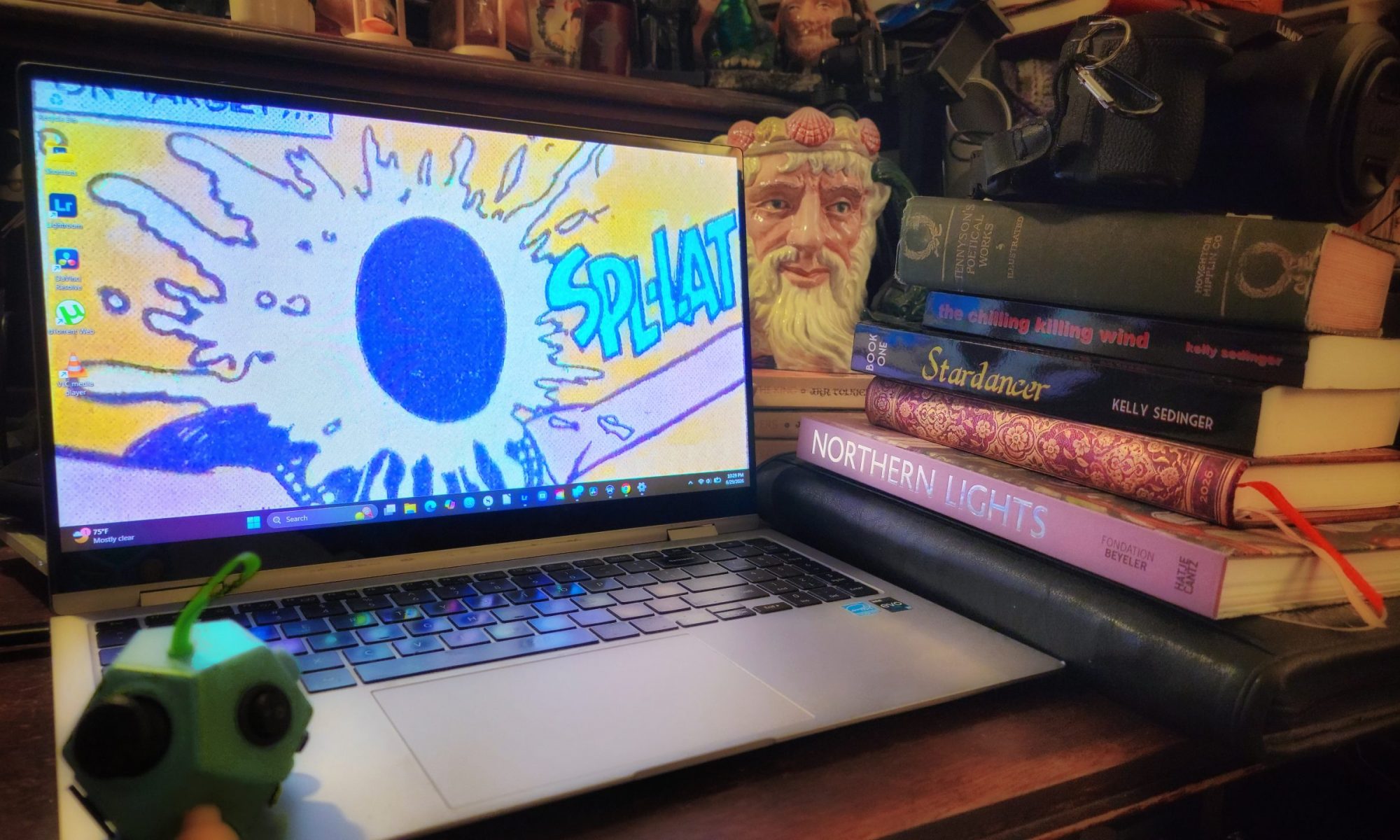
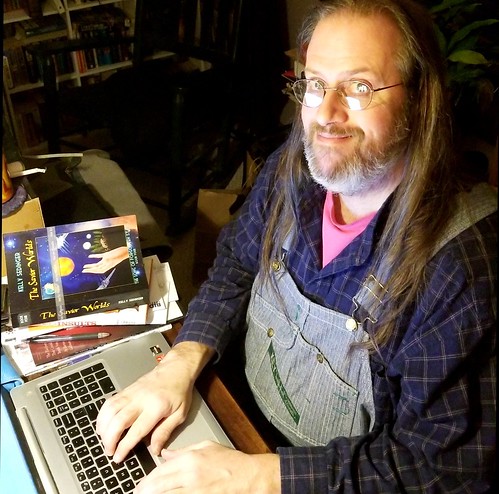
“Once more unto…unto the thing into which we go once more!”

Happiness is writing!

 In other exciting news*, after a really long time not producing any new fiction copy, I have at last returned to drafting. It’s time to get FORGOTTEN STARS V done. I decided some time ago to start drafting it on January 1, and start I did! I spent December thinking about the story and drawing up notes, because this series is now at a point where I really can’t get away with “winging it” each time out, as I’ve previously done. With each previous volume I’ve had a vague idea of what I wanted to establish in each book, in terms of the larger story, but no more than that. However, in Book V we reach (and pass) the halfway point in the series, so it’s time for me to figure it all out. Or at least most of it.

OK, I’ve figured out more than I knew before.

I’m actually considering drafting each of the next three volumes in succession, because I don’t like the slower pace at which the books have been coming out. If that’s what I end up doing, I’ll likely be working in the FORGOTTEN STARS universe for the next two years. I’ve not spent this much time in one world of mine, all at one stretch, before, so we’ll see how this goes. Wow!

As for my actual writing session, it went pretty well, considering I haven’t actually written any new fiction copy in a long time. My last drafting was on Lighthouse Boy, Book II, which I had to set aside when I ran into a narrative rut that will require revision of Book I to untangle, and meantime, I really need to get the FORGOTTEN STARS series back on the front burners. After some hesitant initial typing, I got into the familiar rhythm again. It reminded me of this passage from Stephen King’s On Writing: A Memoir of the Craft, in which he discusses coming back to writing after he finally achieved sobriety:

Little by little I found that beat again, and after that I found the joy again. I came back to my family with gratitude, and back to my work with relief–I came back to it the way folks come back to a summer cottage after a long winter, checking first to make sure nothing has been stolen or broken during the cold season. Nothing had been. It was all still there, still all whole. Once the pipes were thawed out and the electricity was turned back on, everything worked fine.

Of course, that’s how it went today, and that’s just Day One of writing what is always quite a long book. We’ll see if I still feel the same when I have one of my inevitable days when I have no idea what’s happening and I feel like the whole thing was always just a terrible idea and I’d be better off selling shoes. (Do they even sell shoes anymore? The way they used to? With people who measure your feet on the little thingie and disappear out back to find the shoes in your size? Is that a thing?) But for now, I’m off to a decent start.

Not a bad first day of drafting! #amwriting #writersofinstagram #WritingCommunity #sciencefiction #spaceopera #forgottenstars

I want to get this book drafted by my birthday, which is in late September; so setting my goal at 180,000 words, this puts my quota at a manageable approximately 700 words a day. Of course, the story might enlarge in the telling, because…they usually do. Anyway, onward and upward! Zap! Pow!!

* Wait, I didn’t even post the first exciting news yet? Sheesh! Look for that sometime Saturday. It’s also about the FORGOTTEN STARS series….

Share This Post

2020: [sigh of not really relief, but not defeat either]

 It’s time for my annual wrap-up quiz. Warning: I’m writing about 2020 here. Trigger warnings galore! And some political bluntness, for which I’ll say, if you disagree with me, well…I do not care. For a taste of how I’ve been seeing the year just gone by, consider this tweet:

It’s been my view for some time that everything going wrong for America and for the world, all of it, consists of self-inflicted wounds, and I have seen nothing to make me think otherwise for even a second.

But now, on to the quiz.

Did you keep your New Years’ resolutions, and will you make more for next year? 


 My resolutions never change much: “Read a lot, write a lot, eat healthier, walk more, listen to more music.”

As these go, not bad! The toughest one is “eat healthier,” which is a back-end kind of thing: I have no problem finding newer healthier foods to like. It’s staying away from the less-than-healthy ones that tends to trip me up! This is something I need to work on big-time.

As for the rest, it was a decent year. I wrote a fair amount (though a lot of my writing time this year was spent on editing existing manuscripts, so drafting was on the backseat for a chunk of the year). Reading was a constant, and I really have made effort to listen to more music! 


Did anyone close to you give birth? 

 Nope. 

 
Did anyone close to you die? 

 I suppose it’s almost miraculous that in the Year of COVID, my answer to this is, No. But I know of people who have died, and people close who have suffered a lot of loss (and not all of it COVID driven, since the rest of Death didn’t exactly go on holiday because of the pandemic). 

 
What countries did you visit? 

 In my mind? Tons. 

 
What would you like to have in 2021 that you lacked in 2020? 

 A Federal government that isn’t led by a delusional authoritarian grifter whose appeal is distressingly wide. 

 
What was your biggest achievement of the year? 

 It was 2020. I got to the end of it without having contracted COVID-19 as of this writing. This was not a year for grand accomplishments, I suspect…though I did get a book ready for release, and more! Detail to come in another post. 

 
What was your biggest failure? 

 I took entirely too much random delight in chucking rocks at online trolls. 

 
What was the best thing you bought? 

 I probably bought way too much stuff this year–adding to the overalls collection and purchasing books, of course–but the thing that’s brought the most direct happiness to my ongoing existence is the pair of Bluetooth ear buds I picked up in June. I had watched a YouTube video that was randomly recommended by that platform’s algorithm (why, I’m not sure, it was just someone’s “day in the life” video diary thing), in which a person put on earbuds that had hooks to go over the ear, and I thought, “Wait, they make those?” A bit of Googling turned up my Soundcore buds. 

 
Whose behavior merited celebration? 

 Anyone who wore a mask and socially-distanced themselves, no matter how hard it may have been to do so. 

 
Whose behavior made you appalled and depressed?

Not even my skills with the English language can convey my disappointment at how much farther the Republicans can descend in this country. As I write this, a bunch of them in Congress are gearing up to “object” to the certification of the Electoral College results, based on zero concrete evidence of any “fraud” whatsoever. It’s pure banana-republic dictator shit, this business of “We respect the election as long as the guy in charge wins” and it’s just appalling. Add to that the QAnon lunatics, the science deniers, and the ones who refuse to wear masks or maintain social distance because of “FREEDOM!”, and you’ve got a deeply dangerous state of affairs in this country. We can’t long survive this large a percentage of our citizenry being completely off its collective rocker.

I’m also disappointed in what I see as America’s rejection of collective thinking and its growing lack of imagination, but that will have to wait for another post. 


Where did most of your money go? 

 Books, booze, food, gifts, and vintage overalls. And I paid down some debt, which was nice. 

 
What did you get really excited about? 

 In 2020? Day trips to Ithaca and Letchworth and the Finger Lakes area. New flavors I’ve tried. I’ve made green tea a part of my daily routine of late, and I’m loving it! (I also discovered just this week, when the last of my Christmas gifts came in the mail, just how much tea is in a pound of the stuff. Note to self: order the stuff 8oz at a time, moving forward.)


Compared to this time last year, are you happier or sadder?


Oh, who the hell knows. On a personal level I’m pretty happy and doing fine. When I start thinking societally, though–ugh.

On a political note, I’m really increasingly disappointed by my country. Maybe I’ll write more about this later, but re-electing the Joni Ernst’s and the Susan Collinses and the Mitch McConnells of the world is a staggering failure of citizenship, and the fact that more than 70 million of my fellow Americans looked at the current state of affairs and decided that they were fine with it is horribly depressing. 


Thinner or fatter? 

 A bit thinner! No idea about the poundage, but I own overalls for which I have never been able to fasten both sets of side buttons–and now I can. This amazes me. Now, my progress in that regard has probably taken a small beating the last few weeks, but I did develop some healthier eating habits in 2020 that won’t be hard to replicate. I can still do the “gluttony” thing on occasion, but I’ve finally reached a point where doing so is fun for a very short while, but then my brain goes, “Oooog, gimme salad and fiber and lean protein, please.”

 
Richer or poorer? 

 I’m doing better than a lot of Americans. And we all should be doing better, shouldn’t we? I really hope I live long enough to see this country finally start to pivot away from the trickle-down, “If we just let rich people have more and more money they’ll eventually rain it down upon us all” bullshit that’s been the economic wind in America’s wings since 1981.

I’ll say this for American conservatism: when it managed to convince most of America that the major factor holding them back was what government was taking out of their paychecks instead of what their employers were never putting in their paychecks in the first place, it won a rhetorical victory for the ages. 

 
What do you wish you’d done more of? 

 As always, reading, writing, and walking. (Same as last year.) 

 
What do you wish you’d done less of? 

 Chucking rocks at right-wing trolls online. Yeah, it’s fun to mute them and watch them reply anyway, but still…it’s not a terribly productive use of time! 

 
How did you spend Christmas?

With family. We used FaceTime to include my sister, which was…well, obviously it’s not the same, but it was actually a fun way to manage to include someone who wasn’t able to be around due to circumstances and shit. Other than that, Christmas was what it always is for us: a quiet time spent with family. I don’t come from a large and close extended family, and The Wife’s family lives far away as well, so Christmas has never been about large gatherings and traveling around to multiple houses to put in appearances. It’s always been about home, and I expect it always will be. I hear people complaining about how their holidays were ruined by COVID, or how they were going to defy the Big Bad Government to go to their giant get-togethers, and I reflect anew on the degree to which this particular crisis has forced an awful lot of Americans into my lifestyle. I haven’t yet figured out to what degree their reactions to this amuses me or depresses me, but it’s definitely some of both. 


Did you fall in love in 2020? 

 She’s from the Niagara Falls area, you don’t know her. 

(Yes, that’s a quote from The Breakfast Club.)

 
How many one-night stands? 

 Come on. I never had one-night stands when they were an option. 

 
What was your favorite TV program? 

 ABC canceled Bless This Mess, which was a hilarious fish-outta-water sitcom about two NYC liberal hippie-types who inherit farmland in Nebraska, so eff you, ABC. (The show was not about “Let’s make fun of the hicks!”, if you’re thinking along those lines. It was a collection of zany weirdos and full of character-driven comedy that was some of the funniest stuff I’ve seen in years. If you watch it, the short first season–only six episodes, if I recall correctly–is mildly amusing, but the show didn’t take off creatively until the second season, which was sadly the last.)

ABC also had a cool detective show called Stumptown, set in Portland, OR, that I liked a lot. They renewed it for a second season…and then when COVID shut down production, they ended up canceling it instead. Curse you, ABC!

CBS has a sitcom called The Unicorn which we like a lot. This follows a widower as he starts to emerge from grieving; he has two teenage daughters and a wonderful support system of friends around him. This show is in its second season and is worth checking out. It’s sometimes bittersweet, but it’s never depressing.

Oh, and we like The Mandalorian a great deal. We’re slowly watching Season Two now, rationing it out for maximum enjoyment. Of course, the Internet has already seen to it that I’m spoiled and know what happens at the end, so thanks, Internet. Sheesh. 

 
Do you hate anyone now that you didn’t hate this time last year? 

 I really don’t like hatred and I try to avoid it. 

 
What was the best book you read? 

 I refer you to my Books Read in 2020 post from the other day, where my five-star reads are highlighted in bold

 
What was your greatest musical discovery? 

 Oh, music! Music might have saved me this year, to the point where this blog was almost exclusively a music blog for a whole lot of the time. Aside from my year-long deep dive into Beethoven, I also did a lot of listening to the work of Black composers, which often featured in my semi-regular Tone Poem Tuesday posts. This was a partial response on my part to the Black Lives Matter movement, because surely one way we can start to acknowledge the importance of the Black lives that we whites have for so long completely marginalized and ignored is to engage with Black art. This will remain a focus of mine, moving forward.

As far as specific Black composers go, I’ve really become a fan of Florence Price, whose music I featured several times.


Non-classical? Well, none of these were “discoveries”, but I’m discovering a real fondness for ELO, which I am starting to consider one of the most underrated bands in history, and Taylor Swift, whom I am starting to consider simply a genius.

 
What did you want and get? 

 President-elect Joe Biden. 

 
What did you want and not get? 

 A United States Senate not ruled by Mitch McConnell, whom I believe to be the single worst American of my lifetime. (Though, if Georgia voters manage to come through, I still may get this.) 

 
What were your favorite films of this year? 

 2020 was the first year of my life that I never set foot in a movie theater, and I only watched a single movie new to me, courtesy of Netflix. That was Enola Holmes, which I enjoyed greatly.

I love film and I wish I had more time to watch them. I suspect my retirement, when it finally comes, is going to be a big film-fest. 


What did you do on your birthday? 

 I don’t remember specifically what happened on my birthday, but my sister was in town and we did some antiquing and visiting comics stores. The next week was our annual trip to Ithaca and the Finger Lakes, which took on a very different tone given that the annual Apple Harvest Festival was canceled due to COVID. 

 
How would you describe your personal fashion concept in 2019? 

 It’s a struggle, every morning: “Which shirt do I want to wear with which overalls?” 

 
What kept you sane?

Books and music and dogs and cats and overalls. Walks in the woods and by the water. I cope best when I’m allowed to focus my energies inward. 


Which celebrity/public figure did you fancy the most?

I’ll give a shout-out to author and podcaster Dana Schwartz, who is a fine writer and the host of the wonderful podcast Noble Blood, which focuses on the sordid and grim side of history. There have been episodes on each one of Henry VIII’s wives (not all of whom were beheaded!), and a particularly effective episode about King Leopold II of Belgium and how he spearheaded some of the bloodiest acts of African colonialism. My favorite episode focused on one of my favorite stories from the history of science, the life of Tycho Brahe. Schwartz focuses that episode on Brahe’s life, instead of coming at it from the standpoint of Johannes Kepler, as most commentators do.


What political issue stirred you the most? 

 God, so many to choose from…but Black Lives Matter remains staggering to me. That a cop could just casually kneel with his knee on the throat of a black man until he died is one of the most appalling things I’ve ever seen, closely followed by the ability of so many white people to argue that there was really nothing at all wrong with this.

And there’s also my country’s response to COVID-19, a response so perfect in its malignant incompetence and rejection of science that it truly makes me believe that whatever greatness lies in store for humanity, America will no longer be much of a factor in driving it. 

 
Who did you miss?

The geeky people who frequent the local cons! I was just starting to get comfortable with the idea of hanging out at local conventions and trying to market myself there (I was even going to release Book Four of The Song of Forgotten Stars at Nickel City Con in May), but that’s gone. I miss festivals–Ithaca’s Apple Harvest Festival, the Sterling Renaissance Festival, various others that we like to frequent. I miss some favorite local restaurants that we pray manage to hold on long enough for the vaccine to finally start beating back this virus. 

 
Tell us a valuable life lesson you learned in 2020: 

 The same ones as always:

Read a lot, write a lot. Listen to music. Go for walks and look at sunsets. Take all the pictures you want. Learn new things and try new stuff. If you have a dog, take him for walks. Buy books for your daughter, even when she complains that she likes to pick her own books (let her do that, too). Nothing fits your hand so well as your lover’s hand. Eating out is fine, but learn to cook things, too. Have a place to go where they know you and what you order. Don’t be afraid to revisit your childhood passions now and again; you weren’t always wrong back then. Overalls are awesome, it’s OK to wear double denim, and a pie in the face is a wonderful thing!


To all of this I would add something that wasn’t really a lesson I learned in 2020, but which I saw illustrated in events so stark as to have it all be writ large in the fiery letters in the sky: The United States of America desperately needs to re-embrace rational and collective thinking, and ditch its mythologies about rugged individualism and the eternal wisdom of “the Founders”.

I’d sum it up with a quote from the afore-mentioned Enola Holmes: “Our future is up to us.” 


If you take selfies, post your six favorite ones: 
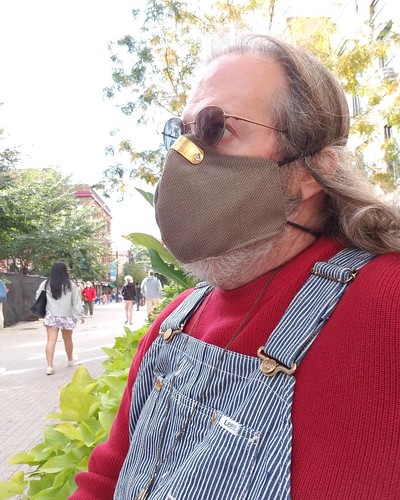
Oh, to have reached another weekend! #sigh #overalls #dungarees #biboveralls #vintage #gap #gapoveralls #bluedenim #denimoveralls #overallsarelife #vintageoveralls
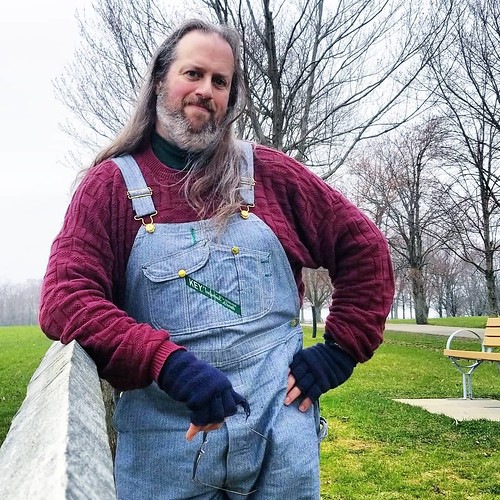
Another in my ongoing "Possible Future Author Photo" series! #overalls #dungarees #biboveralls #vintage #key #keyoveralls #herringbone #vintageoveralls #overallsarelife #sweater #sweatersandoveralls
Just a casual guy in the forest #ChestnutRidge #wny #orchardpark #spring #nature #hiking #trees #overalls #dungarees #biboveralls #key #keyoveralls #bluedenim #denimoveralls #overallsarelife
This pandemic has done wonders for my vintage overalls collection. New Ely overalls FTW! #overalls #dungarees #biboveralls #vintage #ElyOveralls #denim #bluedenim #rawdenim #denimoveralls #vintageoveralls #overallsarelife
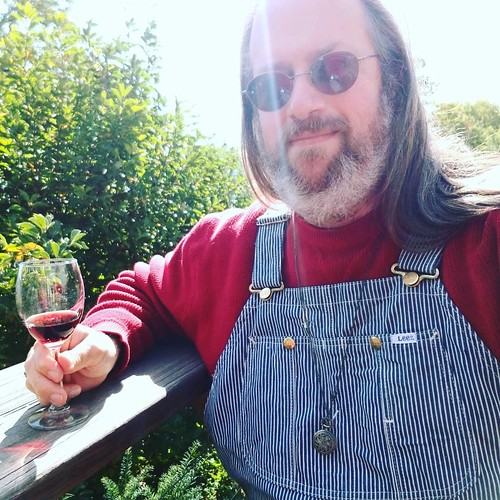
Wine tasting on a crisp fall day! #UpstateTravels #wine #yum #overalls #dungarees #biboveralls #vintage #lee #leeoveralls #hickorystripe #denimoveralls #overallsarelife #vintageoveralls #sweatersandoveralls
What a perfect day it was! #ahhhhh #basking #overalls #dungarees #biboveralls #vintage #lee #leeoveralls #hickorystripe #denimoveralls #overallsarelife #vintageoveralls #sweatersandoveralls
A manufactured pose while my coffee steeps. #ootd #overalls #dungarees #biboveralls #vintage #lee #leeoveralls #hickorystripe #denimoveralls #overallsarelife #vintageoveralls #doubledenim #denimondenim
Finally the coffee was done. #yum #coffee #overalls #dungarees #biboveralls #vintage #GuessJeans #GuessOveralls #blackdenim #denimoveralls #overallsarelife #vintageoveralls #plaid #flannel
Yeah, I’m doing eight, because I can.


Quote a song lyric that sums up your year:


Boy, have I been dreading this question. A song that sums up 2020? How could there possibly be a musical expression of how this awful year was and the effect it had…but maybe, just maybe, 2020 was sufficiently calamitous to provoke at least a beginning to a long-needed reassessment of the American paradigm of life, business, and profit?

This made me remember the last episode of House MD, which ended as Dr. House, having faked his own death, took off on a motorcycle trip with his best friend Dr. Wilson, who at this point was dying of cancer and had only months left. As they motor off into the hills, this song played out the end of the show, and if this is a bit morbid (and maybe sexist in one verse), well…these are the times in which we live.
So here’s Guy Lombardo.
You work and work for years and years, you’re always on the go
You never take a minute off, too busy makin’ dough
Someday you say, you’ll have your fun, when you’re a millionaire
Imagine all the fun you’ll have in your old rockin’ chair
Enjoy yourself, it’s later than you think
Enjoy yourself, while you’re still in the pink
The years go by, as quickly as a wink
Enjoy yourself, enjoy yourself, it’s later than you think
You’re gonna take that ocean trip, no matter come what may
You’ve got your reservations made, but you just can’t get away
Next year for sure, you’ll see the world, you’ll really get around
But how far can you travel when you’re six feet underground?
Your heart of hearts, your dream of dreams, your ravishing brunette
She’s left you and she’s now become somebody else’s pet
Lay down that gun, don’t try my friend to reach the great beyond
You’ll have more fun by reaching for a redhead or a blond
Enjoy yourself, it’s later than you think
Enjoy yourself, while you’re still in the pink
The years go by, as quickly as a wink
Enjoy yourself, enjoy yourself, it’s later than you think
You never go to night clubs and you just don’t care to dance
You don’t have time for silly things like moonlight and romance
You only think of dollar bills tied neatly in a stack
But when you kiss a dollar bill, it doesn’t kiss you back
Enjoy yourself, it’s later than you think
Enjoy yourself, while you’re still in the pink
The years go by, as quickly as a wink
Enjoy yourself, enjoy yourself, it’s later than you think
Let’s make 2021 better, shall we? I’d love to be able to post some optimistic and more cheerful answers to these questions in one year’s time. Remember Ms. Holmes’s quote above: Our future is up to us.

Share This Post

The Ninth: One Symphony to Rule Them All


I’ll have one more Beethoven-related post to wrap this all up, which will mainly be a linkage piece; this post will serve as my main Grand Finale, though. And where else to end with Beethoven’s juggernaut of a masterpiece, the Symphony No. 9 in D minor?

Whether or not the Ninth is Beethoven’s greatest symphony is a matter of debate, and I’m not going to join it here. The main contenders seem to be the 7th, 5th, and 3rd, each of which have strong cases to be made. For me it comes down to the 7th and the 9th, and I probably have a stronger personal attachment to the 9th, since it was my first real deep dive into Ludwig van Beethoven’s symphonic world. Quite a starting point, eh?

It was when I was in high school and becoming keenly interested in symphonic music, to the point that I was examining orchestral scores in an attempt to unlock what secrets I could, with my level of training to that point. (Which was, ahem, not much. But I went ahead undaunted!) I remember the bookstore: A B. Dalton (remember those?) in the Monroeville Mall outside of Pittsburgh, when we were there visiting my sister, who was in college. There was a Dover edition of Beethoven’s Eighth and Ninth Symphonies, in full score.

Dover Publications used to make wonderful copies of music scores in fine books…and apparently they still do! I just now Googled the folks at Dover to see if they were still around, and there’s an active website, so that may be a place that starts taking my money soon…but anyway, I remember picking up the book in that B. Dalton and thumbing through it. At this point I knew nothing at all about either work, so I was completely baffled when I flipped to the last movement of the Ninth and saw…music for voices?

Was this a choral symphony?

Indeed it was…and is.

My sister actually gave me that book for either my birthday or Christmas that year; I procured a recording not long after. My band director dubbed me a cassette of the Ninth, and off I went. The recording was Herbert von Karajan, conducting the Berlin Philharmonic. You never forget your first Beethoven Ninth.

That the Ninth captivated me utterly is unsurprising, as it has been captivating its audiences ever since Beethoven wrote it. The premiere is one of the legendary events in all music, with the deaf composer sitting on stage as his work crashed and hummed all around him…and he heard none of it at all. Imagine the poignancy of one of the musicians, alto soloist Caroline Unger, at concert’s end, putting her hand on Beethoven’s sleeve to turn him toward the audience, that he might see what he could not hear: their applause. When you listen to the Ninth, as with all of Beethoven’s late works, you are hearing the musical realizations of a man who could only ‘hear’ the work in his mind.

Beethoven’s Ninth went on to become one of the most influential works of music ever written. He fired the imagination of many composers with this work, and indeed, the Ninth took on a nearly mystical air as the 19th century wound on. The Ninth was one of Richard Wagner’s favorite works, and it was deep inspiration to both Anton Bruckner and Gustav Mahler, both of whom felt superstitious angst as they approached their own ninth symphonies, as if Nine was a sacred barrier beyond which a symphonist dare not tread. Mahler, having already written eight symphonies when he set out write Das Lied von der Erde (“The Song of the Earth”), thought he might cheat the limit of Nine by not titling this work as a symphony, even though everyone believes it is. Even so, it didn’t buy Mahler much time: he would write his actual Ninth symphony and then die with only a few sketches written for his Tenth.

The Ninth is one of classical music’s true “event” works, often being programmed for concerts that are meant to commemorate specific events. One of the most famous of these was in 1989, when Leonard Bernstein conducted the work in East Berlin, leading an orchestra and chorus drawn from many nationalities. For this concert Bernstein changed the fourth movement’s focus from “joy” (Freude) to “freedom” (Freiheit), in celebration of the fall of the Berlin Wall just a few months earlier. There really is a universality to Beethoven’s Ninth that lends itself to such things. It’s a deeply human work, encapsulating the tortured journey toward joy as imagined by a great composer brought low by deafness.

I thought about writing a lengthy annotation of the Ninth, but time didn’t allow, and besides, I’m not sure if such a thing is really necessary. But there are so many moments in the Ninth that are sheer magic. Here are some of the spots that capture my imagination:

:: The opening bars, with the strings in tremolo, playing only the tonic and the dominant, so we don’t even know if we’re in major or minor key. It’s an opening of total mystery, leading to a stormy march of a movement that is sheer musical relentlessness.

:: And that fiery scherzo, whose opening motifs echo the main theme of the first movement, but in a rhythm that drives, drives, drives forward. Even the timpani gets into the act, pounding out that rhythm in moments that seem to come out of nowhere, no matter how many times I hear the work. But wait! Halfway through the scherzo, Beethoven changes his original time signature and provides, charmingly shocking, a genial “drum and fife” section that eventually yields back to the original scherzo.

:: The double variation of the third movement? I used to have trouble with this movement, not really understanding what Beethoven was up to. It’s certainly a very long movement that leads us into the depths of Beethoven’s mind, as one of the great writers of variations in music history. Somehow Beethoven finds new and enthralling textures each time he winds his way through the long melody that sustains the movement, and then toward the end come the two sets of giant fanfares that are answered by the strings. The woodwinds sing throughout, and the time is marked by pizzicato strings. It’s an amazing movement that once bothered me.

:: And then we arrive at the fourth movement, that gigantic movement that is by itself longer than some of Mozart’s entire symphonies. A stormy passage opens, leading to a remarkable passage where Beethoven quotes each of the first three movements, almost questioningly, only to have the low strings reject each one. After one last declaration by the low strings, we finally arrive where the entire symphony has been leading all along: the famous “Ode to Joy” chorale theme, played first by pianissimo low strings. Beethoven repeats the theme four times, adding to the voices each time (my favorite is the second statement of it, before he adds in the violins but also writes the most wonderful countermelody for the bassoons).

Then the original stormy passage from the movement’s opening bars reprise, before we hear the first of our voices: the baritone soloist, declaring that it is time for a more joyful sound. “Freude!” he cries out, and the choral passage arrives, with the soloists leading through a set of variations on the chorale theme, variations which are answered by the chorus, all of this building to an immense chord that is one of the greatest single chords in all of music…and then the bottom drops out and a Turkish march begins, with Beethoven doing one of his favorite tricks of off-setting the beat.

I won’t describe more than that, save to note that the symphony’s closing moments are one of classical music’s true moments of magnificence. I have never heard the Ninth in a live performance, but I can only imagine that if performed well, it can be an almost overwhelming experience. There is a vastness to the Ninth that makes it a colossus in itself, but this is not at all unique to the Ninth: Beethoven’s greatest works all enjoy this expansive quality, but none are quite so big in their concept as the Ninth. Few works achieve this sense of containing a universe in itself. With the Ninth, Beethoven moved beyond composing music and instead created a world.

Here is Beethoven’s Symphony No. 9 in D minor. Daniel Barenboim leads the West East Divan Orchestra, chorus, and soloists.

Share This Post

Books Read in 2020


Book, beer, and bibs? #reading #yum #beer #overalls #dungarees #biboveralls #lckingmfg #hickorystripe #denimoveralls #overallsarelife

 Well, one area for me in which this year did not drink deep from the Keg of Suck was in reading: I read a lot of great stuff. My goal each year is 52 books, averaging one a week. This year I got through 52, so, yay! You can find all my various short write-ups on these over on Goodreads; here’s my 2020 Goodreads shelf. This is just a list, because…lists! I am listing these in order that I read them, but the Goodreads shelf can be sorted in a lot of ways. We’re separating these into fiction and nonfiction, and I’ll leave a few notes as I go.

(Goodreads gets a lot of shit for being kind of a mess to use, which is certainly true. I don’t use it at all for its social media mechanisms; for me it’s just a decent way to track what I’ve read.)

UPDATE 1/1/2021: Titles in bold are books I rated with five stars on Goodreads. I reserve five stars for books that truly rock my world, books that I know will shift and inform my worldview moving forward. Four stars is for really really really good books that I love. Three stars mean “Good book, I’m glad I read it!” I almost never award two stars and never single stars, because as a general policy I only rate books that I finish, and if I’m not liking it, I don’t finish it. And in all honesty, I usually don’t conclude that a book I don’t finish is bad, because I’ve had a lot of my favorite books of all time come from the ranks of books I couldn’t finish the first time. It’s rare for me to conclude that I genuinely dislike something I read.

Fiction

Heir of Thunder, Karissa Laurel (an indie fantasy)

Red Christmas, Tayna Laubacher (an indie noir-fantasy, by a personal friend of mine)

Magic for Liars, Sarah Gailey (I remember when Gailey first went viral on Twitter for live-tweeting their first-ever viewing of Star Wars: A New Hope while slightly buzzed. Little did I know what a talented writer they are.)

The Scorpio Races, Maggie Stiefvater

A Witch in Time, Constance Sayers

The Wolf of Oren-Yaro, K.S. Villoso (Filipino-inspired fantasy. Very memorable.)

The Hate U Give, Angie Thomas (Brilliant and disturbing. Necessary, and I hate the fact that we’ve build a world where this book is necessary.)

Last Song Before Night, Ilana C. Myer (Lyric fantasy)

The Parsifal Mosaic, Robert Ludlum (I read a ton of Ludlum as a teen. Loved him. This was a favorite. I wanted to see if it held up. It mostly does, though even with my appreciation of slower-paced stories, this one really takes its time.)

Noir, Christopher Moore (One of my favorite authors, of whose work I always seem to be one book behind. I liked this one, but not quite as much as others of his.)

The Ranger of Marzanna, Jon Skovron (Decent opening volume of a fantasy series. Not sure I’ll make it back for the rest, tbh)

The Consuming Fire, John Scalzi (Book 2 of a space opera trilogy. Breezy fun, but it does feel like the second book in a trilogy.)

This is How You Lose the Time War, Amal El-Mohtar and Max Gladstone (Much has been said about how good this is, and rightly so)

We Ride the Storm, Devin Madson (Violent and grim fantasy set in a China analogue.)

Pride and Prejudice, Jane Austen (I was truly unprepared for how much this book made me laugh.)

Strange Planet and Stranger Planet, Nathan W. Pyle (collections of Pyle’s comics about a family of non-humans on a non-Earth world and yet whose everyday concerns seem oddly familiar)

A Memory Called Empire, Arkady Martine (A space opera that I liked, but not wildly so. But other readers gushed over it, and one podcast I listen to made pretty clear that I somehow missed a lot of this book’s forest, so intent was I on focusing on its trees. I will likely give this one a re-read in a year or two because I’m pretty sure I missed some stuff.)

Ashes of the Sun, Django Wexler (Fantasy with a Star Wars aesthetic. Hard to describe.)

Laura Dean Keeps Breaking Up With Me, Mariko Tamaki (teen romance graphic novel. Loved it.)

Nobody’s Fool, Richard Russo (Read partly because I like Russo, and partly for inspiration for a bunch of supernaturally-tinged Finger Lakes-set stories that popped into my head this year. This book was…well, it was too damned long. It just kept on keeping on, if you take my meaning.)

The Life and (Medieval) Times of Kit Sweetly, Jamie Pacton (This was the first e-book I ever checked out of the library! I had no idea about it until someone I like tweeted about it, so I gave it a whirl and I actually enjoyed it quite a lot.)

Annihilation Aria, Michael R. Underwood (Space opera that I liked, but it felt like a sequel to an original that hasn’t been written, if that makes sense.)

Seven Devils, Laura Lam and Elizabeth May (Space opera again, one of whose authors–Ms. May–is a favorite Twitter follow of mine. Good stuff, violent, queer, and the first book in a duology, which I didn’t realize until I suddenly saw that there was no way Lam and May were wrapping up their story in the few pages they had left.)

Last of Her Name, Jessica Khoury. (Another space opera! I need to branch out in 2021, huh…but this was really good. A YA space opera retelling of the Anastasia legend. Loved it!)

A Spark of White Fire, Sangu Mandanna (Yet another space opera. And another really good one, this one inspired by Indian mythology.)

Livingston Girls, Briana Morgan (Another indie by a personal friend. I loved this queer blend of Harry Potter and Dead Poets Society.)

The Spy with the Red Balloon, Katherine Locke (YA supernatural espionage thriller set in World War II. Outstanding! I actually tweeted Locke directly when I was emotionally assaulted by one of their plot developments. They said “Sorry,” but I don’t think they were all that sorry!)

Non-fiction

Letters from an Astrophysicist, Neil deGrasse Tyson

The Devil in the White City, Erik Larson (I’ve been told for years about this book and while I liked it, I was also mildly disappointed for some reason)

We Were Eight Years In Power: An American Tragedy, Ta-Nehisi Coates (I’m trying to look more unflinchingly into the bleakest nature of the American character.)

Will in the World: How Shakespeare Became Shakespeare, Stephen Goldblatt (I’ve owned this book for years; finally read it this year. Fascinating stuff that I never knew about the Bard.)

Fooling Houdini: Magicians, Mentalists, Math Geeks, and the Hidden Powers of the Mind, Alex Stone (great read about the subculture of magic, card sharks, and so on)

The Odd Clauses: Understanding the Constitution Through Ten of Its Most Curious Provisions, Jay Wexler (I am increasingly vexed by the US Constitution.)

Glorious Adventure, Richard Halliburton (I love Halliburton, but wow, have aspects of his adventures aged poorly.)

The Body: A Guide for Occupants, Bill Bryson (I always enjoy Bryson, but I probably shouldn’t have read this book while a pandemic was unfolding)

Beethoven: The Music and the Life, Lewis Lockwood (Fantastic bio of this year’s immortal birthday composer.)

How to Love a Country, Richard Blanco (poetry)

Dangerous Melodies: Classical Music in America from the Great War through the Cold War, Jonathan Rosenberg

On Writing: A Memoir of the Craft, Stephen King. (A re-read, because I hadn’t read it all the way through in some years. It is still my favorite writing book of all time. I noticed in various writerly communities this year a pushback against King’s hatred of adverbs, but I’m with King here. I avoid adverbs at all costs.)

The Secret History of STAR WARS, Michael Kaminski (Fascinating for its deep dive into George Lucas’s life, influences, and storytelling practices. Annoying for a very clear axe to grind, blaming Lucas for everything ever seen as wrong with Star Wars. Very long and desperately needed an editor.)

A Shooting Star Meets the Well of Death, William R. Taylor. (Biography of Richard Halliburton, mentioned above. If you like Halliburton, this will fascinate.)

A Haunted Atlas of Western New York, Amanda R. Woomer. (Of local fascination, but I may find some story inspiration in listings of haunted places I never knew about.)

The Finger Lakes: Nature’s Beauty, Den Linnehan

Waterfalls and Gorges of the Finger Lakes, Derek Doeffinger (used for inspiration for a future story I want to write)

Summer in a Glass: The COming of Age of Winemaking in the Finger Lakes, Evan Dawson (really good book about the rise of the FLX region as a wine center)

Choose Your Own Disaster, Dana Schwartz (Schwartz is the host of Noble Blood, one of my favorite podcasts. Her book is memoir structured as a choose-your-own-adventure book. Fun and engaging and very open about mental illness struggles.)

Taking Joy: A Writer’s Guide to Loving the Craft, Jane Yolen (another favorite writing book that I hadn’t visited in a long time. I don’t read many writing books, because I figure I’ll learn more by writing than by reading about writing, but a few craft books here or there are nice.)

So You Want To Talk About Race, Ijeoma Oluo. (Again, important. And it shouldn’t be.)

Little Chapel on the River: A Pub, a Town, and the Search for What Matters Most, Gwendolyn Bounds (A re-read of a book that hit me between the eyes quite a few years ago, and it hit me between the eyes again. I dearly love this love letter to a small town on the Hudson and its dying tavern.)

Keep Moving: Notes on Loss, Creativity, and Change, Maggie Smith (Good, but I didn’t come to it when I needed such a book. I might have found it more necessary 15 years ago, when my world was a crumbling mess.)

The Boys of Summer, Roger Kahn (When Kahn died in early 2020, a lot of people held up this book as a baseball classic, so I read it. And all those people were right. What an amazing book.)

I Want To Be Where the Normal People Are, Rachel Bloom. (Bloom may well be my biggest celebrity crush these days. I’ve been aware of her ever since her comedy song video “F*ck Me Ray Bradbury” went viral, and I was a huge fan of her teevee show, Crazy Ex-Girlfriend. I consider her a national treasure and will follow her wherever she goes. From afar, though, because I don’t want to be creepy. Anyway, this amazing memoir of her own struggles as a theater kid with mental health issues is blunt, funny, moving, sexy, and at times just the right amount of gross.)

Thoughts:

Not a bad batch of reading! I’m struck that I didn’t read any Shakespeare this year, so I need to rectify that in 2021. I also need to track the poetry I read; I don’t list poetry books because I am always a “dipper” when it comes to poetry, jumping into and out of various collections as I go. Maybe I should read a collection or two all the way through….

Also, in terms of genre, I didn’t realize how much space opera I read last year, and while I’ve no intention of not reading more space opera, I do need to look in on some of the other genres I love! And I need to branch out, so romance awaits.

I note with surprise how few graphic novels I read in 2020. I remember starting several but bouncing off them, which is strange. I love comics and graphic novels and I hope to get back to them next year.

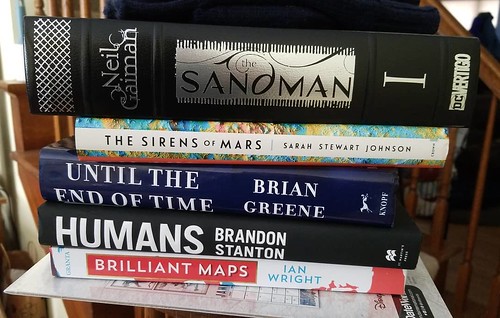
I close with a photo: I made a literal stack for my Major TBR reads in 2021. Obviously I’m going to read way more than this, but these books are the ones I want to ensure that I hit in 2021. There’s quite a lot of reading here! I’d best get started, hmmmm?

This is my "Must Read in 2021" stack. My other reading will be as-I-go, but I most definitely want these titles read in one year's time. #books #bookstagram #fantasy #sciencefiction #science #spaceopera #JamesBond #nature

Share This Post

Beethovens Choral Fantasia: or, What Happens When You’re An Immortal Composer Who Needs a Piece for Piano, Vocal Soloists, Chorus, and Orchestra

 Now here’s a very unusual work indeed: a single-movement piece, roughly 25 minutes long, that features orchestra, solo piano, vocal soloists, and a chorus. Why would Beethoven have written such an oddly structured piece? Most likely, I figured, he wrote this piece for a very specific musical performance event…and that turns out to have been exactly the case. Beethoven put on a benefit concert for himself in December of 1808, which I mentioned the other day in the post about the Fourth and Fifth Piano Concertos. It was quite the program, involving a full orchestra, a chorus, vocal soloists, and himself as pianist, he wrote a work to specifically serve as the finale to the night’s music festivities.

The Choral Fantasy begins with a passage for solo piano that sounds almost like an improvisation–and upon doing a bit more research, I learned that Beethoven himself actually improvised the opening at that first performance. Then the orchestra joins in, and then the work has almost the feel of being a short concerto, starting with a rather portentous slow section that doesn’t last terribly long before arriving at a theme-and-variations that takes up most of the entire work. The feel at the beginning is of another piano concerto, but as the rest of the orchestra takes over the effect becomes quite charming in spots, including a ‘drum-and-fife’ section there the flute plays a lively dance while the piano provides the “oom-pah” part.

Eventually the voices arrive, and the Choral Fantasy becomes lyrical and thrilling. Listeners familiar with Beethoven’s Ninth Symphony may note a similarity in the Fantasy‘s main theme and that of the Ninth’s great finale. Some have even suggested that the theme in the Fantasy is actually an earlier idea that Beethoven had considered for the Ninth and either rejected or elected to use here. In any event, the ultimate effect is thrilling in a way that is very similar to that of the Ninth’s final movement, even if the Ninth is a far more profound work than this. I find the Choral Fantasy an absolute delight. Let me know what you think! Here it is:

Share This Post
Close Encounters of the Beethoven Kind

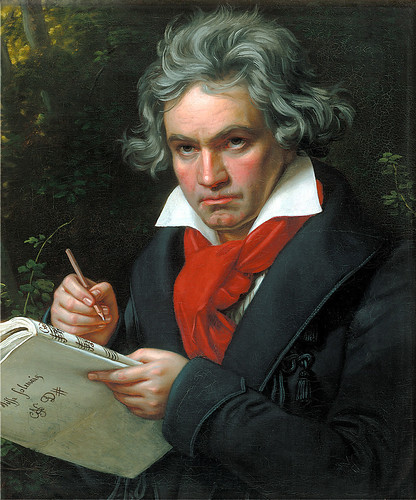
Beethoven

 I was fortunate in my music-making days to get to actually play Beethoven on three different occasions.

The first came via my piano teacher in high school, a lovely old woman named Margaret Hooker. She lived alone in a nice-sized house in Olean, NY, with a quite lovely backyard and a large music studio with two pianos in it, and she was well known as one of the area’s finest piano teachers. She had a lot of students, and her end-of-year recitals were always pretty big events. Thinking back on those recitals, I remember a lot of music, including one bad moment when I crashed and burned in the middle of the first movement of a Mozart sonata. There was one transition in that movement that always gave me fits, and I tended to nail it in practice no more than twenty-five percent of the time; the recital was not one of the twenty-five. I slammed to a halt, and Mrs. Hooker gently said, “Start right after that.” And after that I was fine. A terrible, humbling moment–but I redeemed myself the next year, by gum! The next year I played the absolute hell out of something. A piece by Edward MacDowell, if I recall correctly. I tend to get really motivated when I screw up badly.

But anyway, Beethoven! Any piano student of any skill will play a Beethoven sonata, or a movement of one, sooner or later. For many it’s the Pathetique Sonata, but for me it was other really common one: the Piano Sonata No. 14 in C-sharp minor, often called the Moonlight Sonata. This sonata, unlike many of its brethren, starts not with an allegro movement but with an adagio, putting the “slow” movement first in line. Still the form of the movement is that of a sonata-allegro movement, just in a very slow tempo that contrasts a series of arpeggios, repeating and repeating in hypnotic effect in the bass, with a repeated motif played by the right hand that struggles to be called a “melody”. I loved playing this piece because it appealed to my inner Romantic: I could linger on this piece and take long liberties with the rhythms; so much so, in fact, that Mrs. Hooker actually had to intercede a few times to tell me that “it’s slow, it’s not a dirge.”

I only played the first movement; though I did work on the second movement (a graceful minuet that I do wish I’d worked harder on), the year’s lessons ended before I could really get it polished, and the next year we worked on other things. I never even tried the last movement, which when you listen to the entire work seems to come out of nowhere with its stormy fire. I remember asking Mrs. Hooker about it, and she bluntly said, “I never teach the last movement.” When I asked why, she equally bluntly said, “I can’t play it.” She tried a few bars, and shrugged. “I can play a lot of things, but I’ve never conquered this one.” You gotta respect that!

(On a food note, Mrs. Hooker’s recitals are where I first learned about punch made by dumping an entire container of rainbow sherbet into a big bowl of 7-Up. I don’t know why I thought of that just now, but there it is.)

Here’s the Moonlight Sonata (named thus after Beethoven’s death!), performed by Anastasia Huppmann.

I still studied piano in college, for three years, though I don’t recall playing any Beethoven there. Beethoven did come up twice on the programs with the Wartburg Community Symphony Orchestra, conducted by Dr. Janice Wade (a professor to whom I took a strong initial dislike but came around rather quickly on; she ended up being one of my favorite teachers of all time, which is probably when I learned the lesson that I’ve carried with me for years, that first impressions are almost always bullshit). I don’t recall when exactly the Symphony No. 1 in C Major was on the program, but I think it was in my sophomore or junior year. This symphony is certainly Beethoven, but it is also firmly closer to Mozart and Haydn than to the heights to which Beethoven would take the symphony later in his life. As a member of the trumpet section, I found the First Symphony kind of dull from a performance standpoint; when Beethoven wrote this, the symphonic trumpets were still valveless instruments, only capable of sounding specific harmonics, so there was a whole lot of sitting and doing nothing until the big tutti moments when the trumpets would play a tonic and dominant or two, before returning to counting rests. We were probably tacit for the inner movements. Still, the piece was incredible to hear as it came together, and that in itself was a valuable experience.

Then, in my senior year, Dr. Wade brought in three soloists to play the Concerto for Violin, Cello, Piano, and Orchestra, a work most often referred to as the Triple Concerto. This work is…well, it’s a strange kind of work. The three soloists make for some odd writing, as I recall, and the trumpets had even less to do in this piece than in the First Symphony. So…and I admit this with no pride here…in the rehearsals I never played a note. I literally sight-read the damned thing at the dress rehearsal and again at the concert, and we were fine. That’s what the Triple Concerto is: it’s fine. It’s actually kind of a problematic work, maybe for Beethoven the equivalent of Shakespeare’s “Problem Plays”. I’ll let The Guardian explain:

Beethoven Triple Concerto: arguably the least successful of any of Beethoven’s mature concertos in the concert hall. It’s one of those pieces that never seems to get a performance that does it justice. Usually, you get po-faced seriousness when a big orchestra and three star names try to out-do each other, as the cello, violin, and piano soloists fight for the limelight. On disc, it hasn’t fared much better, and there’s an infamous Herbert von Karajan recording from 1969 with David Oistrakh on violin, Sviatoslav Richter on piano, and cellist Mstislav Rostropovich: it’s a nadir of gigantic egos trying to trump each other, a bonfire of the vanities from which Karajan and the Berlin Phil still somehow manage to emerge victorious.

(Richter himself said of it: “It’s a dreadful recording and I disown it utterly… Battle lines were drawn up with Karajan and Rostropovich on the one side and Oistrakh and me on the other… Suddenly Karajan decided that everything was fine and that the recording was finished. I demanded an extra take. ‘No, no,’ he replied, ‘we haven’t got time, we’ve still got to do the photographs.’ To him, this was more important than the recording. And what a nauseating photograph it is, with him posing artfully and the rest of us grinning like idiots.”)

The truth is that the Triple Concerto isn’t a concerto at all, since there’s no real dialogue between the orchestra and the soloists, and the three soloists carry virtually all of the musical argument themselves.

It’s a nice listen. It’s not bad, but if you’re working your way through Beethoven, from the greatest works on down, it’ll be a while before you get to the Triple Concerto and its not-terribly-profound geniality.

Here are the Symphony No. 1 and the Triple Concerto.

Share This Post

Beethoven: the Fourth and Fifth Piano Concertos

In a typical classical music concert today, you might hear a short work–an overture, perhaps–followed by a concerto, then an intermission, then a symphony. Or the concerto might be the featured work after the intermission, especially if your soloist is one of the greats. Generally you can count on the concert being over in 90 to 120 minutes.

Not so the concerts of Ludwig van Beethoven’s day. On December 22, 1808, Beethoven gave a concert consisting of his Fifth and Sixth symphonies, three movements from his Mass in C, a Fantasia for solo piano, a concert aria, the Choral Fantasia (a 25-minute work to which we’ll be returning!), and the Piano Concerto No. 4 in G Major. I’m guessing, conservatively, that this was about three hours of music, if not more. Wow.

I heard the Fourth Concerto many years ago at a concert in Olean, NY, when I was a kid. There was a local program called “Friends of Good Music” that brought classical music performers to town four or five times a year, and the Fourth was on one of the Buffalo Philharmonic’s programs one year. Or it might have been the Rochester Philharmonic–both orchestras were often featured on FoGM programs–and I think the pianist was Malcolm Frager, but I’m quite possibly wrong there, too.

The Fourth is quite a piece, and it might be the finest of Beethoven’s five piano concertos. It opens not with the orchestra but with the piano making an entrance that sounds almost improvisatory, before the normal proceedings commence. Beethoven’s integration of the soloist with the orchestra is never finer than in this work; a true partnership is at play, and for a convincing performance the soloist must be a virtuoso, to be sure, but also possessed of confident enough ego as to work alongside the orchestra. This is not soloist-with-accompaniment; this is a whole work.

In the minor-key second movement there is an amazing passage where the piano, playing softly, engages the orchestra in dialogue. The orchestra’s tone is firm, loud–perhaps even harsh. Meanwhile the piano is responding with statements of delicacy and softness. Apparently this movement was interpreted by early critics as Beethoven’s depiction of Orpheus and the Furies. Had Beethoven intended such a thing, surely he would have written that at the top of the score.

As is often the case with Beethoven’s concertos, there is no real break between the inner movement and the finale, and the effect is always scintillating as we’re into a rondo before we even realize it. Beethoven’s rondo here is as good as ever, and there is wonderful lyricism on display as we move toward the conclusion. When I heard this concerto live, I remember the soloist (I really think it was Frager!) literally bouncing off the piano bench with delight as he and the orchestra arrived together on that final chord.

Here’s the Piano Concerto No. 4 in G major. The soloist is Mitsuko Uchida. Note how carefully she sets up that very first chord! She is leaving nothing to chance, and she doesn’t care how long the audience has to wait; she’s going to do it right.

And then we come to the last of Beethoven’s piano concertos, which is honestly my favorite of the lot, and it’s one of my very favorites of all of Beethoven’s works. Beethoven himself never performed the Piano Concerto No. 5 in E-flat Major; by then he was too deaf to be able to perform a concerted work effectively. The work was premiered in Leipzig with Friedrich Schneider as soloist, but the Vienna premiere a few months later was performed by Carl Czerny, a name familiar to many former piano students as the man who wrote all those pages and pages of sixteenth-note fingering exercises. Czerny was a student of Beethoven’s.

This concerto, like many classical works, has carried another name into history, and also like many works, that name was not given by the composer themself. Beethoven didn’t call his Fifth Piano Concerto “the Emperor Concerto“, but it has been known as such ever since. The name came from the concerto’s publisher in England. While I’m not generally fond of names given to works by people who came along after the fact and which were not really approved by the composers, I always have to admit that in this case, Emperor works. This is a work of grandeur, bright and flashy and redolent of Imperial Vienna.

The concerto opens as boldly as a concerto can: the orchestra sounds an E-flat major chord, which is then supplanted by the piano playing a virtuosic series of arpeggios. Another chord, another virtuosic reponse, then a third chord and a final virtuosic response which leads to the main theme proper. What happens now is that Beethoven spins out an exposition section so finely crafted in its symphonic styling that, like in the Third Concerto, we forget entirely that we’re listening to a concerto at all. The theme is one of Beethoven’s best, but not to be discounted is the second subject, a motif that sounds in the horns while the strings soar above it, obliggato. All of this is wonderful listening and it comes before the soloist returns to the fray with an entrance that delights in its simplicity and clarity. From then on, we’re in pure Beethoven concerto-as-partnership territory.

The second movement boasts some of Beethoven’s finest lyricism in a way that seems to look forward to the famous Nocturnes of Frederic Chopin. The theme yearns and sings slowly and seductively, with the soloist again engaging in dialogue with the orchestra, and as peace falls at the end of the movement, the piano plays two sets of arpeggiated chords in what sounds like a kind of coda–but Beethoven is up to something else here, and as the piano suddenly strikes loudly into the final movement’s Rondo, we realized that those chords weren’t chords at all but rather snippets of the Rondo’s main theme. Beethoven’s inner trickster shows up once again in this, his last piano concerto, with a theme set on a rhythm that seems to just defy the bar line. It reminds me somewhat of the last movement of the Violin Concerto, and the ultimate effect is similar as the concerto finally comes to its conclusion.

And thus we come to the end of Beethoven’s concerto output. What Beethoven has done is to bring the concerto form to its logical height from the classical standpoint; what remains to be done with concertos is pure Romanticism. Beethoven stands so perfectly between the two that it can be argued that he is, in fact, both.

Here is the Piano Concerto No. 5 in E-flat Major, the Emperor Concerto, performed by Krystian Zimmerman and the Vienna Philharmonic orchestra, conducted by Leonard Bernstein. (And make sure to keep an eye on Bernstein, especially toward the end as it appears he is going to levitate under his own power.)

Share This Post
Pics or it didn’t happen!

 I haven’t done a grab-bag of recent photos from my adventures of late, so…here we go!

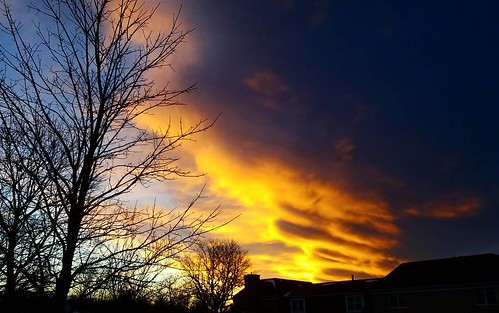
Sky last night. #sky #clouds #sunset

Green tea is now part of my daily life and this makes me happy. #yum #tea #GreenTea

Hollowed #stump #ChestnutRidge #wny #orchardpark #autumn #fall #nature #hiking #trees

Attentive #Cane #dogsofinstagram #greyhound #greyhoundsofinstagram #ChestnutRidge #wny #orchardpark #autumn #fall #nature #hiking #trees

A manufactured pose while my coffee steeps. #ootd #overalls #dungarees #biboveralls #vintage #lee #leeoveralls #hickorystripe #denimoveralls #overallsarelife #vintageoveralls #doubledenim #denimondenim

Another. She was trying to fall asleep on my lap SO hard.... #Carla #dogsofinstagram #pitbullsofinstagram #pitbullmix #pittie #staffordshirebullterrier #staffiesofinstagram

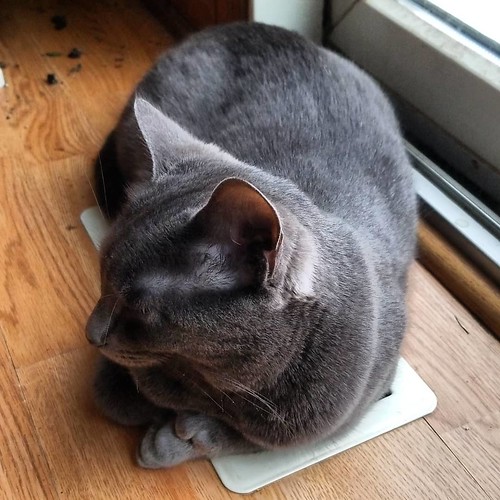
ALL YOUR WARM ARE BELONG TO ME #catsofinstagram #graycat

In the cold....

Our occasional night-time entertainment companion #Carla #dogsofinstagram #pitbullsofinstagram #pitbullmix #pittie #staffordshirebullterrier #staffiesofinstagram

Christmas book haul. HEAVY stuff, both physically and mentally! I'm already hoping for a massive snowstorm so I can bag my shift at work and bury myself in SANDMAN. #ChristmasBooks #books #bookstagram #fantasy #history #science

Shoveling: ✅ One pair of overalls encrusted with ice: ✅ First cup of coffee: ✅ Next: shower, get dressed in a non-icy pair of overalls, read, write, nap! And listen to some Beethoven. #ahhhhh #snow #wny #


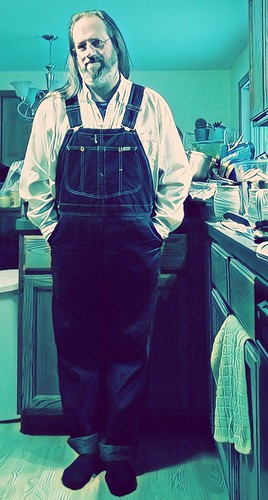
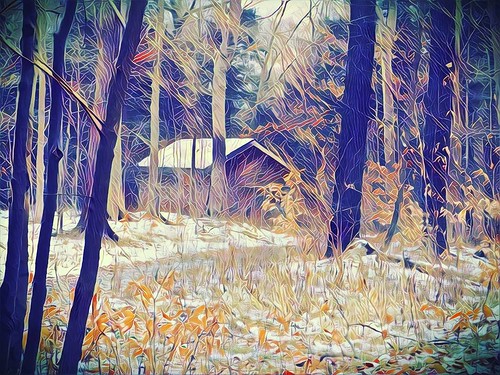
These next few are in a special category, because they’re photos I took with my phone and then processed through a cool app called Prisma. I don’t use the app all that often, but sometimes I get effects from it I like. (Two of these, which will be obvious, I took while I was waiting for my coffee water to boil in the morning.)

Prismafied overalls

Old bathhouse. Something about this vantage point struck me as...Miyazakian. #ChestnutRidge #wny #orchardpark #autumn #fall #nature #hiking #trees #prisma

Quiet reflection (as I wait for the kettle to boil the water) #overalls #dungarees #biboveralls #vintage #gap #gapoveralls #denimoveralls #overallsarelife #vintageoveralls #prisma


Share This Post
Beethoven: Piano Concerto No. 3 in C minor

 Beethoven wrote five piano concertos, and only one of these is in a minor key. I don’t want to reduce these things to the easily-refuted notion that “major key equals happy music, minor key equals sad music”, but there does often seem to be a degree to which a minor key brings out Beethoven’s brooding side more than the major keys do. This concerto is certainly the most inward-looking, the most introspective, off the five.


Where the previous two concertos opened with genial major themes, Beethoven’s Third opens with a generally low-key statement of the main march-like theme in the strings, and we actually spend what feels like a surprisingly long time awaiting the arrival of our piano soloist; if one listens to a recording without video, one might trick oneself into thinking they are listening to a symphony instead of a concerto at all. But once the soloist arrives, Beethoven’s great way of integrating the soloist and the orchestra together into a cohesive whole takes over.

The real magic of this concerto, for me, comes in the second movement, which opens with the solo piano playing a major-key theme that is romance-like. The transition from the first movement to the second always puts me in mind of Mozart’s Piano Concerto No. 20 in D minor, with its famous Romanze in its second movement. Then, the third movement arrives in one of Beethoven’s wonderful rondos, propelling us toward the end of the concerto with typical energy and verve, after starting on a quick motif, played softly and climbing upward throughout. This mysterious opening gives way to a sequence of chords that feel like Beethoven is calling a halt to the darker mood as he starts to segue into a cheerier one, though he isn’t quite done with the brooding introduction just yet.

Apparently the Third Concerto wasn’t even finished when Beethoven premiered it; according to the student who served as Beethoven’s page-turned at the concert (which had only had a single rehearsal for a concert which premiered not only the Third Concerto but the Second Symphony and an oratorio), the score from which Beethoven performed sometimes had blank pages and weird notations that the pupil later described as “hieroglyphics”–presumably some sort of shorthand meant by Beethoven to jog his own memory. Here is how author John Clubbe, author of Beethoven: The Relentless Revolutionary, describes that primiere:


In his Akademies [concerts Beethoven arranged for his own benefit], Beethoven would premiere his first four concertos with himself as soloist. Only the fifth and last, the so-called “Emperor” Concerto, dating from 1809, did he not play in public. By then his fading hearing did not permit a nuanced performance. Once Beethoven realized fully that his time as a piano virtuoso was over, he wrote no more piano concertos.


Although scholars usually date the Third Piano Concerto to 1800, Beethoven had likely worked on it already for several years. He employed his favored key of C minor. As was his wont, he continued to revise it right up to the hour of its first performance. Even then he still had not finished it. For the piano part he had only his erratically pencil-scrawled manuscript. Ignaz von Seyfried, who turned pages for him, recalled how the first performance went:


I saw almost nothing but empty leaves; at the most, on one page or the other a few Egyptian hieroglyphics wholly unintelligible to me scribbled down to serve as clues for him, for he played nearly all of the solo part from memory, since, as so often the case, he had not had time to put it all down on paper. He gave me a secret glance whenever he was at the end of one of the invisible passages, and my scarcely concealable anxiety not to miss the decisive moment amused him greatly.


Not finishing a work on time was not unusual for Beethoven. Nor did it overly bother him. He had lodged the concerto’s piano part deep in memory. He wasted nothing. Soloists then, unlike most today, did not play from memory. Audiences would have regarded doing so as eccentric. Only decades later did Franz Liszt begin the practice of playing from memory.

I often think that I wish I could go back in history and hear inaugural performances of some of the great works of the classical canon, but it’s worth remembering that performance standards now are honestly the highest in history. I suspect that could we truly hear what music sounded like in the early 1800s, we might well be shocked–and not in a good way. But still–to go back and hear Beethoven? Knowing that the score on his piano was simply for show?

Here is Beethoven’s Piano Concerto No. 3.


Share This Post