And…we’re done!
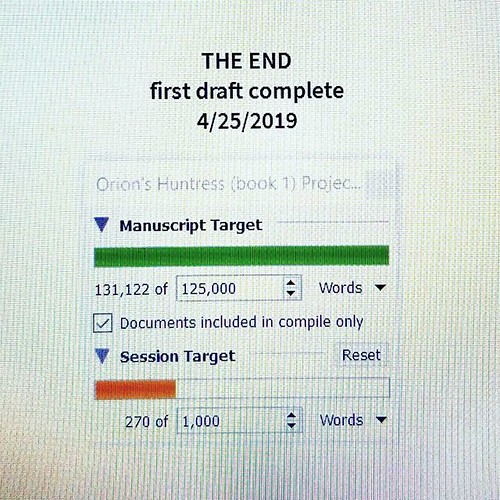
I’ve been cranking out the words for the last couple weeks in order to bring this one to its conclusion, and this morning, conclude it, I did!
So here’s a bit of cheerful triumphalism. (Sorry about the vuvuzela things.)

The official site of Kelly Sedinger: Reader, writer, photographer, and dreamer
I know, I know, I know. Long time, not much content. In my defense, though:

So what does this mean for Tone Poem Tuesday? A piece of familiar music that doesn’t need a lot of introduction? Why, yes! So turn up your speakers and watch the pretty people in Egyptian dress as they perform the Triumphal March from Verdi’s Aida.

You read my last post about why writers should read poetry, and now you’re thinking, “Gosh, I should do that and read some poetry. But I don’t know where to start or what books to buy or anything!”
Well, as with anything, there are several ways to go about the job of reading more poetry. There are a lot of collections out there that are meant as introductions to poetry. Some of these are the school-textbook kind of thing where you’ll learn about rhyme and meter and the difference between a haiku and a sonnet and all that, and those are excellent starting points, if you’re looking to learn mechanics.
There’s absolutely nothing wrong with learning mechanics! If that’s your approach, great. It wasn’t my approach, but it’s valid and anyway, later on when you’ve discovered that you really do love poetry and you’re not nearly as intimidated by it anymore
But maybe you want to start right out with poetry. Maybe you want to dive right in! Good for you! That’s exactly the approach I advise. Poetry is there to be read, first and foremost. There’s plenty of time later for rhyme, meter, allusion, theme, secondary meanings, and all the other stuff. Jump right in, says I!
So, where would be a good place to start?
One possibility is a collection of “light” poetry or of old ballads and narrative poems. It might be easiest to start your journey into verse if the forms are familiar enough that you can recognize a joke or a story in the verse.
Take a poem like The Highwayman by Alfred Noyes, which starts thusly:
“The Highwayman”, Alfred Noyes
The wind was a torrent of darkness among the gusty trees.
The moon was a ghostly galleon tossed upon cloudy seas.
The road was a ribbon of moonlight over the purple moor,
And the highwayman came riding—
Riding—riding—
The highwayman came riding, up to the old inn-door.
He’d a French cocked-hat on his forehead, a bunch of lace at his chin,
A coat of the claret velvet, and breeches of brown doe-skin.
They fitted with never a wrinkle. His boots were up to the thigh.
And he rode with a jewelled twinkle,
His pistol butts a-twinkle,
His rapier hilt a-twinkle, under the jewelled sky.
Over the cobbles he clattered and clashed in the dark inn-yard.
He tapped with his whip on the shutters, but all was locked and barred.
He whistled a tune to the window, and who should be waiting there
But the landlord’s black-eyed daughter,
Bess, the landlord’s daughter,
Plaiting a dark red love-knot into her long black hair.
Now that will certainly catch your attention, won’t it? You want to know the rest of the story, and you barely realize it’s in poetic form, even as the internal rhymes of the stanzas work their magic and even as the rhythm of the words propel you forward. (You can read the remainder of The Highwayman here.)
You should also read poetry aloud, if you can; or, failing that, at least speak the words silently, so you can get a sense of how the words “feel”. Much of poetry’s effect is gained through auditory effect, how the poet arranges sounds and the rhythms inherent in the placing of the words. As you gain experience, you’ll find it less necessary to do this–but by this time, it might be sufficiently ingrained in your poetry-reading experience that you keep doing it. I certainly do.
So where do you find all that poetry? In poetry books, of course! But where do you find poetry books? In bookstores, of course!
To start with, you might want to look for wide collections. The Oxford Book of English Verse is a stalwart, as are other collections of American poetry. I’ll assume that the library of the discerning reader and budding writer already has at least one Complete Shakespeare, which is a great source of lots of poetry. (In fact, if you can read Shakespeare with even a modicum of comprehension, you’re well on the way to being able to read a lot of poetry.) There are also many good themed collections that gather poems around specific subjects: War poetry, music poetry, and of course, love poetry. Picking up a few of these is always a good idea.
Used bookstores and library book sales are wonderful ways to bolster one’s poetry collection. When the books are cheap, you can buy with a lot more abandon, which means you can get a lot more experimental with your poetry collection. You’ll find old compilations that reflect earlier tastes, or collections of poets who are mainly forgotten these days. Even editions of The Oxford Book from decades ago are worth picking up cheaply, because they will contain many poems the current edition does not. Don’t sweat the duplication too much.
Next time I will recommend some of my favorite poetry books! Until then, see you around the Galaxy!

Not a tone poem this week, but an actual symphony, one written originally for a very large wind band for an outdoor ceremonial purpose by Hector Berlioz. This work, called the Grande symphonie funebre et triomphale, was actually one of Berlioz’s most popular works during his lifetime, although like everything he else he wrote that wasn’t the Symphonie fantastique, it languished out of the repertoire for many years after his death. The symphony consists of three movements: a funeral march, followed by a “funeral oration” (including a lyrical part for a solo trombone), and then a triumphal march which Berlioz later edited to include optional strings and chorus. While there is no connection between this work and the Cathedral of Notre Dame, it seems to me that this work suits the mood surrounding yesterday’s disaster at that great building: grief, and mourning, and the certainty that the building will rise again as it has more than a few times in its 800-year history.

Sorry for the late posting, but geez, I’m having a busy bunch of days here. Wowza.
Anyway, here’s an old favorite of mine. I haven’t heard a lot of Edward Elgar’s music, but whenever I listen to him I come away thinking I need to listen to him a lot more. Elgar wrote this piece while spending several months in the Italian Riviera with his family. I don’t know the first thing about the Italian Riviera, but in this piece I hear adventure and wistful remembrance and drama and excitement. This concert overture reminds me of the very best film music from that form’s Golden Age, and for me, that is a compliment.
Here is “Alassio (In the South)”, by Sir Edward Elgar.


One of a series of occasional posts for National Poetry Month.
One of my major resolutions for 2019 is to read more poetry. I’ve always enjoyed poetry and I always try to read some here and there, but this year I’m trying to be even more serious about it, even to the point of starting a poetry reading journal in which I record thoughts about poems as I read them. I’m also reading some books about poetry in an ongoing attempt to strengthen this particular literary muscle of mine.
I discovered this poem purely serendipitously: by thumbing through one of my copies of The Oxford Book of English Verse. (I have multiple editions of this book, because its contents have not been constant through the many years of its publication, and alongside the eternals are the lesser-so works, and poems are like music in that many that deserve to live on don’t always do so). I found a single poem by a poet named Mary Robinson, of whom I don’t remember ever hearing before. Here is the poem:
January, 1795
Pavement slipp’ry, people sneezing,
Lords in ermine, beggars freezing;
Titled gluttons dainties carving,
Genius in a garret starving.Lofty mansions, warm and spacious;
Courtiers cringing and voracious;
Misers scarce the wretched heeding;
Gallant soldiers fighting, bleeding.Wives who laugh at passive spouses;
Theatres, and meeting-houses;
Balls, where simp’ring misses languish;
Hospitals, and groans of anguish.Arts and sciences bewailing;
Commerce drooping, credit failing;
Placemen mocking subjects loyal;
Separations, weddings royal.Authors who can’t earn a dinner;
Many a subtle rogue a winner;
Fugitives for shelter seeking;
Misers hoarding, tradesmen breaking.Taste and talents quite deserted;
All the laws of truth perverted;
Arrogance o’er merit soaring;
Merit silently deploring.Ladies gambling night and morning;
Fools the works of genius scorning;
Ancient dames for girls mistaken,
Youthful damsels quite forsaken.Some in luxury delighting;
More in talking than in fighting;
Lovers old, and beaux decrepid;
Lordlings empty and insipid.Poets, painters, and musicians;
Lawyers, doctors, politicians:
Pamphlets, newspapers, and odes,
Seeking fame by diff’rent roads.
Gallant souls with empty purses;
Gen’rals only fit for nurses;
School-boys, smit with martial spirit,
Taking place of vet’ran merit.Honest men who can’t get places,
Knaves who shew unblushing faces;
Ruin hasten’d, peace retarded;
Candor spurn’d, and art rewarded.
I read this poem three times in a row the first time I found it, and I’ve been returning to it ever since. More than that, this single poem has made me keenly interested in Robinson herself, who seems to have lived quite a colorful life. She wasn’t just a poet. She was an early feminist, and an actress (she would be nickanmed “Perdita” after she did notable performances in that role in Shakespeare’s The Winter’s Tale), and later she became the mistress of the Prince of Wales, before he himself went on to become King George III. Though she eventually died in poverty, Robinson has come in for reappraisal in recent years. I have even been reading her own memoirs, and so far they are fascinating (I am only in the early going, before she had struck out on her own after a childhood of paternal neglect and maternal overwork.)
But back to January, 1795. The poem is simply a word painting, creating a sense of a specific place (London) at a specific time. There are no sentences in the poem, just fragments comprising a series of quatrains which are themselves comprised of rhyming couplets. Throughout Robinson juxtaposes specific details, often combining a beautiful one with an ugly one: “Lofty mansions, warm and spacious; / Courtiers cringing and voracious.” This structure puts me in mind of Charles Dickens’s amazing opening line to A Tale of Two Cities: “It was the best of times, it was the worst of times….” I wonder if Dickens had occasion to read Robinson’s poem.
Stay tuned for more poetry!
Science fiction and fantasy author Vonda N. McIntyre has died.
I feel that I’ve done McIntyre a disservice all these years. I’ve read a lot of her work, but none beyond her well-known tie-in books in the Star Trek and Star Wars universes. But on the other hand, she wrote all those books voluntarily and she wrote some of them so well that they stand up even outside their tie-in status. And what’s so bad about tie-in work, anyway? There’s a reason the Trek and Wars franchises are so well-established. I do own a couple of McIntyre’s non-Trek books, and I should probably make reading them a higher priority.
One novel of hers that I especially liked was her original Trek novel Enterprise: The First Adventure, in which she told the story of how the very first voyage of the starship Enterprise under the command of Captain James T. Kirk went. This novel posed a number of challenges for McIntyre: she couldn’t rely on the tried-and-true relationship tropes of Trek. Kirk and McCoy were already good friends at this point, but neither knew the Enterprise‘s Vulcan science officer; there couldn’t be any hint here of “I have been, and always shall be, your friend.” McIntyre also wrote a Lt. Sulu who didn’t even want to be on the Enterprise, and Commander Montgomery Scott who was so skeptical of his new Captain and so possessive of “his” ship that he nearly let his attitude force Captain Kirk to order his transfer off the finest ship in Starfleet.
Another thing McIntyre did in this book is to show that Kirk’s ascent to commanding the Enterprise wasn’t just a straight-line thing that involved no sacrifice at all. Star Trek II: The Wrath of Khan, which McIntyre novelized, established that there was one woman in Kirk’s past life who was much more than a momentary conquest. Dr. Carol Marcus might have been the love of his life, and she was the only one (that we ever knew of) to bear James T. Kirk’s child. So in Enterprise, Vonda McIntyre wrote a wonderful scene in which Kirk is torn between his dream of command and a woman he loves. It’s the kind of amazing character writing at which McIntyre excelled. She made you care about these characters. Her writing is full of scenes like this, and now I have to wonder even more what magic she was able to conjure with characters of her very own.
Here’s the scene.
Carol turned, uncharacteristically flustered. “Jim–!”
“Hello, Carol.” He stopped. He wanted to say everything to her, or he wanted to say nothing. He wanted to make love with her, or he wanted never to see her again.
“Talk to you later,” Dr. Eng said, and made a diplomatic exit.
“How are you feeling, Jim?”
He ignored the question. His heart beat hard. “It’s wonderful to see you. I have to leave soon. Can we…I’d like to talk to you. Would you have a drink with me?”
“I don’t feel like having a drink,” she said. “But I will go for a walk with you.”
Jim paused beside Gary, still hoping he might awaken. [That’s Gary Mitchell, Kirk’s best friend who was his First Office in the episode “Where No Man Has Gone Before,” before his character died.] “Get well, my friend,” Jim said, and left Ms. Chapel the note to give him when he regained consciousness.
They did not have to discuss where to go. Jim and Carol walked toward their park.
Without meaning to, exactly, Jim kept brushing against Carol. His shoulder touched her shoulder; his fingers touched the back of her hand. At first she moved aside.
“Oh–” Carol said impatiently the third time Jim touched her. She took his hand and held it. “We are still friends, I hope.”
“I hope so too,” Jim said. He tried to pretend the electric tingle of physical attraction no longer existed between them, but he found it impossible to deceive himself that much. Being near Carol made Jim feel as if a powerful current case a web over both of them, exchanging and intensifying every passion.
“Are you sleeping any better?” Carol said.
Jim hesitated between the truth and a lie. “I’m sleeping fine,” he said.
Carol gave him a quizzical glance, and he knew he had hesitated too long. She had held him too many times, when the nightmare slapped him awake in the darkest hours of the morning.
“If you want to talk about it….” she said.
“No. I don’t want to talk about it,” he said in a clipped tone. [This all happens in the aftermath of a bad incident that left Kirk emotionally scarred.]…”No,” he said again, more gently. “I don’t want to talk about it.”
Still holding hands, they reached the small park and set out along the path that circled the lake. Ducks swam alongside them, quacking for a handout.
“We always forget to bring them anything,” Carol said. “How many times have we walked here–we always meant to bring them some bread, but we never did.”
“We had…other things on our minds.”
“Yes.”
“Carol, there’s got to be some way–!”
He cut off his words when he felt her tense.
“Such as what?” she said.
“We could–we could get married.”
She looked at him; for a moment he thought she was going to burst out laughing.
“What?” she said.
“Let’s get married. We could transport to Spacedock. Admiral Noguchi could perform the ceremony.”
“But why marriage, for heaven’s sake?”
“That’s the way we do it in my family,” Jim said stiffly.
“Not in mine,” Carol said. “And anyway, it still wouldn’t work.”
“It’s worked for quite a number of generations,” Jim said, though in the case of his own parents the statement stretched the truth. “Carol, I love you. You love me. You’re the person I’d most want to be with if I were stranded on a desert planet. We have fun together–remember when we went to the dock and snuck on board the Enterprise for our own private tour–” At her expression, he stopped. “It’s true.”
“Yes,” she said. “It’s true. And I’ve missed you. The house is awfully quiet without you.”
“Then you’ll do it?”
“No. We talked about this too many times. No matter what we do, it wouldn’t make any difference. I can’t be with you and you can’t stay with me.”
“But I could. I could transfer to headquarters–“
“Jim…” She turned to face him. She held both his hands and looked into his eyes. “I remember how you felt when you found out you’re getting command of the Enterprise. Do you think anyone who loved you would want to take that away from you? Do you think you could love anyone who tried?”
“I love you,” he said. “I don’t want to lose you.”
“I don’t want to lose you, either. But I lost you before I ever met you. I can get used to the quiet. I can’t get used to having you back for a few weeks at a time and losing you over and over and over again.”
He kept seeking a different solution, but the pattern led him in circles and he could find no way out.
“I know you’re right,” he said, miserable. “I just…”
Tears silvered Carol’s dark blue eyes.
They kissed each other, one last time. She held him. He laid his head on her shoulder with his face turned away, because he, too, was near tears.
“I love you too, Jim,” she said. “But we don’t live on a desert planet.”
That‘s how you write a heartbreaking farewell scene…and it comes very early in the book, before we even see Captain Kirk on the bridge of his new ship. McIntyre knew how to set the emotional stage for her stories.
I really do owe her a reading with newer eyes….
I am really stretching the idea of a “tone poem” with today’s selection, because what we have today is not an orchestral piece at all but rather a choral one, with much of it being a capella (there’s a piano at one point). I heard part of this work whilst driving home the other day and I just had to share it here, where it sort-of ties in to April being National Poetry Month. American composer Morten Lauridsen set five poems by German poet Rainer Maria Rilke, each of which deals with the subject of a rose. Lauridsen–who was a forest ranger and firefighter before he turned to music–has this to say about this piece:
In addition to his vast output of German poetry, Rainer Maria Rilke (1875-1926) composed nearly 400 poems in French. His poems on roses struck me as especially charming, filled with gorgeous lyricism, deftly crafted and elegant in their imagery. These exquisite poems are primarily light, joyous and playful, and the musical settings are designed to enhance these characteristics and capture the delicate beauty and sensuousness of the poetry. Distinct melodic and harmonic materials recur throughout the cycle, especially between Rilke’s poignant “Contre qui, rose” (set as a wistful nocturne) and his moving “La rose complète.” The final piece, “Dirait-on,” is composed as a tuneful chanson populaire, or folksong, that weaves together two melodic ideas first heard in fragmentary form in preceding movements.
Lauridsen’s composition is deeply intimate and full of harmonic resolution; modern dissonance has no place here. The music is almost luminous at times.
Here is the text of one of Rilke’s rose poems (he apparently wrote more than five, so how Lauridsen chose which ones to set, I don’t know), as sourced from poetry blogger Clarissa Ackroyd.
THE ROSES (Rainer Maria Rilke, translated from French by Clarissa Aykroyd)
VI
One rose alone is every rose,
one, but manifold meaning:
perfect and irreplaceable,
framed by words of being.How could we ever speak
without the rose,
of sweet interludes in constant farewell,
or of our hopes?(Original French)
VI
Une rose seule, c’est toutes les roses
et celle-ci: l’irremplaçable,
le parfait, le souple vocable
encadré par le texte des choses.Comment jamais dire sans elle
ce que furent nos espérances,
et les tendres intermittences
dans la partance continuelle.
Here is Les chansons des roses by Morten Lauridsen.
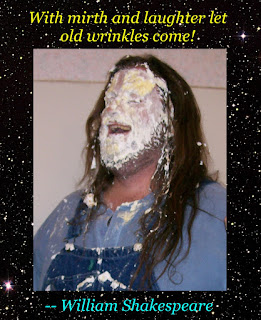

It’s April Fools Day! I’m not a huge fan of this day as a celebration of pranking people, seeing if you can embarrass them or get them to believe some false news story or the like. But I’d be all for a day in which we celebrate laughter and All Things Funny, whether it’s sophisticated wordplay or gonzo silliness or a good old pie in the face. Here are a few things that always hit my funny bone:
(Here, on an episode of Cheers, Sam finds that his bar has been bricked in as a prank by Gary of Gary’s Old Town Tavern…but all is well because he’s got an Irish band coming….)
Momus, God Of Laughter
Though with the gods the world is cumbered,
Gods unnamed, and gods unnumbered,
Never god was known to be
Who had not his devotee.
So I dedicate to mine,
Here in verse, my temple-shrine.‘Tis not Ares – mighty Mars,
Who can give success in wars;
‘Tis not Morpheus, who doth keep
Guard above us while we sleep;
‘Tis not Venus, she whose duty
‘Tis to give us love and beauty.
Hail to these, and others, after
Momus, gleesome god of laughter.Quirinus would guard my health,
Plutus would insure me wealth;
Mercury looks after trade,
Hera smiles on youth and maid.
All are kind, I own their worth,
After Momus, god of mirth.Though Apollo, out of spite,
Hides away his face of light,
Though Minerva looks askance,
Deigning me no smiling glance,
Kings and queens may envy me
While I claim the god of glee.Wisdom wearies, Love has wings —
Wealth makes burdens, Pleasure stings,
Glory proves a thorny crown —
So all gifts the gods throw down
Bring their pains and troubles after;
All save Momus, god of laughter.
He alone gives constant joy,
Hail to Momus, happy boy!
I’ll be posting about poetry off and on throughout the month. I don’t promise a post every day, but most days.


