

Symphony Saturday

There are times when the circumstances of a given work’s creation almost inexorably lead to conclusions about its nature that probably aren’t quite true. Such is the case with Tchaikovsky’s Symphony No. 6 in B minor, which concluded his symphonic output. Tchaikovsky’s life was not easy — neither his creative life nor his personal life. He struggled with his works, occasionally destroying them and many times revising them years later. He also struggled with his sexuality in a time when to be a gay man was perhaps the worst thing you could be. Tchaikovsky was famously prone to bouts of depression and mental despair, and his works are so often riddled with emotion, never moreso than in the heartbreaking Symphony No. 6.

And then there is the fact that Tchaikovsky led the Symphony’s premiere just nine days before he died, reportedly from cholera that he contracted after he drank a glass of unboiled water during an epidemic of that disease. One wonders how Tchaikovsky made such a mistake:

The timeline between Tchaikovsky’s drinking unboiled water and the emergence of symptoms was brought into question. So was the possibility of the composer’s procuring unboiled water, in a reputable restaurant (according to one account), in the midst of a cholera epidemic with strict health regulations in effect. Also, while cholera actually attacked all levels of Russian society, it was considered a disease of the lower classes. The resulting stigma from such a demise for as famous a personage as Tchaikovsky was considerable, to the point where its possibility was inconceivable for many people. The accuracy of the medical reports from the two physicians who had treated Tchaikovsky was questioned. The handling of Tchaikovsky’s corpse was also scrutinized as it was reportedly not in accordance with official regulations for victims of cholera. This was remarked upon by, among others, composer Nikolai Rimsky-Korsakov in his autobiography, though some editions censored this section.

Theories that Tchaikovsky’s death was a suicide soon began to surface. Postulations ranged from reckless action on the composer’s part to orders from Tsar Alexander III of Russia, with the reporters ranging from Tchaikovsky’s family members to composer Alexander Glazunov. Since 1979, one variation of the theory has gained some ground—a sentence of suicide imposed in a “court of honor” by Tchaikovsky’s fellow alumni of the Imperial School of Jurisprudence, as a censure of the composer’s homosexuality. Nonetheless, the cause of Tchaikovsky’s death remains highly contested, though it may never actually be solved.

In the light of such thinking, many consider the Sixth Symphony to be Tchaikovsky’s musical “suicide note” in which he meditates on the nature of his own impending demise. I’m honestly not sure about this. It really does make for an interesting story — there could even be a novel here — but as others note, it seems a bit too easy a conclusion to draw.

To which the only possible rejoinder is: I’m afraid that’s nonsense. To take some examples from elsewhere in musical history: many of Rachmaninov’s pieces are haunted by the Dies Irae plainchant, that symbolic intonation of impending fate, and yet even after writing a piece called The Isle of the Dead, he kept on living; Berlioz’s music too is full of intimations of mortality, but he kept going for decades after dreaming of his own execution in his Fantastic Symphony; Beethoven didn’t expire after just after he faced the limits of human mortality in the Missa Solemnis; and even Mahler remained alive just after he had just crossed the border into silence at the end of his Ninth Symphony. In fact, if every composer, author, painter, or poet had died after making their greatest works about death, none of them would have been around for very long. It is pure, tragic coincidence that Tchaikovsky should die of cholera a few days after conducting the Sixth Symphony at the age of just 53 – a piece, to reiterate, that he actually composed in good mental and physical health – but that’s all it is. We do this symphony a terrible injustice if we only see and hear it through the murky prism of myth, story, and half-truth that now swirls around accounts of what happened in the composer’s final days.

Most commentators do at least agree that in the Sixth Symphony, Tchaikovsky really is exploring and examining issues of fate and death. The symphony is full of wild contrasts. Stormy passages in the first movement are juxtaposed with lyrical passages that feature one of Tchaikovsky’s most yearning melodies. The second movement gives us a waltz that feels “wrong” somehow, because it’s in 5/4 time. The third movement brings a vigorous march that feels like it’s progressing toward a triumph, but then the final movement begins. It’s in that final movement that Death takes hold, because here Tchaikovsky writes a slow movement that opens with drama and descends to meditative brooding and sorrowful lamentation before finally fading away in the end.

And with that, we leave Tchaikovsky behind.
Share This Post

Symphony Saturday

In researching a little for this post, I discovered that Tchaikovsky’s Symphony No. 5 in E minor is not universally beloved. Shocking, but true: some critics find the finale “insincere and crude”. Well, really. While I’ve had issues with a number of Tchaikovsky’s works over the years, I’ve never had any issue with the Symphony No. 5. I’ve loved it since I first heard it, in a televised New York Philharmonic performance sometime in the late 1980s. Tchaikovsky’s Fifth is one of my “signpost” works: it hits home for me on nearly every level, touching nearly all the emotions along the way. It broods, it battles, and it struggles; it sings and it waltzes and it dances — and finally, in the end, it triumphs. Of all the symphonies I have heard, I can think of only one other that touches so many ranges of feeling. (Longtime readers almost certainly know which one that is, and readers who don’t…well, we haven’t got there yet.)

The Fifth, even moreso than the Fourth, makes use of a cyclical structure in which all four movements are tied together by a recurring theme. We hear this theme immediately, in the first movement’s opening bars; this theme is often called the “Fate” theme, and indeed, the work is sometimes said to have an “underlying program” involving some sort of triumph over fate or some such thing. Tchaikovsky himself indicated something of a programmatic aspect to the work early on, but in its finished form the symphony has no specific program as such. Still, the music is highly emotive and dramatic, as befits a composer who never wrote a work that was not dramatic in some fashion.

That “Fate” theme is always recognizable throughout the symphony, each time it appears, and it is heard in a number of different guises and characters. We first encounter it in its brooding mood, before the first movement gives way to a march theme that partially broods but also partially seems to approach a dance-like character. The mood is almost of a folk dance or march, but there is still a feeling of something larger going on under the surface. (And remember that march theme, when it starts: it will return later on.)

In the second movement, we reach the emotional heart of the symphony. This is the slow movement, and what a grand movement it is: meditative and song-like, with multiple themes that wind into and out of each other until the whole thing feels like it’s going to burst (with a massive quotation of the “Fate” theme in the middle). The movement begins with a sequence of soft chords which lead into the first them, played on a solo horn in what I have to assume is one of the “dream works” of every horn player. This movement is one of the most perfect symphonic movements I know.

The third movement, about half as long as the movements that surround it, feels like a small respite in the midst of some very huge emotions being expressed in the rest of the work. It brings us several waltz-like themes that intermingle with each other, at one point taking on the feel of an actual scherzo, before concluding with a triple-meter statement of the “Fate” theme. Tchaikovsky does some interesting things with the rhythms throughout the movement, with syncopations and unexpected turns of musical phrase. Even so, this waltz is both elegant and somewhat melancholy, right to the very end, when we encounter the Fate theme again.

And then the finale begins, with the Fate theme again — but this time it is in a major key, played in stately fashion. The feeling is almost one of optimism. Optimism! From Tchaikovsky! Surely we’re mistaken…and indeed, after a lengthy introduction involving the Fate theme, we launch into the “meat” of the finale, which is stormy and dramatic and at times even almost violent sounding. But even through all that there are moments that feel as if optimism is trying to break through. As much as I don’t like resorting to visual metaphors in describing music, this movement is rather like one of those afternoons in late summer or early fall when a series of thunderstorms rolls through, one after the other, and in between are moments of sporadic sunshine with breaks in the clouds through which the brilliant blue sky can be seen. The tension mounts and mounts throughout this movement, until it all finally culminates in a final crashing chord — or what feels like a final crashing chord, if you haven’t been paying attention (and audiences have actually been known to start applauding what they assume to be the symphony’s concluding moment at this point) — and then, after a brief silence, nothing but pure triumph, with our “Fate” theme blazing forth, backed by heroic trumpet calls before being fully taken up by the brass itself. Then, at the last, there is one last stormy passage before the symphony’s last bit of Tchaikovskian thunder: a blazing call-and-answer between the trumpets and the horns that actually quotes the march theme from all the way back in the first movement.

The symphony, as a form, can be the most epic of musical forms (other than pure opera), and Tchaikovsky’s Fifth is a supreme example of this. A good performance of it always leaves me breathless and satisfied. It’s one of those works of art that gives me the sensation of having been afforded a glimpse, however brief, behind the curtains of this universe into the realm of the truly majestic and beautiful.

But now, you probably want to actually hear the Symphony No. 5, so here it is! And I’m doing something different this time out: I’m featuring two performances. The first performance is from a concert given at London’s Proms (and God, how I want to go to Proms someday!) by the Qatar Philharmonic Orchestra, conducted by Han-na Chang. I had never heard the QPO before I heard this performance, and in doing a little reading, I learned that the QPO is less than ten years old as of this writing (their inaugural concert was in 2008), and they focus especially on the music of Middle Eastern composers, which sounds fascinating to me. There was an unfortunate story surrounding this particular concert, though: having been recently named the QPO’s music director, Han-na Chang led the orchestra in this, the group’s first ever performance at Proms — and then, citing difficulties with management, she resigned the very next day, while the QPO was still on tour. Nevertheless, the QPO’s Proms performance of Tchaikovsky’s Fifth is quite a good one.


Next, though, we have a performance that is nearly transcendent. Leonard Bernstein was made to conduct works like this, with his famous passionate podium manner that sometimes made it seem as if he was about to levitate into the air above the orchestra. This performance is by the Boston Symphony Orchestra, and it was recorded over 40 years ago, at Tanglewood (the BSO’s summer home, in Western Massachusetts). The sound isn’t quite up to modern standards here, but so what? The fire and drama of the music are still luminous.


Next week we wrap up Tchaikovsky.

Share This Post

Symphony Saturday

OK, last week didn’t happen (we were out of town and I just didn’t get the post written), and this week’s supposed to be Tchaikovsky’s Fifth but I still didn’t get the post written (because it’s one of my favorite pieces ever and I want to do it right), so this week, a placeholder, and a particularly fascinating one. Years ago — we’re talking, when I was in high school — I checked this record out from the library. It’s a performance of Mozart’s Symphony No. 36 in C Major. Mozart wrote this piece in four days, when he was traveling with his wife. They arrived at a town called Linz, and the local Count learned that Mozart was in town and announced a concert, so suddenly Mozart found himself in need of a symphony. Out came this work.

What’s interesting about this recording is that it begins not with the symphony itself, but with a recording of the rehearsals! You get to hear conductor Bruno Walter addressing his musicians on the finer points of how he wants to get his musical vision across to the audience. This is always fascinating stuff to hear, when you realize how nuts-and-bolts it is. Walter doesn’t go in for long and lyrical digressions of what the music means and what it suggests to him in terms of imagery and whatnot; instead he obsesses over how long the introductory notes are and how the strings are accenting things that should be accented and so on. (Try to overlook the obvious lack of women in the group, when Maestro Walter says “All right, gentlemen, let’s rehearse!”)


Next week, Tchaikovsky’s Fifth. (I hope.)

Share This Post

Symphony Saturday

Tchaikovsky wrote one symphony that he did not give a number. This work is quite different from his other symphonies, in that not only is it not numbered, but it is a programmatic work that carries a title: Manfred. In terms of order of composition, Manfred falls between the Fourth and Fifth Symphonies, which is why it’s featured in this spot, this week.

I had never heard the Manfred Symphony until just a couple of weeks ago. It is a strange work, to be sure — it has moments of absolute brilliance, and it also has moments that make clear some of Tchaikovsky’s later dissatisfaction with it. The brilliant moments, though, are so brilliant that on balance I end up truly enjoying this piece, and wondering why it seems to languish in obscurity, compared with Tchaikovsky’s other symphonies.

From what I’ve read, the work has never really overcome its programmatic elements, some of which led Tchaikovsky into structural problems. (Or so say the critics.) The result is a work that is at times disjointed and inorganic, especially in its final movement. I’m honestly not sure about all that, but I do know that the work is also technically difficult, occasionally requiring virtuoso skill from its players, and it also calls for a very large orchestra, which contributes to the fact that it is not played all that often outside of recording studios. Opinion on Manfred seems largely divided.

Most interesting to me is the story of the work’s genesis. Mily Balakirev had a program, based on Byron’s poem Manfred, which he wanted to see composed into a symphony. He first tried to entice Hector Berlioz himself to do the job, after hearing Berlioz’s wonderful Harold in Italy, but Berlioz demurred, citing his age and ill health. (As Berlioz had a year left to live, he seems to have been quite correct.) The program ended up finding its way to Tchaikovsky’s hands, and Tchaikovsky composed it. The reaction to the work was divided from the outset, and Tchaikovsky himself considered destroying parts of it:

He found progress difficult, but by August 1885 he declared “this will perhaps be the best of my symphonic compositions.” By the time of the première in March 1886, he was qualifying that “because of its difficulty, impracticability and complexity it is doomed to failure and to be ignored,” and by 1888 he declared that “it is an abominable piece, and that I loathe it deeply, with the one exception of the first movement.”

The work’s program is as follows:

1.Lento lugubre – Moderato con animo

Manfred wanders in the Alps. Wearied by the fateful questions of life, tormented by the burning anguish of helplessness and by the memory of his criminal past, he feels cruel tortures to the soul. Manfred penetrates deeply into the secrets of magic and communicates imperiously with the mighty powers of hell, but neither these, nor anyone in the world can give him the oblivion which is the single thing he vainly seeks and begs for. A recollection of the lost Astarte, whom he once loved passionately, devours and gnaws at his heart and there is neither limit nor end to the boundless suffering of Manfred.

2.Vivace con spirito

The Alpine fairy appears to Manfred in the rainbow from the spray of the waterfall.

3.Andante con moto

Pastoral – picture of the simple, poor, free life of the mountain dwellers.

4.Allegro con fuoco

Underground devils of Ahriman. Infernal orgy. The appearance of Manfred amid the Bacchanal. Summoning and appearance of the shade of Astarte. He is forgiven. Death of Manfred.

And here is the symphony itself. Let me know what you think!


Next week: The Fifth, which happens to be one of my most beloved works of classical music!

Share This Post

Symphony Saturday

We now reach the later period of Tchaikovsky’s career as a symphonist, which is where things go from “good”, “solid”, and “promising” to “great”. This is the Symphony No. 4 in F minor.

I have to confess that I didn’t always like this symphony all that much, but I have warmed substantially to it over the last few years. Tchaikovsky’s music is, in a lot of cases, best understood in the light of the events of his life at the time he was composing. This symphony, which has some of the most anguished passages I know, sprang from Tchaikovsky’s suicidal days after his ill-advised marriage and the beginning of the great relationship of his life, his patronage by the wealthy Nadezhda von Meck. This symphony begins with a passage he referred to as “Fate knocking at the door”, which is a phrase that has also been used to describe the opening motif of Beethoven’s Fifth Symphony, and indeed Tchaikovsky seems to have taken that earlier great work as a major inspiration:

Of course my symphony has a program, but of a kind impossible to formulate in words… Was it not the purpose of the symphony as a musical form to express that for which there are no words, but which surges from the soul and demands expression? Basically, my symphony is patterned after Beethoven’s Fifth. Not Beethoven’s musical ideas, but his fundamental notion… The Beethoven Fifth has a program. There can be no doubt what he wishes to express. The same idea underlies my own symphony, and if you have not understood me, then the only conclusion to be drawn is that I am not a Beethoven, which I myself have never doubted. I will add only that there is not a single line in my symphony which I have not felt deeply, and which does not echo true and sincere emotions.

He would dedicate this symphony to Madame von Meck, who prized it highly when he played it for her on the piano. Doubtless she was moved by the work’s feel of constant emotional struggle and turmoil, and was then brought to a state of intense excitement by the finale, which sounds in its closing passages as though the orchestra is going to levitate, so great is the energy being expended.

Here is Tchaikovksy’s Symphony No. 4 in F minor. (Pay special attention to the conductor at the 12:00 mark. I’m always amazed this doesn’t happen more often!)


Next week, we’re still with Tchaikovsky but we take a break from his numbered Symphonies for one that’s titled.

Share This Post

Symphony Saturday

Sorry for missing last week, but here we are again. Tchaikovsky’s third symphony, the Symphony No. 3 in D Major, is an interesting work, almost experimental in its form. The symphony is in five movements instead of four, and in it Tchaikovsky makes use of Polish dance rhythms, which led to the work initially being dubbed the “Polish” Symphony.

The symphony is kind of an odd work. It has a sense of optimism that seems, frankly, a little out of place for the famously brooding Tchaikovsky; this is the only one of his symphonies to be written in a major key.

Here is the Symphony No. 3 in D major. Next week, the Fourth, which is a work I’ve struggled with over the years.

Share This Post

Symphony Saturday

Tchaikovsky’s Symphony No. 2 in C minor is very, very new to me: I first heard it a week ago, after I posted about the Symphony No. 1! I don’t really have a great deal to say about this symphony, actually. It’s a very nice work, and it would undoubtedly be a lot better known if it hadn’t been so overshadowed — along with the First and Third — by the back half of Tchaikovsky’s symphonic output. The Symphony No. 2 abounds with the feel of Eastern European folk music (he actually used Ukrainian folk songs in the work), and Tchaikovsky’s typical fine and transparent orchestration, with some wonderful writing for the horn, strings, and woodwinds.

This is a fairly short symphony, clocking in around 35 minutes. Apparently Tchaikovsky revisited the work some years after its initial composition, and thus we now have two versions — the original (which ran 40 minutes) and the revised version, which the composer preferred. Critics and musicologists have argued compellingly for each version, but I tend to defer to the wishes of creators in such matters.

Here is Tchaikovsky’s Symphony No. 2 in C minor.


Next week: The Third Symphony!

Share This Post

Symphony Saturday

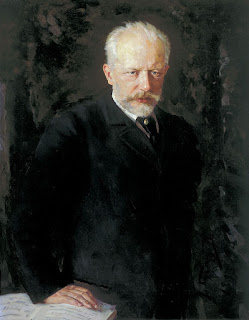
Peter Ilyich Tchaikovsky.

I’ve always had a difficult relationship with Tchaikovsky, but over the last few years, I find myself more and more attuned to him. His famous Piano Concerto No. 1 remains a work that vexes the hell out of me, but I like parts of it enough to outweigh the things I find difficult in it; the 1812 Overture and the Capriccio Italien remain fun potboilers, even if the former is really twice as long as it needs to be. Tchaikovsky’s symphonies, though? Well, even there I’ve always had trouble. For one thing, even though he wrote six total, it’s the last three that show up on frequent programs; in fact, until I did listening for this post, I’d never even heard the first three. I disliked the Fourth for years (only now changing my opinion), and the Sixth was nice but didn’t really do a whole lot for me. (I’ve yet to relisten to it for this series, but I’m looking forward to it.) What started my transition on Tchaikovsky (whose ballet music I have always loved) was the Fifth Symphony, which I’ve always liked and which a few years ago grabbed my heart in a way that few works ever have…but we’ll get to that.

Tchaikovsky was the consummate tortured Russian Romantic who poured the struggles of his soul into his art. His life was one of constant turmoil, and his relationships were stormy and too often ended in death or, in the case of his patron Nadezhda von Meck, the enigmatic and sudden ending of the relationship with no real explanation. Tchaikovsky was also homosexual at a time when that was not a thing to be, and some think that his death — from cholera which resulted from his drinking unboiled water during an epidemic — was at least partly suicidal.

From all this arose some of the most enduring and popular works of classical music ever written, including the last three symphonies. The first three, however, are interesting and fine works in their own right, so I decided to go ahead and just include them all in the course of this series. That’s partly why I took a break from these posts for two weeks: I had catchup listening to do!

So, what of Tchaikovsky’s Symphony No. 1? It was his first (obviously) real foray into the world of large-scale symphonic works, which he began composing shortly after entering conservatory. As a youthful work, it does show some signs of inexperience at times, but Tchaikovsky’s gift for soaring, singing melody is evident early on, and there are some very interesting uses of orchestral color as well. (Russian composers always seem to know how to use the orchestra in the most amazing ways.)

Tchaikovsky’s work on the symphony was not easy, though. Here’s a brief account, from Wikipedia:

Tchaikovsky started writing this symphony in March 1866. Work proved sluggish. A scathing review by César Cui of the cantata he had written as a graduation piece from the St. Petersburg Conservatory shattered his morale. He also composed day and night. All these factors strained Tchaikovsky’s mental and physical health tremendously. He started suffering from insomnia, from pains in his head which he thought to be strokes, and became convinced he would not live to finish the symphony.[5] A successful performance of his revised Overture in F in St. Petersburg lifted his spirits. So did a change of scene for the summer with his family. Nevertheless, he soon worked himself again into nervous and physical exhaustion by continuing to compose day and night. A doctor declared him “one step away from insanity,” ordering complete rest. Tchaikovsky complied.

Ouch. Tchaikovsky was also handicapped by teachers who criticized the work heavily for its awkward use of the traditional rules of sonata-allegro form, rules which Tchaikovsky felt too constrictive for his own natural abilities as a composer. Still, he finished the symphony, and now, hearing it recently for the first time — yes, it’s youthful. No, it’s not the equal of what was to come. But it’s still a fine work that I’m glad to have finally heard!

Here is Tchaikovsky’s Symphony No. 1 in G minor, titled “Winter Dreams”.


Next week, the Symphony No. 2 (which, as of this writing, I still haven’t heard!).

Share This Post

Symphony Saturday (holding pattern edition)

Sorry to miss this feature the last couple of weeks! There’s a reason for that, though: I was finally going to address the symphonies of Peter Ilyich Tchaikovsky, but just the last three, which are among the greatest symphonies ever written. But then I figured, I’ve never actually heard his first three symphonies, so I wanted to hear them first before I blogged about them. So starting next week, six weeks of Tchaikovsky!

In the meantime, we’ll back up a hundred years. Here’s Mozart’s Symphony No. 25 in G minor.

Share This Post

Symphony Saturday

This work may not even actually be a symphony, but I’m featuring it nonetheless, because for a time Nikolai Rimsky-Korsakov actually did consider it a symphony (his Symphony No. 2), before redubbing it a “symphonic suite”, called Antar. His inspiration here was an Arabian story about a man named Antar who saves a gazelle from a bird of prey, and when the gazelle turns out to be a magical Queen, she decides to reward him by showing him the three greatest joys of life (vengeance, power, and love). Rimsky-Korsakov had a love of Asian and Eastern European myths and tales, which most notably manifested in his masterpiece Scheherazade, but Antar is also a fascinating listen, whether it’s a symphony or not.

Here is what might be Rimsky-Korsakov’s Symphony No. 2…or what might not be his Symphony No. 2.

Share This Post