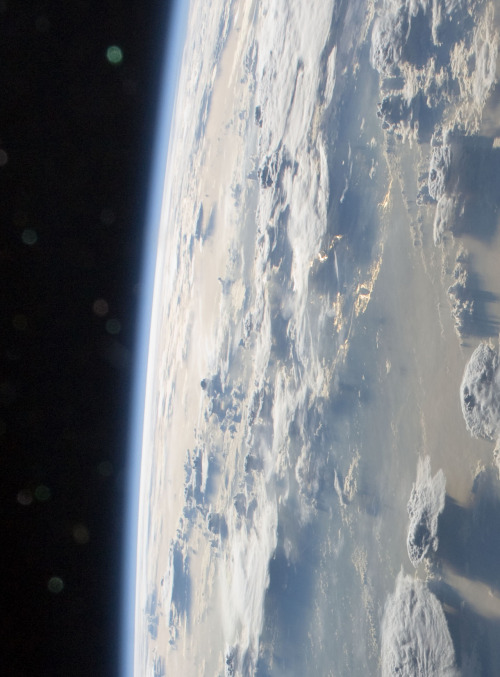
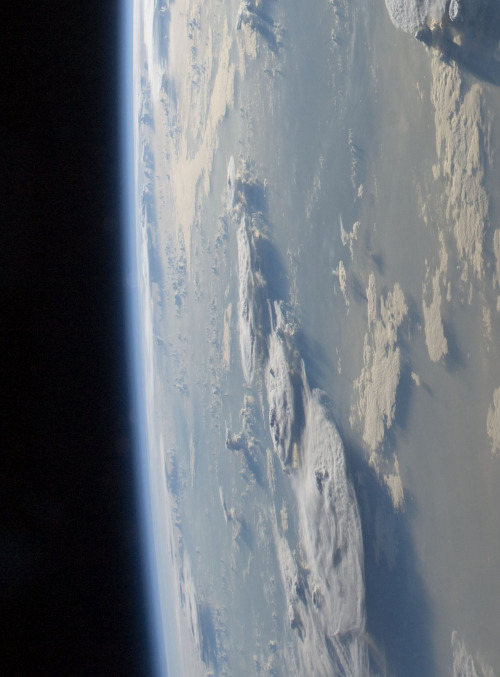
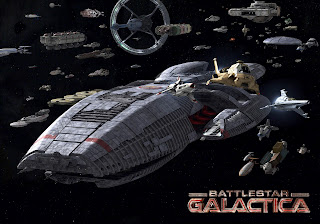
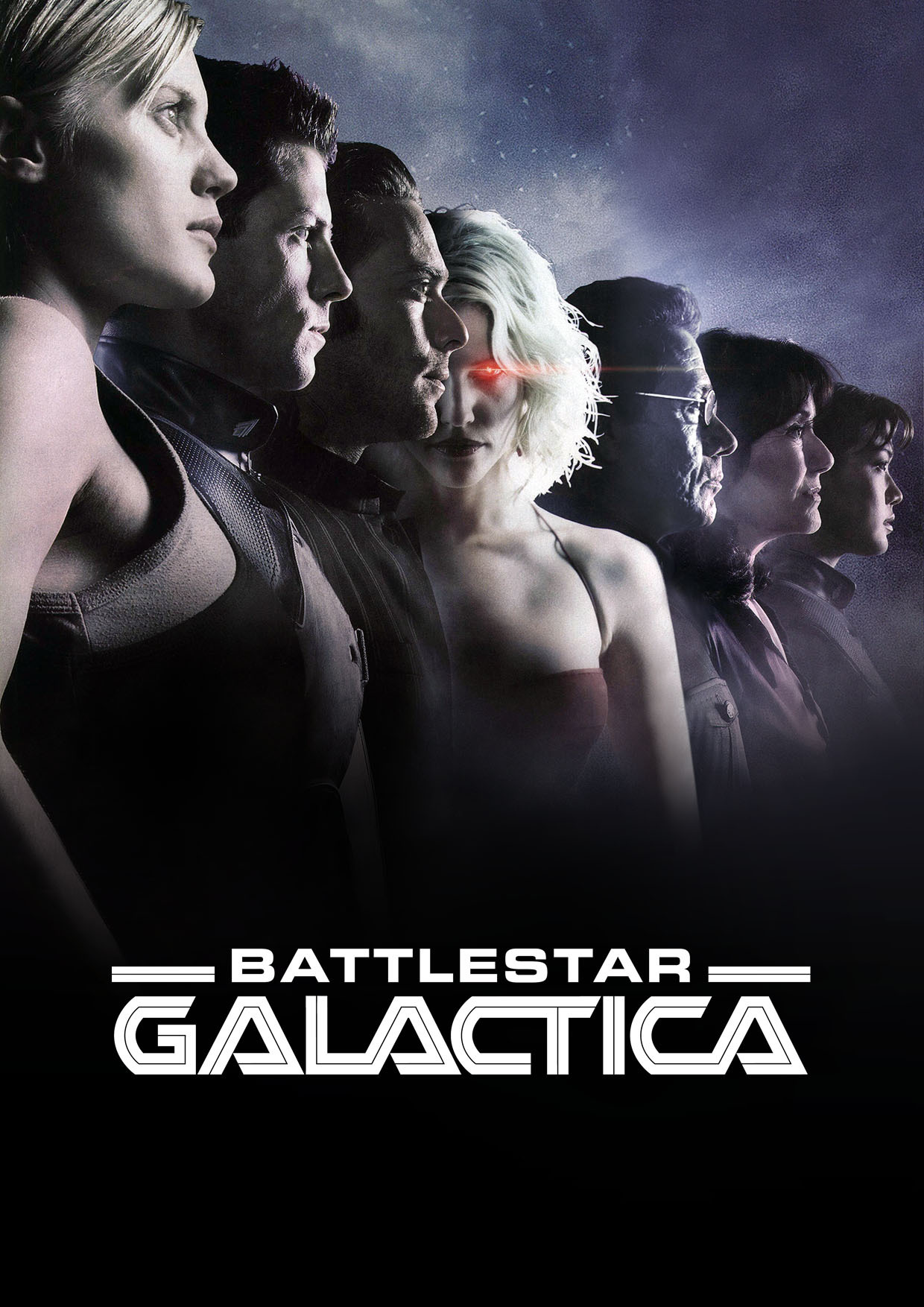
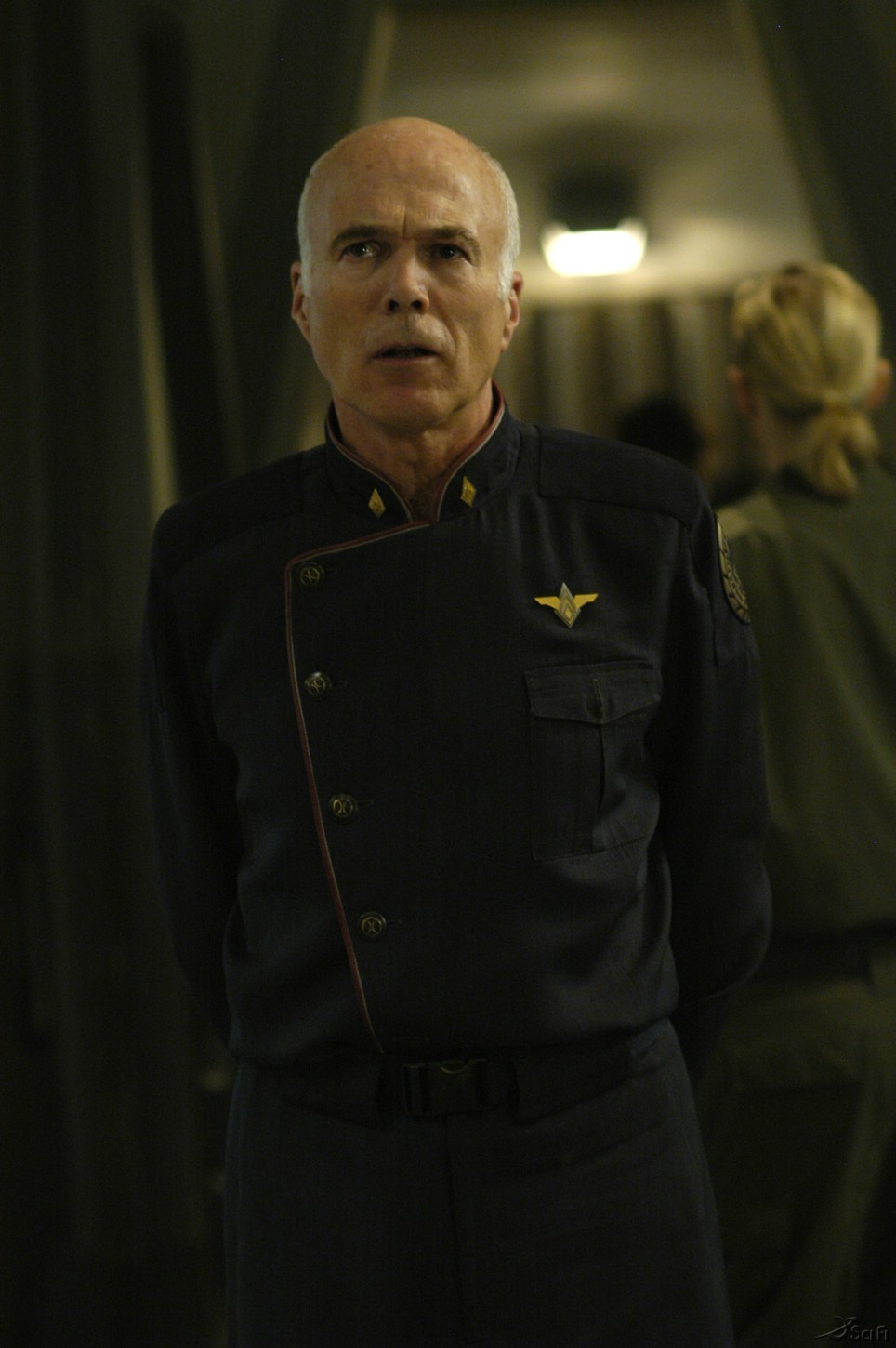
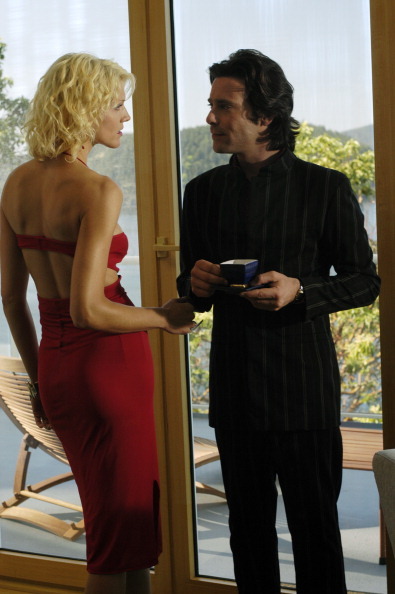
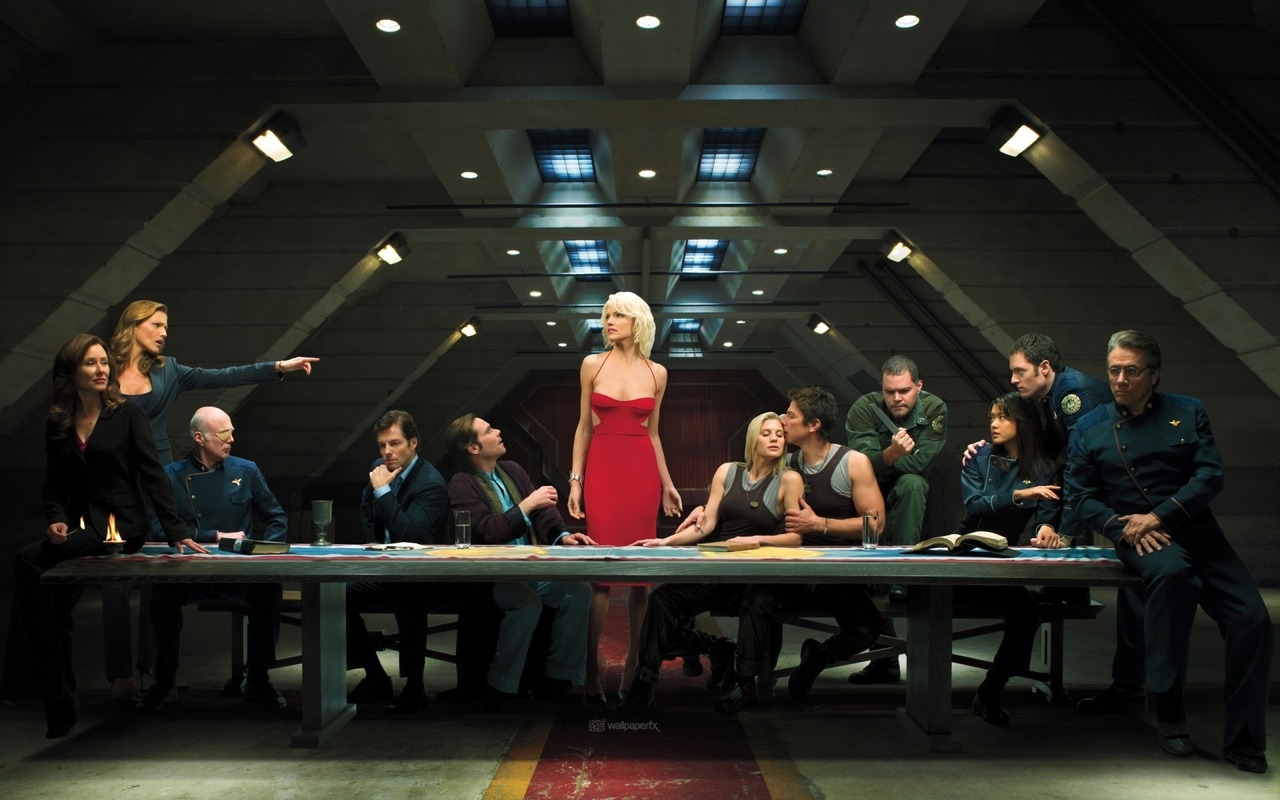
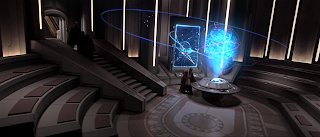
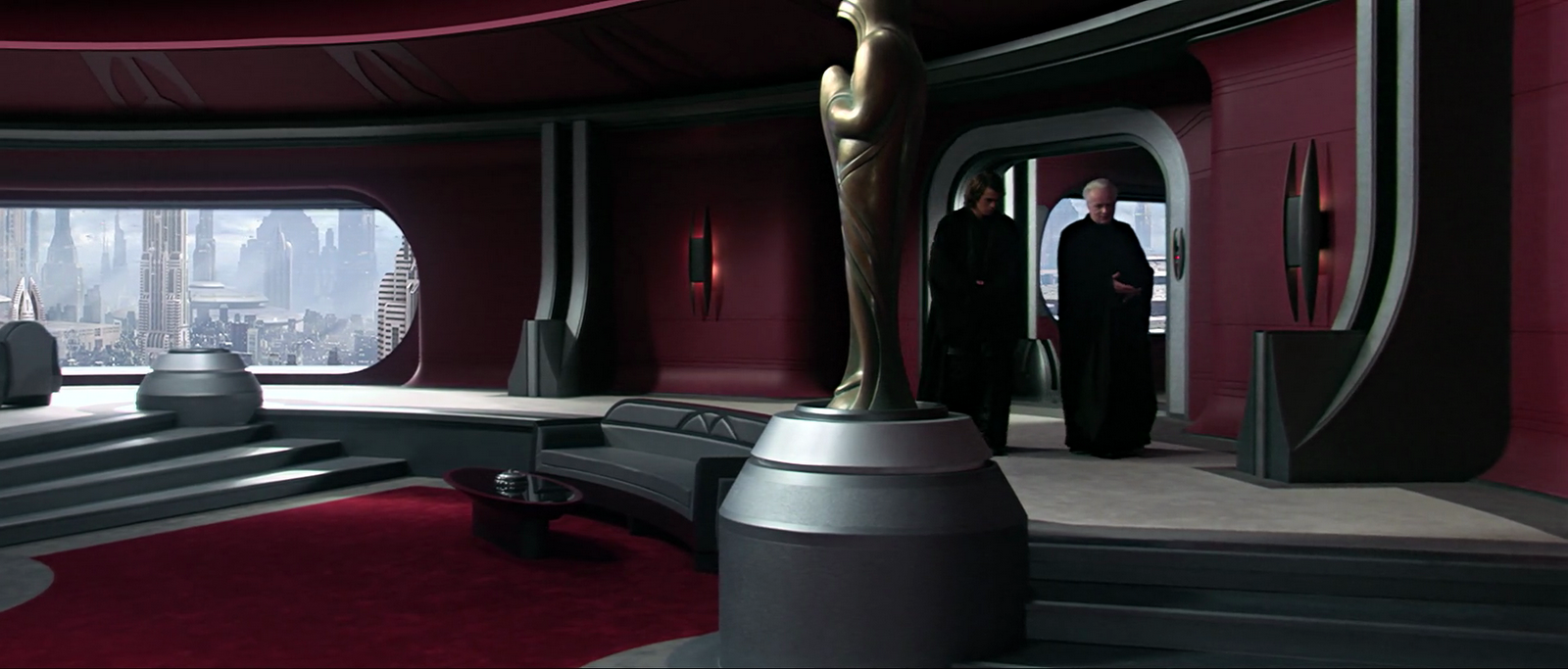
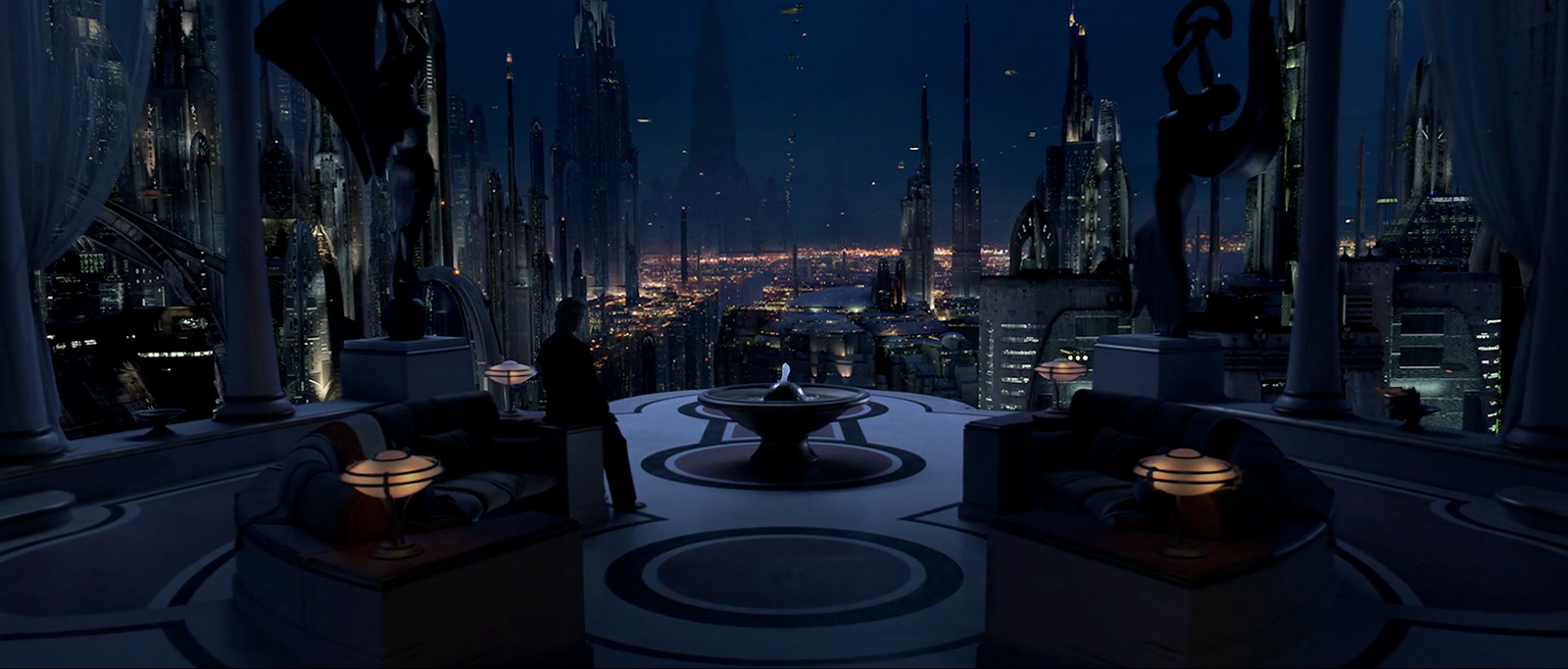
Some possible cover art

Actually, none of these are really ‘possible cover art’, but these images are kinda-sorta how I’d like the cover of Princesses In SPACE!!! (not the actual title) to appear, if and when it finally comes out.

Well, there’d also have to be, you know, the Princesses. And maybe a spaceship or two. Ayup!


(I swiped these all from Tumblr…mostly here.)

Share This Post

The Mouse and the Lightsaber: Random Thoughts on the Disney-Lucasfilm Deal

When I got home from work today, I walked in the door, took care of the mail, unpacked my lunchbox, changed my clothes, and checked the news…to learn that George Lucas has sold Lucasfilm to Disney…including Star Wars. This news really stunned me at first, but as I thought about it, some things crystalized in my head.

:: For years I’ve read and heard people pining that the Star Wars franchise would go the way of James Bond, with different directors getting cracks at it. That seems pretty possible now, for better or for worse.

:: I don’t really have a problem with Disney owning Star Wars or taking the franchise into the future. I think that Lucas has long made it clear that he’s made all the Star Wars movies he wants to make, but that doesn’t rule out the idea of any new ones being made at all. That’s a big universe he’s created there. Why not?

:: For all the complaints heaped upon Disney over the years, fact is, they’re still responsible for an awful lot of really good stuff.

:: I’ve got to think that Disney will be a lot less reticent about the whole “releasing the original versions on DVD” thing than Lucas himself was. I’ve never been one of those fans, but they’re out there, and boy, are they vocal.

:: This also pretty much guarantees that the last set of changes to the Original Trilogy are almost certainly the last set of changes to the Original Trilogy, doesn’t it?

:: For all that…this idea of a new Star Wars movie every few years feels kind of odd to me. One of the big appeals to me about Star Wars is that it’s always been a single story (at least as far as the movies go), this tale of the two generations of the Skywalker family and how one fell into darkness and found redemption at the hands of the next. By necessity, now, the story will become more than that, and with each new tale, that original story becomes a smaller piece of a greater whole. I’m not sure how I feel about that.

:: I had a conversation on Twitter a week or two ago with a friend who had decided that all the various new Star Wars products just weren’t for him anymore, and as a result, his fandom was waning. The point that I made is that Star Wars has become so large in terms of product that one can literally decide what kind of fan one wants to be. That seems very cool to me. I adore Star Wars, but my fandom turns out to be very limited: it pretty much starts and stops with the six existing movies. I read the ‘Expanded Universe’ novels when they started coming out (and I still have quite a lot of love for the Timothy Zahn books, as well as quite a few of the comics, with special love reserved for the Marvel Star Wars title that ran from 1977 to 1987), but I’ve long since stopped following all of that. And I’ve never really gotten around to watching much of The Clone Wars beyond the first couple of episodes (which I actually found pretty solid pieces of entertainment).

Why is this? Well, mostly I suppose it’s because I’m so scattershot in my various fandoms. I’m easily distracted by The Shiny, and I want to fill my life with as much Shiny as possible. I’m just not wired to focus my energies on any one particular variety of The Shiny. But there’s just too much Star Wars out there for me to keep track of, and it’s aimed all over the map. There’s Star Wars for grown-up readers, and there’s Star Wars for kids. Which is why, for me, I’ve pretty much stopped at the movies. I’ll watch what comes, as an observer. And I’ll almost certainly see new movies.

:: I don’t hate the guy. I really, truly don’t. But if Hans Zimmer ever writes the score for a Star Wars movie, I will show up at the theater, consume an entire large popcorn, and then wash it down with ipecac.

:: This isn’t really relevant to the topic at hand, but…f*** Red Letter Media.

:: Some small part of me — the part that’s the writerly equivalent of the kid playing pick-up baseball on the sandlot with a couple of buddies, whispering “It’s the bottom of the ninth in Game Seven…we’re down by three, bases are loaded, two outs and I step up to the plate….” as he awaits the pitch from his older brother — has lazily daydreamed about getting Princesses In SPACE!!! (not the actual title) published, and then a sequel, and then turning the following universal acclaim into being asked by George Lucas to personally write Star Wars Episode VII. That dream has now been taken from me. Sigh….

:: No matter the result, the fact that George Lucas is willing to let Star Wars go, after it’s been the labor of his life, is really something. If it wasn’t obvious, I love this guy and this just helps that right along. What a great thing to do.

:: Speaking of which: as a Buffalo Bills fan, the symbolism of an amazingly rich man selling to someone else the thing that brought him untold riches, that its future might be assured and in good hands, is not lost on me. I hope someone at Ralph Wilson’s house leaves a newspaper on the table, turned to this story….

:: SamuraiFrog has some thoughts, as I figured he would. So does John Scalzi, but when it comes to George Lucas and Star Wars he’s pretty much full of bird poop, so ’tis best to set your phasers (wrong franchise, I know) to ‘ignore’.

:: All that said…I’m really not sure how ready I am to see Princess Leia included amongst the lineup of Belle, Snow White, Sleeping Beauty, and all the rest!

Share This Post

Zoom! Bang!

A couple of science fiction booknotes! Zap! Pow!

:: I’ve seen some mention of a book over the last year or so on various SF blogs called Ready Player One, by a writer named Ernest Cline. Aside from those mentions, I knew nothing about the book until I picked it up on a lark when I saw it at the library. Boy, am I glad I did – what a fun book!

Thirty years from now, the world is a corporate dystopia, and the prime form of escapism is a virtual reality ‘game’, created by two men who grew up in the latter decades of the 20th century, which is so massive that it incorporates entire enormous worlds within it. One of the creators, a fabulously wealthy techno-genius who is also eccentric and reclusive (think Steve Jobs and Howard Hughes, blended into one guy) dies, and bequeaths his entire fortune, a truly staggering sum of money, to the first person who can successfully complete a ‘quest’ that he has created within the virtual world that he has created.

This is all, well, not terribly original. A few decades out, the world is a dystopia where everything is run by a few corporations? Yeah, we’ve seen that before. And the ‘reclusive oddball creates a quest for riches’ thing? Yup, that’s been done too. Basically this book is It’s a Mad Mad Mad Mad World meets Demolition Man. But you know, sometimes originality isn’t about creating something totally new; originality can be found in mashups that no one would ever think to do.

But what really makes this book something else isn’t the mashup, it’s the way all the details are ripped straight from the entire grand, weird, oddball geek culture of the last thirty years, with key focus on the 1980s. If you grew up watching Star Trek and arguing with friends over the Ewoks and listening to Duran Duran and planning your afterschool activities on the basis of which of your friends had an Atari console and so on and so forth, then there is stuff in this book that will thrill you to the core. It’s as if Cline has packed his book with easter eggs, hundreds of them, for people from that period to get. Luckily, I grew up in that very era, so I think I got them all. For the most part.

Ultimately, Ready Player One is geek-porn of the highest order. My only complaint was the nature of the modern dystopia, which is mainly because I’m just generically tired of dystopias. This book is really fun, though. It’s paced beautifully, there’s payoffs galore between the compelling characters and the great stuff they do, there are villains of the ‘boo-hiss!’ variety, and basically, the book would be a slickly entertaining piece of SF-quest fiction even if it didn’t have all the various references to 80s-and-since geek culture. I recommend this book highly!

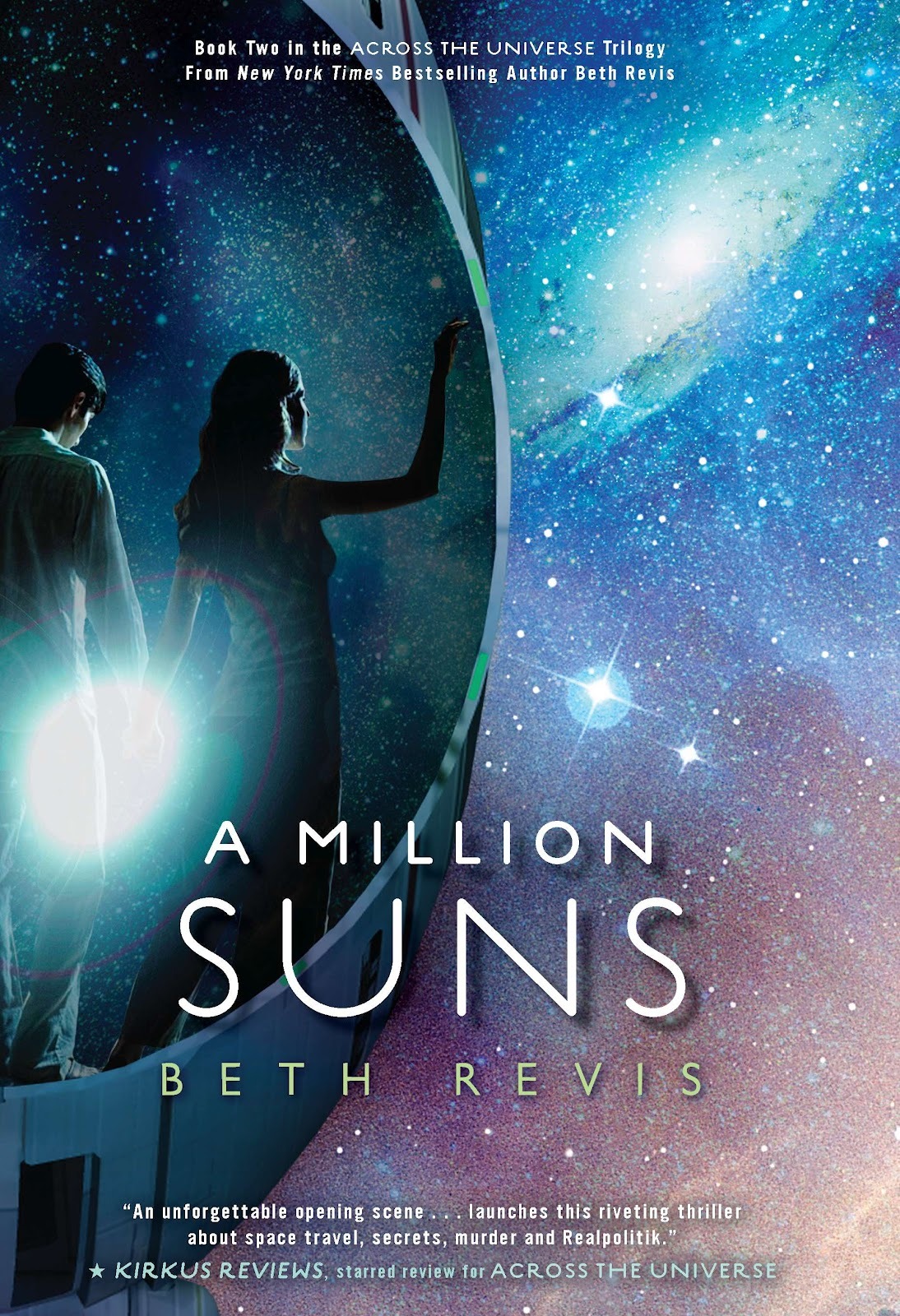
:: A few months ago I positively reviewed a SF novel called Across the Universe by Beth Revis, which is the first book in a trilogy. I have now read the second book, A Million Suns, and I recommend that one equally.

I don’t want to say too much about it, since it’s the second book in a trilogy and thus discussing its plot will require somewhat spoiling the first one, but the story from that first book (of the ‘generation ship’ that’s not what it seems, and the teenage boy and girl who plumb its secrets) continues in interesting and effective ways. We learn more about the ship and the nature of its mission, and the villain from the first book turns out to have left clues behind about something that he discovered before things went awry for him. It’s a very good read that left me waiting enthusiastically for the third one, which is due in January. (And I have a few guesses as to what revelations will come in that last book that I’m excited to see either confirmed or disproved!)

Share This Post

“So say we all!”

I’ve mentioned more than once, over the years, that I have a tendency to not be up on the big pop-culture things when they’re big, or up on what’s the cutting-edge thing in my favorite genres right when it’s at the cutting edge, and so on. For four years back during the 2000s, I heard nothing but good things about the ‘reimagined’ Battlestar Galactica series – well, nothing but good things, that is, until the show ended, at which point I heard some divisive stuff. But since I didn’t have cable, I had to file BSG away for future reference.

Well, ‘future reference’ is now, and last week I finished watching the first season of BSG. I would post things to Facebook about it, and I’d hear a pretty uniform response each time: fans of the show telling me how jealous they are of my coming to the series for the first time. That’s pretty high praise…which the show has, to my mind, equaled. At least in the first season. I’ve got three more to go. (I think.)

Anyway, Battlestar Galactica famously launched way back in 1978, on the ABC network. Even though it most definitely owed its network pick-up and investment (the show was very expensive) to the incredible success the year before of Star Wars, BSG had actually been under development by creator Glen Larson since the early 1970s. He’d had this notion for a show in his head for a while, and when SF space opera suddenly became wildly popular, his show got its chance.

The story had humans existing on twelve worlds, called the Colonies, and living in peace, until they are viciously attacked at the planet Caprica by the robot race called the Cylons. Caught unawares, the humans are smashed, and end up fleeing their planet with a ‘ragtag fleet’ of various ships, under the protection of the giant battleship – called a ‘Battlestar’ – named Galactica. As the tattered remnants of humanity begin to make their way across the galaxy, the leader of the Colonial fleet, Commander Adama, reveals their destination: the mythical, lost 13th colony, called ‘Earth’.

This same background applies to the new BSG, although some of the details have been changed, as befitting a ‘reimagination’ of the idea. Larson’s original series was not just a kind of “Wagon Train to the stars” (and was, in fact, probably a better exemplar of this idea than Star Trek, even though that’s how Gene Roddenberry originally described his iconic show); he also infused it with a lot of veiled references to his own religion and its beliefs, the LDS Church. But for all that, the original BSG has gained a pretty unfair reputation through the years as a cut-rate Star Wars rip-off. I suppose this is partly due to its short run (a single season, due to the ratings not being quite good enough to justify sufficient advertising charges to cover the show’s large budget) and to the follow-up series two years later, Galactica 1980, which was…well, it was, in BSG parlance, frakking awful.

In the years since, there was occasional interest in a revisitation of the BSG franchise, including a project that actor Richard Hatch (Captain Apollo on the original series) spearheaded. It was producer Ronald D. Moore, however, who got the new version off the ground. Moore had a strong grounding in genre teevee, having worked on Star Treks TNG and DS9. The reimagined series, when announced, caused some consternation amongst fans of the original series; I remember one fellow on the FSM boards who would get quite incensed whenever the subject of a new BSG would come up.

So, anyway, as of this writing, I’ve watched all of Season One and about a quarter of Season Two. I’m coming to this with little knowledge of what is to come, although I’ve heard some fairly uncomplimentary things about how the series ends. I suppose I’ll find out soon enough on that score…but what do I think for now?

Generally, this series is amazing.

The main hook is delivered in a pilot miniseries that’s about three-and-a-half hours long. There we open with a deep space station where a human delegate and a Cylon delegate are to meet, once a year, to discuss relations. Or that’s how it’s supposed to go…but what really happens is that the human delegate basically shows up, sits in a room, and reads the paper while no Cylons come. This time, however, the Cylons arrive: two menacing-looking robot types, and a Cylon who looks, for all the world, like a stunningly beautiful blond woman. She asks the delegate if he is alive, and then…the Cylon basestar (the term for a Cylon flagship) destroys the station.

It turns out that the blond woman, ‘Number Six’, is one of many copies, and whenever one of the human-appearing Cylons dies, their memories are instantly transferred to an identical and new body. This simple fact allows the same Cylons to appear in numerous places in the story, and there are quite a few scenes where a human sees a Cylon that he or she has previously killed.

Meanwhile, the crew of the Battlestar Galactica is preparing the ship for a decommissioning ceremony, with all that entails – goodbyes being said, press members being led on a tour, the eventual revelation that one of the launch bays has been converted to a gift shop – when the Cylons launch their dreadful attack on Caprica. Almost immediately this ship, with its commander who is preparing for retirement and a crew mostly made up of young recruits who have never seen any kind of action before, are the leaders of the war effort.

As in the original series, the Cylon attack is staggeringly successful, to the point that all of the Twelve Colonies are destroyed, and all of humanity is reduced to around 50,000 people on a bunch of spaceships, only one of which – the Galactica — is a warship. The rest are tankers and passenger liners and resort ships and the like. They quickly form up into the Colonial Fleet, and take to the stars, fleeing the pursuing Cylons lest humanity be wiped out forever. There’s a deeply chilling scene where it becomes clear that only a portion of the Colonial ships have FTL drives, and as the Cylons launch an attack on the fleet, only those ships can escape, which they do – leaving thousands behind to perish.

The new BSG takes a much more realistic and serialized approach to dealing with this central story notion. Episodes tend to pick up where the last one left off, and problems from one episode are rarely solved in the allotted 60 minutes. Problems of supply, such as water and fuel, are addressed in ways that I don’t recall the original series dealing with in great detail (not that the original ignored all that, by any means).

BSG, like all great science fiction, succeeds or fails based not only on its premise, but on its characters who are living that premise out. This version of BSG is full of interesting characters, with the line often blurred between who is villain and who is not. Alliances form and dissolve as various people find that at times their individual agendas align, while at others, they clash. Aside from the Cylons, there is no one on this show who stands out as purely good or purely evil. Even Commander Adama, who may be the most effective teevee starship commander since Jean-Luc Picard, has moments when he succumbs to his own inner demons and allows them to control his actions. The show is masterful at creating flawed people, but also people whose flaws aren’t so debilitating that we can never sympathize or understand.

Even better, the flaws of the characters make sense. Colonel Tigh is an alcoholic who suffers from crippling self-doubt about his own abilities to command or make correct decisions – so much so that he often doesn’t even realize it when he makes the right ones because he has to. He’s the one who calmly makes the decision to seal off a section of the Galactica that is on fire and vent that section into space, even though this will mean the instant death of dozens of crew, because it’s the only way to deal with the problem.

And then there is Kara Thrace, the brilliant cigar-chomping Viper pilot with a penchant for breaking the rules and who goes by the call-sign “Starbuck”. I remember a lot of consternation when the show was announced that they were making Starbuck (Dirk Benedict’s role in the original series) into a woman, but it really works here. This Starbuck is arrogant and skilled and resourceful and brilliant, but also brash, disrespectful, and racked with deep guilt that exists on several levels. At the point I’ve reached in the series, there have been some indications that Starbuck has a deeper level of significance in some way, but I haven’t gotten there yet. She is a fantastic character, though. Nothing dull ever happens when she is onscreen.

And the roster of the show’s best characters marches on. Laura Roslin is the Secretary of Education in the Colonial Government, and as such, she is 43rd in the line of succession to the Presidency…until the Cylons kill, in one fell swoop, the 42 people ahead of her, so this prim schoolteacher finds herself President of the Colonials during their greatest time of struggle in history. This, in fact, turns out to be one of the show’s most frequent themes: the way in which history often forces the least likely of people to rise to the occasion and do what must be done to survive. The obscure cabinet member who works on education policy becomes President. The commander of the ship that’s being mothballed becomes the leader of the entire war effort. The maintenance workers who repair the ships suddenly find their duties the difference between life and death. And so it goes.

BSG‘s moral ambiguity is most centered on Gaius Baltar, the brilliant scientist who is seduced into giving access to defense computers on Caprica to the stunning woman he’s dating…who happens to be Number Six, the gorgeous human-looking Cylon. In many ways, it’s his fault that the Cylons are so able to destroy Caprica so quickly, so utterly, and so decisively. But is he a villain? It’s hard to see him as such, even though his agenda, to the extent that he even has one, doesn’t really line up to the rest of the Colonial fleet’s. As the series unfolds, Baltar is visited over and over again by Number Six, who may or may not be a figment of his imagination…or a vision placed via a chip in his brain. She is able to stoke his ego to enormous degree, first by getting him elected Vice President, and then by convincing him that he is an ‘instrument of God’.

The BSG writers excel at creating situations where the moral course is not at all clear. In just this one season, we have the fleet having to rely on convicted criminals to form a work crew to acquire water; we have a decision made on incomplete information whether or not to destroy a Colonial ship that may have been taken over by Cylons; and we have the increasing evidence that what is happening to the Colonials has been foreseen in their scriptures, so that they must decide whether to continue fleeing or stop and retrieve an artifact from their once-lost home planet of Kobol. BSG provides its characters with few easy decisions – in fact, it’s almost as if the writers delight in creating situations where their people are in a really bad spot and their only courses of action available basically constitute a grab-bag of suck. “Pick your poison” seems to be the general order of the day on this show…or the choice between the devil you know and the devil you don’t.

I don’t want to give the impression that the updated BSG is all dystopic depressing stuff, because it’s not. It’s intense and dark and a lot of bad stuff happens, but there are real moments of happiness along the way, and a couple of moments of outright triumph. This is a show that makes a major victory out of when the running tally the President keeps of the to-the-number population of the human race actually increases by one, and there are moments of humor along the way. Small moments, to be sure, but there’s a constant sense that when a triumph comes, it is earned. Prices are paid for victories, but hope remains.

This brings me to the show’s mystical and religious themes. The Colonials seem to be polytheistic, believing in gods who are modeled on the Greek pantheon of deities. Reference is made to Apollo and Athena, as well as others. The Cylons, however, are particularly interesting because they are not just a race of robots, as in the original series. The Cylons believe in a monotheistic God, to the point where Number Six, in her talks with Baltar, speaks to him in ways that are so spiritual that it’s possible to wonder if she is some kind of angel and not a Cylon at all. The original series had its religious content as well, being famously shaped by Glen A. Larson to reflect the theology of the Mormon church. The BSG update doesn’t quite do that, but it does address some of the big spiritual questions. Characters are said to be meant to do certain things, and there is the constant repetition of a single spiritual idea, used almost as a kenning in the show: “All this has happened before, and all this will happen again.”

In terms of production design, BSG is top-notch. The Galactica itself is only mildly updated in design, as are the Colonial Viper starfighters – they are still long and sleek, with their tri-thrusters, but they’re deadlier now. Interestingly, early in the show’s pilot miniseries, there’s a touching scene where the flight crew on Galactica provides Adama with a restored ‘vintage’ Viper, which is, of course, one of the ships from BSG 1978. There are other, small nods to the original series: the gold-plated Cylons of the original show are revealed to be an earlier model in this one, and the Colonial Anthem turns out to be the Stu Philips theme from the original show. These are all small nods of respect toward the earlier show. (The ultimate such nod is, of course, the casting of Richard Hatch — who played Apollo on the original show — as Tom Zarek, a criminal-turned-politician, who is one of the more interesting characters on a show that is loaded with them.)

There are other things about the production design that might seem a bit odd at first, but I quickly became used to them. The clothes on the show are contemporary – and by that, I mean, you could pluck just about any civilian character out of BSG, plunk them in the middle of any city in America, and no one would look twice at them. Suits with neckties, women in pants suits and the like…in truth, I found this aspect of the show easiest to swallow. Nobody really has any idea what would be in fashion in some future (or past) society, so why not just use fashions from right now and have done? It was no harder for me to get used to this than it was to get used to all the Western tack in Firefly. One design element in the show that I really like is how every piece of paper, every book, every bit of printed matter, is printed on octagonal paper. That little detail goes so far to make clear that this world, these people, look like our and us, but they’re not.

And the music? There’s some wonderful music on this show, and it uses a lot of different styles, from slashing synths to action cues that are nothing but percussion to a Celtic-theme for the father-son relationship of Adama and Apollo.

I will continue to report on BSG as I make my way through the series, but for now – what a great, great show.

Share This Post

Fixing the Prequels: Revenge of the Sith (part four)

one
two
three

Aaaaand again, it’s been ridiculously long for an installment of this series, for which, again, my apologies. But this time the reason is different, aside from the fact that time, as always,, continues to occasionally get away from me. No, this time I’ve genuinely been vexed with how to fix the part of Revenge of the Sith we’re now entering.

This part of the film – the political part – is the most problematic. After a slam-bang first forty minutes or so, the film has to spend half an hour or so going set-up for the last hour, which will include, as we well know going into this one, all manner of grim stuff happening. As a well-established lover of all things Star Wars, I don’t dislike this part of the movie, but I do have to admit that structurally, this is the weakest part of Sith. It’s mostly a lot of talking, and I’ve really had trouble figuring out what to do here.

So part of what I did was reconnect myself with the entirety of the Star Wars saga by rewatching, over the course of six consecutive Sundays, all six movies (in their proper order: ANH, TESB, RotJ, TPM, AotC, Sith). And while I’m on that subject, I highly recommend doing precisely this! When watched in fairly close quarters like that, the emotional beats of the entire story become a lot more clear. And as fas as this blog series goes, the rewatch more than served its purpose, because it crystallized for me a few things about this movie:

1. There are times when George Lucas chooses to linger when he should move.

2. Conversely, there are times when Lucas moves when he should linger a bit!

3. The film doesn’t contain quite enough politics.

4. The film doesn’t quite connect the dots strongly enough with regard to Anakin’s temptation.

Again, these observations are meant more mildly than they might sound. I think that Sith is a fantastic experience, but it could have been even better had the Problem Portion worked just a bit better. The problem here, I think lies in the talky nature of the material and the fact that a lot of the talk is, well, rather stilted and expository in nature. So, what to do?

Well, there are two possible ways we can go. We can add more action in order to give the impression of plot movement by having things explode. I didn’t want to do that because you have to justify action, and I don’t see how to do that and retain what we need of the political material without resulting in a hugely bloated movie, so I’m prepared to stick with the action in the film that exists. That leaves the other option, which is to make all that talking more interesting in itself.

And how do we do that? Well…and given some of my recent postings, I can’t believe I’m saying this…but we need to take a lesson here from Aaron Sorkin.

I may have spent lots of time ripping the guy recently, and for what I feel are entirely justifiable reasons, but if there’s one thing we can learn from the fairly consistent success of Aaron Sorkin’s scripted films and shows, it’s that lots of talking need not be boring. At his best, Sorkin was able to make the corridors of politics a deeply fascinating place. That’s what needs to happen with Sith…maybe not in Sorkin’s style, obviously. I don’t want characters answering every yes/no question affirmatively with “Yeah”; I don’t want people referring to “the thing” or “this thing” or saying “I’ve gotta go do a thing”; I don’t want Anakin complaining to Obi Wan that the Jedi Council has just “screwed me with my pants on”. But more dynamic conversation, more quickly applied, is certainly called for.

So! When we left off, Anakin had started having nightmares about Padme’s death in childbirth, and in an act of total responsibility that I find pretty impressive (especially as no one seems to notice it), Anakin took his problem to Yoda, who then helpfully told him basically, “Death happens. Let it and don’t be sad when it does.” Yoda’s advice is, shall we say, not all that useful.

So now we start getting into some politics. What is the aim here? Well, we have to show Anakin’s increasing ties to the Chancellor eroding his confidence in the Jedi. We also need to establish that the Chancellor is slowly but surely acquiring enormous amounts of power, to the alarm of the Jedi. This story isn’t just the fall of Anakin Skywalker, it’s about the seizure of power by the Sith and the fall of the Jedi order. Now, in the original script and in some deleted scenes, the seeds of what will eventually be the Rebel Alliance are sown, but none of this made it into the finished film, on the basis that those scenes slow things down too much (and this is not a point without merit). Finally, it seems to me that at least a bit of light needs to be shone upon the exact relationship of the Jedi to the Chancellor and Senate, and on the public in the Galaxy’s view of the Jedi. How to do all this? Read on!

Just after Anakin’s scene with Yoda, he runs to get to a war briefing by Obi Wan, and he gets there late. I would add a little bit, in blue, and what didn’t make the film in red:

INT. CORUSCANT-JEDI TEMPLE-BRIEFING ROOM-DAY

ANAKIN rushes into the Briefing Room. By the time he reaches the Chamber, the last of the Jedi are leaving. Only OBI-WAN remains at the front of the lecture hall. He is shutting off some holograms and electronic charts and maps.

OBI-WAN: You missed the report on the Outer Rim sieges.

ANAKIN: I’m sorry, I was held up. I have no excuse.

OBI-WAN: In short, they are going very well. Saleucami has fallen, and Master Vos has moved his troops to Boz Pity.

ANAKIN: What’s wrong then?

OBI-WAN: The Senate is expected to vote more executive powers to the Chancellor today.

ANAKIN: What powers?

OBI-WAN: The Chancellor wishes the authority to commission more clones from Kamino, and to appoint regional governors to directly control Republic affairs in their territories.

ANAKIN: Well, that can only mean less deliberating and more action. Is that bad? It will make it easier for us to end this war.

OBI-WAN: Anakin, be careful of your friend Palpatine.

ANAKIN: Be careful of what?

OBI-WAN: He has requested your presence.

ANAKIN: What for?

OBI-WAN: He would not say.

ANAKIN: He didn’t inform the Jedi Council? That’s unusual, isn’t it?

OBI-WAN: All of this is unusual, and it’s making me feel uneasy. You’re probably aware that relations between the Council and the Chancellor are stressed.

ANAKIN: I know the Council has grown wary of the Chancellor’s power, mine also for that matter. Aren’t we all working together to save the Republic? Why all this distrust?

OBI-WAN: The Force grows dark, Anakin, and we are all affected by it. Be wary of your feelings. The Council isn’t concerned about your power, Anakin. But they are concerned about how close you are to Palpatine.

I add the little bit enumerating the specific powers being voted upon because I generally think it’s best to be more specific when you can.

Now, in the movie, we cut right to Palpatine’s office, and Anakin and Palpatine are slowly walking around the enormous room, having a discussion. Only about half of it shows up in the film, though:

INT. CORUSCANT-CHANCELLOR’S OFFICE-DAY

ANAKIN stands with PALPATINE at his window overlooking the vastness of Coruscant. Several buildings have been destroyed. A brown haze hangs over the landscape.

PALPATINE: Anakin, this afternoon the Senate is going to call on me to take direct control of the Jedi Council.

ANAKIN: The Jedi will no longer report to the Senate?

PALPATINE: They will report to me . . . personally. The Senate is too unfocused to conduct a war. This will bring a quick end to things.

ANAKIN: I agree, but the Jedi Council may not see it that way.

PALPATINE: There are times when we must all endure adjustments to the constitution in the name of security.

ANAKIN: With all due respect, sir, the Council is in no mood for more constitutional amendments.

PALPATINE: Thank you, my friend, but in this case I have no choice . . . this war must be won.

ANAKIN: Everyone will agree on that.

PALPATINE: Anakin, I’ve known you since you were a small boy. I have advised you over the years when I could … I am very proud of your accomplishments. You have won many battles the Jedi Council thought were lost . . . and you saved my life. I hope you trust me, Anakin.

ANAKIN: Of course.

PALPATINE: I need your help, son.

ANAKIN: What do you mean?

PALPATINE: I fear the Jedi. The Council keeps pushing for more control. They’re shrouded in secrecy and obsessed with maintaining their autonomy . . . ideals. I find simply incomprehensible in a democracy.

ANAKIN: I can assure you that the Jedi are dedicated to the values of the Republic, sir.

PALPATINE: Nevertheless, their actions will speak more loudly than their words. I’m depending on you.

ANAKIN: For what? I don’t understand.

PALPATINE: To be the eyes, ears, and voice of the Republic . . .

ANAKIN thinks about this.

PALPATINE: (continuing) Anakin . . . I’m appointing you to be my personal representative on the Jedi Council.

ANAKIN: Me? A Master? I am overwhelmed, sir, but the Council elects its own members. They will never accept this.

PALPATINE: I think they will . . . they need you more than you know.

As I watched all six movies, I noticed that George Lucas – even in TESB and RotJ, the ones he didn’t direct – likes to join scenes with conversations already in progress (good example: in ANH, after Ben rescues Luke from the Sandpeople, we cut to Ben’s home and Luke is saying, “No, my father didn’t fight in the wars, he was a navigator on a spice freighter.”). A lot of the time it works, but there are a couple of times – most notably the fireplace scene in AotC — where it doesn’t. This is another such example. I suspect that the scene was cut as is to keep it short and simple, but sometimes short and sweet isn’t so great. Interestingly, this scene as written openly addresses something I wondered about while rewatching the PT: the relation between the Jedi and the Republic. This scene strongly indicates that the Jedi are virtually an independent body, and very rigid in guarding their independence. And that, frankly, seems a tad important to me.

I’d like to establish all this, but I wouldn’t do it this way, with a simple Anakin-and-Palpatine in the office thing. Instead I would replace this whole scene with a longer sequence:

EXTERIOR: Coruscant – Senate building – dusk.

The sun is setting behind the great Senate building.

INTERIOR: Senate chamber.

The Galactic Senate is in session, with PALPATINE presiding from his center rostrum. A SENATOR FROM MALASTARE has the floor.

MALASTARE SENATOR: We have heard the reports from the Jedi that their offensive is pushing back the Separatist armies, but if that were true, how could General Grievous have launched such a devastating attack against the very heart of the Republic? How can we trust the Jedi reports of success when they just barely avoided utter failure in our own skies? Malastare moves that an immediate investigation into this affair be undertaken!

PADME: This is outrageous!

The Senate pod from Naboo floats out into the debate space, bearing PADME and JAR JAR BINKS.

PALPATINE: The Senator from Naboo.

PADME: The Jedi have served the Republic with honor for a thousand generations! If we question them now–

MALASTARE SENATOR: This failure was theirs. The Force did not warn them of the attack, did it? This war grinds on and on, and now, look about you! A third of this body is vacant, and a third of these Pods stand empty because their systems have joined the Separatists! The Jedi are failing us. Chancellor, I serve official notice that Malastare is introducing an amendment to place the Jedi Council under the direct authority of the Chancellor and the Senate!

PADME: No! You can’t–

She is drowned out by the shouts from every Senator in the building as the entire place erupts with fierce debate.

MAS AMEDDA: Order! Order in the Senate! Order!

Through all this, PALPATINE shows almost no reaction, even when he meets PADME’s gaze.

INTERIOR: Senate building – Shuttle bay.

PALPATINE is walking toward his personal shuttle, with MAS AMEDDA and his councilors behind him.

MAS AMEDDA: Will you schedule a vote on the Malastare amendment?

PALPATINE: I shall hold that off as long as I can, but eventually the Senate will force the issue…ah, Anakin!

ANAKIN rises from his seat outside the shuttle.

ANAKIN: Chancellor. I was told you wished to see me.

PALPATINE: I do. Come.

He takes ANAKIN aboard the shuttle.

INTERIOR: Chancellor’s shuttle – continuous.

PALPATINE and ANAKIN sit down inside the shuttle as it departs for the Chancellor’s office building.

PALPATINE: These Senate sessions become harder and harder to control. Odd, with fewer and fewer Senators.

ANAKIN: I watched it on the screen. The Jedi Council will not easily submit to being placed under Senate control, no matter what law they pass.

PALPATINE: I agree, which is why I wished to speak with you. I’d heard that Malastare was planning to propose that amendment, but I’d hoped those rumors were false. Perhaps what I have in mind will ease the Senate’s concerns somewhat.

ANAKIN: Sir?

PALPATINE: I need your help, son. I need you to become the eyes and ears of the Republic.

ANAKIN: I don’t follow–

PALPATINE: The Republic has faced times like these before, Anakin. The Jedi Council’s independence was not always taken for granted. I have decided to invoke a very old statute and make a direct appointment to the Jedi Council.

It starts to dawn on ANAKIN….

PALPATINE: I wish you to be my personal representative to the Jedi. They will resist, but I have the right. Of course, by their own by-laws, this will force them to do what they should have done years ago, and make you a full Jedi Master.

ANAKIN: A Master?! Sir…I am…I don’t know what to say….

PALPATINE: You need not say anything. In fact, if the Council’s reaction is what I expect, you may not even wish to thank me. But the Republic needs you, Anakin. More than you know.

EXTERIOR: Sky above Coruscant.

The Shuttle arcs toward the Capital building.

INTERIOR: Senate building – corridor.

PADME is walking with several other SENATORS.

PADME: We have to start working to assemble a coalition that will back the Jedi Council. We can’t have these divisions in the middle of a war–

A young SENATE PAGE approaches, bows, and hands PADME a slip of paper, which she unfolds and reads.

PADME: Thank you.

The PAGE runs off.

SENATOR: We will not vote to obstruct the Jedi.

PADME: Thank you. If you’ll excuse me, I’m late for a meeting….

She nods a farewell and then heads off down another corridor.

INTERIOR: Senate building – Observation room.

The observation room is near the top of the Senate building itself, overlooking the mighty expanse of the Coruscant city. PADME enters and is greeted by SENATOR BAIL ORGANA and several other SENATORS, including a tall and regal-looking WOMAN.

PADME: Senator Organa? Why are we up here instead of one of our offices?

BAIL ORGANA: Greetings, Senator Amidala. I believe you know the others.

PADME: Yes, good to see you all. (to the WOMAN) You’re newly elected?

WOMAN: Just last month. I am Mon Mothma.

PADME: Oh yes. Of Chandrila. A pleasure, and my apologies – I usually get around to welcoming new Senators more quickly. But why are we up here?

BAIL ORGANA: These observation rooms are informal locations.

PADME: And not subject to Senate guidelines for official business. I think I understand.

MON MOTHMA: Those of us here have concerns about some things that are happening in the Republic, and we think that you may share some of those concerns.

PADME glances from face to face in the room. Something about this seems harmless, and yet deeply significant. She knows that a line is about to be crossed….

PADME: Go on.

The point here is to show a number of things: that the Jedi are facing opposition not just from the Chancellor but from the Senate as well, to get the bit in there about Palpatine intruding upon the functions of the Jedi Council while seeming reasonable about doing so, and to show what is probably the moment when the Rebel Alliance is born.

It really struck me how skillfully Palpatine played the Jedi Council and Anakin and everyone else, when I rewatched the films. He just doesn’t seem all that unreasonable in doing some of the things he does, before he unmasks himself. Of course, a part of that is the amazing performance of Ian McDiarmid, whose performances as Palpatine in the Prequels are, to my mind, criminally underrated. He gives Palpatine a kind of fatherly gravitas that is utterly convincing and all the more chilling when it starts to become clear what he’s up to.

And that’s where we’ll stop. The galactic politics continues next time! Excelsior!

Share This Post

Page One: A Princess of Mars

Page One: A Princess of Mars

Here’s Page One of one of my copies of A Princess of Mars. This copy is part of something called the “Library of Wonder”. I bought it off the Bargain Books table at Barnes&Noble. Even though I already owned a copy (an omnibus I bought, in turn, back when I was a member of the SF Book of the Month Club), I couldn’t resist this one. I read A Princess of Mars a while back, and I was surprised at how well the writing holds up after 100 years; I expected a pulpy work that would be difficult to read for its prolix writing, but Burroughs crafts a nice, spiffy, readable tale that doesn’t have nearly as many anachronisms as one might expect. I haven’t yet read any farther into the series, but I intend to. This volume contains the first three of Edgar Rice Burroughs’s “Barsoom” novels, of which the first, A Princess of Mars, has just been adapted for the big-screen. Somewhat infamously, it turns out.

So, why did John Carter fail? I suspect for lots of reasons, not just one.

I’ve heard that there was a change in Disney management during the film’s production, and William Goldman has pointed out in his books that often an incoming exec’s first act of business is to make sure everything that the previous guy greenlit either gets ungreenlit or at least is just tossed out there without hype. I’m not sure about this; it’s one thing to just put the brakes on developing projects, but quite another to purposely scuttle a movie that’s already been made because the $200 million has already been spent. I’ve also heard that director Andrew Stanton was in charge of the marketing, and he made the decision to assume that audiences are more familiar with the John Carter character than they actually are. I’m not sure who was behind the decision to change the movie’s title to simply John Carter, when John Carter of Mars would have been more evocative, and hell, A Princess of Mars would have been in keeping with the book on which the movie was based in the first place.

For my part? I wonder if this isn’t the kind of movie that wouldn’t have failed had it come out, say, twenty years ago, when movies could be allowed to be in theaters for a couple of months, when they weren’t thrust into 18-screen multiplexes on as many screens as possible so as to guarantee massive opening weekends and then a couple more respectable weekends before the movie disappears from release entirely barely a month after its initial appearance. John Carter opened on a Friday, and I was reading about the movie’s box office failure on the subsequent Tuesday. Four days later. That is insane.

Now, I’m not convinced that word-of-mouth can always change a movie from failure to success – remember, The Shawshank Redemption was a box office failure and word-of-mouth didn’t elevate that movie to classic status that everyone’s seen until it came out on video. But still, in this day and age when there are a bunch of movies coming out all the time, and when most folks in my experience only tend to go to movies once or twice a month at most (and many less than that, as the cost of moviegoing is getting to the point where it might well rival the cost of a nosebleed-section admission to an NHL game soon), they tend to only go see whatever the BIG new release is. And that, sadly, tends to be the sequel to the tentpole franchise, or the adaptation of the current favorite book, or whatever. Not a movie like John Carter, which is in turn marketed with ads that really aren’t clear at all as to what the damn movie is about in the first place.

So anyway: I saw John Carter this past Saturday. For a reputed flop, there were a lot of people in the theater to see it. The place wasn’t packed, but the auditorium was probably almost half-full. That’s not bad, especially considering how packed the cinemas were for The Hunger Games. It’s just not the case that no one wants to see this movie. It’s just the case that, for whatever reason, this movie was set up to fail with unreasonable box office expectations that make the movies a sprinting horserace and an ad campaign that simply didn’t get the job done.

My particular screening didn’t start out so well. I attended a 2D showing, because I refuse to see 3D movies. I just can’t do it. I had a headache years ago after sitting through a couple of fifteen-minute 3D flicks at DisneyWorld. And I’m certainly not paying extra for the privilege of having a headache. So 2D it was. But after the previews ended, a title card appears on the screen, accompanied by voiceover: “Please put on your 3D glasses, now!”

Uh-oh….

And yup, they started the 3D version, with the telltale doubling-up of the image that had me in mind of the Monty Python sketch with the double-vision guy planning an expedition to climb “both peaks” of Mt. Kilimanjaro. I wondered if I’d screwed up or ended up in a 3D showing by mistake, but suddenly there were a bunch of folks behind me saying “Wait, what?” and getting up and heading out to the hallway. A Cinema employee stepped in, saw the 3D movie on the screen, and said, “Uh, I gotta go upstairs.” A minute or two later, the 3D version stopped, another minute or two passed, and the 2D version started. Huzzah! And they gave everyone there a free ticket to another movie, which was nice. So I get a free movie, for not that bad of an inconvenience.

(Oddly, when they restarted the movie, we had to sit through the previews again. Are they physically attached to the print of the movie you see?)

So anyway: about John Carter, the movie. Yeah, I loved it, and it depresses me that lost in all the discussion of the movie’s terrible marketing and undeserved fate (which, unless the movie develops surprising legs and then goes on to a remarkable life on DVD, will rule out sequels) is the fact that John Carter is a kind of movie you don’t see much anymore: a rollicking and entertaining adventure movie with high production values. The acting is good all the way around, especially the leads (Taylor Kitsch as John Carter, and Lynn Collins as Dejah Thoris). The visuals are all well-done, with none of the odd muddiness that I’ve noticed in movies shot for 3D. The film is full of wonderful spectacles and set-pieces, and for the most part, the plot isn’t hard to follow, once it gets going. There is a prologue that really doesn’t have much need to be there, and I did find the final battle scene slightly hard to follow as it ended. Also, there are a few pacing problems in the first act, as we cut away from John Carter for a bit too long to learn about Dejah Thoris and her dilemma; in my view, in these kinds of “Fish out of water” stories, it’s best to stay with the fish as long as possible. Those are fairly minor quibbles, though; once the movie settles into itself, about half an hour in, it’s as absorbing an escapist movie as I’ve seen in a long time. Michael Giacchino turns in a typically professional score, sounding a lot like his score to Star Trek 2009, and just as ear-wormy as the earlier score – I’ve had the main theme stuck in my head ever since.

John Carter, and the books that inspired it, aren’t really space opera, but its sister genre, planetary romance. There’s no space here whatsoever. Carter is teleported to Mars – Barsoom, they call it – and there’s an air of steampunk over the entire movie. It feels ‘retro’, and that retro feel is a large part of the movie’s charm.

No, John Carter is not a great movie. But it’s a very good one, well made, a fine addition to its genre. It deserves to be seen and enjoyed, not dissected in some kind of half-assed postmortem on what Hollywood does wrong these days.

Share This Post

Space Battleship Yamato

It seems that, aside from the occasional Star Trek movie, we just don’t do big-screen space opera much in this country anymore. That’s a shame…but at least there’s Japan, who was nice enough to come up with Space Battleship Yamato in 2010. And what a movie this is. This thing scratched nearly every space opera itch I have: war against nigh-unstoppable aliens, a hero who is a discipline case and who has a history, a love story, a crusty captain, a warship that is humanity’s last hope, and so on. And the warship looks like a 20th-century seagoing destroyer…made into a spaceship. You can’t beat this stuff!

Space Battleship Yamato is based on a popular anime series from the 1980s, that was dubbed into English for American audiences and called Star Blazers. I never saw this, so I have no idea how faithful the movie is to the anime, but taking the movie for what it is…it’s a grandly entertaining space opera epic. There’s a massive alien threat to Earth, and the last-ditch effort to gain an edge featuring an enormous warship that is sent across the Galaxy; there are plucky heroes and skilled fighter pilots and talented officers with discipline problems. There’s the old and grizzled captain with a history, and there’s the hero who knows that things may eventually come down to him and him alone. We have desperate assaults on alien fortresses, and acts of noble self-sacrifice all the way around. And there’s the warship of the title, the space battleship Yamato, which is built to look like…a seagoing battleship. Hey, why not?

In the year 2199, Earth is being ravaged under the attacks of the alien Gamilas. The last remaining battleship, the Yamato, is outfitted with a special new super-weapon and sent across the galaxy to the planet Iskandar, where they hope to learn how to counteract the lethal radiation with which the Gamilas have been rendering the surface of Earth uninhabitable. Along the way, secrets about the alien race are discovered, other secrets about the pasts of our characters are revealed, lots of space battles take place, and…well, if you think it should happen in a big-scale space opera movie, it happens here. This movie is almost the Platonic ideal of “Explodey Spaceshippy Goodness”. It’s well-acted, the characters are all pretty memorable, and there are only a few slow moments (and one moment that felt odd for me, as an American, when one of our Japanese heroes delivers a rousing address to the crew, citing the ship’s namesake as inspirational figure). The effects are mostly quite good, and you rapidly get over any of the oddness of a starship that’s built to look like a standard 20th-century battleship. I even loved the opening shot, which is an extreme closeup of someone’s eyeball; the camera zooms back as the lights of blasterfire reflect from the eye, to reveal that the eye belongs to a fighter pilot who is in the midst of a major dogfight. Cool stuff.

I don’t have much more to say about the film than that. But if you want to see a grand space opera movie, track this one down. It’s very much worth the effort!

Share This Post

Prometheus

I know, I know…I’ve said a bunch of times that I have little to no use for the Alien movies, which I suppose would rule me out of bothering to see the forthcoming Prometheus, which as I understand it isn’t actually a direct prequel or anything of that nature, but is set in the same universe, so I suspect there’d be some overlap. This trailer for the film, though, is making me question that resolve.

This looks less like Attack of the Killer Space Vaginas, and more like a dark space opera, with ships exploring the unknown, massive alien artifacts, and so on and so forth. Who knows…and with trailers these days, you never know, because trailers can make the worst movies look like giant storehouses of Awesome, so we won’t know until the movie comes out. But I am really intrigued by this trailer.

Share This Post

Thank you, Ralph McQuarrie

Ralph McQuarrie, conceptual artist for many films, died the other day. Every article and blog post out there cites his art that heavily influenced the eventual look of, among other films, Star Wars, and the frank truth is that without McQuarrie’s concept paintings, Lucas might well have never convinced any studio to bankroll the film in the first place.

Here’s a sampling of his work, via AICN:

Enjoy the stars, Mr. McQuarrie!

Share This Post

Fixing the Prequels: Revenge of the Sith (part three)

one
two

And…we’re back! And in a lot less than ten months, too. Huzzah! In the ‘Credit Where Due’ department, for the purposes of this series I’m referring to the film’s script here.

When we left off last time, our Jedi Heroes had been caught, with Chancellor Palpatine and R2-D2, whilst trying to escape the ship of General Grievous. The space battle is raging on, but our heroes are brought to the bridge of the ship, where they come face to face with Grievous, a fairly bizarre individual who seems to be mostly robot, but with some kind of biological parts, who is hunchbacked, and who is constantly afflicted by a hacking cough. (This cough is actually explained by the final installment of a series of animated shorts called, appropriately enough, The Clone Wars, which aired on one of the cable networks between AotC and RotS, but it’s not really important here…unless one wants to know why a person who is something like ninety percent droid is coughing. I personally, did not.)

As Grievous confronts the Jedi, he refers to Obi Wan as ‘the Negotiator’, a touch that I like because it implies that Kenobi has a kind of reputation that he’s picked up in the course of the Clone Wars, not unlike Erwin Rommel’s ‘nom de war’, ‘the Desert Fox’. When Grievous meets Anakin, he notes that he expected someone of his reputation to be a bit older; Anakin replies: “General Grievous. You’re shorter than I expected.” I’ve always liked this line.

The rest of this plays out pretty much by numbers: R2-D2 creates a diversion, long enough for Obi Wan and Anakin to recover their lightsabers and free themselves from their bonds, at which point they go on yet another Jedi rampage against battle droids. There’s nothing particularly major here that we haven’t seen before in the Prequels, and it flashes by pretty quickly (albeit with an entertaining bit that comes when Obi Wan realizes that a particular model of battle droid can keep right on fighting even after decapitation). Grievous manages to escape yet again, this time by smashing one of the windows open and letting himself get blown out into space; he then uses a grappling hook to get himself to an escape pod while Obi Wan and Anakin have to take the controls of the ship, which is starting a death plunge into the atmosphere.

This whole sequence is really well done:

OBI-WAN and ANAKIN go over to the navigator’s chair.

ANAKIN: All the escape pods have been launched.

OBI-WAN: Grievous. Can you fly a cruiser like this?

ANAKIN: You mean, do I know how to land what’s left of this thing?

ANAKIN sits in the pilot’s chair and sees on a screen the back half of the ship break away. There is a great jolt, and the ship tilts forward.

OBI-WAN: Well?

ANAKIN: Under the circumstances, I’d say the ability to pilot this thing is irrelevant. Strap yourselves in.

OBI-WAN and PALPATINE strap themselves into chairs. ANAKIN struggles with the controls of the ship. The ship starts to glow, and pieces break off. ARTOO moves in on Palpatine ‘s controls and assists in flying the cruiser.

OBI-WAN: Steady . . . Attitude . . . eighteen degrees.

ARTOO beeps.

ANAKIN: Pressure rising. We’ve got to slow this wreck down. Open all hatches, extend all flaps, and drag fins.

OBI-WAN: Temp steady. Hatches open, flaps extended, drag fins . . .

A large part of the ship breaks away.

ANAKIN: We lost something.

OBI-WAN: Not to worry, we’re still flying half the ship.

I love that last line of Obi Wan’s. This whole sequence is fun, tense, and the effects are amazing. This brief shot is one of my favorite sights in all the Star Wars movies:
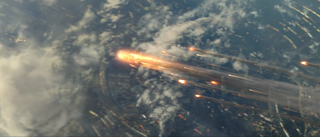
And all the other visual details are terrific here: the flames of reentry outside the bridge windows, the fireships that come alongside to smother the burning ship in fire retardant, the way the ship flies through a thick cluster of clouds to suddenly emerge above the capital city of the Republic. The ship’s bridge is dominated by yellow and green lighting, which is a color scheme we haven’t seen before. I also like how well-conceived this sequence is, in terms of details. Yeah, they may actually be scientifically implausible, but within the rules of his universe, George Lucas has thought out some stuff. The cruiser has ‘drag fins’, big metal flaps that extend out and provide increased air resistance to slow the ship down when it’s in the atmosphere (and remember, we’ve already established that cruisers of this size can land planetside), and the afore-mentioned firefighting ships.

Of course, Anakin brings the ship in for an impressive crash landing (taking out a control tower in the process…I always wonder if that tower was full of space traffic controllers, maybe one declaring this to be the wrong week to be giving up Death Sticks). The dust is settling, everyone is breathing a sigh of relief, and Obi Wan sums it all up: “Another happy landing!”

At this point, we’re finally done with an action sequence that has taken over twenty minutes of the film’s opening. It’s almost a short film in itself, complete with three acts, and it was an exhilarating way for George Lucas to start the film. Now comes quite a bit of talking and politics. Not that a lot of this bothers me, but the pace slows down quite a bit now.

A shuttle brings the Chancellor, along with his Jedi rescuers, back to the Capital, where Obi Wan and Anakin have another bit of repartee:

ANAKIN: (to Obi-Wan) Are you coming, Master?

OBI-WAN: Oh no. I’m not brave enough for politics. I have to report to the Council. Besides, someone needs to be the poster boy.

ANAKIN: Hold on, this whole operation was your idea. You planned it. You led the rescue operation. You have to be the one to take the bows this time.

OBI-WAN: Sorry, old friend. Let us not forget that you rescued me from the Buzz Droids. And you killed Count Dooku. And you rescued the Chancellor, carrying me unconscious on your back, and you managed to land that bucket of bolts safely . . .

ANAKIN: All because of your training, Master.

OBI-WAN: Anakin, let’s be fair. Today, you are the hero and you deserve your glorious day with the politicians.

ANAKIN: All right. But you owe me . . . and not for saving your skin for the tenth time . . .

OBI-WAN: Ninth time . . . that business on Cato Nemoidia doesn’t count. I’ll see you at the briefing.

I like the bit about keeping score – it’s reminscent of the Original Trilogy, and the friendly rivalry between Luke Skywalker and Han Solo. Next there’s a brief bit as Palpatine assures Mace Windu that the Senate will insist on continuing the war as long as General Grievous is at large; with Count Dooku dead, Grievous is now the leader of the droid armies. Not much is made of the fact that Dooku wasn’t just a military leader, but a political leader as well – who will rise to lead the Separatist movement?

Of note here is that Palpatine has managed to create an environment of perpetual war in the Republic, a war that has the support of the Senate and is being led by the Jedi. And yet we know there is tension between the Chancellor and the Jedi, so the question arises – never really addressed by the films – as to just what the relationship is between the Jedi and the Chancellor and the Senate. The Jedi seem to be a somewhat independent body, governing themselves, but taking input from the Senate. But they’re starting to not like what they are being required to do; as Mace Windu basically stated in AotC, they are basically policemen, not soldiers or military leaders. And yet that is their new role. Interesting, then, that a key facet of all of Palpatine’s machinations is to manipulate the Jedi into serving a role that they are not well-suited to serve.

Anyway, back to the movie. The Chancellor and the Jedi and the rest of a group of Senators walk off. (In this bunch is one Jar Jar Binks, who is almost unnoticed except that he has his one line of dialogue in the movie, “Excuse me”. What was funny about this is that when I saw the film in the theater back in 2005, as soon as people noticed Jar Jar, there was no booing or hissing – just several people in the theater exclaiming, “Hey, it’s Jar Jar!” and some murmurs of recognition, not all of which sounded angry. Make of that what you will…but sometimes I wonder if Jar Jar isn’t quite as hated as most people think he’s hated. Or maybe I’m just delusional….) Anakin exchanges words with Senator Bail Organa (Jimmy Smits, who had quite the political acting life in the mid-2000s, appearing as a Star Wars Senator and as the successor to President Josiah Bartlet in The West Wing), and then he notices someone in the shadows of one of the great pillars. It’s Padme.

Now, why isn’t Padme in the group of dignitaries meeting the Chancellor upon his return? She is one of the most influential political figures in the Senate. Clearly it’s because she needs to meet Anakin in somewhat private. They embrace, and this exchange takes place (material not actually in the final film in red):

ANAKIN: I missed you, Padme.

PADME: There were whispers . . . that you’d been killed.

ANAKIN: I’m all right. It feels like we’ve been apart for a lifetime. And it might have been … If the Chancellor hadn’t been kidnapped. I don’t think they would have ever brought us back from the Outer Rim sieges.

ANAKIN starts to give her another kiss. She steps back.

PADME: Wait, not here . . .

He grabs her again.

ANAKIN: Yes, here! I’m tired of all this deception. I don’t care if they know we’re married.

PADME: Anakin, don’t say things like that. You’re important to the Republic … to ending this war. I love you more than anything, but I won’t let you give up your life as a Jedi for me . . .

ANAKIN: I’ve given my life to the Jedi order, but I’d only give up my life, for you.

PADME: (playfully) I wouldn’t like that. I wouldn’t like that one bit. Patience, my handsome Jedi . . . Come to me later.

ANAKIN embraces her, then looks at her.

ANAKIN: Are you all right? You’re trembling. What’s going on?

PADME: I’m just excited to see you.

ANAKIN: That’s not it. I sense more . . . what is it?

PADME: Nothing . . . nothing . . .

ANAKIN: You’re frightened. (a little angry) Tell me what’s going on!

PADME begins to cry.

PADME: You’ve been gone five months . . . it’s been very hard for me. I’ve never felt so alone. There’s . . .

ANAKIN: . . . Is there someone else?

PADME: (peeved, angry) No! Why do you think that? Your jealousy upsets me so much, Anakin. I do nothing to betray you, yet you still don’t trust me. Nothing has changed.

ANAKIN: (sheepish) I’m afraid of losing you, Padme . . . that’s all.

PADME: I will never stop loving you, Anakin. My only fear is losing you.

ANAKIN: It’s just that I’ve never seen you like this . . .

PADME: Something wonderful has happened.

They look at each other for a long moment.

PADME: (continuing) I’m . . . Annie, I’m pregnant.

ANAKIN is stunned. He thinks through all of the ramifications of this. He takes her in his arms.

ANAKIN: That’s . . . that’s wonderful.

PADME: What are we going to do?

ANAKIN: We’re not going to worry about anything right now, all right? This is a happy moment. The happiest moment of my life.

So: Padme’s pregnant, and judging by her clothes, she’s somewhat far along. That’s probably why she’s staying the shadows, then; this is not a condition she wants to become common knowledge, for obvious reasons. Someone will ask who the father is, and someone else will figure it out, to the doom of Anakin’s career as a Jedi, even though he says that he wants to just come out with it and let the chips fall where they may. I like Anakin’s reaction to the news of her pregnancy: he’s shocked at first, a bit overwhelmed, and then he manages to return to happiness. So, is he really happy that he’s about to be a father? Or is this something he neither expected nor wanted? I think that the evidence in the film supports both possibilities, and I like the ambiguity of his response to being told and the way he covers it up almost immediately. At the point of the revelation, John Williams’s music does not become lovely or plaintive; instead it churns in the basses, underscoring nicely Anakin’s conflicted emotions about becoming a father.

I do think that Lucas made a wise choice in eliminating the bit about Anakin suspecting Padme of having another suitor. While his loss of trust in Padme will be the final straw in his march toward the Dark Side, it’s much too early to plant that seed. Nevertheless, here is where I would make my first actual change in the film: as they embrace on final time, I’d have someone from the Jedi council see them embracing. The obvious choice here is Mace Windu. Why? Because I think a few seeds need to be planted here for later in the film, and because I think that the film needed to get a reminder in earlier on that Mace Windu has never really been in Anakin’s fan club. He wouldn’t say anything to Anakin and Padme; not now, anyway. But he’d look back and see their embrace and start to recognize it for what it is: a Jedi indulging forbidden love.

Now we cut to General Grievous and his arrival on the planet Utapau. For longtime Star Wars fans, the name of the planet Utapau is exciting (although we don’t hear it for a while yet), as it is one of the very earliest planet names George Lucas tossed around way back in the early 1970s when he was originally cobbling together his notions for a big space adventure epic movie. After Grievous lands, he makes contact with Darth Sidious, who is behind everything; Sidious orders him to move the Separatist leaders to Mustafar and then answers Grievous’s concern about Count Dooku’s death with the revelation that he’s already got his eye on a new apprentice, “one who is far more powerful”. Uh oh….

And then we are whisked back to Coruscant, for a nice quiet scene between Anakin and Padme at night on the balcony of their 800th-floor apartment. Or what’s supposed to be a nice quiet scene, because…well, this is what happens.

PADME: Annie, I want to have our baby back home on Naboo. We could go to the lake country where no one would know . . . where we would be safe. I could go early-and fix up the baby’s room. I know the perfect spot, right by the gardens.

ANAKIN: You are so beautiful!

PADME: It’s only because I’m so in love . . .

ANAKIN: No, it’s because I’m so in love with you.

PADME: So love has blinded you?

ANAKIN: Well, that’s not exactly what I meant . . .

PADME: But it’s probably true!

Yeah…I know. There’s just no way for me to sugarcoat this one, folks: this scene is a stinker. In a movie that so far has been hitting all the right notes, this scene comes along and reminds everyone of their biggest complaints about the last two movies, what with lines about how Padme’s not like sand and how Anakin is tortured by his love for her and so on. I tend to roll my eyes whenever I hear someone trot out the “George Lucas needs someone to tell him when his ideas suck” meme (otherwise known as the “Gary Kurtz Conjecture”, under the notion that it was Gary Kurtz’s steady hand that kept Lucas from doing stupid things that ruined the only two Star Wars movies that anybody likes, or so the story goes), but this scene unfortunately provides some ammunition for that camp. It’s not quite as bad as the Single Worst Scene In Star Wars History, but…well, it’s right up there. I hate hate hate the way this scene ended up.

So, let’s fix it. Here’s what should have happened here:

PADME: Annie, I want to have our baby back home on Naboo. We could go to the lake country where no one would know . . . where we would be safe. I could go early-and fix up the baby’s room. I know the perfect spot, right by the gardens.

ANAKIN: You are so beautiful….

PADME: It’s only because I’m so in love . . .

ANAKIN: No, it’s because I’m so in love with you.

PADME: So love has blinded you?

ANAKIN: No! I mean…uh….

He sees that she is grinning at him.

ANAKIN: You got me again.

PADME: Only because you make it so easy.

ANAKIN: You know that I’m not good at talking about my feelings.

PADME: You’re not so bad at it, when you stop trying to talk like a poet. There aren’t many famous Jedi poets, are there?

ANAKIN: (laughs) No. I tried reading some Jedi poetry, once…hundreds of lines about the Force. An entire book that sounded like Master Yoda…I didn’t understand any of it.

He comes to her side.

PADME: What are we going to do? When the war is over and the baby is born? You can’t be a Jedi and a father.

ANAKIN: I know. So I’ll be a father.

PADME looks at him.

PADME: You’ll give up being a Jedi?

ANAKIN: (smiling) For what I’d be getting in return? Yes.

They embrace.

Something like that…something which would show that Anakin is thinking ahead a bit, and that he has a happy ending right there for the taking, if he just doesn’t screw it up…which we know he’s going to. It would heighten the tragedy of his fall, and like I did in fixing AotC, I’d fix some bad dialogue by actually calling attention to it.

This scene is followed by a brief dream sequence, in which Anakin sees Padme giving birth, but it’s a horrible, painful experience in which she is shrieking in agony. That’s about all we see, before Anakin snaps awake and walks out to the living room. We don’t really see it in his dream, but he interprets it as meaning that Padme is doing to die in childbirth, and the script bears this out by indicating that in the dream, Padme actually dies. Cut to the living room, then:
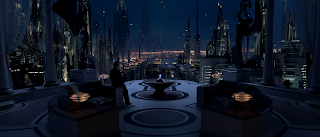
ANAKIN walks down a flight of stairs onto a large veranda. The vast city planet of Coruscant, smoldering from the battle, is spread out before him. He is distraught. PADME descends the stairs and joins ANAKIN on the veranda. She takes his hand. He doesn’t look at her.

PADME: What’s bothering you?

ANAKIN: Nothing . . .

ANAKIN touches the japor snippet around PADME’S neck, that Anakin gave her when he was a small boy.

ANAKIN: (continuing) I remember when I gave this to you.

PADME: How long is it going to take for us to be honest with each other?

ANAKIN: It was a dream.

PADME: Bad?

ANAKIN: Like the ones I used to have about my mother just before she died.

PADME: And?

ANAKIN: It was about you.

They look at each other. A moment of concern passes between them.

PADME: Tell me.

ANAKIN: It was only a dream.

PADME gives him a long, worried look. ANAKIN takes a deep breath.

ANAKIN: (continuing) You die in childbirth . . .

PADME: And the baby?

ANAKIN: I don’t know.

PADME: It was only a dream.

ANAKIN takes PADME in his arms.

ANAKIN: . . . I won’t let this one become real, Padme.

They embrace, then part.

PADME: Anakin, this baby will change our lives. I doubt the Queen will continue to allow me to serve in the Senate, and if the Council discovers you are the father, you will be expelled from the Jedi Order.

ANAKIN: I know ….

PADME: Anakin, do you think Obi-Wan might be able to help us?

ANAKIN: I don’t need his help . . . Our baby is a blessing.

Obviously, I would have eliminated the bit about Padme worrying about Anakin’s future once the baby is born; I’ve relocated that to the earlier scene. It doesn’t seem to fit naturally in the scene where Anakin is dealing with a new dream about his wife’s death.

The shooting script has a bit of dialogue in there in which Anakin angrily asks if Padme has told Obi Wan anything; I’m glad this is left out, as I still think it’s too early for the jealousy angle to show up. I’ve always liked this, though – that Anakin isn’t just afraid of losing Padme, but that he’s having dreams and visions about it, and he’s already had a similar experience with his dreams of the future dolorous fate of someone he loved – his mother – coming true. He desperately wants to prevent this future, but even though he vows that he won’t let it happen, he is already suspecting that he doesn’t have the power he will need to do so.

And since Palpatine knows about Anakin’s actions against the Sandpeople in AotC, it’s reasonable to assume he knows about the dreams then, too. The wedge is already there, waiting to be driven in.

Oh, and that bit with Padme wearing the Japor snippet around her neck, the one Anakin gave her as a boy way back in TPM? That’s fantastic. It’s a great touch by Lucas, one which will pay off with a gorgeously sad visual late in the film.

Anakin doesn’t want to go to Obi Wan for help, but he does go to someone: he goes to Yoda. In the next scene, Anakin is talking to Yoda and gets some helpful advice:

INT. CORUSCANT-JEDI TEMPLE-YODAS QUARTERS-DAY

YODA and ANAKIN sit in Yoda ‘s room, deep in thought.

YODA: Premonitions . . . premonitions . . . Hmmmm . . . these visions you have . . .

ANAKIN: They are of pain, suffering, death . . .

YODA: Yourself you speak of, or someone you know?

ANAKIN: Someone . . .

YODA: . . . close to you?

ANAKIN: Yes.

YODA: Careful you must be when sensing the future, Anakin. The fear of loss is a path to the dark side.

ANAKIN: I won’t let these visions come true, Master Yoda.

YODA: Death is a natural part of life. Rejoice for those around you who transform into the Force. Mourn them, do not. Miss them, do not. Attachment leads to jealousy. The shadow of greed, that is.

ANAKIN: What must I do, Master Yoda?

YODA: Train yourself to let go of everything you fear to lose.

And by the look on Anakin’s face, we see that boy, is that ever not what he’s looking to hear.

This leads to one of the more interesting things about Jedi philosophy, as we hear it from Yoda throughout the Star Wars saga. Anakin is worried about his loved one, but Yoda tells him that the way to deal with his fears for her fate is to let her fate unfold and, basically, ignore it. This is virtually the same advice Yoda will give Luke Skywalker twenty years later, in TESB, when Luke has visions about Han and Leia suffering greatly:

LUKE: And sacrifice Han and Leia?

YODA: If you honor what they fight for…yes!

The advice goes about as well then as it does for Anakin, although Luke’s doesn’t end nearly as badly. The question is: why is this?

I think it’s because Luke is able to do something that Anakin tends to find extremely difficult: he is able to trust his friends, where Anakin only looks inward, to himself, to his own powers and his own abilities. And why is this? Well, I suspect it’s partly because Luke doesn’t grow up – even partially, as Anakin does – inside the sequestered and sheltered bubble that the Jedi put themselves in. The Prequel Trilogy depicts the Jedi as an almost ascetic group who are supposed to be denying their emotional lives in favor of devotion to the Force. Luke later demonstrates that fealty to the Force is not at all incompatible with having love and friendship in one’s life. I wonder if this isn’t part of why the Jedi fall – because they’ve turned so far inward that they genuinely believe that attachment is bad, friendship is bad, love is bad…because under certain circumstances, they can lead to the Dark Side.
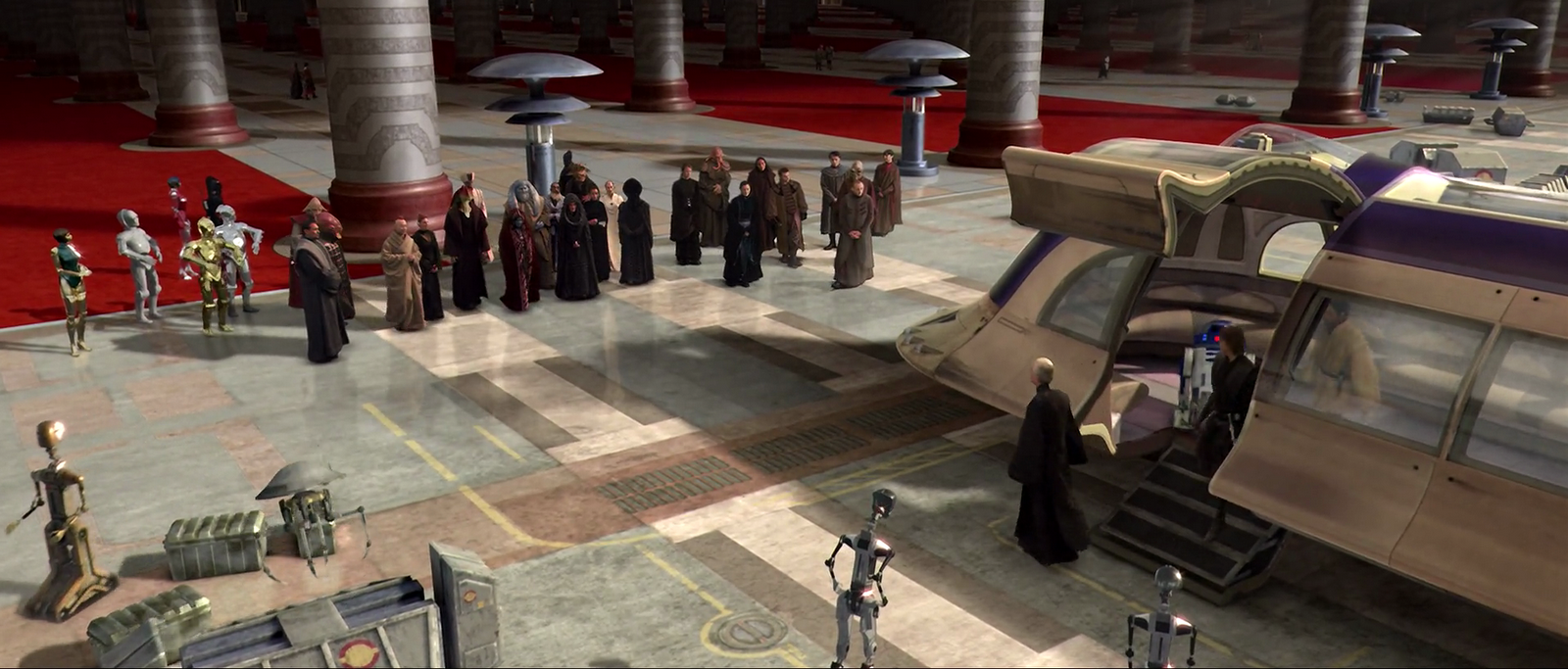
From Yoda’s perspective, though, it’s Anakin’s love for Padme that leads him straight to the Dark Side, straight to joining the Sith, and straight to playing a role in the final fall of the Jedi. So when Luke comes along and wants to be trained and then has his own visions of horrible things happening to his loved ones and rushes off to save them, Yoda must clearly be seeing that as “And here we go again.” He thinks everything is about to be undone by the passions of the Skywalkers, again. Once again, I end up admiring the way Lucas has events from the Original Trilogy having echoes and parallels in the Prequel Trilogy.

And there we will stop. Next time, Anakin is drawn into the political world, and his desires for power start to get stroked as well as his fears for Padme. Tune in!

Share This Post