In other news, my chips-and-dip consumption is WAY down

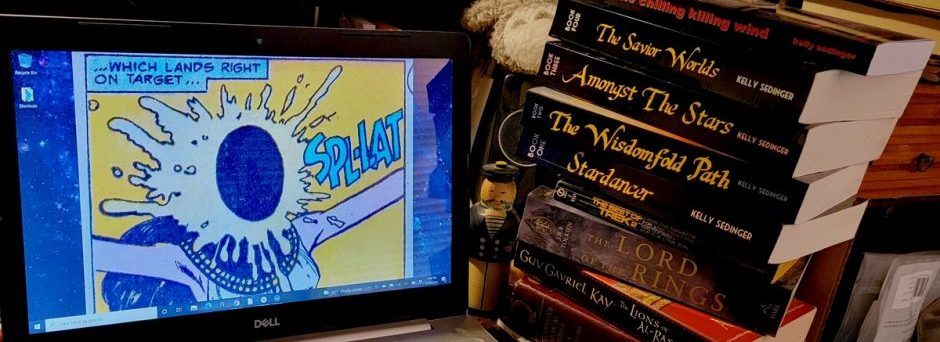
Readers may remember that toward the end of the 2008 NFL season, I decided that watching the Buffalo Bills consistently lose games and look boring in doing so had lost its appeal to a sufficient degree that I decided to just plain stop watching them. Sunday afternoons became a lot more pleasant once I realized that devoting three hours each week to an activity that wasn’t bringing me much pleasure wasn’t that good an idea. I was prepared to do the same this season, but in the offseason, the Bills did something that can now been seen for what it was: a move designed to tempt fans like me back into the fold. That was, of course, the signing of wide receiver Terrell Owens.

And yes, it worked. I watched the Bills for the first handful of games this year, even though it was obvious that aside from his signing, the team hadn’t actually gotten any better. At all. Now, in the first four games, they only won one contest, a home game against Tampa Bay, a team that is in a full-bore rebuilding youth movement phase. But the games they lost were to teams that are pretty good: New England, New Orleans, and defending division champ Miami. But aside from the New England game, which they played pretty well in before losing when someone made a really bad fumble late in the game that led to the Patriots’ winning points, the Bills tended to look flatter and flatter each time out, and the offense specifically looked worse and worse, despite the presence of T.O. For me the last straw came when the Bills lost at home to the Cleveland Browns — one of the league’s worst teams right now — by the thrilling score of 6-3. That’s when I said, the hell with it, T.O. or no T.O. I spent the next three Sundays watching the Spiderman movies with The Daughter at the time when the Bills were playing.

They were 2-1 in those games, but I don’t really care. I didn’t miss watching football at all, and I didn’t miss it this week either (during which the Bills were on their bye week). The Bills have managed, I think, to drive the fandom out of me at long last. Oh well. A Super Bowl win would have been nice, and who knows — maybe in a few years when they’re a year or two into their new location (either Los Angeles or Toronto, I’m thinking), they’ll manage a title in the Big Game.

Share This Post

Sentential Links #188

Linkage of the week:

:: Very few phrases fill me with dread and/or irritation as the response, “Oh, it’s EASY!” And it bugs me on two separate but related levels.

:: I really do believe that there are blessings in ALL my experiences. Some float right up to the surface, like those breaching whales and leaping dolphins. Others are harder to identify. But if I look deep, they are always there.

:: Walking into the San Antonio Airport this afternoon I noticed that there was a decal next to the door that said “Threat Level: Orange”. What the hell does it mean that this is apparently a sufficiently permanent state of affairs to merit a sticker on the door? (Interesting that nowadays we never hear about “Threat Levels”, like we did back in the day….)

:: At least half of all writing involves just sitting and staring into space. Letting your brain out to hunt down ideas, bringing them back all warm and bloody between its teeth. (For me, it also involves training my brain to recognize ideas when they float by, snatch them up, and kill them.)

:: When I was a kid I didn’t pay any attention at all to who wrote the songs. (Me either, with the effect that I would often — and still do — find that when discussing contemporary song, I can’t often keep up because I often don’t know artists or titles, but when I hear the song in question, I think, “Oh yeah, I know that one.” Of course, by that point, the conversation is long over.)

:: Do you believe in inspired writing? Has it ever happened to you? A wave of insights, images, or thoughts so profound you must stop at once, grab a pen, and paper in hopes to capture it before it’s gone. (I know the feeling well.)

:: I used to live in a town called Sandpoint. It was a little ski town in the northern tip of Idaho and it was beautiful. (I just read a book by the woman who writes this blog, Jenna Woginrich, titled Made from Scratch. I’ll blog about that book soon — short version is that I liked it a lot — but what caught my eye is that she wrote it when she lived in Sandpoint, ID. That’s where my future in-laws lived when I first started dating The Wife, way back when; in fact, my brother-in-law still lives up there. It really is a very beautiful place. I wouldn’t want to live there, myself — I find the distances between places in the West a bit daunting — but I do wish we could get out there more than we do.)

:: Today, fifteen years after I first saw it, I believe “Hoop Dreams” is the great American documentary. No other documentary has ever touched me more deeply. It was relevant then, and today, as inner city neighborhoods sink deeper into the despair of children murdering children, it is more relevant. (Wow, I really need to watch Hoop Dreams one of these days. I never saw it, but I was a faithful viewer of Siskel and Ebert back when the film came out, and during the controversy when despite the nearly universal acclaim that was heaped upon it, the Academy failed to give it any Oscar recognition whatsoever. The film wasn’t even nominated for anything, despite the fact that many felt that it was not just the best documentary that year, but a serious contender for the best picture, period.)

More next week!

Share This Post

Under Heaven: the cover revealed!

Via BrightWeavings.com, I see that the cover art for the forthcoming new novel by Guy Gavriel Kay, Under Heaven, has been revealed. Here’s what American and Canadian readers will see:

The British art can be seen here. I prefer the American/Canadian version; the people on the British cover are far too photographic for my tastes.

The book comes out in April, so I still have time to get back to my re-read of all of GGK’s books….

Share This Post

Bill Denbrough Beats the Devil (III)

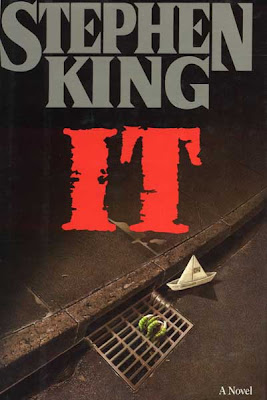
I’m not the biggest Stephen King fan in the world. I find that he can be hit or miss, which is probably to be expected of a writer so prolific as he. I haven’t read everything of his; not even close. I’ve read some stuff of his that I liked a good amount (Salem’s Lot), some stuff that I enjoyed a bit less but still liked just fine (Carrie), some stuff that I outright bounced off (Dreamcatcher), and a range of reactions thereof. But I have also read a good deal of his work that just blows me away (The Stand, numerous short works of his). I’ve often seen King’s It cited as one of his best and scariest novels, but I’d never read it until just a short while ago. And wouldn’t you know: it’s one of his best and scariest novels. It’s also, in my opinion, a great novel.

The book opens with a scene of fairly shocking violence as a small child is killed in the town of Derry, Maine by something that lives in the sewer. It calls to little George Denbrough as he is floating his newspaper boat down the street gutters which are swollen with rain; it appears to him as a clown dwelling within the sewer grate, and when it beckons to him with the promise of cotton candy, the clown – named Pennywise – grabs George’s arm and pulls on it, pulls harder and harder, until it rips free and little George dies. Thus begins Pennywise’s reign of terror in Derry in 1957, which eventually turns out to be a cyclical event; Pennywise shows up every 28 years or so for a fresh round of violent killings. Meanwhile Derry goes on, as it always has – a sad town where life just kind of grinds on and on, until the grinding of the decades is punctuated by the murderous awakening of the malevolent clown that lives in its sewers.

The main characters in the book are a group of teenage children, and the same children as adults, in 1985 – twenty-seven years after the 1957 arise of Pennywise, and therefore on the cusp of the new one. One of the kids is little George’s older brother, Bill, and as the summer of 1957 begins, none of them knows each other well at all, but circumstances bring them together – circumstances like Pennywise and the fact that they have each been targeted by the local bully, a boy named Henry who is in his own way as malevolent as Pennywise himself, who is actually the embodiment of something almost eternal. And in 1985, the kids – now adults – are brought together again, back to Derry, to do battle with Pennywise again. The novel shifts back and forth between these two timeframes, and King does this with such amazing facility that it is actually two stories unfolding at the same time. The 1957 parts never once feel like mere flashback, even though we know that by definition the characters alive in the 1985 chapters of the book must therefore survive the 1957 parts. It’s a testament to King’s skill that instead of grinding through large segments of the book given over to flashback, we instead sense that we’re following two stories that happen to befall the same group of people, many years apart.

King’s sense of pacing is pretty remarkable, given how long this book is. Even more impressive, though, is King’s ability to create a number of characters, this circle of friends bound by grim destiny, who are all vivid and real. Ultimately this is why the horror in the book works, and why It is such a scary read. It’s not all about ratcheting up the gore quotient; it’s about depicting horrible things befalling people we care about. But more than that, King’s gift for not only creating people we care about but also for people who genuinely feel like real people, and who respond to things in a very real way. This is King’s great strength as a writer, and it’s on tremendous display here. Not only are we sympathetic to Bill and Eddie and Beverly and Ben and the others, but we see them react to events in ways that we might well react ourselves if we found ourselves confronted by the kinds of horror that confront them in It.

That’s another of King’s great strengths: his knowledge that there are, in fact, many different kinds of horror. The scary stuff in It comes in a wide range of types, and not all of them are supernatural. In fact, some of the scariest events in King’s book don’t involve anything supernatural at all: they are the terrors we all remember (or maybe only some of us remember) from being the kid singled out by the school bully for continual “special treatment”. There is more than one way to scare a reader, and King at his best always does. In It, King creates for us a group of outcast children who feel like outcast children and who suffer all the normal horrors that many outcast children face, even before they are confronted by the horrible clown who lives in the sewers of Derry.

A word about the setting: Derry is a fictional city in Maine, which is a setting used by King in a number of other works. It’s not, as far as I know, a “redressed” version of a real place, but a creation from King’s viewpoint of the kind of city you’d find in Maine — if that city happened to be the scene of numerous supernatural horrors throughout its history. Several times in It, it is suggested that the kids aren’t just battling a demonic clown, but some kind of darkness in the very spirit of Derry itself. King portrays Derry as an organic being all its own, with a long — and very dark — history that we learn along the way. The book, therefore, spins three stories together: our child heroes in 1958, their adult exploits in 1985, and the long dark travails of Derry itself.

And yes, this book is scary. There is some extremely disturbing imagery throughout the book, and particularly so in the last 150 pages or so, when the tales in both timelines start plowing toward their respective conclusions. The ending is moving, satisfying, and poignant. It is amazing. If you have any love for the horror genre at all, read it.

Share This Post

Something for Thursday

Nettl used this the other day, and it’s sufficiently good for me to pass on to you all. Here’s the first movement of Mendelssohn’s Violin Concerto:

This has been one of my favorite concerted works — in fact, one of my favorite works, period — ever since I first heard it many years ago. Some of the things in this movement that always strike me are its lack of an introduction (the soloist comes in, playing the main melody of the movement, in the second bar), the placement of the cadenza in the middle of the movement instead of toward the end, and one of my very favorite passages in all of classical music, which comes at about the 2:50 moment, when the soloist climbs to a very high note, holds it a bit, and then arpeggiates back down to a very low note, which he then sustains while the clarinets play a lovely countermelody. It’s not only a gorgeous moment, but an ingenious one as well.

Share This Post

Shouldn’t some developer have built a strip mall there by now?

SamuraiFrog points out that today is the 40th anniversary of Sesame Street. Wow. That means that the show was only a few years old when I was a part of its core audience. My memory of that period of my life is admittedly vague, but I recall being distinctly upset when it seemed like most of the day was gone and Sesame Street was still a few hours away from being on teevee. (I think it was on at 4:00 or something like that.) My era was, of course, pre-Elmo. I had no idea who Elmo even was until The Daughter came of the age to watch the show, and I remember thinking, “What the hell is ‘Elmo’s World’ all about? Did somebody drop some bad acid or something when they came up with this character?” There’s a lot in Sesame Street for adults to find enjoyable while the kids eat it up, but really, Elmo ain’t one of them.

But anyway, here are some clips from the show over the years. Here’s Nathan Lane, singing what may be the show’s signature song, called “Sing”:

Lots of other celebrities have shown up on the show to do musical numbers with the various Muppets in attendance. Here’s Gloria Estefan doing the same song, partly in Spanish (and looking very cute in overalls!):

REM came on to do this take on one of their own signature tunes:

One of the coolest guys in history came on the show, Johnny Cash:

I suppose it’s typical that all of my favorite Sesame Street moments involve music. Here’s the earliest appearance on the show of “Mahna Mahna”:

Of course, the definitive rendition of “Mahna Mahna” would later be done by The Muppet Show, but this is pretty cool too.

Here’s classic Kermit the Frog:

And hey, what is the name of that song, anyway?

Sesame Street‘s sense of humor was a lot stranger back in the day, when they’d use trippy animations to teach lessons about sneezing:

Or when they’d demonstrate subtraction using cream pies:

And, of course, one of the most famous clips in the show’s history, when the producers had to figure out how to address death:

Happy anniversary, Sesame Street, and thanks for the memories.

Share This Post

Consolidating my tool bag….

Toolmonger brings me an interesting bit of news: Black and Decker is being bought out by Stanley. Wow.

B&D already owns a number of already-existing tool lines, the most notable in my personal experience being DeWalt and Porter-Cable. I don’t own any tools under the actual B&D label, but my power tools are evenly split between DeWalt and Ryobi. (Oh wait, I just got a Makita hammer drill, so now they’re in the mix, as well.) I do own a number of Stanley products — their tape measures are a constant on my belt — although for hand tools I tend to stick with either Husky (Home Depot’s “house brand”) or Klein Tools.

I’m not entirely sure what to make of this, but I hope that it doesn’t result in either a dilution of quality (especially from DeWalt) or a raise in prices. I’m never sure it’s a good thing when big companies get even bigger, but then, I’m just the guy who buys and uses the tools.

Share This Post