Sorry, Michele

An opinion: I do not think that Newsweek‘s cover photo of Michele Bachmann ‘went too far’ or whatever we want to call it. I’ve seen plenty of photos of Bachmann, and she just plain flat-out has crazy eyes, which I suspect is because she’s…well, she’s dumb and crazy. I’m sorry to say it, but that’s the only way I can interpret the fact that most of the things she says are dumb, crazy, or dumb and crazy. Plus the fact that her eyes really do look like that. Lord knows, we all don’t photograph well all the time — some of us (yours truly among them, I think) don’t photograph well even a majority of the time — but I’ve never once seen a photo of Michele Bachmann that doesn’t make me think, “Wow, I really hope the docs from the loony bin find her soon.”

I mean, the woman was caught hiding behind a bush once, to spy on an opposing rally. She’s crazy. And she has the eyes to prove it.

Share This Post

Page One: 2001 – A Space Odyssey

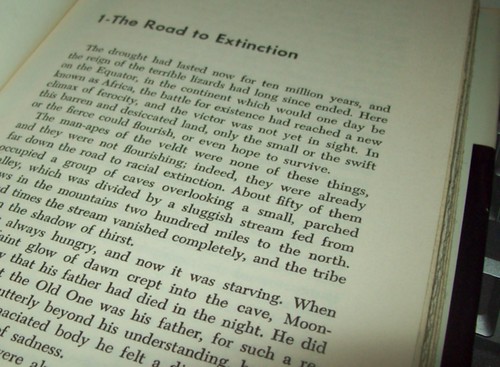
I mentioned this book in yesterday’s NPR 100 SF Books list, so it seemed right to use it today for Page One. I actually think I prefer the book to the movie, as amazing as the movie is.

Share This Post

Top 100 SF Books!

NPR has come up with a list of The Top 100 F&SF Books, although it’s not a list of 100 books per se, as it includes a number of entire series. But as usual…I’ll bold the ones I’ve read and italicize the ones I’d like to read at some point. And I’ll add occasional comment.

Here’s the list:

(Oh wait, complaint the first: there is no GGK on this list. WTF!!!)

(And yes, I voted.)

1. The Lord Of The Rings Trilogy, by J.R.R. Tolkien (Probably my single favorite book of all time. I re-read it this past spring.)

2. The Hitchhiker’s Guide To The Galaxy, by Douglas Adams (Own it; haven’t read it yet. Maybe one of the next few books.)

3. Ender’s Game, by Orson Scott Card (I started this once and didn’t get into it, decided to save it for another time. Since then, I’ve discovered that OSC is a lout to the degree that I will not read him again, ever. I dumped my copy of Ender.)

4. The Dune Chronicles, by Frank Herbert (Just the first one, and recently, too.)

5. A Song Of Ice And Fire Series, by George R. R. Martin (All except A Dance with Dragons, which I own but will need to re-read the entire series before tackling this one. I’m not as enthusiastic about this series as many — the bloat of the books is off-putting.)

6. 1984, by George Orwell

7. Fahrenheit 451, by Ray Bradbury

8. The Foundation Trilogy, by Isaac Asimov (Probably should re-read sometime. Read them in college and liked them a lot.)

9. Brave New World, by Aldous Huxley

10. American Gods, by Neil Gaiman (Wonderful book, as I recall. Maybe a candidate for re-read.)

11. The Princess Bride, by William Goldman (Fantastic book, and quite different from the movie…which is still fairly faithful in its adaptation. You have to read the book to see what I mean.)

12. The Wheel Of Time Series, by Robert Jordan (Just the first one. Gave up a hundred pages into the second. Not my cuppa joe.)

13. Animal Farm, by George Orwell

14. Neuromancer, by William Gibson (Cheating here…I’m counting having started this book a dozen times as ‘reading’ it. I really tried to get into cyberpunk, I really wanted to like cyberpunk…and yet, ultimately, I had to admit to myself that I just didn’t care for cyberpunk.)

15. Watchmen, by Alan Moore (So frakking brilliant. Just astonishingly good.)

16. I, Robot, by Isaac Asimov (I haven’t read Asimov in a long time.)

17. Stranger In A Strange Land, by Robert Heinlein (Just because. I generally find Heinlein kinda weird.)

18. The Kingkiller Chronicles, by Patrick Rothfuss (Great stuff. Love this series.)

19. Slaughterhouse-Five, by Kurt Vonnegut

20. Frankenstein, by Mary Shelley

21. Do Androids Dream Of Electric Sheep?, by Philip K. Dick (All titles I need to read.)

22. The Handmaid’s Tale, by Margaret Atwood (Wait, isn’t this the one that Atwood swore up and down was NOT science fiction, because she doesn’t want to be one of those writers?)

23. The Dark Tower Series, by Stephen King (Started it, bounced off. Maybe another time.)

24. 2001: A Space Odyssey, by Arthur C. Clarke (This is one of the first ‘pure’ science fiction books I read, if not THE first one that wasn’t a Star Wars or Star Trek tie-in book. A truly great book — I love Clarke at the top of his powers. 2010 was also very good. 2063 was decent. 3001? That one I could have done without.)

25. The Stand, by Stephen King (This is one of the all-time horror classics, as far as I’m concerned. I’m due to re-read it.)

26. Snow Crash, by Neal Stephenson (Really good. Liked it a lot. I haven’t read Stephenson at all since Cryptonomicon, though.)

27. The Martian Chronicles, by Ray Bradbury (A classic.)

28. Cat’s Cradle, by Kurt Vonnegut

29. The Sandman Series, by Neil Gaiman (I really need to read this. I own the first three of the TPBs, for Crom’s sake.)

30. A Clockwork Orange, by Anthony Burgess

31. Starship Troopers, by Robert Heinlein

32. Watership Down, by Richard Adams (I read half of it. Don’t tell my mother.)

33. Dragonflight, by Anne McCaffrey (Tried her in junior high, and never again. McCaffrey just didn’t do it for me, and I have little interest in trying again.)

34. The Moon Is A Harsh Mistress, by Robert Heinlein (Bounced off this one some years ago. I have a feeling that Heinlein and I will never be ‘besties’.)

35. A Canticle For Leibowitz, by Walter M. Miller (Own a copy, right here. I can even touch my copy from my desk. Should read it.)

36. The Time Machine, by H.G. Wells (Oh yeah, memo to self: write blog entry about the movie Time After Time.)

37. 20,000 Leagues Under The Sea, by Jules Verne (I read this in grade school, so I think I understood damned little of it.)

38. Flowers For Algernon, by Daniel Keys

39. The War Of The Worlds, by H.G. Wells

40. The Chronicles Of Amber, by Roger Zelazny (Just the first one.)

41. The Belgariad, by David Eddings (Wow, really? Is this actually good? I always figured it was your standard 1980s-era Tolkien clone fantasy series.)

42. The Mists Of Avalon, by Marion Zimmer Bradley (Lots of folks have told me how amazing this is, but I didn’t care for it. I’m open-minded about a lot of stuff, but this book seemed so gleefully hostile toward Christianity that it turned me off.)

43. The Mistborn Series, by Brandon Sanderson (I might have read this…but Sanderson’s recent nauseating comments about gay marriage have plunked him in the “Authors I’m almost certainly never going to read” list. Maybe I’m denying myself some good stuff, but way I see it, I’m never going to be able to read all the books I want to read anyway, so what’s the occasion political filter going to hurt?)

44. Ringworld, by Larry Niven (Didn’t like it as much as I wanted to.)

45. The Left Hand Of Darkness, by Ursula K. LeGuin

46. The Silmarillion, by J.R.R. Tolkien (Well, I’ve dipped into it a lot.)

47. The Once And Future King, by T.H. White (Wonderfully wonderful.)

48. Neverwhere, by Neil Gaiman

49. Childhood’s End, by Arthur C. Clarke

50. Contact, by Carl Sagan (Well, the first fifty pages or so. I was not terribly impressed with Sagan’s voice as a fiction writer.)

51. The Hyperion Cantos, by Dan Simmons (Really need to read this one.)

52. Stardust, by Neil Gaiman

53. Cryptonomicon, by Neal Stephenson (I loved this book for all the wild, wooly fun of it. I’m sure I didn’t understand a lot of it.)

54. World War Z, by Max Brooks

55. The Last Unicorn, by Peter S. Beagle

56. The Forever War, by Joe Haldeman (Fine, fine book.)

57. Small Gods, by Terry Pratchett

58. The Chronicles Of Thomas Covenant, The Unbeliever, by Stephen R. Donaldson (The first two trilogies. I haven’t gone near the current series yet, though. I’d like to.)

59. The Vorkosigan Saga, by Lois McMaster Bujold (The first three books only. I absolutely plan to read the rest!)

60. Going Postal, by Terry Pratchett

61. The Mote In God’s Eye, by Larry Niven & Jerry Pournelle

62. The Sword Of Truth, by Terry Goodkind

63. The Road, by Cormac McCarthy

64. Jonathan Strange & Mr Norrell, by Susanna Clarke (Wonderful prose, fascinating story, but it’s also something of a slog in parts.)

65. I Am Legend, by Richard Matheson

66. The Riftwar Saga, by Raymond E. Feist

67. The Shannara Trilogy, by Terry Brooks (This, the most blatantly blatant of all Tolkien rip-offs, makes this list. Nothing by Guy Gavriel Kay does. Ugh.)

68. The Conan The Barbarian Series, by R.E. Howard (Some of the stories, nowhere near all of them.)

69. The Farseer Trilogy, by Robin Hobb

70. The Time Traveler’s Wife, by Audrey Niffenegger

71. The Way Of Kings, by Brandon Sanderson (OK, I’m sorry, but this has been out less than a year. Give me a break, even if it is really good.)

72. A Journey To The Center Of The Earth, by Jules Verne

73. The Legend Of Drizzt Series, by R.A. Salvatore

74. Old Man’s War, by John Scalzi (Good book…but one of the best F&SF books of all time? I’m really not sure of that.)

75. The Diamond Age, by Neil Stephenson

76. Rendezvous With Rama, by Arthur C. Clarke (I loved this book. Never read the sequels, though.)

77. The Kushiel’s Legacy Series, by Jacqueline Carey (The first two, and I’ll tackle the third one this winter. I love this series. It’s amazing.)

78. The Dispossessed, by Ursula K. LeGuin (I read this in junior high. I didn’t understand it at all.)

79. Something Wicked This Way Comes, by Ray Bradbury

80. Wicked, by Gregory Maguire

81. The Malazan Book Of The Fallen Series, by Steven Erikson (Just the first one. What a commitment, this series is.)

82. The Eyre Affair, by Jasper Fforde

83. The Culture Series, by Iain M. Banks (Several of them, anyway…and I need to blog about the most recent one that I read, come to that. Very good, cerebral space opera.)

84. The Crystal Cave, by Mary Stewart (I’m definitely re-reading this series — a trilogy with a fourth novel added later on — this winter. It’s a gorgeous telling of the Arthur saga that strikes the best balance, I’ve found, between the “magical” versions of the tale and the “post-Roman Britain” versions of it.)

85. Anathem, by Neal Stephenson

86. The Codex Alera Series, by Jim Butcher

87. The Book Of The New Sun, by Gene Wolfe

88. The Thrawn Trilogy, by Timothy Zahn (Yes, they’re media tie-ins. But they’re so good they really deserve to be seen as terrific space opera books on their own.)

89. The Outlander Series, by Diana Gabaldan (Wait, what?)

90. The Elric Saga, by Michael Moorcock

91. The Illustrated Man, by Ray Bradbury

92. Sunshine, by Robin McKinley

93. A Fire Upon The Deep, by Vernor Vinge (I’ll be re-reading this sometime soon…and there’s a sequel coming out this fall, too.)

94. The Caves Of Steel, by Isaac Asimov

95. The Mars Trilogy, by Kim Stanley Robinson (Wow, I’m due to re-read this one, too! This trilogy made a powerful impression on me fifteen years ago. I wonder how it holds up.)

96. Lucifer’s Hammer, by Larry Niven & Jerry Pournelle

97. Doomsday Book, by Connie Willis

98. Perdido Street Station, by China Mieville

99. The Xanth Series, by Piers Anthony (Oh, come now. I’m not as down on Anthony as many F&SF fans are, but inclusion on this list? Really?!)

100. The Space Trilogy, by C.S. Lewis

So there you have it. Always fun to rant about book lists!

Share This Post

Something for Thursday

For some reason, versions of this with good sound to go along with good performances have been hard to find on YouTube, but I’ve finally tracked one down. The choir at college always ended their concerts with this (before doing a standard encore or two), and it’s one of a few pieces of music that transports me back to those years in my heart each and every time I hear it. Here is Hark I Hear the Harps Eternal.

Share This Post

Hell’s Masterchefs

Spoilerific musings on Hell’s Kitchen and MasterChef!

:: Elise is freakishly annoying. She’s not a bad cook, but she’s lazy in the challenge loser punishments and just a generic loudmouth. And I frankly don’t understand why people don’t learn that taking the “I’m not here to make friends!” approach to a reality teevee competition never works.

:: If a favorite is emerging — and it’s not a strong favorite — it’s probably Will, from the Men’s (Blue) team. He doesn’t get a whole lot of screen time during services, which is a good thing, because screen time during services tends to go to the people who blunder. Will’s main screen time comes during challenges, when he does well. I don’t think he’s had a dish criticized yet, and he did a 4-for-4 performance in the “cook four cuts of beef to specific doneness” challenge.

:: They made a big deal out of the ‘balcony tables’ overlooking the kitchen, but nothing’s happened up there that I know of. Odd.

On MasterChef:

:: I like Jennifer a lot. She definitely has cooking skill, and…well, she’s pretty. I’m shallow.

:: I wonder if the producers worked on Joe Bastianich’s personal skills or something, but he is not nearly as obnoxiously arrogant as he was last season. He’s still an occasional hard-ass, but he actually looks like he’s enjoying doing the show this time out. There’s a lot less of the “I shall now descend from Mt. Olympus to mingle with you groveling monkeys” air about him this season.

:: But then, it could just be that Bastianich is simply the second most insufferable prick in this year’s edition of MasterChef. This guy Christian is just a complete douche. He’s also a very good cook, obviously, but really — douche. He’s so convinced that he is carrying around giant bags filled with Awesome that it’s been noticed by the chef judges, who are starting to take shots at him for it. Which he is ignoring. He reminds me of the awful Benjamin from two seasons back on Hell’s Kitchen, a bullying toad who doubled down on his own screw-ups when one of the world’s greatest chefs told him he was full of it.

:: I’d love to see a Mystery Box Challenge where contestants are not given a bunch of “the most amazing” ingredients, but rather, a whole bunch of crap. I’d like to see a challenge where they’re told to make something decent out of beef kidneys, regular old American white bread, Velveeta, and stuff like that. Now there would be a serious Challenge!

That’s about it. More in a few weeks, probably.

Share This Post

You disappoint me, Mr. Quint.

I’ve been enjoying the “Behind the Scenes Pic of the Day” feature over at AICN for quite a while now, even if it’s curated by ‘Quint’, who is my least favorite of the regular AICN commentators. I think that Quint tends to be full of crap and tends to get on top of his hobbyhorses and ride them for broke. A good example of the former? In today’s Behind the Scenes pic, which comes from Dr. No, Quint reveals what he thinks to be the three best Bond movies: Dr. No, From Russia with Love, and Thunderball.

One of those titles I can see. The other two? No way in hell.

Cool Behind the Scenes pic, though.

Share This Post

“It is a far, far better thing that I do, than I have ever done….”

I never liked Charles Dickens.

My first encounter with Dickens was in seventh grade, when we read A Christmas Carol. This was OK, as those things went. The story is very famous and everybody knows it and it’s not a long story, so reading it wasn’t terribly difficult. I was less than thrilled, however, two years later when another English teacher handed out copies of David Copperfield, which I hated. Hated hated hated it. I just couldn’t see the point of the book, I thought the characters were all a bunch of melodramatic dunderheads, and as soon as the teacher told us how Dickens serialized his novels, I decided that David Copperfield and its ilk were basically soap operas for the Victorian age. And dead certain was I in these convictions, even though my own mother, when I opined thusly, said: “When it comes to literature, you’re pretty wet behind the ears.”

What can I say? If I had a nickel for every stupid thing I’ve ever believed, to paraphrase Stephen King, I could buy myself a pretty nice steak dinner. I’ve suspected for years that I was full of crap when it came to Dickens, but I never tried to rectify that situation by, you know, reading one of his books until just a few months ago, when I decided to give A Tale of Two Cities a go.

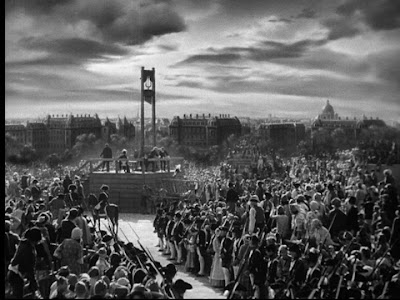
Now, the problem here was that I already knew how the book ended. I didn’t know all of the plot particulars, by any means, but I knew – from watching a teevee movie version of the book years ago – that the plot basically hinges on these two guys, one an Englishman and one a Frenchman, who happen to look nearly identical to one another, and I knew that the Englishman decides to save the Frenchman from the guillotine by putting himself in the other guy’s place and going to the guillotine for him. Basically I was watching these events unfold and see how the story got from Point A to Point B.

When I decided to read A Tale of Two Cities, I thought it might be fun to replicate the original reading experience in a way. As the book was serialized, the chapters are all fairly brief, so what I planned to do was read two chapters a week: one on Sunday, and one on Wednesday. I think the actual publication frequency in Dickens’s day was a bit less frequent than that, but I figured that in this way I would be able to experience the book in something approaching the way the original readers did: in small pieces, with the story being doled out slowly, over time, in a way that they couldn’t do anything about.

This lasted until Chapter six or seven, somewhere in there. From that point, I was hooked and read the thing every day. I couldn’t stop, and I certainly couldn’t wait a few days to read more of it. I soon had to parcel it out a bit, because I didn’t want to finish it too quickly. I didn’t want the book to end.

All the elements were there: the intrigue in revolution-era France, with the commoners rising up against the aristocracy and sometimes proving to be little better than their previous superiors; the long queues of condemned prisoners being brought to the guillotine; a love triangle that unfolds in front of this increasingly tense and violent backdrop; hiss-worthy villains whose comeuppance cannot come soon enough; heroic acts of self-sacrifice and redemption. I couldn’t be happier that I decided to give A Tale of Two Cities a try, because it propelled me along in a way that few books do. As the book’s concluding chapters neared, I found myself wishing that I actually didn’t know how it ended, and that I could come to Sidney Carton’s final moments unsullied by foreknowledge. I wondered what it must have been like, having this amazing story dolled out, one short chapter at a time, and I can only imagine the gasps of the readers – and more than a few tears – as they realized just what was involved in Sidney Carton’s final plan for Darnay and his final honoring of his pledge to Lucy to make any sacrifice that she might be happy.

The book’s opening sentence – “It was the best of times, it was the worst of times….” — is justly famous, as is the book’s closing sentence (alluded to in the title of this post). The title is evocative, and it seems to me that it’s not just referring to Paris and London, but to the two Parises, the Paris of the wealthy aristocrat who can think to make atonement for accidentally running over and killing a commoner’s child by throwing his father a single coin, and the Paris of the poor, the Paris of those very commoners, where things like this can happen:

A large cask of wine had been dropped and broken, in the street. The accident had happened in getting it out of a cart; the cask had tumbled out with a run, the hoops had burst, and it lay on the stones just outside the door of the wine-shop, shattered like a walnut-shell.

All the people within reach had suspended their business, or their idleness, to run to the spot and drink the wine. The rough, irregular stones of the street, pointing every way, and designed, one might have thought, expressly to lame all living creatures that approached them, had dammed it into little pools; these were surrounded, each by its own jostling group or crowd, according to its size. Some men kneeled down, made scoops of their two hands joined, and sipped, or tried to help women, who bent over their shoulders, to sip, before the wine had all run out between their fingers. Others, men and women, dipped in the puddles with little mugs of mutilated earthenware, or even with handkerchiefs from women’s heads, which were squeezed dry into infants’ mouths; others made small mud- embankments, to stem the wine as it ran; others, directed by lookers-on up at high windows, darted here and there, to cut off little streams of wine that started away in new directions; others devoted themselves to the sodden and lee-dyed pieces of the cask, licking, and even champing the moister wine-rotted fragments with eager relish. There was no drainage to carry off the wine, and not only did it all get taken up, but so much mud got taken up along with it, that there might have been a scavenger in the street, if anybody acquainted with it could have believed in such a miraculous presence.

What an astonishing, amazing, heartbreak of a book. A Tale of Two Cities is one of those books that makes me temporarily despair as a reader (“What can I possibly read next to rival that?”) and as a writer (“That book is on a plane of existence that I’ll never reach.”). It also makes me rejoice as a reader and a writer, on much the same grounds.

I wonder if my ninth grade English teacher is still around somewhere. I’d like to tell her that I’m ready to give David Copperfield a better shot.

Share This Post

Notes on the PopStuff

Some thoughts on a bit of pop culture stuff of late:

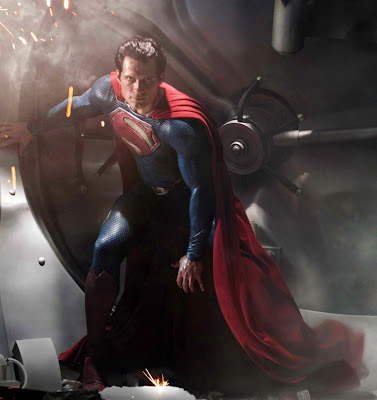
:: Here is actor Henry Cavill as Superman in the new movie about Superman, titled…Man of Steel.

In all honesty, I’m just not very thrilled with this. He looks OK, himself, although I wonder why the “Superman Curl” is missing from the middle of his forehead. The costume, however, bugs me. Proportionally it looks fine, but I hate that texture. I wonder why Hollywood decided that superhero costumes need to not look like cloth anymore; this looks like it was sewn from the material they use to make basketballs. I’m also not thrilled with the washed-out colors. I hope the film doesn’t look like this.

:: A sequel to Cosmos is on the way, apparently. I’m kind of glad to hear this, but any such project will be missing one key element: the poetical prose of Carl Sagan. The new show will be “hosted” by PBS science show mainstay Neil deGrasse Tyson. I hope this is done well, and doesn’t pander at all.

Of course, there has already been a sequel to Cosmos, at least in print: Sagan’s own book Pale Blue Dot. (I excerpted this book once, here.)

:: Oh my God, they’ve killed Sean Bean!

You bastards!

Share This Post