
In a hole in the ground, there lived….

I have to admit to feeling somewhat nervous about the prospects for the movie version of The Hobbit over the last few years. It’s a much more ‘filmable’ story than The Lord of the Rings, much more straight-forward in its tale, and I figured that, if anything, it would make a nice single movie. But then stuff started leaking out about Peter Jackson and company adding stuff to it, from the various appendices, notes, and other materials JRR Tolkien left lying about, indicating what generally went on during the more than fifty years that take place between The Hobbit and LOTR.

This struck me as potentially interesting, if they could find ways to make it all work into a coherent movie, but for the most part it sounded like a way for the filmmakers to justify expanding a story that would fit into one movie into an announced two. And then came the news that they were going to expand it out further, into three movies. The Hobbit, which is a relatively short book that tells a fairly light-hearted (until the end) adventure story, was going to be a cinematic trilogy. Initial reviews of the movie indicated that the film’s flaws are basically those that many had expected from this treatment of the source material: bloated, padded, and disjointed.

But when I saw the movie, I saw none of those things. All I saw was a gloriously entertaining return to Middle-earth, seen through different eyes than before, in the earlier telling of the great trilogy.

Is The Hobbit too long? Maybe, just a bit. Some of the action sequences probably do go on just a tad longer than they should, but ultimately, I didn’t really care. Did the film take its time in getting things moving? Yes…but again, ultimately, I didn’t really care. I guess what it ultimately comes down to is this: where this movie wanted to take me, I wanted to go.

A review at AICN — don’t recall which one — called The Hobbit a ‘homecoming’, in the sense that I mean here: that he wanted to go back to Middle-earth, and this movie accomplished that. Treating this movie as a ‘homecoming’ is an interesting metaphor, as ‘homecoming’ is the entire theme of The Hobbit: Bilbo Baggins must leave home to help the Dwarves get theirs back, and he must leave home in order to find the truest part of himself. In a lot of ways, Bilbo’s adventure causes him to lose his home, and not just in the real way, either (assuming that Jackson ends things the way Tolkien did, with Bilbo returning to find himself presumed dead and the auctioning off of his stuff already in progress). Forevermore Bilbo dreams of adventures, of leaving home and wandering afield. Of the Road that goes ever on and on.

Jackson shoots The Hobbit with a much more vibrant color palette than he used in Lord of the Rings, where everything had a slightly washed-out, muted look that got more and more pronounced as the ultimate confrontation with Sauron approached. Here, that look only really shows up twice: in the scenes where Radagast approaches Dol Guldur to investigate the evil presence there, and in the caverns deep beneath the goblin kingdom, where a wayward Bilbo finds a gold ring and its slimy, enigmatic keeper.

I found that the addition of material not in The Hobbit was actually very well executed indeed. It felt like a logical extension of the story, and I think it may end up giving more credence to later in the story, when Gandalf gets the company to the edge of Mirkwood and then suddenly says “Well, go on, down that path. I’m off. Don’t do anything stupid, now!” I always found that the least convincing part of the book. I know why Tolkien did it — it’s a bit hard to put the company through hell if there’s a super-powerful wizard always there to bail them out — but when reading it, that part always sticks out like a sore thumb. By showing us the ‘Important business to the south’ up front, well before it really rears its ugly head, I think Jackson is softening the blow.

I also had little problem with the extended delvings into the personal history between Thorin Oakenshield and Azog the orc-king, or goblin king, or whatever he really is. And I had little problem with…well, I just had little problem with anything in this movie. Maybe I need to see it again to try and figure out the flaws, but…well, look. Part of my love of Peter Jackson’s Middle-earth movies, this one included, is in the way they allow me a certain level of immersion in Tolkien’s world that’s different from that of reading the books. Not better, mind you, but different. I want to be there. Why should I be upset about being there that long?

And frankly, what’s wrong with a story taking its time to unfold, anyway? Do we always have to be, in to quote Brooks from The Shawshank Redemption, ‘in a big damn hurry’? So yeah, Peter Jackson, you go right ahead and give me a nice, long prologue in which Ian Holm voiceovers the coming of Smaug to Dale. You go right ahead and take your time with the Dwarves showing up on Bilbo’s doorstep, which is as wonderful a sequence as I recall. You go right ahead and give me villainous creatures with loud Cockney accents, and you go right ahead and wallow in the “Wow, look at that!” stuff with the stone giants throwing parts of their own bodies at each other.

(And speaking of Dale, I love how Jackson gives us another Middle-earth location that doesn’t look just like the others. The diversity in the way various places looked in the Lord of the Rings movies is an underappreciated aspect of those movies, in my opinion.)

Howard Shore returned to score this movie, coming back to his Middle-earth soundworld in particularly triumphant fashion. He isn’t very heavy handed in his use of themes from the earlier trilogy; mainly we hear snippets of the Shire music, in some wonderful new settings, and the haunting Ring motif is heard when Bilbo picks it up — the musical fingerprint in these movies of the One Ring officially changing hands from one bearer to the next. His most impressive achievement here is in a motif for the Dwarves, which is cut from the same cloth as a remarkable passage of music from ten years ago in Fellowship. In the earlier film, when the Fellowship is in Moria, Gandalf takes them into the great hall of Dwarrowdelf, the Dwarven city, and the music swells with sad, epic emptiness that seems to be building to a grand statement of a melody — but the melody never comes. It’s a musical passage that always causes me to hold my breath when I hear it, and now, in The Hobbit, Shore crafts a theme that seems to possibly be the very theme that passage in Fellowship was striving for. The theme is first heard when the Dwarves chant their “Far over Misty Mountains cold….” liturgy, but then the theme forms the virtual backbone of the entire score — and I’ve got to note that this particular theme is an earworm of the highest order.

In terms of acting, well, there’s little to be found by way of a weak link in The Hobbit. Sir Ian McKellen can, of course, play Gandalf in his sleep, but he brings an interesting tone to the old wizard here, portraying him as being a bit more doddy than in the first trilogy. That’s in keeping with the book, which doesn’t present Gandalf as being quite so much as ‘One of the Great Powers of the world’, as much as a really good wizard who doesn’t always know what’s going on. Gandalf here also seems warmer, more mischievous, and less plotting-and-scheming. We only get glimpses occasionally of the Gandalf of the earlier trilogy, because the evil of Sauron hasn’t yet started to rise. (And I’m tickled that they managed to get Tolkien’s joke about a severed head leading to the invention of golf into the movie.)

Richard Armitage, as Thorin Oakenshield, captures Thorin’s sense of almost messianic devotion to his quest quite strongly, and he makes a powerful impression, sometimes almost going too far and making Thorin into, well, for lack of a better word…a douche. He presents a Thorin who is a man of singular focus, but also driven by very human concerns and a deep longing to return home, where the Thorin of the book often seems more driven by a desire to get the big pile of gold that Smaug sleeps on than anything else. (Until the Arkenstone turns up, of course.)

And then there is Bilbo himself, played by Martin Freeman. I’m only familiar with Freeman’s acting from one film, and that’s Love Actually. Now, he is utterly perfect in that movie (as is everyone else, but I can wax poetic about Love Actually another time), but the association isn’t quite to his benefit, as in that movie he plays a stand-in for the nude scenes in some movie that’s got a ton of sex in it, because every time we see him, he’s miming various sex acts with a female stand-in. (A unit director helpfully tells him, “All right, now, if you could just, ah, massage the nipples….”)

Freeman creates an absolutely pitch-perfect Bilbo Baggins: a proper hobbit who is going about his own business at his own leisure, but who is a bit odd and who has some desires and wishes buried deep within him that he doesn’t even realize are there until a wizard and thirteen dwarves show up and threaten to crack his dishes and bend his forks (without doing either, it must be noted). Freeman isn’t just the awkward Brit pushed into weird doings and deeds. He shows us that there’s always something going on in Bilbo’s head, and that even though he has a steep learning curve for this sort of thing, he’s got some good ideas, and as the story goes on, he’ll get to use them to greater and greater effect. Freeman puts Bilbo’s intelligence on display, which is extremely important, because the time is coming when he’ll be matching wits with a dragon.

It really does remain to be seen how Jackson and company will handle the continued mix of the book of The Hobbit with their new material. For me, they’re off to a very promising start. All the criticisms and complaints about this movie don’t add up to anything. I feel like this movie was made for me. And I’m damned glad to have it!


Share This Post

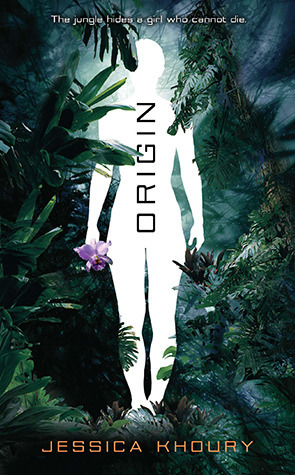
Origin: a tale of immortality

Deep in the rain forests of South America there is a secret laboratory complex that is devoted to a single project, and the result of that project is a girl named Pia. All of their work has led to the ‘creation’ of Pia, who is the first in what the scientists hope is nothing less than the complete re-engineering of the human species. And what, exactly, is so special about Pia? She is immortal.

That’s the background of Jessica Khoury’s wonderful debut novel Origin, in which Khoury explores a host of issues all the while spinning a highly engaging story of adventure and first love. It’s a very entertaining book that left a lot of questions lodged in my mind. Many of them aren’t new questions, but they’re questions that are bound to come up a lot over the next phase of human history.

What is the proper role of science?

What lengths are justified in the pursuit of scientific discovery?

To what extent should humans be biologically ‘modified’ with improvements?

And to what extent are children obliged to fulfill their own dreams and desires, and to carry out their assigned duties in the service of the dreams and desires of adults?

When we meet Pia, she is about to turn seventeen, and is on the cusp of becoming a full-fledged member of the scientific team at Little Camelot (the research facility). The entire focus of this facility, as led by a man Pia calls “Uncle Paolo”, is the development of nothing less than human immortality, which (they believe) would usher in a new golden age of humanity — a permanent golden age. How such an achievement would change humanity is mostly glossed over — there are a few discussion as to what it means to have humans stop reproducing, because they won’t need to — but that’s clearly by design on Khoury’s part, as she is depicting one of the SF’s oldest and finest tropes, the scientists meddling with things best left unmeddled, and without really working through the ethical and moral implications of their project.

Consider Pia. Khoury doesn’t entirely spell out what is meant by ‘immortality’, but she establishes that Pia cannot be harmed by normal means. She can’t even have blood drawn, because the needles will no longer puncture her skin. So, how big a bomb blast would she survive, for instance? We’re not really told, but that’s probably a good thing, as it really doesn’t have a whole lot to do with the story.

Pia’s mother seems to look on Pia with disdain, and we do learn more about their relationship as the book goes on. The novel is one of relationships across the board, each one convincingly drawn. Most central to the book is the relationship between Pia and the native boy she meets, Eio, a member of a tribe called the Ai’oans. Pia meets Eio one night when she succumbs to her desire to see beyond the boundaries of the science facility and sneaks out. In many ways, meeting Eio puts Pia sets everything to come in motion.

Khoury’s Pia is a somewhat typical teenage/young adult protagonist in that she chafes against the boundaries that have been placed upon her life. What sets Origin apart is the nature of those boundaries. They are not just imposed from without, by the scientists in control of her life (on the basis that she is literally their greatest success and she is also, for all intents and purposes, a human lab rat), but also by the very nature of her being. The possibility of love terrifies Pia, because she can’t imagine a basically unending life of always outliving those she comes to love. But she also learns that love isn’t always a force that can be ordered around.

For all the interesting questions raised in Origin, Khoury is still able to craft a book that keeps the pages turning, first during the intriguing chapters at the beginning when we’re learning about this world of hers, then in the middle part of the book when Pia is starting to really develop, and then in the kinetic and at times horrific final act, when all manner of hell breaks loose as relationships are exposed and questions are answered.

I was particularly interested that Origin doesn’t seem to be set in any real specific timeframe. What I mean by that is that Khoury keeps things grounded well enough that even as the book’s central Maguffin is the scientists’ search for immortality (which is granted by the pollen of a flower that grows in exactly one place in the rain forest), there’s a powerful sense that the book could well be happening right now…or in twenty years…or in a hundred. In terms of location, Khoury keeps the book very tightly focused. It’s an interesting choice, and it turns out that this is an excellent book to put into the hands of people whose impression of science fiction is spaceships, and lots of ‘em.

(On that very last point: reading Origin in the same year as Beth Revis’s Across the Universe and A Million Suns was a nice bit of synchronicity, given the teenage heroines in all three novels — apropos to me personally, since Princesses In SPACE!!! (not the actual title) also has a teenage girl as the main protagonist. Funny how things work out sometimes!)

I have no idea if Khoury is planning a sequel to Origin or not. I rather hope not, as the book is a fine stand-alone. And as a final bit of testimony, let me just note that I bought a copy for myself…and then, when finished, I bought another for The Daughter as one of her Christmas presents. Shhhh! Don’t tell her.

Origin is highly recommended.

Share This Post

Shiny in the Black: A FIREFLY Christmas, part three (a repost)

Continuing my repost of this Very Special (but Not Blossomesque) Episode of Firefly.

part two
part one


“Weapons on the ground!” the voice shouted. “Now!”

“Do it,” Mal said. He shot a look at Jayne, whose expression of disgust tended to be indistinguishable from his expression of being about to lose his temper. Slowly, Mal, Zoe and Jayne all laid their guns on the floor.

“Put that package on the floor too, preacher,” said the voice.

Book put the crate down.

“All right, face the crates.”

They complied.

“Put your hands on your head.”

They complied.

“Stand on your left feet and recite the first stanza the Alliance anthem!”

Mal glanced at Zoe. “Uh, what?”

Now the voice burst out in laughter. “All right, turn ’em off,” he said. The floodlights all shut off, and the light returned to the dim of the warehouse overhead lamps. Mal turned toward the source of the voice to see a stocky man dressed in old army fatigues approaching. The man was bald except for long, stringy hairs that hung from the back of his head; he had a thick mustache and three days’ growth of beard. He gave Mal a gap-toothed grin as he put his hands on his hips.

“Ahh, Mal, what am I gonna do with you?”

Mal and the others glanced around at the ‘lawmen’, and saw that they weren’t lawmen at all. They were a motley bunch of thieves. Not unlike themselves.

“Jonas,” Mal said. “Fancy meeting you here. I never figured you to be on Ariel. Kind of a rich world for your tastes, isn’t it?”

“Gotta go where the money is, my boy,” the man named Jonas said as he lit a cigar and took a few puffs. “‘Sides, ain’t planning on being here long. I’m guessing you weren’t either.”

“Not really,” Mal agreed. “Can we put our hands down? I don’t tend to find this posture conducive to friendly chat.”

“Ain’t so sure we’re being friendly,” Jonas said. “But sure, let your hands down. Don’t make a move toward those weapons, though.”

“Of course not,” said Mal. “After all, we’re just bein’ friendly.”

“I suppose we are,” Jonas replied as Mal and his people lowered their hands. “So, Mal, what are you doing here?”

“Same as you,” Mal said. “Doin’ a job.”

“And what would be the nature of that job?”

“Well, we’re purchasing the contents of this crate right here and going with them to a…client on Haven. Easy enough.”

“Sounds easy. Haven’s a piss-poor world…wait, did you say you were purchasing the goods?”

Mal shrugged. “Yeah, we’re doin’ it the honest way this time. Wanted to see what that was like.”

“Really. Honest. Dumpin’ a box of coin here and taking the box? That’s a new version of honest. Sounds to me like you’ve found a way of stealin’ that ends up costin’ you money.”

“Yeah,” Mal said, shooting a look at Shepherd Book, “I guess we didn’t really work all the kinks out.”

“Well, Mal, I can’t let you have this box. See, we need it, too. I’m doing a job, myself, and there’s a cantankerous old woman out on Whitefall that could use some of what’s in that box.”

“Whitefall?” Mal laughed. “You’re planning on doing business with Patience?”

“Sure. Why not?”

“Oh, no reason,” Mal said. “Just make sure you plan for her to try to shoot you.”

“Nah,” Jonas said. “Patience and me go way back. I was the one who told her that she should shoot you if she got the chance.”

“Well that was nice of you,” Mal said. “She got the chance. Twice. I’m still here, still flyin’. Counts for somethin’.”

“Yeah, I guess it does. But I can’t let you take this box, coin or no. You see, Mal–“

“Hey, Captain!” It was one of Jonas’s men. Jonas rolled his eyes.

“What is it, Randy? I’m trying to be threatening here, and you’re interrupting.”

“I know, Cap, but this ain’t the box we’re here for.”

“What?”

“Look!” The wiry man named Randy held out a PDA for Jonas to look at. “See, that’s the number of the box we want. It’s the next one over. That one.”

“Really?”

“Yeah. That one’s got the farming seed and fertilizer in it. See, the one we want is in slot number 29-94-77. This slot is number 29-94-75.”

“Oh,” said Jonas.

“Well, this changes things a bit, doesn’t it?” Mal said.

“I think it does, Captain,” said Zoe.

“You see, Jonas, there’s no need to make this deal confrontational. Instead of goin’ that way, we can go another. We’re not even here for the same crate. We’ll take what we want, you’ll take what you want, and everybody’s happy.”

“Seriously, Mal? You’re after this crate? What’s in it?”

“I don’t think that really matters,” said Mal. “Haven’s not a big farming world, so you can bet I’m not looking for farming seed and fertilizer. Let’s just take what we all want and be done with it.”

Jonas kept his gun aimed at Mal as he considered things. Then he nodded at the Shepherd.

“Sure, Mal, we can do that. But I want the coin, too.”

Mal shrugged. “Give it to him, Preacher,” he said.

“Really?” asked Book.

“Yeah, really,” Mal said. “Plan was to leave the coin here anyway. But if you’re gonna take the coin, least you could do is have your boys load our crate onto our hauler for us.”

“I suppose I could do that,” Jonas said. His men grumbled, but he hissed them quiet. “A friendly gesture, right?”

“Yeah,” Mal said. “If we promise not to shoot you, can we pick up our guns now?”

“Sure,” Jonas said. “But we’ll still be coverin’ you until this is done.”

“I figured,” Mal replied as he picked up his pistol. The others followed suit.

“How’d you get in here, anyway?” Jonas asked.

“Door was open.”

“Well, I suppose you can thank me for that,” Jonas replied. “Paid the guards to leave it open and make themselves scarce. All right, boys, you heard the man. Let’s get these boxes loaded! Remember, this one here goes with them, that one down there goes with us. With the Shepherd’s coin.”

Book handed the box of coin to one of Jonas’s men, four of whom turned to the work of loading both crates while Jonas and Randy kept their pistols aimed at Mal and his people.

“Somethin’ here ain’t right,” Jayne said. “We’re gonna get screwed on this deal.”

“Well, Jayne, the screwing was built into the deal, so at least we’re not surprised by it.” Mal shook his head. “This is a weird damn job, though.”

“Nah,” Jayne replied. “There’s still some way this is gonna go south. You watch. Always happens to us.”

Mal rolled his eyes. “Not all our jobs end in disaster,” he said.

“Name one,” Jayne said.

“Well, there was–“

“You ended up drunk and with a con-woman pretending to be your wife.”

“Yeah, but it was good up to then.”

After about ten minutes, they were all outside and both crates were loaded onto their respective haulers.

“Well, Mal,” said Jonas, “I’d prefer if you’d drive off first. And try to stay out of my way in the future.”

“Pleasure doin’ business as always, Jonas,” Mal said. “But I wouldn’t mind pointin’ out that just because we were in the same place, doesn’t mean I was in your way.”

“Even so. I don’t want to get your luck on me, Reynolds. You have a history of taking on work that doesn’t leave you much of a profit. One day you’re gonna realize that ‘Just keep flying’ isn’t a great strategy for life.”

“Thanks for the wisdom, Jonas. Got some for you, too.”

“Yeah? What’s that?”

“Patience is gonna try to shoot you.”

Jonas grinned. “Let her try.” He gestured with his pistol, sending Mal and his people off.

“I’m tellin’ you, this is gonna be a bad deal for everybody,” Jayne said as they neared Serenity.

“Calm down, Jayne. Your opinion is noted.”

Mal drove the hauler back onto the ship’s cargo hold, and Kaylee closed the hatch behind them. Simon and River were there waiting; Wash was on the bridge, and he called down on the intercom.

“Captain?” Wash said. “I’m ready to lift.”

“What are you waiting for!” Mal responded. The ship shifted beneath their feet as the engines roared and Serenity lifted off. Book and Jayne were offloading the crate from the hauler and securing it.

“You see, everybody?” Mal said as he took off his overcoat and tossed it at the foot of the stairs. “Nice, simple job. No big worries, no big fuss. We’re out some coin, sure, but we’ve got a big crate full of nice, shiny toys that will make all the children in an orphanage on Haven happy.”

“Everything went all right?” said Simon. “No hiccups?”

“One little hiccup,” Mal said. “But it didn’t amount to much.”

“I wouldn’t be so sure of that, Captain,” said Shepherd Book.

“What?”

“Hey Mal,” Jayne said. “We got a problem.”

Mal glanced at Zoe. They walked aft, to where Book and Jayne were both staring at the crate, which Book had opened. Zoe took one look and let out a string of expletives in Chinese. Mal did the same, only with a string of completely different expletives in Chinese.

The crate was full of farm seed and fertilizer. They had the wrong crate.

Share This Post

Be gentle

Sheila O’Malley, a blogger whose insight I aspire to reaching maybe ten percent one day, posted the following to Facebook earlier, and she gave me permission to reproduce it here.

I came home from the Trans Siberian Orchestra concert last night (out at Nassau Coliseum) and it was about 1 in the morning when I got home. It’s been a bit of a blue time for me personally, and then of course the tragedy in Connecticut has just been devastating for all of us. A horrible week. It was fun to go out and see this ridiculous over-the-top show, and when I got home I was a bit wired. I sat in bed reading 11/22/63 for a while (wow wow wow). And at one point, I heard a woman – either in my apartment building – or maybe in the house next door – sobbing. She was sobbing as if her heart was broken. It went on and on and it was the most heart-rending sound. I ached for her, whoever she was. Whatever she was dealing with was too hard to bear at 1:30, 2 in the morning. I understand that. There were times when she would quiet down, and I hoped she was passing out from exhaustion, to just get a little rest. 40 minutes would pass, and then the sobbing would start up again. There were times when the sound was so real and so painful that I felt tears welling up too. I was sending her vibes of at least peace and rest … everything looks at least more bearable in the morning. But, as F. Scott Fitzgerald so perfectly wrote: “In a dark night of the soul, it is always three o’clock in the morning.” I am thinking about that woman today. I wonder if anyone has ever heard me sobbing and had the same reaction. I felt like I was protecting her, hovering over her, during that hour or so that I was listening to her. I know that sounds dumb, but that’s what it felt like. Anyway, I am thinking about her this morning. We all have our private pains. Be kind to one another. Be gentle. Assume that people are doing their best. The holidays are a tough time for many people as it is. Be gentle.

I absolutely believe that we need to have several discussions about public policy in this country, with regard to both guns and mental health care. But we also need to remember how to heal our societal wounds when things like this happen.

Share This Post

Sunday Burst of Weird and Awesome

I wasn’t sure I wanted to post this today, but life doesn’t stop and the world won’t keep spinning today, so…oddities and Awesome abound!

:: Ever wonder what your facial features look like when hit by winds of 186 MPH? Well, no, I didn’t either. This guy did, though.

:: I cannot deny for one second that if 2001: A Space Odyssey was made in 2012, this is what its trailer would look like.


That’s about all. More next week! (Maybe. It’s always possible I’ll be too busy to collect links, between Christmas preparations and cranking through The Book.)

Share This Post

Saturday Centus (depressing edition)

I apologize for the somber tone of my entry for this week, but I think that the dominant event of the day is pretty self-explanatory.

On the thirteenth day of Christmas,
my parents gave to me
thirteen lilies for my grave.

Sigh….

UPDATE: By the way, this post will serve as my only comment on this blog on the awful events in Connecticut. I’ve said a few things on Facebook, Tumblr, and Twitter, but I won’t be using this space to air any of my thoughts.

Share This Post