
The week in photos….
Evgeni
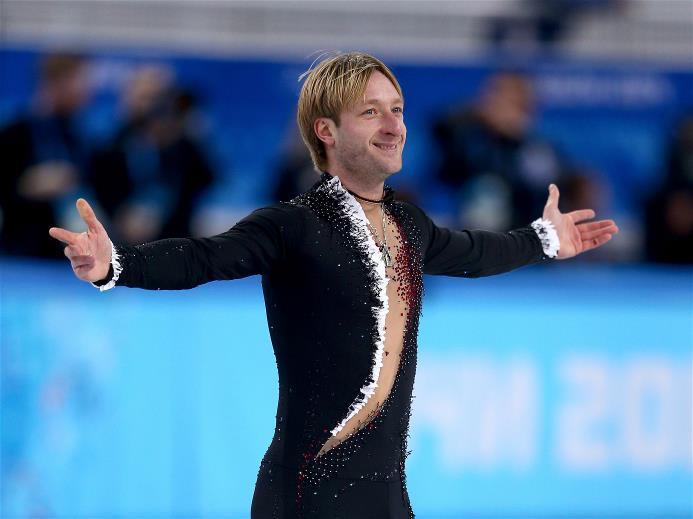
I’ve “hated” Evgeni Plushenko for years…not really, but in that sense of “hate” in which, if you were a Bills fan during the 1980s and 1990s, you “hated” Dan Marino, or in the way I “hate” Tom Brady now. You “hate” the guy who wins a ton while committing the crime of not being your guy.
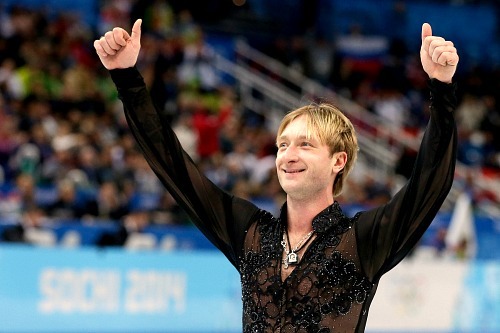
But damn, Evgeni Plushenko has been a hell of a skater and competitor for a long time, and it’s a shame that he didn’t get to go out on the ice, but because he was — as many athletes become — just too damned banged up to keep going. And imagine being a football player and realizing you simply cannot go out on the field, minutes before kickoff in the Super Bowl. That’s what happened to Plushenko: he was warming up for his Olympic short program, but realized…it wasn’t happening.
Yeah, I “hated” Evgeni Plushenko. But damn, what a career he had! Good luck to him in the future!
Share This Post
Something for Thursday
Ach! I can’t find my copy of this CD! I know it’s somewhere and I haven’t looked exhaustively for it yet, but I wanted to listen to it the other day. It’s called The Long Black Veil, and it features The Chieftains with a lot of crossover guest artists. Here’s the title track, with Mick Jagger joining the band for this haunting song.
Share This Post
A Random Wednesday Conversation Starter
So here’s an intriguing case study in how musical works are affected by the nature of their creation. There is a composer from Japan named Mamoru Samurgoch, whose work has been highly regarded for a number of years. He’s done a lot of very high-profile concert works, as well as provided scores to some highly popular videogames. The quality of his music seems all the more impressive because, like Beethoven, he has been deaf for a number of years.
Here’s is his Symphony No. 1, titled “Hiroshima”:
Last week, though…it turned out that the whole thing is a fraud. Samuragoch revealed that he has been using a ghost composer for years, and that ghost composer has speculated that Samuragoch may not be deaf at all. The whole thing is a mess.
But here’s the question: Do you think this has any effect on the works themselves? This seems to me a different kind of case than, say, my decision to never read Orson Scott Card again because of that author’s odious beliefs. Here, the works themselves are inexorably tied in with the very controversy about them. So what should our reaction be? Forget the works and move on? Scratch Samuragoch’s name off them, relabel them as the work of Takashi Niigaki, and keep on listening?
To me it’s kind of like the old Milli Vanilli controversy. Sure, those two guys were fakes — but somebody had to record that music that a lot of people liked, so should the works themselves just disappear down the scandal memory hole?
What say you?
Share This Post
Another reminder: Ask Me Anything!
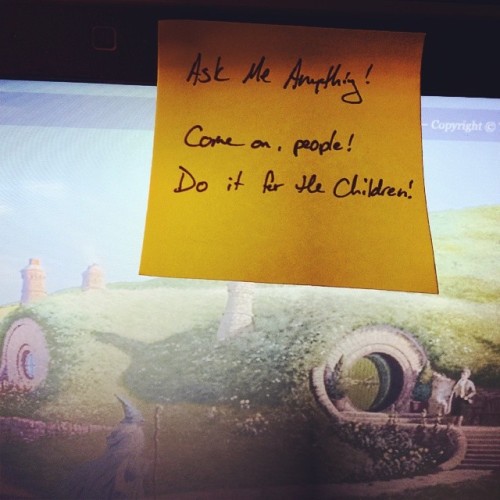
Yar, what ye be waitin’ for, mateys! Ask Me Anything! (Leave questions there as opposed to on this post, because it’s easier for me to keep ’em in one place.)
Or ask via Facebook or Twitter or Instagram or Flickr or parcel post.
Share This Post
Since the invention of the kiss there have been five kisses that were rated the most passionate, the most pure….
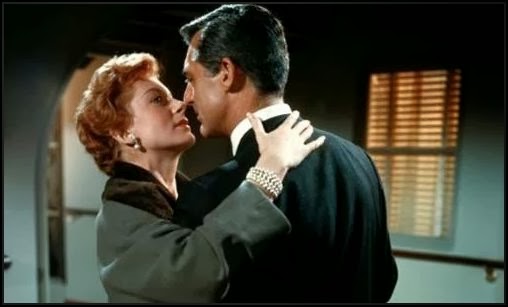
Some awesome kisses:
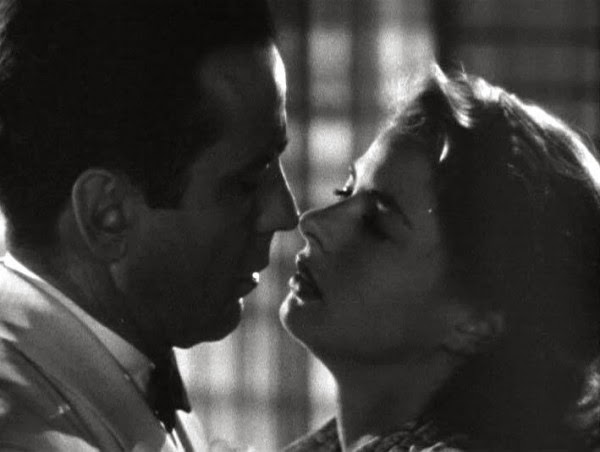

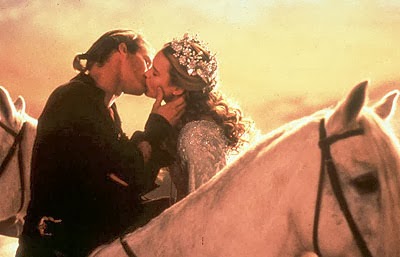

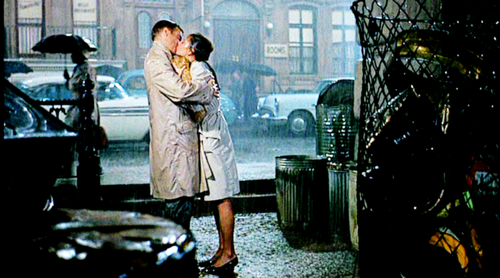
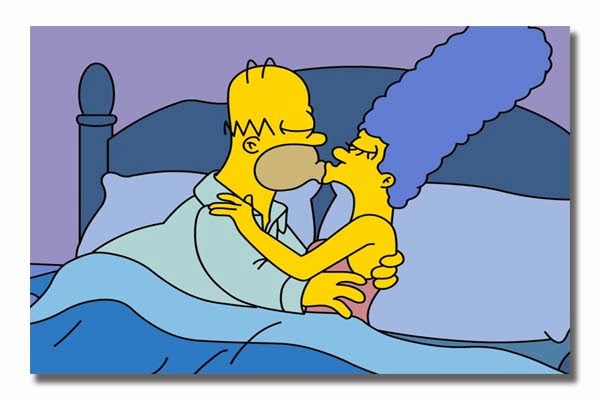


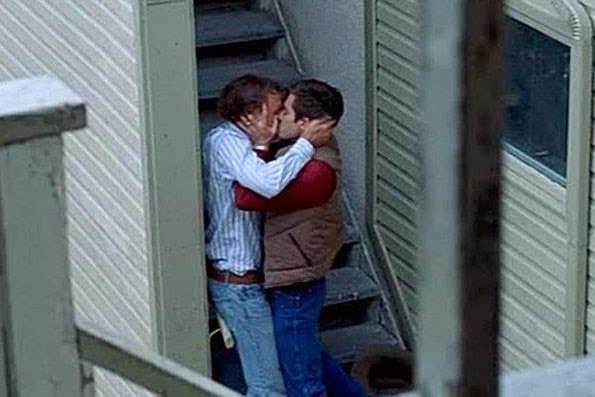

And to these we add the newest Entry Into The Pantheon:
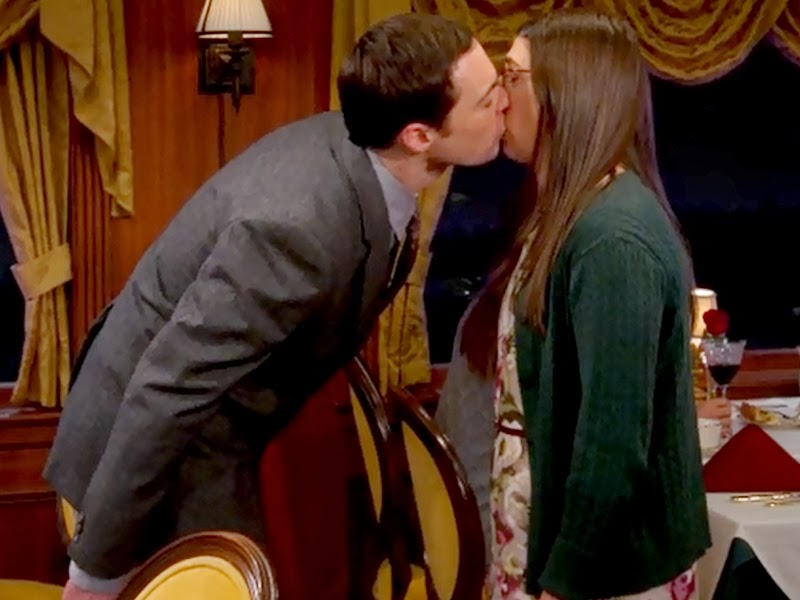
I honestly have to give credit to the writers on The Big Bang Theory. Character development on this show tends to proceed at a pretty glacial pace, to the point where often there’s quite a lot of tension just from the standpoint of thinking “Wow, they have to do something soon, right?” Howard got married a couple years back, but everyone else is in kinda-limbo. Sheldon and Amy keep on plugging, with Sheldon completely unaware of Amy’s increasing need for physical sensation; Leonard and Penny keep plugging along in a relationship that persists despite a seeming utter lack of anything in common; Raj keeps plugging along in…well, that’s wrong. Raj isn’t plugging along at all.
But then, after a fight during a “romantic dinner” on a train — which Amy arranged because Sheldon is a train nut — Sheldon mocks Amy, asking if she wants to do various “romantic” things, such as “gazing into each other’s eyes”. (“You blinked, I win!”) But when Sheldon says, “Hey, kissing is romantic, let’s do that!”, he plants a not-terribly-nicely-intended kiss on Amy’s lips…and then…he holds it. And moves in closer. And puts his hands on her hips. And holds the kiss a bit longer. And notes, afterwards, “That was nice”, and invites her to the locomotive to fulfill an invitation the engineer gave him.
I may be frustrated by the slow way the characters unfold on Big Bang Theory, but the show is still hilarious and mostly warm in its humor (I could do with a bit less geek-bashing), and these writers cannot ever be accused of not knowing their characters. They came up with perhaps the only possible way Sheldon Cooper could ever voluntarily kiss a girl for the first time. What a great moment!
Now, Sheldon and sex? I suspect we’re still a good four seasons away from that.
(By the way, I was just randomly thinking up great kisses off the top of my head for a few minutes. Which ones did I miss? Consider this a Random Tuesday Conversation Starter!)
Share This Post

Stuff in the time of the Bard
I recently read a delightful history book called Shakespeare’s Restless World: A Portrait of an Era in Twenty Objects, by Neil MacGregor. This book takes a great approach to painting a picture of Elizabethan London: MacGregor finds twenty objects from that era and writes about each, telling how each particular item reflects the era and describing for us what we learn from these objects. There’s no dry recitation of facts and dates here; MacGregor’s book genuinely captures what it was like to be alive at that point in history, in terms of what you would carry with you, what you would read, what you would think about by way of politics, and what you ate.
I think most of us have some idea of what people are likely to have felt when they first watched the great love scenes from Romeo and Juliet or heard Macduff being told of the killing of his children. The words move us now as we imagine thay must have always moved an audience. But in this chapter I want to ask a less elevated question: what did Shakespeare’s public eat in the theatre? What were you likely to be nibbling or crunching as you first heard “To be or not to be”? Modern audiences embark on films and plays armed with chocolate and popcorn, glasses of wine or bottles of water. What about the ELizabethans? It is a question that recent archaeological work has taken us a long way towards answering. Over the last few decades the Museum of London has excavated the sites of a number of Elizabethan theatres: they have found huge quantities of glass and pottery fragments, fruit seeds, nuts and mussel shells, and, in among all the detritus, this sharp and stylish fork.
It has a slender shape, a little longer (9 inches) and much narrower than the kind of fork we use today, with two fierce-looking prongs at the end; it is easy to imagine somebody languidly pronging a delicacy with it while watching a play. But this is not the equivalent of disposable plastic cutlery, thrown away at the end of a performance: this fork is made of durable iron and it once had an elegant wooden handle — you can still see the pins that held the wooden plates in place — with at the end a tiny brass knob (a rounded ornamental handle) beautifully engraved with the initials “A.N.” This sort of fork, a sucket fork as it is known, is for spearing suckets or sweetmeats — selections of marchpane (marzipan), sugar-bread, gingerbread and the like, the equivalent of a box of chocolates. This is very smart cutlery, and it is meant to last. And last it did, for this particular fork lay for centuries on the site of the Rose Theatre on the south bank of the River Thames.
Good book! Check it out if the Elizabethan world or Shakespeare is of any interest. And even if they’re not.
Share This Post
If my calculations are correct, when I start pouring this in, you’re gonna see some serious shit!
I’m making my world-famous (using an extremely liberal definition of “world-famous”) chicken wing soup, after much familial pressure to do so. It’s been a while!
Oh yeah. We need a Food Hall of Fame, and Frank of Frank’s Red Hot fame needs to be one of the inaugural inductees.
Share This Post
Sunday Burst of Weird and Awesome!
Oddities and Awesome abound!
:: A friend on Facebook shared this video today, and after a bit of looking around, I found on YouTube. If you like “big machines doing impressive jobs”, check this out. Who needs Paul Bunyan!
:: I have to admit a certain amount of amusement at the horror stories of the infrastructure in Sochi during the Olympics. Today’s entry? Push elevator button, wait for doors to open, and…no elevator!
Luckily this did not result in a real-life sports version of one of the worst moments in the history of teevee.
More next week!
Share This Post
Symphony Saturday
Finishing up with Beethoven this week, we have…the Ninth.
Last week, I referred to an old debate as to which was the greatest of Beethoven’s symphonies, the Seventh or the Ninth. The best case for the Seventh, it seems to me, lies in a look at the work and nothing else. When one considers the influence of each particular work, though, the Ninth really takes flight. It is a work that loomed incredibly large in the musical imagination of the entire Western world for most of the 19th century. Beethoven’s Ninth an amazing example of a game-changing work, opening the realm of symphonic music to epic heights beyond even what Beethoven himself had done in the Third. It opened the world of symphonic music to the human voice, and it firmly placed the symphonic world into that of the political. Beethoven’s Seventh may be the more perfect work in terms of its own quality, but the Ninth? With the Ninth, Ludwig van Beethoven cast a shadow which fell over nearly every musician for the next hundred years.
As for the music itself? If it has a flaw that I can detect, speaking purely personally, I always find my attention flagging just a bit during the slow movement. But that’s about it; other than that, I am nearly always caught up anew in this symphony’s amazing sweep every time I come to it.
The first movement starts with a hushed tremolo in the strings, which is followed by a descending motif that will later form the backbone of the entire movement. What’s fascinating here is the way Beethoven does not establish his tonality at first; he omits the third of the chord, which happens to tell us if we are listening to major or minor. This type of delayed effect will play out throughout the entire symphony, in different ways, even as the first movement goes on to ebb and flow through some of the most wonderfully stormy music I’ve ever heard.
Next comes the scherzo, which opens with four thunderous blasts of the motif that will run its course (including one by the timpani). Beethoven’s scherzi always have a relentless feel to their unstopping momentum, even when he changes meter and takes us into a lighter, sunnier world for a brief time.
The third movement always loses me just a bit toward the end, which I’m not sure is even Beethoven’s fault; a lot of conductors tend to take it so slow that the movement’s architecture takes a very devoted musical attention span to perceive it as a set of variations winds its way through two separate, and achingly beautiful melodies. Even so, I always find myself returning as the movement starts to come to its close. Beethoven has a supreme knack for drawing me back in.
And then there is the finale, which again starts off with a stormy figure before giving three fascinating looks back at what has gone before. The orchestra samples each of the earlier movements, only to have each summarily rejected by the low strings in a kind of musical dialog. Then there is an amazing passage in which the woodwinds hint at a fourth theme, a new melody we haven’t heard yet, and the low strings interrupt again. But the winds try again, and are again interrupted, and a kind of by-play takes place before the low strings stormily usher in a moment of silence before playing one of the most famous melodies in musical history.
What happens next is…I’m not sure I know enough superlatives for it, actually. It’s the same melody, heard first in the low strings. It’s hushed and mysterious; it seems to have no character at all, just a tentative musical thought. But then the violas come in and play the tune again, with the bassoons offering a countermelody that sounds like an improvisation. (I have to think that this passage ranks among the very favorite musical moments for bassoonists.) The tune sounds sunnier now, even optimistic, and then the violins arrive and the tune becomes one of astonishing beauty. Three statements of the exact same tune, three different characters, just because of the instrumentation.
And Beethoven isn’t done yet, because now he gives the theme to the entire orchestra. It’s one of music’s grandest statements of humanity that I think even likely possible.
What’s next? The chorus and soloists, who lead the proceedings through a series of variations on that glorious tune, sometimes soft and meditative, other times in such a way as to allow the sun to break through the clouds by its own force of will. I love how the first order of business is another straight statement of the “Ode to Joy” tune, this time adding the vocal soloists one at a time, alternating with the chorus in full glory until it all arrives at a magnificent chord that seems to hang there, in the heavens, unchanging, forever. This is followed by a section featuring the tenor soloist that sounds like drum-and-fife — but as usual, with Beethoven, there is so much more going on than that.
I could spend a dozen blog posts and more, perhaps, doing nothing but detailing my favorite moments from Beethoven’s Ninth. It’s a work that has never once seemed tired to me, a work that rewards constant return and reengagement. There’s a reason why this work dominated musical thought for a century after its composition, and why it has endured for as long as it has. Put it this way: there is a legend, which may or may not be true, that in the 1970s, when electronics companies were trying to come to an agreement as to the standard length of play of the music on the new compact disc, the figure of 74 minutes was finally agreed upon in part because that’s how long a typical performance of Beethoven’s Ninth is.
Another word about Daniel Barenboim and his amazing group of young performers. Making ensemble might be the single human pursuit that most demands, and rewards, precision teamwork. With all due respect to football and other team sports, the team only has to act as one during each play. Imagine a football game where a single play went fifteen minutes or more, and where you can never talk to the next person — you just have to know what they’re doing and when they’ll be doing it, and you have to have unshakable faith and knowledge that they will do it right, just as they have to have the same faith that you will, too. These musicians play with as much passion and precision as just about any serious, professional orchestra in the world. Watch as Maestro Barenboim conducts: there are times when he doesn’t have to conduct at all, when his arms stop and he simply stands there, knowing that his young musicians have come together into a single entity that, for just a second or two, doesn’t need him at all. That’s when you know the conductor has done things right.
Next week we’ll do something shorter — much shorter. Here’s Beethoven’s Ninth.