
The week in photos!
Something for Thursday
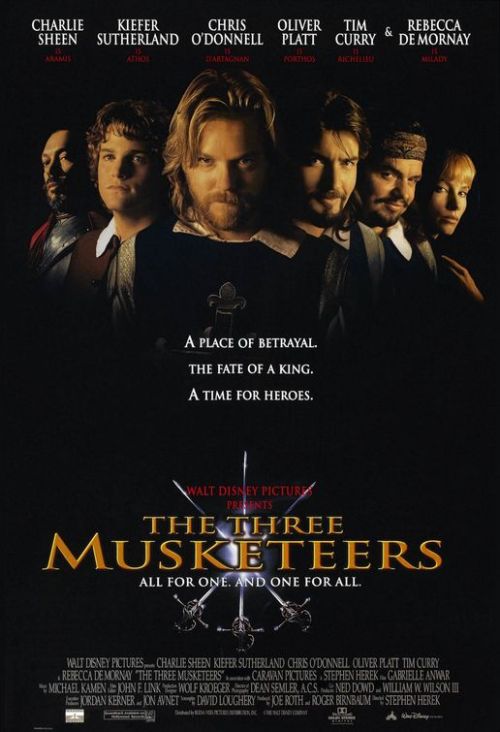
No, I’m not going to try convincing anyone that this is a good movie, because it’s really not. But it’s a decent enough Sunday afternoon flick for when you’re in the mood for crossed swords without too much to tax the brain. The sword fights are fairly well-done, Tim Curry’s Cardinal Richelieu swoops around with a red Vader-esque cape uttering lines like “I want those Musketeers, not excuses!”, there’s an evil henchman in black who wears an eye-patch, and you have American actors trying to act French and, for the most part, failing miserably. Oliver Platt as Porthos brings some energy to the proceedings; there’s a gleam in his eye that makes clear how full of shit the entire thing is. There are many, many, many better swashbucklers than this one. But there are also a lot worse, so there’s that.
The best thing about the film is the score by Michael Kamen, which is bright and energetic and full of lots of energy and dance-like rhythms, along with a bewitching use of the harpsichord. Kamen was a gifted composer taken too early, and it really is amazing how often it turns out that the best thing about a movie is its score. Here — assuming I’ve done the embedding correctly — is the entire score to The Three Musketeers.
Share This Post
A Random Wednesday Conversation Starter
Should the dead guy be blinking? (a writing update)
When they were filming From Russia With Love back in 1962, there was a scene the producers really liked. But they had to cut the scene because, when they screened the film for friends and family, the director’s 12-year-old kid pointed to a character in the scene and said, “Hey, didn’t that guy die in the last scene?”
Oops.
So I don’t feel too bad that one of my trusty beta-readers for Princesses Back In SPACE!!! (not the actual title) found an instance of a character I had very clearly rendered incapacitated turning up very much capacitated fifty pages later. Hey, it happens. Easy fix, but still — yeesh!
In other news, I’m back to work on Lighthouse Boy, and I think I may have figured out the way through the plot difficulty that had been vexing me for some time on that book. We’ll see.
As for Princesses I and its release later this year, well…nothing new to report there. I plan to make that my major focus come summertime. I may even launch a new website for myself…hmmmm….
Onward and upward! Zap! Pow!
Share This Post
Answering Anything, part the first!
Yes indeed, it is time for ANSWERS! Wheeeeeee!!!
My ever-entertaining high school mate Andy asks:
I have thought about your response to my question about ‘The Dukes of Hazard’ question I asked last time. Do you think the reason for all the dirt roads in the county was that Boss Hog was embezzling the funds that the federal government was giving to the county to pave the roads? Or do you think he was funneling the money to buy all the cop cars Roscoe and Ennis were tearing up?
Heh! Either or both! But I’ve always had this odd notion that Hazzard County is like an American version of Brigadoon, that Scottish town that is magically enchanted to only emerge from the mist into the real world every 100 years. Hazzard exists in its own little world, with its own laws of physics and traffic and fashion.
Andy adds:
I can tell you one thing that is for sure!!! Boss Hog wasn’t putting ANY ebezzled money into his bar, ‘The Bore’s Nest’. That place was a DUMP!!!!!!
He didn’t need to, though, did he? That joint was always packed! But really, what the hell did Boss Hogg spend his money on? A new white suit every day?
Paul asks:
Winter or Summer Olympics… and which sport?
Oh, Winter, most definitely. The Winter games are prettier, and their events always look like something I’d like to try for the heck of it. The Summer games is a combination of stuff that reminds me of gym class. Which isn’t to say that I dislike the Summer games, because I love the Olympics in general. Even if they’re corrupt as hell and even if the expense of putting on the Olympics is really hard to justify at times.
Which sport? I’m a figure skating fan, although I’ve missed most of it thus far this year. I didn’t even know there was a “team event” now until I saw that Russia had won the thing! Most of the Winter events look really neat, with one major exception: I must come to grips with the fact that I will simply never, ever, ever love hockey. Never ever. I tried, I really did.
As I write this, I’m watching two-man bobsledding coverage, and I’ve always loved all these various ice-run sports: bobsledding, luge, and skeleton. I’d love to ride one of those bobsleds one day!
Summer sports? I could watch swimming all day, as well as the track-and-field events.
And I am bummed that Olympic pie-throwing never came to anything. Alas!
Ben asks:
How are you supporting yourself until the writing ship comes in?
The day job — for ten years now, wow — is Maintenance at a large grocery store in the Buffalo area. I don’t like to name the chain, simply because I don’t want anything I write here to be taken as a statement by “a representative of the company”, but of the two major chains in this region, it’s not the one that rhymes with “Schmops”. I’m responsible for the upkeep of the physical plant, making sure that things work, and ensuring that our warp field maintains integrity and doesn’t do anything to disrupt the space-time continuum. You know, like Scotty.
More answers to come! And feel free to ask more, if you like — I always accept questions, and follow-ups are welcome!
Share This Post
Why NOT write fiction?
I was going to link this post by longtime blogging acquaintance Will Duquette in a Sentential Links post, but I realized that there’s an awful lot going on in that post, so much so that it warrants its own response post. Or something like that.
Anyway, Will is apparently gearing up to commit acts of fiction, to which I say, Huzzah!. To that end, he has a few thoughts on the fictional enterprise, a couple of which interested me.
Some folks, when asked, will say they wrote a novel or a short story because “that was the only way they could say what they wanted to say.” This strikes me as disingenuous: the sort of thing an author says when someone asks him what a story means, and he has to say something if he doesn’t want to be rude. It isn’t untrue, precisely, because fiction is all about story-telling: the only way to tell to a story is to tell a story, and if the author in question simply wanted to tell a story then indeed that was the only way he could do it.
What the phrase “they wanted to say” seems to imply, though, is some kind of message the author wants to get across. I suppose many authors do write fiction with a message in mind, but I’ve always thought that to be the straight road to fictional wrack and ruin. Certainly, I can’t do it, not and make the story interesting.
I’m not sure who said it, but it’s a favorite quote of mine. I tried sourcing it, and it seems to spring from the days of the studio film industry, but I’ve seen it attributed to Samuel Goldwyn, Jack Warner, and Frank Capra, so who knows who actually said it, but it goes like this:
If you want to send a message, use Western Union.
That tends to be my approach as well. I never write with the intention of saying anything, specifically. But I can’t help saying something along the way. It’s just that whatever I’m saying is coming out of my subconscious mind. I never craft a story with any particular message in mind.
I don’t know what other authors do, or what the “greats” did, along those lines. Charles Dickens seems to have had a great deal on his mind in his novels, but he tells fascinating stories along the way. So does John Steinbeck — The Grapes of Wrath is certainly a book that says a lot, but he could have said those things in an essay, too. So I think I tend to have a bit more sympathy for the idea of “saying something in a story”, but not because that’s the only way of saying it, but for this writer or that writer, it’s the best.
And this still doesn’t take into account the problem of which comes first, the message or the tale in which it’s embedded. There are some novelists who definitely seem to me to approach their books with their “something to say” strongly in mind, to the point where the story is just window dressing for a lecture or sermon. This is one reason why I find Ayn Rand so abysmally disgusting as a writer — not only do I find her message morally odious and logically faulty, but she’s a crappy storyteller, too.
Am I trying to “say” something in Princesses In SPACE!!! (not the actual title)? Not really, at least, not so much as I can tell…beyond my general view that the Universe is a pretty spectacular place.
Next from Will:
S’Mary’s World is different. There I actually started with an idea: an explicitly Catholic colony world, isolated from the rest of the galaxy, and forced to fall back on the monastic model in order to preserve its technology and culture. How could such a place come to be? How would it evolve? And then, what stories would naturally arise in such a place? That led me to the bits of history I’ve been publishing.
As a Catholic, I always write from a Catholic point of view—like Tolkien, I like worlds where Catholic theology is true even if not known. But though S’Mary’s World is Catholic in world-view and Catholic in setting, it isn’t meant to be Catholic fiction, i.e., fiction for Catholics. It’s meant to be just plain fiction with a Catholic setting. (Can’t help the world-view; that’s just me.)
So now I’m trying something I’ve not done before: to write a complete story in a world that I’ve already imagined, instead of letting the world form as part of the process of writing the story. I’ve got a character, and a situation, and a story—and I’ve got to figure out how to tell it, instead of letting it tell itself. Frightening, really. We’ll see how it goes.
A lot to unpack here. Starting with the last point first, I tend to take a pretty lax approach to world building myself. As I write — which is, ultimately, really the first time the story is being read — I am finding things out about its world. When I started Princesses a few years back, I knew very little about the world. Very little. I didn’t even know the name of the main planet on which the tale takes place. I actually only knew one thing about that planet, which created the book’s central dramatic conflict. The other details filled themselves in as I went. I did not spend lots of time generating notebooks full of stuff on the flora and fauna of this planet, making this stuff up as I went. I posited a particular large predatory beast, which then required (a) some other stuff for that beast to eat, and (b) a reason why that beast may or may not have been domesticated. I had to come up with some geography for the planet’s main two locations, and I had to generate a bit of historical detail to explain the situation there.
But I did all this on the fly, cheerfully making up the details and slotting them in as needed (and making notes about each new detail in my files as I went). This worked pretty well — or at least it seems to have worked pretty well — but now, first with Princesses II and likely with future books in the series, events will be partially determined by the details I already established. Once you put your main character in a mountain village, you can’t have him wake up in a city at the bottom of the ocean, right? Or at least if you do, you’d better come up with something good to explain it.
So I’m not totally making it all up as I go, but at the same time, I don’t know each detail as it comes. Yes, this can result in problems along the way, when I need to remember something.
That’s all well and good for the Princesses books, and also for GhostCop (not the actual title), which I have set in my own city of New Mowbray, Michigan (which I have done mainly so I can set a book in Buffalo but free myself from troubling things like Buffalo’s actual geography and history). What about Lighthouse Boy (not the actual title)? Well, this book is more of a historical swashbuckler, set in a land that never existed. For this one, I had to do a lot more heavy lifting than I did with Princesses, because this book is all about history and historical forces and how things that happened a hundred years ago still affect things today. It’s about Kings and Princes and what happens to realms when rulers die without heir and all the rest of that sort of thing. So Lighthouse Boy has several maps, along with quite a few pages of notes detailing who rules what and where, what the various alliances are, why this Duke wants to go to war against that Duchess, and so on and so forth. A lot of this may never show up in the finished book, and I tried to only do the worldbuilding I felt necessary for the story I want to tell — if I’m writing a story in a fake Victorian England, there’s really not much reason to worldbuild my way all the way back to the Plantagenets. If I need more detail, I’ll make it up when I need it. And dutifully write it down. But I did have to come up with some stuff to start with.
Finally, I’m intrigued by Will’s approach to Catholicism in his writing. I’m not Catholic, so I am under no such “obligation” (if that’s even the right word), but I do recall reading an interview with Gene Wolfe in which Wolfe, one of the finest writers alive today and a devout Catholic, says that Catholicism does indeed inform and infuse all of his writing, even if it’s not about any kind of specifically Catholic subject matter at all. I’m paraphrasing here — I don’t remember where I read this interview — but I remember Wolfe basically indicating that if something is as deeply a part of someone as his Catholicism is a part of him, then it’s not possible for it not to be present in the fiction in some way. I think that’s true, to a large extent; writers may make stuff up, but even writers ultimately can’t be who they aren’t. As a non-Catholic, I know that JRR Tolkien’s Catholicism can be found in The Lord of the Rings, but it’s not obvious at all, and in fact, to the non-Catholic, it even has to be explained at times just where one may find bits of Catholic world-view laying about. Of course, that’s at a lower level than what Will’s talking about; Will indicates that his setting is specifically Catholic. And that’s fine. I’ve read those kinds of tales, too.
So, what spiritual views of mine will show up in my fiction? I don’t know, and that’s likely because I tend to have relatively little idea of what my real spiritual views even are. But if I’ve got any writing chops at all, I hope it will be at least somewhat clear from my work how I look at things here on Earth and how I think we little humans relate to our big, amazing Universe. I don’t want to get too obvious in all that, though. For one thing, I don’t know where I’d even find a Western Union office anymore.
Share This Post
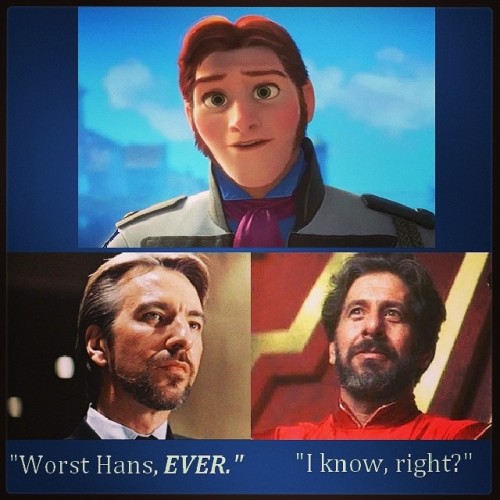
Some obscure geek humor….
Sentential Links
Linkage….
:: It’s all about intentions, and today, I intend to have a really fantastic day.
:: It was just negative energy I didn’t want. I thought the CORRECT response to something on FB that was not of interest to one is to ignore it; I do it ALL THE TIME. (Yup, that’s the correct response. I ignore stuff all the time. I have hidden people who seemed to make it their mission in life to post things that I disagreed with, but I’ve never unfriended over it. Unfriending, banning, or hiding people who feel a compulsive need to share their negativity with me? Begone!)
:: Hands up: who thinks being afraid of the man you’re with is a sign you’re in a healthy relationship? (SamuraiFrog continues his slog through Fifty Shades of Gray. I can’t believe people like this book.)
:: Somehow the poor dear had become stuck on the idea that rubber bands must be in sewing notions and simply could not wrap her brain around the concept of them being in stationary. (You’d be amazed how often shit like this happens in retail: people come in with a notion about your store or restaurant, and dammit, that’s the way it was and that’s the way it should still be. I remember working at Pizza Hut and having people come in on a Sunday and get incensed that we had ended our Sunday Buffet…over a year before. Or people getting pissed at me at Bob Evans because when did we start closing? We used to be open 24-7! (No, we didn’t. Ever.) Or people who come into The Store and bitch because they can never find the milk. Now, we move a lot of stuff, but not the milk. We could move the milk, but it’s in a walk-in cooler the size of a small house and moving it would cost hundreds of thousands of dollars and months of construction.)
:: When people talk about how they came to know James Bond, the story I most often hear is that they were introduced to the movies by an older relative. When I was a kid in the pre-cable, pre-home video ‘70s, that meant catching the old movies as they aired on network TV. (For me, it was seeing Moonraker in 1979, in its theatrical release. But I didn’t know anything about this spy dude; all I knew, based on the teevee commercials, was that Moonraker was a space movie with lasers and stuff. It was post-Star Wars, folks, and I wanted me some space. Of course, once I saw Moonraker, that was that. I was hooked. I didn’t read any of the books until much later, in high school; I never finished the series after Dr. No. I should probably go back and read them one of these days.)
:: Though a teenager in the 1980s, can you believe I’d never seen any of the Bill & Ted movies? This, despite the overt Doctor Who reference? (The Bill&Ted movies are surprisingly clever, really. It’s not easy, getting dumb stoners to be sympathetic.)
More next week!
Share This Post
Sunday Burst of Weird and Awesome
Oddities and Awesome abound!
:: An artist starts sketches, and lets her four-year-old finish them.
:: Victorian mansion for sale. Keep scrolling.
More next week!
Share This Post
Symphony Saturday
After the monumental edifice last week that is Beethoven’s Ninth, we turn now to something much shorter: a symphony by Franz Schubert that may or may not even be complete. It’s his Symphony No. 8, often referred to as “the Unfinished”.
This symphony only has two completed movements, and just why this is the case has long been a vexing question for musicologists. There are sketches for a good portion of what would have been the Scherzo movement, but nothing at all is known to exist for a fourth movement — maybe. It’s all very strange, really — this symphony isn’t like Mozart’s Requiem, left incomplete due to the composer’s death. Schubert did die young, but he still lived another six years after he completed the two existing movements of this work. Some believe that another piece, in the same key and using the same instrumentation, was intended as the symphony’s finale but was then used instead as a piece of incidental music for a play, but there just isn’t enough evidence in favor of such a hypothesis to really make a strong case. And then there are some — Leonard Bernstein was one — who believe that Schubert simply decided that the first two movements were sufficiently good that he didn’t need to write another two. I find this idea a bit hard to believe. Schubert was a pretty staunch classicist and tended to stick to established forms, for the most part, and in any event, he did complete another four-movement symphony after this one, his own Ninth (which is often called simply “the Great”).
My own guess is that it’s a combination of the above. Other projects came along, maybe he had ideas that he ended up using other places, maybe he always intended to get back and finish this one but then he got sick, and so on. We’ll almost certainly never know, unless some kind of evidence — a letter in Schubert’s hand, or maybe even scores to two never-known movements — turn up in some old attic in Vienna.
I don’t really know a great deal about Schubert, to be honest. I’ve never explored his music much beyond the last few symphonies. He’s best known for his art songs, which is a part of classical music that doesn’t always engage me all that much (my failing, not that of the art song). Nevertheless, this work is an intriguing bit of music history. Schubert wrote it in 1822, but it wasn’t even performed until the 1860s!