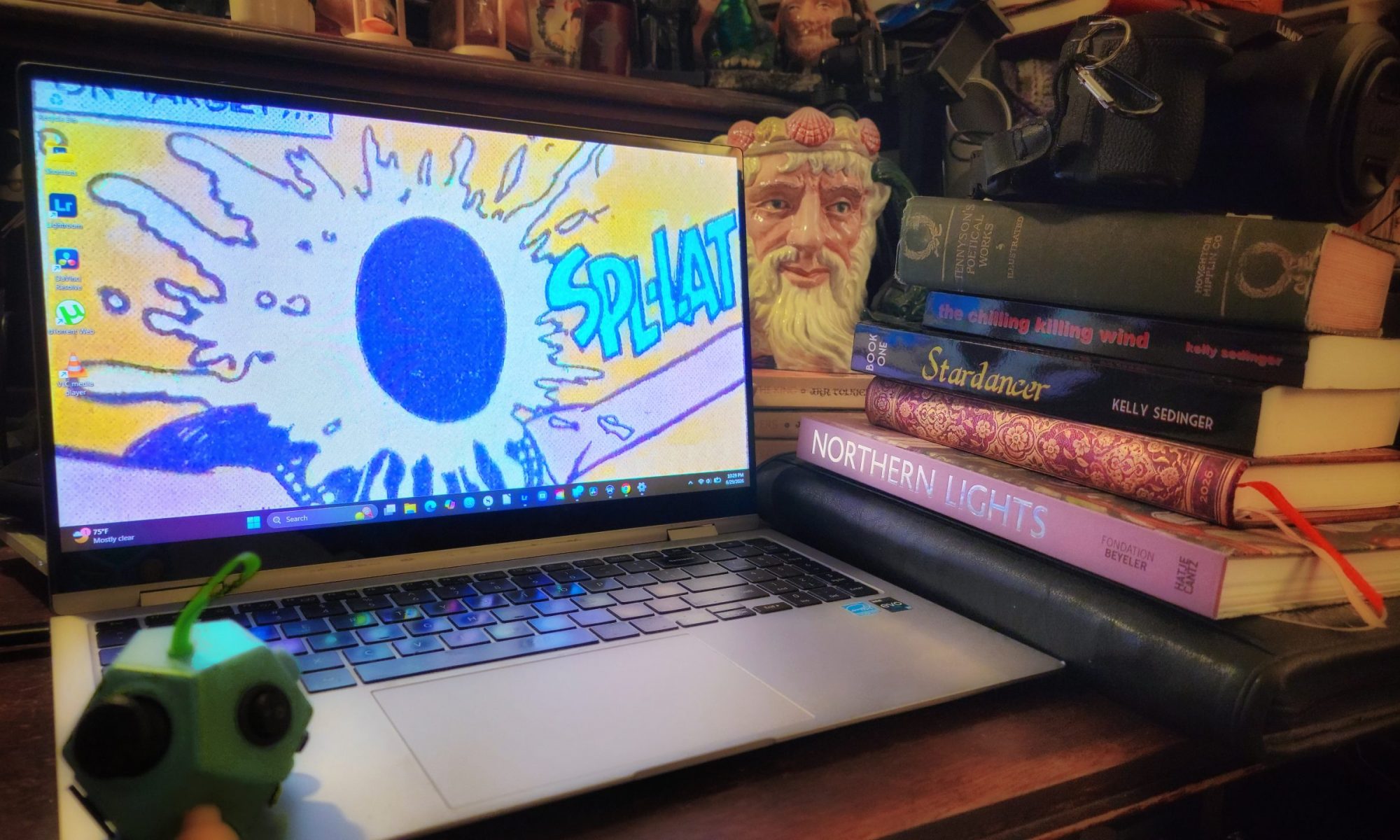
I just finished a remarkable novel the other night, The Mambo Kings Play Songs of Love, by Oscar Hijuelos. The book is a slow burn of a novel about the life of a man (told as a series of memories as he looks back on his life during his last hours, in a seedy hotel in New York City) who, along with his brother, was once a major figure in Cuban music (particularly Mambo music) in the 1950s. Cesar Castillo remembers his childhood with his brother, Nestor, in Cuba, and he remembers the loves they had there before they came to New York, hopefully to establish a life and then move their families and their loved ones along later. Cesar and Nestor become musicians and their lives…well, their lives go on. I don’t want to say a whole lot more than that, because the book is as effective at showing life for what it is–a sequence of things that happen to us, few of which we have any control over–and there are turns along the way that we don’t see coming. The Mambo Kings Play Songs of Love is not a novel that grabs right away…in fact, I was wondering if I’d bother finishing it just after fifty pages or so. But it grows in the mind, and by the time I was in the last hundred pages or so, I honestly couldn’t stop thinking about it. I read the book slowly, savoring as it went, enjoying Hijuelos’s chapter-less structure and his very long paragraphs, sometimes extending over several pages, and his long parenthetical asides as one of Cesar’s memories triggered another one, barely related, that took place at some total other point in his life.
The Castillo Brothers’ biggest hit is a song that Nestor writes about the love of his life, a woman he can’t forget even though she is back in Cuba (and their relationship didn’t work out anyway), named Maria. Nestor pens a song called “Beautiful Maria of My Soul”, and this song’s success marks their high point as a musical act and it also somewhat haunts Cesar for the rest of the novel. And thanks to the fact that the book was adapted for the screen in 1992, in a film simply called The Mambo Kings, we can hear the song. It is sung by Armand Assante and Antonio Banderas, who star in the film as Cesar and Nestor Castillo. I have never seen the film, but the song is quite good.
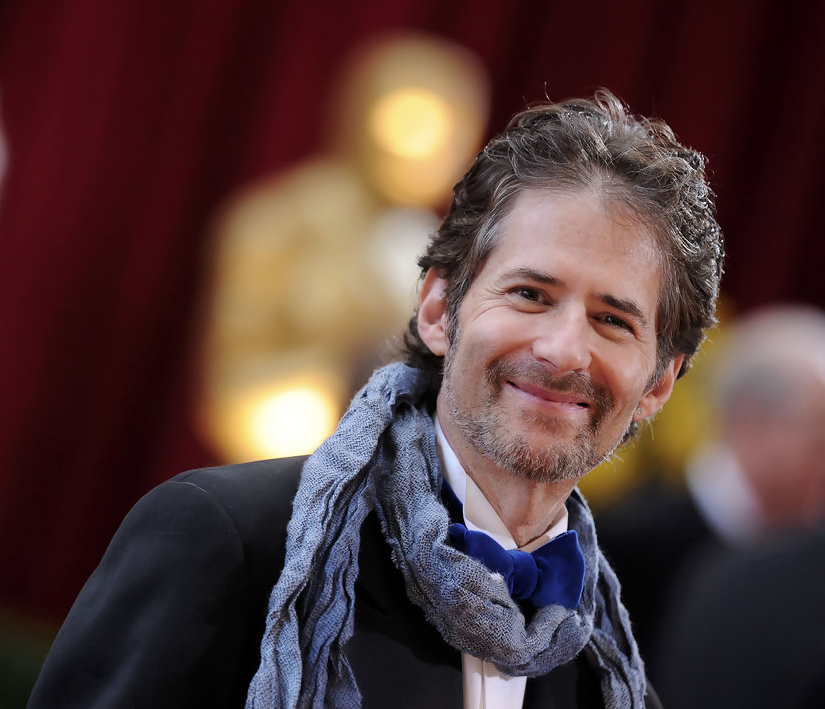
(This is a repost of what I wrote when composer James Horner died ten years ago, very prematurely, in a plane crash. Apparently Horner had been an amateur, hobbyist pilot. My relationship with his music through the years was complicated, but I wouldn’t ever say it was complicated to the point of being “love-hate”. Horner was one of the most important and notable film composers from 1980 until his death, after all, and as prolific as he was, I wish he was still around.)
Composer James Horner died the other day when the airplane he was piloting crashed. He was the sole passenger.
This is, quite simply, the worst news to hit the film music world since Michael Kamen, Jerry Goldsmith, and Elmer Bernstein all died within a year of each other.
For me, though, the hit is more directly personal. Although my relationship with Horner’s music has been rather complicated over the years, he still wrote a fair number of my favorite filmscores of all time, and when a score of his connected, it connected. He had the ability to hone in on the precise moment of a given scene’s emotional high point and construct his music to reach its high at the same moment. All film composers strive for this, but Horner’s gift for this was something else.
Moreover, I saw Horner’s career take flight, as he rose from obscurity to, well, stardom in his small corner of the film world. He started writing for films in the late 1970s, and I first encountered him in his fifth film, the Roger Corman space opera flick Battle Beyond the Stars. This is the first James Horner music I ever heard:
That score is still a fun listen to this day, even with all its minor faults: its heavy debt to Jerry Goldsmith (one of Horner’s strongest early influences), its occasionally awful orchestration (there is a track called “Cowboy and the Jackers” when you can hear the trumpet section slowly die), and occasional transitional missteps. Horner wrote a swashbuckling score that was better than the film it accompanied (although the film really is not all that bad, as long as you don’t ask too much of it).
When next I encountered the music of James Horner, it was for another science fiction film: Star Trek II: The Wrath of Khan.
Gone was Jerry Goldsmith’s brightly optimistic bombast from The Motion Picture, and in its place was a lyrical score that had an older and more seafaring quality to it.
It wasn’t all lyricism, though; Horner’s action writing was impeccable, and the film’s climax gives a great example of Horner’s skill for matching the music to the exact visual and the emotional beats of the scene. Here is the music, titled “Genesis Countdown”:
And here is a portion of the scene as scored, starting with the Enterprise backing away from Khan’s crippled Reliant:
This entire cue is a clinic in how to spot a film: you hear the desperation as the ship begins to move so painfully slowly, the drive as Spock climbs down through the ship toward Engineering, a snippet of Horner’s theme for Spock himself as he mind-melds with McCoy, the desperate ticking down of the seconds as the bridge crew realizes they’re doomed, Khan’s final expressions of hatred. When Horner was on, this is what he could do.
Horner would return to Star Trek for the next film, The Search for Spock, but he never did any more Trek after that. This always seemed to me a pity. I would have liked to hear, perhaps, a more light-hearted take on his themes from Treks II and III in IV, perhaps, or maybe his take on the adventures of the Next Generation in any of their films. Alas, it didn’t happen. I next encountered Horner via his score to the SF film Brainstorm, which is notable mainly for being Natalie Wood’s last film and, well, for Horner’s score.
It’s amazing to hear the progression in Horner’s sound from Battle to the Treks to Krull and beyond. You can really tell how much he was learning along the way, and his development along these lines culminated in 1988’s Willow.
One can detect a certain amount of the common lot of the film composer: often the scores are, on balance, better than the films. Not everyone can be John Williams, with a partnership with Steven Spielberg.
Horner was also able to do a lot more than genre films. He scored everybody’s favorite gentle baseball film Field of Dreams, in which he flexed his Americana muscles without quite aping the typical Coplandesque sound, and a couple years later he scored the Robert Redford caper flick Sneakers.
In the mid-90s, Horner reached what was almost certainly the height of his powers, and his filmography from about 1993 to 1998 basically includes one fine score after another, with three that were truly wonderful and one other which would become his single most famous work.
For Ron Howard’s Apollo 13, Horner managed to capture both the optimism of the Apollo moon missions and the elegiac sense, looking back, that that was as far as we were willing to go at that time and for quite a long time afterward. Horner infused that entire film with amazing energy, never moreso than during that film’s incredible rocket launch sequence:
Then there was Braveheart. Horner’s score for this film is amazing, one of my favorites of all time, and I consider its first half to be some of the finest film music ever written. It’s really quite something, what Horner did here. Mel Gibson’s film takes a fairly ‘dreamy’ approach to its subject matter, with long, lingering shots and scenes that feel like meditations. Horner accompanies all this amazingly, never better than in the “Secret Wedding” sequence. This love music is more complex than it seems, with a main melody that is subtly varied through a number of different stepwise progressions, and as the scene becomes more and more intimate in the film, so too does Horner’s score, boiling down to the utter simplicity of the rhythm being set by an ostinato harp. The first half of this score amazes me each time I listen to it.
Also in this same period came what I consider to be Horner’s finest score, Legends of the Fall. This melodrama is actually a favorite film of mine, and Horner’s approach to its big emotions is to basically say, “To hell with subtlety”. It’s a choice that works amazingly well, as Horner moves from big moment to big moment. This is a movie that blends World War I tragedy with Native American mysticism and Depression-era bootlegging with the generational drama of a family of strong-willed men and women underneath the Big Montana Sky, and Horner turns in a lush, Romantic score that proves that sometimes less is not more.
And then, in 1997, Titanic arrived.
Oddly, while I love the movie Titanic to this day, I’m not a huge fan of its score. It does, though, have a number of great moments. Horner would win his only Oscar for Best Original Score for Titanic (he also won Best Original Song that year for “My Heart Will Go On”). Titanic seems to be mostly laughed-at these days, which I always find unfortunate, but Horner did play a crucial part in its success, from the wonderful energy of “Southampton” to the way he scored the scene where Jack shows Rose how to “fly”. Note, in the latter scene, how the music seems to swell, only to swell again, with an upward modulation, when Rose lifts her hand to Jack’s neck, making the kiss all the more intimate.
One thing that’s always struck me about Horner’s Titanic score is how unobvious it is. He doesn’t go for the type of “seafaring” sound that one might expect from a disaster-at-sea film; nor does he particularly try to capture a “British” feel with proper Elgarian pomposity. Horner’s score, even if it’s not one of my favorites of his, still does manage to somewhat lift the film from its period setting, thus helping make the love story a bit more eternal, if that makes any sense.
The best part of this score, though, comes when Horner sends the orchestra home and uses a simple solo piano for the scene when Jack draws the portrait of Rose. It’s the film’s most intimate scene, and the solo piano is an inspired choice. You can hear that track here. (I’m having trouble embedding it because this post was originally written for the old BlogSpot iteration of this site, and the copying-and-pasting of entire blocks of text-and-video doesn’t always play well with WordPress’s “blocks”.)
Listening to all these selections, I’m struck by something I’d never totally noticed before, with regard to Horner’s melodies. He leans toward long melodies that seem at first to meander, before settling into an internal logic that makes a lot of sense.
Since the late 90s, I’ve lost track of Horner a bit. Partly this is because I stopped seeing as many movies, and he wasn’t scoring as many films that I actually wanted to see. Also, it seems that he wasn’t scoring as many films in general. He was active right up to the end, but he wasn’t getting as many of the blockbuster assignments and high-profile films, as tastes in film music have shifted toward the kind of tuneless soundscapes of Hans Zimmer and the like. I think Horner’s style has somewhat fallen out of favor, but he didn’t disappear entirely. The last new score of his that I heard to any significant degree was his music for James Cameron’s Avatar. I didn’t care for it all that much at first, but it has grown on me on repeated listens.
Horner had his detractors, of course, and sometimes they had cause. Over time, it became clear that Horner had little sonic “tricks” that he liked to use repeatedly throughout his scores — a particular motif to indicate that something bad was in the offing, for instance; film music fans would sometimes call this the “Danger Motif”. Another is what I came to call the “James Horner Rolling Chord of Melodic Punctuation”. More than a few times I would see a film with a Horner score and notice these very tricks playing out, and though it wouldn’t much faze the general audience, I knew what was going on.
Horner’s gifts of melody and his skill at spotting a film were always in evidence, however, and I can’t name a single film that he didn’t enhance with his music. After John Williams and Jerry Goldsmith, James Horner’s music was the most familiar to me growing up. His musical storytelling, in its finest moments, stands with any film composer who has ever put pen to paper.
And his voice will be missed. I may not have heard much of his music of late, but I don’t like knowing that there will be no more to discover. I didn’t like everything he did, but I liked most of it and loved a lot of it. Seeing his name attached to a film was always exciting.
So thank you, James Horner. Your music is part of the soundtrack of my life.
(This is a repost from a couple of years ago. I’m bringing it back in honor of the 50th anniversary of the release of JAWS, which opened June 20, 1975. I didn’t get to watch JAWS until I was a teenager, which is both probably a wise move on my parents’ part and also really lame. I mean, come on! JAWS! But hey, it instantly became one of my favorite movies ever when I finally did get to watch it all the way through, instead of seeing little bits and pieces through sneaky glimpses at this or that telecast. Anyway, here’s a bit of silliness….)
I’ve seen a few of these photos surfacing online the last few months, and they make me really happy because there’s a kind of absurdity going on. These are behind-the-scenes snapshots from JAWS, featuring actor Robert Shaw and “Bruce” the Shark, in between takes. Bruce, if you didn’t know, was the name lovingly bestowed upon the mechanical shark they made for the movie, which ended up not working half the time, forcing director Steven Spielberg to rely on implied-shots, shadows, oblique techniques and other ways of creating the sense that the shark was there without actually showing that the shark was there. It’s generally accepted that the difficulties with the model are a big reason why the movie ended up as good as it is.
I love these shots because they have a kind of absurdity to them, as if Bruce was really a living part of the cast, waiting for his next take like everyone else. They just scream out to be captioned, so:
“Come on, Bob, sing it with me! ‘Farewell and adieu to you fair Spanish ladies….” “Shut UP, Bruce.”“I mean, it was a great fight scene and all, but you gotta admit, Bob, the way your character in FROM RUSSIA WITH LOVE lets James Bond get one up on him is kinda lame.” “I didn’t write it, Bruce.”
“Haha, in your big speech you’re supposed to say ‘We delivered the bomb’ but you make it sound like ‘We delivered the bum’! Hahaha…ouch, please get your hand off my eye! It’s not REALLY like a doll’s eye!” “Too bad, Bruce.”
At some point in the last ten-fifteen years, orchestras happened upon a new formula for a cash-cow event: performing the entire score to a movie as the movie itself played on a screen above them. These events have proven very popular, and thus have given orchestras a much needed series of events that draw big crowds.
And yet, as much as I adore film music, I had never attended one of these events…until last week, when The Wife and I went to see Raiders of the Lost Ark at the Buffalo Philharmonic. I bought the tickets several months ago, for The Wife’s birthday in February. We’ve been trying to give events as gifts more over the last few years, and when I started “event shopping”, this was the nearest one that made me go “Oooooh, yeah, that!” So on her birthday on February 25 I got to say, “Happy birthday! I bought tickets to this thing in twelve weeks!”
Luckily, she didn’t mind.
I don’t have much to say about Raiders as a movie, since it’s one of my favorite movies of all time and I know it as well as I like any movie ever made. It did occur to me that this was the first time I’ve seen Raiders on a big screen since it came out in 1981. The movie’s story pulled me in, to the point that at times I actually forgot that the BPO was right there on the stage.
And how did the BPO do? Brilliantly, as a matter of fact. This isn’t surprising, really. The BPO is a terrific orchestra, and they were more than up to the task at hand. Their sound is really suited to the big, lush romantic sounds of John Williams’s score, especially in the showpiece cues like the Map Room sequence and the “basket chase” in Cairo. They really excelled in the extremely technical action music during the airplane fight and the “Desert Chase”, which is one of the most difficult and complex movie action cues ever written. Here the BPO held up amazingly.
The event was an absolute delight, and I’ll be looking for more such concert-filmscore performances to come!
Last week we watched Say Anything, which has been one of my favorite movies ever since it hit me between the eyes when I saw it in spring 1989 when it came out. To this day I consider it the best teen romance ever filmed, and I don’t love it one bit less revisiting it now for the first time after quite a few years since the last time I watched it. Say Anything is one of those movies that creates its own world…I mean, sure, Seattle is a real place and all, but a world isn’t just the physical place. It’s the people who live there and the emotional fabric of the lives they lead. I would never want an actual sequel to this movie, but I do wonder whatever became of Lloyd Dobler and Diane Court.
This Peter Gabriel song was used to amazing effect in the movie…so much so that it’s hard to hear the song without picturing Lloyd and Diane in the backseat of his car, or Lloyd holding the boom box aloft. Here is “In Your Eyes”.
Today John Williams turns 93. His music stands as one of the undisputed bright spots and creative forces behind my own life; to recall a time in my life when I was not keenly aware of his music I have to dig back to memories that are mostly hazy and almost sepia-tinged. I don’t remember when exactly my sister took me to see Star Wars–it wasn’t in May of that year, it was later, probably sometime in the summer, when it came out we were still living out our one year in Wisconsin and then we moved to Oregon, which is where we saw it–but I’m pretty sure it was well before my late-September birthday, so I was still 5 years old when I first got my serious exposure to John Williams. And he’s been there ever since. It sometimes feels like I’ve kind of let him down as a fan, since I haven’t heard a lot of his post-2000 work beyond snippets here and there, but then I stop and re-cast that as seeing it as a gift to myself: I have many hours of new John Williams music to hear.
Below is the text of the post I wrote on this date a year ago, when Williams’s birthday coincided with Thursday so I was able to use it as the genesis of my weekly Something For Thursday music post. I’m reposting it now, because Williams is great on ANY day of the week!
Here is a wonderful tribute by the author of a forthcoming biography of Maestro Williams, and here below is my post from a year ago.
John Williams turns 93 today…and he’s still working.
In his honor, let’s listen to some of his work!
Williams won a Grammy just the other night for this: “Helena’s Theme” from Indiana Jones and the Dial of Destiny. It’s a typically gorgeous theme that manages to evoke Marion’s Theme from all the way back in Raiders of the Lost Ark without echoing it or quoting it.
Here’s something that vexed film music fans for years: the unavailability of the End Credits music that actually was heard in the film of Indiana Jones and the Temple of Doom. The suite that appeared on the album was nice enough, but the film version is longer, quoting several of the movie’s themes as the last scene in the Indian village plays out. And when we finally go to credits and the Raiders March fires up, it actually fades out in the repeat (at the 3:32 mark) so that we can here a brief quote of Short Round’s Theme. Williams’s ability to put seemingly disparate themes together into an actually cohesive whole is always amazing.
Going back even farther, here’s one of Williams’s earliest contributions to film music: his score to the law-school drama The Paper Chase. Yes, it sounds a bit dated, but you can absolutely hear the fingerprints of the Williams-to-come in this cue, the End Credits suite from that movie:
It’s the lot of most film composers to have to turn in really good work for movies that…aren’t. Hook is, for me, one of the few misfires in Steven Spielberg’s output; it fell in that weird late 80s-early 90s era when Spielberg hadn’t really transitioned into the finer drama work that was to come, but you could tell that his heart wasn’t entirely in the magic-and-fantasy flicks he was still doing. But along comes Williams with this amazing score, and this almost perfect tone-poem-in-miniature:
When Williams’s score to 2002’s Star Wars Episode II: Attack of the Clones arrived, a lot of people were a bit befuddled by that score’s mix of darkness and lyrical love music. One person quipped on some message board or someplace, “It sounds like Nixon on a date.” That was pretty funny, but it seemed to highlight the fact that Williams’s score to Oliver Stone’s Nixon has never been particularly beloved. And that interests me, because I have always found it one of his most fascinating scores. He brings just the right blend of paranoid darkness and throwback Americana to Stone’s film (which I consider a masterpiece). Nixon has some of Williams’s most powerful and most overlooked music.
I do have to make an admission: I’m not always a big fan of Williams when he is scoring comedies or really light movies. For whatever reason, I always feel better when there’s a tinge of darkness in Williams’s music. (I can live quite happily without hearing Home Alone again, to be honest.) But in this wonderful march for Spielberg’s early big-budget misfire 1941, you can tell that John Williams has his tongue firmly planted in his cheek. This is absolutely delightful.
I’ve never seen Seven Years in Tibet. I couldn’t even tell you right now what it’s about without Googling it, other than…a guy is in Tibet for seven years. But I love this theme:
Finally–and I’m only ending this here because let’s be honest, I could go on a lot longer about John Williams and how much he’s meant to me and to my creative life throughout my years, but I actually have to eat dinner tonight–here’s a suite of another of what seems to me an underrated score, which is all the more surprising to me because every time I listen to it, I’m dazzled anew by how new this sounds, even for a throwback score. It’s Catch Me If You Can.
I’ve just watched a wonderful documentary about the world of rare and antiquarian booksellers, and you can watch it, too! It’s quite a wonderful film that sheds light on the mindset of people who collect rare books, people who sell them, and why they do all this. There is also some skepticism about the reading future, in this time of electronic devices and bad attention spans, but…well, if books are going away, I hope they wait until I’m gone to do it.
The title of this post comes from this poem, which is recited at the end of the film.
It’s that time of year again: the annual debate over whether or not Die Hard is a Christmas movie!
My personal opinion is that this one’s easy: yes, Die Hard is a Christmas movie. But a friend on Facebook made an interesting argument against Die Hard‘s Christmas status the other day, and I want to tease it out a little more. Basically his view is that there is nothing intrinsically Christmas to Die Hard, at least not in the same way that Christmas is intrinsic to Miracle on 34th Street (his example). Basically, my friend argues that you can’t have Miracle on 34th Street take place any other time of year, where Die Hard actually can take any time of year.
Now, I’m honestly not sure about my friend’s argument. I mean, Miracle on 34th Street does seem to require Christmas, but I’m sure you could tell pretty much the same story at some other time of year, though it would definitely require quite a bit of heavy lifting in the writing department to make it work. And could Die Hard take place any other time? Sure. Obviously it could. Hans Gruber and friends could just take over the building on Easter Sunday, or July 4. As I noted to my friend, I’ve seen Die Hard set at another time of year. It’s called Die Hard With a Vengeance.
My problem with my friend’s argument is that it’s deeply limiting as to what constitutes a “Christmas movie”. Does a Christmas movie have to involve Christmas to such a degree that it literally can’t take place any other time? I don’t think so. Die Hard isn’t just set at Christmastime; it intrinsically involves a lot of emotions that come to the fore at that time. Family concerns. Redemption. Getting home for the holidays, safe and sound. Are those ideas unique to Christmas? No, but they are most certainly central to Christmas. So, could Die Hard take place at some other time? Sure. But the Christmastime setting gives it a subtext that engages the emotions, doesn’t it? Die Hard has a lot going for it as a movie: it’s extremely well-made, a virtual masterpiece in its genre, but a lot of action movies are well-made. It’s the emotions that keep it so re-watchable now, 35 years or so after it came out; the Christmas setting is part of how Die Hard gets us to care about its characters.
So I would argue that yes, Die Hard is most definitely a Christmas movie. I also argue that the first Lethal Weapon movie, also set at Christmas, is a Christmas movie, for similar reasons, even though LW doesn’t push the Christmas subtext quite as hard as Die Hard. Still, LW makes Martin Riggs’s redemption and his finding meaning after his wife’s death one of the major emotional subplots, and that is very much informed by Christmas.
Now, how about Die Hard 2? It also takes place at Christmas! It’s also about getting home, and all the other stuff, isn’t it? Well, that one I think has less of a claim as a Christmas movie than the original, but for me that’s more because in that respect it doesn’t do much new with the Christmas theme from the first film. And that’s interesting to me, given how inventive and fresh Die Hard 2 actually is. That movie does not get enough credit for not repeating the first movie.
There’s another way for a movie to be a Christmas movie, but it’s a more nebulous one: it’s our own associations. Ultimately it’s up to us to decide what’s a Christmas movie, isn’t it? The Sound of Music has become a Christmas tradition, even though its story has nothing to do with Christmas at all. (On a more limited note, “My Favorite Things” has become a staple of Christmas songs, and there’s nothing about it at all that’s intrinsic to Christmas.) For me, My Fair Lady is a Christmas movie, because I watched it the first time right around Christmas and that’s just the association I have with it. And my beloved On Her Majesty’s Secret Service, which takes place at Christmas, is absolutely a Christmas movie. And I’ll bet there are a lot of families who always watch some completely non-Christmas movie every year at Christmas, because of one tradition or another, so for them, that movie is a Christmas movie.
There are many ways to be a Christmas movie, and I think that’s a good thing. So: in conclusion Your Honor, I insist that Die Hard most certainly is a Christmas movie, and that therefore the score to Die Hard, composed by the wonderful and dearly-missed Michael Kamen, is by extension Christmas music. That being the case, I close with this suite.
…because surely we can add more, if we want. Seems to me it’s kind of the point.
Here’s a tribute film Disney made for its definitive songwriting duo, the Sherman Brothers. I don’t think I was aware that Richard M. Sherman died earlier this year; I knew that brother Robert had previously died in 2012.