It’s May 4, otherwise known as Star Wars Day! Because “May the Fourth be with you!”
I don’t have any major new thoughts to offer today, but here’s a bit of music.

The official site of Kelly Sedinger: Reader, writer, photographer, and dreamer
I say it every year, and every year I’m given more evidence to back up my hypothesis: Buffalo Niagara’s winters wouldn’t be nearly so hated by people living here if our springs weren’t so godawful each and every year. The three months of winter aren’t that hard to negotiate; it’s that they are always followed by two more months of cold, muddy, grayness that makes the winters feel less like a season and more like a slog that consumes nearly half the year.
Anyway, it’s May now, and only now are the trees starting to show signs of awakening, and only now am I able to see wisps of green around the peripheries of the forests.
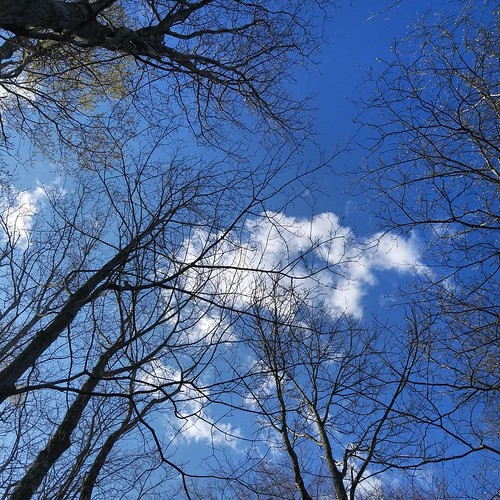


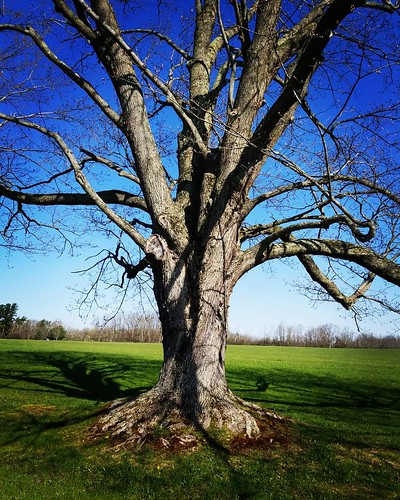
Sigh.
No excuse, I just didn’t get to it yesterday. You get what you pay for, folks!
But anyway, a repeat of a favorite work of mine. This twenty-minute concert overture by Edward Elgar is lyrical and exciting. It reminds me of the grand old film scores, in all honesty, with its muscular opening that would accompany the giant “Warner Bros.” shield, followed by a big-hearted opening them that would soar as the film’s title appears onscreen. Remember when movie titles were GIGANTIC and would take up the entire screen? They don’t do that much anymore, do they? And credit montages that set the tone…films nowadays almost never have opening credits at all anymore, saving all credits for the end.
Anyway, Elgar wrote this overture, which he called “In the South (Alassio)”, after a winter’s holiday in Italy and a village called Alassio. The piece is pure sunlight from start to finish (well, there’s a bit in the middle that might be a summer storm, if we’re pushing our musical metaphors farther than perhaps we should), and to me it’s always a wonderful delight. I don’t know why the piece isn’t better known, in all honesty; it’s one of those works that always leaves me feeling like I’ve just spent twenty minutes in the company of a master.
Here is Edward Elgar’s “In the South” overture, subtitled “Alassio”.
After a long period–more than a year!–in which I have been mainly focused on editing drafts of various manuscripts, I am finally back to actually drafting one. It’s Book Two of Seaflame!, which you may remember by its old not-actual-title of The Adventures of Lighthouse Boy. This one is likely to take most of the rest of the year to draft, because this one is my Alexandre Dumas-inspired doorstop of an epic fantasy (with no magic at all, because I’m weird).
More on that another time, but for now, here’s a photo I took a couple weeks ago while walking The Dee-oh-gee at Chestnut Ridge Park. I saw a big crow sitting in a nearby tree, and I went to take his picture, hoping it would turn out. Instead he took wing just as I tapped the shutter release, and…this.

Sorry to be a day late, but I had my regular shift at work yesterday, combined with my weekly grocery shopping, combined with having to go back in to work to assist with an overtime job (installing a new refrigerated case). I didn’t get home for good until 8:30pm, by which time I figured, “Meh, wait ’til tomorrow.”
So here, without a lot of extra comment, is Jimmy Durante. Good night, Mrs. Calabash, wherever you are!
Baroque music hasn’t always been my cup of tea, but I’ve made strides in its direction over the years. And even when I wasn’t a big Baroque fan, I’ve always rather liked the music of George Frideric Handel. There’s a flashy ostentatiousness to his work that I find appealing, and never moreso than in this piece, which Handel literally wrote to accompany a fireworks display. King George II of Great Britain commissioned the work for a grand fireworks display that was to take place on 27 April 1749, in commemoration of the end of some war or other, and the signing of some treaty or other. The particulars don’t seem that important now, as back then some war was always starting or ending and some treaty was always being signed or something, and in any event the weather on April 27th was poor enough to make a general mess of the fireworks, with misfires aplenty, a pavilion catching fire, and several spectators actually being set ablaze. Ouch.
Handel’s music, though, provides fireworks aplenty! It starts with joyous drums and fanfares and proceeds from one flourish to another, before we arrive at the more lyrical inner movements and then come back to full-on flourish. If you need a musical boost of enthusiastic pageant in the current crisis, you can’t do much better than Handel’s Music for the Royal Fireworks.
In this particular performance, take note of the ensemble itself. This is a French ensemble called Le Concert Spirituel, and they specialize in the performance of early and Baroque music on period instruments. This is as close as we can get to what the audiences would have heard in April 1749, minus the rain and miscues from the pyrotechnicians. Note the keyed woodwinds, the valveless horns with their bells held aloft, the drums placed smack in the middle of the proceedings as opposed to being stuck in the back or off to the side. And of course, note the trumpets! Valveless natural trumpets, long and regal, and held one-handed as the trumpeters stand with their other hands on their hips.
Note, too, the flamboyant leader of all this! Herve Niquet looks like a man who just stepped out of the pages of history to conduct this work. The video is worth watching just for the ensemble…but also watch it for the music. Here is George Frideric Handel’s Music for the Royal Fireworks.
This poem is fascinating in that it seems to anticipate Shelley and Ozymandias by almost a thousand years. It describes in some depth the ruins of a Roman city, which has fallen into decay and disrepair, and juxtaposing that imagery with the thoughts of life that must have once flourished there. By the time this poem was written in the 8th or 9th century, the ruins being described (it’s not entirely clear which ones specifically are in the poet’s heart, or if they’re even meant to) had probably been abandoned for centuries already. It’s often worth remembering just how much time really passed during the Middle Ages, and how distant a memory the glory of Rome truly was.
The Ruin comes to us from a manuscript called the Book of Exeter, and unfortunately the poem as we have it is incomplete because of fire damage to the book itself. This translation comes from one of my favorite poetry collections. The poem itself is anonymous.
The Ruin
Well-wrought this wall-stone which fate has broken:
The city bursts, the works of giants crumbles.
Roofs are fallen, towers in ruins,
The gate is gone, frost on the mortar,
The shelters in shards, open to showers,
Eaten by age. Earth has in its grasp
Ruler and workman, removed now, perished,
Held fast in the ground while a hundred generations
Went from the land. This wall remained,
Stood under storms, will all around perished.
Bright were the buildings, many bath-houses,
High-gabled homes, and the sound of soldiers,
Many a mead-hall where men enjoyed themselves
Until mighty fate overturned all.
Many men fell in the days of wrath;
Death took all the valor of earth.
Bulwarks became wrecked foundations,
A fortress in fragments. The builders perished.
Defenders gone unver. The courtyard is dreary;
The arch of red stone, the roof with its rafters,
Shed their tiles, and they slip to the earth,
A broken mound. Once many men
Glad and gold-bright, in gleaming array,
Proud and wine-flushed, shone in war-apparel;
Saw the treasure, the silver, the well-set jewels,
RIches, possessions, precious stones,
In the bright fortress of a broad kingdom.
Stone courts stood, the hot stream came
In its broad whelm; a wall enclosed all
Within its bosom. There the baths were,
Hot in the midst. It was a haven.Translated by Michael O’Brien,
Printed in World Poetry: An Anthology of Verse From Antiquity To Our Time
I’ve always loved Loreena McKennitt’s music, although I did lose track of her for a while. It turns out that she had a new album in 2018, called Lost Souls. Here is the first track from that album, “Spanish Guitars and Night Plazas”. I’ve heard the album all the way through just a couple of times, but I plan to listen to it a lot more, moving forward. Apparently it is comprised of songs recorded or written earlier in McKennitt’s career, songs that ended up not included on albums for which they were originally intended; this makes it all vintage McKennitt, and quite wonderful for that.
Beethoven’s Piano Sonata No. 18 (Op. 31, No. 3) has been a favorite piece of mine for years…and for years I didn’t know what it was.
I first heard part of it–not the whole work, but a single movement–at my piano teacher’s annual end-of-year recital, when a former student of hers returned from college to offer up a quick surprise encore. He play the second movement of this sonata, which is one of the most infectious pieces I know. The movement is a rambunctious and, dare I say it, playful march in a brisk 2/4 time, with one of those Beethovenian melodies that sticks in the head as soon as you hear it.
This sonata is unusual in its construction in that it is in four movements and not the usual three, and that none of the movements is a proper slow movement. The entire work is warm and almost humorous, which is not something one typically expects from Beethoven. However, Beethoven’s cultural image is often unfair in itself. This sonata clearly comes from the same mind as the Seventh Symphony and even the Sixth before it, especially that wonderful dance in the Sixth where the bassoon keeps making off-beat entrances.
This performance is excellent, although if you’re a traditionalist in your views on deportment in the concert hall, the fact that the pianist is wearing overalls may be distracting. If that’s the case, turn your screen off and keep listening, because he performs this sonata wonderfully. As for me, I’m trying to ignore that he’s wearing his overalls incorrectly.
Enjoy!