So, as social media companies exercise more and more control over the content users post, and as those companies employ algorithms that are more and more quixotic in their moderation (I’ve seen people put into Facebook jail for using normal words that are homonyms of other words that may or may not be less normal, given the context), it’s more and more advisable that people with the intent of making at least some portion of their livings on content creation (like, writers!) own their own outpost online where there is no moderation save that which one applies themselves.
I already have such a space: my personal site, ForgottenStars.net, which I launched with the idea of using it as my base of operations for my “writing life”, while I’ve kept this blog going for all of my content that is not specifically writing-related.
The problem is that I don’t use the space I pay for enough, and that I’ve got what seems to me too many outposts online. Also, I don’t own this space: Google does, via their ownership of BlogSpot. So what I’m very strongly considering is migrating Byzantium’s Shores to Forgotten Stars. I’m not entirely sure what would look like, as I’m a wee bit nervous about pulling the trigger, but I’m told it’s not super hard to do. The problem is going to be that there is almost twenty years of content here, and I’m not sure how well the migrating will work.
The more I consider this move, the more likely I think it’s going to happen. I’m not sure when exactly I’ll pull the trigger, but it will likely be sooner rather than later, because I tend to be a “rip the bandaid off” kind of person. Ultimately I’d like to set up an automatic redirect here, but I’m not sure if that will work. We’ll see. It’s not as if I expect to lose a ton of traffic if I move, since this blog doesn’t get a ton of traffic these days; not many blogs do, in all honesty. But blogging does seem to be making a comeback, whether it’s on individual sites that people own themselves or on Substack or Medium or Patreon. So…be ready for things to randomly look very different here, pretty soon!
I have to admit to feeling a bit odd about such a move! As noted, I’ve got almost twenty years invested here at Byzantium’s Shores, but the arguments for consolidating and migrating elsewhere honestly do seem to outweigh staying on BlogSpot and keeping multiple content management systems going.
The fifth episode of the great Carl Sagan show Cosmos is titled “Blues for a Red Planet”. The episode focuses on Mars: a history of the chase for life on Mars, the clash between the fictional Mars (and the one fervently wished for by men like Percival Lowell) and the real one, the discoveries made on Mars in the 1970s (particularly by the Viking lander), and the prospects for future Martian exploration. How I wish Carl Sagan had lived to see the astonishing advancements in Martian exploration since his terribly untimely death!
Cosmos was a series that paid careful attention to every detail, including its music. Obviously an episode called “Blues for a Red Planet” should include some blues in it, right? But not just any blues: the episode called for an ethereal, other-worldly kind of instrumental blues, and that’s exactly what it got in a track by blues guitarist Roy Buchanan. The track is called “Fly…Night Bird”, and it begins with just the kind of ethereal soundscape followed by equally ethereal blues guitar playing that sounds perfectly suited to the cold days of Mars.
I was going to present that track by itself, but then I found myself curious about the rest of the album on which “Fly…Night Bird” appears. Titled You’re Not Alone, the album is a 1978 release that was apparently a commercial failure for Buchanan, who worked and recorded for years but who never really turned the corner into actual stardom. Instead Buchanan produced highly respected and influential work that is deserving of reassessment and exploration. Sadly, Buchanan appeared to have finally achieved some degree of artistic freedom in the mid 1980s, but he also struggled with personal issues that led to his death in 1988. I certainly knew nothing about Buchanan until I did a bit of research for this piece.
You’re Not Alone is an amazing album, packing in some astonishing music making in its roughly 41 minutes. Only one track, the second side’s opening “Down By the River”, has vocals; the rest is pure instrumental, and the mood shifts across the entire album from blues to psychedelic to pure rock and back again to blues. Listening to this album made me feel like I was in the control of a master who knew what he was doing.
Here is the complete album You’re Not Alone by Roy Buchanan (and others), in two sides. (Come to that, anybody besides me occasionally miss the concept of “Side One” and “Side Two”?)
When last we checked in, The Wife and I had just finished up a visit to a Cayuga Lake winery. Next up was a stop that we make every single year, without fail: the great Taughannock Falls, which have the distinction of being the tallest waterfall in North America, east of the Mississippi River. Maybe next year we’ll try the longer walk on the Gorge Trail that goes up to the base of the Falls, but the higher overlook is always spectacular. This summer and fall have been pretty wet, so there was a good amount of water going over the brink. One year it had been so dry that the Falls were literally dry on the day we went.
I honestly do not remember a time in my life when I was not deeply thrilled by water, whether it be a placid lake, a running river, a surging sea, or a plunging fall.
As you drive up and out of Taughannock State Park, the road follows the stream before it starts its quick descent down its gorge before the fall. Up there it’s a beautifully picturesque Upstate New York stream, running quickly along its rocky slate bed. The temptation would be great to simply pull over and look for a swimming hole, if not for the signs all along the road pointing out the danger lurking a few bends downstream.
After Taughannock, into Ithaca we went. Unfortunately we had to miss this year’s Apple Harvest Festival, so we were just…in Ithaca. Which is fine! Ithaca is one of my favorite towns anywhere, and were I able to wave a wand and instantly move someplace, Ithaca would be the place. We went into bookstores and a few boutiques and gift shops and generally just soaked in the Ithaca vibe.
Ithaca is really a place that presses all my buttons. It’s big enough, with its population base and the two large colleges nearby, to have the cosmopolitan feel of a larger city while being very small. Its very geography keeps the degree of sprawl possible there to a minimum; the hills and the lake really keep Ithaca at a size where its only option is to expand upward, which it’s doing with a lot of high-rise construction of late. Still, the overall vibe is one of liberal weirdness. It’s the kind of place where I show up in a poofy Renfest shirt under a pair of vintage overalls, and I’m the one dressed kind of conservatively.
And the bookstores! Oh, my, so many bookstores. I only got into two this time (three if you include the comics store): Autumn Leaves, which is a wonderful used bookstore right in the middle of The Commons, and Odyssey, which is a beautiful new bookstore that just opened last year. Somehow Odyssey Bookstore has made a go of it despite having opened as COVID-19 hit. That says something. The only real downside to this year’s visit to Ithaca was that Waffle Frolic, our beloved joint for waffles and fried chicken, was closed! We arrived about 1:25pm, and Waffle Frolic had closed at 1:00. It never occurred to us to check their hours for abbreviated operation. Alas! But the day was lovely.
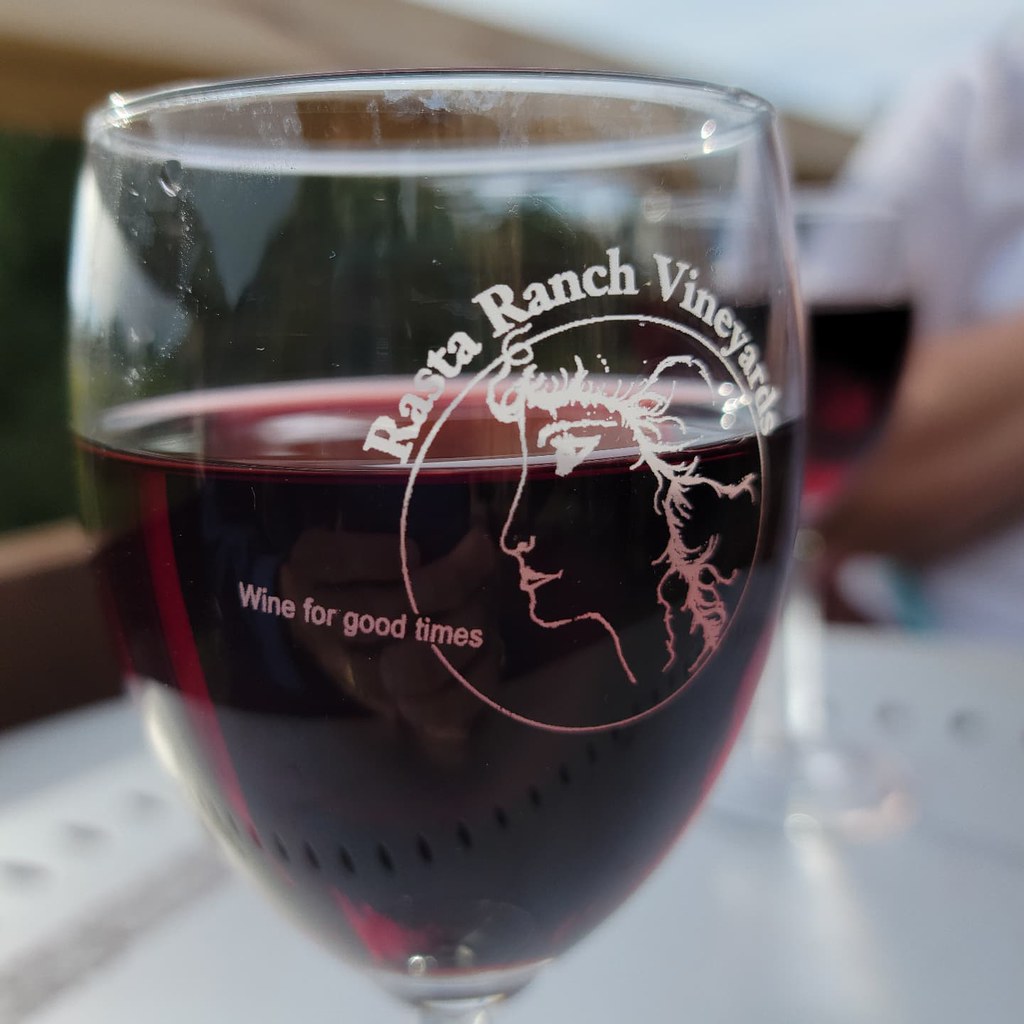
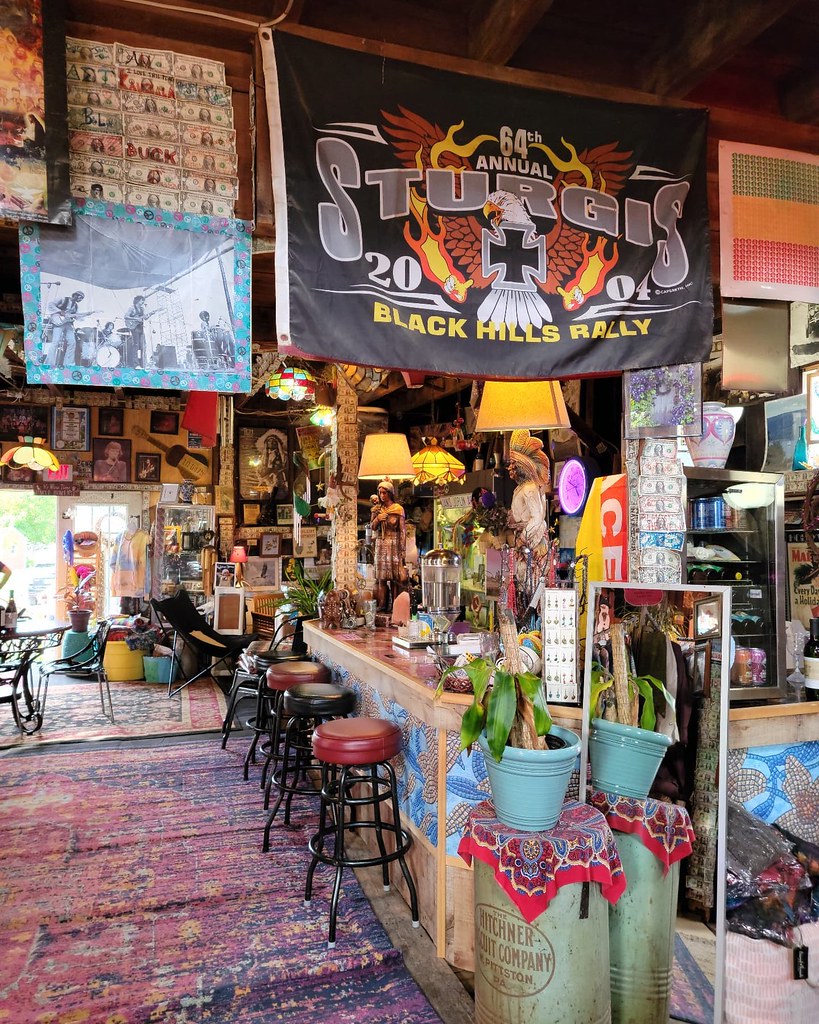
We passed a few hours in Ithaca and then had to strike out for home. We made one more stop, this time driving across the rise to the west of Cayuga Lake and into the valley of the next lake, the mighty Seneca Lake (largest and deepest of the Finger Lakes). Here we stopped at Rasta Ranch Vineyards, another favorite place of ours. This place is steeped in hippie vibes, with wines called things like “Uncle Homer’s Red” and “Terry’s Teaser”. Rasta Ranch is a joy, and here we pretty much wrapped up the “tourist” part of our day.
After this? Well, a sunset drive along the eastern shore of Seneca Lake, and then dinner at a fried chicken joint in Geneva (sadly they were out of bone-in chicken, so we had popcorn chicken), and then a stop at Trader Joe’s in Rochester for various items. And then…the trip home.
I’m always sad when we get home from a trip, any trip, to the Finger Lakes. The whole region always feels just slightly off-the-beaten-path, just slightly forgotten. It’s an entire region that still rolls along, probably with less money and fewer people than in days long gone by, but the bones are still there, and so is the wonder and the beauty. In fact, maybe some of that decay has even helped in some way: the old railroad tracks where the trains don’t run are a part of the landscape now. A long-abandoned army depot, which happens to house a herd of white deer because their population is protected by old fences. Occasional Amish folk in their buggies. The feeling of cresting a hill, leaving a lake behind you…but there’s still another one ahead.
Maybe it’s time for me to write that sequence of stories set in the Finger Lakes, after all….
Some nifty stuff in the pipeline–I’m not going to keep ignoring Richard Strauss, now that I’ve opened him up on this series–but for now, a favorite potboiler by Tchaikovsky, a man who certainly knew how to compose the kinds of potboilers that kept audiences pleased while he worked on his more serious work.
There’s not a whole lot to say about this work, musically. It’s pretty much a collection of tunes, but orchestrated by a genius. There’s a lot to be said for works in which great composers collect some tunes.
This piece also happens to have be a favorite of my father’s. He particularly loves the dance-like central tune. And as a former trumpet player, I’m eternally sad that my trumpet-playing career never gave me the opportunity to play the part that happens around the 8:00 mark in this recording! Trumpet players LIVE for those brief moments to shine.
Here is Capriccio Italien, by Peter Ilyich Tchaikovsky. Daniel Barenboim conducts the Chicago Symphony Orchestra.
The Wife and I made our annual trek to Ithaca and the Finger Lakes this weekend. Our trip was timed a bit oddly and was truncated by a day, because of Reasons; usually we stay two nights in a hotel near Rochester, leaving Friday and spending Saturday trekking through the FLX region and Ithaca before returning to the hotel and coming home (at a leisurely pace) on Sunday. We usually attend the annual Apple Harvest Festival in Ithaca, but this year the folks in Ithaca took a rather long time in announcing the dates for the festival (or if they were even having it at all). We took a gamble, booking our trip for this weekend, since the Apple Fest is usually either the last weekend in September or the first in October, waiting as long as we could to nail down our price. And wouldn’t you know it: right after we booked, Ithaca announced next weekend as the Apple Festival.
Oh well. Win some, lose some, and all of that. It’s not really that big a deal! I know that the COVID pandemic has made it difficult for towns to plan things like annual festivals, and we had a good time nevertheless. It was a stunning weekend for weather: it had been annoyingly hot and humid until the beginning of last week, when it turned dreary and rainy for the better part of three days. By Friday, though, when we set out on US 20A heading east? Blue skies and cool breezes, and it’s been that way ever since.
And even though we missed out on lunch at our favorite joint in Ithaca on Saturday (apparently they’re closing at 1:00 and we got there at 1:20, having not even thought to check their hours for staffing-related changes), did we ever eat well.
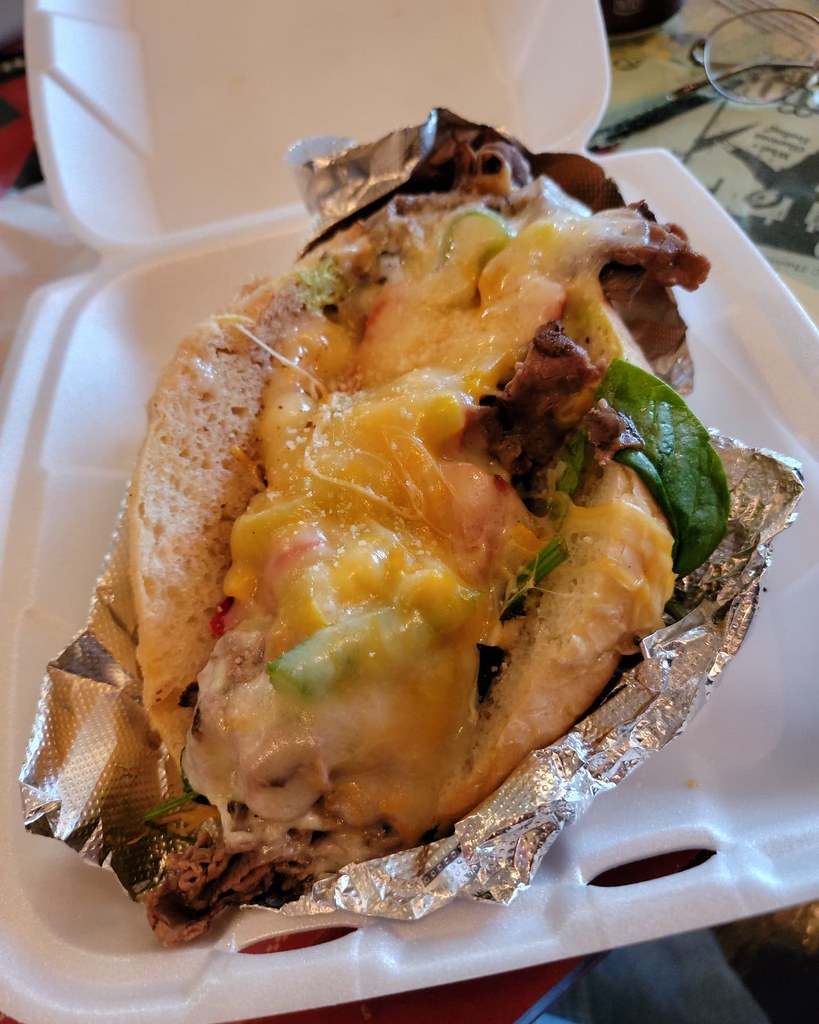
It started at the Broadway Deli in Lancaster. Behold this cheesesteak sandwich!
And for dinner that night? A visit to PF Chang’s. Yes, it’s a chain joint, but not all chains are bad. PF’s puts thought into what they do and it’s always a delight to eat there.
The next morning we headed out, bright and early, looking for breakfast. We found it in someplace new: Macri’s Deli in Canandaigua, which has a nifty selection of breakfast sandwiches and they also make them gluten-free. The place is right on the city’s municipal pier, right on the water, which made eating there an absolute joy.
(This phone does panoramas!)
Our next destination was the Goose Watch Winery on Cayuga Lake. We discovered this winery last year and liked it so much we had to return.
(Note The Wife, eyeing my wine because she hasn’t been served hers yet!)
I’ll stop here for now, but the day wasn’t even close to being over at this point. Stay tuned!
Normally I don’t post on Sundays much, but…well, today’s my birthday. I am now fifty.
Here’s what fifty (minus two days, since I took this two days ago) looks like:
Not a lot different, huh?
So, how does fifty feel? Well…so far, not a whole lot different from forty. A bit stiffer, a bit achier, a bit…longer. Mentally, it’s OK. I still have tons of interests and tons of things I want to do, places I want to see, stories I want to tell.
Introspectively, I suppose…geez, I don’t know. Is this the life I saw myself living twenty, thirty, forty years ago? Not even close. Is that bad? Not really, though in all honesty, as much as I generally avoid thinking about roads not traveled, I do find myself wanting my college decision to leave music behind back, more than any other decision. Everything else, I’m mainly fine with, at least as far as things that have happened over which I had any control. The worst things are the things I had no idea were coming, and I expect that’s true of most people.
So, anyway, that’s my introspection on turning fifty. Check back in ten years for sixty. Maybe then I’ll stop thinking mostly like a twelve-year-old sci-fi geek. More like…thirteen!
Here’s the thing: I’m fine with wearing a mask. As in, I’m genuinely fine with it. Not only does wearing one not bother me, but…I honestly kind of like it.
The discourse on masks has mainly centered on their use being a mutual-protection kind of thing, which is absolutely true, and I have a whole lot of things to say about the degree to which this particular pandemic crisis has really exposed the degree to which a deeply depressing percentage of Americans simply have no investment in being parts of a larger, functioning society. Many see masks as just one more battlefield on which they can fly their “Don’t tread on me!” freak flags, but even as full of shit as that is, I have to note that I don’t much like the usual response:
“Hey, I hate wearing this thing, too! It sucks! I hate breathing through it and it makes me all sweaty and gross but I grit my teeth and do it because I’m a part of society!”
And hey, if you really really really hate wearing the mask, that’s your opinion. Like anything, it gets uncomfortable after a long enough time. The most comfortable underwear in the world reaches a point after the twelve-hour mark that…well, let’s just let that thought finish itself, shall we?
But for me, I can honestly report that from the vantage point of having been wearing a mask for close to a year and a half, it doesn’t bother me much at all to wear it for a length of time, even for most of my work day. I can breathe just fine. I don’t find that I’m getting any sweatier than usual, except for maybe when I had to do work outside on the really hot days of summer, and in that case, I have to be honest, it’s not as if the mask is the major factor in my general discomfort. In truth, I get to the point now where I forget the thing is even on my face to begin with. There have been moments when I lift my coffee mug to my mouth only to forget that I have to lower the mask to sip the stuff.
And we’re coming out a hot summer, but with cooler weather coming, let me say: masks rule when it’s cold out! I don’t have to wrap the scarf around my face when it’s cold, if I’m wearing a mask. This is huge. I remember being outside on windy days last winter with my mask on, and I never had the dry, chapped, wind-burned lip thing going on.
The other anti-mask thing I hear a lot is some variant of “Now I can’t see if you’re smiling!” or “I can’t tell what facial expression people are making!” And I’m, well, meh on that. As a longtime sufferer of “Resting Bitch Face” (that term sucks, by the way), the last 18 months of masking has been a deeply refreshing break from hearing “Smile!” or “Wow, you look really angry!” (when I’m almost certainly thinking along the lines of “Do I want a turkey sub or pizza for lunch today?”), on an almost daily basis. Our society’s insistence on performative perma-grins has bothered me for years, and the fact that so many of us find ourselves completely unsure of what to do with a person who isn’t SMILING CONSTANTLY is illustrative of a pretty superficial culture. The mask has been something of a leveler in that regard: you have to look people in the eye and listen to their words, their tone, and actually think about your interactions. I love that, and I also love that we’re not beating poor exhausted retail clerks and restaurant workers over the heads if they’re not smiling like we’re their long-lost cousin from Sheboygan.
Now, it did take me a bit to solve a few issues related to masks. My glasses did tend to fog up, but that problem went away when I insisted on getting masks with wire in the upper seams, so I could form the mask to the bridge of my nose; now, my glasses almost never fog up. One issue that I haven’t quite stomped out is related to my progressive lenses: a mask will, at times, push my glasses up slightly on my nose, which means that the lenses don’t quite line up anymore with my normal way of looking through them. This results in some occasional blurriness and now I’m reaching up to adjust my glasses pretty frequently as a habit. Not a bothersome thing, but it’s there.
I also decided very early on that masks with ear loops just irritate the hell out of me. This is a “Your mileage may vary” kind of thing, but the flesh behind my ears gets downright sore after a short while of this. There are some workarounds: some folks sell extender things that you can hook the loops to instead of your ears, but I’ve switched entirely to masks with loops that go around the head. In terms of comfort, this is far superior. The only issue there is a bit of finagling to get the mask cord to not interfere with my earbuds on the rare occasion that I’m wearing them with the mask.
So, in conclusion Your Honor: No, I don’t hate masks and I rather hope that they don’t become another “Hey, remember when” thing once COVID is in the rear-view mirror. (Of course, it won’t be in the rear-view mirror in the way that, say, smallpox is, because of reasons.) Hooray for masks!
Autumn is here! And almost like flipping a switch, we went from warm temperatures in the 80s for the last few days to high temps that are unlikely to rise above 70 for the better part of a week. This comes not a minute too soon, to be honest: I am long-since on record for preferring autumn over the other seasons, and that is unlikely to change any time soon.
There’s an old popular song called “Autumn Leaves” that has been covered and recorded a whole lot of times, including this setting for string quartet by the great Japanese composer Toru Takemitsu. Bring on the fall!
Mr. Tolkien was good enough to assign the birthday of two of my favorite fictional characters to the day when Autumn, my favorite season, generally starts. There’s poetry there, I think.
Has anyone noticed that in all the time I’ve been doing Tone Poem Tuesday, I have never once yet discussed any of the works of the composer who is not only best known for his tone poems, but who is actually best known for being the greatest composer of tone poems? I’ve been holding this composer back because aside from a handful of other works (which are also great, such as his operas, his songs, and his horn concertos), this composer is so synonymous with the tone poem that he actually overshadows just about everyone else in this rich, rich form of music.
But, I can’t keep him on the bench forever, so: at long last, let us grapple with Richard Strauss.
Strauss was the last of the line of German Romantics who reached their thundering apotheosis in Richard Wagner. Strauss’s life was long, spanning from 1864 to 1949; he saw the end of German nationalistic Romanticism, the rise of Modernism, and his own reputation falter as musical tastes changed and as he made his own regrettable political choices during his last two decades. Strauss did not actually join the Nazis, but neither did he exactly repudiate them. This might be seen as the sad choice of an old but beloved artist who was reluctant to turn away completely from his homeland, but still…the fact remains.
As an artist, Strauss’s work pushed Wagnerism about as far as it could go without crossing the line that the likes of Arnold Schoenberg would. Strauss’s music, at its best, is profound and evocatively lyrical. He wrote massive orchestral music that still shines with utter clarity in the orchestral writing; his textures are never muddy, never unclear, even when he is clearly indulging himself. Strauss is a great enough artist that his descents into self-indulgence are nevertheless captivating in their enthusiasm. Strauss’s skill at conveying scenes through orchestral tone-painting will be appreciated by anyone with a love of film music, where a lot of his influence can be felt, especially in the work of Korngold, Steiner, Waxman, and Rozsa.
Going back to my high school years, when I was doing my first major explorations of classical music, I entered the world of Richard Strauss not at the beginning of his career, but toward the end. (Some composers I entered through their early works, like Berlioz and the Symphonie fantastique, while others I entered through late works, like Mozart and his 40th Symphony or Beethoven with his 9th.) I knew that Strauss had written a series of works called “tone poems”: not symphonies, not concert overtures, but large scale symphonic works with form determined on an individual basis depending on the composer’s need. The first one of Strauss’s that I heard, via a cassette recording I bought pretty much on a whim (my allowance in those days mostly went to comic books and classical recordings), was a piece called Eine Alpensinfonie. This, I learned, was actually the very last of Strauss’s tone poems. Though he would live another thirty-four years after writing it, and though he would write a great deal of music in that time, never again did he write a tone poem.
Eine Alpensinfonie–“An Alpine Symphony”–is also not generally viewed as one of Strauss’s truly great tone poems, and there is reason for that. It’s almost entirely intended as pictorial music, and the focus is generally on orchestral pyrotechnics. Aside from a few introspective passages, Eine Alpensinfonie is almost entirely a showpiece. There’s a reason why, for a work not generally viewed highly by critics, a recording of Eine Alpensinfonie ended up being the work used on the very first test pressing of a compact disc. (That recording was by Herbert von Karajan conducting the Berlin Philharmonic, and by coincidence it ended up being one of the very first compact discs I ever owned. It only had one track, comprising the entire work. All later recordings separate the work into tracks, played without break, comprising the piece’s twenty-some sections.)
Eine Alpensinfonie is wildy Romantic, thrillingly dramatic, and massively orchestral. It also has moments of melodic grandeur that utterly soar, which is almost entirely why I love it: listening to it is an experience, and since despite the critics it has remained steadily performed and recorded for over a hundred years, I think it’s time to finally grant that it is, in any useful sense of the word, a classic.
“That’s great, but what is it about?” You might be asking…and you’re right to ask! Eine Alpensinfonie is simply a 50-minute musical depiction of a journey up an Alpine mountain peak, over the course of an entire day. The work opens with hushed tones and descending minor scales followed by soft churnings in the bass; a minute or so in we hear, in the low brass, the motif that will represent the mountain. As the orchestra slowly begins mustering its strength (in a passage that is spiritually connected with the opening of Wagner’s Das Rheingold, and its depiction of the Rhine’s deep dark waters), eventually everything culminates in a magnificent passage that is so gloriously resplendant that one almost doesn’t even realize that all Strauss has done is orchestrated, in grand fashion for full orchestra thundering fortissimo, a descending major scale.
What follows is a sequence of segments depicting various aspects of a climber’s ascent up the mountain: The ascent (note the offstage hunting horns), treks through forests and beside wandering brooks; scrambling over rocks beside a waterfall (the music actually glitters here); passages through flowering meadows and Alpine pastures (note the cowbells, inevitably making one wonder if the conductor asks the orchestra for more–well, you know); tense moments as the climb becomes more difficult; and then an introspective passage before we break through to the work’s grandest moments, depicting the acheivement of the summit. O, to be a brass player in the orchestra during this passage!
After the summit, the music takes on a darker tone as our climbers begin descending. The darkness is gathering, with good reason: the last big bit of musical theatricality that Strauss has in store is the “Thunder and Tempest” segment as a wild storm takes over. Here Strauss goes so far as to supplement the orchestra with a wind machine. After this, calm is restored and the sun returns, but the music grows quieter and quieter and quieter over as night settles. The entire work ends almost exactly as it began: descending soft scales, and the mountain’s motif plays once more before the final chords fade away.
Obviously Eine Alpensinfonie is not a symphony in any traditional sense. Strauss is not the least bit concerned with symphonic development or treatment of musical ideas here; the music is pure show from one of classical music’s great showmen. But really: what a show it is, and surely there’s room in our lives for pure theater, right?
Here are three recordings of Eine Alpensinfonie by Richard Strauss. The first is a magnificent classic performance, released in 1974, by the Staatekapelle Dresden, conducted by Rudolf Kempe (one of the finest Strauss conductors).
This recording, featuring Herbert Blomstedt conducting the San Francisco Symphony, may be the most technically perfect recording of the work I’ve ever heard. (Admittedly, Eine Alpensinfonie gets recorded a lot, because it’s so popular a showpiece; for all the recordings I’ve heard of it, there are many more I haven’t tried yet!)
Finally, here is the recording that got my attention in the first place, way back in, I don’t know, 1988 or so. This is Sir Georg Solti conducting the Bavarian Radio Symphony Orchestra. Many “Oh, wowwww” moments in this recording. (This is digitized from vinyl, but it’s a pretty high quality record, and it provides a neat demonstration of a particular problem that used to vex recording engineers back in the days of LPs and cassettes: how to accommodate long works on recording media that had two sides, neither of which could support the length of the work in question. The answer is simple: you have to split the recording in two, requiring the listener to flip the record or the cassette somewhere in the middle. Obviously this isn’t ideal, but it simply could not be avoided. In this case, those recording engineers managed to put the side-flip in a very logical place, musically. You can actually hear the brief gap in this recording, but it’s so well done that you have to know it’s there, almost.)