So there’s been an intermittent problem with WordPress sites hosted by Ionos, of which this site is one. And the intermittent problem has, in fact, affected this site! Yay!
What happens is that only the front page loads, and nothing else. If you try to load a specific post or go back in the archives, you’ll get one of those “This Domain Is Owned By Someone” screens. So far I’ve had this happen twice and both times the tech whizzes at Ionos fixed it in minutes, but I’m told today that this is a larger issue that Ionos admins are working on solving, so I have to assume it might happen again until the full repair is made.
If you notice that you can’t load a specific post, or the archives go nowhere, please let me know and I will contact Ionos Support as soon as I can.
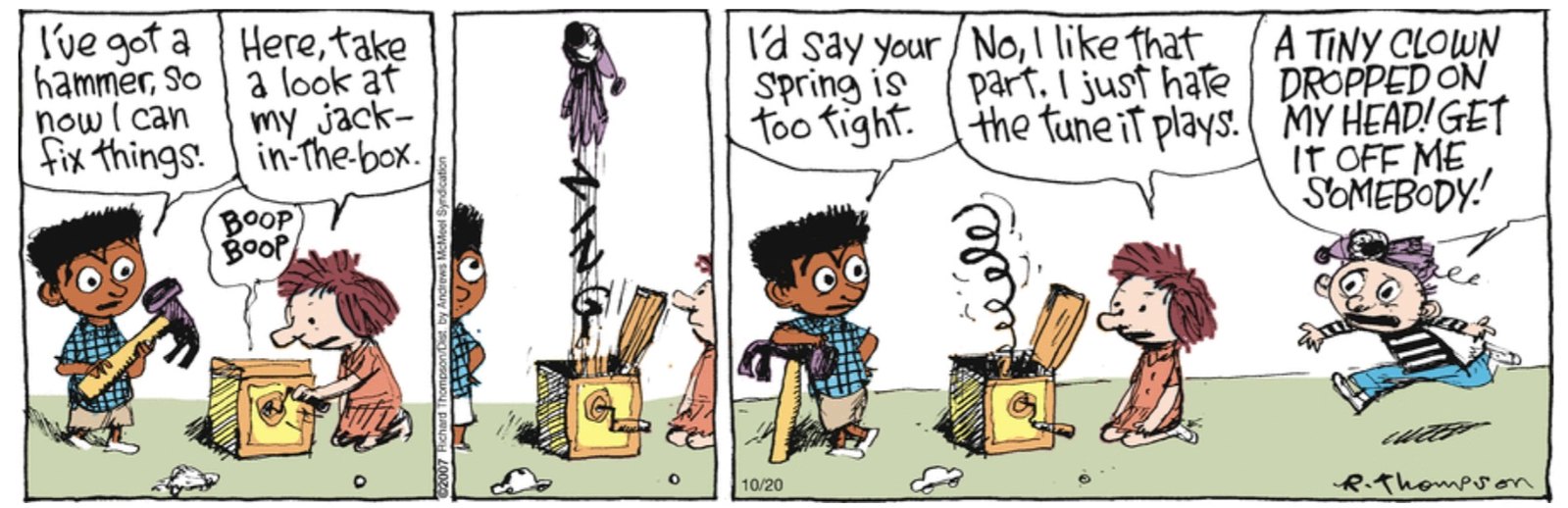
(Maybe this is my problem…I always skip the exploratory taps….)
Sticking with Alfred Schnittke, to whom I introduced myself last week, we have extracts from a film score of his. The Story of an Unknown Actor is a Soviet film from 1977 for which Schnittke provided the music. I have turned up very little information about the film at this point, save its year and its director, one Aleksandr Zarkhi. I’m wondering if the film isn’t best known now precisely for its score by Schnittke, which has shown up on several recordings.
The score is mainly monothematic, as far as I can tell, but the arrangement here into a series of extracts casts it as a theme-and-variations work, and it ends up being a fairly interesting listen, particularly when Schnittke does different things with his orchestrations. Even in an obscure score to a very obscure film from a nation that no longer exists, Schnittke is an interesting composer.
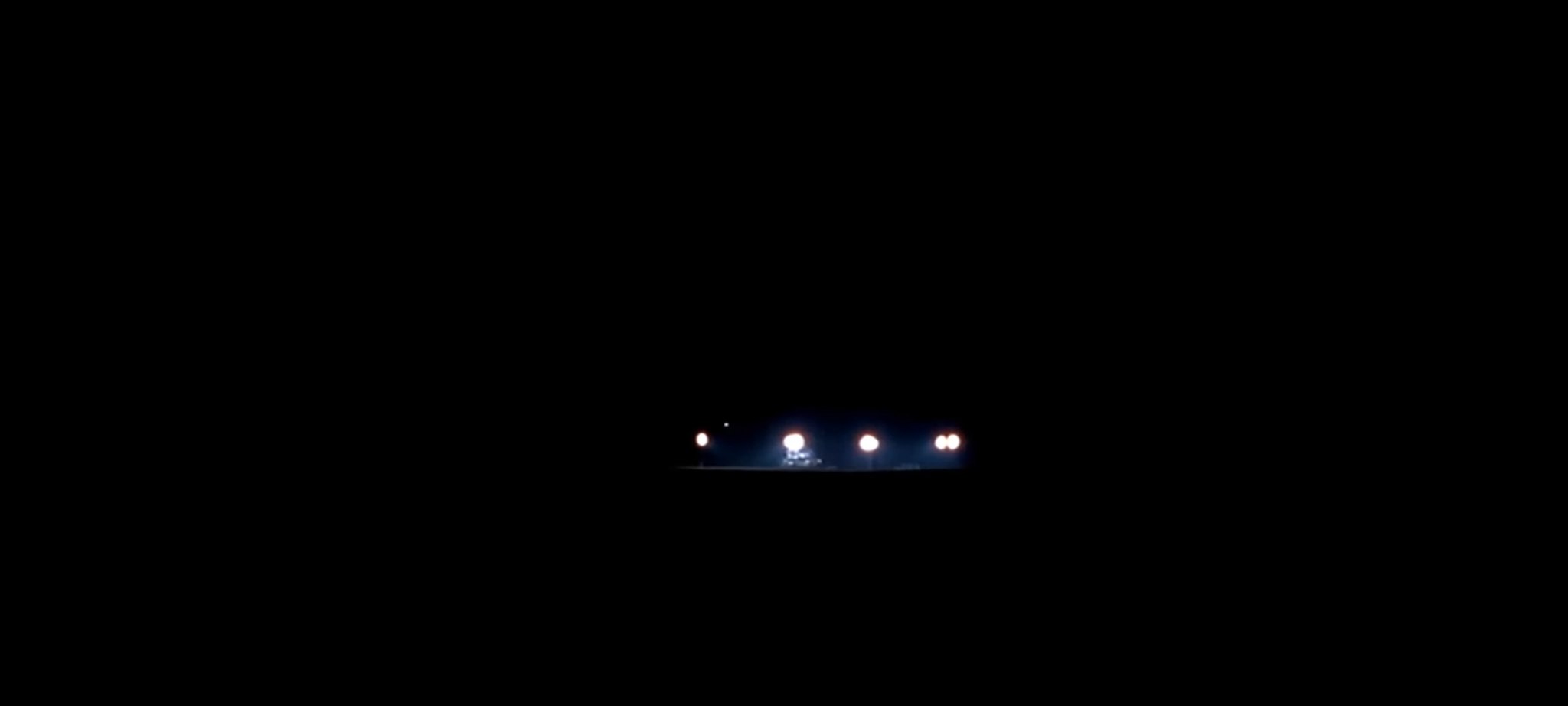
I saw this on County Executive Mark Poloncarz’s Twitter feed this evening. It’s a beautiful shot of post-sunset over downtown Buffalo. Our city has sunsets over water. Just like Waikiki! (I know that this is a reach…but really, our sky does beautiful things.)
Interesting article about the proliferation of numerical analysis for just about everything these days:
Smarties approached baseball like an equation, optimized for Y, solved for X, and proved in the process that a solved sport is a worse one. The sport that I fell in love with doesn’t really exist anymore. In the 1990s, there were typically 50 percent more hits than strikeouts in each game. Today, there are consistently more strikeouts than hits. Singles have swooned to record lows, and hits per game have plunged to 1910s levels. In the century and a half of MLB history covered by the database Baseball Reference, the 10 years with the most strikeouts per game are the past 10.
On another note, I should write a post sometime about the movie Moneyball, which is a fascinating sports movie from the standpoint of the front office, a good piece of evidence for my belief that Aaron Sorkin is at his best when he’s paired with another writer to neuter his more annoying quirks, and also an interesting case study in how to not manage.
:: A post about the title song from the movie That Thing You Do!, the wonderful 90s flick about what happened when a bunch of teenagers from Erie put together a garage rock band and ended up being a national one-hit wonder. The film was directed by Tom Hanks, and he directed it very well, which is why I’m often surprised to think how he never really pursued directing much at all after this one. Maybe he just didn’t want to. That’s fine!
As for the song, though, I did not know that it was written by Adam Schlesinger, the brilliant songwriter who was behind a lot of the amazing satirical songs that formed the backbone of Rachel Bloom’s masterpiece series Crazy Ex-Girlfriend. Schlesinger, sadly, died at the too-early-age of 51 in the first wave of COVID-19.
Oh, here’s the song, if you don’t remember it. It got quite a bit of airplay in the 90s when the movie was a thing:
When Jeri Lynne Johnson made it to the finals of an orchestra tryout in California and didn’t get the job, she didn’t think much of it.
“It happens. It’s like dating — you kind of work or you don’t,” says Johnson of the chemistry that gets tested when a conductor stands before an orchestra for the first time.
But when Philadelphia-based Johnson asked the head of the selection committee what she could have done differently, “He said, ‘We just didn’t know how to market you. You don’t look like what our audience expects a maestro to look like.’”
Orchestra conducting has been the almost entirely-exclusive bastion of white men for just about the entire two century period that the job has even existed. Woman conductors have only started breaking through into the mainstream in the last couple of decades. Black conductors? Imagine that quote above: “We didn’t know how to market you.” Why not…as a thrilling and exciting musician? The same way you market every new conductor who takes a music director position with an orchestra?
My God, we have so damned far to go.
(Classical music’s racism is often obvious, but it’s also worth noting the crustacean-like resistance to change at all in the genre and in people who follow it. I remember attending a Buffalo Philharmonic concert some years ago where the first half of the program was a modern work, and the second half was a Beethoven piano concerto. At intermission I heard the old ladies behind me saying things like “At last, now we get to the good stuff.” I can hear them now, exiting the concert hall after a Black conductor has led a performance of, oh, Brahms’s Third: “Well, I like Brahms, but I suppose he’s woke now.” Ugh!)
If that sounds confusing–and it did to me at first, too–it’s referring to fictional writers who also end up being detectives, like Richard Castle of my once-beloved show, Castle. (Who is on the list, by the way. He’s not Number One. If you’re wondering who Number One is, I won’t give it away, but it’s really kind of obvious, especially considering recent events.)
I, myself, have never been much for the notion that people are to be automatically afforded massive amounts of deference and respect because they have simply managed to amass some large amount of wealth. But in this country, I am in a distinct minority in this viewpoint, I think.
That’s all for now. Time to start letting the tabs pile up again!
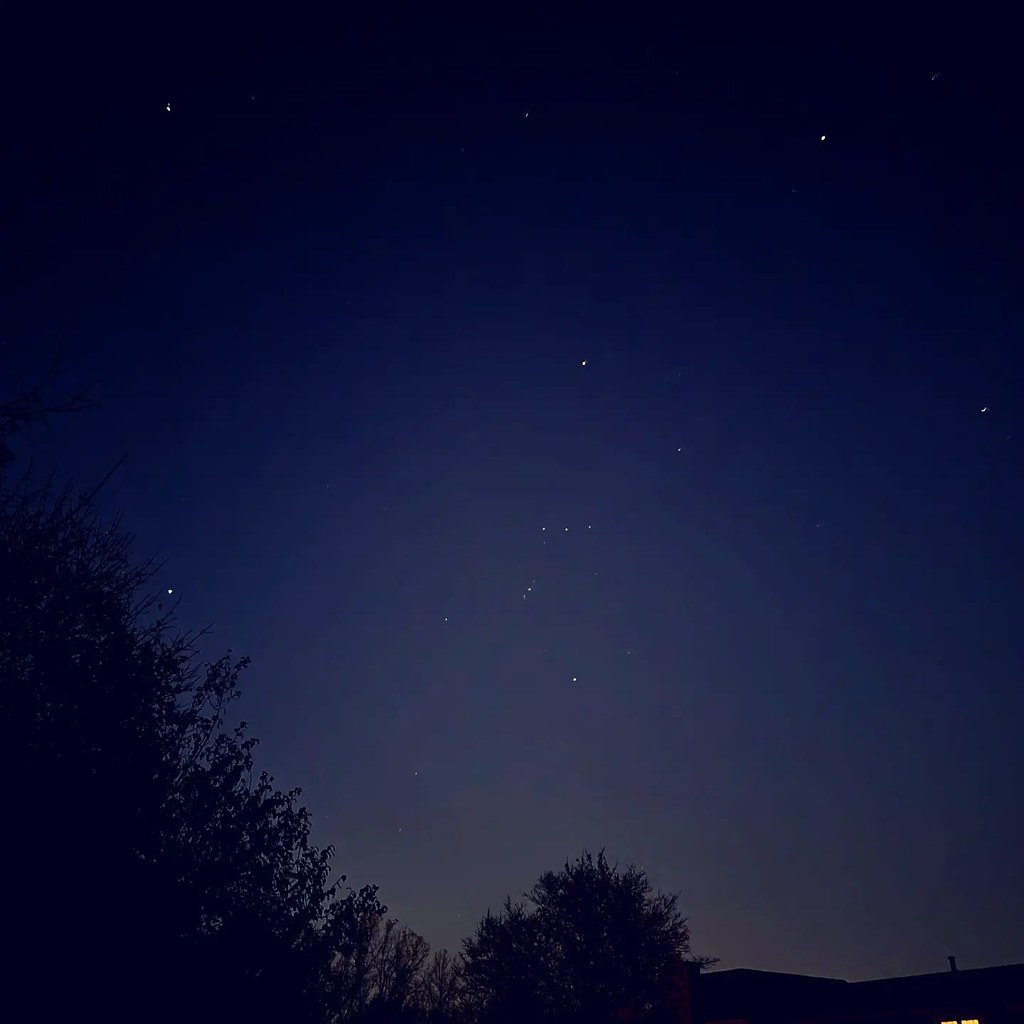
My favorite constellation has almost always been Orion the Hunter–and I only hedge on this just a bit, because maybe there was a point when I was in first grade and just starting to learn about constellations that I preferred the Big Dipper or some such thing.
Orion is a winter constellation, and it always starts showing up in my sky around the mid-point of autumn–that is to say, it shows up at a time when I can see it around that time. It’s possible that Orion rises first at midnight or something…I don’t really know. All I do know is that the other morning I left for work and it was early enough that the stars were still visible. I glanced southward…and there was the Hunter.
And here he is, in all his glory!
By the way, I hope that once in a while you take time to stop and reflect on the fact that most of us now carry around a device on a mundane basis that is capable of astrophotography. That’s kind of amazing, isn’t it?
A long and busy day with no time for thinking about posting means, as always, that when I get home I throw up a quick post with an overture by Franz von Suppe.
This time I’ll change it up a little, though: no orchestra this time! Just a pianist, playing the Poet and Peasant Overture.
Luckily, I have a surplus of USB-C cords for just such an occasion.
(Not that anyone asked, but my favorite brand for such items is Anker. I have several of their bluetooth speakers, their bluetooth earbuds, two of their portable chargers, and a whole bunch of their cords.)
One of the eternal questions in relating to art is how to separate one’s feeling for the art from one’s feelings for the artist. This is not the least bit new; it’s a problem that is probably as old as art itself. There have been so very many artists whose own lives and statements fall well short of the art they produce. I find myself thinking anew, as one of the oldest and yet most irritatingly persistent of hatreds, anti-Semitism, just keeps arising again like the very worst of pennies, of Richard Wagner.
You can barely read a biography of Wagner that covers the man’s life in any depth beyond “He was born in 1813, died in 1883, and wrote operas” without confronting what a staggering boor he was, a fact which…
…[shit]…
You know what, to hell with that. I love Wagner’s music, but I don’t want to write about Wagner right now, not when my country’s discourse is once again mainstreaming awful crap about the Jews again.
Let’s talk about Jewish composers instead. We’ll start with Alfred Schnittke.
Schnittke, of whose music I am mostly ignorant, was a Russian composer of Jewish and German ancestry. I’m sure that particular blend of ethnicities and nationalities made for some strife in his life. He was born in 1934 in Russia, and started his musical education in 1946, after the war and after the Holocaust. Not long after, he moved along with the rest of his family back to Russia, where he lived for most of the rest of his life. Thus he had to toil in the air of state control that was the artistic scene in Soviet Russia, until he finally left for good in 1990. Schnittke died in 1998.
His music–and I am going on reference here, rather than my own personal insight–is influenced early on by the great Soviet composer Dmitri Shostakovich, but later on in his life, as great artists do, he developed his own sound and voice. It’s a voice I know little about. So many voices to hear, so little time!
This work is a ballet called Sketches. In a sequence of twenty-two short pieces, Schnittke puts on display a great deal of sardonic wit, seemingly poking fun at the entire proceedings. He even goes so far as to quote or reference other classical composers along the way, and his use of rhythm and color are infectiously amusing. One of the segments even utilizes a spoken-voice part, which threw me off the first time I heard it; at first I thought one of my other open tabs had stumbled upon a voice recording.
Here is Sketches by Alfred Schnittke.
Share This Post
ForgottenStars.net
The official site of Kelly Sedinger: Reader, writer, photographer, and dreamer