
It’s December, so here we go with our daily roundup of Christmas favorites old and new!
Your Daily Dose of Christmas!
Your Daily Dose of Christmas
Your Daily Dose of Christmas!
Your Daily Dose of Christmas!
Every December when the Trans Siberian Orchestra brings its Christmas show to town, there’s some inevitable scoffing at the thing. A lot of it ends up taking the form of “You know that they’re just a hair band, don’t you?” My response is always, “No shit! Of course they’re a hair band! Why should that matter? We have country Christmas music, and jazz Christmas music, and classical Christmas music, and Celtic Christmas music, and so on. Why shouldn’t the hair bands of the world get to do Christmas music too?”
So in that vein, I searched out some “Heavy metal Christmas music”, and here is a small sampling of what I found. If you ever went through a “Hair Band” phase, this is some fun stuff.
Share This Post
Your Daily Dose of Christmas!
Your Daily Dose of Christmas (LOVE ACTUALLY edition)
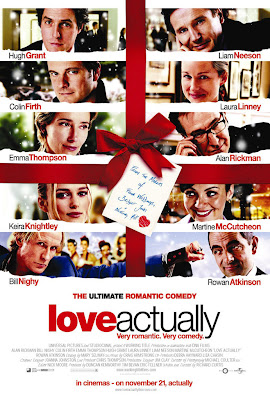
This Christmas season I’ve seen a number of think-pieces online about “Why [Your favorite Christmas thing here] Actually Sucks”, and I’ve seen several of them devoted to one movie in particular: LOVE ACTUALLY. And hey, whatever floats your boat and all, but I still love the movie. First a couple of musical selections from the film, and then the text of the post I wrote years ago in which I waxed poetic about how much I love the film.

—
So. Love Actually. This is one of my favorite movies, so I’m going to wax poetic about it for a while (with spoilers, by the way). Some people watch A Christmas Story and It’s a Wonderful Life at Christmastime; for me it’s My Fair Lady (which I haven’t watched yet this season) and Love Actually (which I have). The other day Mrs. M-Mv posted her own appreciation of the movie:
I know that many folks dislike this film — too long, too sentimental, too… something. Everyone has a suggestion for a storyline that needs to go or a character that could be deleted. Even Roger Ebert: “I once had ballpoints printed up with the message, No good movie is too long. No bad movie is short enough. ‘Love Actually’ is too long. But don’t let that stop you.” [Emphasis added.]
I, on the other hand, think the pace, the narrative, and the characters are practically perfect in every way. Moreover, I think the film wears well: I’ve seen it at least six times since it was first released — more, if you count all of the partial viewings — and it’s funny, sweet, and effective each time.
That’s true, isn’t it? I have yet to read a critique of this film that fails to mention the “fact” that it is just too long of a movie. Heck, even the movie’s director, Richard Curtis, seems to feel that it’s too long; in his filmed introductions to the deleted scenes on the DVD, he says something along the lines of “Well, the original cut was three-and-a-half hours long, so if you think the two-and-a-quarter-hour version is too long, it could have been worse.” But I heard that and thought, paraphrasing the movie’s Prime Minister of the United Kingdom, “Who do I have to screw around here to get to see the original cut?” I’ve never found Love Actually too long; in fact, it’s one of the rare films that leaves me wishing I could spend more time with these characters, in their world.
I want to know if Harry and Karen repair the damage to their marriage that Harry caused with his near-miss of an affair.
I want to know if Sarah ever gets another chance with Karl, or if she ever manages to find love in a way that still allows her to care for her brother.
I want to know how the PM’s relationship with a staffer turns out.
I want to know if Mark ever finds love after his impossible crush on Juliet plays out.
I want to know how Sam and Joanna fare as kid loves, and how Daniel and Carol make out as a potential couple.
I want to know if Colin ever matures beyond his need for impressive sex with American girls.
And I’d love to see a biopic of aged, battered old rocker Billy Mack, who late in the movie admits that his life, though lonely, has been a wonderful life.
Few movies seem as full of real people, to me, as Love Actually. That’s a testament, really, not just to the writing, but the entire production, because the movie by its nature has to rely on its actors and editors to make the whole thing really come to life. Since each story in the movie is basically told in miniature, each cast member is put in the position of having to knock each scene out of the park. Luckily for the movie, they accomplish this.
So no, I don’t think Love Actually is too long; not even close. And I think that beneath its exterior, which makes it look like the schmaltziest, mushiest romantic comedy ever made, the film is surprisingly insightful about how some relationships work when they’re based on love.
The film’s masterstroke is this: not everybody gets a happy ending. And, thinking about it, you realize that the movie is aware of an even deeper truth: that nobody gets an ending at all, save one, and that’s the big ending, the one that really ends everything.
When we first meet Daniel (Liam Neeson) and Sam (Thomas Sangster), they are at the funeral for Sam’s mother (and Daniel’s wife). [Daniel is actually Sam’s step-father, which raises other questions about Sam’s life: has he already lost one parent, or were his parents divorced with his mother then marrying Daniel? We never learn, and for the purposes of the story in Love Actually, it really doesn’t much matter.] Daniel is devastated, as is Sam, but it soon turns out that Sam’s got another problem of his own: he’s in love, probably for the first time in his life, with an American girl in his school who doesn’t know he exists. When Daniel finally gets this out of Sam, shortly after the funeral, it’s in a scene where the two are sitting on a bench, and Daniel finally appeals for Sam to tell him what the problem is, even if he can’t help the boy. We’re as surprised as Daniel is when Sam bluntly states, “Well, the truth is, I’m in love.” Daniel and Sam spend much of the rest of the film, when they’re onscreen, working out the details of how Sam can win Joanna’s heart. It’s a beginning that only comes out of a horrible moment of ending.
Harry (Alan Rickman) and Karen (Emma Thompson) are middle-aged married folks. Harry is the boss of what appears to be a non-profit or something like that; Karen is the housewife who basically keeps everything at home going, doing the cooking and cleaning and making the lobster costume for their daughter who has just been cast as First Lobster in the school’s Nativity play. (“There was more than one lobster present at the birth of Jesus?”) Their marriage seems staid and dull, but not unfeeling; even so, Harry finds himself responding to the advances of his new administrative assistant, a comely young woman named Mia. They never have a physical affair, but Harry indulges the attraction to the point of buying Mia a gold necklace for Christmas, which Karen finds out about. When the film reaches its last scene, Harry and Karen greet each other somewhat warmly but cautiously, and nothing really is said of what is going on with them: are they divorcing? Was Harry away on business, or were they separated? Are they working on it, or is it ending? We don’t know.
And then there’s Mark, who serves as his best friend’s best man in a wedding at the beginning of the movie. His problem is that he is himself desperately in love with Juliet, the bride who is marrying his best friend. This is hard for him to cope with, so his way of compensating is to treat Juliet very coldly, to the point where she thinks he hates her – until she visits him one day, hoping to find some good footage in the videotapes he’d made of the wedding, and realizes that all he taped that day was her. Late in the movie this plays out in a fairly charming scene that could give pause, as Mark admits to Juliet his love for her. Was this the right thing to do? It’s tempting, I suppose, to say that he should never tell the wife of his best friend that he loves her, but I don’t see it that way. Mark knows that he owes Juliet an explanation, and he knows that he has to find a way to be around her and not act like an arse, and he further knows that there’s no danger that he’s going to be coming between his friend and his friend’s wife by doing so, because he knows them. Mark knows that Juliet is not going to love her husband one bit less, so he knows that what he’s doing is not a potential act of abetting adultery. His is an act of reconciliation, and as he walks away, he says to himself: “Enough. Enough now.” He’s put himself in a position to move on, and it’s a totally right thing for him to do, even though if someone else were to try the same type of thing, it might well be disastrous for all concerned.
The most notable unhappy ending, though, belongs to Sarah (Laura Linney), who works for Harry and has been in love with their office’s graphic designer, Karl, for “two years, seven months, three days, one hour and thirty minutes” (half an hour less than the time she’s actually worked in that office). Harry finally sits her down and tells her to do something about her crush on Karl, since it’s Christmas and apparently everybody in the office knows already. Sarah’s eyes light up briefly with the sense of possibility. The problem, though, comes in the person of Sarah’s brother, who is institutionalized with some unspecified mental illness. Sarah is the only one to take care of him, and she does, out of an intense sense of duty (their parents are apparently long deceased). Her brother calls her on her cell phone constantly, usually to talk about problems that she really can’t help him with, but she takes each call anyway – including two that come the very night she is finally trying to seize her chance with Karl. It’s an awful moment that she faces: the two are in bed, beginning foreplay, when the phone rings; Karl says, “Can you help him right now?”, and when she shakes her head, he says, “Then maybe you don’t answer it.” But she can’t bring herself to do this, and she answers, telling her brother that she’s not busy at all. The moment passes, and as far as this film goes, Sarah and Karl never get together.
Sometimes in our lives, our various loves come into conflict. The love people have for one another can’t be exercised because of the love they have for their children; or, as with poor Sarah, her love and desire for Karl – her desire for a life of her own, even – is pushed back because of her love and duty to her brother. One friend of mine hated the movie, mainly for this particular plot point, but I found it entirely realistic. I’ve known people who have made these kinds of choices in their lives.
Of course, I wouldn’t be so enchanted with Love Actually if the movie wasn’t so wickedly funny. There isn’t a scene with Billy Mack (Bill Nighy), the aging rocker, that doesn’t leave me grinning at the very least. There’s the wonderful moment when the Prime Minister has to literally go door-to-door looking for someone, at one point being exhorted by a trio of little girls who have no idea who he is to sing Christmas carols (the look on Hugh Grant’s face when the PM discovers that his own bodyguard has an amazing singing voice is priceless). There is one hilarious moment after another.
Lastly, Love Actually is a beautiful film. So much of the movie seems to actually sparkle, and the music is, for a typical selection of romantic-comedy music, mostly wonderful stuff, including two gorgeous love themes by composer Craig Armstrong.
As a conclusion, here’s the opening scene to Love Actually, with a brief monologue by Hugh Grant as the PM. Love actually is all around.
I don’t know of a scene that better sets the tone for what’s to come in a movie than this one — so much so that I almost want to turn off the computer and watch the movie again right now.
—
I stand by every word.
-KS
Share This Post

Your Daily Dose of Christmas!
One of these years I’ll make it to see a live performance of The Nutcracker. Until then, this can suffice:
Don’t have time for the whole thing? Here’s the Suite that Tchaikovsky arranged. I played this every year in college, and it’s one of few pieces of music that has a very strong time-and-place association for me.
Share This Post
Your Daily Dose of Christmas!
For some reason, this has been on my mind for a bit this year…and I’m not sure I’ve thought about it in years before that. It’s the first season Christmas episode of The Wonder Years. In this episode, young Kevin and his brother have united forces to try to get their parents to spring for their first ever color television set, while Kevin wonders what he should get Winnie Cooper for Christmas, after she has given him a surprise gift (which he doesn’t know what it is). Kevin waffles — he wants to get her perfume, but settles on a snow globe — and then he goes to give it to her, but she isn’t home. Her family has gone away, because this is their first Christmas since Winnie’s older brother died in Vietnam.
This is the episode’s final sequence. Sorry about the dodgy video, but…the point comes through.
Share This Post
Your Daily Dose of Christmas
You don’t often hear straight performances of “The Twelve Days of Christmas” these days, do you? It seems that every take on that song has to introduce at least some sort of comedic element, like the Johnny Carson version I offered the other day. But then it occurred to me that except for caroling singalongs, nobody ever does a straight-up version of “Twelve Days” anymore!
Examples include, of course, this one by Straight No Chaser, which gets tons of airplay every year:
And then there’s the Canadian Brass, with a version that should appeal to classical music lovers (especially brass players):
I heard this rendition — actually pretty much a new song, based on the original, with a dark twist — just last night on the radio:
Of course, you have John Denver and the Muppets, who don’t do much to “comedify” the song other than play up the personalities of every single muppet who participates. I appreciate this minimalistic approach to being funny!
It wasn’t always like this, though. For nice, straight renditions of Christmas songs, the go-to is almost always Mr. Crosby:
And finally, the mighty forces of the Mormon Tabernacle Choir and friends.