Film Quote Friday: Apollo 13

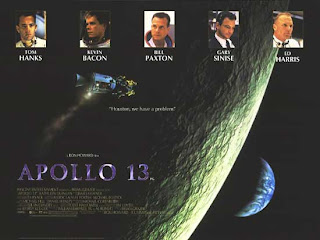
I know, I haven’t done one of these in a ridiculously long time! But here’s something, a favorite moment from a movie that I think is starting to border on being criminally underrated: Apollo 13.

The story is well known by this point, I hope; the moment I’m quoting here isn’t one of the more famous moments, but it’s an excerpt, in the movie, of an interview astronaut Jim Lovell had given before the Apollo 13 mission ever blasted off. It’s the type of wonderful scene that may seem at first glance like a bit of filler, but it establishes so much about the character of Jim Lovell that it’s really indispensible. And as it comes later on in the film, after the mission has already been deeply imperiled, this scene partially serves to assure us that this mission is still in good hands, and that this guy will pay attention and find his way home. Here’s the speech that Lovell (Tom Hanks) gives:

Uh well, I’ll tell ya, I remember this one time – I’m in a Banshee at night in combat conditions, so there’s no running lights on the carrier. It was the Shrangri-La, and we were in the Sea of Japan and my radar had jammed, and my homing signal was gone, because somebody in Japan was actually using the same frequency. And so it was – it was leading me away from where I was supposed to be. And I’m lookin’ down at a big, black ocean, so I flip on my map light, and then suddenly: zap. Everything shorts out right there in my cockpit. All my instruments are gone. My lights are gone. And I can’t even tell now what my altitude is. I know I’m running out of fuel, so I’m thinking about ditching in the ocean. And I, I look down there, and then in the darkness there’s this uh, there’s this green trail. It’s like a long carpet that’s just laid out right beneath me. And it was the algae, right? It was that phosphorescent stuff that gets churned up in the wake of a big ship. And it was – it was – it was leading me home. You know? If my cockpit lights hadn’t shorted out, there’s no way I’d ever been able to see that. So you never know…what…what events are to transpire to get you home.

Here’s how Hanks delivers it. I love his little conversational ah‘s and um‘s; most of all — and this is such a tiny detail to notice, but it’s just great — as he’s telling the story, he reveals what the ‘green carpet’ in the ocean was, and when says it, at the end of the sentence he says, “Right?” As if to lead us to the same conclusion he has reached.


I’ve said this before, but I’ll go ahead and repeat it: I really think that all the time corporate America spends in goofy meetings and seminars and “team-building events” to try and teach “teamwork” through fake activities could be better spent by simply putting all the workers in a room and screening this movie. I cannot think of a finer example of teamwork in a movie.

Share This Post

Film Quote Friday: Apollo 13

It’s been way too long since I watched this movie. I love this little scene, early in the film, after the party at Jim Lovell’s house has ended and the first moonwalk in history is over. Jim and his wife, Marilyn, are in the backyard.

MARILYN LOVELL: You’re drunk, Lovell.

JIM LOVELL: Yeah, I’m not used to the Champagne.

MARILYN LOVELL: Me neither. I can’t deal with cleaning up. Let’s sell the house.

JIM LOVELL: All right. Let’s sell the house. They’re back inside now, looking up at us. Ain’t that something?

MARILYN LOVELL: I bet Jenny Armstrong doesn’t get a wink of sleep tonight. Ah, when you were on the far side on Eight, I didn’t sleep at all. I just vacuumed over and over again.

JIM LOVELL: Christopher Columbus, Charles Lindbergh and Neil Armstrong. (laughs) Neil Armstrong! From now on we’ll live in the world when man has walked on the Moon. It’s not a miracle. We just decided to go. Apollo 8 – we were so close. Just sixty nautical miles down and… Mmm. It was like just step out, and walk on the face of it. I wanna go back there.

That is so true: “It’s not a miracle. We just decided to go.”

It’s amazing to me what we as a species are capable of when we somehow manage to get ourselves on the same page and decide, “We want to do that.” The Moon’s still there. Mars is there. All our planets are there. The stars are there. When are we going to decide to go?

Share This Post

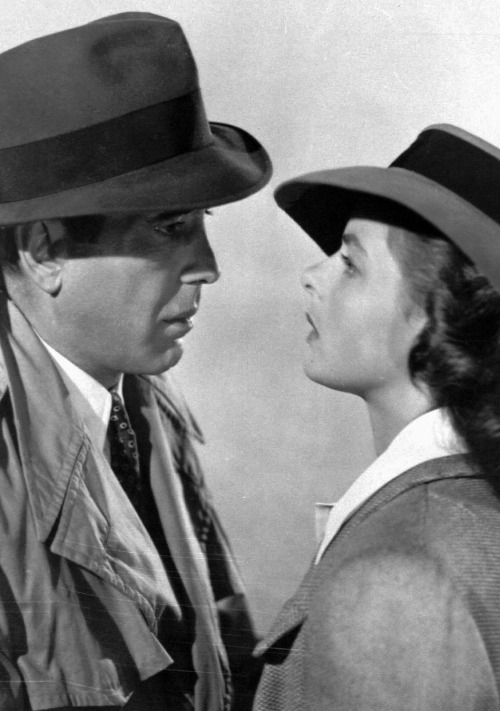
Film Quote Friday: Casablanca

In honor of Roger Ebert….

Rick: Last night we said a great many things. You said I was to do the thinking for both of us. Well, I’ve done a lot of it since then, and it all adds up to one thing: you’re getting on that plane with Victor where you belong.

Ilsa: But, Richard, no, I… I…

Rick: Now, you’ve got to listen to me! You have any idea what you’d have to look forward to if you stayed here? Nine chances out of ten, we’d both wind up in a concentration camp. Isn’t that true, Louis?

Captain Renault: I’m afraid Major Strasser would insist.

Ilsa: You’re saying this only to make me go.

Rick: I’m saying it because it’s true. Inside of us, we both know you belong with Victor. You’re part of his work, the thing that keeps him going. If that plane leaves the ground and you’re not with him, you’ll regret it. Maybe not today. Maybe not tomorrow, but soon and for the rest of your life.

Ilsa: But what about us?

Rick: We’ll always have Paris. We didn’t have, we, we lost it until you came to Casablanca. We got it back last night.

Ilsa: When I said I would never leave you.

Rick: And you never will. But I’ve got a job to do, too. Where I’m going, you can’t follow. What I’ve got to do, you can’t be any part of. Ilsa, I’m no good at being noble, but it doesn’t take much to see that the problems of three little people don’t amount to a hill of beans in this crazy world. Someday you’ll understand that.

[Ilsa lowers her head and begins to cry]

Rick: Now, now…

[Rick gently places his hand under her chin and raises it so their eyes meet]

Rick: Here’s looking at you kid.

I think it’s time to watch Casablanca again.

Share This Post

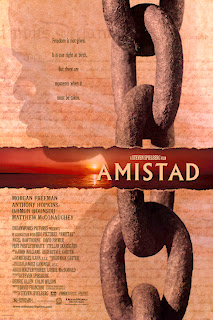
Film Quote Friday: “Amistad”

I’ve only seen this movie once, and I liked it, but not really enough to watch it again. At the time I remember finding it well-made, well-acted, and all, but a bit on the slow-moving side and generally not too involving. But at the end of the film, when the court case in the story (regarding the status of a group of Africans, on their way to being sold into slavery, who rise up while still on the slave ship from Africa) reaches the Supreme Court, we get to hear a long speech by former President John Quincy Adams (played by Sir Anthony Hopkins), that I’ve watched, in itself, many times on YouTube. It’s a terrific speech, and like all great speeches, the most emotionally resonant part comes at the end.

The other night I was talking with my friend, Cinque [the slave, played by Djimon Honsou]. He was over at my place, and we were out in the greenhouse together. And he was explaining to me how when a member of the Mende — that’s his people — how when a member of the Mende encounters a situation where there appears no hope at all, he invokes his ancestors. It’s a tradition. See, the Mende believe that if one can summon the spirits of one’s ancestors, then they have never left, and the wisdom and strength they fathered and inspired will come to his aid.

James Madison, Alexander Hamilton, Benjamin Franklin, Thomas Jefferson, George Washington, John Adams: We’ve long resisted asking you for guidance. Perhaps we have feared in doing so we might acknowledge that our individuality which we so, so revere is not entirely our own. Perhaps we’ve feared an appeal to you might be taken for weakness. But, we’ve come to understand, finally, that this is not so. We understand now, we’ve been made to understand, and to embrace the understanding that who we are is who we were.

“Who we are is who we were.” That’s very true, isn’t it? Like it or not, for good or ill, we are in many ways the sum of the experiences of our forebears. And so will our children be, of us.

Here’s the entire speech:

Share This Post

Film Quote Friday: 2010 (The Year We Make Contact)

2010 is a fairly odd film, all things considered. It harks back to when Hollywood’s mania for sequels was just starting to get underway, and when the idea of reboots was still way off. And the idea of making sequels to films that were nearly twenty years old? And to films that are considered classics? Yup, it’s strange that this project ever got off the ground, even with a pretty decent Arthur C. Clarke novel to go by. But off the ground 2010 got, providing some answers for the extremely enigmatic 2001: A Space Odyssey.

Some would claim that the earlier film should have been left well enough alone, and its questions left to be explored by the viewer. I agree, to a point…but the problem is, as a movie in itself, 2010 really isn’t bad at all. It’s nowhere near the towering masterpiece that 2001 is, and its feel is so different that it doesn’t even feel like a sequel to the earlier movie. It feels like a sequel to a different version of the earlier movie.

Anyway, 2010 holds up well in some ways, not so well in others. As seems typically the case with movies predicting near futures, they’re mostly wrong, and what they’re really wrong about stands out like a sore thumb now. In the movie, the Soviet Union still exists, and during the film’s events, the USA and the Soviets come to the brink of nuclear war. This adds nice tension to the nature of the film’s space mission (a joint American-Soviet flight), but it’s hard to take it seriously now. But really, how unthinkable was it in 1985 that the Cold War didn’t even have an entire decade left to it?

And then there’s a little scene where Heywood Floyd (Roy Scheider) and Walter Curnow (John Lithgow) are talking about how they miss Earth, and they get onto a brief bit about the merits of the hot dogs at various ballparks. Curnow opines that the Astrodome makes good hot dogs. Little did they know that the Astrodome’s days as a functioning ballpark wouldn’t reach 2010, either! But that’s all minor stuff. The film’s character interactions are nicely done, the cast is terrific (Helen Mirren pushes her Russian accent just to the brink of being too thick to take seriously, but it works), and the visual effects are still outstanding, given the time period. 2010 is an odd film, indeed: it probably shouldn’t even exist, but it does, and on its own, it’s really not a bad little SF thriller.

Oh, yeah — this is “Film Quote Friday”, so I have to quote the movie. Fair enough. I’ve done long quotes from movies before, so this time I’ll use a very short one. The film indicates that these were the last words received on Earth via transmission from astronaut David Bowman before his disappearance from the Discovery. This line is never heard in the original film of 2001, however — but it is in Arthur C. Clarke’s original novel of 2001: A Space Odyssey. See what I mean? Strange. The quote? Well, the 2001 novel has David Bowman leave the Discovery in a pod and approach the enormous monolith that is hanging in Jovian orbit. This monolith opens up, and Bowman sends home his last report before going inside:

My God! It’s full of stars!

Share This Post

Film Quote Friday: The Hunt for Red October

When this movie came out in spring 1990, I was on the tail end of a fascination with the spy genre that had lasted two or three years. I’d devoured a whole bunch of Robert Ludlum and Nelson DeMille novels; I’d found Tom Clancy somewhat less readable but OK, and I bounced right off John Le Carre. Shortly thereafter I returned to reading fantasy and science fiction, having had my fill of spy stuff. Nowadays I haven’t read a spy novel in quite a few years, and I generally rely on movies and teevee for my espionage desires. (Plus, a lot of the F&SF I read employs tropes of spy stories, so it’s not like I’m completely missing out.)

I went with a bunch of friends to see Hunt for Red October the day after the winter semester ended (our school had an odd calendar), and before we went, I remember reading an article in TIME or Newsweek about the troubles that the entire spy genre was facing, what with the Cold War having ended just eight or nine months previously. I found the idea that the movie might suffer because of the lack of timeliness of its subject matter kind of goofy; after all, lots of historical dramas work just fine as stories with tension and suspense, despite the fact that their historical eras are long over. But still, there was some serious thought given to the fact that the spy genre was now going to have to look for new threats. I remember a Wayne’s World sketch on Saturday Night Live in which Wayne and Garth lamented the end of Communism with a top-ten style list, one of which was, “Spy stuff sucks.” Garth whined, “Yeah! Who’s James Bond gonna spy on now, the Guatemalans?!”

I also remember some years back when I got into a heated discussion on a Usenet newsgroup because someone wanted to say that some movie had done something in a very clicheed manner, “just like the James Bond movies of the 1960s used to treat Russians”. That ran up all manner of red flags, because only one of the six Bond movies released in the 1960s uses Russians, and in that one, they are hardly depicted stereptyically. In fact, Garth and my Usenet interlocutor might be surprised to learn that there was surprisingly little Cold War subtext to the Bond films until the 1980s!

What does all this have to do with Hunt for Red October? Well, if anything, the years that have passed since the Cold War’s conclusion have only helped the film. By pushing those historical circumstances back into history, the film now plays as it always should have: it’s a tense, engrossing thriller that pits one man against entire bureaucracies in the face of a dangerous diplomatic and military situation. The film’s story is extremely well constructed, with every element serving some purpose. But the movie’s dialog crackles! Here are just a couple of instances.

This brief exchange happens when the Russian Ambassador to the United States is meeting with the National Security Advisor, and is still maintaining the fiction that nothing terribly serious is to be read into the fact that the Northern Atlantic is now crawling with Russian ships:

Jeffrey Pelt: Mr. Ambassador, you have nearly a hundred naval vessels operating in the North Atlantic right now. Your aircraft have dropped enough sonar buoys so that a man could walk from Greenland to Iceland to Scotland without getting his feet wet! Now, shall we dispense with the bull?

Ambassador Lysenko: You make your point as delicately as ever, Mr. Pelt.

This brief exchange comes later on, when Jack Ryan is on the aircraft carrier USS Enterprise, and the Russian Navy is plowing across the ocean, the sonar systems blasting away into the water:

Captain Davenport: They’re pinging away with their active sonar like they’re looking for something, but nobody’s listening.

Jack Ryan: What do you mean?

Captain Davenport: Well, they’re moving at almost forty knots. At that speed, they could run right over my daughter’s stereo and not hear it.

And here’s a Navy pilot trying to give Jack Ryan some encouragement as they fly through violent turbulence to get to the Enterprise:

Navigator C-2A: What’s the matter Commander? You don’t like flying, huh? Aw, this is nothing! You should’ve been with us five, six months ago! Whoa! You talk about puke! We ran into a hailstorm over the Sea of Japan. Everybody’s retching their guts out! The pilot shot his lunch all over the windshield, and I barfed on the radio! Shorted it out completely! And it wasn’t that lightweight stuff either, it was that chunky industrial weight puke! [offers him the candy bar he’s been eating] Hey, you want a bite?

Jack Ryan: Jack, next time you get a bright idea just put it in a memo!

Frivolous stuff, to be sure, but all this dialog rings true because in my experience, people tend to resort to comfortable metaphors and idioms even in the face of stressful situations. Everybody speaks distinctively in The Hunt for Red October, and director John McTiernan gives the actors the breathing room necessary to let the script take flight. The result? An espionage thriller that feels like it’s populated with real people. That’s the key to any storytelling!

Share This Post

Film Quote Friday: “The Sea Hawk”

Seeing as how I devoted yesterday’s Something for Thursday post to The Sea Hawk, my favorite Errol Flynn movie, I figured, why not use it in this feature too?

The Sea Hawk tells the story of a rogue English sea captain, Geoffrey Thorpe, who is commanding his ship and preying on Spanish vessels right around the time the Spaniards are building their Armada for their final reckoning against England. Thorpe becomes involved in the various politics involved in convincing Queen Elizabeth I that the Spanish threat is very real and that she must arm her nation and prepare for inevitable war, while Spain tries to convince her that they mean no real threat at all. And by “becomes involved”, of course I mean, “has adventures that involve piracy and swordplay and falls in love with a girl”. The girl is Dona Maria, played by the beautiful Brenda Marshall (who seems to get a short shrift, in my view, by virtue of her simply not being Olivia de Havilland). The romance between Thorpe and Dona Maria is pretty typical adventure story romance: charming rogue is at first rebuffed by the woman who finds him disreputable, but gradually wins her over as she discovers that there are depths to him that she hadn’t realized at first.

They meet in the early scenes when Dona Maria is on her way to England, and her ship is attacked by none other than Captain Thorpe. He doesn’t so much take her prisoner as escort her family aboard his ship for safe transit the rest of the way, but he does seem happy to steal her personal jewelry. After the Spanish ship sinks, they’re all en route back to England, and Dona Maria is looking out the balcony on the Captain’s quarters. Meanwhile, Captain Thorpe is on deck, aware of her presence below, and eventually works up the courage to talk to her. But again she rebuffs him, making clear that she does not wish to socialize with a criminal.

Dona Maria: I’m not in the habit of conversing with thieves. I thought I made that quite clear, Captain Thorpe.

Capt. Geoffrey Thorpe: Why, yes, all except your definition. Tell me, is a thief an Englishman who steals?

Dona Maria: It’s anybody who steals… whether it’s piracy or robbing women.

Capt. Geoffrey Thorpe: Oh, I see. I’ve been admiring some of the jewels we found in your chest… particularly the wrought gold. It’s Aztec, isn’t it? I wonder just how those Indians were persuaded to part with it.

Of course, that doesn’t go over well at all, and she turns and disappears inside — to discover, on the table, the chest containing her jewelry, with a note reading — in wonderfully ornate penmanship — “Only a pirate would deprive you of these jewels.”

Later on, after a reception with the Queen (during which it’s clear that Dona Maria’s impression of Thorpe is warming), Thorpe plans a new expedition, a particularly dangerous journey to the New World where he plans to attack the year’s gold shipment to Spain. Before he departs, he visits Dona Maria in an English rose garden, a lovely scene that concludes with Captain Thorpe leaving her with this:

Capt. Geoffrey Thorpe: Dona Maria, in a convent in Peru there is a statue that the sisters there call Nuestra Senora de las floras. That’s how I shall always think of you, as ‘My Lady of the Roses’.

Yeah, he’s smooth. Why wouldn’t he be, though? He’s Errol Flynn, the first of all Shatners.

Share This Post

Film Quote Friday: “Sneakers”

COSMO: You could have shared this with me.

MARTIN: I know.

COSMO: You could have had the power.

MARTIN: I don’t want it.

COSMO: Don’t you know the places we can go with this?

MARTIN: Yeah, I do. There’s nobody there.

COSMO: Exactly! The world isn’t run by weapons anymore, or energy or money. It’s run by ones and zeroes, little bits of data. It’s all just electrons!

MARTIN: I don’t care.

COSMO: I don’t expect other people to understand this, but I do expect you to understand this! We started this journey together!

MARTIN: It wasn’t a ‘journey’, Cos. It was a prank.

COSMO: There’s a war out there, old friend, a world war. And it’s not about who’s got the most bullets. It’s about who controls the information: what we see and hear, how we work, what we think. It’s all about the information!

MARTIN: If I were you, I’d destroy that thing.

I saw Sneakers when it first came out, back in 1992 or thereabouts. It quickly became one of my favorite movies, and I saw it several more times theatrically before it became a fixture in my rotation of movies to rent on occasion, and later, when I had a sizeable collection of movies on VHS. But for one reason or another – mainly because I just never got around to it – Sneakers never got into my DVD collection, so I haven’t seen it in…holy crap. More than ten years. That seems rather wrong to me now, in retrospect, but never fear – I finally watched it recently, with some fear and trepidation that, like many a techno-thriller made more than a decade ago, it wouldn’t hold up very well.

Surprisingly – and satisfyingly – it does hold up, very well. And more than that: it’s striking to me now, twenty years later, just how eerily prescient this movie was.

Sneakers is one of the most entertaining cyberthriller-espionage movies I’ve ever seen. Robert Redford stars as Martin Bishop, the head of a security firm consisting of a group of men whose backgrounds mostly include shady dealings or outright brushes with the law. Their main job is simply to break into places that are supposedly highly secure, in order to demonstrate the lax areas in the security. They seem to be mostly just eking by: when they complete a job for a bank early in the film, a bank officer fills out the payment check, looks at it, and comments that it’s not a very good living. The team gets hired for another job, this time by two men claiming to be NSA agents, who happen to know who Martin Bishop really is (for which he could go to jail). They are to steal a device that decrypts codes which are supposedly unbreakable, which they do, and then give to the NSA guys – only to learn that they’re not NSA guys at all, and that they’ve murdered the mathematician who invented the device.

In a deeply eerie scene, Bishop’s hacker buddies start probing around with the little black box, just to see what it can do – and they discover that it can allow anyone to hack into extremely sensitive computer systems. The power grid of the entire Northeast…the Federal Reserve…air traffic control. They couldn’t have known it, writing this movie ten years before 9-11, but hearing one of the hackers jokingly say, “Anybody want to crash a few passenger jets?” is deeply chilling.

The entire movie is about security in an increasingly digital world, and at the end of the film, the exchange quoted above takes place, between Bishop and his onetime college buddy Cosmo, who has become a villain since doing time in prison for a crime that he committed with Martin at his side (but who eluded capture by the police simply by going out for pizza when they showed up with the guns). The idea of the world become increasingly governed by, and even defined by, the processing of data was a pretty bold one back in 1992. When I saw this movie, I had not yet even heard of the Internet, and the digital infrastructure that Sneakers portrays – with dial-up modems and not a cell phone in sight – seems utterly quaint. And yet, the movie is somehow fresh, despite all that, largely owing to the charm of the cast, the sparkling dialogue, the engaging direction, the brisk pacing, and – in terms of the technology – the nicely non-specific way the technology is depicted.

There are a lot of very clever touches in Sneakers: the reverse ‘race against time’, for example, in which Martin Bishop has to get a job done and yet literally can only do it at a very slow pace, lest the motion detectors notice his presence. Also the way they enlist Martin’s former (and yet still friendly) girlfriend to help with the problem of recording a particular scientist’s voice for use against the voice-print ID gizmo. (If the phrase “My name is Werner Brandes. My voice is my passport. Verify me.” is in your geek lexicon, then you are my kind of people.) I also like how vague the movie is about Cosmo’s villainy. We never learn who he works for, or if he is the main ringleader; we never learn what exactly it is that he wants to accomplish with the little black codebreaking box. In fact, it’s entirely possible that Cosmo doesn’t even have a specific plan in mind at all, and that he just wants the codebreaker because it will give him power that he as yet doesn’t really know how he intends to use it. He’s almost purely a theoretical villain, which is what makes him even scarier — as well as the sheer optimism of his villainy, which is what makes the quote above so memorable. It’s not about making threats or committing crimes or any of that dirty stuff. It’s about the possibilities inherent in controlling the world’s data.

And that is really makes this twenty-year-old film stay relevant.

Share This Post

Film Quote Friday

Been a while since I did one of these, huh? So much for ‘regular features’. Par for the course around here, though. I may one day relaunch this blog as a series of regular features, with one post each before completely disappearing.

Anyway, election season has me thinking about The West Wing. One thing that bugged me about the show during its run was that Aaron Sorkin wasn’t always very good at tying things together over the long haul of a teevee series, which led to things like the character Mandy (who was totally annoying) utterly disappearing between seasons one and two, despite the fact that season two begins literally at the exact same time that season one ended. But there were times when Sorkin did some really cool things, such as this.

One of the backdrops of the series — which was, to my mind, underutilized — was the fact that President Bartlet and Vice President Hoynes did not have a good working relationship. Their union was born of political necessity, after Bartlet surprised the political world by beating front-runner Hoynes for the nomination; after that, there was always friction between the two men. This scene happens in an early episode in Season One, called “Enemies”:

HOYNES
What did I ever do to you? Where, in our past, what did I do to make you treat me this way?

BARTLET
John…

HOYNES
What did I ever do to you except deliver the South?

BARTLET
Really?

HOYNES
Yes.

BARTLET
You shouldn’t have made me beg, John. I was asking you to be Vice President.

HOYNES
Due respect, Mr. President, you have just kicked my ass in a primary. I’m fifteen years younger than you. I have my career to think of.

BARTLET
Then don’t stand there and ask the question, John. It weakened me right out of the gate. You shouldn’t have made me beg.

A brief silence fills the room.

HOYNES
I’m glad C.J. straightened things out with Danny.

BARTLET
Yeah.

HOYNES
Good night, Mr. President.

BARTLET
Good night, John.

That’s interesting stuff. The implication here is that Bartlet asked Hoynes to run on the ticket, and Hoynes made Bartlet wait and stew and ask again — made him beg — for Hoynes to be Vice President.

But later on, in Season Three, when Aaron Sorkin was in the midst of the big “Bartlet reveals he has MS” storyline, there’s a flashback in the episode “Bartlet for America” to the very night Bartlet asked Hoynes to join the ticket. We’d been lead to believe earlier that Hoynes’s reticence had actually been a little bit of a tantrum, but this casts quite a different light on things:

LEO
John?

Hoynes looks over at Leo, then walks into the suite and shakes Leo’s hand.

HOYNES
Leo.

Leo quietly closes the door and watches as Hoynes greets Abbey, who has banished the tension
from her face. They embrace formally. He kisses her on the cheek.

HOYNES
Hello, Abbey.

ABBEY
Hello, John.

BARTLET
[smiles] Senator.

Bartlet and Hoynes shake hands.

HOYNES
Good evening.

BARTLET
I’d like you to be the Vice-President.

Hoynes’ expression goes from amiable smile to shock. He and Bartlet stare at each other silently for a few moments.

BARTLET
Why don’t you sit with Abbey and me for a few minutes. [turns to aides] Can I have the room, please?

As the staff quickly take their leave, Bartlet walks over to a table on the other side of the suite. He pours himself another cup of coffee.

BARTLET
[to Hoynes] You want anything? Coffee or anything?

Hoynes, his hands in his pockets, walks slowly toward Bartlet.

HOYNES
Ah… no.

On yet another TV, this one in a corner, crowds on the convention floor can be heard chanting “Bartlet! Bartlet!” Hoynes glances over at the TV. Abbey finally joins them but stands a bit off to one side. Again, she looks a bit nervous and distracted as she fidgets with her wedding ring and watches the two men talk.

BARTLET
You ran a good campaign. [pause] You’re a young man. You’ll be back.

HOYNES
[nods] Thank you.

Bartlet finishes getting his coffee and walks back over to the sofas. Hoynes and Abbey join him as the last of the aides leaves and the door to the hall finally closes. Bartlet and Hoynes sit down across from each other. Abbey remains standing off to one side.

BARTLET
There’s something you need to know. It’s why I asked everyone to leave the room.
[short pause] A few years ago, I was diagnosed with a relapsing remitting course of MS.

HOYNES
[confused] I’m sorry?

BARTLET
Multiple sclerosis.

Hoynes, stunned, glances over at Abbey with a vaguely accusatory expression on his face. Bartlet looks over at her, too. She meets Hoynes’ gaze. She reveals very little, says nothing, but her expression is grave.

HOYNES
[to Bartlet] Did you just tell me that you have MS?

BARTLET
Yeah.

HOYNES
Which you never mentioned during the campaign.

Bartlet shakes his head. Hoynes raises an eyebrow and sighs heavily.

BARTLET
I told you because it’s something you’re gonna need to know. But also because I wanted to show that I trust you.

HOYNES
[slight edge to his voice] Oh, you do?

BARTLET
[unfazed] Yeah.

HOYNES
[leans forward] That’s supposed to be me accepting the nomination Thursday night. But I suppose your trusting me is consolation prize enough.

BARTLET
[doesn’t flinch, pauses] Well, what do you say?

Hoynes shrugs his shoulders, sighs, and stands up.

HOYNES
I’d like to think about it… for a few…

BARTLET
[stands] I’d like your answer now, John.

They stare at each other for several long moments, the tension rising.

HOYNES
You’ll have it when I give it, Jed.

That’s very interesting to me. It shows that Hoynes’s reasons for not being eager to join the ticket isn’t entirely, as Sorkin would put in another episode referring to something else, “the natural reaction to not getting the girl”. He no doubt feels that he lost unfairly, and that Bartlet in some sense cheated in winning the nomination without mentioning a fairly significant health concern. Hoynes no doubt has trouble trusting Bartlet after this, ironically in response to something Bartlet does in order to show trust in him.

That’s pretty cool.

Share This Post
Film Quote Friday

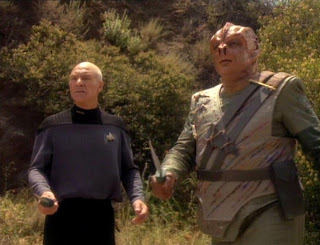
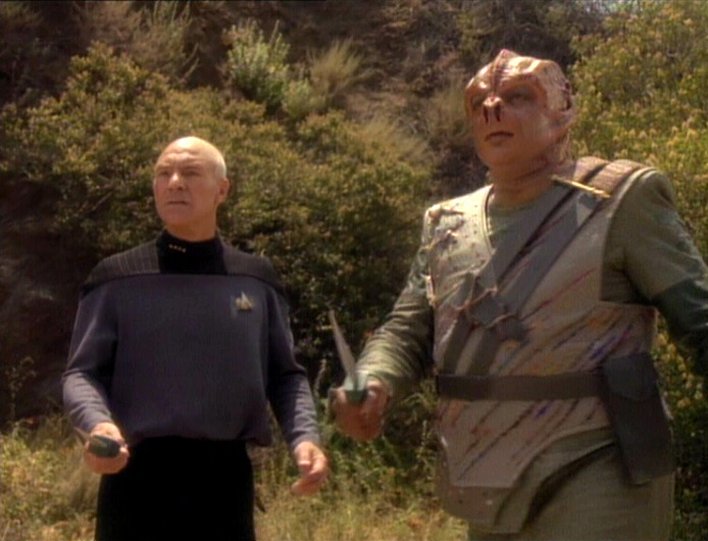
“Darmok” is one of the most memorable episodes, and for me a high point, of Star Trek: The Next Generation. The Enterprise makes contact with a people, the Tamarians, whose language has resisted all efforts at translation, to the point where not even the Universal Translator can make head nor tail of what they are saying. Their language appears to be based on random citations of stories, an extreme way of talking in metaphor and citing examples from a rich storytelling heritage to make one’s point. As someone who often thinks in terms of stories I’ve read or seen and who frequently cites them in the case of arguing various points, this hits home for me.

In the episode, Captain Picard and Captain Dathon (of the other ship) go down to a planet surface to face a ‘monster’, to suffer a shared danger, which Dathon hopes will somehow forge a connection between them. It takes Picard a while to realize that Dathon’s ‘kidnapping’ of Picard to the planet surface is intended as an act of friendship, and it takes him a bit longer to put together just what some of the Tamarian phrases mean. They do battle with the creature, and manage to fight it off…but Dathon is mortally wounded. At night, Picard and Dathon sit by a campfire. Dathon is clearly in great pain:

DATHON: Darmok and Jalad at Tanagra.

PICARD: Our situation is similar to theirs. I understand that. But I need to know more. You must tell me more about Darmok and Jalad. Tell me. You used the words, ‘Temba, his arms wide’ when you gave me the knife and the fire. Could that mean give? Temba, his arms wide. Darmok. Give me more about Darmok.

DATHON: Darmok on the ocean.

PICARD: Darmok. (draws on the soil) The ocean. Darmok on the ocean. A metaphor? For being alone? Isolated? Darmok on the ocean.

(Dathon writhes in pain)

PICARD: Are you alright?

DATHON: Kiazi’s children, their faces wet.

PICARD: Temba, his arms open. Give me more about Darmok on the ocean.

DATHON: Tanagra on the ocean. Darmok at Tanagra.

PICARD: At Tanagra. A country? Tanagra on the ocean. An island. Temba, his arms wide.

DATHON: Jalad on the ocean. Jalad at Tanagra.

PICARD: Jalad at Tanagra. He went to the same island as Darmok. Darmok and Jalad Tanagra.

DATHON: The beast at Tanagra.

PICARD: The beast? There was a creature at Tanagra? Darmok and Jalad, the beast of Tanagra. They arrived separately. They struggled together against a common foe, the beast at Tanagra. Darmok and Jalad at Tanagra.

DATHON: Darmok and Jalad on the ocean.

PICARD: They left together. Darmok and Jalad on the ocean.

DATHON: The ocean. (another spasm) Zinda! His face black, his eyes red. Callimas at Bahar.

PICARD: You hoped this would happen, didn’t you? You knew there was a dangerous creature on this planet and you knew from the tale of Darmok that a danger shared might sometimes bring two people together. Darmok and Jalad at Tanagra. You and me, here, at El-Adrel.

DATHON: Kira at Bashi. Temba, his arms wide.

PICARD: My turn? No, I’m not much of a story teller. Besides, you wouldn’t understand. Shaka. when the walls fell. Perhaps that doesn’t matter. You want to hear it anyway. There’s a story, a very ancient one, from Earth. I’ll try and remember it. Gilgamesh, a king. Gilgamesh, a king, at Uruk. He tormented his subjects. He made them angry. They cried out aloud, send us a companion for our king. Spare us from his madness. Enkidu, a wild man from the forest, entered the city. They fought in the temple. They fought in the street. Gilgamesh defeated Enkidu. They became great friends. Gilgamesh and Enkidu at Uruk.

DATHON: At Uruk.

PICARD: The new friends went out into the desert together, where the great bull of heaven was killing men by the hundreds. Enkidu caught the bull by the tail. Gilgamesh struck it with his sword.

DATHON: Gilgamesh.

PICARD: They were victorious. But Enkidu fell to the ground, struck down by the gods. And Gilgamesh wept bitter tears, saying, ‘he who was my companion through adventure and hardship, is gone forever.

At this point, sadly, Dathon dies. It’s a haunting moment in a terrific script, made all the better by Patrick Stewart and guest star Paul Winfield (as Dathon). It amuses me that they have Picard claim to not be a very good storyteller, and then he goes on to make even this Cliff’s Notes version of the Epic of Gilgamesh riveting.

I’ve heard some fans over the years wonder why they never revisited the Tamarians on Trek. I’m not sure, but I do think that as good as the Trek writers were, they weren’t always great science fiction writers, and to really be done well, the concept needed someone on the order of, say, a Vernor Vinge. The idea of a society whose collective memory has become so ingrained as to literally form the basis of its language is a fascinating one, and it would need to be done justice.

Share This Post