It’s all in the details.

I have a half-arsed theory that one thing that makes stories work, be they in book form or movies or teevee shows, is in the little details they include. It’s not the “details” as in the various plot points and making sure they work, or things like avoiding anachronisms.

(Say, you know what anachronism always bothers me when I see it? People in movies or teevee shows drinking Coke from glass bottles. You can still get glass bottles today, so it’s easy, right? You just buy those and film away. Problem is, those are 8oz bottles. Back in the day, Coke bottles were 16oz. Those tiny bottles always stick out like a sore thumb to me.)

But anyway, I was thinking a bit about Superman (1978), after watching it a while back, and there’s this tiny little thing that happens in one scene. So tiny you wouldn’t even notice it, but I think it’s just terrific, because it really does add a tiny bit of realism to the film’s world.

It’s the start of the film’s third act. Lex Luthor has reprogrammed the two missiles, and he’s about to use his ultra-sonic broadcaster to speak directly to Superman. Clark Kent arrives in the Daily Planet newsroom, as his fellow reporters are clustering around a teevee set to watch the nuclear missile test. Clark comes over, asks what’s going on, someone tells him, and then tells him that Perry White wants to see him. Then the guy says, “You’re blocking the set, Clark,” and Clark says, “Oh, sorry,” ducks his head, and walks to Perry White’s office.

But before he gets there, he turns back to the reporter he’d just been talking to and says, “Hey, how’s Judy?” The guy says “Fine”, and Clark says “Great!” or “Good!” or something like that.

The whole interaction lasts all of five seconds, but that last bit — “Hey, how’s Judy?” — is the kind of perfect detail that makes this film’s world seem that much more real. Clark isn’t just hanging out at the newspaper for something to do when he’s not fighting crime and working for Truth, Justice, and the American Way. It’s his job, these are his coworkers. Clark Kent knows this guy’s wife’s name and asks about her. That’s great.

I think what I’m getting at here is that even the most spectacular fantasy worlds are, at some point, mundane. There are people in every single fantasy world who are just going to jobs and asking how the kids are and the like. When writing such details into worlds, you don’t have to draw attention to them or underline them or make them stand out. And you certainly don’t need tons of them, just a few, here and there. But they work wonders when you realize they’re there. It’s like the two stormtroopers in Star Wars IV: A New Hope, chatting about stormtrooper stuff while Obi Wan Kenobi turns off the tractor beam. It’s the acknowledgment in The Lord of the Rings: The Fellowship of the Ring that a party the size of Bilbo Baggins’s birthday party is going to involve a lot of dirty dishes.

What examples of such little details — the mundane little bits of the fictional worlds — do you recall from favorite books or tales in other media?

Share This Post

Something for Thursday

Oops…how on Earth did I completely forget about last week’s installment? It just totally flew out of my mind, alas.

I’ve been listening a bit this week to John Williams’s amazing score to Close Encounters of the Third Kind, the other classic score he wrote for a sci-fi film released in 1977. (If you don’t know by now what the other one was, I can’t help you.) Williams’s CE3K music is quite different, as it is mostly by turns either atonal, or haunting, or militaristic during the “Government agency” scenes. Only gradually does a lyricism emerge from the score, becoming stronger and stronger, beginning really with the introduction of the famous five-note “Communication with the aliens” theme. Gradually Williams stitches all of this together into an amazing tapestry of emotion that is one of his more overwhelming efforts.

This is a well-produced suite of tracks from the film, edited together very convincingly into a pretty nifty listening experience.


A few annotations:

0:01: The score opens with the swirling music that plays as the teevee reports of the disaster at Devil’s Tower appear, leading Roy Neary and Jillian Guiler to separately realize that their visions of some strange mountain are of a very real place.

1:30: Roy and Jillian drive cross-country into the Wyoming back woods to try and get closer to Devil’s Tower.

2:12: Roy and Jillian see Devil’s Tower, in person, for the first time. “I can’t believe it’s real!”

What follows is some suspenseful music as they continue driving into the back woods. At about 4:15, they drive past four ‘dead’ cows. Now they’re taken by the military and processed, with Neary being questioned by Lacombe and Loughlin.

6:40: The ‘conversation’ between the electronic music synthesizer and the mother ship.

10:52: The terribly sad scene where Roy thinks he’s going insane. “This means something…this is important.” (The subtext with Roy’s family is awfully troubling, really. His wife is completely justified in thinking that he’s utterly lost it, but of course, he hasn’t. Now, it’s never established at the end of the film how long he’s going to be off with the aliens, so I don’t completely buy into the notion that he’s ditching his family forever. But what does poor Ronnie Neary think when she reads the next day’s newspaper?)

13:25: The ‘returnees’ begin emerging from the Mother Ship, abductees who have been missing, in some cases, for decades (the pilots of Flight 19). Among them is little Barry Guiler, who is reunited with Jillian at the 15:14 mark.

15:35: Back to the beginning of the film. The mysterious crescendo ending in a smash as we open in the deserts of Mexico.

16:00: And back to the film’s finale, as the ETs come down from the Mother Ship and begin interacting with the people gathered at the Devil’s Tower landing site. Roy Neary is taken away to be prepared to join the astronauts who are being allowed to go. Note “When You Wish Upon a Star” at 17:03.

17:41: The ETs choose Roy Neary. More “When You Wish Upon a Star”. Neary looks back; Lacombe urges him to go. He meets Jillian’s eye, and then goes up on board.

19:00: The main ET greets Lacombe; they exchange the hand signals at 20:20. Here Williams starts letting the “Alien Communication” theme take over; where it was strange and haunting before, now it’s plaintive and beautiful.

21:05: All the aliens go back on board. The music begins to swirl as the Mother Ship prepares to depart. We arrive on a gorgeous chord of resolution that holds as little Barry Guiler says, ever so perfectly, “Bye.”

22:17: Oh, wow. End titles over what might be the most perfectly gorgeous finale of John Williams’s career. When he lets that Alien Communication theme peal forth, complete with bells, it is one of the greatest moments in the history of movie music.

Share This Post

On Death and Villainy

John Seavey, one of the regular posters at MightyGodKing, writes at length about Norman Osborn, the human alter-ego of Spider-Man villain Green Goblin. I don’t much have a dog in that fight, but I did like two different side points Seavey made along the way.

First:

I have gone on record multiple times as saying that if contrived resurrections cheapen deaths, the answer is to stop killing off characters so frequently and not to have fewer resurrections. Killing off a character in a shared universe is generally an act of colossal arrogance and short-sightedness, a statement along the lines of, “Well, I can’t think of anything more to do with this character, and I’m the Most Creative Person of All Time! The only interesting thing left to do is kill them off.” It’s never true. There are always more interesting stories to be told with a living character than a dead one, and that’s what makes resurrections so inevitable no matter how contrived they wind up being. The blame should be placed squarely on the shoulders of the killing writer, not the resurrecting one.

I think death is kind of overrated as a narrative device. It’s kind of cheap, really, an easy way of amping up the stakes — just kill someone off, to show that everything is real, that we’re playing for keeps. I find that a lot of deaths in stories feel like they’re there more for narrative effect than for any other reason, and a lot of them end up ringing false when it’s obvious they’re supposed to be incredibly shocking.

Good examples of this can be found all over the place: A Song of Ice and Fire, for instance. (Game of Thrones, for you who know it by the teevee.) George RR Martin gets heaped with praise all the time for being willing to sacrifice main characters, but I’d posit that by the point we’ve now reached, it’s clear that he’s not sacrificing main characters at all; he’s just disposing of secondary characters at surprising junctures.

More oddly, though, is the odd notion that a character should develop only so much, and then they should die. This strikes me as deeply silly, and the two best examples I know are characters who didn’t die: Han Solo, and Martin Riggs (of the Lethal Weapon movies). Harrison Ford has gone on record in the past as believing that Han should have died in Return of the Jedi, because he’d reached the end of his narrative and because it would have given the story a lot more gravitas. And Lethal Weapon writer Shane Black apparently left the series after his intention to kill off Martin Riggs at the end of Lethal Weapon 2 — pretty much for the same reasons — was shot down by the producers.

The problem here is, our lives don’t end when we reach handy points in our development as human beings. Well, for some of us they do, but that’s just the accident of timing, not some existential thing about the Universe dispensing with us upon our reaching of our inner Zen. It’s a silly reason to kill off a character, and Seavey is one hundred percent correct: a character doesn’t run out of potential stories just because one particular writer does.

And besides, “Death as route to gravitas” is…well, it’s just plain overrated anyway. How many major, named characters among the protagonists die over the course of The Lord of the Rings? Two: Boromir and Theoden. That’s it. And yet nowhere in that entire story would I ever claim that the stakes don’t feel pretty damned high, nor that a price will have to be paid for victory.

(For the record: Yes, I do think that Joss Whedon overdoes death as well, but his deaths tend to be a lot more visceral, given his skills at getting me to care about his characters in the first place.)

And second:

(W)hen you go back and read the original Green Goblin stories, he wasn’t much of a villain. He was a C-list Kingpin wannabe who failed at everything he tried, lost pretty much every fight he was in, and whose only talent was in running away. He didn’t even really have a backstory, because Stan Lee and Steve Ditko couldn’t decide who he was going to be under the mask. (Ditko wanted it to be a totally unmemorable nobody, to show that villains didn’t always have to be someone important to the hero. Lee felt like they’d spent so long building up the mystery of the Goblin’s identity that the audience would be upset if it wasn’t someone they recognized. The dispute was one of the reasons that Ditko left the title.) Basically, the Green Goblin was by no means the most important of Spider-Man’s bad guys.

Now, I’m not sure about this, and a couple commenters in the thread over there take issue with Seavey’s description of Ditko’s views and departure from the series. But Ditko’s point here, even if it wasn’t really Ditko’s point, is a good one, an interesting one.

There was a very effective episode of Magnum, PI that did this to really extraordinary effect — so much so that it’s one of my favorite episodes of that series. Magnum receives a strange telephone call from a cackling guy who promises to kill and leaves Magnum bits of nursery rhymes as clues. This pattern repeats several times, and it becomes very clear that this killer knows Magnum well and has a very specific beef with him. It’s a very well-made episode — Magnum occasionally eschewed its Rockford Files-esque tone for a kind of “Hawaii Noir” mode, usually to very good effect — but what makes it stand out is the resolution. Eventually the killer stands before Magnum, unmasked and grinning and waiting for his sick payoff…and Magnum doesn’t recognize him. Even later, after the killer has been dealt with and the whole mess is over, Magnum doesn’t remember him at all. He has to go back into his own personal records to figure out who this guy is, and it turns out that Magnum investigate the guy’s wife some years back in a possible divorce case, but the case turned up nothing at all and Magnum didn’t even take the guy’s money. I don’t recall what caused the guy to spiral into insane killing, and there’s a good chance that the episode doesn’t even fill in that detail, leaving it a complete mystery. But that’s one of the things that makes it really memorable: that the villain isn’t some significant figure from Thomas Magnum’s past; it’s just some guy with whom he had a completely mundane association for a short time years before, so mundane that he doesn’t even remember him.

Of course, I can turn this back to Star Wars. One thing that really incensed fans as the Prequel Trilogy unfolded was the idea that at the very heart of the mystery that is Darth Vader is a pathetic teenager, a guy who couldn’t get over the loss of his schoolboy crush.

It’s a hard thing, explaining villainy. Sometimes no explanation whatsoever is the most disturbing way to go.

Share This Post

Star Trek Into Frustration

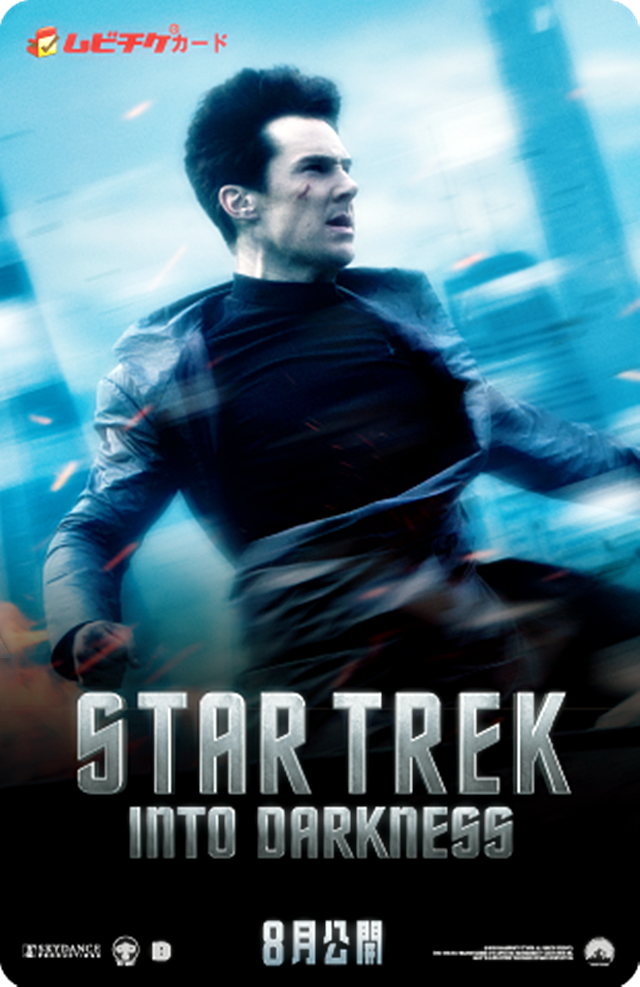
Well, despite my initial intentions to not see the new Star Trek movie until the DVD came out, a number of factors intervened: the fact that we went on vacation (and seeing a movie on vacation is always fun), and The Daughter’s crush on Benedict Cumberbatch. So, off we went to see the movie. I expected that my reaction would be similar to that I had for the first one, and sure enough, it was. I loved watching it. It’s a tremendously entertaining movie, expertly paced, wonderfully shot, beautifully acted. It scratched my ever-present itch for Explodey Spaceshippy Goodness, just like the last one.

And it frustrated the hell out of me on the script end, just like the last one.

On the design end, this bunch of filmmakers is getting so much right. I love the look of the world they’re in; I love that it’s not ‘dystopia as far as the eye can see’, as is so often the case in SF these days. I love the look of the ships, and I don’t even mind JJ Abrams’s somewhat-infamous lens flares. This movie, as much as the last one, looks the part, and it does a really nice way of bringing those old 1960s-era costume designs into a future in a way that doesn’t look completely ridiculous.

Also, the cast continues to be superb. About the only weak link I’ve found thus far is the fellow who plays Sulu, and really, how could you tell, given how little he has to do? This group has real honest-to-God chemistry, and watching them interact is most of the fun.

So why is the script so maddening?

Let’s just get my little “Star Trek fanboy” complaints out of the way first. I know, I know, “This ain’t your daddy’s Star Trek!” But the producers keep saying that basically, yes, it is; it’s the exact same universe, but time went in a different direction, so different stuff happens. So as nifty as the visual is, I can’t get behind the Enterprise hiding at the bottom of an ocean. I can’t get behind starships going to warp speed while in a planetary atmosphere. (They did this in Star Trek IV: The Voyage Home as well, and yes, it bugged me then, too.) And I can’t get behind two starships having a firefight while in warp.

And…Khan.

I really don’t know what the whole purpose of using Khan in this movie was, except to use Khan in a movie. It’s very strange. Benedict Cumberbatch turns in a frankly wonderful performance of the scenery-chewing villain (although he’s so flamboyantly chewing the scenery that I was disappointed that the film put him in an all-black costume, instead of clothing him more interestingly). But the script – but Roberto Orci, Alex Kurtzman, and Damon Lindelof – does absolutely none of its own heavy lifting. When we finally get to Cumberbatch’s big reveal – “My name is KHAN!”, complete with rumble in the soundtrack’s bass – it’s clear that Orci, Kurtzman, and Lindelof aren’t interested in creating their own emotional space here. What they’re after is mining the original. We’re meant to feel something, some kind of dread, when we learn that we’re dealing with KHAN here. But the script doesn’t bother to earn that moment. The proper response there would be for Kirk to blink and say, “Is that supposed to mean something to me?”

Ultimately, the script for this movie is really lazy. It’s lazy in the way it brings Khan in for no real reason other than that he comes with a built-in story that doesn’t need to be explained or elucidated, and it’s lazy in the way it converts Khan into a mad killing machine. The original Khan was a charismatic leader, almost a genetically-enhanced Hitler. He was megalomaniacal and wanted to rule a world that he made in his own image; we see none of that in this movie’s Khan. He pays very brief lip service to his followers, but as they all spend the entire movie in suspended animation, that’s all we know of that. There’s no real sense to what, if anything, really drives Khan to do the things he does, other than a vague “I’m mad at the world!” kind of thing, which is pretty much what Eric Bana had as the bad guy in the last Trek movie. Of course, Cumberbatch is leaps-and-bounds better than Bana as an actor, so he’s able to imbue his Khan with menace that Nero never had, but ultimately, it’s a case of “So what?”

(Brief pause here to note that I’ve always had problems with Star Trek II: The Wrath of Khan on kind of the same basis. Yes, it’s a great movie – although I do not think it the best of the Original Series movies, even though popular culture insists that it is – but I’ve always had trouble with the way it takes the interesting set-up of the original “Space Seed” episode, which ends with Khan and friends being left on a wild and untamed planet, and reduces it to, “Nothing came of that and now Khan is furious and insane”. More interesting, I think, to see what kind of society Khan would have built if he’d had the chance. Wrath does pay lip service to this, when one of Khan’s underlings tries to talk him out of his “Hunt down Jim Kirk” plan – “You have a ship! You have Genesis! You can have whatever you want!” – but that goes nowhere. Wrath uses a great villain to great effect, and yet I always feel that it was a wasted opportunity. Of course, this is hindsight, when back in 1982, if Wrath didn’t do well, Trek as a whole would have likely died on the vine.)

I’ve heard Into Darkness praised for its subplot about the militarization of society and the rise of a security state, but I’m wondering – just what is the justification for all this? In the real world, real events happen that jolt society in those directions. Where is the 9-11 event in Star Trek Into Darkness? We don’t know, so Admiral Marcus’s plot ultimately boils down to more scenery-chewing villainy. Orci, Kurtzman, and Lindelof give us yet more villains whose motivations are barely enough to motivate them to get out of bed in the morning, much less wreak galactic havoc.

“This ain’t your daddy’s Star Trek!” Well, if that’s the case, then why is the entire movie little more than a giant re-creation and inversion of the emotional beats at the end of The Wrath of Khan? Because that’s what this movie is, to the point of recycling dialogue and visual cues. It’s incredibly lazy writing, and it wastes all the strengths in this production. There’s this odd air surrounding the Trek reboot that longtime Trek fans shouldn’t criticize it because it’s a reboot, because it’s new, because it’s made for people now who don’t know anything about Trek as it was. That’s pretty stupid and insulting, though; if not for all those years of Trek fans, there wouldn’t be anything to reboot in the first place, and since these two films are so hell-bent on offering fan service that is almost entirely derived from The Wrath of Khan, it’s extremely disingenuous for the producers to then claim “But it’s a reboot!” Because it’s not a reboot.

Battlestar Galactica is a reboot. You can argue about whether it’s done well or not – I think it is, but I know others who aren’t fans of it and prefer the original – but there is no connection at all between the 1978 show and the 2004 one. They aren’t different timelines in the same universe, they’re completely different shows, and they are about completely different things. Yes, the latter does have a few bits of fanservice here and there (the original theme of the 1978 show being the Caprica National Anthem, for example), but that’s it. That’s how you do a reboot. What Trek is doing is lazy tribute, which isn’t the same thing.

And since they’re not doing reboot but rather tribute, I can criticize them on getting so much stuff wrong. Like starships firing at warp or hiding underwater. And like continuing to get the central relationships of Trek completely wrong by once again insisting that it’s “Kirk and Spock” and not “Kirk, Spock, and McCoy“. God, that annoys the hell out of me. Dr. McCoy is just a supporting player this time around, only there to pop in with a useful plot bit a few times, such as his utterly inexplicable “Hmmm, I think I’ll inject this dead tribble with this guy’s blood!” experiment.

Which brings me to my biggest frustration: Orci, Kurtzman, and Lindelof don’t seem to grasp for one second the implications of the science fiction world they are creating. Consider that at the end of this movie, we can (a) use the transporter to beam ourselves across thousands of light years (so why do we need ships anymore?), and (b) we can bring people back from the dead by injecting them with Khan’s genetically-engineered blood. Either one of these would be a leap forward for our species in a way that would be like cavemen skipping over fire and the wheel and going straight to medieval architecture. But here, these are just plot points. (Yes, original Trek made similar mistakes – say, even if the Genesis project failed, there was still some awfully interesting stuff learned in the R&D phase, right? – but we’re not talking about the sins of original Trek right now.)

So I guess I fall once again into the position of hoping that Trek continues with different writers. Damon Lindelof is a terrible writer, anyway – Prometheus was embarrassing, and Lindelof clearly has gone all-in with his belief that if you just never explain anything logically at all, lots of folks will take that as profundity – and Orci and Kurtzman aren’t a hell of a lot better. Maybe they can be around for a dialog polish, but they continue to fail to understand their own characters and the universe they’re working in, and they write plots more than character-driven stories.

I want a Trek where James T. Kirk has some agency, where he figures things out and takes control. I want a Trek where Spock doesn’t take advantage of a guy’s moment of death to give himself the ultimate snuff film. (Watch the scene where Pike dies and tell me that’s not what’s going on when Spock mind-melds with him, especially later on when Spock admits it. God, that was a skeevy moment.) I want a Trek where Vulcans aren’t just a bunch of people repressing their emotions. I want a Trek where things happen in logical sequence arising out of what’s gone before, as opposed to things happening because that’s what’s gotta happen next. I want a Trek where things like this don’t happen:

KIRK dies. MCCOY is sad.

But then, in the best bit of resurrectional timing since Jesus himself, the dead tribble purrs.

MCCOY realizes how to bring KIRK back to life!

As much as I think Chris Pine does a great job with what he’s given, I want an end to this idea of Kirk as adolescent screw-up with loads of potential if he could just realize it. I have seen that story literally hundreds of times. What was always interesting to me about James T. Kirk was that he excelled as a young man because he was more competent than anyone else. He wasn’t some renegade maverick disregarding the rules; Jim Kirk was a genius who always figured out ways to make the rules work for him. These writers seem to think we need to see Kirk grow into his role, whereas the fact is, he was always there. I’m not sure I can see Chris Pine’s Kirk ever giving this speech, and you know whose fault that is? It’s not Chris Pine’s.


Again: I love the cast, love the look, love the music. I even loved a lot of the dialog, and I find Spock’s relationship with Uhura an intriguing element. Scotty was terrific this time out. There are a lot of elements in place on this version of Trek that are wonderful, so I pray that next time out, the script lives up to them instead of just putting them through the paces of a plot that basically boils down to fanservice.

Share This Post

EW’s 100 Greatest Movies

UPDATE and EDIT: I screwed up somehow the first time I posted this — entries 34 through 50 were Roger’s, not mine. I’ve changed it to reflect my actual views!

ANOTHER UPDATE: I missed The Wizard of Oz on here. Of course I’ve seen it!

I’m posting this list because Roger and SamuraiFrog did, too. I’ll only opine on the ones I’ve seen.

(I’ll also mention that I have always found the critics in Entertainment Weekly to be a really tiresome lot. They always strike me as really self-impressed.)

1 (2). Citizen Kane (1941) OK, I guess. Maybe I should watch it again at some point, as I saw it as a teenager and I actually liked it, but I didn’t quite understand all the fuss.

2 (1). The Godfather (1972) Yeah, it’s a great movie. I don’t know that I feel the need to re-watch it any time soon, but it is great. The genre really doesn’t appeal to me, so this is one of the few movies I’ve seen that transcend that genre.

3 (3). Casablanca (1942) This is one of those movies where, if you tell me you don’t like it, I will forever look at you a little less favorably.

4 (48). Bonnie And Clyde (1967)

5 (11). Psycho (1960) Not my favorite Hitchcock. It’s a little too iconic at this point; give me either Rear Window, Dial M for Murder, or North By Northwest.

6 (56). It’s A Wonderful Life (1946) I don’t like this at all. Sorry. I never understand why this is beloved.

7 (64). Mean Streets (1973)
8 (15). The Gold Rush (1925)
9 (38). Nashville (1975)

10 (8). Gone With The Wind (1939) I really don’t like this one. Impressive production, but I don’t romanticize the South, and I certainly never feel any real sympathy toward Scarlett. I wonder why it takes Rhett so long to stop giving that damn of his.

11 (47). King Kong (1933) I’m glad I’ve watched it, but I don’t feel the need to return to it.

12 (13). The Searchers (1956) Great film. It’s tough, but great. Its lingering effect in the memory is a lot stronger, in my experience, than the actual watching of it.

13 (60). Annie Hall (1977) Meh.

14. Bambi (1942) I love this movie, but I’m a bit nonplussed at it being the first animated film on this list. But then, I’m not sure what I’d put here in its stead…Snow White, maybe? Peter Pan, my favorite Disney film? Not sure.

15 (37). Blue Velvet (1986)

16 (10). Singin’ In The Rain (1952) Almost my favorite musical of all time. (My Fair Lady is tops in my heart.)

17 (12). Seven Samurai (1954, Jp.) Wow. I do like Hidden Fortress more, and of Kurasawa’s films, RAN most of all, though.

18 (52). Jaws (1975) Amazing! ‘Nuff said.

19 (29). Pulp Fiction (1994) One of my favorite movies. I love this one.

20. The Sorrow and the Pity (1969, Fr.)

21 (9). Some Like It Hot (1959) I really need to see this.

22. Toy Story (1995) See, I like the sequel more. And neither is my favorite Pixar film; I’d rank both Finding Nemo and Ratatouille ahead of this one.

23 (66). Notorious (1946)

24. The Sound of Music (1965) I love this movie a whole, whole lot.

25 (26). 2001: A Space Odyssey (1968) Utter genius.

26 (22). Bicycle Thieves (1948, It.)

27 (31). The Maltese Falcon (1941) – don’t think I saw this in full.

28 (32). The Wizard of Oz (1939) Simply great. ‘Nuff said.

29 (44). North By Northwest (1959) – #2 action film, seen only clips.

30 (92). Sunrise (1927)

31 (4). Chinatown (1974) – well crafted, yet it always felt at arm’s length. I don’t love it.

32 (43). Duck Soup (1933) – #5 comedy. This Marx Brothers film, I love.

33 (55). The Graduate (1967) – saw this only recently, in the past five years, on DVD. Probably would have liked it even more had I seen it when it came out.

34. Adam’s Rib (1949)

35. Apocalypse Now (1979) This is one of those films where I acknowledge the craft involved, but I really did not enjoy watching it at all.

36. Rosemary’s Baby (1968)
37. Manhattan (1979)

38 (19). Vertigo (1958) I really need to see it again…but a great film, obviously.

39 (58). The Rules of the Game (1939, Fr.)
40 (50). Double Indemnity (1944)

41 (93). The Road Warrior (1981, Australia) (aka Mad Max 2) I should re-watch these at some point. I didn’t get the fuss the first time through.

42 (41). Taxi Driver (1976)

43. The Lord of the Rings: The Return of the King (2003) Singling out the third installment is dumb; it’s all one giant film. And one of my favorites.

44 (17). On The Waterfront (1954)

45 (30). Mr. Smith Goes to Washington (1939) Meh. No desire to see it again.

46 (61). The Adventures of Robin Hood (1938) One of the greatest movies I know. I love this movie whole-heartedly. Just sheer joy, beginning to end.

47. A Clockwork Orange (1971) Another one where I saw it once, didn’t get the fuss, and have little intention of seeing it again, ever.

48. It Happened One Night (1934)

49. Goldfinger (1964) Sorry, but this isn’t even the best Bond movie ever made; it’s not even the best Connery Bond movie ever made. Goldfinger is ridiculously overrated. I’ve never understood the degree to which it’s venerated.

50 (25). Intolerance (1916)

51. A Hard Day’s Night (1964) I’ve owned this on DVD for years. I should actually watch it one of these times!

52. Titanic (1997) I make no apologies for the fact that I still love this movie, hammy romance and all.

53. Star Wars: Episode V – The Empire Strikes Back (1980) I know it’s an article of faith at this point that this one is the best Star Wars movie, mainly because it best fits into The Official Narrative that George Lucas sucks and that only when he gives vague story notes to a bunch of other people and takes his hands off does anything of value emerge. Whatever. I still love the original more, and that a Star Wars movie is on the bottom half of this list irritates me. But then, we are talking about EW critics, here.

54 (63). Breathless (1960, Fr.)
55. Frankenstein (1931)

56 (40). Schindler’s List (1993) Absolutely a great film, far superior to the colossally overrated Saving Private Ryan.

57. Midnight Cowboy (1969)
58 (45). The Seventh Seal (1957, Swe.)

59. All the President’s Men (1976) Watched it as a teenager. I don’t recall a whole lot about it, but I remember it being fascinating.

60. Top Hat (1935) I’m glad this is on here. I often get the feeling that a lot of Fred Astaire’s films slip through cracks on lists like this — doubly so the Ginger Rogers ones.

61 (98). The Silence of the Lambs (1991) Great, great film. I do wish that the Hannibal Lecter thing had ended here, though. (I have not watched the new show Hannibal yet.)

62 (20). E.T. – The Extra-Terrestrial (1982) Also an utterly great film (although in honesty, I love Close Encounters of the Third Kind more.)

63. Network (1976) I’ve seen chunks of it, and of course, Aaron Sorkin has slavishly invoked it enough times over the years to make me feel like I’ve seen it.

64 (83). The Best Years of Our Lives (1946)
65. Last Tango in Paris (1973)

66. The Shining (1980) Watched it as a kid. I don’t recall much about it, other than not liking it much. It was on teevee and my sister was watching it, if I recall.

67 (86). Rebel Without a Cause (1955)

68. GoodFellas (1990) OK, you know what? To hell with this movie. It’s good, it really is, but ten times out of ten, if given the choice between watching this and the movie that beat it for the Best Picture Oscar that year, I will watch Dances With Wolves. GoodFellas just isn’t that great, and frankly, I’m starting to think that our culture is pretty ridiculous in its overvaluing of the “Criminals at work and play” genre. It’s as if this is the only real “genre” that we’re allowed to take seriously. “This is the kind of movie that men watch, not silliness like superheroes or science fiction or adventure flicks.” Whatever. I’m sick of having entries in this genre constantly forced down my throat as the greatest thing. If it’s not this, it’s The Departed. Or The Sopranos. Or, for a period piece, Gangs of New York. I’ve seen The Godfather, I liked it, and yes, I liked this movie, but I’m done with the genre and I’m really tired of every single new thing in this genre being received like it’s been handed down from the Gods. OK, end of rant. (Although I think there might be a larger post to tease out of this….)

69 (14). Dr. Strangelove
70. L’Avventura (1960, It.)

71. American Graffiti (1973) I think this movie is really underrated. It sometimes seems as though it’s an unofficial pilot for Happy Days, but it’s really a very insightful and elegiac movie, a fine teen romance and coming-of-age film. I’m glad it’s here. I love it, and I need to watch it again.

72. The 400 Blows (1959, Fr.)
73. Cabaret (1972)
74. The Hurt Locker (2009)
75 (54). Touch Of Evil (1958)

76 (18). Lawrence of Arabia (1962) Just…wow. This film defies comment by me. I finally saw it all the way through a couple of years ago, and I never blogged about it because I just can’t find words about it. It’s not perfect, don’t get my meaning wrong here. But it just exists, independent of my thoughts about it, if that makes any sense whatsoever.

77. Dog Day Afternoon (1975)

78. Raiders of the Lost Ark (1981) One of the finest adventure films ever made. It absolutely belongs here.

79. Night of the Living Dead (1968)
80. Dazed and Confused (1993)

81. Blade Runner (1982) I will never love this movie, but the recent “Final Cut” or “Last Cut” or “Really The Best Cut We Mean It This Time” is probably the best representation of the story. I admire the production in many ways, and even the story construction, but as always, the film’s human story never quite emotionally involves me.

82. Scenes From a Marriage (1973, Swe.)
83 (57). The Wild Bunch (1969)
84. Olympia (1938, Ger.)

85. Dirty Harry (1971) Again, I think they should have stopped here. Making more movies turned Harry Callahan into a self-caricaturing thing. The movie is powerful, albeit fascist in outlook.

86 (21). All About Eve (1950)
87 (6). La Dolce Vita (1960, It.)

88. The Dark Knight (2008) I like and admire this film, but yeesh, what a bleak tale. I really find myself responding to bleakness less and less, the older I get. This depresses me, because I get a strong sense that popular culture is embracing bleakness more and more.

89. Woodstock (1970) I’ve seen parts of it. Maybe enough to constitute the whole thing.

90. The French Connection (1971) Watched it once and loved it, but that was years ago. I wonder how well it holds up.

91 (81). Do The Right Thing (1989)
92 (97). The Piano (1993, NZ)
93. A Face in the Crowd (1957)

94. Brokeback Mountain (2005) I have a feeling that time may elevate this one farther. I already think it’s underrated. It’s really an accomplishment, one of those movies that doesn’t seem like much when you’re watching it but lodges in the brain and refuses to leave. Kind of like The Searchers.

95. Rushmore (1998)
96. Sullivan’s Travels (1941)

97. Diner (1982) Meh. I know it launched a bunch of careers, but of Barry Levenson’s “Baltimore” movies, I liked Tin Men a lot more. (And frankly, I think that watching Tin Men pretty much covers anything I’d need to watch five years of Mad Men for.)

98. All About My Mother (1999, Sp.)
99. There Will Be Blood (2007)
100 (49). Sweet Smell of Success (1957)

As always, I would remove a bunch and add others; but then, I’ve never claimed to be a particularly educated movie viewer. I’m always getting better, but I tend to watch what interests me and not what lists tell me I should see, so there’s that.

Thoughts?

Share This Post

This means something. This is important.

So The Wife and I took a few hours a couple weeks back to wander the aisles and corridors and back corners and nooks and crannies (but, sadly, no dimly-lit basement!) of the Orchard Park Antique Mall. This wonderful space, of which I’ve written before, is an old supermarket that was converted to an antique mall when the supermarket built itself a spiffy new location a mile down the road. It’s always a great place to kill some time, as I always find something cool there, whether it’s something I want to own or something I want to look at. Take, for example, this glowing art deco airplane lamp:

Or the Space Needle cigarette lighter (which is about eight inches tall):

Or the creepiest damned lamps you will ever see, ever, for the rest of your life.

I almost always find something to buy, however. On this trip I snagged a really lovely set of sushi dishes (photos forthcoming, I haven’t taken them yet), and, from one of the Used Book cabinets, this bit of movie memorabilia:

CE3K

If it looks like a plain stiff paper folder, of the kind you used to use in school to keep your class papers in a semi-organized state, it is. But what’s neat is that inside the folder are the real goods. See, this is an actual Official Press Kit, issued by Columbia Pictures, for the release of Close Encounters of the Third Kind: The Special Edition. Inside the folder are a number of items: a synopsis of the movie, a bio of Steven Spielberg (to that point in his life, obviously), and a complete roster of the film’s cast and crew. All these are typewritten on regular paper.

In addition to that, there’s a brown paper envelope that contains about a dozen black-and-white production still from the film.

CE3K II

Note the Columbia address down in the lower right corner.

I have absolutely no idea on the sequence of events that led to this thing sitting in a cabinet of an antique emporium in Orchard Park, NY, but I’ve got it now. Huzzah!

Share This Post

A possibly depressing exercise

I’ve written of this before, but the names change every year, so let’s do it again! For me, when I think of an ‘old movie’, my brain always defaults to Casablanca, which by the time of my awareness of its existence, had become a venerable classic movie. Now, when I was born, Casablanca was 29 years old. So here is a list of films that, as of this year, are as old as my brain’s canonical ‘old movie’.

Ghostbusters
Indiana Jones and the Temple of Doom
Splash
Gremlins
The Karate Kid
Star Trek III: The Search for Spock
Amadeus
Revenge of the Nerds
Romancing the Stone
Red Dawn

Lots more, obviously, but those are stand-outs. Not all in terms of quality, obviously — Red Dawn is trash, no matter how you slice it — but it’s interesting to note that of the ten movies I list here, all of them among that year’s twenty top-grossing films, two have been remade. (So has a third of the 1984 top twenty, actually — Footloose!)

Meanwhile, Casablanca has never been remade. Its story beats have been mined a lot, and the film has an enduring place in popular and wider culture, but no one has yet actually made a new version of the film. Will it happen? Who knows? Anyhow, all hail the newest Old Movies!

Share This Post

“This never-ending road to Calvary….” (Thoughts on Les Miserables)

It all comes back to Star Wars, doesn’t it? Even Les Miserables.

What am I talking about? Well, back when The Phantom Menace came out, and initial reaction was somewhat mixed (before ossifying into outright hatred), I remember an article on some site – I think it was AICN – in which the writer said something I found fascinating. Paraphrasing, it went roughly like this:

I’ve made Episode I in my head many, many times since 1983. Now I’ve had to see the real thing twice, once just to get the one I’ve been making in my head for sixteen years out of the way so I can come to grips with the real one that George Lucas made.

I understood the sentiment, but I never made Episode I in my head – or any other Star Wars movie, for that matter. (What I did, in fanfic, was remake the original trilogy entirely, but that’s a tale for another time.) But the movie I have made in my head many, many times over the better part of two decades?

Les Miserables.

And I mean, I’ve made that movie in my head. All the way down to various visuals. Bear with me here a moment. I’ve seen the film tied together around a single location: a bridge over the Seine. We’d first see that bridge when Jean Valjean is conflicted over his release after he stole the silver. We’d see it again when Fantine sings “I Dreamed a Dream”. And again when Javert sings “Stars”, and again when Eponine sings “On My Own”. And at the end of the film, the entire cast would gather on that bridge, after Valjean’s passing. The bridge would be a visual motif tying the entire thing together.

(I know, this would require a bit of license, given that much of the first half of the story doesn’t take place in Paris. Like I said, bear with me.)

I don’t know why I’ve so vividly imagined Les Mis in my head over the years, because I very rarely do that with music. I’m never one to visualize certain scenes or mental images when listening to music, even if the composer intends me to do so, as is often the case with Berlioz. I generally belief, along with Leonard Bernstein, that music is inherently abstract, and that a composer can call his piece “The River” all he wants, but that doesn’t make the piece an actual depiction of a river. This was driven home once in grade school when a music teacher handed everyone a sheet of paper and some crayons and played a piece of music, telling us to draw what we heard in the music. Not one of us drew what the composer said was in the music.

So why did I have such strong visualizations of Les Mis? I have no idea, and I must answer blandly with something along the lines of “I am large; I contain multitudes.” But anyway, now along comes the real movie version of Les Mis. No, it doesn’t match up to my visualizations at all, and there were times when I thought, “No, that’s not the way it’s supposed to look!” But those moments were few and far between, and there were moments when it looked right to me, anyway.

Ultimately, Les Mis the movie seems to be fairly polarizing. I’ve heard basically two categories of responses to this film: “Oh my God thank the Lord that’s over and I never hafta watch it again”, and “Oh my God that movie was a religious experience I can’t wait to watch it again”. And the reactions, at least in my small and not-randomized sample, doesn’t seem to directly correlate in any real way with people who never saw the stage show and people who have.

So what did I think? Well…my reaction isn’t entirely positive, but it’s a lot closer to the latter reaction than the former. I did love the film, but not unreservedly. And my reservations aren’t entirely because the film doesn’t map out exactly with what I made in my head.

Story-wise, the Les Mis film is pretty much exactly the stage show that I saw last year. A few songs have been shortened or altered slightly, but in general, there’s nothing significant missing from the film that happened in the show. Thus, any difficulties in the story are inherent in the show itself, and in its nature: the show distills an immense novel down to a single night’s entertainment, and it does it mostly with music. (I’m reading the novel right now, as it happens. I’m taking my sweet time with it, doling it out to myself at a rate of about 10-15 pages a day. At that rate, I should be able to get through it in about three months. I’ve been at it for a few weeks already.)

From a story standpoint, then, the main problem is the same as the show’s: not enough backstory can be established, particularly in the second half, once our young revolutionaries show up. It’s hard to feel any particularly great emotional involvement in that particular storyline, because the film just can’t go into any great depth about what these students are fighting for and what the source of the revolutionary fervor happens to be. Now, I’m not even close to that point in the book yet, so I can’t be sure if Victor Hugo suffers the same problem, but on the basis of what I’ve read thus far, I rather doubt it. Hugo’s problem seems to be that he never met a chunk of backstory he didn’t love and go on about at length. Not the problem in the movie.

So, that being the case, what are we to make of that whole part of the film and the stage play? The idea seems to be to take Jean Valjean and Javert and put their respective moral centers in the middle of yet another set of moral choices, that of revolution. This can get a bit lost in the shuffle as the melodrama, wonderfully musical as it is, cranks on and on. But again, short of reworking the entire show, I’m not sure how the filmmakers could have really solved the structural problem of the story’s second half. I do think that the film makes two musical choices that don’t help matters, though.

First is a simple one: the wonderful song “Drink With Me” is greatly shortened in the movie. In the show, it’s a gorgeous song of men’s chorus, the young revolutionaries, singing sadly during the night after their first clash with the Paris military. The die is cast, and now they know that it’s for real: at this point real prices have been paid, and the song in its complete version plays as a serene acceptance that no matter what happens now, these young men will never again be simple lads wiling away the time with wine and women. There’s a fatalism to the complete song that’s sadly absent here as the movie only gives us one or two verses.

Second is more problematic. I think I know why Tom Hooper and the producers did it, but it still seems to me a pretty big error. In the film, we don’t hear the show’s singular anthem, “Do You Hear the People Sing”, until after what is the huge show-stopping number in the stage show, “One Day More”. And “One Day More” can be emotionally overwhelming – just listen to it (starting at 1:15) in the famed tenth anniversary concert performance of the show’s score. The problem? For one thing, “Do You Hear…” is what really establishes the revolutionaries in the story, even moreso than “Red and Black” (which immediately precedes “Do You Hear…” in the show). It’s the type of stirring melody that we haven’t heard to that point in the show, and when it comes, it really signifies that something’s coming, that as they say these days, shit’s about to go down. “Do You Hear…” conveys a sense of inevitability to what’s about to transpire, and the tune overhangs everything afterwards.

But in the movie, “Do You Hear…” is moved to after “One Day More”, which I found extremely jarring, because “One Day More” derives much of its astonishing effect from being a literal reprise of just about all the melodies of the entire first half of the show. “Who Am I?”, “I Dreamed a Dream”, “Master of the House”, and “Do You Hear…” – they’re all there, contained within “One Day More”. But in the film, you haven’t heard “Do You Hear…” yet. Instead, you hear it immediately afterwards, when the revolutionaries crash the funeral of the General. What the show does right after “One Day More” is more subtle, because in the show, the next thing we hear is Eponine and “On My Own”. Both acts feature, very early on, a woman singing of heartbreak and unrequited love – Fantine in Act I, and Eponine in Act II. The film messes with the structure a bit, and it doesn’t entirely work.

Neither, it pains me to say, do some of the film’s visual choices. Tom Hooper seems to have set out to make a movie of beautiful squalor, or squalorous beauty, or something like that. There’s a disjointed sense to the film’s visual approach that I found hard to put my finger on, until late in the film, when Valjean carries Marius through the sewers. When they emerge, they are covered literally head to toe with the filth of those sewers, and it was hard for me not to think, “My God, was that really necessary?” And there it was: there are times when it’s clear that Hooper is trying for beautiful effects, because he gets them when he wants to. But then there are other times when he feels the need to dial up the visual ugliness, with washed-out colors, with lingering shots on corpses, with Valjean and Marius completely encased in more shit than Andy Dufresne did, for basically doing the same thing.

I’m of similarly mixed mind on Anne Hathaway’s Fantine. Not because of anything she did, because I think she was basically amazing throughout. But even so, as gut-wrenching as her “I Dreamed a Dream” is, I can’t help wondering how necessary that was – the single take, the broken sobbing, the rest of it. Again, the concert performance of the show is key, because there, they can’t do a lot of stage trickery, so they just let the song speak for itself. For my money, Ruthie Henshall sells Fantine’s soul-crushing heartbreak every bit as well as Hathaway did. But here, I’m quibbling with a stylistic choice, and not so much with the song in question, but with an overall approach of ratcheting up the ugliness at times, which seemed rather unnecessary. Again, I’m not done with the book, but it seems to me that a theme of Les Miserables is the presence of beauty in the world that many can never touch or know.

All this sounds like I’m ripping the movie, but I don’t think I am. There’s much to love in it, because I really did enjoy it immensely, and I’ll be thankful to have it in my DVD collection for when I need a fix. For one thing, aside from the few musical alterations I mention (and the omission of Eponine from Valjean’s death scene, which struck me as quite wrong), the songs are for the most part given room to be the songs they are. That’s important, because in a movie like this, the music is what’s prime – nothing works if the music doesn’t work. And it does.

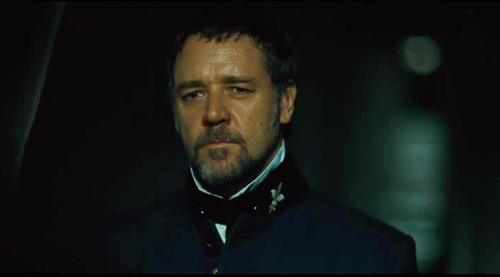
I had zero misgivings about the cast. Like many Les Mis lovers, the casting of Russell Crowe as Javert struck me as potentially problematic, not because of his appearance, but because he simply isn’t blessed with a great musical voice. And when your mental template for Javert is the great Philip Quast, well…yeah, good luck there, Russell. But Crowe did very well, I think, precisely because he doesn’t have a great voice. This makes sense to me because Javert is a man of virtually no happy touches in his life, no vices, no room to enjoy anything whatsoever. I have no trouble at all with the fact that his singing is distinctively unmusical, because Javert’s singing stands at odds with his role in the story, doesn’t it? Plus, Crowe’s singing voice plays in well with the way he plays Javert in the first place: his Javert is a man of weariness, a man who has seized on his obsession with upholding the law as the only way he can make sense of a world in which no matter how righteously he pursues his obsessions, he can never make the world into ‘paradise’. Humans have fallen too far, and Javert knows it – but he can’t ever say it. Crowe captures this internal strife of Javert’s perfectly: there is always a hint of tired confusion lurking in his eyes, and we know, almost immediately upon meeting him, that suicide is likely the only way he’ll ever reconcile the world with his place in it.

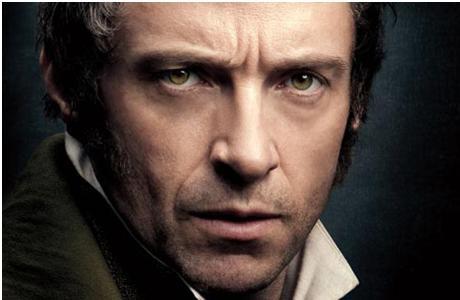
Hugh Jackman’s Valjean is likewise brilliant, and the film would fail utterly without him. I don’t think that the production decision to sing live on stage always served Jackman’s voice to the highest degree, but that is, again, a quibble. Jackman captures Valjean’s internal goodness as perfectly as Crowe captures Javert’s inability to live in the real world, and I loved Jackman’s voice. His Valjean is more of a tenor than usual, but that’s no matter. He completely convinces me of Valjean’s pain, of his moral certitude once he is set on the right course by a compassionate priest, and of the seriousness with which he holds the vow he made to Fantine on the night she died. Best of all, Jackman’s Valjean always seems to be thinking. He’s not just going through the motions of always doing what is moral; Jackman shows us that Valjean has to work at it, even if the music and script don’t always make that internal struggle entirely clear. (Victor Hugo spends entire chapters describing Valjean thinking about his moral choices.)

In all honesty, I can’t think of a wrong note in the cast. Amanda Seyfried’s Cosette is…well, she’s just kind of there, but I don’t think that Seyfried can possibly be blamed for that, as Cosette is just…well, there’s not much there there, with Cosette. She’s easily the weakest link in the stage show, dramatically speaking, and the film can’t really solve that difficulty, either. Cosette is just there to be loved, either protectively (Valjean), or unattainably (Fantine), or romantically (Marius). Eponine is far better drawn as a character in her short time on stage, but she’d better be, because her story is the tragic one.

Sacha Baron Cohen and Helena Bonham Carter as the Thenardiers? That was, for me, utterly perfect casting. Of all the numbers in the film, “Master of the House” is closest to that movie I’ve made in my mind over the years – my “Castle in the Clouds”, so to speak. The Thenardiers are disgusting individuals, the ones who steal the coins from the dead man’s eyes, so to speak. And the way they keep popping up is disconcerting, as if the very world is constantly trying to drag back down those who would rise above it. Which, when you think about it, is really true, isn’t it?

The best person in the cast is very likely Samantha Barks as Eponine, who makes the absolute most of the relatively short time she’s around. Her emotions are raw and we feel them with her, and Barks does something wonderful in the way she allows Eponine’s love for Marius to show only when he’s not looking (until the very end). It’s kind of a shame that Anne Hathaway’s “I Dreamed a Dream” seems to be shaping up as the film’s musical highlight, because Barks’s “On My Own” is amazing. But then, it’s Eponine’s constant fate, isn’t it, to stay in the shadows of someone else?

So no, Les Miserables is not a perfect movie. And it won’t win over anyone who didn’t like the stage show. Nor, I think, will anyone who sees this movie, wonders what the fuss is, and then goes to the stage show find that experience terribly more satisfying. This isn’t my Les Mis, but it is Les Mis. Warts and all, maybe more warts than I would have liked.

Put it this way: After writing this review, all I can think is…I want to go see it again. As soon as humanly possible. “One more day…another day, another destiny….”

Share This Post

Darth Abrams?

According to a number of media reports, JJ Abrams is directing the first Star Wars movie of the Disney era. I’m mostly fine with this — of all my myriad problems with Star Trek 2009, none of them were in the film’s execution or direction. I thought that Abrams made a fine explodey-spaceshippy-goodness movie, so if he’s directing Star Wars, yeah…I’m fine.

I don’t want him writing it, though. I’ve never cared for his work as a writer. Nor do I want Orci and Kurtzman to write it, either. Because they are, frankly, terrible writers.

If only there was a writer out there somewhere, well-steeped in Star Wars and space opera, waiting for his big break…if only…doo de doo de doo….

Long live Star Wars!

Share This Post