Man of steel, suit of rubber

Here’s a problem: the teaser poster for the new Superman movie, unveiled at Comic Con:

I just don’t like this poster at all. It does nothing to make me want to see the movie. I hate the washed-out colors (I really wish this era of dull color schemes in movies would come to an end), and I really dislike the weird rubber-material appearance of the costume itself. I know, I know, I’m one of those people — but Ye Gods, the first Superman movie is one of the iconic superhero movies ever made, and in that one, Superman wore a suit made of…cloth. Now, no, this doesn’t mean that the movie itself will stink. If it’s good and the script is good and it’s shot and acted well and the score doesn’t stink (which is, frankly, six to five and pick ’em, what with Hans Zimmer composing it), something little like a costume isn’t going to stop me from seeing it and enjoying it. But I’m not complaining about the movie, just a poster.

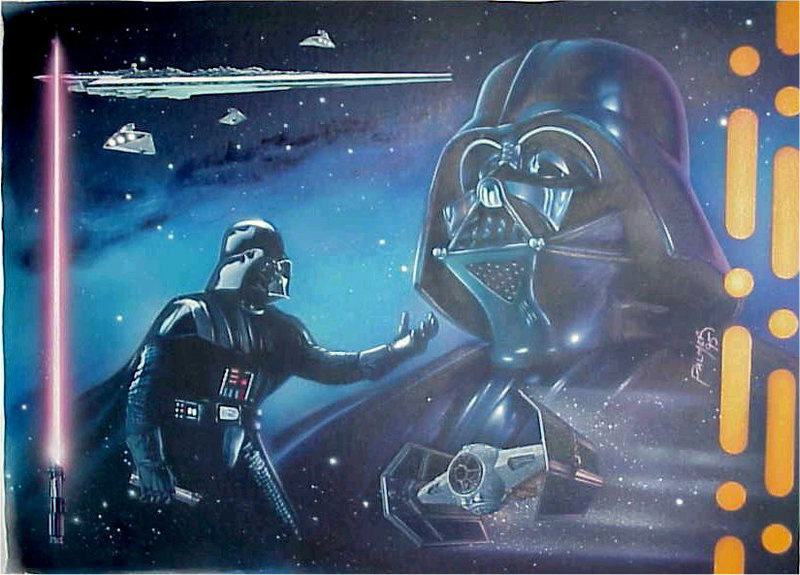
And as a poster, this does spectacularly little for me. All this does is remind me that there’s a Superman movie coming out at some point. Here, on the other hand, is a fan-made tribute image for the original Superman movie:

This (via) makes me want to drop what I’m doing and watch that movie again right now.

Share This Post

What’s an ‘old’ movie?

I find it interesting once in a while to consider what constitutes an ‘old’ movie. I’ve always thought of Casablanca, for example, as an ‘old movie’. (Now, a movie’s status as an ‘old movie’ has absolutely no bearing on how much I love it. I can name only one movie that I love more than Casablanca. No points for guessing correctly which movie that is.)

When I was born in 1971, Casablanca was 29 years old, having been released in 1942. That means that right now, movies released in 1983 are as old as Casablanca was when I was born. Here’s a list of such films:

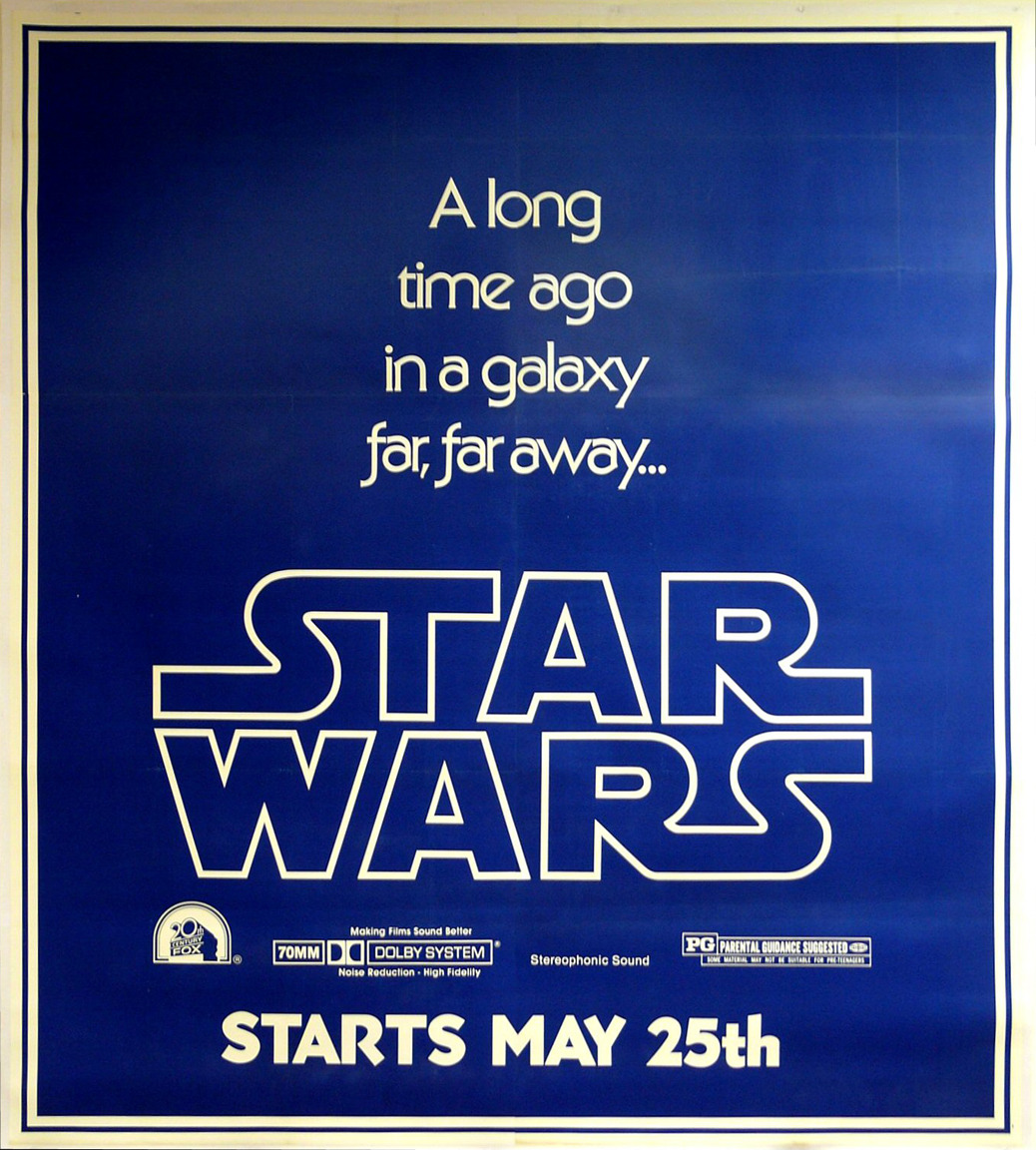
Star Wars Episode VI: Return of the Jedi
Octopussy
Brainstorm
The Big Chill
A Christmas Story
WarGames
Terms of Endearment
The Right Stuff
Superman III
Easy Money
Flashdance
High Road to China
Krull
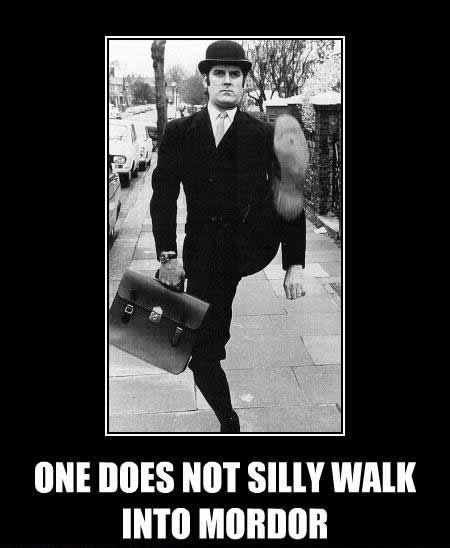
Monty Python’s The Meaning of Life

What does this mean? Well, for one thing, it means that for me, the concept of a movie being ‘old’ gets more and more meaningless each year. It’s a great thing when one gets over how long something has existed before determining one’s willingness to enjoy it.

Share This Post

Avengers assemble!!! (no spoilers)

Heavens, what a movie.

I mean, really. Heavens, what a movie.

The Avengers doesn’t quite take the top prize as my favorite superhero movie of all time, but at this point, I just don’t think that Superman is likely to be dislodged from that spot in my heart, ever. But the spot for number two? I think that Spiderman 2 is in that spot…but I’m not sure if The Avengers didn’t just take it over. Or at least tied it.

I loved this movie. It’s thrilling and exciting. Its story is epic in scale, but fairly simple in its particulars. Its characters are all well-drawn and sharply written. Its dialogue crackles. Its action sequences are full of effects that look amazing even in this day and age, and the sequences are not impossible to follow. The Avengers is pretty much a joy from start to finish.

I’m a fan of Joss Whedon’s, although I’m not an obsessive one (I have yet to watch much of Buffy the Vampire Slayer at all), nor one who believes he is infallible (I watched four or five episodes of Dollhouse before I gave up). I do rank Whedon above the other great God Emperor of Geekstuff, JJ Abrams, though; Abrams is a fine director, but his writing just leaves me wanting. I was never a big fan of the Avengers during my own comics reading days, but when I learned that Whedon was writing and directing the film toward which all the Marvel superhero movies of recent years had been building toward, I was terribly excited. And I’m glad to report that this excitement has paid off.

The films leading up to this have, admittedly, been a mixed bag…but a generally likable mixed bag. Iron Man  was a lot of fun; Iron Man 2 a bit less fun, but enjoyable. Thor was a blast, although its blend of New Mexico desert and an Asgard that looked made of freshly-painted plastic felt odd. Captain America was probably the best of all these; I enjoyed the hell out of that one. (Did I ever blog about it? Oh noes, I didn’t! Especially since I didn’t see it until just a month or so ago.)

So, along comes The Avengers. This movie has to reintroduce all these heroes, and do it in such a way that it reminds those of us who saw their individual movies what went on, but doesn’t bog down in reminders for people who didn’t see them. It also has to set up the villain (Loki) and explain what he’s up to. Whedon gets all these various pots boiling, and he does it with flair and confidence. Where lots of superhero movies falter is in their various first acts, but Whedon is able to keep all this pretty interesting. He doesn’t spend too much time in explanations, and gives pretty much exactly as much information as you need to make sense of what’s going on. (And, frankly, he honors the longstanding tradition of superhero comics that everything makes sense as long as you don’t really think about it too closely.)

This isn’t a perfect movie. The pacing is pretty relaxed in the first act, but each act picks up steam, until by the end of the movie, I was left pretty breathless. Whedon is able to make the film large in scale; this feels like a genuine epic, and it doesn’t feel artificially inflated. Here are some great things that Whedon does along the way:

  • He raises the stakes a little at a time. Early on, in the first skirmishes, a given fight might need one hero, maybe two. This changes as the nature of the threats becomes greater and greater.
  • He establishes that in any battle worth fighting, a price will be paid. Anyone familiar with Whedon’s work over the years will know that he definitely likes to do this, and there are moments in this film where I found myself wondering if the price had just been paid, because I know Whedon and his lack of fear when it comes to putting his characters through hell.
  • The battles take their toll on our heroes. Whedon makes them work for it. This is a hallmark of all the great Marvel Comics team battles over the years. Sometimes the team — any team, whether it’s the Avengers, the X-Men, whomever — even loses. And the battles themselves have acts! It’s just classic Marvel Comics storytelling that our heroes have to work to exhaustion just to beat the first wave of attackers, and just as you’re wondering how they can ever defeat what’s next…what’s next comes upon the scene.
  • Whedon gets that superhero teams are not inherently given to teamwork. He knows that there are egos at work, and he shows this. Best of all, he’s able to show all these clashing egos without making us think that any one of them is a complete jerk. I loved that.
I love the acting in the film, as well. All the leads are superb, just as they were in their respective films before. Chris Evans is still able to portray Captain America’s earnest goodness without making him an insufferable boor to be around; Robert Downey Jr. as Iron Man gets all manner of great lines. The best part of the cast may be Mark Ruffalo as Dr. Bruce Banner, who also has to turn into the Hulk on occasion. He’s able to portray Banner as brilliant and cursed, a man who is wounded by his inabilities to always control who he is.
As I mention above, the action sequences are filmed perfectly. Despite the fact that New York City is exploding left and right, Whedon establishes what’s going on and shows it without filling his frame with so much mayhem as to make the shots impossible to follow. And I liked that he engages in minimal cross-cutting, so that when he takes us to see what, say, Black Widow is up to, he stays with her long enough that we know what’s happening.
No, The Avengers is not perfect. It does have moments of slowness, and the motivations of the villains aren’t always obvious. And as much as I’ve enjoyed Alan Silvestri’s music in the past, I don’t think he turned in the best score here; I’d hoped for one big, memorable theme for this film, but it just wasn’t there. In a very real way, if forced to choose one factor that keeps this film (and Spiderman 2) behind Superman in my heart is that Superman boasts a score by John Williams at the height of his powers. But to my mind, there is no flaw in The Avengers that keeps it from being what it is: one of the most entertaining films I’ve seen in years.
A couple of random notes:
::  Yes, Stan Lee has a cameo. But my favorite cameo was from character actor Kenneth Tigar as the “German Old Man”, who talks back to Loki. I’ve always liked Tigar (he was the bomb squad guy in the Lethal Weapon movies, and he was one of the more notable killers against whom Thomas Magnum matched wits on Magnum PI) , and I’m glad to see that he’s still active and acting!
::  Reportedly, Joss Whedon wanted Cobie Smulders as Wonder Woman, back when he was attached to whatever Wonder Woman movie was in development. I’m glad that he managed to get her into the superhero movie world here, as a SHIELD agent.
::  A lot of reviews I’ve seen accuse Samuel L. Jackson of just doing his standard glower through the movie. It’s not like his role didn’t really call for him to do much else, but he did allow his Nick Fury to show what little vulnerability he would.
::  There’s an airplane in this movie that bears a small design similarity to the Serenity. It’s a blink-and-you-miss-it kind of thing, but I sure saw it.
::  If you see it, stay for the very, very end. All the way to the end of the credits. Trust me.
::  Bring on The Avengers II! (And while we’re at it, let’s get the Serenity out of mothballs, shall we?)

Share This Post

A to Z: Zany!

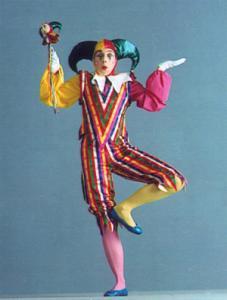
Hey, I made it! It’s the end of the A-to-Z Challenge. Let’s look at some Zaniness, shall we?

According to this site, the word ‘zany’ was first used in English by none other than William Shakespeare, although its origins are apparently Italian:

Somebody zany is amusingly crazy or clownish. If you object to my definition, then you may be in the company of the compilers of several current dictionaries. It’s a hard word to pin down — we all think we know what we mean by it, but we may find describing it in plain English surprisingly hard.

That may have something to do with the way the word has evolved. It was first a noun, to describe a performer in the commedia dell’arte, an improvised Italian comic form of the sixteenth to eighteenth centuries. The zany was a foolish servant, a buffoon, who attempted to mimic the actions of his master, himself a clown. The servant was given the generic name Giovanni (the Italian equivalent of John), much as English servants of the same period were frequently called Andrew (indeed, one English equivalent to the zany was a merry-andrew), or as a Glaswegian might call someone Jimmy as an all-purpose name. In time Giovanni turned into zannie and we imported it in that form.

. We tend to think of zany as meaning a special kind of madcap comedy, one in which questions of sanity are best left at the door. Here’s Merriam Webster on the case:

1: being or having the characteristics of a zany

2: fantastically or absurdly ludicrous (a zany movie)

However, looking at definition number one under zany as adjective, I see that zany can also be a noun. This, I did not know! y interesting word, actually. Merriam-Webster defines it thusly (same link as above, toggle a link there to switch from noun to adjective):

1: a subordinate clown or acrobat in old comedies who mimics ludicrously the tricks of the principal

2: a slavish follower

3a : one who acts the buffoon to amuse others

The noun use of zany seems to have dropped out of usage, in favor of the adjective. I’ve never, to my knowledge, heard of someone refer to a ‘zany’, but I have heard, many times, someone or something described as ‘zany’. So how about some zaniness in fantasy and SF?

Well, there’s quite a lot of comedy to be found in both genres. Fantasy isn’t all long, wordy, and ponderous tales involving plucky rural heroes making their way across a vast continent to the very stronghold of evil; there’s plenty of funny stuff be found. But not everything that is funny is also zany. I’d definitely file the books of Christopher Moore in the ‘zany’ category, and they are cheerfully zany, full of wild leaps in logic and loaded with highly eccentric characters; his books are, in the words of Merriam-Webster, “fantastically or absurdly ludicrous”. That’s part of their charm. Moore writes the kinds of books where two women in a rubber raft at sea find themselves in between two whales who are about to engage in the physical act of whale-love, or where a six-year-old Jesus causes a stir in his hometown when he makes his own face appear in the Passover bread.

Interestingly, Moore has also written a book that fits the noun use of zany, the wonderful Foole, in which Moore tells the story of King Lear from the viewpoint of the Fool…the zany, you might call it.

Lois McMaster Bujold’s “Miles Vorkosigan” books aren’t really zany, per se, but they do have moments when the humor rises to a certain level that’s almost zany. Ditto Scott Lynch’s Gentleman Bastard Sequence (comprising The Lies of Locke Lamora and Red Seas Under Red Skies. I suspect that the Hitchhiker’s Guide to the Galaxy series is pretty zany…but I wouldn’t know. I haven’t read them. (I’ll hang my head in shame.)

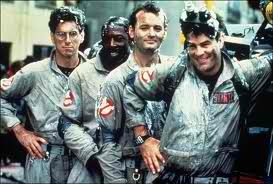
Fantasy and SF in the movies? There, it’s easier to find zaniness on display. Ghostbusters is pure zaniness, through and through. So is Back to the Future, Galaxy Quest, and most of Star Trek IV. Men in Black is zany, and amongst animated films, The Emperor’s New Groove is as zany a film as I can remember. And you have to include the films of Monty Python, which are as zany as it gets and which are often filled with fantastical content.

I’m sure it comes as no surprise that I’m a fan of zaniness, both in life and in fiction. Serious things are good, but zaniness is a part of life, is it not? Life should be a little bit zany…or a lot zany, if you can manage it. The trick is to find your preferred versions of it and incorporate them into your life. Don’t be afraid to, as Merriam-Webster defines it, “act the buffoon to amuse others”…even if it means the occasional pie in the face.

And with that, I come to a successful close of the A to Z Challenge for 2012, Huzzah! Maybe I’ll do this again next year….

Share This Post
A to Z: Villains

A good adventure tale needs a lot of things: a hero or two or three or four, a problem for them to solve, long odds, improbably escapes from certain doom, high stakes if they fail…and a Villain. It’s often said that a tale of adventure succeeds as much on the strength of its villains as it does on the strength of its heroes. A great villain is fun to watch, and on some small level, we might even find ourselves rooting for him or her…maybe not for ultimate victory, but at least for keeping things tough and interesting for our hero.

The best villains are, obviously, people. Except for the ones that aren’t. How’s that for hedging your bets! But it’s really true. When I think of adventure movies or books that I love the most, those are the ones that often boast the best villains. And in adventure tales that fall short for me, it’s equally often because the villains just aren’t interesting, or fun, or they are so evil and despicable that it becomes depressing just to watch them in action.

A good example of the last kind are the Gary Oldman character in the Harrison Ford-as-President flick Air Force One. At first he’s OK, but as the film goes on, Oldman doesn’t play him as a person who is having the least amount of fun – a villain should seem to enjoy him or herself a little – and then there’s an awful scene where he threatens to kill a defenseless woman if the President doesn’t surrender. The President doesn’t surrender, so he kills the woman after counting down from ten with his gun pressed to her temple. The scene cast a huge pall over the rest of the movie. There was no particular thrill when President Indiana Jones defeated Oldman in the end; it was just, “OK, that monster’s gone now.”

Another such example is the Jeremy Brett character in The Patriot, the Mel Gibson Revolutionary War epic. Brett plays this guy as a lunatic who is perfectly happy to kill anyone he wants, and this culminates in a staggering scene of awfulness when he has his men round up an entire town’s people into a church…and then bars the doors and sets the church on fire. Ye Gods. (It doesn’t help that the Nazis would do just that, 180 years later.) Again, it’s so over-the-top and awful that for me, Brett’s final defeat in the movie had little feel of actual triumph.

So, who are the good villains, then? Well, they’re all going to kill…but they make choices about when to do it, and they only do it when they must. Kind of like heroes, right? Which is why it’s best if the hero and the villain can be shown to have some of the same kind of personality. I think of that wonderful scene in Raiders of the Lost Ark, when Belloq points out to Indy that they really aren’t terribly different. “It wouldn’t take much to make you like me,” Belloq says. “To push you out of the light.” And he’s right. Belloq is a big reason why Raiders is the best Indiana Jones film.

Villains have to be motivated, and they have to act in ways that are consistent with their motivation. But villains also should, if they are to be compelling and believable, clearly see themselves as the heroes and the hero as their personal villain. The best example of this I can think of is Hans Gruber from Die Hard; he gets nearly as much screen time as John McClane, and it’s not all just Hans killing hostages and saying evil-sounding things in his lair. Gruber’s got a plan and he’s got motivations, and the film lets us see his annoyance and irritation – as well as his intelligence – when things happen that derail the perfect execution of his plan. Alan Rickman lets us see Hans’s wheels turning. Hans Gruber is one of the best villains of all time.

Of course, there are outliers to the above. HAL-9000 of 2001: A Space Odyssey is a fascinating villain and deeply memorable, even though his motivations are inexplicable. We’re never told (in 2001, anyway) why the ship’s computer would become psychotic; it’s effective because of how odd a thing it is. And then there’s The Lord of the Rings, whose main villain is never directly interacted with, and whose physical embodiment is a giant flaming eyeball. Tolkien’s skill is such that he still manages to create with Sauron a palpable feeling of menace, and a sense that Sauron’s actions are driving everything that happens in our story.

And then there are the villains in comics. Each major superhero seems to have one or two iconic villains that they tend to be the ones to square off against: Spiderman has the Green Goblin and Dr. Octopus; Superman has Lex Luthor; Batman has the Riddler, and so forth. You don’t see very often things like the X-Men squaring off against the Lizard, or Batman having to deal with Brainiac (but you do see it from time to time). That’s always interested me…it always felt a little bit wrong when there would be ‘crossovers of villainy’. And sometimes it gets a bit hard to swallow, such as the issue of Spiderman that acknowledged that 9-11 had happened; in that issue we saw Doctor Doom shedding tears. That was just tough to believe.

Books, of course, can get even deeper with the villains. In Guy Gavriel Kay’s Tigana, Brandin is portrayed at first as an evil enough man to have erased an entire nation from memory, but it quickly becomes more complicated than that, and GGK allows us to see him as a man who deeply loves his wife. I have a friend who is watching the Games of Thrones teevee series, but he hasn’t read the books, so when he said, “Wow, I hope they kill Jaime this season. That guy’s a scum!” I had to laugh. Is Jaime a villain? He is in the first two books. In the next two…it gets complicated.

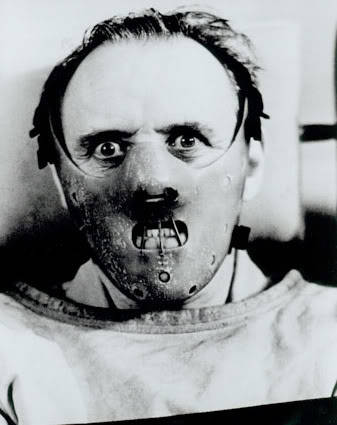
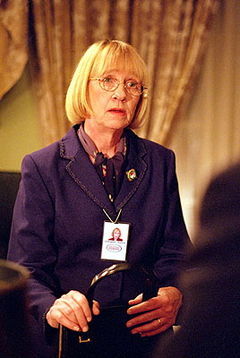
So: villains have to be motivated, and they have to seem that they are the protagonists in their story. And they should be the tiniest little bit sympathetic. You know, kind of like this guy:

Share This Post

A to Z: Trains

There’s some part of me that thinks that no matter how far in the future we get, no matter how awesome the spaceships or starships we build, there’s a degree to which human transportation will never exceed railroads for romance, intrigue, and a just plain civilized feel. Trains rule…and judging by fiction out there, a lot of writers and creators agree.

What is it about trains? Well, you have a confined setting, but it’s a setting on wheels, and therefore, the setting moves. So you get the best of both worlds: you can lock your characters in one place and watch them interact, or you can have the train stop and have some other stuff happen. Trains increase the intrigue by virtue of the fact that once on, you can’t get off until it stops. Trains lend themselves to tension in so many ways.

Trains are also a concept which can be modified to fit nearly any time frame. Trains figure in a lot of far-future stories, as far from their ‘wild west’ forebears as you can get…and yet, there they are, strings of metal cars, riding atop rails or suspended from cables or embedded in tubes. Arnold Schwarzenegger’s Quade boards a train once he gets to Mars in Total Recall. In the Commonwealth of Peter Hamilton’s space opera novels, one travels from one world to the next not via starship but via train, as it’s the trains that pass through the wormholes to other worlds.

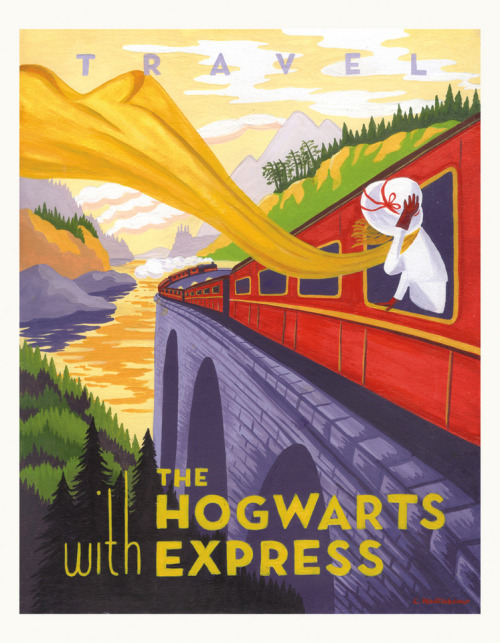
Trains can be futuristic, but they don’t have to be. The most famous fictional train right now may well be the Hogwarts Express, which departs from Platform Nine and Three Quarters in London for the great school of wizardry. The Express isn’t one of the major locations in the Potterverse, but it appears in each tale, its importance quietly understated.

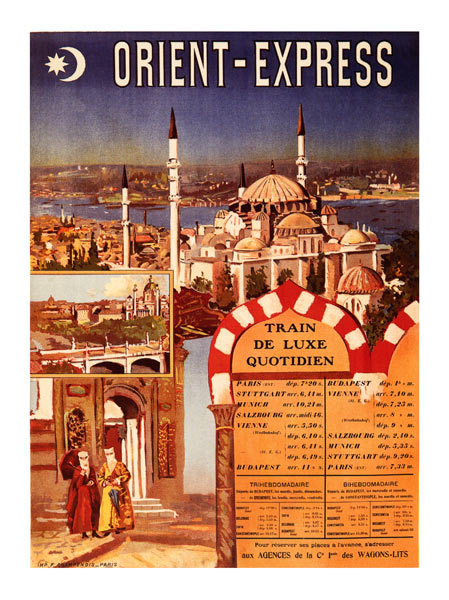
Of course, trains figure all the time in “real world” fiction. There’s the Agatha Christie novel Murder on the Orient Express (whose solution is one of the more elegant to be found in Christie), and the same train figures prominently in the James Bond book and film From Russia With Love. You can’t have Westerns without trains, and one of the most riveting action films of recent years, , dealt with a runaway train.

I wouldn’t want to live in a world without trains, and I deeply wish I lived in a country that took them more seriously than others.

Share This Post

A to Z: Q

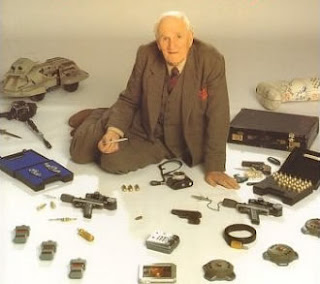
The obvious choice here is to talk about Q, but I couldn’t decide which one. This Q?

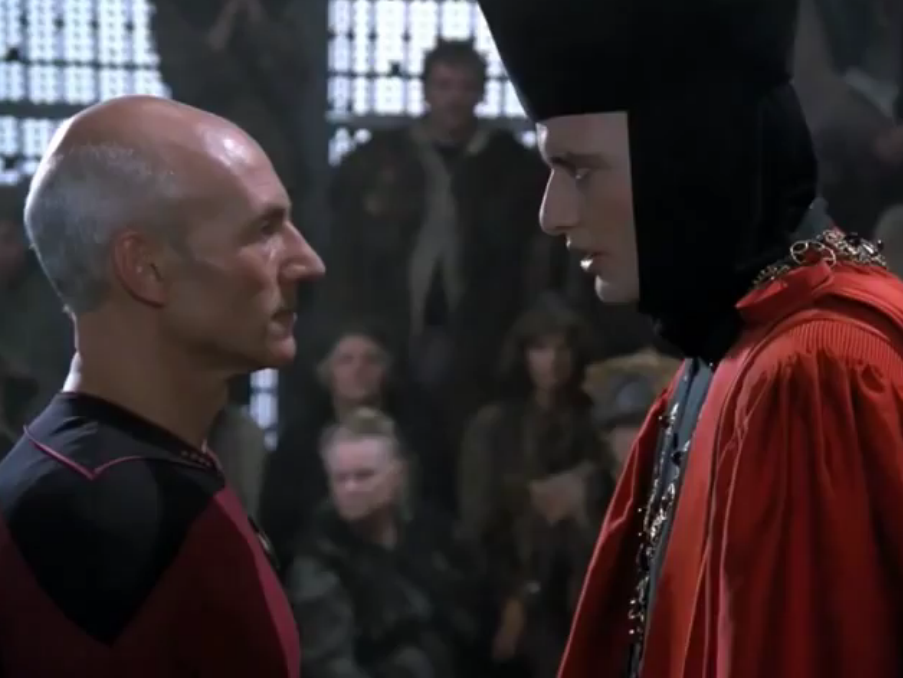
Or this one?

Luckily, this is my personal blog, where the only rules that apply are the ones that I choose for myself, and which I can summarily set aside any time I want, so…let’s talk about both Q’s!

Our first Q is less well-known as Major Geoffrey Boothroyd. (The only time we ever hear his name in the James Bond movies is in The Spy Who Loved Me, when he holds a door open for Agent Anya Amasova, and she thanks him by name.) Q’s first appearance was in From Russia With Love, when M informs Bond during his briefing that “Q branch has been working on something special for you.” In walks our man, looking pretty young and spry back then, played by actor Desmond Llewellyn. He’s got with him a briefcase that has trick catches that, if not opened properly, causes an explosive to go off; contains a rifle that’s nicely broken down into a bunch of small pieces (this was 1962, well before X-ray machines at airports!); and fifty gold sovereigns. There had been a character in Dr. No simply referred to as “the armorer”, who relieved Bond of his Baretta pistol (derisively calling it a fine gun “for a lady’s handbag”) and giving him his trademark Walther PPK, but the guy we would know as Q didn’t come until the second movie.

But it was in the third Bond film, Goldfinger, that Q would become iconic. That’s when he unveils his tricked-out Austin Martin DB-V, with machine guns in the headlights, spinning license plates, homing device trackers, and the ejector seat. It’s too bad that the car doesn’t end up amounting to much…but Q’s attitude toward James Bond becomes clear when Bond says “You’re joking!” in reference to the ejector seat, and Q replies, “I never joke about my work, 007.”

Q was a fixture for most of the remaining Bond films. He wouldn’t appear in Live and Let Die, but he’d be present for all the remaining films until Die Another Day; Q was revealed to be retiring in The World is Not Enough; he even introduced his successor, who was played by John Cleese, in an inspired bit of casting. There was a giant pall cast over the whole thing, though, when Desmond Llewellyn died in a car crash not long after TWINE came out.

The Daniel Craig films have not availed themselves of a Q character yet, which I hope is forthcoming, even if I also hope that the gadgets don’t get too outlandish (the invisible car in Die Another Day was too hard to believe). Maybe in Skyfall; I don’t know yet.

My favorite Q gadgets? I loved the exploding key ring in The Living Daylights, the wrist-activated blowgun of Moonraker, and the fountain pen filled with acid in Octopussy. And my favorite Q moment came in Licence to Kill. In that film, Q actually goes out into the field to assist 007, who has gone rogue. Now, all through Bond’s career, Q has constantly complained that Bond never returns his gadgets in their original working condition. Late in the movie, though, Q is posing as a peasant sweeping a sidewalk when the bad guy drives by. Q alerts Bond via the little radio he has attached to the broomstick…and then, with his job done, he casually tosses the broom aside.

But…what about the other Q?

This Q showed up immediately on Star Trek: The Next Generation, right in the very first scene of the pilot, and he was originally depicted as a representative of a nearly omnipotent species that is deeply ambivalent toward humanity. Played with zeal every time he showed up with John de Lancie, Q put all of humanity on trial through the persons of Picard and the rest of the bridge crew. I think the character of Q went through evolution, though, as all characters do. Originally, Q was seen more as a trickster character, but then he became more of a gadfly through whom the Enterprise crew learned their deeper lessons about the universe and about life. Most of Q’s episodes were highly memorable: it was Q who made the Borg aware of the Federation; it was Q who greeted Picard in the afterlife and somehow arranged for him to experience an astonishing life lesson.

I never liked Q as much when he started turning up on DS9 or Voyager, when the producers started to explore the entire ‘Q Continuum’ and the politics thereof, which had the unfortunate effect of turning Q into, well, another in a long series of alien races with their own concerns and whatnot. When he was by himself (for the most part), Q something unique unto himself.

Share This Post

A to Z: Old People of Wisdom

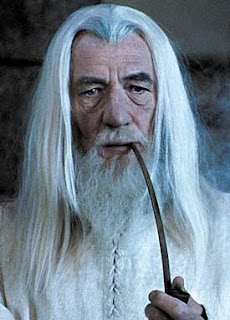
Gandalf. Loren Silvercloak. Mrs. Potts. Obi Wan Kenobi. Boothby the gardener. Sarek. T’Lar. Dumbledore and McGonagall. The Oracle. Jor-El. Maester Aemon. Mrs. Landingham. And, of course, Merlin.

What do all these folks have in common? They are Old People of Wisdom.

In the Campbellian Monomyth, the Old Person of Wisdom is the mentor-figure who provides the Hero with magical aid that he or she will need, going forward, to complete the adventure. It is also often the Old Person of Wisdom who provides the Hero with their initial ‘Call to Adventure’. So this figure is often the catalyst for the story.

“If you’re referring to the incident with the dragon, I was barely involved. All I did was give your Uncle a little nudge out the door.” –Gandalf the Grey, The Lord of the Rings: The Fellowship of the Ring (film)

Of course, those familiar with ‘the incident with the dragon’ know that Gandalf did a lot more than that. Yes, he showed up on Bilbo’s doorstep and introduced him to a bunch of dwarves who wanted to hire him to be their burglar, but how did it come to that? How did Gandalf settle on Bilbo, and not, say, some Bolger or Bracegirdle or Proudfoot? It’s often the role of the Old Person of Wisdom to see something in the hero that they don’t see in themselves. Gandalf sees in Bilbo a stalwart burglar. Obi Wan Kenobi sees in Luke Skywalker a future Jedi knight. (We’ll learn, of course, that he has a lot of reasons for seeing that.) Loren Silvercloak sees in five young University of Toronto students qualities that will prove essential in the final war with the darkness of Rakoth Maugrim.

One of the interesting things about the Harry Potter books is the way that multiple characters fulfill the function of the Old Person of Wisdom. Albus Dumbledore is the key of them all, but he doesn’t do it all. The Call to Adventure comes from Hagrid. Supernatural aid comes not just from Dumbledore but from McGonagall, Sirius Black, Remus Lupin…a whole host of people. Of course, JK Rowling didn’t blaze this trail on her own; in the James Bond movies, what are M and Q but Old People of Wisdom?

Why does this trope have so much power? It seems pretty obvious to me. Age implies experience and wisdom. We look to the mothers and fathers of our communities for wisdom. And we know that eventually they move on, into death, and that eventually the story will be ours and ours alone…until we have to serve as Old People of Wisdom ourselves.

I’m reminded of the wonderful closing speech that Sir Anthony Hopkins delivers in the movie Amistad:

The other night I was talking with my friend, Cinque. [The African man who was kidnapped into slavery and who is suing for his freedom in the film.] He was over at my place, and we were out in the greenhouse together. And he was explaining to me how when a member of the Mende — that’s his people — how when a member of the Mende encounters a situation where there appears no hope at all, he invokes his ancestors. It’s a tradition. See, the Mende believe that if one can summon the spirits of one’s ancestors, then they have never left, and the wisdom and strength they fathered and inspired will come to his aid.

James Madison, Alexander Hamilton, Benjamin Franklin, Thomas Jefferson, George Washington, John Adams: We’ve long resisted asking you for guidance. Perhaps we have feared in doing so we might acknowledge that our individuality which we so, so revere is not entirely our own. Perhaps we’ve feared an appeal to you might be taken for weakness. But, we’ve come to understand, finally, that this is not so. We understand now, we’ve been made to understand, and to embrace the understanding that who we are is who we were.

We desperately need your strength and wisdom to triumph over our fears, our prejudices, our-selves. Give us the courage to do what is right. And if it means civil war, then let it come. And when it does, may it be, finally, the last battle of the American Revolution.

What’s wonderful about this particular cinematic moment is that in the film, Hopkins’s John Quincy Adams is himself an Old Person of Wisdom…and yet here he is, citing the eternal need in our species for Old People of Wisdom. (You can watch the speech here.)

It’s almost impossible, I think, to avoid the trope of the Old Person of Wisdom. It’s not just ingrained in our storytelling. It’s ingrained in us.

Share This Post

A to Z: North!

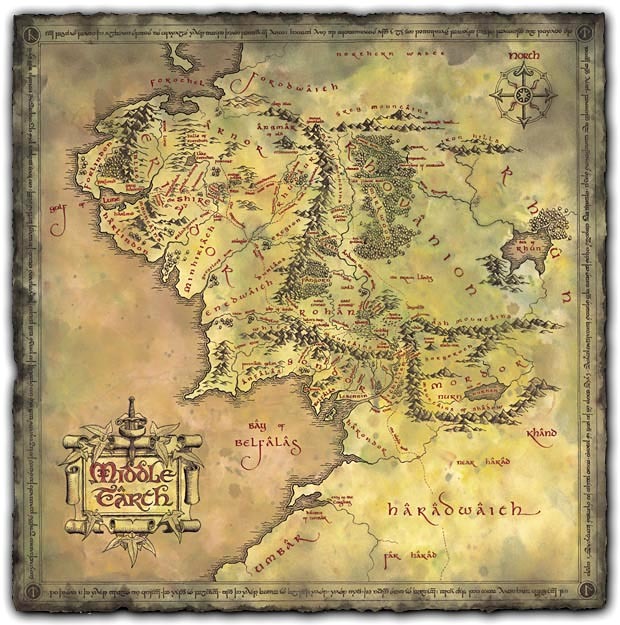
Direction is always important…and in a lot of fantasy, specific directions carry with them specific connotations. Such as North.

finding north

North is often portrayed as cold and desolate and lonely. Just about every fantasy that I know is set in the northern hemisphere of its particular planet, so north really does tend to be a land of cold and, sometimes, a land of unknown. In some cases, the North is where Evil lives: Guy Gavriel Kay’s The Fionavar Tapestry puts Rakoth Maugrim’s fortress up north, just below the “Ruk Barrens”, which are endless lands of ice. In Tigana, he flips things around – it’s the warm lands that are in the north, and to the south are the snowy mountains. But it’s easy to miss this geographic flipping.

George RR Martin uses the North as a source of cold grim things, as well; in fact, it could very well be that the main existential threat of his books is coming from the North, beyond the Wall that was built thousands of years ago to hold the North at bay.

I don’t recall what is in the far north in Stephen R. Donaldson’s “The Land”, the setting of his Thomas Covenant books, but he does invert things a bit by placing Revelstone, the chief fortress of his forces for Good, in the northern part of The Land, while Foul’s Creche – the stronghold of villain Lord Foul – is in the east.

For JRR Tolkien, the north seems to have been also a source of cold, of snows, and of dark things. In the north is the kingdom of Angmar, whose Witch King would later come to serve Sauron as Lord of the Nazgul. The North is never really visited in The Lord of the Rings; it is a location of legend more than action of the story. But it’s not only a source of grim things, for the Rangers of the North are also there, protecting the Shire and from their number comes Aragorn, heir to Isildur and rightful King of Gondor.

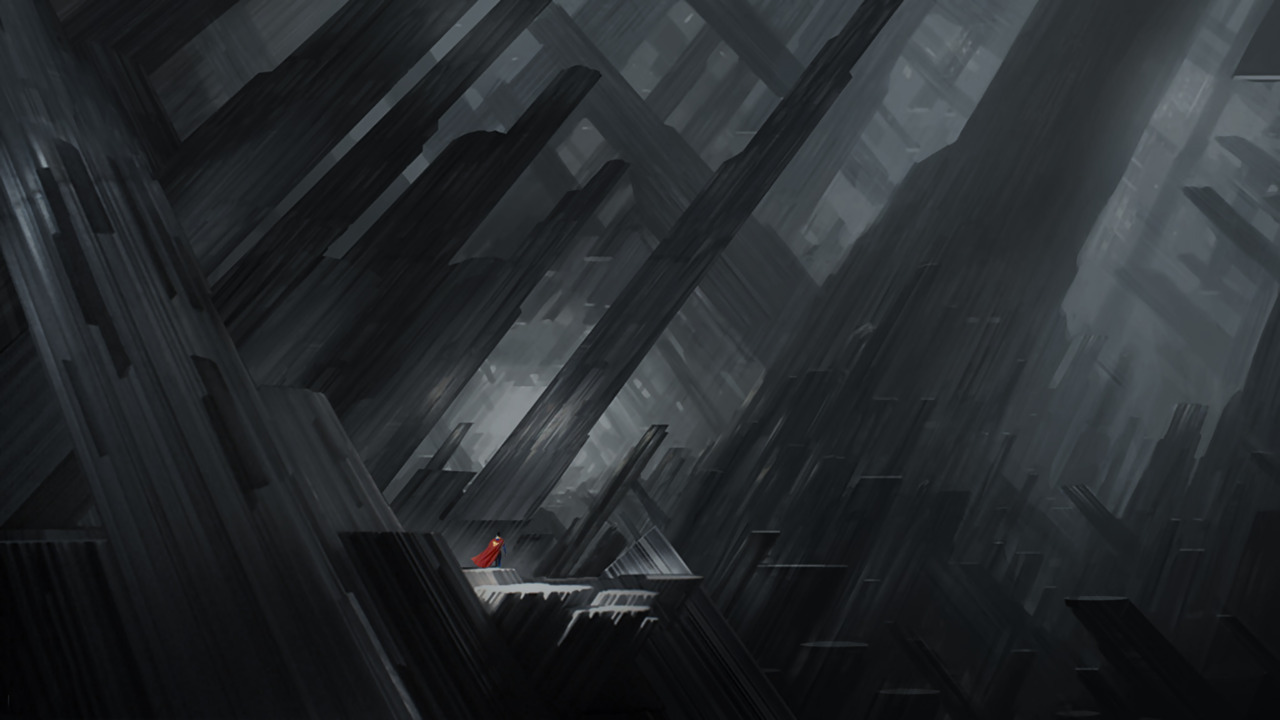
The North is not always a source of darkness, cold, villainy, or evil. For Superman, the North is a place of quiet and contemplation, where he goes to rest. It is in the North that he builds his Fortress of Solitude, his unearthly home on Earth.

How do you see the North? Cold and desolate and full of dark beings? Or stark and majestic and a place of enormous solace?

Share This Post