I know, it’s not Thursday. But hey, whoever said I had to stick to the schedule?
I’ve had an odd relationship with country music my entire life. On balance, it generally isn’t my cup of tea, but when a country song gets under my skin, it really gets under my skin, and this — “Y’all Come Back Saloon”, by the Oak Ridge Boys — is a perfect example. I love this song to death. I don’t know why I’ve been listening to it a bit of late, but I have (and I’ve almost certainly featured it on Something for Thursday at one point or another). It goes back in my memory a long, long way — all the way back to my childhood. I looked it up, and the song’s 40th anniversary is coming up later this year. Wow.
I think I really respond to the country songs that have a hint of sadness to them. The best country songs always seem to deal with sad memories, of loves lost and people looking back over hard lives. That’s what this song sounds like to me…and then there are the wonderful lyrics. I mean, the first verse (heard after the chorus, for an interesting formal change) is pure poetry:
In a voice soft and trembling, she’d sing her song to Cowboy,
As a smoky halo circled ’round her raven hair.
And all the fallen angels and pinball playin’ rounders
Stopped the games that they’d been playin’ for the loser’s evening prayer.
I don’t care how much you claim to hate country music, that is some wonderful writing there. The smoky halo circling her raven hair? That is a perfect image for a song like this, as is the notion of an entire saloon’s clientele falling silent as the raven-haired beauty with her tambourine starts her song. Of course, the song’s melody will lodge in your ear in the best way. What a great song.
This live performance is terrific. Please don’t laugh at the Saturday Night Fever outfits they’re wearing! This is a terrific performance. There are more recent renditions on YouTube as well, if you want to hear how the group has changed over the years.
Roger Owen Green has turned sixty-four, which means that the one age to have a Beatles song devoted to it is now his! Huzzah! Here’s a barbershop-quartet type of cover of that very song.
Conductor Sir Neville Marriner has died. I first heard his work, as I suspect did many, in the context of the film Amadeus, but over the years since, I have heard a great deal more of his wonderful music-making. Marriner lived a long and fine life, and the music world is all the richer for his having been here. Thank you, Sir Neville!
Is there a more Me thing to do, blogging-wise, than announce a new series, post the first post in that new series, and then promptly forget about that series a week later? Oops! I completely forgot about Tone Poem Tuesday last week. Now, I did have a lot of different stuff going on, but Ye Gods, I gotta do better than that.
So this week we attend upon a work by Sir Arnold Bax (Great Britain, 1883-1953). In fact, this might be Bax’s most well-known work, although I personally have only heard it a handful of times. Bax’s music tends to be earthy and rustic, almost to the point of being rough-hewn. In addition, Bax’s music is atmospheric and clearly molded in the spirit of Romanticism, which is almost certainly why, to a large extent, his music fell into neglect after his death: his particular musical idiom was simply not in fashion anymore. Couple that with the fact that his scores tend to require large numbers of performers, and it all adds up to music that spent several decades languishing, except for occasional dustings-off of his tone poems, the most famous of which is apparently this one: Tintagel.
Bax was also heavily influenced by Celtic lore, and the castle of Tintagel in Cornwall is of major import in such lore, seeing as how it’s traditionally held as the birthplace of King Arthur. Bax’s tone poem is meant to convey some of the emotions of the location and give a sense of its character, through music. Bax eschewed any specific program for this work, intending it to be mainly suggestive of the ruined castle on the tiny spit of land that is constantly being pounded by the sea.
After three consecutive weeks of increasingly lengthy and heavy German symphonies, let’s step back and listen to something shorter and much less dense. What’s needed right now is a French composer, so this week we’ll encounter Vincent d’Indy.
I have heard almost nothing by d’Indy; in fact, it’s quite likely that the work featured in this post is the only work I’ve ever heard by d’Indy. My brief research confirms that his music is little heard today outside of the present piece, although in his Essential Canon of Classical Music, David Dubal does opine that d’Indy is a terribly underrated composer, so perhaps his work is deserving of greater exposure.
This work, the Symphony on a French Mountain Air, is unusual in a number of ways. First, it is in three movements instead of the traditional four; second, its melodic material is mostly derived from a single tune (the “mountain air” of the title, a song d’Indy heard while traveling in the mountains); and third, the work features a prominent (but not quite dominant) part for a solo piano, making it a sort of symphony-concerto hybrid, not unlike Harold in Italy, the symphony by d’Indy’s fellow Frenchman Hector Berlioz, which had featured a prominent part for solo viola.
The Symphony on a French Mountain Air is, to my ears, a delightful listen that always feels fresh and light, especially after a steady diet of heavy Germanic romanticism.
Next week: Well, I haven’t decided yet, but there is a big-name Russian composer knocking on the door….
I’ve been meaning to dust off this once-regular feature of mine, in which I take time each Saturday to explore the world of that grandest of classical music forms, the symphony — and what better time than right now?
During the 19th century, Italy did not have a great symphonic tradition as did other nations in Europe. In Italy, opera was by far the most popular form of musical composition, and practically zero symphonies by Italian composers of the Romantic era have entered the standard symphonic repertoire. This is not to say that there were no Italian symphonists during that era, however.
Giovanni Sgambati achieved some renown for his piano music, but he also wrote two symphonies, the first of which is the subject of this post. Listening to the work, it is easy to hear the heavy Germanic influence that Sgambati felt. He was an eager champion of German and Austrian music in Rome, and this symphony, with its decidedly Teutonic feel and sound, definitely shows that. It is clear that Sgambati felt more attuned to the line from Beethoven to Brahms than that from Cherubini to Verdi. The work does not feature the kind of lyricism one might expect from an Italian, but it is full of the kind of Germanic writing that is notable in many a symphony from the north.
Sgambati’s Symphony No. 1, like many an obscure work, deserves to be heard more than it is. Enjoy!
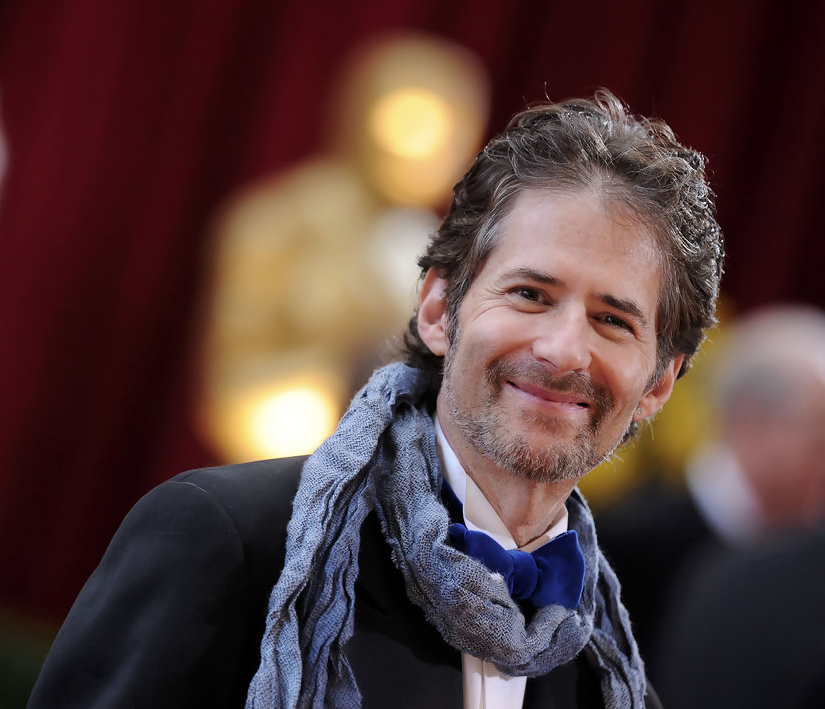
Composer James Horner died the other day when the airplane he was piloting crashed. He was the sole passenger.
This is, quite simply, the worst news to hit the film music world since Michael Kamen, Jerry Goldsmith, and Elmer Bernstein all died within a year of each other.
For me, though, the hit is more directly personal. Although my relationship with Horner’s music has been rather complicated over the years, he still wrote a fair number of my favorite filmscores of all time, and when a score of his connected, it connected. He had the ability to hone in on the precise moment of a given scene’s emotional high point and construct his music to reach its high at the same moment. All film composers strive for this, but Horner’s gift for this was something else.
Moreover, I saw Horner’s career take flight, as he rose from obscurity to, well, stardom in his small corner of the film world. He started writing for films in the late 1970s, and I first encountered him in his fifth film, the Roger Corman space opera flick Battle Beyond the Stars. This is the first James Horner music I ever heard:
That score is still a fun listen to this day, even with all its minor faults: its heavy debt to Jerry Goldsmith (one of Horner’s strongest early influences), its occasionally awful orchestration (there is a track called “Cowboy and the Jackers” when you can hear the trumpet section slowly die), and occasional transitional missteps. Horner wrote a swashbuckling score that was better than the film it accompanied (although the film really is not all that bad, as long as you don’t ask too much of it).
When next I encountered the music of James Horner, it was for another science fiction film: Star Trek II: The Wrath of Khan.
Gone was Jerry Goldsmith’s brightly optimistic bombast from The Motion Picture, and in its place was a lyrical score that had an older and more seafaring quality to it.
It wasn’t all lyricism, though; Horner’s action writing was impeccable, and the film’s climax gives a great example of Horner’s skill for matching the music to the exact visual and the emotional beats of the scene. Here is the music, titled “Genesis Countdown”:
And here is a portion of the scene as scored, starting with the Enterprise backing away from Khan’s crippled Reliant:
This entire cue is a clinic in how to spot a film: you hear the desperation as the ship begins to move so painfully slowly, the drive as Spock climbs down through the ship toward Engineering, a snippet of Horner’s theme for Spock himself as he mind-melds with McCoy, the desperate ticking down of the seconds as the bridge crew realizes they’re doomed, Khan’s final expressions of hatred. When Horner was on, this is what he could do.
Horner would return to Star Trek for the next film, The Search for Spock, but he never did any more Trek after that. This always seemed to me a pity. I would have liked to hear, perhaps, a more light-hearted take on his themes from Treks II and III in IV, perhaps, or maybe his take on the adventures of the Next Generation in any of their films. Alas, it didn’t happen. I next encountered Horner via his score to the SF film Brainstorm, which is notable mainly for being Natalie Wood’s last film and, well, for Horner’s score.
It’s amazing to hear the progression in Horner’s sound from Battle to the Treks to Krull and beyond. You can really tell how much he was learning along the way, and his development along these lines culminated in 1988’s Willow.
One can detect a certain amount of the common lot of the film composer: often the scores are, on balance, better than the films. Not everyone can be John Williams, with a partnership with Steven Spielberg.
Horner was also able to do a lot more than genre films. He scored everybody’s favorite gentle baseball film Field of Dreams, in which he flexed his Americana muscles without quite aping the typical Coplandesque sound, and a couple years later he scored the Robert Redford caper flick Sneakers.
In the mid-90s, Horner reached what was almost certainly the height of his powers, and his filmography from about 1993 to 1998 basically includes one fine score after another, with three that were truly wonderful and one other which would become his single most famous work.
For Ron Howard’s Apollo 13, Horner managed to capture both the optimism of the Apollo moon missions and the elegiac sense, looking back, that that was as far as we were willing to go at that time and for quite a long time afterward. Horner infused that entire film with amazing energy, never moreso than during that film’s incredible rocket launch sequence:
Then there was Braveheart. Horner’s score for this film is amazing, one of my favorites of all time, and I consider its first half to be some of the finest film music ever written. It’s really quite something, what Horner did here. Mel Gibson’s film takes a fairly ‘dreamy’ approach to its subject matter, with long, lingering shots and scenes that feel like meditations. Horner accompanies all this amazingly, never better than in the “Secret Wedding” sequence. This love music is more complex than it seems, with a main melody that is subtly varied through a number of different stepwise progressions, and as the scene becomes more and more intimate in the film, so too does Horner’s score, boiling down to the utter simplicity of the rhythm being set by an ostinato harp. The first half of this score amazes me each time I listen to it.
Also in this same period came what I consider to be Horner’s finest score, Legends of the Fall. This melodrama is actually a favorite film of mine, and Horner’s approach to its big emotions is to basically say, “To hell with subtlety”. It’s a choice that works amazingly well, as Horner moves from big moment to big moment. This is a movie that blends World War I tragedy with Native American mysticism and Depression-era bootlegging with the generational drama of a family of strong-willed men and women underneath the Big Montana Sky, and Horner turns in a lush, Romantic score that proves that sometimes less is not more.
And then, in 1997, Titanic arrived.
Oddly, while I love the movie Titanic to this day, I’m not a huge fan of its score. It does, though, have a number of great moments. Horner would win his only Oscar for Best Original Score for Titanic (he also won Best Original Song that year for “My Heart Will Go On”). Titanic seems to be mostly laughed-at these days, which I always find unfortunate, but Horner did play a crucial part in its success, from the wonderful energy of “Southampton” to the way he scored the scene where Jack shows Rose how to “fly”. Note, in the latter scene, how the music seems to swell, only to swell again, with an upward modulation, when Rose lifts her hand to Jack’s neck, making the kiss all the more intimate.
One thing that’s always struck me about Horner’s Titanic score is how unobvious it is. He doesn’t go for the type of “seafaring” sound that one might expect from a disaster-at-sea film; nor does he particularly try to capture a “British” feel with proper Elgarian pomposity. Horner’s score, even if it’s not one of my favorites of his, still does manage to somewhat lift the film from its period setting, thus helping make the love story a bit more eternal, if that makes any sense.
The best part of this score, though, comes when Horner sends the orchestra home and uses a simple solo piano for the scene when Jack draws the portrait of Rose. It’s the film’s most intimate scene, and the solo piano is an inspired choice.
Listening to all these selections, I’m struck by something I’d never totally noticed before, with regard to Horner’s melodies. He leans toward long melodies that seem at first to meander, before settling into an internal logic that makes a lot of sense.
Since the late 90s, I’ve lost track of Horner a bit. Partly this is because I stopped seeing as many movies, and he wasn’t scoring as many films that I actually wanted to see. Also, it seems that he wasn’t scoring as many films in general. He was active right up to the end, but he wasn’t getting as many of the blockbuster assignments and high-profile films, as tastes in film music have shifted toward the kind of tuneless soundscapes of Hans Zimmer and the like. I think Horner’s style has somewhat fallen out of favor, but he didn’t disappear entirely. The last new score of his that I heard to any significant degree was his music for James Cameron’s Avatar. I didn’t care for it all that much at first, but it has grown on me on repeated listens.
Horner had his detractors, of course, and sometimes they had cause. Over time, it became clear that Horner had little sonic “tricks” that he liked to use repeatedly throughout his scores — a particular motif to indicate that something bad was in the offing, for instance; film music fans would sometimes call this the “Danger Motif”. Another is what I came to call the “James Horner Rolling Chord of Melodic Punctuation”. More than a few times I would see a film with a Horner score and notice these very tricks playing out, and though it wouldn’t much faze the general audience, I knew what was going on.
Horner’s gifts of melody and his skill at spotting a film were always in evidence, however, and I can’t name a single film that he didn’t enhance with his music. After John Williams and Jerry Goldsmith, James Horner’s music was the most familiar to me growing up. His musical storytelling, in its finest moments, stands with any film composer who has ever put pen to paper.
And his voice will be missed. I may not have heard much of his music of late, but I don’t like knowing that there will be no more to discover. I didn’t like everything he did, but I liked most of it and loved a lot of it. Seeing his name attached to a film was always exciting.
So thank you, James Horner. Your music is part of the soundtrack of my life.
OK, I promise that this blog isn’t going to be all-Nimoy-all-the-time, but after I got done collating the material for the Sentential Links post, I saw this on Facebook. As I’ve noted, I’ve been obsessing somewhat over the Glen Campbell song “Gentle On My Mind” for a while now, ever since I heard The Band Perry’s version on the radio a few months ago. Well, it turns out that Nimoy recorded that song as well, and you know what? He does a pretty damned good job of it. If your only impression of Nimoy as a singer is that “Ballad of Bilbo Baggins” thing (certainly the case with me), you may find this surprising. Wow!