Close to Home

Two news stories of personal interest to me happened over the last couple of days. I won’t provide any links, since you can all Google this stuff if you really need to:

:: The city of Cedar Rapids, Iowa has suffered massive flooding. I looked at the photos, and my jaw dropped. Cedar Rapids is about ninety minutes down the road from where I went to college, and both towns share the Cedar River, with Waverly being a hundred miles or so upstream. We drove through Cedar Rapids many a time between 1989 and 1993. We never spent a whole lot of time in Cedar Rapids itself, but we did stop there a few times for pit stops or shopping; and of course, since Cedar Rapids is Iowa’s second-largest city, I had a number of friends from that area. How many of those old friends still live there, I don’t know, but I hope they’re all well if they’re still there.

That’s downtown Cedar Rapids there, all flooded out. That image astonishes me. That large bridge there, the third one up the river from the bottom, is Interstate 380, which runs northward from Iowa City, through Cedar Rapids, to Waterloo. That was the road we took through the city each time (when we drove that way; sometimes we took Route 20 east out of Waterloo toward Dubuque). Cedar Rapids always struck me as a lovely and pleasant town, and I dearly hope the place can withstand this disaster. All my best to those living there, as well as in all the other flooded locations in Iowa. (I think I may have a regular reader there, if I remember correctly from my referral logs.)

:: Tim Russert is dead. I personally tend to think of him more as Buffalo’s current most famous native son on the national stage than a journalist; I was never a fan of his interviewing style, which seemed more geared toward confronting people with inconsistencies in their record and making them squirm than in actually discussing policy questions. I always felt as if a public figure’s goal was more to “survive” an interview with Russert, and he also struck me as being, well, selectively tough on people. (Matthew Yglesias wrote the definitive article on the Russert approach.) However, as unenthusiastic as I was about Russert’s approach, it still remains that Russert himself was a very likable guy, and it really does sadden me that now we don’t have anybody on the national stage willing to say, “Yeah I’m from Buffalo and Buffalo rules and bite me if you don’t like it.” Anyway.

Share This Post

Boldly Going

I see at AICN that composer Alexander Courage has died. He had a very long career in Hollywood, both as a composer and an orchestrator, and he had his fingerprints on a great deal of amazing film music. But what is he best known for? Something pretty iconic, I think:

Before Jerry Goldsmith, James Horner, Dennis McCarthy, Ron Brown, Cliff Eidelman, and others came along, it was Alexander Courage taking us into the final frontier. And now he’s gone there himself.

Share This Post

“So far, this is not blowing my skirt up, gentlemen.”

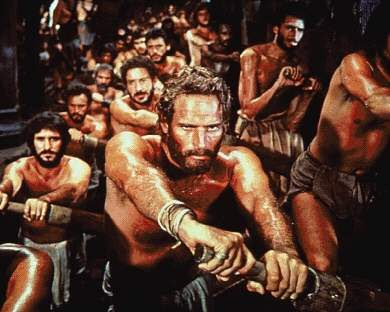
Ach! Charlton Heston is dead!

Being a firm admirer of actors who chew the scenery with wild abandon, I always liked Charlton Heston a great deal, even when I didn’t like the movie. The Ten Commandments tends to have the same soporific effect on me as a big turkey dinner with two glasses of wine, without the comforting feeling of having eaten a big turkey dinner with two glasses of wine, but that’s not Heston’s fault, and I really love Ben-Hur. In his later years, Heston took on a lot of small roles that played off his image of a tough-as-nails guy you don’t mess with, and I like that sense of humor he showed.

His political views? Didn’t share them, obviously, and I don’t much care what actors believe, anyway. I’ll just cheerfully watch the chariot race from Ben-Hur again:

So long, Omega Man!

Share This Post

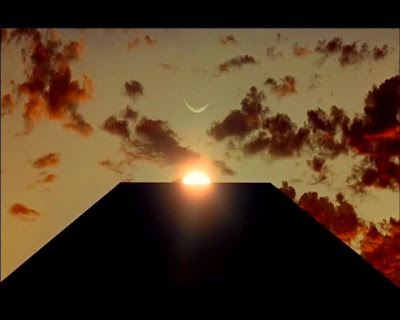
My God, it’s full of stars

UPDATE: I’ll update this post with links to other blog posts on Clarke’s passing that strike my eye.

Arthur C. Clarke is dead.

This is really no surprise, as Clarke was very old, and though I haven’t read any of his new work since I was disappointed by 3001, I am saddened by his passing. Clarke was the first science fiction author whose work I really loved, going way back to when I was in high school and read 2001: A Space Odyssey. Clarke was just awfully good at capturing that good old “sense of wonder” without getting too wordy, in my view; he would simply describe things with none of the “You will be amazed by this!” subtext that I can often detect in other SF writers. That, his ability to keep the story moving, and the way he could relate the futuristic stuff to the concerns of contemporary readers was always impressive.

I don’t think I even own a copy of 2001 at the moment, so I can’t even quote my favorite Clarke passage. For those of you who own the book, you can look it up: it’s the part where David Bowman is settling in for the long lonely journey to Saturn (what remains of the journey, anyway) after HAL has killed Frank Poole and the hibernating crew members, and he tries to take his mind off his loneliness by listening to music; but over time he finds that the constant parade of human voices actually increases his loneliness rather than decreasing it, and his search for musical companionship finally leads him to the abstract counterpoint of Johann Sebastian Bach. I always thought that this passage represented a particularly keen bit of human insight for a science fiction author, given the stereotype of SF writers as being concerned with the Gosh WOW! stuff and less with the human concerns.

Clarke was a part of my reading landscape fairly early on; I remember reading Dolphin Island (although I don’t so much remember Dolphin Island itself), and a frankly wonderful true-life tale of discovering a sunken wreck in Indian Ocean Treasure. I’ve never had any desire to read the follow-ups, but I did admire Rendezvous with Rama greatly. And his short fiction was also amazing; “The Star” and “The Nine Billion Names of God” particularly haunt my imagination. I even remember some road trip or other with my family when I was six or seven years old; my sister was reading a book whose title stuck in my head even then as being pretty provocative and intriguing. The book? Childhood’s End.

I truly believe that Arthur C. Clarke is one of the more important figures of the 20th century, and I honor his life now.

(Here’s a good article on Clarke’s life.)

UPDATE I: Steven Den Beste: “Clarke didn’t write as much as the others, I think, and it’s also not really correct to say his stuff was more imaginative. But I think that there was a quality to his work that made it stand apart. His stories were, how to put this, further away than Heinlein and Asimov.”

Charlie Stross.

UPDATE II: SamuraiFrog: “Thank you, Arthur, for believing that we were worth the trouble and that we might, one day, snap out of this. Thank you for showing us it was full stars.”

Patrick Nielsen Hayden, who apparently was on NPR to discuss Clarke. I’ll look for an audio link later today.

Lou Anders.

Lots of good linkage (as usual) at SFSignal.

Share This Post

Bring on the Gelatinous Cubes!

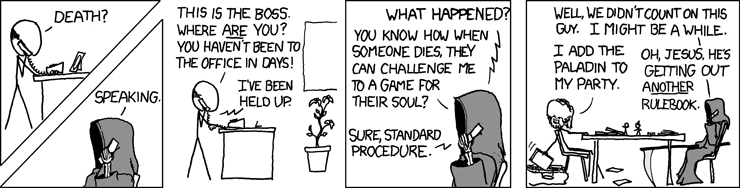
As just about everybody with a blog already knows, Gary Gygax, one of the inventors of Dungeons and Dragons, died last week. I’ve been too busy to post about it until now, and I also didn’t want to make the same obvious joke that everybody else did about Gygax failing his last saving throw. (A favorite geek humor joke of mine is: “Jesus saves! The rest of you take full damage.”) I, of course, choose to envision God as the ultimate Dungeon Master, and with regard to Gygax, he did the old DM trick of dropping a bunch of dice on the table behind his screen and then shaking his head and saying, “Ooooh, bummer, dude.”

But of course, leave it to xkcd to come up with the best Gygax tribute I’ve seen anywhere:

I was never a huge AD&D player, although there was a period in sixth grade when everybody in school was seemingly obsessed with it for some reason, to the point where cliques formed within our class based on whose character was a God and whose was a Demon. (What can I say? We were a bunch of dumb-assed eleven year olds.) Strange thing was, for all the D&D babble we all indulged, we did almost no actual playing of the game, which was a bummer. I didn’t actually get to play the game in anything close to the manner in which it’s meant to be played until college, when I was a part of two separate campaigns, the first in our freshman year and the next when we were juniors and seniors.

The DM of our first campaign was hard core on the role-playing aspect of the game. He and his high-school mates had used AD&D campaigns partly as means of honing their improv theater chops (this guy was really into drama), so we had to make a lot of effort in his campaign to be “in character”. This occasionally led to interesting results. Our second campaign, spread over the latter portion of junior year and a big chunk of senior year, was run by a guy who was a more action-oriented DM; with him, there was less emphasis on role-playing (although there was that) and more on pacing and excitement. He was really good at managing combat so that the “battle sequences” were exciting, and he was also good at managing the treasure and rewards, consistently finding the “sweet spot” between extreme stinginess (“The red dragon is dead, leaving his horde of one hundred copper pieces to be split amongst the party, after you pay these six NPCs their agreed price!”) and Monty Haul (“Your party of level eight characters has slain the duo of bugbears, taking their horde of one million platinum pieces, five swords +6, and eight scrolls with one Wish spell on each!”).

Both campaigns took place in the Greyhawk setting, so I never got to play in the Forgotten Realms. My own campaign, had we not petered out as a group in senior year, would have been a Forgotten Realms campaign. I also bought a lot of the “Al Qadim” materials for another campaign, in the style of the 1001 Nights, that never took place.

AD&D was, of course, lots of fun, and we usually had a blast whilst playing. I haven’t played a single game since college, fifteen years ago now, and while I don’t have a whole lot of desire to play again (mostly because I know that I just don’t have enough time), I’m glad I got to play the games that I did, and I do wish we’d had some time to get more playing in there. So, like every geek these days, I owe a certain debt to Gary Gygax.

Share This Post

Passages

My mother mentioned in an e-mail the other day, among other things, that my first ever school band director died last week. I hadn’t seen Mr. Beach (first name Jim) since I graduated high school, but back then he was a fairly heavy smoker and known for his fondness for booze, so his passing isn’t exactly a galloping shock. He looked fairly advanced in years even when I first met him when I was in fifth grade, and his posture was even then terrible; he had a pronounced hunch in his back and his hair was already completely white. It was thus a surprise to learn that he was actually a year younger than my mother.

Mr. Beach was a fairly strange man, as I recall. As a band director, he was adequate, although this is hard to judge by the fact that he was the elementary and junior high band director, so it wasn’t as though he was really tasked with great amounts of musical development on the part of his students. He was fairly encouraging of his more talented charges, but as a direct source of musical wisdom, I don’t recall much from him.

However, I could be wrong here as well, since my own temperament later turned out to be strongly classical, and Mr. Beach’s was strongly jazz oriented. Being a straight “band director” wasn’t really his game, but he was quite good at getting the sound he wanted from the jazz bands under him. The one year that I remember him directing the Senior High Jazz Band was probably the best single musical experience of my high school years; for a high school ensemble from a small town, that band cooked. I can still hear remember our bass trombone player on a haunting arrangement of Gershwin’s “Summertime”, and I can still remember my own frustration that he would never let me play any of the solos. It wouldn’t be until college that I’d realize what he’d surely already known: that I was no jazz musician and had no place in a jazz band other than being a really good section player.

I don’t recall why Mr. Beach only had one year to direct the jazz band, but I do recall that there was some kind of incident that led to our school superintendent stepping in for some reason. The details were never explained to us, but to my knowledge, Mr. Beach never stepped in front of a jazz band again. I had already thought poorly of that particular superintendent, who was one of those guys who takes a position if and only if he thinks it can lead to the next position. (In a fitting postscript, four or five years ago I was in one of Buffalo’s Media Play locations – before they all closed when the chain went belly-up – and recognized one of the cashiers as none other than that ambitious, arrogant superintendent. I found some kind of cosmic karmic justice at work in that; this guy who had once been highly impressed with his own authority in a small town school system was now, fifteen years later, wearing a uniform shirt and a nametag. In his mind, that had to be a blow.)

I remember something else. We used to have a summer jazz band at that school; we’d rehearse a couple of times and then we’d go out and play at various gigs. We’d play the Cattaraugus County Fair, various dances and festivals in the region, and the like. It always went over well; we’d mostly perform the great big-band classics, and the membership of the band would be augmented by other musicians who lived in the area. Those performances were always hard work, but they were also always a joy. One year at the Catt. Co. Fair, we did Glenn Miller’s “Moonlight Serenade”, but in an arrangement that had an extended clarinet solo. Mr. Beach’s main instrument was the clarinet, and he took that solo himself. To this day that one performance of his – the only time I ever actually heard him perform anything at all – remains one of the most beautiful bits of clarinet playing I’ve ever heard live, and I’ve heard a lot (Richard Stoltzman playing the Mozart clarinet concerto, for example). I wonder if Mr. Beach was one of the many musicians who went to school figuring to be a professional performer, and then found himself a teacher when gigs were harder to come by than he’d thought. I also wonder if he never quite made the transition to teaching in his head or in his heart. Certainly on the night I heard him play “Moonlight Serenade”, it was as if Mr. Beach had grabbed a part of his life he’d maybe thought lost.

Anyhow, I can’t really say that I learned a lot about music from Mr. Beach, but if he hadn’t specifically recruited me for band when I was in fifth grade, I possibly would never have learned anything about music at all. Berlioz? Rachmaninov? Wagner? The Chieftains? Howard Shore? They’d all be just names, I suppose. And I certainly wouldn’t have gone to college in Iowa, thinking to study music; and then I wouldn’t have met a girl a year older than me who played the oboe.

We often judge our teachers by what they teach us, and forget the ones who didn’t so much teach us as simply meet us at a crossroads and say, “Go that way. You’ll like it.” Well, Jim Beach put me on a road, sure enough. So thanks for the nudge down the road, Mr. Beach.

And wherever you are, I hope you’re jamming with Benny Goodman.

Share This Post

Eerie coincidences

A bit of a postscript to my post the other day about my online friend who died last week.

Over the course of commiserating with other online friends who knew Gummy well, I learned that his last full name was Gregory Twyman. With this piece of information and my knowledge that he lived in the Pittsburgh area, I was able to find Gregory’s obituary in the Pittsburgh newspapers. What was odd was that I happened to glance down the page of obits and saw another name that I knew.

My grandmother on my father’s side was a schoolteacher, many years ago, in a Pittsburgh school district. Now, all the time I knew her she’d been retired, but by trade that’s what she had been: a teacher. I come, actually, from a long line of teachers — in fact, I’m almost the odd one out in not being a teacher myself. But anyway, my grandmother had a friend named Esther Yessel. I only met Esther a single time that I remember, when she and my grandmother both visited us in the first years we lived in Western New York. This was around 1982 or 1983, I suppose.

Well, my grandmother turned 80 in 1986, and she died about six months later. In truth, I suppose I’ve generally assumed that Esther had also died sometime since then — but it turned out that she only passed away last week, at the age of 95. That was utterly stunning to me — not that she had been alive all those years (more than twenty since my grandmother’s passing), but that she died only last week, and that only by virtue of looking for my friend’s obituary did I learn of Esther’s own death.

What a spooky, spooky world.

Share This Post

The Internet is made of people

Always remember that, folks: The Internet is made of people. I got that from Warren Ellis, and it’s totally and utterly true. There are good people on the Internet, and bad people; people you’d follow once more unto the breach, and people you’d toss into the breach head-first and then walk away. There are winners and losers, friends and enemies, casual acquaintances and even lovers.

This is about an online friend of mine who went by the moniker “Gumdrops”.

Gumdrops, or “Gummy” for short, was a film music fan. And by “fan”, I mean, “rabid hobbyist”. I’m a gatherer of film music, but Gummy was a collector. He amassed a pretty impressive collection, many of the discs of which were quite rare. His collection includes, to give just one example, a copy of David Shire’s score to Return to Oz. Just try finding a copy of this. You’ll pay through the nose.

Longtime readers will know that before this blog, my main outlet for online blatherings was the Usenet group rec.music.movies. I gradually became disenchanted over there, and when that disenchantment lined up with my discovery of the blogging medium, the writing was on the wall (or the Web), and I departed r.m.m. pretty quickly after launching this blog. For a time, I also posted at the FilmScoreMonthly message boards, and it was there that I met Gummy.

He was a jovial soul, who usually signed off his posts with “Yuk yuk!”. He had a way of disarming many heated discussions with a quip or two, and it might have been tempting at first to not take Gummy very seriously as a film music fan, but one quickly learned otherwise: this guy knew his stuff. He was conversant on many composers and their works, and he knew far more about film than I do. But through it all, he never took it all that seriously — or, more properly, he never took it so seriously that he lost sight of the passion of his film music, and he never forgot what music is for. He looked for music that moved him, that made him feel something. He was the guy who’s constantly coming up to you, discman and earphones held out, grinning wildly and practically tripping over his own feet as he tells you, “Wow, you gotta hear this!!!”

That was Gummy.

When the FSM boards finally became too generically unpleasant for me and some others to stick around there — it happens, you know — we went back to rec.music.movies, which had become pretty much of a wasteland. Posts were rare, and posts that were about film music and not about where we might procure cheap CIAL!$ were rarer still. But we started posting, a tiny little community, and gradually things picked up. Not to the point of r.m.m.’s hey-day back around 1999 or 2000, but we got some nice discussion going. Often the discussions were sparked by Gummy’s thread-launching posts, when he’d throw out single questions or provocative statements.

Gummy also loved to share his music, and he cheerfully made copies of just about any score in his collection that anyone asked for. I was the recipient of more than a few of his mailings. Scores that I now own, thanks to him, include the afore-mentioned Return to Oz, Howard Shore’s Soul of Ultimate Nation and The Last Mimzy, John Williams’s Jane Eyre, and a large number of Japanese filmscores as well. His generosity was stunning, and it often bothered me that my own film music collection is not nearly as extensive as his, not because I was jealous of what he had, but because I couldn’t really return the favor. Some time ago he told me about some items he was looking for, and by sheer miracle, it turned out that I own them. Last week I finally got around to burning copies.

You can probably tell by my use of past tense in this post that he’s never going to hear them.

Gregory — “Gumdrops” — became suddenly ill last week, and by the time he became ill enough to require hospitalization, his fate was set. He finally died today. I never met him in person; to me, he was “only” a set of words on a screen, and an occasionaly envelope in my mailbox. But remember: The Internet is made of people, and Gumdrops was one of them.

Other friends from r.m.m. have been in contact with his wife, and we’ve learned Gregory’s passion for film music was a lonely passion until he first went on the Internet and discovered that there are other such-passionate people around, all over the world. And amidst all the cantankerous discussions that take place in Internet forums on any topic, Gregory was a person motivated solely by the fact that the music, and the act of sharing it, just plain made him happy. His vocation, it turns out, was furnace installation. He loved the Pittsburgh Steelers (he lived in that area), and he lustily cheered their Super Bowl win from two seasons ago. But he didn’t trash-talk a few weeks back when his Steelers tossed my Bills around like rag-dolls. That’s the kind of person he was. He took joy in things, and appeared to have no patience at all for the joyless side of the very same things.

So yeah, I’ll miss him. He was a friend. Tonight I’ll listen to some of the music he shared with me.

Goodbye, Greg. Yuk yuk.

Share This Post

Remember

October 15th is Pregnancy and Infant Loss Remembrance Day. If anyone you know has suffered a loss of this sort, let them know today that you are thinking of them, and if possible, consider lighting a candle this evening in memory and tribute to those lives that were either too short or never lived at all.

We first heard the following song, “Held” by Natalie Grant, performed in our church, a few weeks or so after Little Quinn’s funeral:

It’s a Christian Contemporary song, and the imagery in the video is overtly Christian, but the best of art, even religious art, can cross over those lines between faiths and non-faiths. This song has become deeply meaningful for our family.

Share This Post