
“The City of Dead Works” (a repost)

I guess this is as close to a tradition on this blog as I have: I re-post this story every year on this date. I wrote it within months of the original event.

“The City of Dead Works”

There is never any rest for me, the Ferryman of the Dead.

I pole my barge across the black waters and up to the pier. So many wait this time, many more than usual. I wonder what has happened, what event has sent me this many. “Come aboard,” I say. “I will take your coin for passage.” One by one they file past me, each handing to me the coin that they never knew they had. It is the coin which determines where they shall be taken to rest, its metal shaped and determined by life. The coins of these dead are gold, every one of them purest gold. Six thousand come aboard my barge, and each has passage for the farthest and greatest of destinations. In that moment I know that something truly dark has happened; the gold coins are always forged in moments of darkness. I am the Ferryman. I can give them no answers to what lies behind their haunted, questioning eyes. I can only take them on this, the last of all journeys.

When they are all aboard I take up the pole and push away from the pier. The barge always feels the same, no matter how many stand upon its decks. Whether six or six thousand, it is all the same to me. I guide us out onto the River Styx. Some of the people look worried, but there is no need for fear. This river can do them no harm. They are already dead.

This is to be a long journey, I know – it always is, to this destination. As I guide the barge through the black waters, I look on the faces of those who have come to me. As different as these people all look, they all have the same expressions of shock, disbelief, and withering sadness. Here is a man of business, talking into a cell phone. He is trying to call someone, anyone, who will tell him that it’s all a dream, that it didn’t happen, that he didn’t die in a blast of fire, smoke, glass and steel. There is a mother who is explaining to her daughter that they won’t be going to Disneyland after all. And there, a group of firemen stand together, realizing that soon they will meet all their brothers-in-arms who have gone into the infernos before them. So many now – colleagues once in business and now colleagues in death, people who have never before met but now have the gravest thing in common. As the current takes hold, I look back at the pier. There are more gathering there. There are always more. They will wait. Time does not exist for the dead.

“Please,” a young man says as he turns to me, “I have to go home to my daughters.”

“You are going home now,” I reply. “To the home where all eventually return.” Two black rocks slide past on either side, the rocks that mark the passage of the circling Styx.

“This can’t be,” a woman cries out. “My mother needs me.”

“She will be with you soon enough.”

“When?” Her voice pleads, and yet there is no solace that is mine to give.

“I cannot say,” I reply. “The Ferryman has no hand in Fate.”

The tears come then, tears from the six thousand that run over the gunwales and into the river which has been fed by tears for centuries. All tears are born in the River Styx.

“Where will you take us?” someone asks.

“To the place you are promised,” I answer. I recall the words of a poet: Will there be beds for all who seek? Yea, beds for all who come.

One our left we approach the Hills of the Damned, an endless stretch of shattered lands which reach away into the blackness. The waters echo with the cries of all those who have been taken to the Hills for the agony they have brought on the living. I consider the bag of six thousand gold coins, and I realize that I will have to journey to the Hills this day. There will be a person, perhaps more, who will pay me with a coin of black tin; but not on this journey. As the hills recede behind us, the unending cries of the damned become fainter and fainter until they are drowned out by the lapping of the waters upon the sides of the boat and the marker stones that we pass. The six thousand fall silent, each realizing that it is not a dream. I would offer solace, but as ever I cannot. I am the Ferryman.

We come around a particularly dark bend, and before us lies a very wide expanse of water, as if the Styx has become an ocean – which in some sense it probably has. And beyond that expanse are the thousands of twinkling lights that I have come to know so well. One man, a fireman, sees them too. “What is that?” he asks.

“It is the City of Dead Works,” I reply. The lights of the city glow on the horizon, and every one of the six thousand turns toward them as the Styx impels us onward. As we come ever closer to the city, the glittering lights reflect off the black water.

“I don’t understand,” someone else says. “The City of Dead Works?”

“Aye,” I reply. “Behold!”

From behind us, golden light: the Sun of the Dead is rising as it always does when the dead come near the City. Above us the firmament is turning purple, then blue; soon the light of the Sun will illuminate the City of Dead Works. As the sky lightens, the true scope of that city becomes plain: it stretches away into the land, farther than any eye could see. Not even the highest-soaring raven, cavorting in the breezes and zephyrs of the dead, could take it all in. It is bigger by far than any one city ever built by the hand of men, because it encompasses some part of all of them. Perhaps it is bigger than all of the cities ever built. Now the sun’s first rays come up behind us, and the first buildings can be seen down by the water.

“That one looks Egyptian,” a woman says.

“The Great Library of Alexandria,” I tell her. “Once the greatest repository of learning the world had ever seen, now only a memory to the living and a reality only to the dead.”

A man points to a building high upon a rock. I nod.

“The Temple of Solomon,” I say.

“There are ships in the harbor,” says another. Thus for him I name the ships: Arizona, Indianapolis, Lusitania, Bismarck, Wilhelm Gustloff, Cap Arcona. And many, many others. I scan over the impossibly vast city and spot Dresden, as it was; and beside it the cities of Hiroshima and Nagasaki. And how many smaller villages, tucked into the hills beyond the City? None can say. The Sun of the Dead shines upon those hills now, and the great stone statues in the likeness of Siddhartha Gautama.

“I don’t understand,” a young man says. “Why this City? Why here?”

I only shake my head as we continue to float by the City. I do not point out the fairly small, nondescript office building that sits near the water. It is not a particularly remarkable building; nor was it, really, until the fuse was lit. The six thousand almost don’t recognize it.

Almost.

Not one word is uttered as we slide past the Alfred Murrah Federal Building. Then we turn away from the City of Dead Works, and head again down the waters of the Styx toward distant hills and the place where these people will join their brethren.

“Who lives in that city?” It is a priest in a fireman’s coat.

“No one lives there,” I tell him. “The City of Dead Works is not for people. It is for the buildings and the ships. It is for the books and the music, the sculptures and the paintings which are gone forever. It is for everything destroyed by craven people in the name of foolish wars, for everything judged forfeit in the face of transitory desires.”

The Styx takes us into the Golden Hills. Soon we will be there, and the six thousand will go where they belong. And then the Styx will complete its circle, taking me back to the pier where more dead await.

“We will be there soon,” I say. “Soon we will be at the Elysian Fields, where all heroes go – for that is what you all are. It is what you have bought with your lives, with the shaping of your coins into gold.” No one replies. We near the last bend now, and before us lie the Elysian Fields, where peace reigns and where heroes dwell; where all is light and voices are always raised in song. The Sun of the Dead shines warmly on Elysium.

But they do not see it. They, the six thousand, all gaze back behind us upon the City of Dead Works. It will soon be behind us forever as we round the last bend of the River Styx into Elysium. I know they all need one last look upon that City, and I do not grudge them that. For myself, I do not look back; the eyes of the Ferryman are ever forward. But I know. I know that the City of Dead Works is different now. I know that it has changed. I know that the people who come with me now to Elysium, the dead around me, look back on the two soaring towers of steel that now rise above the City where there had been no towers before.

I know these things.

I am the Ferryman of the Dead.

Finis.
Share This Post

Luciano

Alex Ross today:

The finest singers not only hit the notes but erase the difference between notes and words. Singing is most thrilling when it becomes a kind of heightened talking. That’s what happens in Pavarotti’s “Che gelida manina” or “E lucevan le stelle” or “Una furtiva lagrima”: the beauty of the sound envelops you, but you’re not conscious of the artifice of art. It’s as if someone were making conversation in a dialect of dreams.

Bravo, Luciano.

Share This Post

Errands

Yesterday was a hectic day after work.

I didn’t feel like making that much effort at dinner, so I bought a rotisserie chicken and some potato salad.

I put a little gas in the vehicle.

I kept a medical appointment.

I picked The Daughter up from her day camp, and treated her to a Slurpie from 7-11.

I bought a ream of paper for the printer.

And….

I picked up the little cardboard box, about the size of a new box of checks (or the box your year’s worth of church donation envelopes come in, if you do that sort of thing), containing Baby Fiona’s ashes.

Almost three months after she was born, and almost a full month before she should have been…I brought her home.

There is “more of her” than I thought there would be. The box is surprisingly heavy. The ashes themselves are in a Zip-loc bag. They are mostly a fine gray powder, but there are bits of coarser, whiter material scattered throughout. We’ll find some kind of appropriate container sometime…but for now, her little box is wrapped in a blanket.

Three children. Two are in boxes.

Forgive me, world…but there are times when I hate you.

Share This Post

Passages

Last time I revised my blogroll, I removed Rittenhouse Review because its creator, James Capozzola, hadn’t posted in more than two months, as is my general approach to such things. Still, I kept him bookmarked in an “Inactive Blogs” folder, in hopes he’d return. He was one of the first big liberal blogs out there, way back in 2002; for a while he was the only major liberal blog to link mine; he was the writer of a particularly fine essay, “Al Gore and the Alpha Girls”; he was a proud denizen of Philadelphia; and he was a doting cohabitant of a bulldog named Mildred.

Sadly, James Capozzola has died. I seem to recall that he wasn’t generally in the best health — but that explains why his blog fell silent for the last time.

Somebody better be taking care of Mildred.

Share This Post

Passages

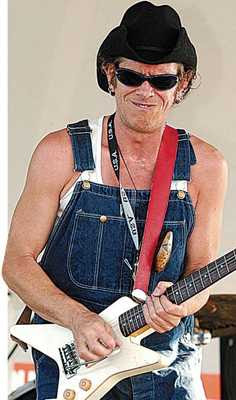
Mark Freeland, a big name in the local Buffalo rock music scene, died this week after a lengthy battle with cancer. Buffalo News rock critic Jeff Miers writes about Freeland here and here, while local rock bloggers Val and Kevin post about him here, here, and here. Another remembrance, by Beth, can be found here.

Personally, I knew nothing about Mark Freeland until I learned of his passing…but having seen a photo of him, I can’t help but think there’s something about him that I like….

Share This Post

Passages

I was only a sporadic reader of his, but it saddens me that Steve Gilliard has died. He was a fine writer in Left Blogistan, and that I was never more than a sporadic reader of his is more a product of my political blog reading habits pretty much getting set in stone before I discovered him than a reflection on his work.

Condolences to his family and to those who knew him best.

Share This Post

Memorial

Know, all who see these lines,
That this man, by his appetite for honor,
By his steadfastness,
By his love for his country,
By his courage,
Was one of the miracles of the God.

— Guy Gavriel Kay

“The Green Field of France”, by Eric Bogle

Well, how do you do, young Willie McBride,
Do you mind if I sit down here by your graveside?
And rest for awhile ‘neath the warm summer sun,
I’ve been walking all day, and I’m nearly done.
I see by your gravestone you were only 19
When you joined the great fallen in 1916,
I hope you died quick and I hope you died clean
Or, Willie McBride, was it slow and obscene?

Did they Beat the drum slowly, did they play the fife lowly?
Did they sound the death-march as they lowered you down?
Did the band play The Last Post in chorus?
Did the pipes play the Flowers of the Forest?

Did you leave a wife or a sweetheart behind
In some faithful heart is your memory enshrined?
And, though you died back in 1916,
To that faithful heart are you forever 19?
Or are you a stranger without even a name,
Enshrined then, forever, behind a glass pane,
In an old photograph, torn and tattered and stained,
And faded to yellow in a brown leather frame?

Did they Beat the drum slowly, did they play the fife lowly?
Did they sound the death-march as they lowered you down?
Did the band play The Last Post in chorus?
Did the pipes play the Flowers of the Forest?

The sun’s shining down on these green fields of France;
The warm wind blows gently, and the red poppies dance.
The trenches have vanished long under the plow;
No gas and no barbed wire, no guns firing now.
But here in this graveyard that’s still No Man’s Land
The countless white crosses in stand mute in the sand
To man’s blind indifference to his fellow man,
And a whole generation who were butchered and damned.

Did they Beat the drum slowly, did they play the fife lowly?
Did they sound the death-march as they lowered you down?
Did the band play The Last Post in chorus?
Did the pipes play the Flowers of the Forest?

And I can’t help but wonder, no Willie McBride,
Do all those who lie here know why they died?
Did they really believe when they answered the call,
Did they really believe that this war would end wars?
Well the sorrow, the suffering, the glory, the pain
The killing and dying, was all done in vain,
For young Willie McBride, it all happened again,
And again, and again, and again, and again.

Did they Beat the drum slowly, did they play the fife lowly?
Did they sound the death-march as they lowered you down?
Did the band play The Last Post in chorus?
Did the pipes play the Flowers of the Forest?

Share This Post

Last Update

Today, at the official 22-week point, The Wife went into labor, delivering Fiona Quinn at around 9:30 a.m. Our child lived for just under two hours, dying at about 11:30 a.m.

All that’s left now is incidental detail — recovery for my wife who’s been bedridden for seventeen days, yet another homecoming without a child in our arms, massive hospital bills, and lots of grieving.

This blog will probably lay fallow for a while now. Possibly a good while. We’ll see.

UPDATE: Or maybe the blog will lay fallow for a few hours, until I get sick of moping. As moping goes, I’m more sprinter than long-distance runner; I can mope a four-minute mile, but no way can I mope a marathon. So anyway, the beat goes on.

Thanks yet again to everyone who has offered comment and support, or support without comment, or whatever.

I’ll be posting a bit less for a while, but I won’t be dropping off the face of the earth.

UPDATE II: Earlier, I e-mailed a good friend of mine about what’s happened. Later on, I logged back on to find two messages in the Inbox. One was from that very friend, exorting me to just survive the current crisis. “Survive. Just survive.”

The other message? A spam advert for free cigarettes.

Talk about distilling life to a single binary alternative.

UPDATE III: Thanks one last time for all the well-wishes. It’s all very moving, and highly appreciated.

Share This Post

In time, only the bards knew the truth of it.

I’ll post a link to a news item as soon as I can get hold of one, but according to an e-mail I’ve received from a reputable source, author Lloyd Alexander has died.

Alexander was highly prolific, and yet, I have only read a small portion of his work. But the portion that I have read? The Chronicles of Prydain? The Westmark trilogy? Sheer magic. I must read more of him.

In my reading life, Alexander came before Tolkien, before CS Lewis, before Guy Gavriel Kay, before Stephen R. Donaldson, before George RR Martin…before all of them. I came to Alexander, as I did so many of my childhood authors, by way of my mother who would stick a book in my hand whenever I misbehaved, always with orders that I couldn’t watch any TV until I read the whole thing. (And, more often than not, the books she handed me as “punishment” turned out to be first books in series.) I’d finished fourth grade, and we were getting ready to move from Hillsboro, OR to Western New York, and I did something I shouldn’t have done — no, I don’t remember what — and suddenly, in my hands is a copy of The Book of Three.

This was my first entry into epic fantasy, complete with maps of the make-believe realms, innocent and unknown farmboys who turn out to be Kings, wars against Dark Lords who would destroy all…yes, my fantasy life began with Lloyd Alexander. (Well, almost. Before Alexander, of course, was George Lucas.) Alexander gave me Prydain, and so doing, gave me Narnia and Middle Earth and The Land and Hogwarts and Al-Rassan and Fionavar and Westeros.

Alexander was apparently preceded in death two weeks ago by his wife of over sixty years. This man spent his entire life studying the folklore of the world and channeling that folklore into beloved books for children, books which, like the best of works for children, also carry incredible rewards for adults. Isn’t that the kind of life we should celebrate and sing about for the ages? And what does it say about our world that Jerry Falwell changed it more than Lloyd Alexander?

Thus Taran rode from Merin with Gurgi at his side.

And as he did, it seemed he could hear voices calling to him. “Remember us! Remember us!” He turned once, but Merin was far behind and out of sight. From the hills a wind had risen, driving the scattered leaves before it, bearing homeward to Caer Dallben. Taran followed it.

Farewell, friend I never met.

Share This Post

The Right Stuff

Wally Schirra, one of the original Mercury Seven astronauts (and later a Gemini and Apollo astronaut as well) died today. Samurai Frog has a nice appreciation:

There were seven brave men who first stood in line to lead this country into outer space. We call them the Mercury Seven. And they are among this country’s greatest heroes. Captain Schirra follows Gus Grissom, Deke Slayton, Alan Shepard, and Gordon Cooper to the undiscovered country. Scott Carpenter and John Glenn continue to remind us of what we can accomplish. And what, one day, we may accomplish again.

Indeed.

Share This Post