Remembering William Goldman

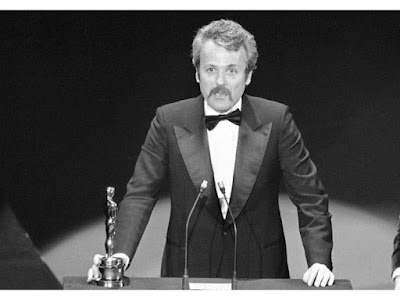
William Goldman died last year. He lived a long and brilliant life as one of the finest screenwriters, penning such films as All the President’s Men, Butch Cassidy and the Sundance Kid, Marathon Man, and what might be his most beloved work, The Princess Bride. That last is doubly special because not only is the movie wonderful, but it’s an adaptation of a novel of Goldman’s as well. The novel works wonderfully on its own, and Goldman’s adaptation isn’t just a slavish transliteration of the book to the screen, but rather a loving creation all its own, that has its own focus and its own way of making use of its own medium to tell its story.

Goldman tends to be beloved of storytellers in many mediums, and not just because he was a great storyteller himself. He was also great at writing about storytelling, and this is borne out in two books of his that I consider essential reading for anyone interested in writing, or in film, or in the general enterprise of storytelling to begin with. Those books are Adventures in the Screen Trade and Which Lie Did I Tell?.

Here is a wonderful anecdote from the making of Marathon Man, a thriller Goldman wrote (again, adapting an earlier novel of his) about the pursuit of a Nazi war criminal. The film starred Laurence Olivier, Dustin Hoffman, and Roy Scheider. Here is Goldman:

Last Olivier story.

He and Roy Scheider were rehearsing a scene. In the story they are very close to voilence, but both are still trying to figure out what the other one knows. The dialog went like this:

OLIVIER: We must talk. Truthfully. Are you to be trusted?–

SCHEIDER: –No–

OLIVIER: –Was that the truth? Or are you trying to upset me?–

SCHEIDER: –I know why you’re here—and I know that sooner or later you’re going to go to the bank–

OLIVIER: –perhaps I have already been.

Schlesinger [director John Schlesinger] interrupted them. He said, “Larry, that’s supposed to go fast, and after Roy says the line about the bank, you’re taking a pause before ‘Perhaps I have already been.’ Don’t take the pause.”

Olivier said “Of course,” and they started into the dialog again. And then he stopped. “I have a problem about not taking the pause.”

We waited.

“I’m trying to find out information. Roy says, ‘I know why you’re here.’ And I need to find out what that means. Then Roy says, “I know…” And I’m listening. Then he says, ‘I know that sooner or later…’ And I’m still listening. Now he says, ‘I know that sooner or later you’re going to go…’ And I’m still listening. Finally he says, ‘I know that sooner or later you’re going to go to the bank.’ That pause I’m taking is to give me time to register the information about the bank.”

“I understand,” Schlesinger said, “But we’ve got to get rid of the pause.”

Olivier turned to me, then. “Bill,” he said, “could I suggest an alteration in the line? Would it be all right if I changed it so that the line went, ‘I know that you’re going to go to the bank sooner or later?’ You see, then I could register the word bank while he was saying ‘sooner or later’ and I wouldn’t need the pause.”

Obviously it was fine with me and the line was altered and we went on without the pause. And probably this two minutes of rehearsal explained at length doesn’t seem like much put down in black and white.

But that moment—when the actor of the century asked me would I mind if he switched six words around—is the most memorable incident of my movie career. Olivier. Calling me “Bill.” Olivier. Asking me would I mind.

That’s high cotton….

Goldman knows, in Which Lie?, that The Princess Bride might well be the project of his most likely to carry his name into Time. He writes lovingly about that film, focusing in the end on the sad story of Andre the Giant, who so wonderfully played Fezzik in the movie. Andre died a few years later, and was greatly mourned. Here is part of Goldman’s tribute:

Andre would never come out and say that wrestling might not be legit. He fought 300 plus times a year for about 20 years, and all he ever admitted was that he didn’t like being in the ring with someone he thought might be on drugs. When he was in his prime, men who weighed 250 or 300 pounds would hurl themselves on him from the top rope and he would catch them and not budge.

But even seven years ago his body was beginning to betray him. There is a scene at the end of The Princess Bride where Robin Wright—and yes she is that beautiful—jumped out of a castle window, and Andre was to catch her at the bottom.

The shot was set up for Roin to be lifted just above camera range and then dropped in Andre’s arms. Maybe a foot. Maybe two. But not much and Robin was never that heavy.

The first take, she was dropped and he caught her—and gasped, suddenly white like paper, and almost fell to his knees. His back was bad. And getting worse, and soon there would be surgery.

Andre once said to Billy Crystal, “We do not live long, the big and the small.”

Alas.

Next, two bits of inspiration, because every book on storytelling should make people feel better about this most ancient of human enterprises (I suppose there’s one human enterprise that’s older than storytelling, but who knows—stories had to play a part in that one, too). This comes at the end of Adventures in the Screen Trade:

I think there’s a wave of talent rising now. Thousands upon thousands of young men and women who literally love film. I realize this is a book about Hollywood, so obviously there has to be a happy ending. Only I’m not tacking this on. I believe that wave is upon us and that it’s not going to be stopped. And to all that talent, let me say, where the hell have you been and I wish you joy…

…and may you ignore the critics when they attack you, and pay no attention to their praise…

…and may you please remember when your scenes are sludge, that screenplays are structure…

…and may you have peers as willing to improve your project as you must be; treat them kindly, for they will save your ass many times over…

…and may you always remember “it’s only a movie” but never forget that there are lots worse things than movies—like politicians…

…and may you be lucky enough and skilled enough to make some glorious moments for all those people sitting out there in the dark, as earlier craftsmen created such moments for you…

…and finally and most of all…

…may all your scars
be little ones….

And finally, this. It’s a sidebar at the very end of Adventures in the Screen Trade.

Writing Time

The one thing I think all writers like to talk about is their work habits. When do you write? For how long? Where? Endless questions. So I want to spend a minute now on the basic problem facing us all: doing it.

When I began, at twenty-four, the work always came out in a burst. The Temple of Gold took less than three weeks. A year later, Your Turn to Curtsy, My Turn to Bow, less than two. And in between, nothing much happened that bettered the human condition, just going to the movies, a double feature a day, sometimes two, everything on 42nd Street or the Thalia on West 95th. Two years basically wasted until the next book, which was Soldier in the Rain.

I was having a career, God yes. Three novels published by age twenty-eight, two of them million-copy sellers in paperback, the third into a movie.

What I wasn’t having was a life.

I never had a real job so whenever I wanted to write, I could. Morning, night, all night if I watned—and I suspect it I had continued that way, I was heading for disaster.

There is no wrong when it comes to work habits. It doesn’t matter if you use a Mac or a quill pen. There is no best way to go about storytelling. Bergman writes from ten to three and in ten weeks, he’s got a screenplay. Graham Greene, another hero, counted words. Yes, you read that right, he counted each and every word until he reached his magic number—three hundred. And when he got there, guess what, he quit for the day, in the middle of a sentence or not.

They had the one thing writers need most: discipline.

My great editor, Hiram Haydn, was a very busy man. He started or ran publishing houses, had a wife and a bunch of kids, was editor of The American Scholar.

And wrote novels.

He was my editor from Soldier in the Rain through The Princess Bride, was a wondrous father figure for me. Once we were talking about a novel of his, The Hands of Esau, that he was so close to finishing, and I asked him how long since he began it and he said probably eight years.

How do you stay the same person for that long, I wondered?

You just do the best you can, he replied. You hope.

When do you write?

Sunday morning, he said. Every Sunday morning.

That was the only time available to him. The rest of his life was kids and work and family and commuting and meetings and dealing with crazy writers; Sunday morning was all he could carve out, so he played it as it laid.

You have to protect your writing time, he said then.

That’s the best basic advice I can give to any writer. You have to protect your writing time. You have to protect it to the death.

I think it should always be the same time. Each day, each night, each whatever. Can be half an hour, more when you’re on a roll, probably shouldn’t be less. I know a brilliant young writer who has zero problem writing. Her problem is sitting. Her computer is surrounded by a mine field and she will come up with the most amazing reasons not to try to cross it. And no, she is neither crazy nor along in her problem–

because the easiest thing to do on earth is not write.

The need for a schedule is simple: You’ll have hours, days, when you just sit there, but eventually, you come to know that your writing time is not and things begin to happen as you sit there.

And if you manage to suck it up, if you decide you must get your stories down, then there is one other thing that’s crucial: don’t talk about it. Tell no one.

Once others know, they will look at you strangely, they will question you, they will ask you terrible questions–

–how’s it coming?

–is it fun?

–when is it going to be finished?

–I bet it’s fun

–when can I see it?

You don’t need those words buzzing around your ears. So keep the start of your career secret. Keep the time sacred.

Remember: nobody made you be a writer.

Now, I myself am pretty firmly a member of Team Write Every Day, but you can’t always do that and you shouldn’t feel shame if you can’t do that. But in that case, the best compromise is Goldman’s Team Write At The Same Time Each Day/Week/Whatever, because there’s another, shorter term for members of Team Write When You Feel Like It. That term is nonwriters.

One last bit. In discussing the script to Casablanca in Which Lie Did I Tell?, Goldman says as an aside, “I wish to God I’d written lines as glorious as ‘I was misinformed.’”

Well, here’s the thing about that. Casablanca famously boasts that wonderful last line, “Louis, I think this is the beginning of a beautiful friendship.” That is an amazing final line, and I consider it one of the two greatest last lines in movie history.
The other? It’s by William Goldman. Here’s the scene, after the Grandpa has finished reading the book to The Kid:

THE KID: Grandpa?

The Old Man stops, turns.

THE KID: Maybe you could come over and read it again to me tomorrow.

GRANDFATHER: (a beat) As you wish.

And his smile is enough. As The Grandfather steps out the
door, tipping his hat–

FINAL FADE OUT.

THE END.


Share This Post

Something for Thursday

I was all set to move along in the ongoing Song Challenge, but events in the musical world today compel me to push A Song from my Preteen Years to next week.

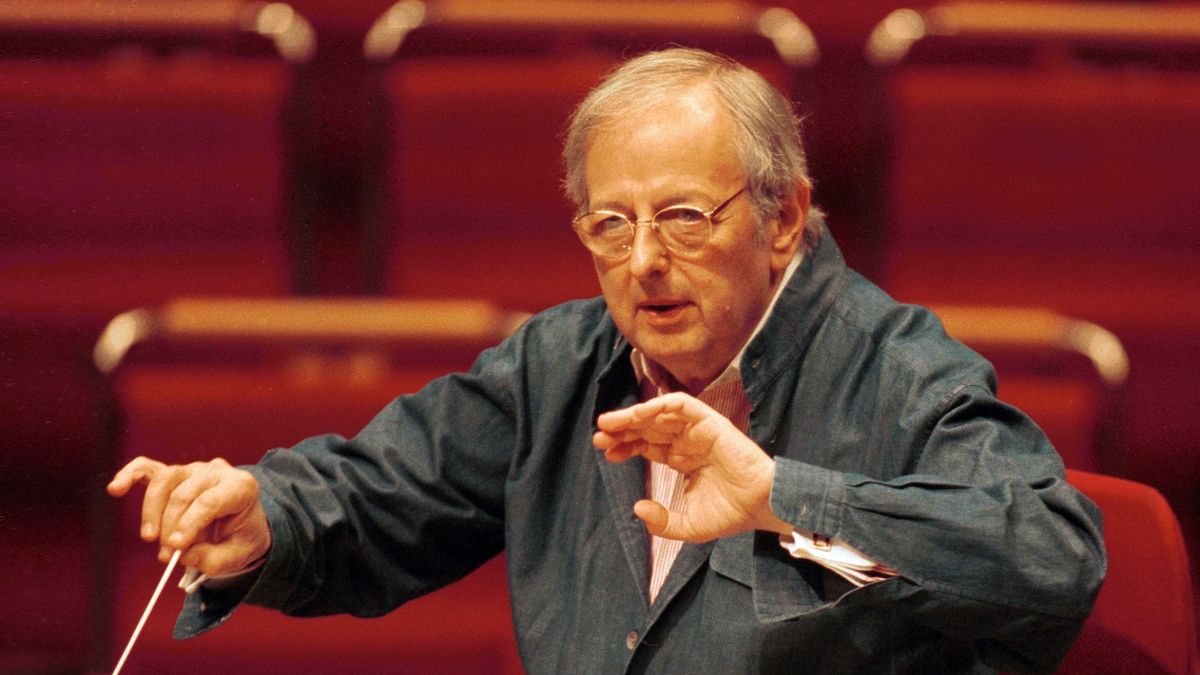
Andre Previn has died at age 89.

Previn was one of the great musicians of the latter half of the 20th century, accomplished as a conductor and as a pianist and in both classical and in jazz. He did important film work (he conducts the musical arrangements in My Fair Lady, a film of which I’ll have much more to say in a forthcoming essay), and he did a lot of important work in the concert hall and on recording. Previn is partly responsible for the re-emergence of the complete score of Rachmaninov’s Symphony No. 2, a work which prior to Previn’s adopting it in the early 1970s was almost always performed with extensive cuts. (Why, I have never been able to figure out. A complete performance of the work runs no longer than the Berlioz Fantastique or the Mahler 1st or the Beethoven 3rd.) Previn’s 1973 recording of that symphony (with the London SO) is the one I heard first, and though Vladimir Ashkenazy’s Concertgebouw recording has since overtaken Previn’s as my favorite, I almost certainly would not have heard Ashkenazy if not for Previn’s wonderful recording.

That’s not my selection here, though. Here I’ll go with a selection from one of the finest recordings I’ve ever heard in any genre. This is Previn playing the piano and conducting the Pittsburgh Symphony Orchestra in George Gershwin’s Concerto in F. There is so much vitality to this performance, so much verve and excitement, ripe with the energy of pre-WWII American urban society.

Bravo, Maestro Previn! You’ll not be forgotten soon, if ever.


Share This Post

Something for Thursday (for Dr. Janice Wade)

Last month Dr. Janice Wade of Waverly, IA passed away.

Dr. Wade was a member of the music department faculty at Wartburg College when I was there from 1989 to 1993, teaching strings and–in the part of her professional life that made her a part of my creative life–serving as music director of the Wartburg Community Symphony Orchestra, a joint collegiate and community ensemble that played five concerts a year. I played the trumpet in that orchestra all four of my years there, and for three of those years I was the principal. I got to see Dr. Wade’s music making up close.

At first, she wasn’t even Dr. Wade: she was still completing her doctorate when I arrived, and if memory serves, it wasn’t until my junior year that she completed her requirements and became Dr. Wade. Before that she was Ms. Wade, and for a time it seemed to me like she was fighting an uphill battle. There weren’t many string players at all at Wartburg when I arrived, and the orchestra was mainly a skeleton crew for most rehearsals. That first year and most of the second we never got to rehearse with full numbers until the dress rehearsals the day before the performance, and there were times when I wondered if the school’s string program would ever get off the ground.

It did. Dr. Wade recruited heavily, and by my third year, we had a full complement in the orchestra for nearly every rehearsal, and we played some meaty works: Mozart’s Requiem, the Tchaikovsky Piano Concerto No. 1, a work by Amy Beach, and so on. We premiered a work by a Des Moines composer whose name escapes me (I still have those programs around and should look them up), and a lot of other fine works. The Symphony was kind of the odd-child out in the music culture at Wartburg at the time; the jewels in the crown were the Choir and the Concert Band, and then the jazz vocal group (called the Castle Singers) and the jazz band (the Knightlighters). But I was as proud to be a part of that orchestra’s evolution as I was of any other musicmaking I was privileged to be a part of while I was there, and Dr. Wade was the driving force.

One particular musical memory: each year we did the Nutcracker Suite as part of our Christmas program, and to this day that is one of the few works I know that is tied in my mind to a very specific time and place. I remember sitting in the orchestra room, rehearsing that piece, while watching snow fall outside through the hall’s big windows, and I remember Dr. Wade’s annoyance with us each year at the very end of the Waltz of the Flowers. In the very last couple bars, it feels like there should be a dramatic ritardando, slowing to the final smash, but the thing is there’s no such ritardando indicated in the score. We would try to play one, and Dr. Wade insisted that we not do it. To this day when I listen to a performance of that work and I hear some great conductor observe the unwritten ritardando, I smile a little and think how Dr. Wade would not approve. Indeed, when Leopold Stokowski conducts the Waltz in the film Fantasia, he does not observe the unwritten ritardando…and when friends and I who were in the orchestra at the time watched that sequence of the movie (it had just come out on VHS right then), we all yelped out, “Dr. Wade’s right! It doesn’t slow down there!”

Of all the pieces we played in the WCSO, this may well be my favorite. It’s the Symphony No. 2 by Howard Hanson, titled the “Romantic”. Hanson was a 20th century composer whose language is a conservative throwback to the previous century and its lush Romanticism. The symphony is perhaps the best illustration I know of how a very gifted mind can get a half hour’s worth of deeply compelling music from about twelve minutes of actual material: the piece is cyclical to a fault, with the same ideas recurring in each movement, but the overall effect is so effective that one hardly cares. So it was with me when I got to play this symphony under Dr. Janice Wade’s baton. As a conductor her overall demeanor was cool and analytical, but for all that she certainly programmed a lot of highly emotional and dramatic music. She kept her fire under control, but there was no questioning its heat.

Here, offered in memory of Dr. Janice Wade of Waverly, IA is Howard Hanson’s Symphony No. 2, the “Romantic.”


And thank you, Dr. Wade. I never got a chance to say it, but I often thought of you as Maestra Wade.

Share This Post

Something for Friday

Sorry I didn’t get around to posting yesterday, but here is a bit of film music from a movie that is one of the better ones out there at depicting the sense of wonder and grandeur in the universe that science can illuminate. The film is Contact, and I offer this in memory of Stephen Hawking, who died the day before yesterday (on Pi Day, and Albert Einstein’s birthday, for a couple of odd synchronicities). Hawking was a complicated person, as most are, but his contributions to science cannot be diminished. He is now one of the “Giants” upon whose shoulders future generations will stand.

Share This Post

John Mahoney

Actor John Mahoney died the other day. His most famous role was probably Martin Crane, father to Frasier and Niles Crane on Frasier, but he did a lot of work over the years, and for me the most memorable thing he did was also the first thing I ever saw him in: the great teen romance film Say Anything, in which he plays Diane Court’s father in a complex and moving storyline.

Diane is graduating high school, and she is utterly brilliant, so much so that she has won a fellowship to study and live overseas. However, she meets a fellow senior named Lloyd Dobler, who is massively in love with her and who manages to get her to agree to a date. So begins a whirlwind romance that unfolds over the weeks after graduation, which is for many young people a time of great uncertainty if not outright fear.

Mr. Court, obviously, dislikes Lloyd, who has no real plan for his own future other than to date Diane as much as possible and maybe pursue kickboxing, which he indicates is “the sport of the future”. (This was 1989, mind you.) This is the standard old trope, isn’t it? The doting father of the highly-achieving girl detesting the “bad boy” that she is dating.

But the film subverts the trope. Lloyd isn’t a “bad boy” at all; in fact, everyone who knows him loves him, from one end of the school’s social ladder to the other. He is talented and smart in his own ways, even if he doesn’t immediately scream out “future success story”. Also, Diane’s relationship with Mr. Court isn’t typical for films like this. Many times the doting father is a stern figure who seems cold and distant, intent only on preserving the family’s status or some such thing. Mr. Court, though, is warm and encouraging with Diane, clearly loving her deeply and wanting her to succeed. He doesn’t seem terribly invested in his own life, and in actuality, the Courts’ home life is presented as mainly comfortable, and not wealthy. Nice, but not too nice.

And that’s the problem.

Rather than keep Mr. Court as just some obstacle for Diane and Lloyd, the film gives him his own motivations. It turns out that he has been embezzling from his own business for years, and that the IRS is closing in on him. His whole house of cards is about to collapse and he knows it. That is why he is so invested in getting Diane into that fellowship: it will get her free, it will keep her safe when his own actions come back to haunt him. Lloyd, though, represents a threat to that. If Diane stays in Seattle for Lloyd…if she foregoes this opportunity…Mr. Court sees those possibilities as sheer disaster.

Through all this John Mahoney plays Mr. Court brilliantly. He clearly loves his daughter very deeply, even as we learn that he has been lying to her for years. His distaste for Lloyd doesn’t become personal until the very end, when he realizes that Diane is going to have both the schooling abroad and a life (for now) with this directionless, almost Zen-like boy. Mahoney shows Mr. Court’s conflicting emotions and growing tension throughout, in scenes like one where he huddles in the bathtub in a moment of encroaching terror and another when he is buying luggage for Diane and starts to flirt a little–just a little–with the salesperson, but then has to stop when he credit card is denied. When Diane confronts him, giving him an opportunity to confess and he doesn’t (after an IRS agent has asked her if her home is “nice…but not too nice”), he tries resisting at first, but then the shame is written clear on his face when Diane has to tell him that she found his stash of money.

I have always felt that Say Anything is one of the greatest teen romances ever filmed, if not the greatest, and I’ve never wavered from that opinion. John Mahoney’s performance is a big part of that. The film has an open ending, leaving it up to us to decide what the future holds for Diane and for Lloyd and for Mr. Court, and if their relationships will ever heal. If not for the very human portrayal of Mr. Court, this wouldn’t really work.

Mahoney was in a lot of stuff, obviously, and I was a big fan of Frasier through its run. Mahoney’s Martin Crane was a blue collar man who didn’t have very many ways to relate to his two academic sons, but he always found a way, such as in this wonderful scene where he comes up with a very distinctive way of cheering Frasier and Niles up.


There’s another scene, in another episode, when Niles has a little too much to drink and indicates his belief that he and Frasier are both massive disappointments to their father, a supposition that sends Martin to very quick anger. Mahoney nails the emotion in that scene as he snarls, “You will not put these words in my mouth. I was always proud of you boys.”

John Mahoney was a terrific actor, and I already miss him, even though I realize that I haven’t seen him in anything new in some time. He did a number of memorable voice roles for animated films like Atlantis and The Iron Giant, and he was quite active on the stage as well. Thanks for the memories, John Mahoney. You were a great one.

Share This Post

From the Books: Ursula K. Le Guin on Tolkien

Author Ursula K. Le Guin has died.

Calling Le Guin an “author” is true, but it doesn’t do her justice, and that’s coming from one who has not read nearly enough of her work. Not even close. Le Guin was a cultural force, particularly in the genres of fantasy and science fiction where her influence is felt so keenly that her name ranks with the very highest of titans in the fields. Le Guin’s brilliance shone for decades, not just in her fiction but in the examples she set in her interactions with the rest of the field and in her thoughts to which she gave voice in many essays. Le Guin was one of the absolute giants, and her passing at the age of 88 is one more milestone in the history of two genres that still strive for respect and acceptance.

I have a small book that I got years ago as a reader’s companion volume to the Book of the Month Club’s editions of The Lord of the Rings. (The book is cleverly titled, A Reader’s Companion to THE HOBBIT and THE LORD OF THE RINGS.) It contains a number of short essays about JRR Tolkien and his writing, and the final essay in the book, called “The Staring Eye”, is Le Guin’s. Here is a part of it:

They were displayed on the new acquisitions rack of the university library: three handsome books, in the Houghton Mifflin edition, with beige and black dust jackets, each centered with a staring black and red Eye.

Sometimes one, or two, or all three of them were out; sometimes all three were together. I was aware of them every time I was in the library, which was often. I was uneasily aware of them. They stared at me.

The Saturday Review had run a special notice upon the publication of the last volume, praising the work with uncharacteristic vigor and conviction. I had thought then, I must have a look at this. But when it appeared in the library, I shied away from it. i was afraid of it. It looks dull, I thought–like the Saturday Review. It’s probably affected. It’s probably allegorical. Once I went so far as to pick up Volume II, when it alone was on the rack, and look at the first page. “The Two Towers.” People were rushing around on a hill, looking for one another. The language looked a bit stilted. I put it back. The Eye stared through me.

I was (for reasons now obscure to me) reading all of Gissing. I think I had gone to the library to return Born in Exile, when I stopped to circle warily about the new acquisitions rack, and there they were again, all three volumes, staring. I had had about enough of the Grub Street Blues. Oh well, why not? I checked out Volume I and went home with it.

Next morning I was there at nine, and checked out the others. I read the three volumes in three days. Three weeks later I was still, at times, inhabiting Middle Earth: walking, like the Elves, in dreams waking, seeing both worlds at once, the perishing and the imperishable.

Tonight, eighteen years later, just before sitting down to write this, I was reading aloud to our nine-year-old. We have just arrived at the ruined gates of Isengard, and found Merry and Pippin sitting amongst the ruins having a snack and a smoke. THe nine-year-old likes Merry, but doesn’t much like Pippin. I never could tell them apart to that extent.

This is the third time I have read the book aloud–the nine-year-old has elder sisters, who read it now for themselves. We seem to have acquired three editions of it. I have no idea how many times I have read it myself. I reread a great deal, but have lost count only with Dickens, Tolstoy, and Tolkien.

Yet I believe tha tmy hesitation, my instinctive distrust of those three volumes in the university library, was well founded. To put it in the book’s own terms: Something of great inherent power, even if wholly good in itself, may work destruction if used in ignorance, or at the wrong time. One must be ready; one must be strong enough.

I envy those who, born later than I, read Tolkien as children–my own children among them. I certainly have had no scruples about exposing them to it at a tender age, when their resistance is minimal. To have known, at age ten or thirteen, of the existence of Ents, and of Lothlorien–what luck!

In the essay Le Guin goes on to think about what her experience with Tolkien might have meant to her as a writer of the fantastic had she come to it earlier in life than when she did. It’s interesting to consider. For myself? I came to Tolkien first when I was eight or so, via the animated The Hobbit, and three or four years later via the books. I have no idea how it affect me, as a writer of the fantastic, but then, Ursula Le Guin was a genius, and I’m only me.

I have intended to re-read Le Guin’s A Wizard of Earthsea this year already; I have now moved it up in the planned rotation. I read it in eighth grade, I think; I recall liking it, but I never read past it. To this day my familiarity with Ursula Le Guin is more through her essays and nonfiction than through her fiction (I also read The Dispossessed, and remember it about as well, which is more reflective of me as a young reader than her as a writer). This needs to change.

Ursula K. Le Guin lived to be 88, and she leaves behind an enormous legacy not just in her own works but in all the authors on whom she was a huge influence. Her life may be over, but the ripples in time left by her having been here? Those are just beginning.

Thank you, Ursula K. Le Guin. You’ll be read for a long, long time.

Share This Post

Greta Thyssen

Roger notified me of the passing recently of actress Greta Thyssen at the age of 90. I confess that I had no idea at all who she was, but thankfully, Roger provided context. In addition to her film career she later became an artist, and was married for a time to Cary Grant.

For my purposes, she starred in several Three Stooges shorts. I’ve never been a huge fan of the Stooges, but you can’t deny that they elevated the fine art form on which Ms. Thyssen several times found herself on the receiving end:


Full points to Ms. Thyssen for her pie-faced slow burn!

Share This Post

Something for Thursday (Glen Campbell edition)

There are four songs I remember from when I was just a very small child: “Country Roads” by John Denver, “Song Sung Blue” by Neil Diamond, “Love’s Been Good To Me” by Frank Sinatra, and “Rhinestone Cowboy” by Glen Campbell. My very earliest musical memories involve these songs.

Glen Campbell died the other day. He was a wonderful musician, and the world is poorer for his passing…but so much richer for his having been here at all.

Share This Post