Something for Thursday (Farewell, Leon Fleischer)

Pianist Leon Fleischer has died, at the age of 92.

Fleischer was one of the greatest American musicians of the twentieth century (and a chunk of the 21st!), and his story is one of consummate musicianship along with triumph to overcome and live with disability. Fleischer was already a pianist and teacher of great renown by 1964, when a neurological condition made playing with his right hand impossible. Fleischer didn’t lose a step, though: because one-armed pianists are hardly unheard of, there is a substantial amount of repertoire for them, including today’s feature piece.
Maurice Ravel, the great French Impressionist composer, was commissioned by an Austrian pianist named Paul Wittgenstein to write a concerto for him. Wittgenstein had lost his right arm in World War I, however, so Ravel wrote his Concerto in D for Left Hand. It’s an amazing, bravura work, with such impressive piano writing that it is never obvious that only one hand is playing.
Wittgenstein appears to have been a rather prickly individual; he clashed with Ravel about the Concerto, revising it himself before playing it, to Ravel’s displeasure. Later he commissioned another Concerto for Left Hand from composer Paul Hindemith, but Wittgenstein decided he didn’t like the piece, so he refused to play it–but he also owned the rights to it, so he never let anyone else play it, either…until long after his death, when Hindemith’s score was found in Wittgenstein’s papers. The work was finally premiered in 2004, more than 40 years after Hindemith’s death. The pianist who premiered it?
Leon Fleischer.
In the 2000s, even though he had a long career of left-hand piano playing, conducting, and teaching, Fleischer began undergoing experimental treatments in hopes of regaining control of his right hand. These treatments proved somewhat successful, enough for him to resume two-handed piano performance. In 2007 Fleischer was a Kennedy Center Honoree, inducted by President George W. Bush.
Here is Leon Fleischer performing Ravel’s Concerto for Left Hand in D Major.

Share This Post

Maestro Morricone

Ennio Morricone, one of the greatest of all film composers, has died. He was 91. His music was often expansive and melodic, evocative and emotional. I often find his work hard to characterize, to be honest, but his finest work is often meditative and introspective. He often took a non-intuitive approach to scoring certain films, like his famous work on the “Spaghetti Westerns” of Sergio Leone. He wasn’t about to strive for the Americana-west sound of an Elmer Bernstein or a Dmitri Tiomkin

One of the finest albums of film music I know is a collaboration album he did years ago with Yo Yo Ma, performing selections from his film scores. I cannot recommend this album highly enough, especially if you’re new to Morricone and you have no idea where to start. That can happen with composers as prolific as Morricone was.
Farewell, Maestro. Your music will linger!

Share This Post

Something for Thursday

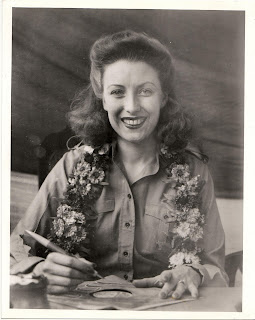
Dame Vera Lynn has died at the age of 103.

Lynn was a singer, songwriter, and entertainer whose stardom was brightest during World War II, when she was a big part of maintaining morale within the British forces. After the war she had a long recording career and became an icon of popular culture, even to the point of being referenced, in all places, in a song on the Pink Floyd album The Wall.
I spent some time today at work listening to Vera Lynn, and hearing her songs from the distance of almost eighty years, it’s not hard to hear why she was such a star. Her voice in those songs is radiant, carrying the melodies with amazing ease and sonority. She had a nearly perfect voice for the kind of songs that were…well, at the risk of betraying a bit too much bias, I tend to be increasingly of the view that the 1930s and 1940s were the Golden Age of the popular love song.
Here are a few selections I found, including Lynn’s best known song, “We’ll Meet Again”. It’s an incredibly effective song, but the one here that really hits me between the eyes is one of my absolute favorite songs of all time, “A Nightingale Sang in Berkeley Square.”
Here is Dame Vera Lynn.

Share This Post

Something for Thursday (Thank you, Adam Schlesinger)

Singer and songwriter Adam Schlesinger has died of complications from Covid-19. He was an amazingly prolific singer and songwriter who worked on his own material with his own bands, as well as songwriting for movies and teevee. I’ve heard a lot of his work…and I haven’t heard a whole lot more. My primary exposure to him came via the amazing, wonderful show Crazy Ex-Girlfriend, a show I adored with each and every episode. Here are some of the songs on which he worked.

Share This Post

Something for Thursday: Thanks, Kenny

Kenny Rogers died this past weekend. He had a long and productive life of music-making, and I won’t try to offer a major retrospective here. I will note that Rogers was just…always there, wasn’t he? And he was always there in a good way. Never once did I hear Kenny’s rough voice and think, “Uh, no, I’m not in the mood right now, Kenny.” He was always good, always reliable, and in his best songs he always knew how to sell the emotion of the tune.

This song, I believe, was a favorite of my father’s back in the day. Thanks for the music, Kenny Rogers!

Share This Post

Bring Back

Since St. Patrick’s Day is approaching, I thought I’d listen to some Irish and Celtic music while at work today. A good starting point for such a mood is always The Chieftains, so I looked up one of my favorite albums of theirs, Fire in the Kitchen. This isn’t exactly considered an “official” Chieftains album, as its selections were all recorded on the spur-of-the-moment as they toured in Canada and appeared with a number of that country’s notable Celtic acts, but it is quite a wonderful album anyway. One of my favorite tracks is this haunting rendition of “My Bonny Lies O’er the Ocean”, sung hauntingly by a woman named Laura Smith.

It suddenly occurred to me that I know nothing at all about Laura Smith, so I looked her up.

She died the day before yesterday.

Sigh.

Share This Post

REPOST: Love, Logic, and Why I Don’t Write Dystopia: Some Rambling Thoughts on the Occasion of Leonard Nimoy’s Passing

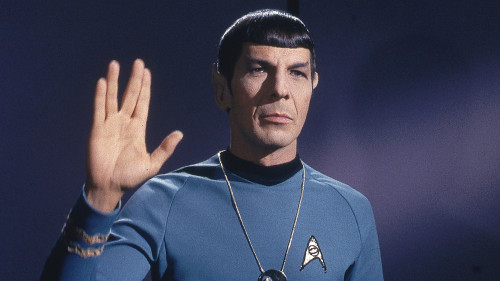
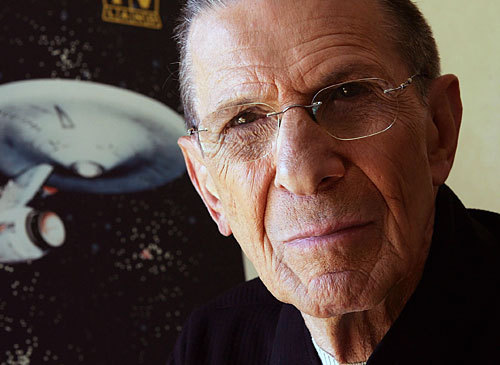
Leonard Nimoy died five years ago today. Here’s the post I wrote on that occasion.

When The Wife and I were on our honeymoon, one of the stops was the Boston Museum of Science. I’m always a fan of science museums. During our visit, we saw a movie in their OmniMax theater. I don’t remember what the movie was, to be honest, but I do recall a bit at the beginning of the show, when the lights dimmed and a voice sounded over the speakers, which said something like this:

Good afternoon! The movie will begin shortly, but before it does, we need to properly calibrate our theater’s sound systems for use. To do this, we have enlisted the aid of a person who grew up in this very neighborhood. You may find his voice familiar.

This was followed by a beat of silence, and then another voice said:

Hello. Who put the BOMP in the BOMP shoo BOMP shoo BOMP; who put the RAM in the RAMALAMADINGDONG.

The second voice, the “local kid made good”, was Leonard Nimoy’s. I think most folks in the audience recognized that voice before he actually said “This is Leonard Nimoy”; his voice was, actually, one of the most familiar I ever knew. Gravelly and distinguished, that voice was, and Nimoy knew how to use it, which words to emphasize and where to pause just ever-so-slightly for effect.

I don’t remember a time when I wasn’t aware of Leonard Nimoy on some level. More precisely, I should say that I don’t remember a time when I didn’t know who Mr. Spock was. I remember Star Trek episodes very early on, all the way back to the first house I ever lived in. Trek was my sister’s thing, but I remember vague images from it. The most specific one I have is at the end of an episode called “Friday’s Child”, when, at the end, all is well and the female guest star’s character has given birth, and observing Dr. McCoy making baby talk to the kid, Spock asks why baby talk is a thing at all.

A lot can be said about Nimoy and Spock, and a lot has been said about Nimoy and Spock over the years. Most fascinating to me was Spock’s arc through the six “Original Crew” movies, from his attempt in The Motion Picture to purge himself of emotion to his own resolution of the “Kobayashi Maru” test to his rescue to his work to put his own brain back together (interesting that no fewer than three major Trek stories, one episode and two movies, devoted large amounts of time to putting Spock’s brain and mind back together), and finally to the confident, competent officer we saw in The Undiscovered Country. In that film, when Kirk and McCoy get in serious trouble and are arrested, Spock just calmly assumes command and immediately begins the investigation to find the evidence to free them. Through that film, Spock acts with a calm acceptance that the truth will come out, that they will find the evidence, and that they will find it by searching for it calmly and logically. It is of a piece with his line in the film about the need for faith, to trust that “the Universe will unfold as it should”.

My personal favorite Spock moment comes at the end of what is certainly one of the very best Trek episodes ever, “The City on the Edge of Forever”. Knowing that if he allows Edith Keeler to live, the future will change and Starfleet and the Federation will never happen, Kirk stops McCoy from pulling her out of the path of the oncoming car. McCoy rages at Kirk:

“You deliberately stopped me. Jim! I could have saved her! Do you know what you just did?!”

And Spock — ever calm, ever logical, ever accepting of what must be — simply says:

“He knows, Doctor. He knows.”

Nimoy knows that he can’t express sadness in that line. He cannot express heartbreak or the awfulness of the choice that Kirk has just had to make, and all the same, Nimoy conveys that Spock knows these things. He knows these things, he knows that they are real, and he does not belittle them in any way.

Since I’ve no memories at all of a time before Star Trek, it’s fair to say that it — along with Star Wars, obviously — are the biggest influences of mine in terms of my notion of what the world will look like, hundreds or thousands of years in the future. Will we always face problems and struggles and very real difficulties? Absolutely. But I don’t believe in dystopia. I cannot, will not believe that there is a future in the offing when the world is wrecked and everything is in ashes and only a very few are living well while the rest of humanity exists in dimly-lit squalor. I cannot, will not believe that, and that’s why I cannot, will not write it.

I believe that whatever difficulties and challenges we eventually face, we will do it from a brightly-lit viewpoint where it’s always clear how far we’ve already come. I believe that when we take to the stars, our ships will be beautiful and that they will explore with grace, and that we will confront our futures with logic and science as well as warmth and a twinkle in the eye that’s always there.

Why do I believe those things? In large part, because of a teevee show and some movies that Leonard Nimoy starred in.

After his long and prosperous life, Leonard Nimoy now belongs to the past. But he’ll always be a part of my future…my “Undiscovered Country”.

Share This Post

Memories of Lester

Lester, one of our two cats, died last week.
He started to seem a bit not-quite-himself last weekend, and we kept an eye on him. Then on Monday morning we couldn’t find him anywhere in the house. He eventually turned up in the cabinet under the kitchen sink, which for him was extremely odd. Some cats are keenly interested in cabinets and will become quite adept at opening them, while others will not, and when cats–especially older cats–suddenly start nesting in places that have never apparently interested them before, it’s generally not a good sign. So we took him to the vet on Monday, where they kept him in an attempt to help his breathing (which had become labored) and get fluids into him.
Lester got a little better over that day, but then he started relapsing, and we received a phone call from the vet at 4:00am that he was doing significantly worse. When The Wife returned that call, the phrase “it’s time to make some decisions” was uttered. We went to the vet’s office at 5:00am Tuesday morning, prepared to have Lester ushered into death as painlessly as possible…but somehow, improbably, he waited until we got there, and then he twitched a single time and was gone.
Lester lived with us for thirteen and a half years, along with his brother Julio, who remains. When we adopted them, they were roughly a year old, but we never had any way of knowing exactly. These two cats turned up one morning outside my parents’ back door on a cold winter morning. I suppose they were left there by someone who decided they were too much to handle, as my parents were well known in their small-town social circle as enthusiastic cat lovers. My mother has told me often of waking up to a cat howling and scratching at that back door, and when she proceeded to open the back garage door (which opened to the same part of the house’s exterior), in came a big gray cat who was quickly followed by an almost-as-big black cat.
My parents were at a bit of a loss as to how to deal with this sudden arrival of two cats. They already had , I think, five cats, all indoor cats, all Persians, and they weren’t prepared to suddenly have to deal with these two big lummox barn cats-without-a-barn. Even more, my mother was shortly to undergo surgery, which would leave her unable to really deal with these two energetic yo-yos properly.
Thus we stepped up and took possession of them. By this time my mother had named the big gray one Lester, and the black one Julio. We only had a single cat at the time (Comet), so now we were up to three. We had to play dumb about this because our apartment complex specifically only allowed a single cat. (Suck it, Quakertowne Apartments!)
Lester and Julio’s first days with us were rocky. In their first eight hours they broke two drinking glasses, got into a lot of stuff, and were generally quite naughty. They also ganged up on poor Comet, and finally one morning they came very near to getting the boot. But calmer heads prevailed, and we kept them.
Over the years, Lester and Julio would be almost joined at the hip, to a degree that was sometimes kind of gross to behold. (They would often wash each other simultaneously, down there.) But they developed personalities of their own as well. Lester was a big goof who would chew on plastic bags his entire life and who would, for a time, come crying to me at night if he decided that it was time to go to bed and I hadn’t come yet. Both cats adapted fairly quickly to the new house when we moved in. Adapting to the presence of dogs? That was more of a struggle, but eventually Lester developed a strange kind of “sibling rivalry” with Cane. Until Carla arrived, the cats and Cane shared a common water dish, and one time Cane saw Lester going to get a drink and ran over to slurp up all the water in the dish, just to piss Lester off. Of course, within half an hour Cane had to pee very urgently, so that plan kind of backfired a bit.
Lester and Julio are the only cats I’ve ever known who were literally litter-mates, so we often wondered what might happen when one inevitably died before the other. So far Julio seems to be his normal self, but we’re keeping an eye on him and we’re giving him dollops of yogurt more than just once a day now. Will we ever get another cat? Undoubtedly we will. Except for the time I spent in college in Iowa, I have never lived outside of the presence of cats and I see no reason to start doing so now. Of course it will be a challenge to figure out now that we have dogs in the mix, but eventually I think we’ll want another cat.
But there certainly won’t be another Lester.
He was a good cat, even when he wasn’t.

Share This Post

Farewell, Vonda N. McIntyre (From the Books)

Science fiction and fantasy author Vonda N. McIntyre has died.

I feel that I’ve done McIntyre a disservice all these years. I’ve read a lot of her work, but none beyond her well-known tie-in books in the Star Trek and Star Wars universes. But on the other hand, she wrote all those books voluntarily and she wrote some of them so well that they stand up even outside their tie-in status. And what’s so bad about tie-in work, anyway? There’s a reason the Trek and Wars franchises are so well-established. I do own a couple of McIntyre’s non-Trek books, and I should probably make reading them a higher priority.

One novel of hers that I especially liked was her original Trek novel Enterprise: The First Adventure, in which she told the story of how the very first voyage of the starship Enterprise under the command of Captain James T. Kirk went. This novel posed a number of challenges for McIntyre: she couldn’t rely on the tried-and-true relationship tropes of Trek. Kirk and McCoy were already good friends at this point, but neither knew the Enterprise‘s Vulcan science officer; there couldn’t be any hint here of “I have been, and always shall be, your friend.” McIntyre also wrote a Lt. Sulu who didn’t even want to be on the Enterprise, and Commander Montgomery Scott who was so skeptical of his new Captain and so possessive of “his” ship that he nearly let his attitude force Captain Kirk to order his transfer off the finest ship in Starfleet.

Another thing McIntyre did in this book is to show that Kirk’s ascent to commanding the Enterprise wasn’t just a straight-line thing that involved no sacrifice at all. Star Trek II: The Wrath of Khan, which McIntyre novelized, established that there was one woman in Kirk’s past life who was much more than a momentary conquest. Dr. Carol Marcus might have been the love of his life, and she was the only one (that we ever knew of) to bear James T. Kirk’s child. So in Enterprise, Vonda McIntyre wrote a wonderful scene in which Kirk is torn between his dream of command and a woman he loves. It’s the kind of amazing character writing at which McIntyre excelled. She made you care about these characters. Her writing is full of scenes like this, and now I have to wonder even more what magic she was able to conjure with characters of her very own.

Here’s the scene.

Carol turned, uncharacteristically flustered. “Jim–!”

“Hello, Carol.” He stopped. He wanted to say everything to her, or he wanted to say nothing. He wanted to make love with her, or he wanted never to see her again.

“Talk to you later,” Dr. Eng said, and made a diplomatic exit.

“How are you feeling, Jim?”

He ignored the question. His heart beat hard. “It’s wonderful to see you. I have to leave soon. Can we…I’d like to talk to you. Would you have a drink with me?”

“I don’t feel like having a drink,” she said. “But I will go for a walk with you.”

Jim paused beside Gary, still hoping he might awaken. [That’s Gary Mitchell, Kirk’s best friend who was his First Office in the episode “Where No Man Has Gone Before,” before his character died.] “Get well, my friend,” Jim said, and left Ms. Chapel the note to give him when he regained consciousness.

They did not have to discuss where to go. Jim and Carol walked toward their park.

Without meaning to, exactly, Jim kept brushing against Carol. His shoulder touched her shoulder; his fingers touched the back of her hand. At first she moved aside.

“Oh–” Carol said impatiently the third time Jim touched her. She took his hand and held it. “We are still friends, I hope.”

“I hope so too,” Jim said. He tried to pretend the electric tingle of physical attraction no longer existed between them, but he found it impossible to deceive himself that much. Being near Carol made Jim feel as if a powerful current case a web over both of them, exchanging and intensifying every passion.

“Are you sleeping any better?” Carol said.

Jim hesitated between the truth and a lie. “I’m sleeping fine,” he said.

Carol gave him a quizzical glance, and he knew he had hesitated too long. She had held him too many times, when the nightmare slapped him awake in the darkest hours of the morning.

“If you want to talk about it….” she said.

“No. I don’t want to talk about it,” he said in a clipped tone. [This all happens in the aftermath of a bad incident that left Kirk emotionally scarred.]…”No,” he said again, more gently. “I don’t want to talk about it.”

Still holding hands, they reached the small park and set out along the path that circled the lake. Ducks swam alongside them, quacking for a handout.

“We always forget to bring them anything,” Carol said. “How many times have we walked here–we always meant to bring them some bread, but we never did.”

“We had…other things on our minds.”

“Yes.”

“Carol, there’s got to be some way–!”

He cut off his words when he felt her tense.

“Such as what?” she said.

“We could–we could get married.”

She looked at him; for a moment he thought she was going to burst out laughing.

“What?” she said.

“Let’s get married. We could transport to Spacedock. Admiral Noguchi could perform the ceremony.”

“But why marriage, for heaven’s sake?”

“That’s the way we do it in my family,” Jim said stiffly.

“Not in mine,” Carol said. “And anyway, it still wouldn’t work.”

“It’s worked for quite a number of generations,” Jim said, though in the case of his own parents the statement stretched the truth. “Carol, I love you. You love me. You’re the person I’d most want to be with if I were stranded on a desert planet. We have fun together–remember when we went to the dock and snuck on board the Enterprise for our own private tour–” At her expression, he stopped. “It’s true.”

“Yes,” she said. “It’s true. And I’ve missed you. The house is awfully quiet without you.”

“Then you’ll do it?”

“No. We talked about this too many times. No matter what we do, it wouldn’t make any difference. I can’t be with you and you can’t stay with me.”

“But I could. I could transfer to headquarters–“

“Jim…” She turned to face him. She held both his hands and looked into his eyes. “I remember how you felt when you found out you’re getting command of the Enterprise. Do you think anyone who loved you would want to take that away from you? Do you think you could love anyone who tried?”

“I love you,” he said. “I don’t want to lose you.”

“I don’t want to lose you, either. But I lost you before I ever met you. I can get used to the quiet. I can’t get used to having you back for a few weeks at a time and losing you over and over and over again.”

He kept seeking a different solution, but the pattern led him in circles and he could find no way out.

“I know you’re right,” he said, miserable. “I just…”

Tears silvered Carol’s dark blue eyes.

They kissed each other, one last time. She held him. He laid his head on her shoulder with his face turned away, because he, too, was near tears.

“I love you too, Jim,” she said. “But we don’t live on a desert planet.”

That‘s how you write a heartbreaking farewell scene…and it comes very early in the book, before we even see Captain Kirk on the bridge of his new ship. McIntyre knew how to set the emotional stage for her stories.

I really do owe her a reading with newer eyes….

Share This Post