
Blasters and spaceships, oh my!

I don’t know what it is, but for some reason, in the warmer months my reading tastes gravitate strongly toward science fiction (and the occasional horror book). I associate fantasy with the cooler months. Why this is, I’ve never really figured out; I’ve read many a fantasy novel set in warm locales, so it’s not as if the cooling weather puts me in mind of the snowy journeys through the Misty Mountains in The Lord of the Rings. This isn’t to say that I won’t read any fantasy at all during the warm periods, but…well, summer is when I want lots of exploding spaceships.

So, here’s the skinny on three space opera books I’ve read of late!

:: The first was, technically, a re-read of The Warrior’s Apprentice by Lois McMaster Bujold. This is the first novel in the ongoing saga of Miles Vorkosigan, one of the most famous characters in contemporary SF. I read this book before, several years ago, and I enjoyed it, but for one reason or another I never continued with the Vorkosigan series. No real reason why, really; I just never got around to it until I’d reached a point where I figured that if I was going to continue with the series, I should just start over.

The Warrior’s Apprentice starts with Miles Vorkosigan undergoing the final physical trial he needs to complete before he can enter the military service of Barrayar, his homeworld. Barrayar places supreme importance on its military, but getting in will be difficult for Miles, because he is physically disabled. He is barely five feet tall, and his bones are extremely brittle and prone to breaking. Sure enough, he breaks both his legs in the first minutes of the trial, and Miles is forced to take on the life of a mercenary.

He actually isn’t really forced into that life, per se, so much as he just kind of steps into one situation after another that causes a mercenary crew to just naturally gravitate toward him. It’s a fascinating thing that Bujold does here: she depicts a character with enormous personal magnetism who uses it to his advantage without ever really seeming totally aware of it.

The Miles Vorkosigan tales aren’t “sensawunda” space operas; they’re as character-driven as just about any story can be. I look forward to reading more of them.

:: Starpilot’s Grave, by Debra Doyle and James MacDonald, is the second book in their “Mageworlds” series. The adventures of Beka Rosselin-Metadi continue, along with her various friends from the first book, The Price of the Stars. The earlier book established a galaxy that is post-war, a war against a group of villains hailing from ‘the Mageworlds’. Here, Doyle and MacDonald set up the resumption of those hostilities, and by the end of the book, war has broken out again, with our heroine, Beka Rosselin-Metadi, assuming a leadership rule. Not a whole lot that happens in this book is a surprise, as it is clearly setting up the third act in the trilogy. It’s all somewhat Star Wars-like, in general feel, and it’s a fun read that isn’t terribly demanding. My main complaint, as with Price of the Stars, is that there is still little explanation as to who the Mages actually are or why they are to be feared. I hope this is explained more in the final volume.

:: Finally, John Scalzi’s The Last Colony was the third and final book in his Old Man’s War trilogy, until he went and added a fourth book, making it not a trilogy anymore. Oh well. As with the first two books, this is a fast-paced and involving read that suggests a whole bunch of nifty Sfnal questions without slowing the pace enough to delve into answers. We rejoin our heroes from the first novel, John Perry and his wife Jane Sagan, who have adopted a girl named Zoe from the second book. They are asked by the Colonial government to head up a secret colony whose location is to be kept secret…because, it turns out, an alliance of aliens is systematically destroying colonies they deem to be “unauthorized”. Lots of hilarity ensues: resistance against the aliens, coupled with the fact that they can no longer rely on their own government to be honest with them or give them aid.

Some of my key questions about this whole universe, dating back to Old Man’s War, are finally explained, which is nice, and Scalzi gets a pot boiling quite nicely, creating a definite sense of tension as he depicts on the one hand an alien force that seems well nigh unstoppable and on the other depicts a group of colonists struggling to find an answer to a problem that is seemingly unsolvable. My main issue with the book lies with the nature of the final solution itself; in all honesty, it kind of seems to come out of left field and only barely manages to avoid feeling like an outright deus ex machina. But it’s my understanding that some of this background is explained in a fourth book in the series, which focuses on the Perrys’ daughter, Zoe.

More space opera to come!
Share This Post

Brightest day, darkest night, yada yada yada….

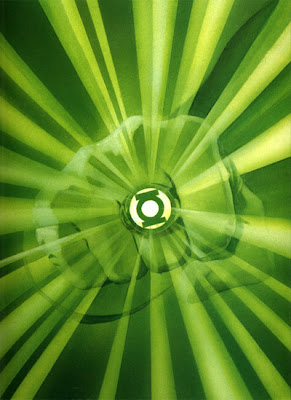
I saw Green Lantern a while back, and I’ve been struggling since then to figure out how to write about it. I liked the movie, quite a bit. I grant some of its flaws, but for the life of me, I can’t justify the enormous piling-on of the critics who have ripped the film and given it an awful reputation. That, plus what I understand to be lackluster box office, seems to cast doubt on any hopes that Green Lantern might be the start of a franchise. Maybe DVD sales will help, but in this era of slackening DVD sales – well, I’d be surprised if the next time we see Green Lantern on the big screen will likely be a reboot that happens later rather than sooner.

Green Lantern just isn’t a bad film. It simply isn’t. Not one of its flaws is sufficient to sink it as an enjoyable experience, and I think that a lot of the harping on those flaws is downright unfair. One common complaint – too much CG! — has really become, in my view, a crutch complaint that everybody levels against everything nowadays in the movies.

But the thing is…Green Lantern is a frustrating film, because I’ve rarely seen a movie that makes so clear the ways it could have been a truly outstanding film in its genre. On the one hand, it’s a fun movie. On the other, it’s a maddening one.

I came to Green Lantern fairly virginal as far as the character goes. I knew very little about him aside from the bare bones of his origin: a hotshot pilot named Hal Jordan comes across a crashed alien spaceship, whose purple-skinned pilot hands him his green ring and the green lantern that powers the ring. In this way, Jordan becomes a Green Lantern – a member of an intergalactic police force, who uses his ring’s power to fight evil. I did read some recent comics — mostly stuff by Geoff Johns — as preparation for the movie. Some of it, I liked. Some of it (lookin’ at you, Blackest Night), I thought was just over-the-top, histrionic nonsense. But anyway….

Green Lantern casts Ryan Reynolds as Hal Jordan, and it’s a fine performance. The character isn’t really anything we haven’t seen a lot of times before; he’s the talented but uncommitted screw-up who is given power far exceeding his apparent level of maturity and who must learn to see within himself whatever the “ring” saw. Yes, that’s a tried-and-true formula, but that’s because when done well, it really works. In Green Lantern, it does work, but not as well as it should. Why?

Well, for one thing, the film keeps taking its focus off Hal Jordan for other things. There’s a lengthy intro that tells us a lot of stuff about who the Green Lanterns are and what they do and why they do it. It’s kind of interesting, but…it’s too early for it. There’s a reason why, in Star Wars, we’re more than a half hour into the movie before the words “Jedi Knight” are ever uttered. The movie has to set up its enormous cosmic threat, a beastie called Parallax. Now, I liked the way Parallax was depicted, but I kept thinking throughout the movie that we really needed a tighter focus on Hal Jordan the whole way through.

And there’s the other problem: Parallax isn’t the only villainous force in play here; there’s a whole other villain too. A scientist is somehow infected with the “Yellow” power of fear, and becomes the initial threat that Jordan must face before Parallax finally comes to call on Earth. And here is part of my general problem with superhero movies these days: they’re all origins, all the time.

I don’t mind origin stories for superheroes; in fact, we need them, so we know who they are and why they can do the things they do and why they do them in the first place. Problems arise when, in addition to a superhero’s origin story, we also have to endure a long origin story for the villain, too. That happens here. It happens in the Spiderman movies. It’s going to happen again in the new Spiderman movie, the one that’s a reboot that will apparently treat us all to seeing Peter Parker bitten by the damn spider again.

The best superhero movies I’ve seen — Superman, the Christopher Nolan Batman films, Iron Man – don’t really bother with the origins of the villains, because they don’t really need to. We can spend time delving into Superman’s origin properly because we’re not also having to learn all about how Lex Luthor became, well, Lex Luthor. Ditto The Dark Knight — we know who Batman is, and all we need know about the Joker is that he’s a lunatic. Now, the first two Spiderman movies were still well-made, but in each case, we still had to watch long origin stories for the supervillains. And in Spiderman 3, there were two of them.

I was looking forward to Green Lantern because of the hero’s space opera nature, but it turns out that Green Lantern might have really been something special if it had omitted much of the space opera and left that for the potential sequel. I did groove on all the space stuff, but I can’t help thinking that what the movie really needed to do was tighten the focus on Hal Jordan, give him more heroic things to do, and have him square off against not quite so cosmic a villain.

Random thoughts:

:: If the Lanterns can fly through space by themselves, why does Abin Sur have a spaceship at all?

:: Why can Parallax slap aside a dozen Lanterns in one scene, and then get taken to the mat by Hal Jordan?

:: The final fight is over too soon, anyway. Jordan should have been battered and bloody well before he got to his “In brightest day….” recitation. (Which was a great moment, by the way.)

:: I loved the fact that a little mask isn’t enough to conceal Jordan’s identity from those who know him. I also loved how he tried using the Christian Bale Batman-raspy voice.

:: Some folks have complained that Sinestro’s taking of the yellow ring, during the credits, isn’t set up in the movie. See, coming at this from a non-GL fan perspective, I thought that Sinestro’s presence in the movie did nothing but set this up. It’s the only reason he’s in the movie at all. So the film is actually giving us three origin stories!

:: I loved the look of the film. It’s not nearly as ‘green’ as the commercials and posters suggest. I also didn’t find the CGI poorly done at all. But then, these kinds of complaints seem to me to usually spring from people who have an overly strong attachment to Harryhausen stop-motion stuff.

:: Having heard the score now in context of the film…it’s still a bad film score.

So there it is. I hope there’s another movie, but I’m not optimistic. But I liked this one.

Share This Post

Planets ending with ‘is’

Time to talk about some books I’ve read recently.

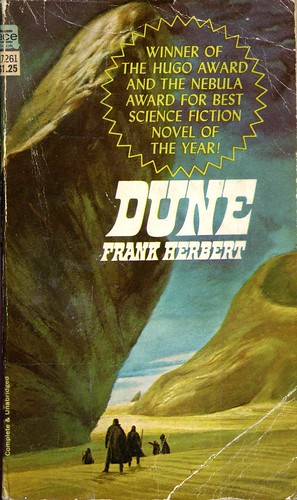
:: Somehow, in my life as a science fiction reader, I’d never read Dune until just a few weeks ago. Now, that’s nothing really abnormal; there are lots of SF classics I haven’t read. I haven’t read Dhalgren. I haven’t read The Book of the New Sun. I’ve read only one of Banks’s Culture novels. I still haven’t read A Canticle for Leibowitz. And I haven’t read…well, you get the idea.

Dune by Frank Herbert

So, why not Dune? I actually started it, ten or eleven years ago, but it either didn’t grab me or something else came along that I wanted to read more. I do recall that my first attempt at Dune flummoxed me a bit because I had to flip back to the book’s glossary so often that it threw me out of the book a lot. Still, I always intended to return to Dune, and I finally have.

This just in: Dune is a great book. Water, also, is wet.

Again, as before, it took me a while to get into Dune, and this time I just generally found a certain coolness to the overall emotional tone of the book. Everything felt like it was at a distance, somehow. This isn’t a criticism per se, but I found myself admiring the book more than really getting involved in it. But still – it’s a great book.

What makes the book great are a combination of factors. First, the setting, the desert planet of Arrakis. Yes, I’ve seen desert planets before, but Dune was there before all of the ones that I’ve seen, and Herbert imbues this world with an impressive sense of scale and an even more impressive sense of importance. Whenever you depict a world where conditions are about as harsh for humans as can possibly be, you need to create a reason for them to live there, and this Herbert accomplishes impressively. (The reason is, of course, the spice called “melange”, which is important because…well, that’s beyond the scope of this post.)

Even better is how Herbert is able to depict the society that lives on Arrakis, the nomadic-bedouin-like Fremen. Herbert brilliantly depicts just what the effects upon society would be on a world where water is as precious as it is on Arrakis, as people have to wear special suits that reclaim every bit of moisture their bodies excrete, and Herbert has thought things through to the point where an act that we on Earth wouldn’t even think twice about – like spitting – is deeply significant on Arrakis. Herbert’s attention to detail is superb, and he packs a lot of detail into the book.

Oh yeah, and sandworms. Sandworms are all kinds of awesome. I won’t say anything more than that.

As noted above, I wasn’t as emotionally involved in the book as I like to be, but the book’s other strengths compensated for this. Part of the problem was the glossary-flipping I had to do a lot of this time around as I did the first time; another part is Herbert’s structuring the novel by including quotes from fictional texts of his world before his chapter. This device does create some dramatic tension in one key respect – establishing that one particular character is a horrible traitor well before the treason happens – but in other ways, those text quotes were sometimes distracting.

I’m not sure if I will read Herbert’s sequels to Dune. I own them all, having picked them up at library book sales, but the general consensus out there as I’ve sussed it out seems to be that the sequels aren’t nearly as good as the first one and that they drop in quality each time out. We’ll see.

(Seriously, folks. Sandworms.)

:: I suppose that most casual SF fans are only aware of Leigh Brackett, if at all, as the writer of the first draft of the screenplay to The Empire Strikes Back. Brackett was a prolific SF writer during the middle of the 20th century, though, and she produced a lot of fine space opera and planetary fantasy stories. In fact, Leigh Brackett is required reading for anyone interested in those strongly-related SF subgenres, and not least because she was simply a fine, fine writer.

I’ve only read a little bit of Brackett thus far, but I’ve loved everything of hers that I’ve read to date, and I can now add to that list of titles her novel The Starmen of Llyrdis.

starmen of llyrdis

A human male, Michael Trehearne, is approached by a beautiful girl who tells him that he looks like one of the Vardda, a race of humanoids who are the only beings in the galaxy who can travel between the stars. This gives them a monopoly over all interstellar trade, and most of the planet-bound species in the Galaxy hate them for it.

Trehearne is brought into the fold as a Vardda, but at the same time, he is viewed with suspicion by them, a suspicion that manifests throughout the book in betrayals and schemes and plots against him. Eventually Trehearne learns a deep secret of the Vardda: the fact that many years before, one of their scientists had figured out how it is that the Vardda can travel the stars, and how to give that ability to other species. Trehearne is now at the center of events that could change the galaxy forever.

Brackett’s writing is poetic and beautiful as she weaves a tale of adventure and galaxy-spanning mystery that even has a few action set-pieces. The story is a bit heavily skewed toward the male end of the spectrum, as might be expected of a book written in 1952, and in terms of style, there’s not a lot of humor in the book. But those are quibbles that are better taken in the context of the era in which Leigh Brackett wrote, and The Starmen of Llyrdis is a fascinating and entertaining space opera.

Share This Post

Fixing the Prequels: Revenge of the Sith (part 1)

I’ve been meaning to get to this for a while, but various things have distracted me and kept it pushed down the priority list for several months. But now, it really is time to start the final edition of Fixing the Prequels, by turning to the final film in the trilogy, Revenge of the Sith.

Before I begin, it’s worth a reminder of what I’m about here. I love the Prequel Trilogy (abbreviated ‘PT’ hereafter), and have since I saw each individual film on first release. I found them all involving, exciting, and in the case of Revenge, emotionally crushing at times. I know I’m a minority in this, but I’ve never much cared about that. Even so, I must admit that as much as I love the Star Wars prequels, I don’t love them unreservedly, because they are flawed. There are things wrong with them.

That’s not an unusual opinion, but I think that my view as to the degree of that opinion is. Most folks seem to hold the flaws of the PT as fatal flaws, sinking the films to the point where the only appropriate response to them seems to be outright mockery. I don’t believe that. I think that a lot of the flaws in the films are overblown; others arise from misinterpretation or possibly a failure to understand what George Lucas was at times really getting at. And still more perceived flaws in the PT come, I think, not from a sense of genuine error on Lucas’s part but the simple fact that, by the time Lucas made these three films, tastes had changed in a lot of ways.

So when I talk about “fixing” the prequels, I’m not about wholesale rewrites and bagging on the direction of the films in all particulars. I point out flaws along the way, but my goal is also to highlight the things in these films that I find admirable, the things that keep me coming back to them frequently. My approach is to address two kinds of flaws: the ones that I think are real, genuine flaws, and the ones that I’ve heard cited as flaws from other people over the years but which I either don’t see as flaws or as fatal flaws. I’m about credit as much as criticism here, which I think is a more measured response to them than a lot of the people who deeply despise the Prequels would admit. It has long interested me that, in almost all cases of such discussion, the people who hold a negative view of something are the ones who invariably claim to be seeing the thing objectively. My response is to simply point out that having a negative opinion is not seeing something “objectively”; it’s having a negative opinion.

And now, with all that preamble behind us, let’s move on to discussing Revenge of the Sith, a fascinating film that even as I write this I’m not sure about, as to how I’d go about “fixing” it. This is mainly because I’m not entirely sure what I think is wrong with it. But as I work through the film, I expect some thoughts will crystallize. So let’s start at the beginning, which means as it always does in a Star Wars movie, a crawl:

War! The Republic is crumbling under attacks by the ruthless Sith Lord, Count Dooku. There are heroes on both sides. Evil is everywhere.

In a stunning move, the fiendish droid leader, General Grievous, has swept into the Republic capital and kidnapped Chancellor Palpatine, leader of the Galactic Senate.

As the Separatist Droid Army attempts to flee the besieged capital with their valuable hostage, two Jedi Knights lead a desperate mission to rescue the captive Chancellor. . . .

It sets things up nicely. I especially like that opening: “War!” This crawl is pretty blunt, with none of the “politics” stuff that many claim to have been bored by in the first two Prequels. (How they could be “bored” by a couple of lines of text is something I’ve never figured out, but no matter.) What stands out to me in this crawl, however, is that second sentence in the first paragraph: “There are heroes on both sides.” That’s an interesting line, there; it seems out of place, but I think it works in an interesting way: it calls to attention the ambiguous nature of the Clone War, the War to Preserve the Republic: we know that it’s basically a fake war, started for no other reason than to trick the Republic into destroying itself.

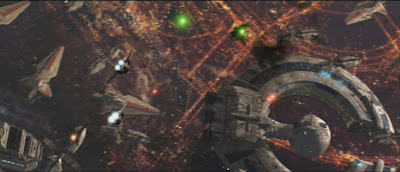
Revenge opens with a massive space battle, of which I’ve heard many differing opinions over the years. Detractors say that it plays like a video game on the big screen, and is impossible to follow. This has always struck me as odd, because it’s always seemed to me that George Lucas goes out of his way to make this incredibly frenetic space battle as easy to follow as possible.

After the crawl, we have our traditional pan down to a planet and a spaceship. (AOTC, remember, actually followed its crawl with a pan up.) The planet is Coruscant, and the ship is a Republic attack cruiser. The music dies away almost completely at this point; all we hear for about thirty seconds is a steady, but off-kilter (because it’s in 5-4 time), beat of drums. The camera starts to zoom in on the cruiser, when two new ships enter from behind: small fighter craft. Only two. We follow these two ships as they skim over the surface of the cruiser, out into space beyond it, and then back and dive. The camera follows over the edge of the cruiser, and there – spread out before us – is the enormous space battle.

As soon as the two Jedi starfighters come into view, the music starts in again, with the famous “Force theme”. We don’t need any dialogue or to even look into the cockpits to know that our two Jedi are flying these ships. Also, of all the ships coming and going in the skies above Coruscant, these are the only two ships of this type. This isn’t like A New Hope, when Luke Skywalker was only one of a bunch of X-wings. Even more, the Jedi starfighters are, by design, similar to what will eventually become TIE fighters, and those ships’ thrusters emit cone-shaped blasts of exhaust (presumably because the battle is taking place high in Coruscant’s atmosphere, as opposed to in the vacuum of outer space).

Another thing that interests me about this space battle is that we see almost none of it. Really. This battle clearly involves several times as many ships and combatants as the big battle at the end of Return of the Jedi (of course, a one-to-one comparison there isn’t easy because that one has a Death Star in it), but aside from lingering shots that quickly flash by, we are shown nothing of the battle itself. Nothing of the strategy, nothing of which side is winning and which is losing, nothing of tactics. All we see of this battle is what Anakin Skywalker and Obi Wan Kenobi see as they fly through it, on their way to General Grievous’s flagship. The battle is frenetic, and there is a lot happening onscreen, but it’s not at all hard to follow, so far as I can tell. The battle is entirely secondary to their main concern: getting through it alive to land on General Grievous’s ship and find the Chancellor.

So, after quite a bit of space derring-do that involves flying directly through a cloud of attacking fighters, evading missiles, and dealing with a bunch of small droids who get onto a fighter’s hull and then scuttle about taking the ship apart, our two Jedi heroes land on Grievous’s ship. I like a lot of the dialogue through here: at one point, Obi Wan notes “This is why I hate flying!”, echoing two lines from Attack of the Clones. I also like how when Obi Wan’s ship is infested by the buzz droids, Anakin’s first notion is to blast them off, which has Obi Wan screaming in protest, at which point Anakin says, “I agree. Bad idea.” So he comes up with something else.

What I also like about this whole sequence is John Williams’s music, which is full of interesting things like quotes from the “Force Theme”, sections in 5/4, and one heroic quote of the Rebel Spaceship Fanfare when R2-D2 dispatches the last buzz droid. This was a musical touch that I liked immensely.

Anyway, back to the General’s ship, where Obi Wan and Anakin have just landed. There’s an interesting touch here as the two Jedi take on a typically large number of battle droids: Obi Wan leaps out of his ship and ignites his lightsaber before his ship has even slid to a stop; Anakin, however, waits until he’s stopped completely before grabbing his saber and hopping out to join the melee. I like that. It’s the kind of tiny detail that gets lost amidst a lot of the melee, the kind of blink-and-you-miss-it thing that nevertheless illustrates something about the story and our characters.

Now Obi Wan and Anakin must make their way to the observation deck where the Chancellor is being held captive. This involves more run-ins with battle droids, malfunctioning elevators, and relying on R2-D2 when R2 is dealing with his own problems. (He has to hide from a couple of battle droids when Obi Wan starts talking to him through his comm-link.) I wouldn’t change any of this material, because the banter and chemistry between Obi Wan and Anakin really works pretty well, in my opinion:

ANAKIN: I sense Count Dooku.

OBI WAN: I sense a trap.

ANAKIN: Next move?

OBI WAN: (grins) Spring the trap!

And this, the transition from the space battle to the derring-do aboard General Grievous’s ship, is a good place to stop. Next time we’ll rescue the Chancellor, land half a ship, and find out that Anakin isn’t always shooting blanks. Excelsior!

Share This Post

Meg and Miles

Post corrected below.

Regarding a bit of recent reading:

:: Some years ago — I don’t recall how long — I read the first few volumes in Lois McMaster Bujold’s series of books on the adventures of a man named Miles Vorkosigan. I’m not sure that the series has an “official” name, so for my purposes, I’ll call it the Vorkosigan Chronicles. I’d been hearing about these books for years; it consists of a long series of self-contained novels about Miles Vorkosigan and the people around him, and every time a new book in the sequence would come out, I’d see a flurry of discussion in various forums online as fans of Bujold’s books devoured her latest offering.

This is one of those series where there tends to be a bit of diverging opinion as to the “best” order in which to read the books. One can read them in “story order”, meaning, reading the books in the order that the events within take place; or, one can read them in the order in which the books were published. In truth…I’m not sure which order I went with. Baen Books has reprinted the novels over the last few years in omnibus editions that gather two or three at a time, making it easy to read the books more-or-less in story order, or so I think. Anyway, I started with Cordelia’s Honor, which gathers two novels, Shards of Honor and Barrayar, which tell the story of how Miles’s parents come together and have their famous son. So I read a book consisting of two books, out of publication order.

You can see how this gets a bit confusing.

Anyway, this was the second time I had read Cordelia’s Honor. The first time, I liked the book just fine…but I wasn’t sure I understood the wild love that fans have for the series. I found it genial enough, but I wasn’t overwhelmed. I later read The Warrior’s Apprentice, the first actual book about Miles himself, as part of the omnibus Young Miles. That one, too, I enjoyed…but wasn’t overwhelmed.

So why did I decide to return to the Vorkosigan Chronicles? Well, even though I wasn’t wowed by it, I did like it, and always meant to get back to it. But I’d waited long enough that I figured I pretty much didn’t remember enough of it to keep going, so I figured I’d best start over at the beginning. Which meant going back to Cordelia’s Honor. And this time, I was wowed by the book.

I’m finding that this happens a lot for me when I return to books some years later, especially SF books that I either didn’t dislike but also didn’t find fantastic the first time around. I chalk this up to the fact that I’m a more experienced SF reader now than I was even five, six, seven years ago. I find it easier to pick up on certain SF tropes now than I used to, which makes it a lot easier to read some of these books.

But maybe this shouldn’t have mattered so much in the case of Cordelia’s Honor, as the book is very character-driven. At no point did I get a feeling that I was reading the unfolding of a plot, but rather following the actions of a group of characters, some of whom are deeply sympathetic and some of whom are…deeply not. As the book opens, Captain Cordelia Naismith is commanding a scientific expedition on some planet when her group is attacked by soldiers from the militaristic world of Barrayar. Left behind by her fleeing co-workers, she finds herself depending on the similarly-stranded Barrayaran officer Aral Vorkosigan for her survival. Cordelia is from Beta Colony, a rival world of Barrayar, and as the two work together to survive, they discover plots afoot…and increasingly complex feelings for one another.

I don’t want to give away much, since the story twists and turns in a lot of fascinating ways, but it’s no spoiler to note that eventually Cordelia gives birth to young Miles Vorkosigan, who will be the hero of all the books and stories in the series to come. Miles, though, is not without his own set of challenges; for reasons outlined in Barrayar, Miles is born with his growth stunted and with extremely brittle bones that are constantly breaking. In short, Miles is the last kind of son a man would wish to have in a heavily militaristic society. I look forward to reading how Miles overcomes these challenges in the books ahead; just from the two volumes presented in Cordelia’s Honor, I can tell that Bujold’s approach is to create engaging, sympathetic characters and then put them through hell.

:: Another book that I probably should have read long before this is Madeleine L’Engle’s A Wrinkle in Time, which was published in 1962 and won the Newbery Award. [CORRECTION: Until just today, I always thought that the famed award for Childrens’ Literature was spelled “Nerberry”. It’s actually “Newbery”. Thanks to the reader who pointed this out — that reader being none other than my retired librarian mother. Thanks, Mom!] I had no idea at all what to expect from this book, but even so, it defied the few expectations I had. I expected fantasy, but the book is much more strongly science fictional than fantastic in nature (even taking into account the forever-shifting dividing line between SF and fantasy). As with many books involving children as protagonists, the heroes are misfits — generally unpopular at school and not understood by anyone except for a couple of their peers. They are whisked away on an improbably adventure, this one to rescue their father, who has been missing for years and whom most believe to have basically run off, either with a mistress or for some other reason.

What makes A Wrinkle in Time compelling, in addition to well-done characters, is the ominous tone struck throughout the book, and the fact that it’s so overtly SF. Among books published today, I don’t see a whole lot of SF for kids, but there’s so much in Wrinkle that is SFnal that I end up wondering anew when it was that kids turned away from SF, or had SF turn away from them. Nowadays, it seems that the only real SF-type stuff kids ever see aimed at kids are a lot of Star Wars materials and superhero stories.

Anyway, I’m not sure how A Wrinkle in Time managed to elude me all these years, but I’m glad to have it off my “I should read that sometime” list. Now to track down the others in the sequence.

:: Way back when we were in college, The Girlfriend (now The Wife) bought a goofy book called 14000 Things to be Happy About. And that’s exactly what it is: a giant list of 14000 things you should be happy about.

Things to be happy about

Obviously you don’t just read this thing cover to cover. That way, madness lies. Instead, you dip, here and there, finding things you’re already happy about, or that you should be happy about, or things that you’d be happy about if you were certifiably insane.

Of course, I’d be silly to read anything into this, but it tickles me nonetheless to see two of my favorite things on the same page, out of 14000:

Two of my favorite things...on the same page!

Of course, I’m ambivalent about unbuttered green beans, and I’m not sure why I should find appeal in the rattling of garbage cans, but bib overalls and pie throwing? I’m there!

More book notes, as always, as I read more books….

Share This Post

“These deadly rays will be YOUR death!”

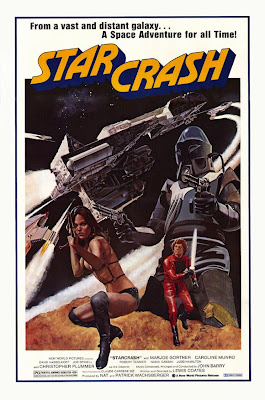
A while back I posted about an old SF B-movie I saw when I was a kid, Battle Beyond the Stars. I saw Battle in this old, somewhat beat-up theater in Hillsboro, OR that often showed double features – which I remember my parents sending me off to with their blessing, only now realizing that it was probably a great way to get an annoying kid out of the house for a few hours. Battle was the main feature that day; the lead-in was another SF flick called Starcrash. Yup, I saw Starcrash in its theatrical run.

If you’re a fan of SF movies, you’ve probably heard of Starcrash — and not in a particularly good way, either. It’s one of the legendarily bad movies of SF history, made on a shoestring budget to capitalize on the SF craze initiated by Star Wars in 1977. I remember kind of digging the movie, when I was 8 years old, but I never saw it again…until a month or so ago. I tracked the film down, wondering just how bad it really was. Is it really one of the worst movies in SF history? Or is it a bit better than I remember?

Well, it’s bad. Really bad. Its badness exists on some kind of epic level. Starcrash is almost a primal force of nature in its badness. Seriously, this is a bad bad BAD movie. But it does have that nice virtue of being bad on a level that’s entertaining in a “watch it just to laugh at it” kind of way.

The main characters is a female star pilot and criminal named Stella Star, who is gamely played by Caroline Munro, a buxom, gorgeous woman whose best-known role was a femme fatale who tries to kill James Bond in The Spy Who Loved Me, but upon whom Bond turns the tables and kills instead. (Interesting Bond trivia: Munro’s Spy Who Loved Me character, Naomi, is the first woman directly killed by James Bond in the movie series. Sure, he’s responsible for a lot of women dying, but she’s the first we ever see expire by his hand.) Stella is flying around with a curly-headed guy named Akton, when they incur the wrath of a couple of space cops, one of whom is a robot named Elle. They are basically blackmailed into searching for a lost ship that carried on it the son of the Emperor of space, or something like that. This is important because there are bad guys about, led by an evil Count, planning the conquering of the Empire. Or something like that.

Starcrash is one of those movies where when you try to summarize it, you find yourself saying vague things and using the phrase “or something like that” a lot.

Much of the middle section of the film settles into routine: Stella and friends go to a planet, find the Prince isn’t there, evade some dangers, and go to the next planet. Eventually there is betrayal, a bunch of mystical stuff involving Akton that makes no sense at all, the Prince turns up (played by David Hasselhoff!), we meet the Emperor (played with benevolent and soporific droning by Christopher Plummer), and we finally find out what the title “Starcrash” means. It involves crashing. Among the stars.

Below the fold are some screencaps of the glory that is Starcrash.

This is what space looks like. Kinda trippy – lots of stars of different colors.

Stella Star, on the right, and her trusty sidekick Akton. Ships in this movie are boxy and square on the outside, and filled with circles and ovals on the insides. Weird.

Stella’s line here – believe it or not – is “First you gotta catch me, you dirty cop!” Note the goofy smile on Akton’s face. That’s his main facial expression.

The evil count.

The evil count dispatches his robot assassins!

Stella is taken prisoner and put into a forced labor camp. Wearing this. Zowie!!!

Oh noes! Attack of the fifty-foot big-breasted sword-bearing robot!

Oh noes! Attack of the badly animated robot assassins!

Oh noes! ‘Tis the Hoff!

Hey, a sword that’s a laser! A saber made of light! What an idea!

The Emperor on his throne, which looks like…geez, how would you describe that thing?

If you decide to watch Starcrash, please prepare yourself for a bad movie. Drinking may help.

Here’s the trailer!

(Poster via)

Share This Post

Lovin’ the Lantern

I just saw this article about the Green Lantern movie that is currently in production. It’s sounding like a pretty nifty production:

See, here’s the the thing – I can’t tell you how Green Lantern will be as a movie, but after visiting the New Orleans set of the film I can tell you that director Martin Campbell and company are working to make the biggest, most epic, most sweeping, most cosmic superhero film yet. Forget Hal Jordan versus muggers in an alley, Green Lantern is really about Hal Jordan battling to save not himself, not his girlfriend, not even just his city but the entire planet Earth. Green Lantern is a huge movie, with set pieces that will be unlike anything you’ve ever seen before. I can’t spoil where the final battle takes place, but it’s an INSANE location – it certainly isn’t your standard issue end-of-the-movie warehouse, bridge or warehouse-like supervillain lair.

And it’s not just Hal Jordan. Green Lantern will feature the entire Green Lantern Corps; while visiting I saw life-sized cardboard cut outs of Tomar-Re and Kilowogg, the alien GLs who help train Hal Jordan. I saw mock ups of Oa, the planet at the center of the galaxy where the Guardians of the Universe oversee the galactic police force that is the Corps. And I saw much, much more – stuff that will make not just GL fans but hardcore space fantasy nerds salivate with excitment. I’m talking massive planetary and space vistas, incredible alien life forms and crazy space ship designs.

Yeah, this better not suck. I’d hate for something to sound so completely made for me and turn out to be a turd in the punchbowl. I am pleased to learn that Martin Campbell is directing; he is very good at directing action sequences that are highly kinetic and yet easily followed by the viewer. I’m looking forward to this.

(If you click through the article, make sure to click all the way through to the large versions of the two pieces of concept art they have posted. The Lantern cemetery is a beautiful, haunting space-opera type of image.)

Share This Post

Readin’

A couple of book notes:

:: A while back, Michael May recommended a book called Napoleon’s Pyramids, which sounded right up my alley:

I had high hopes for Napoleon’s Pyramids. It promised a lot: a swashbuckling hero, a mysterious medallion, an evil count, and an Indiana Jones-esque adventure to unlock the secrets of the pyramids. I’ve learned to be skeptical though about stories that sound too good to be true. There’s always something wrong. The hero is unlikable, the Maguffin is dull, the villain is unbelievable, or the adventure is a bait-and-switch that promises much more than it ever intended to deliver. Napoleon’s Pyramids has none of these problems. It’s exactly what it claims to be and so much more.

I’ll second his recommendation, with one caveat. This book is like a cross between Indiana Jones and the National Treasure movies, set in the Napoleonic era. There are secret societies, ancient prophecies, present-day people who are guardians of ancient lore, exciting chases, thrilling escapes, and interesting characters. You have the French army, the English navy, American spies, mysterious Egyptians, and even Gypsies. All this is mixed together in a plot that is a lot of fun — so much so that you expect to hear music by John Williams or Jerry Goldsmith while you read it.

The book’s pacing slows down a bit as we move into the middle third of the book, but as soon as I became concerned about that, the book picked right back up again. There are twists that are predictable, but I think those are there to distract attention from the twists that are not predictable — and there are quite a few of those.

My one caveat, that I mention above? Michael May did mention that the book is the start of a series. He did not mention that this one ends on a cliffhanger. Aieee!!!

:: Grease Monkey is fantastic. I loved it. What is Grease Monkey? It’s a graphic novel, originally serialized online but now available in a trade paperback, about a young mechanic who comes to live on a giant space cruiser, where he hopes to get a job working on the fighter ships. He is assigned to work with Mac Gimbensky, the very experienced, and very crusty, older mechanic who just happens to be a gorilla.

All of this is in the wake of an alien invasion of Earth, and a subsequent visit by aliens who “uplift” gorillas to human levels of intelligence. The book tells the story of their unfolding relationship, and their trials and tribulations on an immense warship that is a society of its own, with competing squadrons, weaselly mechanics out to steal each others’ secrets, cranky librarians, military officers who desperately want control over everything, and, as our young hero discovers, girls.

As a collected webcomic, Grease Monkey is pretty episodic in structure; there’s no plot that ties everything together, but there are arcs to follow as creator Tim Eldred opens up more and more of his world. The entire story, though, takes place on this one ship, and the whole conceit is great; it’s wonderfully refreshing to read a SF/space opera story where the Admirals and Captains are only supporting characters, and we instead focus on the mechanics who are just trying to keep the fighters flying and find time in between to have dates and read their favorite books.

Grease Monkey also has a wonderful sense of humor. I laughed out loud plenty of times while reading it, and some of the chapters turn out to be elaborate set-ups for jokes that only pay off in the very last panel or two.

Grease Monkey is great stuff. Read it!

Share This Post

Jaran

A while back I bought a copy of Kate Elliott’s novel Jaran on the assumption that it was, at least kinda-sorta, a space opera. It turns out to not really be a space opera at all; it’s more of a future planetary romance type of book. No matter; those are only matters of taxonomy and nomenclature. It’s not a space opera simply because very little of it takes place in space.

So what is Jaran about, then? It turns out to be a science fictional romance story, as well as a tale of an epic journey, a clash-of-cultures novel, and a quite wonderful character study. I actually started the book a year or two ago, read a few chapters, and then put it aside — not, if I recall correctly, out of any negative feeling for the book but because something else came along that I really wanted to read instead right at that moment. The last Harry Potter book or maybe a Guy Gavriel Kay book. Something like that. So I finally got back to Jaran, and in a lot of ways I didn’t want it to end (which is nice because it’s the first book in a four-book series).

Terese Soerensen (known as “Tess” to friends) is the sister of Charles Soerensen, a human who has been given a Dukedom over a number of worlds by humanity’s apparently gracious conquerors, that Chapalii. As sister to a very important man, Tess has a number of responsibilities and obligations that she is less than thrilled about pursuing, especially after her fiance breaks her heart, so she decides to eschew her duties in favor of traveling to a world called Rhui, where she wants to bury herself in linguistic studies. But on her way there, she finds evidence of some kind of odd plot involving humanity’s Chapalii conquerors, so she follows the evidence and ends up stranded in the middle of the grassy steppes of a vast continent. She soon meets the locals, who are human — but who are not technological, and instead live a nomadic existence with the horse as their primary mode of transportation.

These people are known as Jaran, and the first one she meets is one of the most important of all Jaran, a man who wants nothing more than to unite all of the fractious, often-warlike tribes under one banner. His name is Ilya Bakhtiian, and he is unlike any person Tess has ever known.

Over the course of the rest of the novel — and all of this set-up takes about twenty pages — Tess will have to learn a new culture, travel across a continent by horse, investigate the doings of the Chapalii on a planet they’re not even supposed to be on, come to terms with her own emotional pain, and work through her increasingly complex feelings for Ilya Bakhtiian. All of this makes for one of the finer “character-driven” stories I’ve read recently.

I suppose it’s not much of a spoiler to note that Tess and Ilya do fall in love with one another, but the book is praiseworthy for the way it develops their relationship. Both characters are complex and flawed, and their relationship is full of strife and hardship. There were plenty of times when I wanted to slap either Tess or Ilya or both upside the head, and that’s actually a good thing, as that means I had come to care about these people.

Elliott also displays a good gift for language, especially as she creates the recognizable, and yet alien, culture of the Jaran. They all tend to speak with unexpected cadences and rhythms, and the depiction of a matriarchal culture doesn’t feel at all contrived as some SFnal matriarchies do. Many such societies end up seeming like regular old patriarchies with the genders switched, but Elliott avoids that trap in a number of interesting ways.

Here is a passage that I particularly admired. Here, Ilya Bakhtiian is talking to Niko, a wise elder, about his conflicted feelings for Tess and what those feelings may mean for his dream of uniting all the Jaran:

“Loving a woman and wanting a woman are not the same thing.”

Ilya simply stared at him [Niko], perplexed. “Of course, to desire a woman only because she is pretty–“

“I am not speaking of anything so simple. Listen to me, my boy. When you came back from Jeds, you had found the path you were destined to ride, knowing that it would bring you fame that no other jaran had found before you. But the gods play this game with us, challenging us to strive for fame, and yet how many of us can ever hope to beat their players: the wind that never ceases, the deep earth, the rain that dissolves the ashes of the dead, the unbounded sky, and the silent stars. They play their game well. They have only to wait us out to win.”

The rising sun laced hsi pale hair with silver. “Yet now and again, a man or a woman is born who has weapons against these opponents, one who can command quiet, who can see beyond death, one who can hold fire to the old ways and let them burn. You are such a man. You can change the jaran. You are changing them. You can leave this world with a name that will live forever. You can win that game.” He fell silent. Two women spoke in low voices from the etsana’s tent, too far away for words to be distinguishable. From the farther edge of camp, a man hallooed, and a child yelped and laughed.

“But you will die in any case, Ilyakoria. What good is everlasting fame to a man if he dies unloved?”

A wind had come up. It touched Ilya’s hair, stirring it like a whisper.

“Love, Ilya. That is what we who are mortal have been gifted, a gift never given adn never known by the undying. The wind cannot love the plain, but I can love the plain, and I can love much more than that and be loved in return. Fame is something you want. A woman is someone you love.”

(I’m finding, more and more, that I’m less and less interested in stories that don’t have some component of a love story within them. This doesn’t mean that I want every book to be a romance, but it does mean that books where love is not a theme are turning out less interesting to me. I’m not sure why this is the case, but it’s something I’ve noticed in my reading lately in terms of the trends I’ve seen in my reactions to the books I’ve been reading.)

Share This Post

Stars, ships, and ferrets in pants

Time to catch up on some recent reading!

:: Sports From Hell: My Search for the World’s Dumbest Competition by Rick Reilly is a fun piece of sportswriting in which Reilly travels the world in search of really bizarre sports. The ones he finds are both familiar (the “Rock Paper Scissors” championships) and utterly unexpected (World Sauna Championships). Some of these he tries, some he only watches from afar, but all in all, the book is a funny and fascinating look into the world of organized competition. Despite having built a society, we humans still revere competition and have a biological need for it, so we’ll end up competing in anything. Such as, who can sit in an extremely hot sauna (261 degrees) for the longest, or who can sit the longest at a poker table that’s been set up in the middle of an arena into which an angry bull has just been released, or who can hold out the longest after having a ferret dropped into their pants and their belts and cuffs taped shut. Yes, that ferret-in-the-pants thing is real. It’s the cover photo of the book.

Some of the sports are surreal not just for the events themselves, but for the context in which they are played. The bull poker, for example: that one takes place in a prison in Louisiana, and the competitors are inmates. The warden makes a case that allowing competitions like this gives inmates some form of dignity, but Reilly creates an interesting juxtaposition when, at the end of the chapter, after an inmate named Rocky has won the bull poker competition, he gives the reaction of the father of the girl whose murder Rocky is in the pen for in the first place. “I didn’t know that someone who raped and murdered an innocent person would get to ride in a rodeo. That doesn’t sound like hard labor to me.”

My favorite chapter was the one on baseball. Not some kind of special baseball that they play in white-water rapids, or on top of a mountain, or something weird like that. Just regular old Major League Baseball. Now, I used to be as big a fan of baseball as anyone, but various things have sapped my enthusiasm for the game. First, my favorite team has sucked for almost two decades. Second, we haven’t had cable in years, so following baseball is basically a “checking the boxscores online or in the paper” thing now. But third, really — the game has become longer and longer and duller and duller. Hence Reilly’s first complaint, that “Baseball is as dull as Amish porn.” That whole chapter is as good a rant as I’ve read in a while. Here’s a taste:

3. Writers somehow think baseball is male childbirth.

There’s no bigger gap in any sport than the one between misty-eyed Jack Kerouac-quoting baseball writers and red-eyed Jack Daniels-drinking baseball players. Press-box poets like George Will are always waxing nostalgic about the game; everything is roses and sepia tones and tearstained “catches” with Dad. They’ll see some rookie standing with some old vet in the outfield and say, “Imagine the lessons being handed down.” And having been around the game my whole life, having played it, I can tell you the lessons. The old vet is saying, “You see the blonde with the rack sitting behind the dugout? She likes power tools.”

:: Two space opera novels recently joined the ranks of…space opera novels I’ve read. Prophets by S. Andrew Swann (book one of a series called Apotheosis) was a fairly quick and breezy read. Not that it’s a light book, by any means, but it’s fairly short and it’s divided into short chapters, which always helps the pacing along. The book posits a complex spacefaring human society in which there are several groups constantly vying for power (an Islamic Caliphate and the Roman Catholic Church among them) when the existence of a lost human colony, way out in space, is discovered. There’s a race against time to get out there and see what’s going on…and of course, there’s a lot more going on than a simple lost colony.

This is, as noted above, the first book in a series, and from what I’ve gathered, this series is a sequel series to an earlier series by Swann, so I have some catch-up reading to do. This was a fun, fast-paced space adventure story.

:: Also fun, but not quite so fast-paced, but wildly adventurous, is Judas Unchained by Peter F. Hamilton. This is the sequel volume to his earlier Pandora’s Star (previously discussed), and it’s about as long — 1000 pages of space opera goodness. I can’t say too much about it, since it is literally the second half of a pretty massive story, but I did greatly appreciate how Hamilton is mostly able to bring all of the various storylines — and there are a lot of them — together in fairly convincing fashion. The pace really picks up in the last two hundred pages, leading to a nicely whiz-bang conclusion. The series also has lots of ideas and managed to keep me nervous about the fates of characters even in a universe in which death has been rendered an impermanent state. This duology is long, but it’s very impressive. I’m already looking forward to The Dreaming Void, which kicks off a new series set in the same universe.

Share This Post