Chickens in the Mist

(What the heck is this?!)

RACHEL LUCAS.

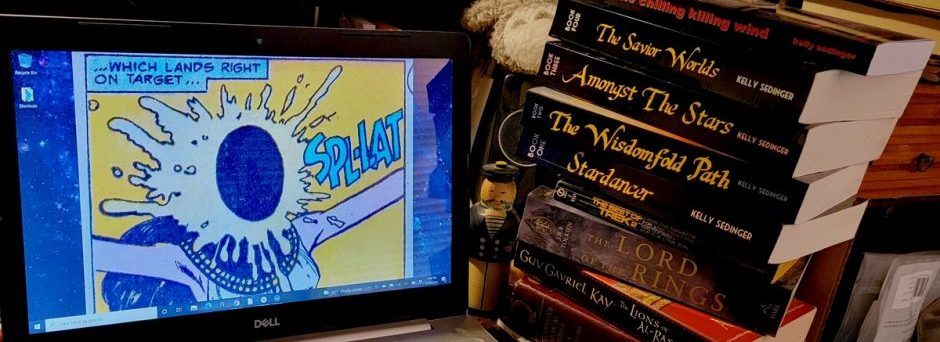
:: Here’s a picture of my dog chasing a chicken across the road! Isn’t he cute? I love when he does that!

:: Open letter to Barbra Streisand:

Dear Babs,

I know you’re upset about the war and all, and I know you’re upset because Dubya is the devil and everything, and I know you’re upset because all those poor little liberals now have to work for a living. But please don’t go on national TV again to cry about the plight of the poor chickens on the California roads, OK? It just makes you look like an asshat. Now, I know, that’s because you really are am asshat, but you probably don’t want to let that secret out. Besides, it’s not like you see any chickens on your Malibu estate. So just shut up and entertain me, and we’ll be fine, OK?

Love,

Rachel

:: Oh. My. God. Michael Moore is going to make his next movie about the decline of chickens on the roads in Flint! Of course it will be full of lies. I. Cannot. Wait. To. Ridicule. It.

:: After writing that last post, the period on my keyboard broke! So! I’ll! Be! Using! Exclamation! Points! But! Right! Now! I! Have! To! Go! Stop! That! Chicken! From! Kicking! My! Dog’s! Ass!

Share This Post

Next, Woody Harrelson plays the Chump.

Here we have an op-ed genius who thinks that Rush Limbaugh was right, and that Donovan McNabb actually is overrated.

Basically, the writer – – a guy named Allen Barra – – digs out some stats to demonstrate that McNabb’s production hasn’t been all that great, and that the Eagles’ success in recent years has been mainly due to defense. Now, Barra is correct that the Eagles have hung their hats in the last couple of years on their defensive prowess, which is in turn no surprise to anybody who pays attention to the NFL. “Defense wins championships” is an adage that has been proven so many times, especially in the last few Super Bowls, that it still amazes me that so many teams still even try to overload their offenses with talent.

The problem I have with Barra’s article is that he wants to hang just about all of the blame for the Eagles’ lack of offensive production on McNabb’s neck, which is unfair for a number of reasons.

Barra asks us to compare McNabb with the quarterback who won last year’s Super Bowl, Brad Johnson. Johnson’s lifetime passer rating, we’re told, is higher than McNabb’s , by about seven points. The correct response to this, of course, is “So what?” Johnson is in his tenth year, I believe, and he has had the luxury in his career of throwing to such receivers as Cris Carter, in his first years with the Vikings, and Keyshawn Johnson in Tampa Bay. McNabb, however, has yet to have that kind of receiving talent around him.

When I look at the Eagles’ leaders by year (.pdf file), I see a number of interesting things. First, since 1998, a different receiver has led the Eagles in receiving each year, and twice that player has been a running back. (It doesn’t speak very highly of a team’s wideouts when a running back is catching the most passes on the team.) No Eagle receiver has hauled in more than seventy passes since Irving Fryar had 86 in 1997, and this in an era when receivers catching at least ninety passes is a regular feature of the NFL. (By comparison, last season the Buffalo Bills had two receivers over the 90-mark, Eric Moulds and Peerless Price, with Moulds actually pulling in 100 passes.)

Eagles running backs have been better than their receivers, but there too, they haven’t been as prolific as one would expect from an elite offense. Duce Staley has been the team’s starter, and he has certainly been a good back, but his yardage is lower than one would hope from a team with a great back – – his best years have been around 1200 yards, as compared with, say, last year’s NFL rushing leader, the Dolphins’ Ricky Williams, who piled up over 1800 yards.

I find it hard to believe that a player who has been to two NFC title games and who, in 2000, finished second in the league’s MVP voting, and who that same year accounted for just under seventy-five percent of his team’s total yards can be said to be “underrated”, especially since he’s only in his fourth year as the Eagles’ opening-day starting quarterback.

To return to Brad Johnson, Barra says this: “I don’t know anyone who would call Brad Johnson, on the evidence of his 10-year NFL career, much more than mediocre.” Well, I doubt he’s a Hall-of-Famer, but I’d consider him more than mediocre. I’d rate Johnson pretty well, especially in the elusive category of “toughness”. So I’m not entirely sure what benchmark Barra is using to determine mediocrity. Barra seems also to think that last year’s NFC title game, in which Johnson’s Buccaneers beat McNabb’s Eagles, proves conclusively that Johnson is superior, which seems odd to me. First, the Bucs last year had one of the best defenses ever, and second, McNabb was ineffective largely because he was coming back from a broken ankle early in the season (the decision to play him is one of the more questionable I’ve seen, but I’d probably have done it, too).

Further, to cite Johnson’s Super Bowl ring as an example of why he’s the superior quarterback is simply idiotic. By this metric, Johnson is therefore better than not only McNabb, but he’s also superior to Fran Tarkenton, Dan Fouts, and (ouch) Jim Kelly. Now, that’s probably not quite what Barra is getting at here, but there is something worth considering here. The fact is, the club of Super Bowl-winning QBs is a small one, and in general it takes QBs a long time to get into that club. To imply that McNabb should have won a Super Bowl by now, in his fifth year in the NFL, is ridiculous, although we might be tempted to forget this after seeing Kurt Warner and Tom Brady do it so soon in their careers, in the last four years. But consider how long all the other winners have had to wait: Brett Favre took six years, John Elway took something like thirteen, Trent Dilfer took seven, and so on. Winning the Super Bowl is a crowning achievement, but it’s not really a defining achievement. As a Bills fan, I wouldn’t exchange Jim Kelly’s entire career for Mark Rypien’s Super Bowl ring.

Donovan McNabb has not been mediocre, not by any logical estimation. He has shown, at least to this point, a lot of potential as one of the league’s top playmakers. He has improved each year. He still needs to really grow into the role of team leader, but what’s funny is that this whole ugly business will probably end up helping him in that regard. Setting aside all of the racial nonsense, just the football evidence suggests that he’s not overrated at all.

Share This Post

Tonight on a very special “Blossom”….

OK, if any of my readers are also regular viewers of ER, did any of you like last night’s episode? I thought it was terrible, overwrought crap. More African-pseudo-military stuff, complete with summary executions and soul-searching for characters whose souls really ought to be all searched-out by now. Yeesh. End complaint.

Share This Post

So you wanna write a novel….

I haven’t participated in National Novel Writing Month in years past, and I probably won’t this time out either (since I’m already writing one), but there it is, for anyone interested. It really is true that the Big Secret to writing successfully is that one actually has to sit down and write. The problem, though, is that this also happens to be the Big Secret to writing unsuccessfully. But editors can’t buy books that aren’t in front of them, so all you zombies who fancy yourselves as nursing a novel within you, put it on paper. It is the only way…it is your destiny…I am your father…I need to watch Star Wars

Share This Post

The Future is coming…but isn’t it always?

Michael Lopez has some thoughts on the future of the music industry. Basically, Michael thinks that the RIAA’s legal wranglings right now are actually the beginnings of death-spasms, and that performance is going to replace recording as music’s coin-of-the-realm. I’m not sure how much I agree with him.

Forecasting the future is always incredibly tricky business. (Remember, if my predictions had come about, Jim Kelly’s hand would be sporting three Super Bowl rings right now.) I do think that performance will see something of a comeback, but I’m not at all convinced it’s going to replace recording as the musicians’ main source of income. I take it as pretty much of a given in human nature that, given a new thing X, someone will figure out a way to make money on X. And since recorded music isn’t going anywhere — what’s being hashed out right now is the how of recorded music, not its existence — eventually we’re going to end up paying for it, somehow. Recorded music will not be free, because nothing that has ever been free has ever stayed free, and I see little reason to expect music to buck that trend.

And if it’s not free, I can’t imagine the musicians sitting idly by while others make money on their work.

Share This Post

Critical Thoughts

I occasionally enjoy Norman Lebrecht‘s columns, as posted and archived at the Naxos website. (Naxos, you really ought to know, is in my opinion the greatest thing to hit classical music since the trumpet.) Many times, I have no idea at all what Lebrecht is talking about; he frequently writes about specific goings-on in the British classical music scene, of which I have no knowledge at all. Other times, I disagree with him vehemently (he wrote a dismissive article about John Williams some months ago that had me fuming). But he’s usually interesting. Right now, he’s discussing what makes a great critic.

First of all, I’m not really sure there actually is such a thing as a “great critic”; not many critics seem to last in the general public estimation a while beyond their deaths, really. We can rattle off lists of great composers, great painters, great writers, et cetera; but the list of great critics seems painfully short: Pauline Kael (although I wouldn’t name her, to be honest); and…well, are there any others? Does anyone still study the music criticism of Virgil Thomson, outside of music critics themselves? I rather suspect that “great critics” are actually “great writers”, who made criticism their subject and stock-in-trade. The problem there, though, is that by the very nature of their subject matter, critics are pretty much doomed to being forgotten. There’s not really a great deal that lasts in the critic’s output, and it seems to me that critics’ writings are more likely to become historical curiosities than anything else. A graduate student in film might dig into Pauline Kael’s or John Simon’s writings on 1970s American cinema, but I can’t really imagine anyone else doing so.

Lebrecht’s column also saddened me because it was here that I learned of Harold Schonberg’s recent death. I never read Schonberg’s music criticism, since when I came to music he was already five years into his retirement. But I did read a number of the general interest books Schonberg wrote about music: The Great Pianists is a fine volume, as is The Great Conductors (although when I reread that last one, a year or two ago, I was surprised at the occasional sexism that I had not noticed in my first reading as a teenager). He wrote a book about some of the greatest virtuosos in music history, and his most successful book, The Lives of the Great Composers (which I reviewed for GMR) is still in print. I enjoyed Schonberg’s writings, and I’m saddened by his passing. (In a side note, Schonberg was also keenly interested in chess and wrote a book called Grandmasters of Chess, which I may have read in college although I don’t recall if I actually did.)

(I would be remiss in citing Lebrecht’s article if I didn’t also cite one sentence from it, because I am sorry to say that this is the worst sentence I’ve read in months. Lebrecht notes that Leonard Bernstein overcame Schonberg’s apprently-often negative comments about him to become a central figure in American music, and then Lebrecht writes this: “But the sparks struck by his flinty reviews fire the glow that endures as Bernstein’s halo.”. Gahhhh, make it stop!)

Share This Post

Up with this I will not put.

As a former brass player — the trumpet, specifically — I find this news story, linked by Lynn Sislo, offensive in the extreme.

(All kidding aside, the oboe is my favorite of the woodwind instruments. So many of Berlioz’s most achingly-beautiful moments involve the oboe, and the third movement of the Symphonie Fantastique, with its duet for English Horn and offstage oboe, is sublime. Rimsky-Korsakov’s Scheherazade is also laden with wonderful stuff for the oboe.)

Share This Post