Sunday Burst of Weird and Awesome

Oddities and Awesome abound!

:: Interesting article on the Lost Art of the Unsent Angry Letter:

WHENEVER Abraham Lincoln felt the urge to tell someone off, he would compose what he called a “hot letter.” He’d pile all of his anger into a note, “put it aside until his emotions cooled down,” Doris Kearns Goodwin once explained on NPR, “and then write: ‘Never sent. Never signed.’ ” Which meant that Gen. George G. Meade, for one, would never hear from his commander in chief that Lincoln blamed him for letting Robert E. Lee escape after Gettysburg.

Lincoln was hardly unique. Among public figures who need to think twice about their choice of words, the unsent angry letter has a venerable tradition. Its purpose is twofold. It serves as a type of emotional catharsis, a way to let it all out without the repercussions of true engagement. And it acts as a strategic catharsis, an exercise in saying what you really think, which Mark Twain (himself a notable non-sender of correspondence) believed provided “unallowable frankness & freedom.”

Harry S. Truman once almost informed the treasurer of the United States that “I don’t think that the financial advisor of God Himself would be able to understand what the financial position of the Government of the United States is, by reading your statement.” In 1922, Winston Churchill nearly warned Prime Minister David Lloyd George that when it came to Iraq, “we are paying eight millions a year for the privilege of living on an ungrateful volcano out of which we are in no circumstances to get anything worth having.” Mark Twain all but chastised Russians for being too passive when it came to the czar’s abuses, writing, “Apparently none of them can bear to think of losing the present hell entirely, they merely want the temperature cooled down a little.”

That’s about it for this week. Interesting article, though, with an interesting hypothesis as to why the Internet is so often a cesspool of spittle-flecked rage. It’s not just that it’s easy to post angry missives online, it’s that the very ease of doing so negates the intended catharsis of writing them in the first place.

More next week!

Share This Post

Symphony Saturday

Of all of Berlioz’s literary muses, and there were many, none burned quite so bright in his head and heart than Shakespeare. It was through a performance of Hamlet that Berlioz first saw actress Harriet Smithson, thus inspiring his most famous and enduring work, and it was Shakespeare who inspired Berlioz to write what is, for me, his single greatest symphony and work in general. It’s his third symphony, Romeo et Juliette.

The fact that Shakespeare had such an effect on Berlioz is all the more remarkable given that Berlioz discovered Shakespeare in translation, and given that in Berlioz’s day, translation wasn’t quite so rigorous a pursuit as it is now. The focus was not so much on accuracy, and translators felt little compunction toward changing a work to suit their own ideas. The version Berlioz saw had Juliet awaken in her tomb, so that the lovers could have one last moment together before dying. Translators at that time just didn’t much care about total fidelity to a work, for good or ill. It little mattered, though: Berlioz was thunderstruck.

Nicolo Paganini had commissioned a work from Berlioz, if you’ll remember from last week; while disappointed in the result, Paganini was as good as his word, and paid Berlioz the 20,000 francs he had promised. That influx of cash gave Berlioz the financial freedom he needed to pursue his next work, which is the very symphony we are considering here. And what a work it is. Romeo et Juliette is a symphony mainly because Berlioz says it is. There are almost none of the standard features one might expect from a symphony. Instead of four movements, here we have seven (or even more, depending on how they are counted). Voices feature strongly throughout, culminating in a massive choral finale that depicts the Capulets and Montagues coming together after the deaths of their children. The work is heavily programmatic, going right down the line and basically telling the story of the play in the right order, starting with the fighting in the square and the intervention of the Prince.

With all the symphony’s uses of vocal forces, it might be surprising, then, to note that the most intimate parts of the story are depicted purely orchestrally. Berlioz never allows voices to depict either Romeo or Juliet; instead, when the lovers are called for, the orchestra depicts their moods. This results in the central section of the work, when we “hear” Romeo at the Ball (where he first sees Juliet), the love scene, and then a brilliant and effervescent scherzo depicting Queen Mab (as described in the play by Mercutio). The symphony’s use of voice is pretty much restricted to the people affected most by the two doomed lovers, but the lovers themselves are only shown in the most deeply abstract music of the orchestra itself. That level of music insight is a prime reason why I love Berlioz as much as I do.

Yes, this symphony stretches the very idea of what constitutes a symphony in the first place, but it’s not hard to see the trend continuing through music history later on. In terms of form, this work clearly anticipates Mahler by fifty years; in terms of musical depiction of drama, this work clearly influenced Wagner (who actually sent Berlioz an autographed copy of his score to Tristan and Isolde, noting his admiration for Romeo et Juliette in the inscription). All that, of course, would be of little concern were the music itself not so engaging. Berlioz tended to have an odd time with melody, and this work is no different — but the “Romeo Alone and the Capulets’ Ball” movement is its own little tone poem, and the love music here is, to my ears, utterly rapturous. Even that movement alone amazes in its construction: it begins with Romeo wandering after the ball, struck by love, and we hear the tenors offstage, singing snatches of the main dance music from the ball. But the tenors fade away, and Berlioz’s main melody eventually begins. But somehow it sounds tentative at first, as though Romeo is trying to put what is in his heart into music. Eventually, though, the lovers come together, and the music flowers.

There isn’t a single aspect of Berlioz as a musician that is not in evidence in Romeo et Juliette: his storytelling approach to music, his belief in the power of the orchestra to convey emotion, his skill at writing orchestra textures that still sound fresh to this day. While I have always discounted the notion that music can, by itself, tell a story, this work stands as the finest example I know that that doesn’t mean that story is story and music is music and never the twain shall meet. Here, story informs the music and the music informs the story. If Hector Berlioz really was only known for a single work, and this was that work, he’d be in my personal Pantheon anyway.

The symphony is so large that this performance is in three parts. There are a few complete performances on YouTube, including a very nice live one (with an annoyingly sedate audience). The three parts correspond to the sections of the symphony, which break out like this (courtesy Wikipedia):

Part I

1. Introduction: Combats (Combat) – Tumulte (Tumult) – Intervention du prince (Intervention of the prince) – Prologue – Strophes – Scherzetto

Part II

2. Roméo seul (Romeo alone) – Tristesse (Sadness) – Bruits lointains de concert et de bal (Distant sounds from the concert and the ball) – Grande fête chez Capulet (Great banquet at the Capulets)

3. Scène d’amour (Love scene) – Nuit serène (Serene night) – Le jardin de Capulet silencieux et déserte (The Capulets’ garden silent and deserted) – Les jeunes Capulets sortant de la fête en chantant des réminiscences de la musique du bal (The young Capulets leaving the banquet singing snatches of music from the ball)

4. Scherzo: La reine Mab, reine des songes (Queen Mab, the queen of dreams – the Queen Mab Scherzo)

Part III

5. Convoi funèbre de Juliette (Funeral cortège for the young Juliet): “Jetez des fleurs pour la vierge expirée” (“Throw flowers for the dead virgin”)

6. Roméo au tombeau des Capulets (Romeo at the tomb of the Capulets) – Invocation: Réveil de Juliette (Juliet awakes) – Joie délirante, désespoir (Delirious joy, despair) – Dernières angoisses et mort des deux amants (Last throes and death of the two lovers)

7. Finale:

La foule accourt au cimetière (The crowd rushes to the graveyard) – Des Capulets et des Montagus (Fight between the Capulets and Montagues) – Récitatif et Air du Père Laurence (Friar Lawrence’s recitative and aria) Aria: “Pauvres enfants que je pleure” (“Poor children that I weep for”) – Serment de réconciliation (Oath of reconciliation) Oath: “Jurez donc par l’auguste symbole” (“Swear by the revered symbol”)


Next week: Berlioz’s final symphony, which is, again, rather unique.

Share This Post

A brief writing update


For various reasons, the only writing project to which I can devote any time at all right now is Lighthouse Boy (not the actual title), which got stuck in a particular spot because I just couldn’t figure out where to go with it. I tried one thing, and rejected it; then I tried another, and rejected that; then I tried still a third, and rejected that. And each rejection of a particular plot direction meant deleting at least several days’ work — a few thousand words, each time out. It sucked.

But, I finally got it figured out. The solution involved a bit of retconning and refitting earlier material to give one character a skill he hadn’t had before, and figuring out how to move the tale in a new direction entirely. The book’s backstory involves a fight for the throne — because all good stories have to involve a fight for the throne — but somehow, I got myself into the situation where every way forward involved bringing that war front and center, and that’s not what I want to do. At least, not yet. I want this book to be an adventure tale like Alexandre Dumas, not a wars-of-succession tale like George RR Martin.

But, at least I’m getting the length right, in the fine tradition of Dumas (but hopefully not quite so bad as Martin). Currently the book stands at a little over 100,000 words…and I figure I’m only now nearing the one-third mark. Wow, this is going to be a doorstop!


Onward and upward!

Share This Post

Something for Thursday

It’s not much of a secret that my musical tastes sometimes run to the more obscure, and this band is no exception. They’re not unheard of — you still hear a couple of their songs on “Greatest Hits of the 1980s” things — but The Hooters never really cracked into the mainstream, alas. I loved their blues-influenced sound and their singers’ voices, both of which sounded like they’d smoked just enough Marlboros in their lives to get a little character.

Anyway, this song is off their album One Way Home, and it’s easily my favorite off that album (which is, in turn, one of my favorite albums from the 1980s). It’s an eerie song with supernatural undertones, and I eventually ended up writing a short story based on it. That story ended up being the first tale I ever submitted for publication anywhere. It was rejected, of course, but the editor wrote a note in the margin that she’d come this close to buying it. Oh well…funny thing was, that first rejection slip felt pretty good. It felt like I was in the game, you know? (Every rejection slip since then, though? F*** those editors!)

Here are The Hooters, with “Graveyard Waltz”.


Oh yeah, and here’s the story I wrote. Maybe I’ll re-read it one of these days…but I’m a bit afraid of what I’ll think, given that it was written by the Me-of-fourteen-years-ago….

Share This Post

Answers, the fifth!


Oy…yeah, I suck. This month has been very hectic, folks and I lost track of this. Ugh! But, let’s get it done, shall we? (Not in one post, though. I think.)

Anyway, from Roger:

Still thinking football: what are the 2nd, 3rd, 4th, etc. favorite game you’ve ever watched? I assume I know #1.

Well, I’m not sure what #1 might be, although I assume it’s the Buffalo Bills’ “comeback game” against the Houston Oilers in the playoffs after the 1992 season, in which the Bills were down 35-3 in the third quarter before eventually winning, 41-38, in overtime.

Here’s the bummer part of that: I didn’t watch most of the comeback.

That game took place on the weekend I got back to college for the second semester. I watched the first half, and figured that the Bills’ collective geese were cooked, so I decided to go with The Girlfriend (now The Wife) to the grocery store to pick up some provisions. When we got back, the Bills were mysteriously only down 35-24, and immediately made it 35-31. Yes, I missed most of the furious comeback. But hey, at least I admit it; in the Buffalo area you’ll find about 200,000 people who claim to have been there that day. The stadium only held about 80000 people at the time and the game wasn’t even sold out! (Ha ha, no blackout for me since I went to school 800 miles away…and then I didn’t watch.)

I don’t know if I can rank the games in general, but here are a few that I really got a kick out of watching:

Bills def. 49ers in 1992: This game, early in the season, was awesome. It was played at Candlestick, and it was the first time in NFL history that neither team punted. Just a great game.

Bills def. Raiders, AFC Championship, Jan 1991: The famous 51-3 throttling. For one day, the best football team on the planet played in Buffalo. Nobody was beating the Bills that day, in that stadium.

Super Bowl XLII: Giants 17, Patriots 14. An astonishing game, an astonishing result, and so so so worth it to see St. Tommy and his hooded master come up short.

Super Bowl XLI: Colts 29, Bears 17. This is one of the weirdest games I’ve ever seen. It was just strange. At halftime the score was Colts 16, Bears 14 — and yet, the announcers were saying things like, “Geez, what do the Bears need to do to get back in this game?” It was either the closest blowout in football history, or the most lopsided close game in football history. It was easily the weirdest football game I can remember.

Super Bowl XLIII: Steelers 27, Cardinals 23. I rooted for the Steelers in this game, but it was really hard even despite the fact that the Steelers are my second favorite team, because Kurt Warner was the Arizone quarterback, and he’s one of my favorite sports figures ever. I hated seeing him lose a second Super Bowl, and he played pretty heroically. That game was full of amazing plays and individual performances; Cardinals receiver Larry Fitzgerald put up numbers in the fourth quarter that most times would be great numbers for an entire game.

Vikings def. Bears, 1992 season. This was a regular season game that I taped on the VCR for my college roommate, because he was off doing something with the college choir. The fourth quarter began with the Bears up, 20-0, and when he finally got home to watch the game, I had cued the tape to that moment, telling him that he didn’t need to watch anything other than the fourth quarter. He turned pretty green when he saw that 20-0 score…and then he watched the Vikes’ comeback for a 21-20 victory, a comeback that was sparked when Bears quarterback Jim Harbaugh decided to call an audible at the line with disastrous results. (Guess what? You can actually watch the ESPN NFL Primetime highlights for this game on YouTube. God, I love the Internet!)

That’s a pretty good representation of games I loved watching.

Woody/Mia/Dylan – thoughts on whether it will, or should affect Oscar voting, seeing Allen’s films, being in Allen’s films.

I don’t really know what any of this was about. I’ve never been a huge Woody Allen fan, so I don’t usually bother to see his movies on that basis alone. I have no problem with someone deciding that Allen’s “squick factor” now looms to large to really enjoy his work. From what little I heard of this there was an awful lot of “He said, she said”, but the things getting said seem kind of bad….

OK, more to come. I promise. I also promise that I won’t screw up the August edition this badly! A lot of things in real life are in motion right now, though. Good stuff — I should probably blog about it all at some point….

Share This Post

The revolution will be incentivized.

(I’ve changed the wording below a little since my first posting.)


I actually donated to a Kickstarter project recently: Mercado Revolution, a new venture in Buffalo that will…well, here’s how Mercado’s visionaries describe it:

Mercado will kickstart the Buffalo/Niagara region by assembling 15 different, excellent restaurants under one “market” roof – a centralized hub where anyone can sample products from Western New York’s top food artisans, watching from counter seating as dishes are made. The market will also serve as an incubator and lab for the next generation of Buffalo culinary success stories. Thanks to culinary director Scott Kollig, Mercado will bring the latest techniques and world-class ingredients to WNY from Washington, D.C., where Scott has worked for celebrity chefs as a chef de partie and sommelier. Working together, we will create an incredible culinary bazaar – a one-stop shop to experience the future of food and drinking.

When it comes to food, I’ve always felt of two minds in this region. I’ve never been down on the food that’s here, but at the same time, it’s impossible to not realize that there’s a great deal of exciting things happening in the food world that just don’t make their way here for years and years and years. The Buffalo Niagara region tends to be oddly resistant to new things, but the time just may be right for something like this, as a lot of small and independently-driven projects are underway in this region that seem to signify a terminal frustration with business-as-usual. I suspect a lot of it is the younger generation, which has had the chance to go elsewhere and see different things and come back with new ideas.

So what is Mercado? I was a bit fuzzy at first as to how this project will be different from, say, the wonderful St. Lawrence Market in Toronto (one of my favorite places on Earth). The Mercado people have been releasing little bits of information here and small tidbits of their vision there since they announced their project, and it seems that Mercado will be something halfway between a market and a restaurant, with the best features of both. Their focus will be on locally-sourced (as much as possible) and locally-prepared foods, as well as (I believe) foods that have never been seen here before. They are also pledging to be as affordable as possible (a major consideration for my family and I, as we aren’t generally in a position to spend more than $100 on meal very often). My general sense is of a hybrid between a restaurant and a fine public market. Either way, it’s exciting stuff, and I look forward to visiting once they’re up and running. There will be many options under one roof, with — it is to be hoped — the kind of vitality that the best such places in the world offer.

I don’t consider myself a “foodie”, but I am curious about food and while I enjoy a cheap meal from Mighty Taco or a pizza from Imperial as much as anyone, I do also want more variety and international flavor to choose from in this region. There’s room here for a lot of different approaches to food, after all, and a locally funded business like this seems to me an idea so obviously good that I’m not sure why more people aren’t rushing to fund it.

Heck, I’m looking forward to the coffee.

Follow Mercado on Twitter, if you’re so inclined. They’re not backing off their ideas of community engagement.

Share This Post

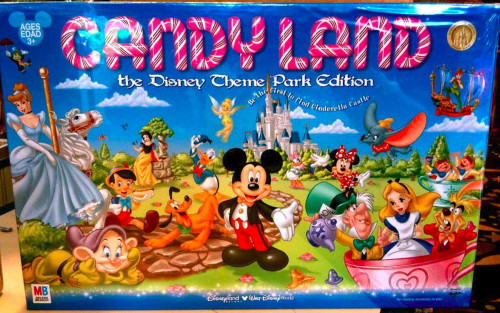
Candyland? Again???

Patrick Rothfuss on the game Candyland:

He’s bored because the game is tedious. And it’s tedious because there is no skill involved. You draw a card, you look at a card, you match a color, you move your piece.

Games that involve no skill are not good games.

Yesterday, after months of not playing, we brought out the game again and took another crack at it. Because he wanted to, and he asked nicely. And I can deal with some tedium if it makes him happy.

But we changed the game a little bit. We added a house rule where you drew two cards and got to pick which one you wanted.

With this small change, Candy Land became an actual game.

Sure there was still a huge random element to it, but now there was some skill as well. You had to make decisions.

Oh, why the hell didn’t I ever think of that?

You see, the problem with Candyland is that, aside from shuffling the cards, there is no random element to it at all.

It’s a “start here and first one to get there wins” game. But instead of rolling a die or spinning a spinner, you draw cards. The cards have colors on them, and the game board is a path laid out in blocks the same colors as are on the cards. So if you draw a red card, you advance your piece to the next red square. There are a couple “double” cards, which move you forward two squares of that color. And there are a couple of spaces where you lose your turn.

The problem is that once you shuffle the deck and start game play, literally all you are doing is playing out the sequence of cards. There are no choices to make, no element of chance whatsoever. Your route through the game board is already determined, and all you’re doing is unveiling it, one card at a time. It may seem like there’s chance involved, but that’s an illusion, simply because you don’t know what’s going to happen. It’s like seeing a movie: you may have no idea at all what the story is, but there is exactly one scene that can be happening at, say, the fifty-five minute mark. It’s the same thing in Candyland. The only way for the game to include an element of chance is for the first arrangement of the deck to line up in such a way that it doesn’t bring any of the players to the end, in which case you have to reshuffle. But that’s it: as soon as you start drawing cards again, you’re right back to simply playing out a drama.

But here, Mr. Rothfuss has made one teeny-tiny change that introduces a whole new element to the game. It might have actually been fun, as such.

Damn. I wish I’d thought of that.

Share This Post

Sentential Links

Links!

:: So yes, I sing. I’d rather sing harmony than melody. I’m a baritone and can generally find the bass line to any song, even those without one. I sing in the shower. I sing inside my head when singing out loud would be inappropriate.

I do sing.

:: You know, I believe you. You work hard for the money. Harder than people know.

But the question is still: How hard?

:: Casper is a GHOST and by definition that means he’s is a transparent spirit that everything can pass through, light, RAIN and even that gun you will throw at the ghost after you waste your bullets trying to kill it.

:: What passes for joy in the Funkyverse: He’s Not Really Dead, Part IV.

:: It’s also to the point that culture is not static and that every generation wants their own music, books and movies. (Odd thing: Aside from a few short stories, I’ve never really read Heinlein. I bounced off The Moon Is a Harsh Mistress years ago, but I’ve never really tried to get into him outside of that.)

:: It’s a trend that comes and goes. Forty years ago we loved Archie Bunker and those kooky Corleones, and thirty years ago we cheered on J.R. Ewing. I suspect the trend really reignited with debut of THE SOPRANOS. Tony Soprano was clearly a monster, but he was so fascinating and complex that he drew us all into his world. Don Draper on MAD MEN was another. Walter White became America’s chemist. Vic Mackey brought new meaning to good cop/bad cop. And who can forget everybody’s favorite serial killer, DEXTER? (I don’t know…to me, evil is only interesting to a point….)

:: The use of drones as a tool to study wildlife is a marvelous idea. We all like the various animal cams. My mother-in-law is absolutely obsessed right now with a camera that’s fixed on a bald eagle’s nest. I saw this footage and was thrilled by its potential.

More next week.

Share This Post