On Memorial Day

Here is my annual reposting of some things that pertain to Memorial Day. This particular year’s iteration of this day gives me pause to consider my sense that many of the things for which the men and women we honor today fought and died may be slowly, or quickly, passing into memory. I hope not….

First, a remembrance of a soldier I never knew.

Fifteen years ago I wrote the following on Memorial Day, and I wanted to revisit it. It’s about the Vietnam Veteran whose name I remember, despite the fact that I had no relation to him and clearly never knew him, because he was killed four years before I was born.

Memorial Day, for all its solemnity, has for me always been something of a distant holiday, because no one close to me has ever fallen in war, and in fact I have to look pretty far for relatives who have even served in wartime. Both of my grandfathers fought in World War I, but both had been dead for years when I was born. I know that an uncle of mine served during World War II, but I also know that he saw no action (not to belittle his service, but Memorial Day is generally set aside to remember those who paid the “last full price of devotion”). My father-in-law served in Viet Nam, but my own father did not (he had college deferments for the first half of the war, and was above draft age during the second). So there is little in my family history to personalize Memorial Day; for me, it really is a day to remember “all the men and women who have died in service to the United States”.

One personal remembrance, though, does creep up for me each Memorial Day. It has nothing at all to do with my family; in fact, I have no connection with the young man in question.

When I was in grade school, during the fall and spring, when the weather was nice, we would have gym class outdoors, at the athletic field. On good days we’d play softball or flag football or soccer; on not-so-good days we’d run around the quarter-mile track. But the walk to the athletic field involved crossing the street in front of the school and walking a tenth of a mile or so down the street, past the town cemetery. I remember that at the corner of the cemetery we passed, behind the wrought-iron fence, the grave of a man named Larry Havers was visible. His stone was decorated with a photograph of him, in military uniform. I don’t recall what branch in which he served, nor do I recall his date-of-birth as given on the stone, but I do recall the year of his death: 1967. I even think the stone specified the specific battle in which he was killed in action, but I’m not sure about that, either.

That’s what I remember each Memorial Day: the grave of a man I never knew, who died four years before I was born in a place across the world to which I doubt I’ll ever go. And in the absence of anyone from my own family, Mr. Havers’s name will probably be the one I look for if I ever visit that memorial in Washington. I hope his family wouldn’t mind.

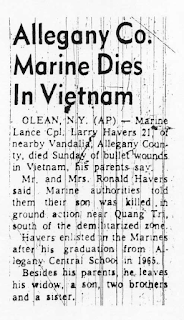
I looked online and found these images, first of Mr. Havers’s obituary and then of Mr. Havers himself. The things you remember. I wonder what kind of man he was. He has been gone for more than half a century. His name is not forgotten.

Mr. Havers’s service information can be found on the Virtual Vietnam Wall here. He was born 14 October 1946 and died 29 October 1967, in Thua Thien.
Next, my annual repost for Memorial Day.

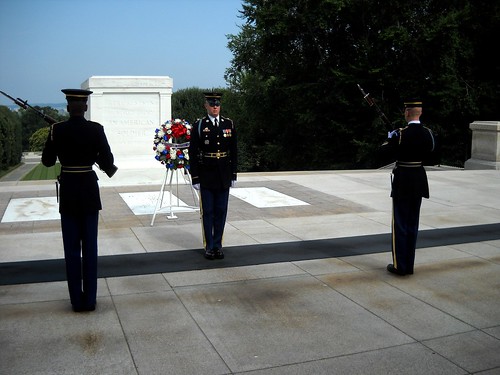
Tomb of Unknown Soldier


Know, all who see these lines,
That this man, by his appetite for honor,
By his steadfastness,
By his love for his country,
By his courage,
Was one of the miracles of the God.

— Guy Gavriel Kay

“The Green Field of France”, by Eric Bogle

Well, how do you do, young Willie McBride,
Do you mind if I sit down here by your graveside?
And rest for awhile ‘neath the warm summer sun,
I’ve been walking all day, and I’m nearly done.
I see by your gravestone you were only 19
When you joined the great fallen in 1916,
I hope you died quick and I hope you died clean
Or, Willie McBride, was it slow and obscene?

Did they Beat the drum slowly, did they play the fife lowly?
Did they sound the death-march as they lowered you down?
Did the band play The Last Post in chorus?
Did the pipes play the Flowers of the Forest?
Did you leave a wife or a sweetheart behind
In some faithful heart is your memory enshrined?
And, though you died back in 1916,
To that faithful heart are you forever 19?
Or are you a stranger without even a name,
Enshrined then, forever, behind a glass pane,
In an old photograph, torn and tattered and stained,
And faded to yellow in a brown leather frame?

Did they Beat the drum slowly, did they play the fife lowly?
Did they sound the death-march as they lowered you down?
Did the band play The Last Post in chorus?
Did the pipes play the Flowers of the Forest?

The sun’s shining down on these green fields of France;
The warm wind blows gently, and the red poppies dance.
The trenches have vanished long under the plow;
No gas and no barbed wire, no guns firing now.
But here in this graveyard that’s still No Man’s Land
The countless white crosses in stand mute in the sand
To man’s blind indifference to his fellow man,
And a whole generation who were butchered and damned.

Did they Beat the drum slowly, did they play the fife lowly?
Did they sound the death-march as they lowered you down?
Did the band play The Last Post in chorus?
Did the pipes play the Flowers of the Forest?

And I can’t help but wonder, no Willie McBride,
Do all those who lie here know why they died?
Did they really believe when they answered the call,
Did they really believe that this war would end wars?
Well the sorrow, the suffering, the glory, the pain
The killing and dying, was all done in vain,
For young Willie McBride, it all happened again,
And again, and again, and again, and again.

Did they Beat the drum slowly, did they play the fife lowly?
Did they sound the death-march as they lowered you down?
Did the band play The Last Post in chorus?
Did the pipes play the Flowers of the Forest?

Share This Post

Something for Thursday

 Sorry to be so late with this! Crazy week here at Casa Jaquandor (nothing bad, just busy). Anyway, here’s something cool: the “official video” for Elton John’s classic song “Tiny Dancer”. The song dates from the 1970s, well before the notion of music videos, so this is a newer development: a short film that tracks several people through their daily lives in Los Angeles.

One of my favorite uses of “Tiny Dancer” comes in the Cameron Crowe film Almost Famous, in which an underage teenage kid is using journalist credentials to tour with a rock band called Stillwater. The band isn’t good enough to be an A-list band, but they aren’t good enough to just peter out, either. This scene comes around halfway through, depicting the point where the initial excitement of being on tour has worn off and all that’s left for now is the grind.

Here’s that scene:

Share This Post

Tone Poem Tuesday

 Greek-born composer Nikolas Labrinakos has come to my attention recently. After growing up in Greece, he went to London to study music composition, eventually getting a Ph.D. from the University of Surrey. He is an active composer of both film music and concert music, and what I’ve heard of his is fascinating and atmospheric, displaying a gift for shimmering, evocative string writing.

The present work, The Last of England, is a pastoral work in the tradition of music by Ralph Vaughan Williams, George Butterworth, and Gerald Finzi. The piece is inspired by the seascape of England’s southern shore, with its cliffs overlooking the great gray expanses of water. Melodies seem to arise from meditative chords and sink back into them again, often with a soloist in the orchestra singing somewhere not quite in the foreground. This isn’t the music of a stormy sea, nor the sad music of the water where all things end, but a singing contemplation of life at the edge of our world’s most permanent feature. The Last of England is neither sad music nor happy music. It is…music that is.

Here is The Last of England by Nikolas Labrinakos.

Share This Post

The Flannel Conversion

 It’s almost June, so it’s just about time to retire the flannel shirts until maybe late September, but more likely, some time in October.

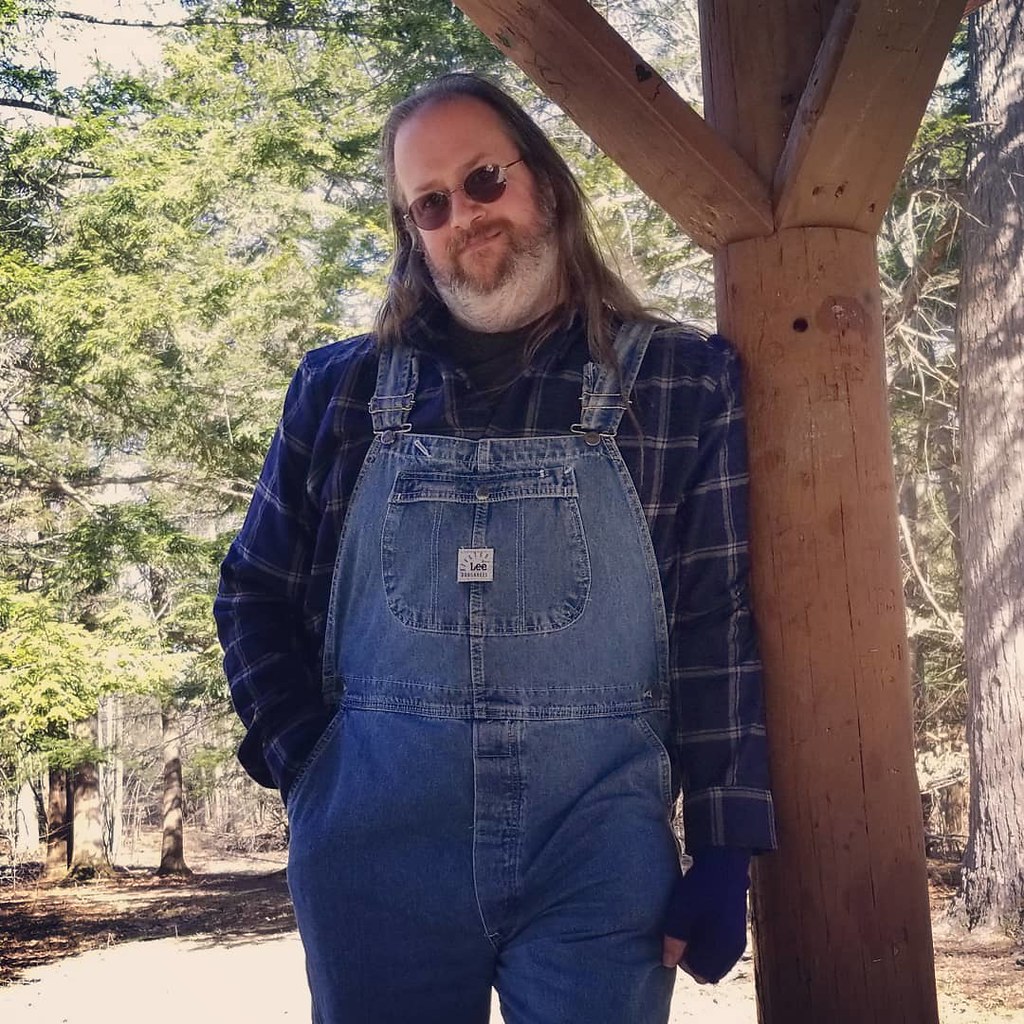
Denim and Flannel

When I was a kid, in third or fourth grade, my father decided that I needed to wear flannel shirts. At the time I did not understand this. I quite hated collared shirts as a kid, for whatever reason, so I took a rather instantaneous dislike to the flannel shirts that ended up in my closet. As I recall, they were new and stiff and scratchy, and all of that was on top of my already-establish dislike of buttons and collars. (Again, I’ve no idea why I hated those things so much. We all have things about which we are dumbasses in our youth; collared shirts were one if mine.)

Even when I started coming around some years ago on collars and button-ups and such, I was still kind of hesitant about flannel, because while I’ve long since discovered flannel bed sheets and I have a couple of denim shirts that are flannel-lined, I still have that association with stiff, scratchy flannel collars and shirts that fit, well, stiffly and scratchily. Also, there was a bit of fear that flannel–especially plaid flannel–paired with overalls would make me look like something of a cast extra from Hee Haw. (That show was on a lot in our house when I was very young, which may explain where my lifelong love of bib overalls comes from. And since it was a variety show in the 70s, I’m guessing the occasional pie wound up in a face or two….)


Over the last couple of years a few flannel shirts have made their way into my wardrobe, though, via thrift stores and eBay, and I’m happy to report that I am finally embracing that particular fabric…and even in the plaid. Hey, there’s a reason why plaid flannel and overalls is a classic combination, right? And yes, it’s a classic combination!


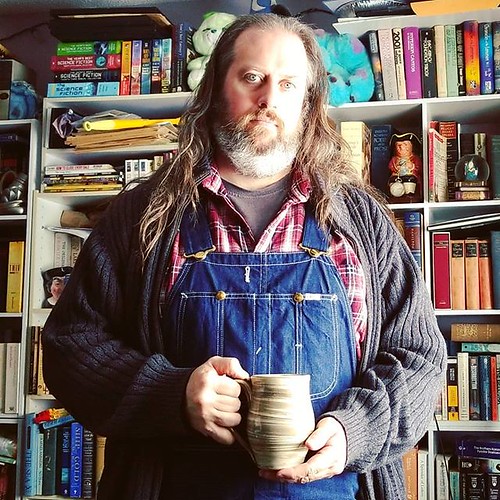
Cold? Why do you ask? #brrr #coffee #yum #layersFTW #overalls #dungarees #biboveralls #vintage #lee #leeoveralls #denim #bluedenim #denimoveralls #rawdenim #vintageoveralls #overallsarelife #flannel</center></span></span></p><p dir=


I started with a couple of flannel shirts that I picked up at the local thrift stores, and while I like these, they’re a bit more broken in than I would like. I have since found more intact ones (new, with tags) on eBay, including a black-and-white checked shirt…


…and a blue one…


and, most recently, this cool multi-colored one.


I remain in the market for a flannel shirt that is predominantly red, but I haven’t found one I really like yet. As with just about all of my button-up shirts, I prefer button-down collars or, as in this one that I found in a stroke of luck, a banded collar:


Anyway, roughly 32 years or so after my father first tried getting me to like flannel, I’m finally on board. What can I say…I’m not the fastest study in the world. Of course, now it’s warm out and I’m having days where I don’t wear overalls at all (shorts and a t-shirt as I’m writing this, go figure), so it’ll be a while before I’m wearing flannel shirts again. But fall will be here before we know it! (And not soon enough, if the 90s in May we’ve had already are any indication of what’s in store for summer.)


Share This Post

Recent Book Notes!

 Here’s some recent reading I’ve done! I don’t have pictures of the covers, unfortunately. (Several of them I forgot to snapshot before I whisked them back to the library.)

::  Maybe you didn’t know that you needed a graphic novel about the Bronte sisters, their brother, and the imaginative life they lived in their youth, but you do need that graphic novel, and thankfully for you, it exists! It’s called Glass Town: The Imaginary World of the Brontes, by Isabel Greenberg. Apparently in their younger years, the Bronte sisters (Charlotte, Emily, and Anne) and their brother Branwell passed the time by creating a fantasy world called Glass Town, which they populated with all manner of interesting characters (no doubt providing the girls with valuable experience in character creation that would serve them well when they turned to their own literary works years later). As the siblings fight over the nature of their world, two break off and make their own world, and in Greenberg’s graphic novel–based on extensive research into the materials left behind by the Brontes themselves about this period of their lives–Charlotte Bronte becomes the focus. She seems to have the strongest relationship with the people of Glass Town, to the point where she actually speaks to them and finds herself drawn into their struggles.

Greenberg’s art is unusual; I’m not sure how to describe it. It took me some work to get used to, and even until the end I didn’t always find it easy to tell which character was which. But the narrative as a whole has some interesting things to say about stories, how we relate to them, and the difference between how adults relate to stories and how kids do. If you’ve never seen a couple of kids get in a fight over a fictional character or world, well…that can be some serious stuff. Good book.

:: I’ve read of the graphic novel series Monstress over the years, so I decided to give the book a try. It’s a highly regarded fantasy set in a steampunk Asia kind of world…and honestly, even though I read the whole first volume (collecting issues 1-6), it was long enough ago that I honestly remember very little of the story at all. I do remember the series’s incredible art–the book is worth looking at on that basis alone–but I also remember finding it very hard to care about the characters, and disliking the story’s tone. This is along the lines of SAGA and A Song of Ice and Fire: tons of violence and rape and murder and cruelty. Monstress isn’t remotely my cup of tea, but if you like your fantasy full of horrible people being awful, there it is.

::  More my speed was Elizabeth May’s The Falconer, the first book in a trilogy set in Edinburgh about a willful young lass named Aileana who has to contend with societal expectations, her father’s desire to see her wed, and the fact that she can see the magical beings who are obsessed with killing humans, so she has made it her mission to kill them first. Yup!

May (who I’ve been following for years on Twitter, she’s awesome) writes a really fun book here, with enough humor and “comedy of errors” kind of stuff, along with crackling dialogue, to offset the story’s occasionally grim tone. There are steampunk elements and cool magical doings, fairy beings whose loyalties aren’t entirely clear, and on our side of the magic-realism divide, people who want what’s best for Aileana and people who think what they want is best for Aileana and people who just want her married off so they don’t have to think about her anymore.

Aileana’s efforts to balance her “Magic hero” thing with her societal obligations put me in mind of the best Spider-Man stories, when Peter Parker was always this close to getting his high school or work or romance shit together, only to have to run off to fight Green Goblin when he was just on the cusp of getting a job or a date with Mary Jane or some such thing. May keeps that whole pot boiling nicely. I liked this book immensely and I look forward to the other two books in the trilogy. (They’re all out already; this series has been out for a few years.)

All for now! Keep reading, folks!

Share This Post

Tone Poem Tuesday

 French composer Emmanual Chabrier isn’t much known these days, but he is represented in the standard repertoire by his intoxicating dance Espana. That work is one of the most compulsively joyful in its bright orchestrations, sparkling melodies, and effervescent rhythms in the entire classical music canon. This piece, from one of Chabrier’s less-performed operas (and none of his operas are often staged), is cut from the same cloth as Espana, being a five-minute burst of energetic dance.

From what I’ve read, Chabrier is a curious composer in that his work has never really cracked through into the mainstream of classical music, even though his music was greatly admired by great composers who followed, like Ravel and Stravinsky. Chabrier was innovative in his own way, and he may have simply lived too early and therefore just missed a time which might have been golden for his music. Anyway, here’s a bit of pure delight: the Danse slav from the opera The Reluctant King, by Emmanuel Chabrier.

Share This Post

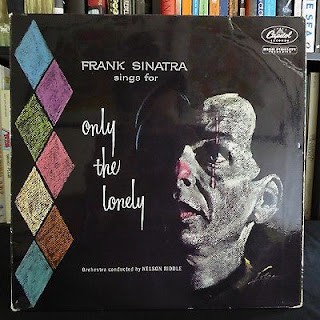
Speaking of Albums: “Frank Sinatra Sings For Only the Lonely”

Each place I go, only the lonely go
Some little small cafe
The songs I know, only the lonely know
Each melody recalls a love that used to be.

Look, for the purposes of this post, let’s just stipulate that there’s no way I’ve heard every single Frank Sinatra album, and therefore I cannot really justify having an anointed favorite Frank Sinatra album, OK? Let’s just talk about my favorite Frank Sinatra album: Frank Sinatra Sings for Only the Lonely.

This album is a masterpiece of mood. It starts with that cover. There’s no cheerful Frank Sinatra with his crisp suit and his hat just-askew; here we see Sinatra as a sad clown, with the colored checked pattern of a Harlequin figure to the other side.

The album is a collection of torch songs, and what torches they are. This is the music of lonely ex-lovers, walking through foggy streets at night only occasionally illuminated by the light of a blinking streetlight as they pass beneath it. Maybe there’s rain, but not a soaking rain, just a constant drizzle that somehow soaks through no matter how many layers you wear.

This is the music of men whose only sartorial concession to their emotional state and the time it happens to be is a loosening of the neckties of their suitably dark suits. This is the music of cigarettes and glasses of Scotch into which too much ice has melted. This is the music of men who don’t want to go home because the person they were going home to isn’t there anymore, or because that was their home and now they don’t even have that.

Frank Sinatra’s voice was an amazing instrument, but I believe that his biggest gift was his unfailing instinct to find the emotional center point in any song. So many of the songs he recorded have an aspect of story, a sense of conveying things that actually happened, and when Sinatra was really on, you never had any other feeling than that he was the fellow to whom these things happened. So in Frank Sinatra Sings For Only the Lonely, he’s not singing words about loneliness. He is performing songs of loneliness. There’s a difference.

Sinatra and his collaborator, Nelson Riddle, who wrote the song arrangements for the album and conducted the orchestra, had both suffered personal losses as they adopted this project, but as always with Sinatra, it barely seems to matter, so completely does he always enter the content of a song.

Hey drink up, all you people!
Order anything you see.
Have fun, you happy people–
The drink and the laugh’s on me.

I try to think that love’s not around
Still it’s uncomfortably near;
My old heart ain’t gaining any ground,
Because my angel eyes ain’t here.

This album doesn’t sound like it should work. It’s an entire album of a single mood, an entire album of very little variation in tempo. Sometimes Sinatra keeps his register and mood subdued, but other times he does that wonderful “Frank” thing where he lets his voice climb into his almost operatic sound. Aside from that, though, the general tone of Frank Sinatra Sings for Only the Lonely stays steady throughout: slow songs of lost or unrequited love.

I first discovered this album in the late 1990s, when I “rediscovered” Frank Sinatra. He had been a staple of my house growing up; he’s one of the first singers I remember (more on that another time), along with John Denver and Bing Crosby. But you do have to discover things for yourself, don’t you? At some point you have to listen anew to the music you already knew for years and realize, all on your own, just how good it is. That’s what happened with me and Frank Sinatra. (I try not to feel too guilty about the fact that within months of me buying my first Sinatra album of my own, he died. Ouch.)

I listened to Frank Sinatra Sings for Only the Lonely a number of times when I was driving home from my job in Jamestown, NY. My commute during the year and a half I worked that job was about an hour long. It made for long days, but the commute home gave me ample time to get the day out of my system, and I listened to a lot of good music on that commute. (This is also when I discovered that I am not the least bit good at listening to audio books, but that’s a thing for another day.) Some albums worked well any time, but there were some that really lent themselves to the night time drive, when it was just me and my headlights on rural Interstate 86 in New York’s Southern Tier. Frank Sinatra Sings for Only the Lonely was one of the best for this…especially when the album’s last song rolls around.

“One For My Baby” is really the only song that can end an album like this, isn’t it? Is there a song whose mood, whose sense of place, is more perfectly evoked by its tempo, those sad tinkling piano chords that open it, and Sinatra’s opening words? I can see the dim light reflected in the backbar mirror, the guy mopping in the corners, the bartender barely listening to this one last gin-filled drunk as he washes those last glasses and eyes the not-quite-adequate couple of bills the guy has been weighing down with his ashtray. Frank Sinatra’s gift for musical storytelling was one of the greatest ever, and he almost never put his gift to better use than this song, right here, as he closes his greatest album with the anthem of the drunken loveless whose barkeep has said, “Last call.”

It’s quarter to three.
There’s no one in the place,
‘cept you and me.
So, set ’em up, Joe;
I got a little story I think you should know.

We’re drinkin, my friend,
to the end of a brief episode.
Make it one for my baby…
and one more for the road.

(cover image credit)

Share This Post

Happy Birthday to the Maker!

 Happy birthday to George Lucas!

Happy birthday George Lucas! #StarWars #GeorgeLucas

It’s no accident, or exaggeration, when I say that George Lucas is the biggest influence on my storytelling. Star Wars imprinted on me at a very young age, and it is still my guiding star, even with all the other influences that I’ve blended (and, let’s be honest, pillaged and stolen from).

I’ve gone so far as to dedicate The Savior Worlds to Mr. Lucas. In terms of the stories that are in my heart, I may not owe him all of them, but I owe him a whole damn lot of them.

Thank you, Uncle George!

The dedication page for THE SAVIOR WORLDS. I would not be the storyteller I am today without George Lucas's work. It's just that simple. #HappyBirthdayGeorgeLucas #StarWars

Share This Post