Jean Sibelius wrote The Bard in 1913, when he was entering the late period of his compositional life. The work has little by the way of orchestral fireworks; while there is power, this is no showpiece. It is instead a work of surprising introspective depth in its short running time (about seven minutes, give or take, depending on the conductor). The mood is hushed and meditative, and somehow manages to stay hushed and meditative, even when it does crescendo toward the end.
The inspiration for this work isn’t easy to tease out. Some think it was perhaps a movement from another larger work that Sibelius decided to hold back; some have suggested a particular poem as an inspiration, which apparently the composer himself denied. There does not seem to be any direct literary inspiration to The Bard, nor does the work suggest a pastoral inspiration from the natural landscapes of Sibelius’s beloved Finland.
Perhaps Sibelius meant the work to be mainly abstract, only giving it a name out of habit…or perhaps he meant it to be more of a work of feeling than to have any particularly strong connection to some extramusical source of meaning. I don’t know, but I do know that The Bard is mystically effective in suggesting the kind of wisdom that one would expect from the itinerant poets of old. It may take a few listens to penetrate into the heart of this work: it’s not a piece that leaves a particular tune or melody lingering in the ear, like Finlandia, but its mood is what lingers. And that is almost precisely Sibelius’s point.
Yes, it appears that our most recent stretch of warm days is finally over, which means temperatures in the forecast that don’t break above 60 degrees, and even cooler nights. It’s been a long time coming, folks…I’m even hearing that in what I’m sure will be surprising to absolutely nobody, this may end up being the warmest October ever, at least in my neck of the woods. On the anniversary this past week of 2006’s “Surprise storm”, in which lake-effect snow pounded Buffalo, wrecking thousands of trees that hadn’t dropped all their leaves yet, we were in shorts because it was 75 out.
Since The Wife has been working remotely at home for over a year, at times she has had to allow Carla to hang out in her home office with her as she works. Carla does have a crate, as does Cane, but we don’t like to crate Carla for long periods of time. (Retired racing greyhounds are used to their crates and even like them.)
The Wife has a particular soft blanket that she likes to use as a wrap for those cold times in her office, but Carla has, in the grand tradition of our domesticated pets, decided that this blanket is hers, and she loves sleeping on it. So much so that the few attempts I made to have Carla hang out in my library while I read or write on weekends met with failure.
After thinking on this a bit, I wondered: maybe I needed a soft blanket of my own! Maybe that would be what I needed to convince Carla to become my Faithful Library Companion dog! Maybe, just maybe!
The Family thought this was jealousy on my part, but I deny this. I will only note that…today I am writing this post from my library, whilst Carla sleeps on her–no, my new soft yellow blanket. No jealousy or manipulation here! Just a sleeping doggo on a rainy Saturday as I write.
Paddy Moloney, the great front-man for the Celtic band The Chieftains, has died. He was 83.
In my musical life, Paddy Moloney ranks very high. Very high. When I list musical figures who shaped my world and the way it sounds in my heart, Paddy Moloney is right up there with John Williams, Hector Berlioz, Sergei Rachmaninoff, Leonard Bernstein, Annie Lennox, and Sam Cooke. I can tell you when I first heard each one of those artists, and I can tell you when I first heard Paddy Moloney and The Chieftains.
I don’t know why I remember this with such clarity, but remember it, I do. It was late in my high school career, maybe my senior year, or it was in my first college year, when I was home. We had taken a day trip like we often did to Erie, PA, and a shopping mall there. After the hours at the mall, there was another store in an outparcel that my parents wanted to visit, but I opted to sit in the car, reading and listening to Erie’s classical music station. At this time, living in Allegany, NY, classical music on the radio was a rare luxury that involved driving an hour in any direction. Before the Internet, before cell phones.
At this point in the day, there wasn’t actual classical music playing on that station. Instead there was a weekly program called Thistle and Shamrock, that featured something called “Celtic” music. I had no idea what this music was. I would later learn that it was a larger genre that included an artist whom I had discovered not long before, a singer named Enya (wait a minute! If this is post-Enya, then this is during my college years, because I remember with equal clarity when I first heard Enya: in the record store in a shopping mall in LaCrosse, WI, where we stopped on a college visiting trip. Thanks, memory!). But it took all of five minutes of listening to Thistle and Shamrock (hosted to this day by Fiona Ritchie) to realize that Celtic music was much, much, much more than the New Age-tinged dreaminess of Enya.
I would later buy a Chieftains CD as part of one of my orders to the BMG Classical CD Club (the less said about my experiences with fiscal insanity that were driven by my several memberships in BMG, the better). The CD was Celtic Wedding, and from that one disc sprang a love of Celtic music that has lasted me in all the days from that to this. This genre ranks just behind classical and film music in my heart, and I often find that a rough mood is soothed by listening to some wonderfully melodic and rhythmic Celtic music. All of this came from hearing The Chieftains, and Paddy Moloney.
Paddy Moloney, and by extension The Chieftains, were extremely versatile and dedicated to exploring every byway of Celtic music they could. Albums were coming out constantly, sometimes more than one a year, and the focus was always something new. There was a holiday album that nevertheless broke new ground, and there were duet albums with the likes of Van Morrison. Moloney and friends were not content to keep to the British Isles, either: they did albums with Canadian artists, and that Celtic Wedding album actually explored the Celtic music of Brittany. They did an album of Celtic-inspired music from the northern regions of Spain, and they did several albums with Country-Western stars, since a lot of the original settlers of the hills of Appalachia were actually descended from Scots and Celtic peoples, meaning that the folk music that eventually became a part of Country music in America sprang originally from older Celtic material. The Chieftains appeared in film scores
Paddy Moloney was a great ambassador for music, a constant force of admirable curiosity and of good cheer, and he was also a fantastic musician in his own right. The music world is poorer for his loss, but immeasurably richer for his having been here at all. As am I.
Thank you, Paddy Moloney. I hope ye were in Heaven a half hour ‘afore the Devil knew ye were dead!
I watched the Blue Origin flight yesterday, in which William Shatner joined three others in the very short up-and-back-again space shot yesterday in Jeff Bezos’s interestingly-shaped spacecraft. I have to admit to a certain amount of cynicism as I’ve watched the breathless reactions in recent years to the achievements of a tiny handful of ultra-wealthy white men who have apparently decided that the best thing to do with their vast sums of money, sums that it seems to me a sane society would make it impossible to accumulate in the first place, is to replicate things that the United States government did sixty years ago.
I don’t even mind, really, that this is the way it’s shaping up. The really ground-breaking stuff, the envelope-pushing stuff, needs to be done at the government level, because that’s still the level that can operate in the amounts of capital needed to do the experimental work. If the rich then want to test the waters that have already been explored, that’s great. And that’s what’s been happening…only with a sense of worship about what the Bezoses and the Elon Musks of the world have been accomplishing. I’ve even heard it suggested that maybe now we can just do without NASA entirely, get government out of the space game, and let “Private enterprise” or “the Free Market” or “capitalism” get about the work of really making space exploration happen.
As always, to this I say, “Bollocks.”
But…but!
On the other hand…a spaceship launched yesterday, and it blasted a capsule into space. Then the launching craft didn’t just tumble back to earth to be swallowed by the sea; it fired its thrusters again, extended four landing legs, and landed right where it started. Meanwhile the capsule completed its trajectory, entered space, arced back down, and parachuted back to earth.
The passengers (I trouble to call them “astronauts”, in all honesty) climbed out then. Three of them hugged and high-fived and cheered and hooted and hollered and sprayed each other with champagne. But the fourth? He, Mr. Shatner of Star Trek (and others) fame, stood off to one side, as if gathering his emotions. This flight had moved him deeply; you could see it in the way he stood. Then he started talking, and said, among other things:
“I mean, the little things, the weightlessness, and to see the blue color whip by and now you’re staring into blackness. That’s the thing. This covering of blue is this sheet, this blanket, this comforter of blue around that we have around us. We think ‘oh, that’s blue sky’ and suddenly you shoot through it all of a sudden, like you whip a sheet off you when you’re asleep, and you’re looking into blackness – into black ugliness. And you look down, there’s the blue down there, and the black up there, and there is Mother Earth and comfort and – is there death? Is that the way death is?”
Look, I can be as cynical as anyone about rich people and them treating space like it’s their playground and ignoring the problems of the world and the fact that they profit greatly on some pretty nasty labor practices. But…there’s still space! My heart will never not thrill to a rocket ship blasting away from Earth, or to space passengers disembarking their spacecraft after returning to Earth. And I will never not be moved to hear those returning to Earth talking about the planet’s blue blanket.
Great human achievements are never just so…but they are still great.
Oh yeah, this is supposed to have some music, isn’t it? It’s a Something for Thursday post. Here’s a suite from Bill Conti’s score to The Right Stuff.
Here are two photos of the Buffalo Niagara region, taken from atop Chestnut Ridge! The first is clearer, but the second is obviously a wider shot, in which can be seen in the distance the skyline of Niagara Falls, Ontario, Canada. (Note that Niagara Falls, NY has no visible skyline from this distance, which is a statement in itself.)
A fall morning overlooking Buffalo, NY
Here’s the wider shot! I took both of these with my still-new-enough-to-me-to-call-it-new new phone. I have to say, I really love that waiting three or four years to get a new phone allows enough improvements to make me say, “Holy crap, my phone can do that?!”
Wider view of Buffalo and Niagara Falls, ON from Chestnut Ridge
If you’re wondering where Niagara Falls, NY is, see the Seneca One tower there? It’s the reddish building that’s the tallest in Buffalo. Go along the horizon to the left until you see a faint boxy-looking building. That’s the Seneca Niagara Resort and Casino, the only building in that city tall enough to have a horizon-topping presence from this distance. This angle also makes it look like it’s a much farther distance separating the two Niagara Falls cities; the Seneca Casino on the American side actually lies at the far end of the city, well away from the Falls and the gorge themselves. The American side, at least right up to the river, falls, and gorge, emphasizes nature parks and the like; the Canadians have built their side’s touristy stuff and giant resort skyscrapers almost right up to the brink of the gorge itself.
Anyway, on a fall morning, that’s what a big chunk of the 716 looks like!
No doubt all of you* have been asking, “Look, dude, all this music writing and book stuff and all is great, but what’s new with your bib overalls collection?!” And I am always one to give the public what it wants**, so here’s something new!
Well, naturally, if you buy a pair of striped overalls in a new label and style, you’ll be happy…for a while. But then the nagging voice will start whispering in your ear, late at night, when you’re trying to decide which overalls-and-shirt pairing you’re going to wear tomorrow****:
“Sure, the striped pair is great, but you know, you really really REALLY need a pair of the same overalls in the classic blue denim. You NEED them. It’s science!”*****
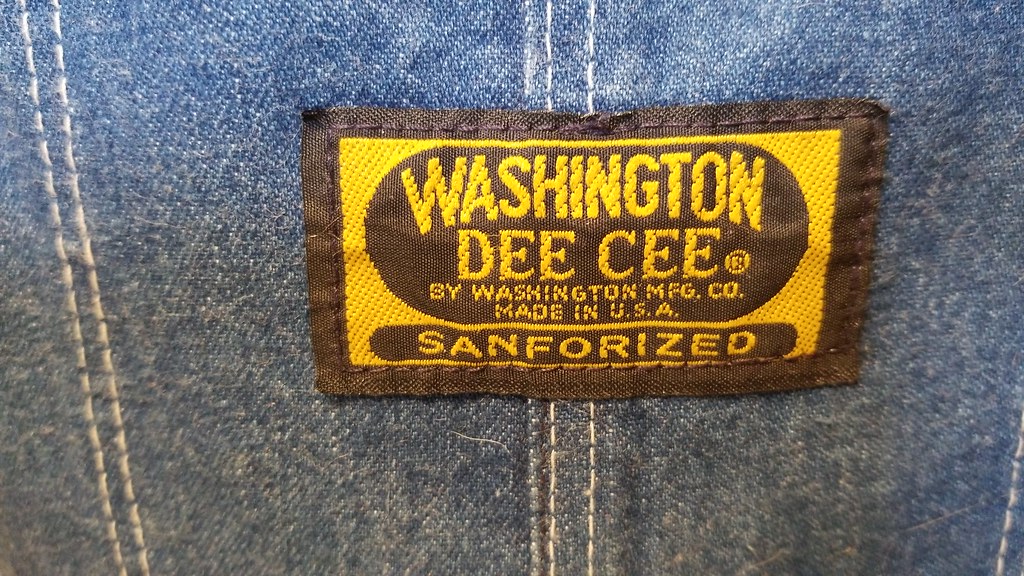
So, off to eBay I went, whereupon I created a new Saved Search for Washington Dee Cee overalls. There are almost always a few pairs available, because Dee Cee was a popular and common brand back in the “glory days” of bib overalls, but as they are always vintage by definition, they tend to be expensive. But…persistence pays off! I finally scored a pair for a price that wasn’t enough to make you look at me like I’m insane.******
Washington Dee Cee overalls, frontWashington Dee Cee overalls, rear
I actually acquired these in July, which is the time of year when I don’t wear overalls much at all, because it’s just too warm. Aside from trying them on when they arrived, I have really only worn them one day, and that was on our annual Ithaca trip a couple of weeks ago. I paired them with another new acquisition, a “Renfest” style shirt. I realize that wearing a shirt like this may put me a bit too close to “Jerry Seinfeld in the pirate shirt” territory, but I figure that now that I’m fifty, I’ve long since reached the point of being able to wear what the hell I want and give zero f*cks about it.
Washington Dee Cee overalls, with blue “renfest” shirtSame, just…sitting down
I have to admit, I genuinely like this look. It’s my version of the “cottagecore” thing that’s been popular of late. There’s something, well, me about a Renfest shirt worn under a pair of nicely-worn vintage denim overalls, isn’t there?
Anyway, if it ever gets reliably and seasonably cool around here (as I write this we’re entering a several-day stretch of possible record highs for mid-October, which is not ideal), I look forward to pairing these overalls with some of the new flannel shirts I have around…and I can’t rule out ordering another of these Renfest shirts, maybe in white this time.
And of course, the highest praise has already come. Carla approves of these overalls!
Sleepy doggo!
* None of you have been asking this.
** Yeah, this is just a lie.
*** You do not remember this. I do not hold this against you. (OK, I do. A little.)
**** Not kidding! I really do put thought into this. I don’t just roll out of bed, grab a shirt and some overalls, and go about my day. Come on, folks. I’m weird, but I’m not some heathen.
***** Why am I dragging poor science into this? Science has nothing to do with overalls. Sheesh!
****** “Har har, we already look at you like–” Yeah, yeah, I know. You don’t have to say it.
A few weeks ago we finally introduced Richard Strauss to this ongoing feature, and now we continue! When I wrote about Eine Alpensinfonie, I noted that I came to Strauss at the end of his tone-poem career: though he composed a great deal of music after that work in the thirty years or so he had left, he never wrote another tone poem. Now we’re rolling things back to the beginning of Strauss’s tone-poem career, with a work that, like Eine Alpensinfonie, is generally not ranked among his great masterpieces of the genre. But unlike that work, this one is seen as showing the promise of a young composer just entering his prime. The work is Aus Italien, or, From Italy.
Aus Italien is a four-movement work that seems somewhere between a proper abstract traditional symphony and a purely descriptive work. In terms of form, one can sense the influence of Hector Berlioz, but Strauss goes even farther than Berlioz did; Berlioz may have incorporated descriptive elements into his first two symphonies, but they are still primarily symphonies. Strauss, on the other hand, eschews the traditional forms of the classical symphony for a sequence of four movements of descriptive, programmatic music tied together by stated theme. The movements are:
Auf der Campagna (On the Roman Campagna)
In Roms Ruinen (In the Ruins of Rome)
Am Strande von Sorrent (On the Sorrento Beach)
Neapolitanisches Volksleben (Neapolitan Folk Life)
The work is lyrical and colorful throughout, and if it lacks the profound insight that marks Strauss’s finest tone poems, it still abounds with orchestral flash and pictorial color. In the fourth movement one will note the familiar strains of the song “Funiculi, Funicula”, which Strauss used thinking it was a folk song and not a composed work that was under copyright. This ended up costing Strauss a legal judgment, which must have annoyed the composer greatly. Strauss was always aware of his finances, and there is a story, possibly apocryphal, in which Strauss was greeted by his son upon returning home from a conducting engagement. When his son asked, “Did they pay you, Father?” Strauss wrapped his son in an embrace and said, “Now I know you are my son.”
The moral is, make sure your folk material is actually folk material!
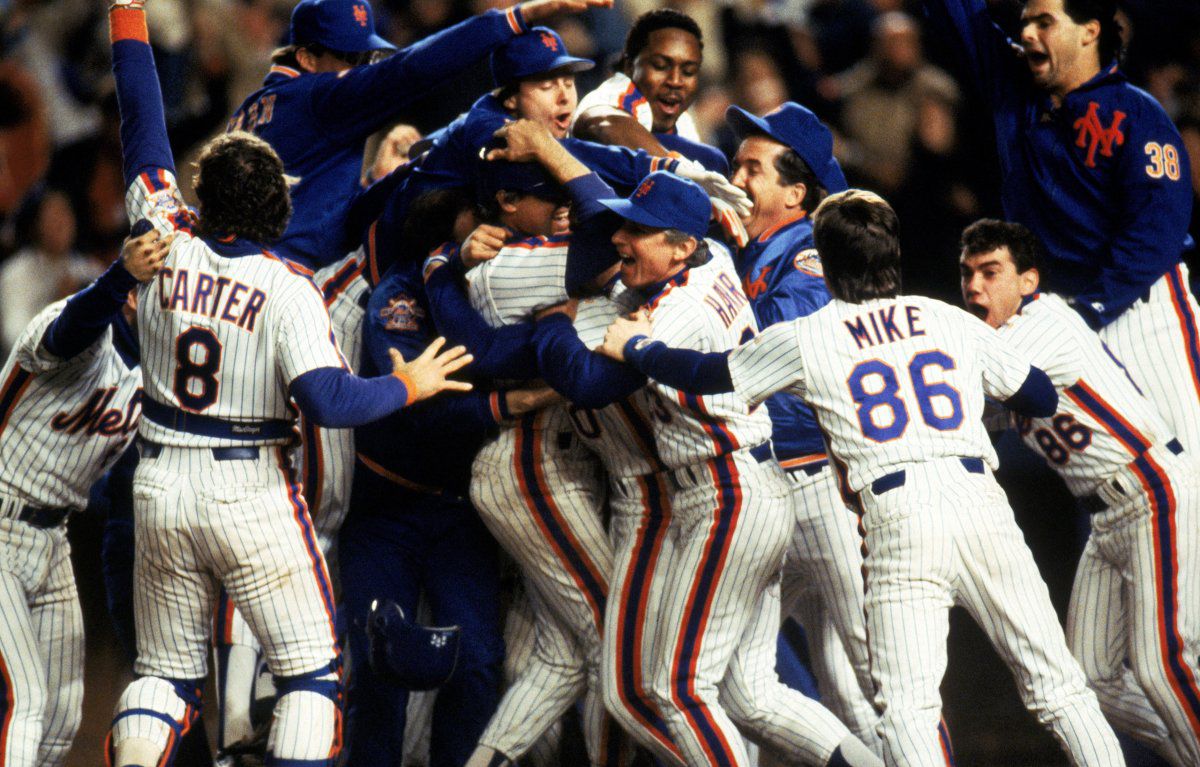
It’s been my experience that any baseball fan will hate at least one of New York City’s two teams, either the Yankees or the Mets. I’ve never really hated either, which makes me an outlier, I suppose. I just like New York City too much to hate on its teams (though that can’t be the only factor, as I adore Boston the city and yet I’d like to see all of its teams fired into the sun*). Back when there were only four divisions in Major League Baseball, the Mets were in the same division as my team, the Pirates, and for a couple years there, the Mets were a thorn in the side of the Pirates as they strove to win three division titles in 1990, 1991, and 1992. Since then they’re all in different divisions, though, so the Mets don’t figure too much. And the Pirates are usually terrible, so what’s to root against? Fifth place?
One of my best friends is a Mets fan, which might seem a bit odd living in Buffalo, where all baseball fandoms basically boil down to a whole lot of Yankee fans, some Red Sox fans, and then a fan or two of everybody else. My friend came by his Mets fandom honestly: he grew up in the days of 1980s cable television, when every local provider had a couple of indie stations from NYC (WOR and…another one), and on one of those stations resided the Mets. Since they were what my friend saw most often, that’s what he came to love, and to this day he roots as hard for the Mets as he ever has, though I’ve noted over the years a certain jaded amusement at the Mets fortunes (which are more often misfortunes) and a general feeling of “Hey, what did you expect” when the Mets flirt with something wonderful only to end up losing.
I’ve seen this same attitude from other Mets fans I’ve known: a certain even-keeled acceptance of their likely fate, which oddly allows them to have more fun in the face of their team losing than other fandoms out there. In all honesty, it’s my sense that a lot of sports fans could learn from Mets fans. They get as deliriously happy when their Mets win, obviously, but they avoid the soul-crushing despair and rage that comes of losing. (Mostly. I mean, it’s still sports, and when you lose the NLCS four games to two because your pitcher walks in the winning run in the bottom of the ninth in Game Six, well, no amount of baseball zen is going to keep you from wanting to take a chef’s knife to every teddy bear you can find.)
The Mets are that odd duck of a sports franchise: they haven’t won a ton (two World Series titles, and five total National League pennants), but still, they’ve won enough in their nearly 60 years of existence to make them rank just a bit above the “lovable losers” thing that the Cubs once managed to hold down for over a century. Mets fans aren’t long-time sufferers the way, say, Bills fans are. Because they’ve won, and because Mets fans seem to choose not to suffer in the first place.
When we traveled to New York City for Thanksgiving in 2015, I thought I’d grab my friend a Mets souvenir when we went into this big NYC gift store in Times Square. Place was huge, loaded with every NYC-related gewgaw and tchotchke you could want, including stuff for the Yankees, the Rangers, and the Knicks. And there wasn’t a single Mets-related item to be found anywhere in that store. Which was really weird, because the Mets are still a NYC team, they have some lore, and they had just won the NL pennant that year. Just six weeks before our visit, the Mets had hosted World Series games in New York City, and this gift shop didn’t have anything. Not a single pennant, shot glass, poster, snow-globe with Citi Field in it, nothing.
In America’s biggest and most important city, one of two resident Major League Baseball teams is a beloved institution of American sports history, and the other is a niche interest, like indie comic books. Weird.
Anyway, a new book came out earlier this year called So Many Ways to Lose: The Amazin’ True Story of the New York Mets, the Best Worst Team In Sports, by Devin Gordon. That’s a great title that sets up the tone of the book to follow: Gordon’s walk through Mets history is (mostly) warm and humorous. It’s Mets history not as a scholar would relate it, or a sportswriter striving for “objectivity”; this is the history of the Mets that you would hear from a Mets fan, and that’s what makes the book special.
Gordon, like my friend, adopted the Mets as his favorite team from an early age, and he’s been with them since their rise to late-80s powerhouse and beyond. Gordon is also an experienced writer, and not just about sports, so he knows his way around telling stories with flare and a good viewpoint. Gordon writes like what he is: an erudite fan who can spend a couple of pages breaking down just why Willie Mays’s “Catch” is as great a baseball play (for many, it’s the greatest baseball play) as it is, while at the same time using chapter titles like “Fuck the Yankees”.
Buffalo’s own sportswriting market is awash in talented writers and journalists who undermine their own work by beating everyone over the head with their heated insistences on their own “objectivism”, so it’s frankly a relief to find a book like this where fandom is admitted and embraced and allowed to shine.
I honestly had a great deal of trouble selecting a passage to quote from So Many Ways To Lose, because it’s packed with great passages. I thought about his lengthy breakdown of the Willie Mays catch, which he uses to prelude what he considers an even greater outfield catch (by Endy Chavez). I considered some of the passages in which Gordon speculates on why discussion of Darryl Strawberry and Doc Gooden tended to focus on drug use when the topic of other players’ drug use never seems to come up much (you don’t really need to think too long to figure that one out), and there’s a passage about the design and construction of Shea Stadium that is helpful because it’s frankly always helpful to remind ourselves what an asshole Robert Moses was.
Instead, I’ll go with this, from early in the book, when Gordon is making the case why the Mets are “the best worst team in sports”, even though they have done something at least twice that a lot of other perennially losing teams have not, i.e., actually win.
Now, there may be some fans of trash teams out there who have read this far and who think I’ve been too cavalier in dismissing their body of work. They’re wrong, but I suppose they deserve a fair hearing, so let’s go through the top contenders, if only to condemn them to yet another defeat.
The Detroit Lions might be the worst team in sports, which is to say: they’re not even good at being bad. They’ve never won a Super Bowl, never been to a Super Bowl. They’ve played (lost) in a conference title game once, and that was before we all had cell phones. I don’t have to consult the Internet to know that the Lions have never had a memorable postseason moment, because if they had, I’d remember it. It’s been nothing but decades of cold, slushy, uninterrupted losing. Even their uniforms, bluish-gray and grayish-blue, are colorless. Playing for the Lions is such a demoralizing experience that the two most gifted players in team history, running back Barry Sanders and wide receiver Calvin Johnson, both retired in their primes rather than spend another season with Detroit. They didn’t just quit the Lions, they quit football.They ghosted. After Johnson walked away in 2016, at age 30, the Lions’ front office demanded that he return a $3.2 million roster bonus, which is sort of petty for a team owned by the Ford family. It also means the Lions now have a frosty relationship with at least 50 percent of their franchise icons.
The Cleveland Browns have a better claim to the “best worst” throne, because unlike the Lions, they are easy to like, and unlike the Lions, their postseason defeats are so infamously excruciating that they have names like The Fumble and The Drive. The Browns have only made the playoffs once this century, despite starting 29 different quarterbacks over the course of 20 years. For three years in the 1990s, the Browns ceased to exist because their greedy, heartless owner, Art Modell, may he rest in peace, hated it so much in Cleveland that he tried to move the team to Baltimore. Nest he fired his head coach, Bill Belichick. Now that’s some first-rate ineptitude. The problem with the Browns’ case may be Cleveland itself. It’s too grim. The 21st century hasn’t been good to the city, and every unlikely defeat, every clumsy failure is cut with rust and resignation. You can laugh at the Mets all you want. If you take pleasure in the Browns’ misfortune, you’re a dick.
Same goes for all of Minnesota’s crappy teams, the Vikings in particular, who have been waiting decades for the chance to lose another Super Bowl. In 2020, the Minneapolis-based sportswriter Steve Marsh compared the NBA Timerwolves’ Mets-ian flair for comic incompetence to a night of experimental dining–“Maitre d’, surprise us!”–but even he admits that in a city famous for its losers (the Vikes, Walter Mondale), the Wolves can’t get no respect. Their losing, while admirable, is just too small-time. Ditto for the Cincinnati Bengals, another small-batch loser, whose principal resume for “best worst” champion is the Icky Shuffle.* In order for the Bengals to be the Mets, Cincinnati would have to be New York. This is yet another case of small-market franchises getting overshadowed and disrespected, to which I can only say boo-hoo. To win at this level of losing, you need a big canvas.
Gordon goes on a bit, discussing why several other prominent never-winners in American sports can’t beat out the Mets for “best worst team ever” status, but curiously, he doesn’t mention a few other franchises known for their relentless losing. Surely the fact that the Chicago Cubs won a single World Series a few years ago doesn’t blot out their entire century of losing from our collective memory, does it? Or how about the Arizona Cardinals, a team that until its single Super Bowl appearance (which they lost in heartbreaking fashion despite a superhuman effort by their Hall of Fame quarterback and one of the greatest receivers ever in that very game) had to admit that its greatest moment in franchise history was a fictional moment that happened in the movie Jerry Maguire? And how about the Buffalo Bills, whose four consecutive Super Bowl losses from 1990 to 1993 still boggle the mind of sports fans to this day?
The Mets have done a lot of losing, sure–but they’ve done some winning, too. I’m not ready to grant the Mets the title of “best worst team” just yet, but Gordon does make a compelling case for his team, and that’s what it’s all about, anyway. And really, one of the great subgenres in sports writing is when gifted writers take on bad teams.
In the last year, I’ve read two great baseball books. First was Roger Angell’s iconic The Boys of Summer. Now I have So Many Ways to Lose.
I wonder if it’s time to start watching baseball again.
Compilation-arrangements that gather selections from Broadway musicals are a long-time staple of “pops” concerts everywhere, and for good reason: when they are done well, there’s a certain kind of charm to these compilations in their own right.
Robert Russell Bennett wrote a number of these arrangements, and his were some of the very best. This is because Bennett was a fine composer on his own, and it’s also because Bennett worked closely with many of the great Broadway composers in the first place. He wasn’t a composer who decided to try his hand at arranging these songs; he was the original arranger, and he was steeped in all that music. Bennett had his finger on the pulse of Broadway for decades, and that‘s why his concert arrangements make for such wonderful listening.
In my orchestra performing days, I only got to play one of Robert Russell Bennett’s compilation arrangements. I’m glad it was this one. The particular show it’s from has its problems, but the songs certainly aren’t one of them. Here is Robert Russell Bennett’s Selections from Camelot.