Tale of a morning….

 On weekends I am awoken usually by the whimpering of the Dee-oh-gee, who usually gets to somewhere between 7:30 and 8:00am before he has to go out and relieve himself. Fine. Then I make coffee and usually try to sit and read a bit before getting on with the day.

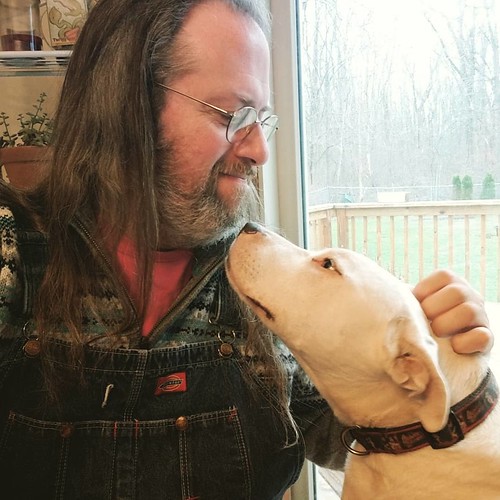
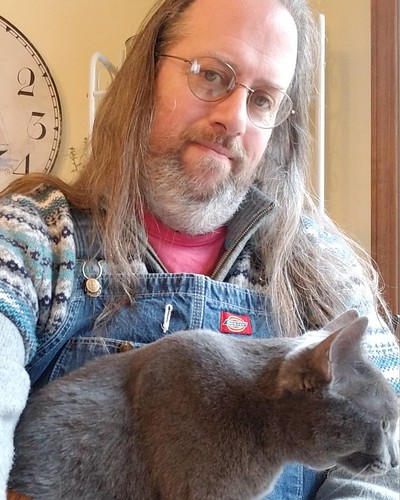
This morning, however, Carla and Rosa (one of the two cats we adopted recently…huh, not sure I ever blogged about them!) decided they had other plans for me.

My morning, start. Hi, Carla. #Carla #dogsofinstagram #pitbullsofinstagram #pitbullmix #pittie #staffordshirebullterrier #staffiesofinstagram #overalls #dungarees #biboveralls #vintage #dickiesworkwear #dickiesoveralls #denimoveralls #overallsarelife #vin

I found this. It's vibrating. #Rosa #catsofinstagram #graycat #overalls #dungarees #biboveralls #vintage #dickiesworkwear #dickiesoveralls #denimoveralls #overallsarelife #vintageoveralls #sweatersandoveralls

Sigh.... #Rosa #catsofinstagram #graycat #Carla #dogsofinstagram #pitbullsofinstagram #pitbullmix #pittie #staffordshirebullterrier #staffiesofinstagram #overalls #dungarees #biboveralls #vintage #dickiesworkwear #dickiesoveralls #denimoveralls #overallsa

Sigh, indeed #Rosa #catsofinstagram #graycat #Carla #dogsofinstagram #pitbullsofinstagram #pitbullmix #pittie #staffordshirebullterrier #staffiesofinstagram #overalls #dungarees #biboveralls #vintage #dickiesworkwear #dickiesoveralls #denimoveralls #overa

Such is the life of a pet owner, I guess. Sheesh.

Share This Post

A Linkage Clearance!

 Here are some links to stuff I’ve perused the last few days:

::  An Incredible Move: In 1930, an Indianapolis office building was literally moved, including rotating it 90 degrees. While it remained open for business. That’s amazing.

::  Dana Schwarz is sick of desaturated and dark-looking movies:

But with the coronavirus pandemic hitting its one year anniversary, we’ve reached reached a tipping point where cinematic content that perhaps was designed to be released on massive, high-contrast theater screens is now being released to our living rooms. Which means I’m stuck squinting at the screen asking my boyfriend if Superman’s new suit is actually black or if I just couldn’t make out the colors. (It’s actually black.)

::  On the eternal hopefulness of The Lord of the Rings:

The most important thing that the Lord of the Rings movies grabbed from the books wasn’t any particular plot detail, but an earnest belief that hope can coexist with despair, so long as we never surrender to it. Boyens, Jackson, and Walsh took the emotional themes of their subject entirely seriously and sincerely, imbuing the trilogy with humor that never pointed back on itself, no matter how operatic.

::  On a favorite 1990s show of mine, Millennium:

Never envisioned as an X-Files spinoff, but rather as “a sister series,” Millennium readily broke new television ground, becoming a relatively short-lived mainstream network series that spawned a host of pay-TV imitators. It engages difficult questions around violence, grief, and art in startlingly stark and sophisticated ways. Millennium’s creative team, many of the same forces behind The X-Files, took advantage of the smaller-scaled, more esoterically textured series to take storytelling risks that would have been ill-suited for Millennium’s ratings-behemoth elder brother.

::  The Medusa Nebula. Wow!

Share This Post

Something for Thursday

 It’s been False Spring here in The 716 of late, as I noted the other day. Today at work I spent about twenty minutes doing my twice-monthly rooftop inspection (a regular part of my job!), and during this, I put in my earbuds and listened to this piece of music. I chose it because its duration is such that it would last roughly the length of time it takes me to inspect the roof, and I searched this out in the first place because I’ve been intending to listen more to this particular composer.

Rachel Portman is known mainly for her film music, though she has written a lot of other stuff too (including an opera based on The Little Prince). Her film work tends to quieter, character-driven films, like Jane Austen adaptations (she won an Oscar for her score the 1996 version of Emma, becoming the first woman composer to do so) and the like. This selection is a collection of several cues from her score to the film The Cider House Rules, which I know nothing at all about other than Michael Caine plays a headmaster of a boarding school or something like that, and he bids his resident boys a decent night’s sleep every night with the words “Good night, you Princes of Maine, you Kings of New England.” The movie was well regarded when it came out, something like twenty years ago, but I certainly have heard nothing of it since.

Portman’s music is gently pastoral in its approach to the drama (at least as it’s represented in this suite), putting me in mind of the fine English pastoral music of the early 20th century–composers like Butterworth and early Vaughan Williams.

If it’s a lovely spring day where you are, may this enhance it…and if not, may this put you in mind of warmer days to come!

Share This Post

Tone Poem Tuesday

 A very modern work today, by Canadian composer Cassandra Miller. Duet for Cello and Orchestra is almost avant-garde in its conception: a solo cello plays the same droning two notes, a perfect fifth apart, through the entire work, marking the time insistently throughout even as the orchestra enters and departs at intervals that feel almost random. The orchestral passages start out sounding like trumpet fanfares, but they become increasingly frantic as we move through the work’s thirty minutes. The work apparently quotes an Italian folksong throughout, while our solo cello keeps playing this weird two-note ostinato until the very end, when at last the soloist gets to do something else: a strange kind of cadenza that soars above the orchestra’s dying ostinato.

It’s a fascinating work. Here is Cassandra Miller’s Duet for Cello and Orchestra.

Share This Post

Rabbit Holes

 A while back I shared a fascinating video of a guy doing his job, which I labeled “Competence Porn”. I found another such example the other day, and since this new guy’s videos are mostly shorter than that first one, I’ve watched more of these. I’ve “gone down the rabbit hole”, as the kids say (in an allusion to Alice’s Adventures In Wonderland), and this is something that interests me in itself. During our COVID-19 isolation times, I’ve seen a lot of people discover new things and delve into them a lot more deeply than they might have otherwise. Baking is one I’ve seen a lot (especially sourdough starters!). Ditto knitting, and other hobbies. Gaming. Cooking. Home brewing. And in my case, going deeply into music again, and hitting the books hard.

And…”competence porn” videos!

In my earlier example, that’s a guy doing his job. This one is a hobbyist…with a very interesting, strange, and useful hobby. This fellow likes driving around on very rainy days, finding flooding streets, and unclogging the storm drains. And that’s it! So why would I find this fascinating?

Well, these videos are pleasant sonically. I have always responded quite happily to the sounds of rain, rushing water, splashing, and all the things that water does. I just like listening to this guy’s videos. But he also says interesting things along the way, pointing out the physics as to how this stuff works, why the water does what it does, what the design flaws are sometimes in the drains he encounters, why the drain pipe runs this way and not that, and sometimes how dumb and inconsiderate people can be (a couple videos have cars deciding they don’t want to drive through the flood so they go around it…on the sidewalk).

Anyway, here’s a guy unclogging a street drain. What rabbit holes have you gone down lately?

Share This Post

Sprung?

 I’ve long been of the belief that as delightful as three of the four seasons in Buffalo Niagara are, the last one is usually just annoying. It might surprise you to learn that the one I don’t like is not winter, but rather, spring. I stand by this! Spring in these parts is not a welcome return to warmth, but rather it is generally a two-month affair of temperatures remaining stubbornly in the mid-to-upper 40s. Spring in Buffalo Niagara is usually a pretty gray affair, as the clouds maintain their stranglehold over the sun until mid-May at the earliest. It takes forever for trees and bushes and everything else to come back to life, to the point that green isn’t the dominant color here until Memorial Day at the earliest. The snowpiles in parking lots and at the ends of streets endure, in their dirty grayness, and it seems like mud is everywhere.

And yes, it usually snows in April around here. Last year it even snowed not near Mothers Day, but actually on Mothers Day.

But we do once in a while get to enjoy a day like today in springtime around here, a day when it is warm and sunny out, when we get to open windows and switch out the stuffy indoor air for fresh outdoor air, when we can walk the dogs multiple times, and when the sun shines from sunrise to sunset.

Geology and astronomy may be in agreement that it is spring here, but it’s just not. Not yet. Not in a way that feels real.

That’s not stopping nature from looking like it’s embracing the early wake-up call….

Larger view of the stream at Chestnut Ridge

That’s Chestnut Ridge park, just this morning. It’s one of my favorite places, where The Dee-oh-gee and I visit often on our weekly Sunday morning nature walks. That particular stream is a combination of two streams that tumble from the upper reaches of the park; this is at the park’s northern, and lower, end. Here it tumbles down through what’s left of a deep ravine, and under a steel-deck bridge before it flows on, winding its way toward Lake Erie before it finally empties into Eighteen Mile Creek, which then flows on to Lake Erie. A lot of that water will eventually flow out of Lake Erie, down the Niagara River, over the Falls, and out to Lake Ontario…and on and on, eventually to the sea.

There’s still snow up there (Chestnut Ridge is in what the weather people call “the upper elevations” when they are threatening snowfall for some of us), and as of now there hasn’t been enough warmth to cause the grass to really start greening or for dormant trees and bushes to start budding. But it’s tempting to look for those things.

Spring in Buffalo Niagara. It’s here…kind of.

Share This Post

Lately reading: Ken Jennings on Maps

 Time to catch up on some of my recent reading!

::  Maphead by Ken Jennings is about maps and the people who like maps. More than that, it’s about people who love maps. Some people love maps so much they end up seeming a bit odd, but that’s fine! And who better to write about such strange people, committed to esoteric knowledge, than Ken Jennings, trivia champion extraordinaire?

Maphead, Ken Jennings

It’s safe to say that Jennings’s authorial career would not have taken flight had he not put together that wonderful winning streak on Jeopardy! back in the Aughts, but now that he’s writing, I hope he keeps doing it for a long, long time. He seems to be a cheerier version of Bill Bryson, able to write engagingly about topics that don’t often get written about (I love Bryson, but his work often has something of a dark tinge to it), and in this book especially Jennings is able to write both about maps and the entire subculture that has sprung up about maps.

Along the way in Maphead, Jennings visits the London Map Fair, an event I never knew existed. I’ve read a lot about book collectors, though, and this little world intersects that of people who seek out First Folios very neatly. I also learned about things like road geeks, who learn about specific odd details you’ll find on America’s roadways if you look closely (like a traffic light in Syracuse where the green light is on top of the fixture!) and who nurse grudges against people like a Pennsylvania Congressman who used his power to insist that a new section of Interstate Highway in that state be numbered I-99, even though that number is in violation of federal highway numbering guidelines.

Jennings visits the map collection at the Library of Congress, relating stories of how international incidents have actually been settled by other countries referring to maps in the LoC’s collection, and he writes about the National Geography Bee, which is exactly what it sounds like: an event like a spelling bee, where the goal is not to answer questions like “How do you spell chiaroscurist?” but rather questions like “What is the local name given to the katabatic winds in southern France that can cause damage to crops in the Rhone Valley?” (The answer is “mistral”. No, I don’t know what any of that means, and I am taking Jennings at his word here.)

My favorite chapter, though, as a writer of fantastic tales myself, is the chapter on maps of places that don’t exist. Some people create elaborate maps of fictional locales as a hobby in themselves. but Jennings also discusses the role of maps in fantasy and science fiction novels, helpfully enlisting his former college roommate, bestselling fantasist Brandon Sanderson, to provide some comment. I personally get a bit antsy when I try to read an epic fantasy novel that has no map, and I’ve read a few advance copies of epic fantasies over the last few years that had blank pages where the eventual map would go. This always bugs me. Some readers are fine with no maps, but if you give me an imaginary world, I have to be able to see how its locales fit together. Jennings writes:

It’s the importance of place to the genre, not just slavish imitation of Tolkien, that explaisn why todays’ fantasy authors still make sure maps are front and center. David Eddings, one of epic fantasy’s most popular writers, went so far as to put maps on the covers of his books. (Eddings’s nation of Aloria was born the same way Stevenson created Treasure Islans: he doodled the map first, and the map inspired the adventure.) The maps are certainly functional too; many fantasy novels are episodic quests, and a map is an easy way to plot that course for a reader–it’s no accident that the word “plot” can refer to the contents of both a chart and a narrative. But Brandon’s tried hard to get away from the quest narrative in his own books, most of which take place in contained urban settings, yet he still makes sure his books have maps. His latest novel–the first volume in a projected ten-books series–is called The Way of Kings, and it includes no fewer than nine maps.

I haven’t read The Way of Kings yet (in a genre that tends to long books, Way is a doorstop of doorstops), but it does contain a lot of artistic ephemera, including maps. I never re-read Tolkien without constantly referring to his maps, and I’ve rejected owning several editions of The Lord of the Rings (primarily in mass paperback) because the maps are printed so badly as to be illegible. What I love most about Tolkien’s maps isn’t just how detailed they are (I admit to being frustrated by fantasy books that give me a giant world and yet the map is basically a blob with three or four place names on it), but also how much wider they are than the story! Just look at the map of Middle Earth as it appears in LOTR: most of the places depicted aren’t places the story ever goes! I love that. (And no, I don’t care that the geology makes no sense. It’s a world of dark lords, great wizards, elves, and magic rings. In the midst of all that, I think I can make room in my brain for the right angles formed by the mountains surrounding Mordor.)

Jennings also takes some time to explore the degree to which love of maps, and knowledge of geography itself, has been pushed out of the realm of things we expect everyone to know and into that of self-applied geekdom. We’ve all seen the results of quizzes and polls showing how few Americans can identify a given percentage of the states. Jennings writes:

There are obvious ways to explain an ongoing drop in geographic literacy. Geographers like to blame the curriculum revolution of the 1960s and 1970s, in which the clear-cut history and geography classes of grade schools were replaced by a wishy-washy amalgam called “social studies”. The adoption of social studies was the well-intentioned result of academics in a wide variety of social sciences hoping to expose kids to their pet fields: anthropology, economics, political science, and so on. But, as a side effect of the new curriculum, classes specifically devoted to geography virtually disappeared from the nation’s schools. The United States is now the only country in the developed world where a student can go from preschool to grad school without ever cracking a geography text.

I can attest to this. I remember my social studies classrooms, decorated with lots of maps…to which my teachers (and these were good teachers! I enjoyed just about all of those classes) almost never referred or made the basis of a lesson. This didn’t stop me, of course, from learning about them. In fact, the maps on the walls often became my refuge in the midst of the occasional boring lecture.

And it seems, from reading Maphead, that I am far from alone in this.

Share This Post
Something for Thursday

 Ever have something that was a favorite of yours at some point, but which for no real reason–just the normal moving on to new things, Robert Frost’s “knowing how way leads on to way”–you just leave the favorite thing behind, and then some time later–years later, even–you suddenly remember it?

I’ve been listening to an album by Brona McVittie, an Irish folk singer and songwriter, that I discovered by…well, more on that another time. In listening to McVittie’s album, I found myself reminded of an artist I listened to a lot way back in the early 2000s, but whose track I lost since then. She’s an English folk singer and songwriter named Kate Rusby. I found several of her albums on YouTube and played part of one on my night’s commute…but for now, here’s a song from her debut album, from way back in 1997. This is called “Sir Eglamore”, and it’s a delight.

So why haven’t I heard it in so long? Well…yeah. Way leads on to way, doesn’t it? It’s not just about two roads in a yellow wood.

Here’s Kate Rusby with “Sir Eglamore.”

Sir Eglamore was a valiant knight,
fa la lanky down dilly,
He took up his sword and he went to fight,
fa la lanky down dilly.
As he rode o’er hill and dale,
All armored in a coat of mail,
Fa la la m ba di n da da n da, lanky down dilly..

Out came a dragon from her den,
fa la lanky down dilly,
That killed God knows how many men,
fa la lanky down dilly.
When she saw Sir Eglamore,
You should have hear that dragon roar
Fa la la m ba di n da da n da, lanky down dilly.

Well, then the trees began to shake,
fa la lanky down dilly,
Horse did tremble and man did quake,
fa la lanky down dilly.
The birds betook them all to peep,
it would have made a grown man weep,
Fa la la m ba di n da da n da, lanky down dilly.

But all in vain it was to fear,
fa la lanky down dilly,
For now they fall to fight like bears,
fa la lanky down dilly.
To it they go and soundly fight,
the live-long day from more ’till night,
Fa la la m ba di n da da n da, lanky down dilly.

This dragon had a plaguey hide,
fa la lanky down dilly,
That could the sharpest steel abide,
fa la lanky down dilly.
No sword could enter through her skin,
Which vexed the knight and made her grin,
Fa la la m ba di n da da n da, lanky down dilly.

But as in choler she did burn,
fa la lanky down dilly,
He fetched the dragon a great good turn,
fa la lanky down dilly,
As a yawning she did fall,
he thrust his sword up, hilt and all,
Fa la la m ba di n da da n da, lanky down dilly.

Like a coward she did fly,
fa la lanky down dilly.
To her den which was hard by,
fa la lanky down dilly,
There she lay all night and roared,
the knight was sorry for his sword,
Fa la la m ba di n da da n da
Fa la la m ba di n da da n da da.

Share This Post

DNF

 I read this article with interest. It’s on the topic of DNFing books. What does that mean? It means Did Not Finish. For some people, DNFing a book is a simple matter, but for many there’s almost an honor code among readers that you have to finish a book when you start it.

Dear reader, you can.

I’ve tried to force myself at times to join Team Finish What You Started, but in honesty, I’ve always been on Team DNF. Many times I’ve found myself simply not enjoying a book that much, not “clicking” with it. I’m not the type of reader who needs the all-night page-turning experience, and I am not the type of reader who insists that the first page has to GRAB GRAB GRAB me. Of all the books I’ve read and loved over the years, I honestly can’t think of very many at all where I can say “Wow, this book had me hooked from the very first paragraph!”

I know there are readers like that, because I’ve encountered them, but giving a book the first page or just the first few pages is like buying a ticket to a movie and walking out during the opening credits. It makes no sense to me at all.

So when do I DNF a book? Generally, if I find myself reaching the halfway point and I’m just not enjoying it, that’s a sign. If I get that far and I open it up to read and I have to think a bit about what the plot is, or even backtrack a bit to remind myself what’s going on, that’s a bad sign. More often, though, I’ll DNF something if I get roughly a quarter or a third of the way in and the book just isn’t clicking with me. Life’s too short and there are too many books I want to read! Why spend the effort on something I’m not enjoying?

However! There are a couple of caveats to this:

First, I almost never indicate on Goodreads that I DNFed a book. I will only do this once in a great while (I think that at this point I have only listed four books as DNF over there.) This is why my reviews almost entirely skew positive: While I’m fine with not finishing a book, I am not fine with reviewing a book I did not finish. So, by definition, my Goodreads books are books I finished, and therefore I enjoyed just about all of them.

And second, I never hold a DNF against a book, really. All I’ll say is that at the time I tried reading it, a book just didn’t click with me, for whatever reason. Did you ever have a pizza for dinner that you weren’t really in the mood for, and you ended up having it because it was easy and it was there and hey, you gotta eat something? The pizza doesn’t suck, it’s just not doing it for you. Same thing with books, and there are a lot of books that are beloved to me that I DNFed the first time around. Hell, my very first attempt to read Guy Gavriel Kay, who has since become my favorite living author, ended in a DNF.

How do you all approach your reading? Are you DNFers, or are you Finish Or Die types?

Share This Post