
Untitled Post

The Western has never been my favorite genre; for some reason, I always find it hard to relate to the concerns of the characters in them. That’s not to say that I dislike Westerns, though, as I’ve loved some of the recent ones: Dances With Wolves, Tombstone, Silverado, and most notably, Unforgiven. The older Westerns, though, usually don’t resonate with me very much — I admire their craft, and enjoy their stories, but as a whole they’re not really my cup of tea.

A case in point is The Searchers, which I just watched this weekend. To be perfectly honest, I probably would never have bothered to watch this film if not for the fact that a major subplot of Star Wars Episode II: Attack of the Clones is reportedly an homage to The Searchers: Anakin Skywalker’s search for his mother, who has been abducted by sandpeople. The story of The Searchers is fairly straight-forward: a frontier family is attacked by an Indian tribe (Comanches, I think), and the father, mother and son are murdered while the two daughters are carried off. A posse, of course, is formed to go after them, and after failing, two of the possemen closest to the family — the John Wayne and Jeffrey Hunter characters — go on alone, having a number of adventures before finally locating the tribe that has abducted the two daughters.

The film is fairly dark, with racism in its subtext. The Wayne character hates the Comanches with frightening passion, so much so that he also seems to hate the Jeffrey Hunter character, who is something like one-eighth Indian. Wayne barely treats Hunter like a person throughout the film, calling him things like “Blankethead” and refusing to let him drink in a saloon. He also makes clear that his intent, upon finding the missing girls, is not to rescue them but to kill them — because by that point they will have become Comanche themselves. Wayne portrays this character as a man whose soul is constantly roiling in anger, and Hunter portrays his in much the same way, but their respective angers are different, which creates a great deal of tension between the two men. This is the best aspect of The Searchers (along with the frequently stunning cinematography).

There are subplots along the way that did not engage me — prime among them, a love story between Hunter and, well, some woman. (I can’t recall the character names from this movie for the life of me….) This whole storyline felt like padding, interjected into the film to give it running time. It distracted from the dynamic between Wayne and Hunter, and it distracted from the main concern of the plot. Thus, a lean and taut film took on a flabby aspect. As to my failure to really relate to the concerns of the characters, as mentioned above, I’m not entirely sure what this family is doing in that spot in the first place. The land they live on appears to be smack in the middle of a vast desert, with no crops and no irrigation, and they don’t appear to be ranching (although I might well have missed this). I felt like their sole purpose was to be out in the wilderness, just to be kidnapped in the first place.

So, I’m reporting a mixed reaction to The Searchers. I can see some of why it is so highly regarded — but at the same time, I can’t admit to having really enjoyed it.
Share This Post

Untitled Post

You know what the difference is between hitting .250 and hitting .300? I got it figured out. Twenty-five hits a year in 500 at bats is 50 points. Okay? There’s 6 months in a season, that’s about 25 weeks–you get one extra flare a week–just one–a gork, a ground ball with eyes, a dying quail — just one more dying quail a week and you’re in Yankee Stadium!

              — Crash Davis (Kevin Costner), BullDurham

It is now that part of the NFL season known as “crunch time”, when the playoff picture begins to solidify. This is when the best teams put their divisions away and shift their focus to securing home-field advantage or a first-round bye, and when a cluster of good teams start jockeying either for third (and, new this year, fourth) seed division titles and wild-card playoff berths. Each week sees more teams that have been “on the bubble” slide off it, into the ranks of the also-rans, and the worst teams start to play for pride and for the pleasure of being a spoiler. And for the teams on the bubble, this is when the season can become agonizing; this is the time of year where when the season is over, the players will look back and remember that one game or — in some cases — that one play that took them out of playoff contention. December is when a football season either becomes a success or a failure, and when the ones who fail look back and achingly wonder why they couldn’t get that one more first down, not lose that one fumble, not had that one ball that was batted into the air come down into the arms of a defender, that might have meant that one more win and a season in January. This is when they wish for the football equivalent of that “one more dying quail”.

:: For the Buffalo Bills, the end of their playoff hopes came yesterday with their definitive loss to the Patriots. It wasn’t as bad as the 38-7 debacle at home a few weeks back; they played tougher yesterday, on the road, and their defense actually acquitted itself fairly well, although the tackling still needs a lot of work. The fault yesterday was squarely on Drew Bledsoe’s shoulders: he threw four interceptions. Turnovers, as always, are the single thing most likely to utterly kill a football team. There isn’t really much more I can say about this game, except that the Bills have shown a lot of progress this year. Their remaining three games are for redemption; even if they win them all — an unlikely event — to finish 9-7, they would need a series of miracles to make the playoffs. Next week they are home for the Chargers, who are in the thick of the playoff hunt and will need a win; then they visit the Packers, who have clinched their division but need to keep winning to get home-field advantage; and then they wind things up with an exhibition game against one of the lesser college teams (the Cincinnati Bengals).

:: For further instruction on how turnovers can kill you, look at the Steelers game yesterday. Instead of beating an expansion team to join the eight-game winners in the AFC and solidify their position in first place in the AFC North, they lost 24-6 to the Texans despite gaining almost nine yards for every yard gained by Houston. (Houston’s 47 total yards is the lowest number of total yards gained by a winning team in NFL history.) The culprit? Five turnovers, three of those courtesy of Tommy Maddox. Now the Steelers are only a half-game ahead of the Cleveland Browns in the AFC North. If they want to make the playoffs (and keep my Super Bowl prediction alive!), the Steelers must win their division. I don’t see a wild-card team coming from this division.

:: My other Super Bowl pick, the Eagles, kept their pace by beating the Seahawks. The Eagles are one of three ten-win teams — all of them in the NFC — and a victory next week will give them the NFC East title.

:: The Chiefs won’t make the playoffs, but they are sure looking impressive in the last two weeks. They have won their last two games by the combined score of 98-10.

:: The road to the Super Bowl in the NFC may well end up going through Tampa. The Bucs appear to have the easiest remaining schedule of the three ten-win teams in the conference. And recent history may be on the side of the Bucs: four of the last five Super Bowl champions were teams that, at that point, had never won a Super Bowl before.

Share This Post

Untitled Post

I lived in one of Buffalo’s larger suburbs, and one that directly borders the city, for two years. In that time there was only one instance of crime in our vicinity, an isolated incident of domestic violence that did not recur. In that incident, some property was destroyed but there were no injuries.

Now, we’ve moved to a smaller suburb that is farther away from a city that is already half Buffalo’s size. We live in a moderately upscale residential community that has its own golf course and elementary school. Not a gated community, but still pretty nice and quiet and the town is small.

And two mornings ago, a murder occurred in a townhouse less than a quarter of a mile away from our apartment. There have been scant details released yet, so we don’t know if it was a domestic dispute gone wrong or a burglar who got interrupted in his break-in. The murder happened, apparently, around 10:30 Friday morning….when we were all at home. So while we’re home drinking coffee and surfing the Net and watching Sesame Street, a man was dying of a gunshot wound less than a thousand yards away.

It’s always frightening when the world decides to remind me that it can be a disturbingly random place.

Share This Post

Untitled Post

I’ve made some additions to “Other Journeys” at left.

:: Asymetrical Information (formerly Live From the WTC) by Jane Galt is always interesting, even when I disagree with her — hell, especially when I disagree with her. I’ve particularly enjoyed her recent posts about file sharing and the fact that even though it is likely to become more and more prevalent, it will have other effects that aren’t going to please the “Information wants to be free” folks who think that the end of intellectual property will lead to some kind of wondrous utopia.

:: CalPundit is, like William Burton, a particularly clear-minded liberal voice I’ve been enjoying for a month or so. His recent post about the coming Iraq war — ostensibly a review of the book The Threatening Storm — is superb, both in its logic and in its writing.

:: Reading and Writing, by Joseph Duemur, is a fairly intellectual blog by a professor at Clarkson University, located in Pottsdam, NY (roughly a three hour drive, I think, from Syracuse). It’s a good blog, and I have to support my fellow Upstate New Yorkers.

:: I wrote a few days ago about Piquant Rants and Sassy Impudence. As noted, I’m totally on the opposite side of her, politically, but I like her “voice” and I greatly admire the project she is now undertaking.

[Edited for an unfortunate misspelling of “Asymetrical”.]

Share This Post

Untitled Post

With December being a prime release month for movies, it’s also a prime release time for film score CDs. I’m eagerly awaiting this coming Tuesday, when Howard Shore’s score to Lord of the Rings: The Two Towers is released. Another big upcoming release is the John Williams score to the new Spielberg film, Catch Me If You Can, which is reported to be a more jazzy-sounding effort than Williams’s usual symphonic-style work. While I think that Williams’s output in recent years has made clear that he is no longer at the height of his powers (as far as film music is concerned), I’m looking forward to this one because it (reportedly) presents Williams working in an idiom that he hasn’t done much with since his early days as a jazz pianist in Hollywood.

The big new release that’s out now — it came out last week — is Jerry Goldsmith’s score to Star Trek: Nemesis. The reviews I’ve read of this one are almost unanimously positive, and some are amazingly so, stating that Goldsmith has turned in a classic. I bought the CD yesterday, and while I like a lot of it, I can’t say that I consider it a classic — in fact, it’s not even as good as Goldsmith’s scores to Star Trek: The Motion Picture (an undisputed classic, one of the finest SF film scores ever composed) and Star Trek V: The Final Frontier, a great score that was the best thing about the film most commonly named as the worst of the Trek films. I’d say it’s roughly as good as Star Trek: First Contact and better than Star Trek: Insurrection, based on the CD alone.

As is the case with many of Goldsmith’s score CDs, this release is fairly short, although it’s more generous than usual at forty-nine minutes or so. The result is that a good deal of music in the film did not make the CD, and according to reports an entire heroic aspect of the score has been left off the CD. What is on the CD is mostly comprised of quiet, suspense-type music and, toward the CD’s end, rattling action cues. It’s all pretty good stuff, displaying Goldsmith’s amazing ability to weave a single theme through an entire score in a kind-of inversion of traditional leitmotif-based scoring techniques, but the sequencing of the album makes, unfortunately, for a fairly “monochromatic” listening experience. Basically we get the same emotional texture for roughly half an hour, and then the action stuff kicks in, and we switch to full-bore exciting music and get that for fifteen minutes or so. Notable features of the score are its surprising use of electronics — Goldsmith is very good at incorporating electronic sounds into his orchestral textures — and his reuse of motifs from his previous Trek scores.

Then we get Goldsmith’s end-credits suite, which is identical to the last four he has done for Trek films: the Alexander Courage “Enterprise Fanfare” leading into Goldsmith’s classic ST:TMP/ST:TNG theme, and then a beautiful, lyric theme that is followed by the same coda. It’s a formula, and I find it more disappointing each time I hear a new iteration of it: Goldsmith does not even compose a transition into the “lyric” theme; instead, his Trek march simply stops and after a second of silence the lyric theme starts. I really wish Goldsmith would stop using this exact same arrangement each time out. Now, the lyric theme here is utterly gorgeous, so I’m forgiving to that extent, but the whole manner of execution still smacks of a bit of laziness. Goldsmith is a great composer; surely he could do more than simply slap a new middle section into the same End Credits music with each Trek film to come down the pike.

And I question the album’s sequencing and music choices. Goldsmith, more than any other composer for films, seems to fall victim to the devilish “re-use fees” that result in short CDs that leave a great deal of music off the disc. That said, Goldsmith is apparently responsible for choosing which music makes the CD and which does not. In this case, he has apparently not done a very good job, as he has left off a good deal of the score’s actual character, resulting in a CD that seems to get stuck on one mood for a long time, then another mood for a similarly long time, and then the End Credits.

Jerry Goldsmith’s work on Star Trek: Nemesis may prove to be his finest work for a Trek film, but how many of the reviewers out there can pronounce it so on the basis of this CD is a mystery to me. Of course, it’s a Goldsmith CD, so it’s good by definition. But I’m still disappointed.

Share This Post

Untitled Post

Steven Den Beste recently shooed a cadre of Ayn Rand cultists from his virtual doorstep, saying that he found the question “Have you ever read Ayn Rand?” to be equivalent, in some ways, to the question, “Have you spoken to Jesus lately?” I couldn’t agree with him more; I have always found Rand’s devotees to be a fairly scary bunch. Anyway, a good resource for people whose reaction to Objectivism (the fancy-schmancy name for Rand’s philosophical ideas) is to think “Something is rotten in the state of Denmark” can be found here.

Share This Post

Untitled Post

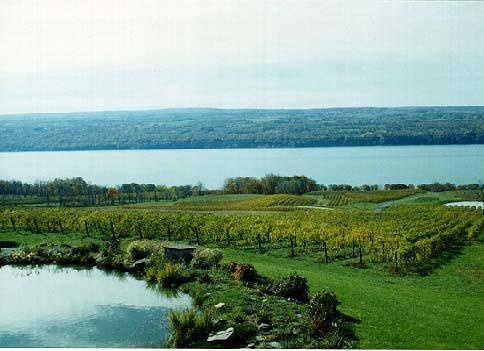
IMAGE OF THE WEEK


A vineyard on the slopes of one of New York’s Finger Lakes.

When the glaciers receded after the last ice age, deep valleys running roughly north-south were cut into the Central New York region, which then filled with water, creating the Finger Lakes. These deep, long and narrow lakes — reminiscent of the Lochs of Scotland, especially in winter — provide some of the most wonderful scenery in New York State, as well as a home to the bulk of the state’s wine industry. (New York is the second-leading wine producing state in the United States, behind California.) This is because of the steep hillsides along the lakes, where the vineyards reside, and the lakes themselves, which being as deep as they are moderate the climate in their immediate vicinity — keeping the summers cool enough and the winters mild enough for the grapes to flourish.

And here, as a bonus image, is a fascinating satellite image of the Finger Lakes Region. The large body of water at the photo’s top is Lake Ontario; the large lake at the upper right of the photo — spilling off the edge — is Oneida Lake, which is about twenty miles away from Syracuse. The city of Syracuse itself lies at the southern end of Onondaga Lake, which too can be seen in this image. It is the small lake, just south and west of Oneida Lake, that runs northwest-to-southeast.


Share This Post

Untitled Post

It’s always interesting when I find my tastes changing, such that something that I have heretofore disliked intensely becomes an object of increasing affection. This has been happening lately in my musical life, as I’ve been listening to a bit of French music from the Impressionist era — composers such as Claude Debussy and Maurice Ravel.

I’ve always had a difficult time relating to this area of music, because I think the music has more to do with color and evocation of mood than with more purely “musical” goals, such as the development of melodies in accord with the requirement of certain established forms. You won’t find Debussy composing a classical rondo, and you’ll be hard pressed to locate a passacaglia by Ravel. And sonata-allegro form? Forget it.

You don’t even find melody, at least in the sense of a definite theme that can be hummed to oneself after listening to a work. There is melody in the Impressionist music, but it’s a slippery thing — it rises from the depths and sinks again into the musical texture, making it occasionally difficult to ascertain if one is listening to a melody at all, or if it is all part of a larger tonal painting. I find that in listening to Impressionistic music, I must resort to non-musical metaphors to describe it — visual metaphors such as color, physical and emotional metaphors to describe mood. In fact, mood in itself seems to be of prime concern to the Impressionist composer; even though melody and development do exist, they are subservient to mood. The musical architecture, then, seems to me to be more emotional and less formal in nature. For a person like me, whose musical experience is so grounded in the classical tradition, relating to Impressionistic music has been difficult for a very, very long time — so much so that I have always viewed the Impressionists with suspicion; I’ve found Ravel to be a master of orchestration but a composer of cold, lifeless music, while judging Debussy to be a poseur of the highest order, a composer of works that are sometimes enjoyable but at the same time are light and inconsequential. I’ve come lately to revise my views of both composers.

My reexamination of Ravel comes courtesy of his amazing ballet Daphnis et Chloe, which is more familiar to listeners via the Suite #2 which Ravel culled from the complete score of the ballet. I can’t speak to this ballet’s narrative elements, because I am unfamiliar with its story, but I can note that there are moments of supreme transcendence within it, including one breathtaking sequence with a “falling” motif is repeated and developed throughout the orchestra and chorus until reaching an apotheosis of majesty and elemental mystery. This is amazing, wondrous music, and it reveals to me new possibilities for music beyond classical forms — especially in Ravel’s orchestration, which is some of the finest orchestration I have ever heard. (Some of his orchestration anticipates the sound that some film composers, such as Jerry Goldsmith, would employ almost a hundred years later in their film scores.)

As for Debussy, I have been listening both to some of his orchestral works and to his piano Preludes. His musical landscape is less universal than Ravel’s, more suggestive of ethnic color (particularly in a work like Iberia) and more intimate (as in his Preludes for piano). I had always dismissed Debussy as a lightweight, a wine-and-cheese Frenchman whose dull work has eclipsed my own supreme being amongst French composers, Hector Berlioz. That judgement was in error (although I doubt very much that Debussy will ever fire my soul the way Berlioz has for years). Debussy’s music is even more illustrative than Ravel’s, with his use of smaller orchestral ensembles and a “blocking” effect in his sound that yields orchestral sonorities that are much more complex than I have ever given him credit for.

I think sometimes that in this culture of ours, obsessed as it is with speed and with advancement, we sometimes forget all of the wonderful things we have either discounted or missed entirely along the way.

Share This Post

Untitled Post

Steven Den Beste just changed the contents of his blogroll, performing an “out with the old and in with the new” kind of operation. I didn’t make the cut, which doesn’t surprise me as I rarely write about the types of things that he writes about and when I do it’s not from his side of the political aisle. But I did find something potentially nifty in exploring his new set of links.

The site in question is Rachel Lucas. This is a site I’ve read a few times before, usually briefly and in passing, because she’s a gung-ho conservative one of whose main inspirations is “hating Al Gore”. I don’t have a problem with that (aside from disagreeing with it), but given that it’s not my particular point-of-view, I would not have ever become more than a sporadic reader of hers. I’m glad I checked her site out today, though, because she has announced a new focus for her blog: she intends to visit with elderly people in nursing homes and such, and transcribe for posterity as many of their stories as she can. (She writes about her intentions and her background for this interest more eloquently.)

This also illustrates the problem I have with The Rittenhouse Review‘s recent decision to impose meta-restrictions on sites hoping to make the blogroll there: the “turning inward”, in the sense of association only with that with which we already agree. When we refuse to engage other people because we know their politics stand in opposition to ours, we inevitably miss out on other things they may be doing that could be more important.

Share This Post

Untitled Post

A couple of weeks ago I finished reading The Grapes of Wrath by John Steinbeck. Since then I’ve been thinking a lot about the American Dream.

Not so much the standardized vision of the Dream, with the nice suburban house on an immaculate lot bound by a white picket fence and all the trappings that go with it, but the more abstract idea of the American Dream: the idea, central to our society and essential to its functioning, that anyone willing to work hard and show dogged persistence can achieve his or her dreams. The Grapes of Wrath shows just such a family, the Joads of Oklahoma, and it follows them as they engage in a quest for work that is almost Quixote-like, in that at the end when they have worked and worked and worked some more, and in between working have searched for work, they have achieved mere survival. For the Joads, work is not a means to a dream, but a means just to stay alive. The funny thing is, it doesn’t start out that way.

At the beginning of the novel, Tom Joad — the eldest son in the family — is paroled from prison in Oklahoma (this is the Dust Bowl era), and he returns home to find his family already evicted from the family farm (whose fields are now dry, dessicated acres of dust) and preparing to head for California. The occasion for this departure from their ancestral home is the dozens of handbills that have been plastered all over Oklahoma, promising work in the bountiful fields of the Pacific Coastal Plain — work in such abundance that they will be able to save money and follow their respective dreams. As the Joads set out on their journey westward, it is with a sense of optimism, even in the face of the great difficulties they have already faced.

The optimism begins to shift about halfway through their trek to California, when they encounter fellow Oklahomans — but who are heading east, back to Oklahoma. The work, the Joads are told, is not as easily found as they believe, nor does it pay well at all. Nevertheless, the Joads maintain their determination, although it becomes a grim determination. They are going to find good work, if it kills them.

And when they finally arrive in California, they discover that the situation is indeed as dire as they have been told. Competition for jobs is incredibly fierce; the migrant Oklahomans are looked upon with disdain by the Californians (they are derisively called “Okies” and invariably treated as subhumans); they are forced to work for wages that are barely enough to pay for food; they are in turn charged prices for food that are almost extortionary; and whenever the subject is brought up of the workers banding together to demand better treatment, such talk is discouraged because the locals won’t hold with “Reds”. The upshot is that they have no choice at all in what they do, and are instead herded about almost like sheep. Throughout the course of the book, the initial optimism gives way to pessimism and ultimately to a dreary fatalism as the Joads pretty much lose whatever status they once had as individuals and are instead pushed into a kind of indentured servitude and forced to join a subclass of humans who are always present, always necessary, but never taken seriously or allowed any more than what they need to keep from dying on the doorstep.

The Grapes of Wrath ilustrates a problem with the American Dream: that it is possible for people to work as hard as they can, indeed as hard as anyone can, and still not achieve any kind of success beyond base subsistence. How we respond to this problem — if, in fact, we even admit that it is a problem (“That’s not a bug, it’s a feature!”) — lies at the heart of much of our country’s political debate over much of the last century and beyond. And yet, it is not a political novel so much as a depiction of the trials faced by one family and the choices made by its members. The novel’s final scene — in which a character who has been so self-centered as to be insufferable through most of the book performs an act of generosity that is at once shocking and stirring — will linger with me for a long, long time.

Share This Post

ForgottenStars.net

The official site of Kelly Sedinger: Reader, writer, photographer, and dreamer

Skip to content ↓