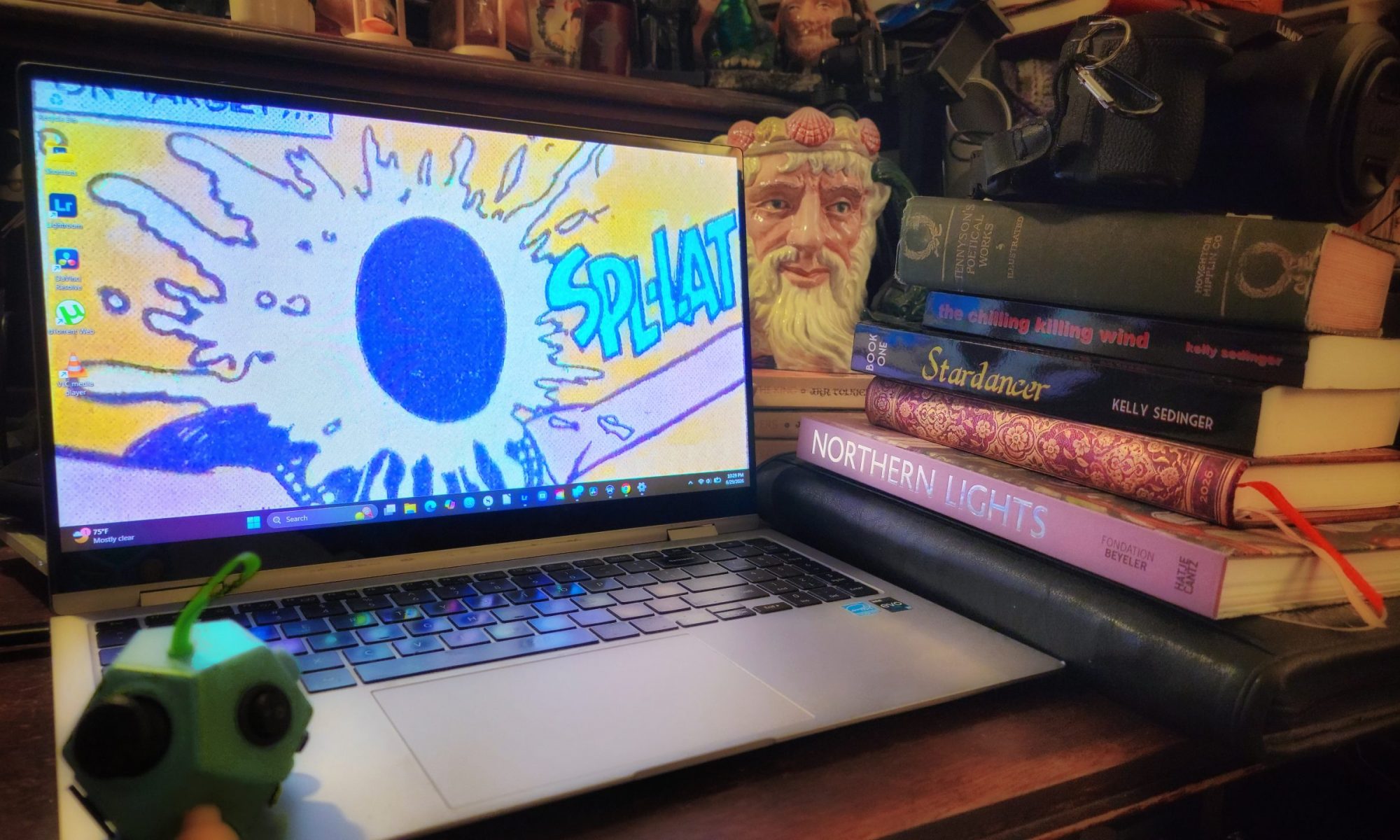

Ugh! ‘Twas a crazy day at work and a busy evening at home, so I almost forgot entirely about getting this week’s selection posted. In fact, I’m not even posting this week’s selection; I’m saving it for next week. Meanwhile, here’s Mr. Bernstein, conducting Mr. Tchaikovsky. Enjoy!
From the Books: Mike Royko
A repost, because somehow the subject of Mike Royko came up on Twitter. For many years he was my father’s favorite columnist. I remember him handing me the Opinion section more than a few times, saying, “Royko’s got a good one today.” Sometimes I got to return the favor.
For quite a few years, one of my favorite things in the newspaper was the syndicated column by Mike Royko. I loved his writing, and his style has come to mean “Chicago” to me in a very real way. Royko was also a favorite of my father’s, and one year for either Christmas or his birthday I gave my father a collection of Royko’s columns. I spotted another collection – or maybe it’s the same one – on the shelf at the library the other day (One More Time: The Best of Mike Royko), and I’ve been dipping into it with great pleasure. It’s a voice I’d forgotten about.
Royko’s writing, more than anyone else’s, evokes a newspaper for me. Often when reading him I can almost see him there, at a desk in a corner of some big newsroom in a big building in downtown Chicago, his typewriter keys clicking away while he smokes. I actually don’t know if Royko was a smoker, but his columns evoke an era when smoking wasn’t quite the demon it is now. His writing is the writing of a guy who haunted local taverns, and reading him makes me think of the smell of newsprint.
Royko was also perceptive and, in some cases, prescient, as when he wrote of Rupert Murdoch in 1984: “No self-respecting fish would want to be wrapped in a Murdoch paper.” I really wish he was still around right now; in this world of FOX News, a voice like Royko’s would be invaluable. He’d only be 79 today, if a brain aneurysm hadn’t struck him down in 1997. I’d love to know what Mike Royko would make of the state of journalism today, and the fact that one of the most important political commentators of our day – two of them, actually – are hosts of shows on a comedy network.
Royko could write gorgeous, lyrical prose, though, and this column of his — from November 22, 1979, on the occasion of the sudden passing of his first wife – is a prime example. I love how delicately he chooses his visual descriptors, which details to include and which ones to omit. I love the lack of proper nouns, and that he didn’t write this in the first person. The short sentences and short paragraphs are a Royko trademark, but they add up to a larger, and deeply beautiful, portrait in words of a beloved person gone too soon. A more loving tribute would be hard to think of.
The two of them first started spending weekends at the small, quiet Wisconsin lake almost twenty-five years ago. Some of her relatives let them use a tiny cottage in a wooded hollow a mile or so from the water.
He worked odd hours, so sometimes they wouldn’t get there until after midnight on a Friday. But if the mosquitoes weren’t out, they’d go to the empty beach for a moonlight swim, then sit with their backs against a tree and drink wine and talk about their future.
They were young and had little money, and they came from working-class families. So to them the cottage was a luxury, although it wasn’t any bigger than the boat garages on Lake Geneva, where the rich people played.
The cottage had a screened porch where they sat at night, him playing a guitar and her singing folk songs in a sweet, clear voice. An old man who lived alone in a cottage beyond the next clump of woods would applaud and call out requests.
One summer the young man bought an old motorboat for a couple of hundred dollars. The motor didnt’ start easily. Some weekends it didn’t start at all, and she’d sit and laugh and row while he pulled the rope and swore.
But sometimes it started, and they’d ride slowly along the shoreline, looking at the houses and wondering what it would be like to have a place that was actually on the water. He’d just shake his head because even on a lake without social status, houses on the water cost a lot more than he’d ever be able to afford.
The years passed, they had kids, and after a while they didn’t go to the little cottage in the hollow as often. Something was always coming up. He worked on weekends, or they had someplace else to go. Finally the relatives sold the cottage.
Then he got lucky in his work. He made more money than he had ever dreamed they’d have. They remembered how good those weekends had been and they went looking at lakes in Wisconsin to see if they could afford something on the water.
They looked at one lake, then another. Then another. Cottages they could afford, they didn’t like. Those they liked were overpriced. Or the lake had too many taverns and not enough solitude.
So they went back to the little lake. They hadn’t been there for years. They were surprised to find that it was still quiet. That it still had no taverns and one grocery store.
And they saw a For Sale sign in front of a cedar house on the water. They parked and walked around. It was surrounded by big old trees. The land sloped gently down to the shore. On the other side of the road was nothing but woods. Beyond the woods were farms.
On the lake side, the house was all glass sliding doors. It had a large balcony. From the outside it was perfect.
A real estate salesman let them in. The interior was stunning – like something out of a homes magazine.
They knew it had to be out of their reach. But when the salesman told them the price, it was close enough to what they could afford that they had the checkbook out before they saw the second fireplace upstairs.
They hadn’t known that summers could be that good. In the mornings, he’d go fishing before it was light. She’d sleep until the birds woke her. Then he’d make breakfast and they’d eat omelets on the wooden deck in the shade of the trees.
They got to know the chipmunks, the squirrels, and a woodpecker who took over their biggest tree. They got to know the grocer, an old German butcher who smoked his own bacon, the little farmer who sold them vine-ripened tomatoes and sweet corn.
They were a little selfish about it. They seldom invited friends for weekends. But they didn’t feel guilty. It was their own, quiet place.
The best part of their day was dusk. They had a west view and she loved sunsets. Whatever they were doing, they’d always stop to sit on the pier or deck and silently watch the sun go down, changing the color of the lake from blue to purple to silver and black. One evening he made up a small poem:
She told him it was sad, but that she liked it.
The sun rolls down
like a golden tear
Another day,
Another day
gone.What she didn’t like was October, even with the beautiful colors and the evenings in front of the fireplace. She was a summer person. The cold wind wasn’t her friend.
And she saw November as her enemy. Sometime in November would be the day they would take up the pier, store the boat, bring in the deck chairs, take down the hammock, pour antifreeze in the plumbing, turn down the heat, lock everything tight, and drive back to the city.
She’d always sigh as they pulled onto the road. He’d try to cheer her up by stopping at a German restaurant that had good food and a corny band, and he’d tell her how quickly the winter would pass, and how soon they’d be here again.
And the snow would finally melt. Spring would come, and one day, when they knew the ice on the lake was gone, they would be back. She’d throw open all the doors and windows and let the fresh air in. Then she’d go out and greet the chipmunks and woodpeckers. And she’d plant more flowers. Every summer, there were more and more flowers. And every summer seemed better than the last. The sunsets seemed to become even more spectacular. And more precious.
This past weekend, he closed the place down for the winter. He went alone.
He worked quickly, trying not to let himself think that this particular chair had been her favorite chair, that the hammock had been her Christmas gift to him, that the lovely house on the lake had been his gift to her.
He didn’t work quickly enough. He was still there at sunset. It was a great burst of orange, the kind of sunset she loved best.
He tried, but he couldn’t watch it alone. Not through tears. So he turned his back on it, went inside, drew the draperies, locked the door, and drove away without looking back.
It was the last time he would ever see that lovely place. Next spring there will be a For Sale sign in front and an impersonal real estate man will show people through.
Maybe a couple who love to quietly watch sunsets together will like it. He hopes so.
Yeah, I miss Mike Royko.
Share This Post
Brrrr!!!
It’s cold outside! This time of the year in The 716, we’re not usually suffering the kind of cold the Upper Midwest tends to get for weeks (or months) at a time, but we do get bursts of some seriously icy weather here and there. The real deep freeze around here usually won’t last more than a few days, but when it hits, as it’s hitting today–as I write this, it’s 20 degrees out and I woke up to 7 degrees at 7am this morning–it’s “hole up, layer up, and consume coffee and tea and soup” weather.

Which makes me think about heat, and how we get it.
I never really knew how our houses were heated when I was a kid, up to when we moved into our house in Allegany, NY, when I was nine. I assume those houses were forced-air furnaces, because I remember heat registers in the floor issuing warm air when we needed it. But when we arrived in Allegany, we switched to wood burning. (Our last house in Oregon had used wood too, and we’d actually moved the wood stove with us because my parents owned it, but I don’t recall it being the main source of heat in that house in Hillsboro…but again, I was nine and this was Hillsboro, OR, where it doesn’t get as cold as it does here, so maybe the wood stove was our primary heat there.)
For the balance of my young life, from fifth grade until I headed out for college, I lived in a house mainly heated by a wood stove. This was fine, but it wasn’t without its challenges. For one thing, it’s very hard, if not impossible, to achieve consistent heat with wood. It gets really hot, so you choke off the flame and let it die down a bit, and maybe open a window if it gets too hot. This cooling process takes a while…and then, when you want it warm again, you have to restoke the fire, which takes time again to heat back up. There was a constant dance of being a bit too cold or a bit too hot.
Sometimes, if the wood was especially wet early on in the season (we’d get a cord or two of wood delivered each fall), you simply wouldn’t get great heat. The way it usually worked was that when you got up in the morning, all that was left in that stove were coals, so you (meaning me) shoveled out some of it to make room for new wood, which you would then toss in. This wood took a long time to start burning, so it would be cold in the morning and it wouldn’t be warm again until after I was gone for school.
And then there were times when we’d go away for a day or two, returning on a winter’s night to a completely dead fire. Nothing to do then but build a new fire in the stove.
Another factor here was the house itself, which was long and narrow. The wood stove was at one end, and the bedrooms were all at the other, and we didn’t run fans to move that air around, so that back end of the house would stay hold. For this reason we got a supplementary kerosene heater for the back end of the house. My years in that house are probably why to this day I tend to be more comfortable in a cool environment than a warm one.
Eventually my parents got a gas furnace and forced air installed in that house, I think because there were huge savings when the gas company ran lines out that way. And I moved out for good a while after that. Our first apartment had a gas heater in the living room; again the “long and narrow” problem reared its head and we kept rooms in the back half of the apartment closed. Another apartment had hot-water baseboard heaters, so when the heat kicked on we’d hear the flow of water followed by a chorus of creaking pipes as the metal expanded.
Our house now has a forced air furnace, which is nice. Even nicer is the programmable thermostat, so I’m not forever changing temp settings (maybe once in a while). The program has four settings that I can set for specific times: Sleep (which runs overnight), Wake (first thing in the morning), Leave (how warm for while we’re at work), and Return (how warm we want it for when we’re home at night). It’s nice being able to let the house cool overnight, and then start warming up again when we’re getting up for our day.
One problem I discovered is that our thermostat has a “Recovery” system. I didn’t understand this system until recently. I have the “Sleep” temperature set for 62, and the “Wake” temp set for 68. Originally I set “Wake” to start at 6:15am, which I interpreted to mean that the t-stat would keep things at 62 until 6:15, at which time it would start heating the place up to 68 and then maintain that until the time when the “Leave” setting takes over. Problem is…that’s not how it works! I was noticing that the bedroom would start getting a lot warmer starting at 5:45 or so, warm enough to actually wake me up half an hour before the alarm at 6:15.
What was going on?
Well, that “Recovery” system was kicking the heat on around 5:30 or so, because the thermostat interprets the “Wake” setting–68 at 6:15am–not as “Start heating to 68 at 6:15”, but rather, “Make sure it’s 68 by 6:15″. So, to achieve what I wanted, I had to change the Wake time to 7:15! It took me a week to figure this out.
On weekends lots of times it’s all not applicable anyway, because a certain greyhound decides that he needs out to pee; thus, when this happens, I tend to get up and stay up. Which means, layers and coffee. And, on the really cold mornings, I get out my handwarmers, too.
Later this week we actually hit the lower 50s…and then back down to the 30s for next weekend. It’s a roller-coaster, it is! Heat management is fun, it is. It’s more fun than cooling, that’s for sure….
Share This Post
Winter mornings

Something for Thursday
“To me, Seven O’Clock Shout is a declaration of our survival. It is something that allows us our agency to take back the kindness that is in our hearts and the emotions that cause us such turmoil. … We cheer on the essential workers with a primal and fierce urgency to let them know that we stand with them and each other.”—Valerie Coleman
Valerie Coleman is a flautist and composer who grew up in Louisville, KY, before becoming an influential musician in a number of ways: a flautist who formed the Imani Winds, a prominent woodwind quintet, while following a busy solo career, and a composer of a diverse body of work for soloists and ensembles all the way up to full orchestras.
Coleman’s piece Seven O’Clock Shout was written for, and premiered by, the Philadelphia Orchestra. The work is directly inspired by the COVID-19 pandemic and the early response to it. From Coleman’s website:
Seven O’Clock Shoutis an anthem inspired by the tireless frontline workers during the Covid-19 pandemic, and the heartwarming ritual of evening serenades that brings people together amidst isolation to celebrate life and the sacrifices of heroes. The work begins with a distant and solitary solo between two trumpets in fanfare fashion to commemorate the isolation forced upon human kind, and the need to reach out to one another. The fanfare blossoms into a lushly dense landscape of nature, symbolizing both the caregiving acts of nurses and doctors as they try to save lives, while nature is transforming and healing herself during a time of self-isolation.
When a composer has the rare opportunity to create for musicians they have gotten to know, the act of composing becomes an embrace tailored to the personality and capabilities of the musicians with elements of both challenge and appreciation. One such moment is dedicated to humanity and grace, as a clarinet solo written for Ricardo Morales, followed by a flute solo with both Jeffrey Khaner and Patrick Williams in mind, providing a transition into a new upbeat segment. Later, to continue tradition from the first commission the composer received from the orchestra, a piccolo solo dedicated to Erica Peel dances with joy.
The piece is lyrical and optimistic, even in the face of the horrors of the pandemic–especially the early days, when everyone was sequestered from one another, with no real sense at all for when, or even if, things might start to get back to “normal”.
Who knows how we might have responded back then if we had realized that two years would then elapse during which we couldn’t entirely return to “normal”…but that’s a discussion for another time. Seven O’Clock Shout is one musician’s response to the great difficulty of our time. And why not? Much great art is.
Here is Seven O’Clock Shout by Valerie Coleman.
Share This Post
Pizza Thoughts

Raise your hand if you grew up in a town with terrible pizza.
[raises hand]
OK, good. I’m not alone. But more on that later.
Today is apparently National Pizza Day. I have no idea why today is National Pizza Day, but I do not generally question such things. But at least I can honor the occasion by dining on some pizza!

That’s leftover frozen pizza that I’ve reheated, actually. But no, this is not a bad thing! Frozen pizza has come a long, long, long way since the days of the really cheap crusts that tasted vaguely (or not so vaguely) of the cardboard box. This is actually a new brand to me, by a company called the Motor City Pizza Company. Every few weeks at home we have Frozen Pizza Nite for dinner, whereupon I buy a gluten-free pizza for The Wife (she is partial to the Freschetta brand), and I buy something for myself. I don’t have a favorite, which is nice for some pizza exploration each time out.
This last one was apparently a Detroit-style pizza, which means that it’s oblong rather than circular, the crust is thick and chewy (not unlike Buffalo-style pizza, in all honesty!), and the cheese (Wisconsin brick cheese) is spread all the way to the edge, so that it melts and scorches a bit around the edges, giving the outer crust a cheesy, carbonized crunch. I don’t know how well this particular frozen pizza holds up as an example of Detroit-style pizza, but I did like this brand and I would buy it again.
(Pro tip: When reheating leftover pizza, don’t use the oven OR the microwave. Use a frying pan, on the stove, on medium to medium-low heat. Put a lid on it to get the cheese melty again, while the pan re-crisps the crust.)
Generally speaking, pizza might be the single food I’ve eaten more than any other (maybe second after sandwiches), and I suspect I’m far from alone in this. Americans tend to be nuts about pizza. What’s one of the first question anybody asks in this country when they relocate to a new city? “Where’s the good pizza around here?” Pizza is so huge that it’s simply not acceptable that celiacs live a pizzaless existence, hence the existence of many gluten-free pizzas.
I don’t remember a time of my life that was Before Pizza. In our oddly-nomadic life in my first ten years, during which we moved each year, we had a favorite pizza place in each town. Pizza Caboose was a run train-themed pizza place in the Portland area (some locations had an actual caboose inside, which you could sit in as long as the whole thing wasn’t rented out for a party), and there was another place (now gone) called the Organ Grinder, which was a trip in itself. These places, I remember liking very much, even if I, as the youngest member of the family, rarely got to pick the pizza toppings, so I had to deal with sliced tomatoes and mushrooms and having Dad admonish me for trying to pick the pepperoni off the freshly-served pizza.
(But really, isn’t it a pizza law that you pick off one slice of pepperoni from the fresh pizza? How many things in life are better than that first, and only, piece of pepperoni, picked from the top of the still-bubbling pie, dripping hot grease and pulling along with it a fine tendril of molten cheese?)
Another joint I remember, from the year we lived in LaCrosse, Wisconsin, was Rocky Rococo’s. This place served up slices of deep-crusted goodness. I also remember a couple of other pizza joints in LaCrosse…one of them had barber chairs that kids could play in while waiting for food (maybe this was actually Rocky Rococo’s? I dunno) and another was a bar/restaurant in LaCrosse’s downtown section, whose name I don’t recall but I do recall their pizza being very well-endowed in the cheese department.
And then there was Olean, my hometown of roughly twenty years.
Olean, bless its heart, was not a place for great pizza. I know that some of the locals down there will quibble with this assessment, but I cannot tell a lie. One local joint, located in the mall there, is absolutely beloved, but it’s really on par with Sbarro, and it serves the same kind of product (the cheap thin NYC-style slice that you can fold). It wasn’t bad, but I never once pined for it the way many there do. Another joint served slices of square pizza cut from sheet pans, and each slice had two pepperoni slices on it. That’s it: two. This place was also beloved. I never understood why.
There were a few other mom-and-pop joints that came and went, but generally, Olean was not really a place to get great pizza. Maybe its pizza scene has improved since I moved away–it’s been more than twenty years now, after all–but at the time, well…a case can be made that Pizza Hut really was the best game in town. (And honestly, as much as I might say about working at Pizza Hut, I do still believe that their product, at least back then, was perfectly respectable, at least for a corporate “Every pizza must be the same!” joint.)
One special mention must be made of a pizza place in Pittsburgh, the city of my birth: Vincent’s Pizza Park is the home of some amazing pizzas, but they’re rather idiosyncratic. They are big, heavy, loaded with grease, and the crust goes for miles. I mean, look at these:


That’s some amazing pizza–I have never been able to find Italian sausage on a pizza that had quite the same bite as the stuff that Vincent’s uses–but when you’re eating it, you might well flash back to that episode of The Simpsons when during breakfast Bart is complaining of chest pains while Homer orders him to butter his bacon.
(Vincent’s was also apparently a bit less well-maintained, in earlier days when sanitary standards were a bit more lax than they are nowadays. My father loved telling the story of how once he was at Vincent’s when my parents were relatively newly wed, in the early 1960s, and he called home from the pay phone to tell Mom he was going to be a while because some poor guy had gotten locked in the bathroom and was shrieking to be released from whatever eldritch terror dwelt within. Dad had to see that one play out.)
What are my pizza preferences? I mean, everybody has a preference, right? My favorite right now would almost certainly be Imperial Pizza in South Buffalo, a joint that is rightfully legendary. It breaks my heart that The Wife can’t eat their product anymore. Curse you, Gluten Gods! But Imperial’s crust is that wonderful thick pillowy Buffalo crust, topped with a sweetish sauce and piled with cheese and whatever your toppings are. Each year at Christmas I treat myself and a couple of coworkers to pizza and wings from Imperial, and given the opportunity to have pizza from any place right now, I’d likely choose Imperial.

Or Cappelli’s…they may an amazing chicken finger pizza that tastes like pizza and wings all in one dish…and their crust, a bit thinner than the standard Buffalo crust, is ideally suited for one of my favorite topping combos, Italian sausage and banana peppers.
But more generally? I really do love all kinds of pizza. The New York City thin crust experience really is special, and I love it to death. But I am equally fond, if not moreso, of the Chicago deep-dish experience, in which a buttery and flaky crust contains multitudes in terms of tomatoes, cheese, and who knows what else. And everything in between! Buffalo pizza, Detroit pizza, and from my little experience with it, that super-thin crust stuff they make in St. Louis.
Pizza is so amazingly versatile that I can’t imagine ever tiring of it, or getting militant about one particular variety of it. Pizza is large. Pizza contains multitudes. You can make breakfast pizza, you can make white pizza, you can make any variation of the “traditional” pizza you can think of, you can make dessert pizza. Pizza makes life better, and we owe eternal gratitude to whichever ancestors it was who made a flatbread and then started putting stuff on it.
And then to those who made beer to wash it down with, and wings to pair with it.

Happy National Pizza Day, everyone!
Share This Post
Tone Poem Tuesday
I last featured the work of 20th century American composer Ulysses Kay two years ago, which is probably too long to have allowed to lapse without revisiting him. Kay is an important voice in the Neoclassical tradition, but his music represents a broad array of influences, some of which show up in today’s work. Chariots is an orchestral rhapsody in which Kay’s main literary influence was apparently the use of chariots in the poetry of William Blake. The work was premiered by the Philadelphia Orchestra, under the baton of the composer himself–and that’s the performance featured here.
Enjoy Chariots by Ulysses Kay.
Share This Post
“So much of what we do is ephemeral and quickly forgotten, even by ourselves, so it’s gratifying to have something you have done linger in people’s memories.” — John Williams

John Williams was born ninety years ago today.
I’ve written many times in the years I’ve been blogging about John Williams’s influence on my creative world. He has been a central figure in the cinematic stories that shaped my life and stamped their print on my storytelling soul, all the way back to when I was five years old. Williams is, of course, best known for his many filmscores to some of the most prominent movie franchises of the last fifty years: Star Wars, Indiana Jones, Harry Potter, and more. The Winter Olympics are going on right now, so I’m sure we’re hearing a steady dose of his Olympic Fanfare on the telecasts. He is absolutely a gigantic part of the sonic character of our time.
In addition to being very prolific, Williams is also versatile. He has scored intimate character studies, historical epics, and psychological thrillers. He has done horror as well as escapist fun…and he has also written a good deal of music for the concert stage. Pretty impressive lifetime of work for a guy who was once “Johnny Williams”, a session musician in 1950s Hollywood who did things like play the piano part on the theme to Peter Gunn.
Thank you, John Williams! Here are some selections, which I tried to draw from his “deeper cuts”–i.e., trying to stay away from the Big Hits. John Williams’s body of work really rewards a deeper look, even beyond the “usual suspects”.
(Oh, and a reminder: No, Williams did not steal the Jaws theme from Dvorak.)
Share This Post
And now, four animals.


And now, a lamp-post
It seems an odd visual to like, but I’m always fascinated by light poles in parking lots, especially when there’s weather. This human-made object stands there, adding unnatural light to a scene while nature does its thing all around. The resulting contrast interests me. Why, I don’t know. It just does.
