Time to clear out some tabbage:
:: Two morons were convicted in Great Britain of cutting down the Sycamore Gap tree. Good.
:: Conductor Michael Tilson Thomas, 80 years old and battling cancer, has called it a career. Tilson Thomas was once music director of the Buffalo Philharmonic Orchestra, from 1971 to 1979.
The BPO has been so stable over the years that with Tilson Thomas’s retirement, only three former BPO music directors remain active on the podium: Semyon Bychkov (1985-1989), Maximiano Valdes (1989-1998), and the incumbent, JoAnn Falletta (1999-present).
:: Yes I’m a half-Palestinian lesbian, but I dream of being a Republican Congresswoman. Here is my six-point plan.
(Yes, this one is written with a wink.)
:: Abbott Elementary keeps the laughs but loses the stakes.
The biggest shake-up that happened over these twenty-two episodes was Ava Coleman’s (Janelle James) firing in the wake of the district uncovering the bribery, especially since Ava’s capability as a principal has been thoughtfully advanced over the show’s run. It truly felt like a loss. Unfortunately, it was one whose impact was cut short as she was rehired a mere three episodes later. So much potential could have been had, seeing what happens when a series regular, especially one as seemingly callous as Ava, is deprived of the school that operates as the heart of the series. It winds up being a mere blip instead, a momentary inconvenience undone within a couple of weeks. Abbott doesn’t traffic in hard drama, nor is it supposed to, but pulling its punches doesn’t do anyone any favors.
I agree with this article. I love Abbott Elementary, but not only did much of its fourth season feel like it was treading water, I think the last few episodes actually harmed it. Ava’s development over the show’s four seasons has been amazing–in a lot of ways, her character hasn’t changed so much as been revealed. For all her brash materialism, there have been many moments revealing her wiser self, which is what made her firing late in S4 such a shock. When she finally admitted that she wanted to come back to the school, the show had also shown Gregory growing into his sudden new role as principal. I really thought the obvious thing was to keep Gregory in that role and allow Ava to return as a teacher. That would have shaken up the dynamic considerably, and it would have added a new wrinkle to the Gregory-Janine relationship. Alas, the show let Ava twist in the wind for all of two or three episodes, and then executed a reversal of fortune that was frankly not believable. I really think the show limped to the end of its season, and it’s the kind of thing that makes me wonder if the show has entered its decline. We’ll see.
:: 30 years ago, Timothy Zahn resurrected Star Wars.
This article is a few years old already, but the point still stands: Star Wars was pretty much dead in the water until author Timothy Zahn wrote a novel set five years after the events of Return of the Jedi. I remember seeing that book on a stand in a Walden Books and buying it on the spot, feeling a rush of confusion and excitement. Was Star Wars back? Was this a precursor to more films? What was going on? I tore into the book, which was very well written…and a lot of history followed.
:: “Only I get to tell you what to do”: Republican messaging deconstructed.
You’ve watched the Republican Party champion the idea of “freedom” while you have also watched the same party openly assault various freedoms, like the freedom to vote, freedom to choose, freedom to marry who you want and so on.
If this has been a source of confusion, then your assessments of what Republicans mean by “freedom” were likely too generous. Here’s what they mean:
1. The freedom to tell people what to do.
2. Freedom from being told what to do.
When Republicans talk about valuing “freedom”, they’re speaking of it in the sense that only people like them should ultimately possess it.
This is a useful article that pretty much sums up the genuine nuts-and-bolts of Republican thinking.
:: Finally, some baseball commentary! It’s fun being a Pirates fan, innit? Here’s an article whose headline could have been accurate at nearly any point over the last twenty years, except for three seasons: Bob Nutting has ruined the Pirates and broken plenty of hearts along the way.
I’ve followed sports for a long time, and “bad owners” are nothing new. There are plenty of bad owners: owners who are cheap, or who want control to the point that their micromanaging screws things up, or who think that they have special knowledge about how to build a team so they keep making decisions and somehow the team never gets better (see “Jones, Jerry”). But I think I can honestly say that every bad owner I’ve ever seen has at least wanted to win and just couldn’t because they sucked at it.
Bob Nutting, however? He’s the first owner I’ve ever seen who seems genuinely unmotivated by winning and completely unfazed by losing. It’s amazing, it really is, and the only chance the Pirates have of ever being good while he’s in charge is for them to field their typical team full of young prospects on their first contracts, and have them all just happen to enjoy career years at the same time.
Yeah, good luck with that.
Harumph.
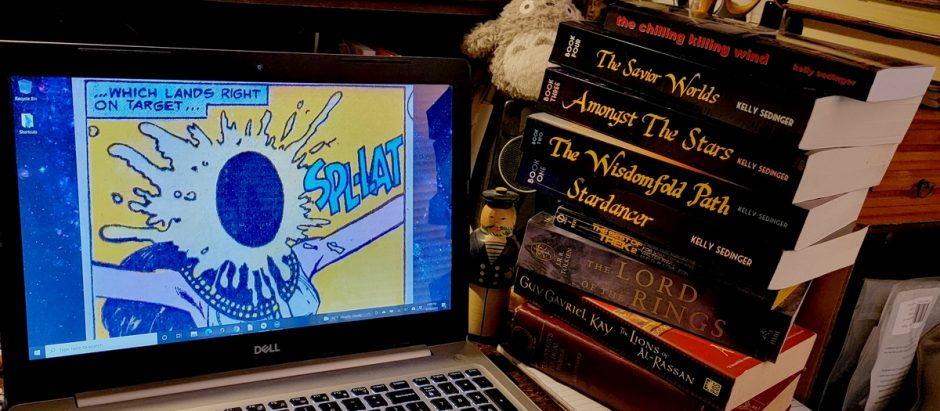


Tabs! Get ’em while they’re open!
Time to clear out some tabbage:
:: Two morons were convicted in Great Britain of cutting down the Sycamore Gap tree. Good.
:: Conductor Michael Tilson Thomas, 80 years old and battling cancer, has called it a career. Tilson Thomas was once music director of the Buffalo Philharmonic Orchestra, from 1971 to 1979.
The BPO has been so stable over the years that with Tilson Thomas’s retirement, only three former BPO music directors remain active on the podium: Semyon Bychkov (1985-1989), Maximiano Valdes (1989-1998), and the incumbent, JoAnn Falletta (1999-present).
:: Yes I’m a half-Palestinian lesbian, but I dream of being a Republican Congresswoman. Here is my six-point plan.
(Yes, this one is written with a wink.)
:: Abbott Elementary keeps the laughs but loses the stakes.
I agree with this article. I love Abbott Elementary, but not only did much of its fourth season feel like it was treading water, I think the last few episodes actually harmed it. Ava’s development over the show’s four seasons has been amazing–in a lot of ways, her character hasn’t changed so much as been revealed. For all her brash materialism, there have been many moments revealing her wiser self, which is what made her firing late in S4 such a shock. When she finally admitted that she wanted to come back to the school, the show had also shown Gregory growing into his sudden new role as principal. I really thought the obvious thing was to keep Gregory in that role and allow Ava to return as a teacher. That would have shaken up the dynamic considerably, and it would have added a new wrinkle to the Gregory-Janine relationship. Alas, the show let Ava twist in the wind for all of two or three episodes, and then executed a reversal of fortune that was frankly not believable. I really think the show limped to the end of its season, and it’s the kind of thing that makes me wonder if the show has entered its decline. We’ll see.
:: 30 years ago, Timothy Zahn resurrected Star Wars.
This article is a few years old already, but the point still stands: Star Wars was pretty much dead in the water until author Timothy Zahn wrote a novel set five years after the events of Return of the Jedi. I remember seeing that book on a stand in a Walden Books and buying it on the spot, feeling a rush of confusion and excitement. Was Star Wars back? Was this a precursor to more films? What was going on? I tore into the book, which was very well written…and a lot of history followed.
:: “Only I get to tell you what to do”: Republican messaging deconstructed.
This is a useful article that pretty much sums up the genuine nuts-and-bolts of Republican thinking.
:: Finally, some baseball commentary! It’s fun being a Pirates fan, innit? Here’s an article whose headline could have been accurate at nearly any point over the last twenty years, except for three seasons: Bob Nutting has ruined the Pirates and broken plenty of hearts along the way.
I’ve followed sports for a long time, and “bad owners” are nothing new. There are plenty of bad owners: owners who are cheap, or who want control to the point that their micromanaging screws things up, or who think that they have special knowledge about how to build a team so they keep making decisions and somehow the team never gets better (see “Jones, Jerry”). But I think I can honestly say that every bad owner I’ve ever seen has at least wanted to win and just couldn’t because they sucked at it.
Bob Nutting, however? He’s the first owner I’ve ever seen who seems genuinely unmotivated by winning and completely unfazed by losing. It’s amazing, it really is, and the only chance the Pirates have of ever being good while he’s in charge is for them to field their typical team full of young prospects on their first contracts, and have them all just happen to enjoy career years at the same time.
Yeah, good luck with that.
Harumph.