Cheese. Pure, unadulterated, joy-filled cheese.
Here are The Three Tenors.


The official site of Kelly Sedinger: Reader, writer, photographer, and dreamer
Where were you when you heard that John Lennon had been killed?
(For me, it was the next morning. I can’t remember if I heard it first on a Good Morning America kind of show or not, but I remember that my father drove me to school that morning for some reason, and that the news was on the radio. At the time, I honestly didn’t know anything at all about the Beatles.)
Time for a repeat of a song I use every year at some point: Dan Fogelberg’s “Same Old Lang Syne”, that achingly beautiful song that’s barely a Christmas song but yet perfectly captures that certain wistful part of the season, when no matter how well your life is going, you can’t help but think back over choices made and others not.
Is anyone experiencing a problem with ads playing when I embed YouTube videos? Somehow my Google account has become eligible for “YouTube Red”, which means (among other things) that I never have to watch ads when I’m viewing YouTube while logged into my Google account, which is pretty much always. So I have no way of knowing what ads are running for people who are not logged in while watching the videos here.
I’m honestly not sure what I can do to solve this problem, but I would like to know if it is a distraction with a high annoyance factor.

There seems to be a common school of thought among writers, at least so far as I’ve seen, that holds that your first draft of anything – story, novel, poem, whatever – is always bad. But I gotta be honest here, folks: I don’t like the idea that your first draft is crap. In fact, I dislike this notion with some intensity.
Actually…I hate it. Hate hate hate it.
Your first draft is not crap. It just isn’t. Is it “publishable”? Almost certainly not. Is it “ready”? Almost certainly not. But…is it crap?
Almost certainly not.
Look, when you write, you pour a lot of yourself out onto the page. How can that be “crap”? And even if there a lot of things that need fixing, either in terms of phrasing or pacing or characterization or any other concern one might have about a piece of writing…there’s still a lot that’s good, right? Unless you quite literally replace every word in your first draft during your edit, your first draft is not “crap”. Neither is it “junk”, or “bad”.
I think that what’s called for here is a different metaphor. So: if we think of a finished book as a building, then this is what your first draft is:
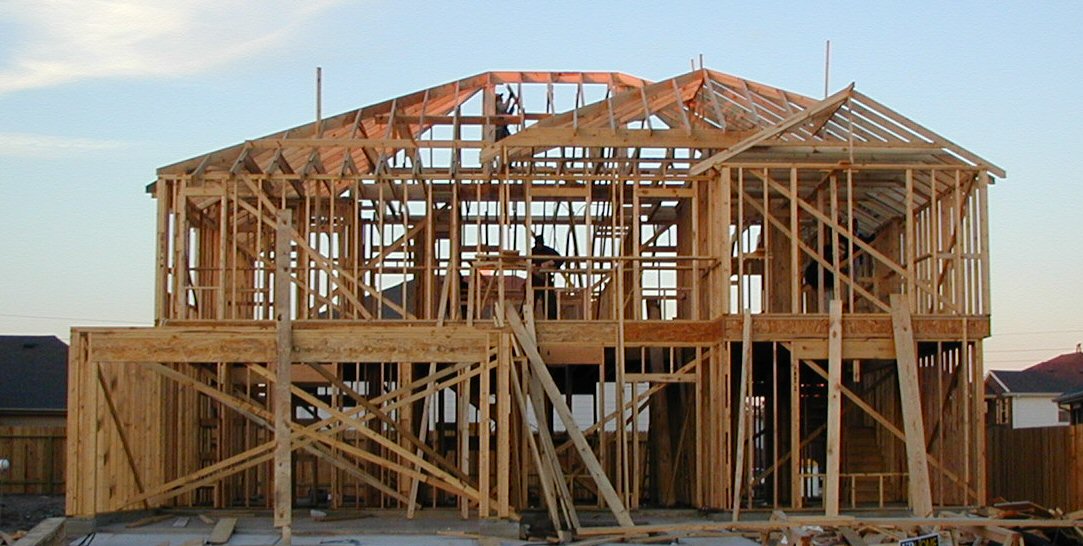
That’s right. It’s not crap; it’s an unfinished building. You still have to put up walls and run plumbing and electrical and install window frames and put up the glass windows and doors and you have to paint the walls and finish the exterior and trim out the woodwork and lay carpet and all the other stuff that comes with building a building. But a building without a frame is a pile of stuff from Home Depot, and that’s not much use to anybody. Without the frame, there is no building; it’s the frame that defines the building.
Your first draft is pretty much the same. Without a first draft, you don’t have a story because you don’t have a sense of things. You don’t have a clear idea your arc or what it is that your characters are trying to accomplish or what problem they’re trying to solve. You don’t know what it is they need to learn, or how they need to change, or what things are going to happen to change them. Without the first draft to give you some idea of the story’s structure, you don’t know what kind of story it is.
So a first draft is not a pile of crap, and it does not suck. It’s an incomplete framework. You’d never try to live in a house that was just a frame on a lot, and you wouldn’t want to read a story that’s in its first-draft stage. But that’s not because the first draft sucks! It’s because the first draft is missing things, like drywall and paint and plumbing and electrical and windows and doors and trim work. There’s a reason that carpenters talk about “rough carpentry” and “finish carpentry”: the rough carpentry is the framing and basic layout, and the finish work is what makes the thing a house or a store or an office building or whatever. No carpenter ever says, “Your frame should be crap!” because that’s not how they look at these things.
That’s the way it should be for writers, in my opinion. Even the terminology is compatible: rough carpentry, rough draft. Finish carpentry, finishing work on the story. This seems to me a much more productive and healthy way to look at one’s writings-in-progress. When you finish a rough draft, you haven’t produced something that sucks; you’ve produced the frame of an eventual finished story.
Now, obviously this analogy isn’t perfect. Sometimes when we do the finish work on a rough draft for a 30-chapter novel, we might find ourselves condensing things to the point where we literally get rid of chapters 3, 5, 10, and 22. An architect supervising the construction of a 30-story building, however, isn’t going to wait until the frame is built and then decide, “OK, we’re actually going to ditch the third, fifth, tenth, and twenty-second floors.” But no analogy is perfect, and even an imperfect analogy using carpentry as its motif has got to be better than one that uses poo, right?
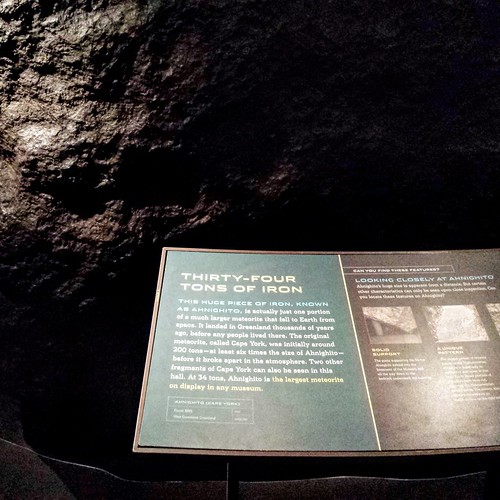
Continuing the adventures in New York City! On Black Friday, we didn’t do much by the way of shopping until late. First up was one of two things that had been on my Must-Do list: Visit the Museum of Natural History and the Hayden Planetarium. This was indulging the Little Kid Space Nerd in me, I fully admit! And imagine what flitted through my heart when we walked in and saw the Hayden Sphere looming above:
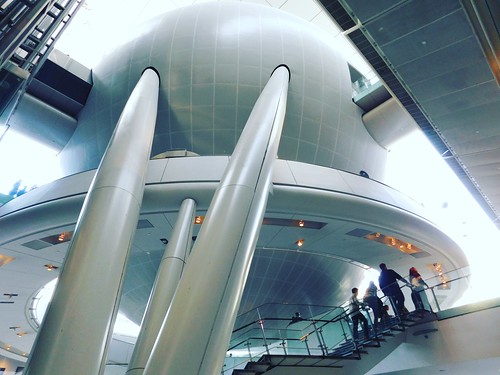
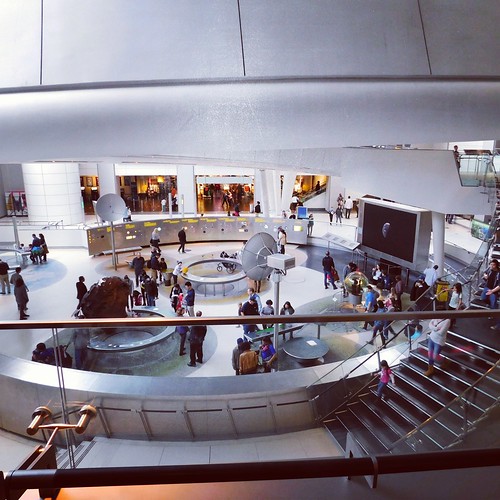
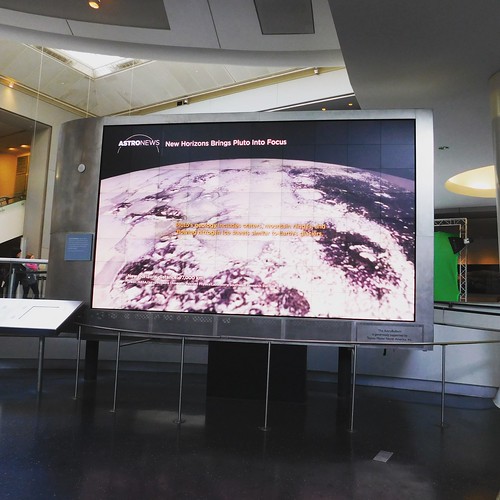
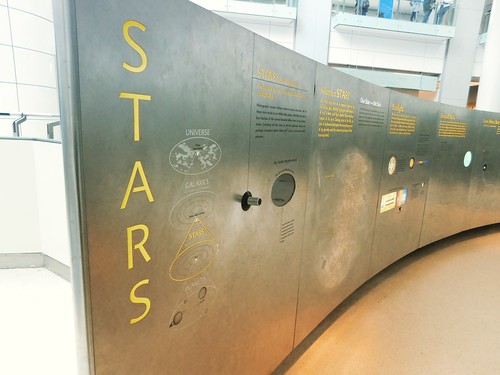
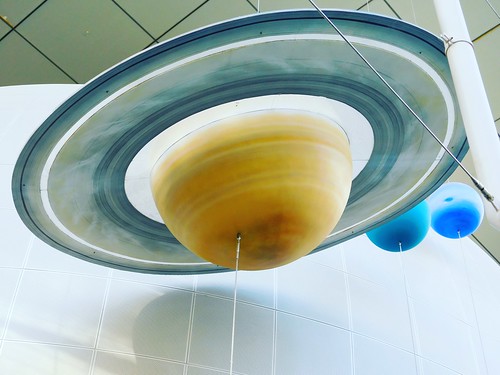
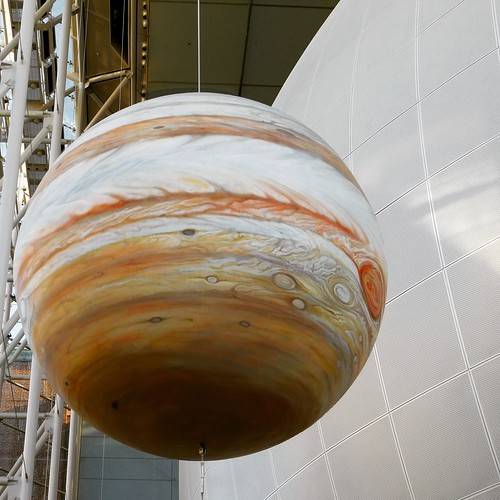
The upper portion of the sphere itself is the Planetarium, where we saw a show about dark energy, narrated by Neil DeGrasse Tyson himself. I could sit through a dozen planetarium shows in one day, to be quite honest. It was our great luck that the Planetarium had just reopened after several months downtime for refitting: the dome was rebuilt to make the seams between the sections almost invisible, and the seats and projection systems were upgraded. To my surprise, there was no Big Bug-Eyed Projector sitting in the middle of the planetarium, which is a traditional fixture of such places (this kind of thing, if you’re wondering what I’m talking about). Projection seems to be handled from a series of projectors along the boundaries of the planetarium. The show was amazing and very well-done. There’s another theater in the lower half of the Sphere, but we didn’t attend that one. Instead we moved on to the rest of the museum.
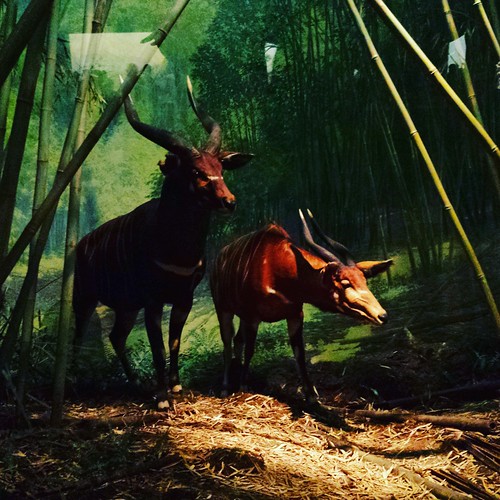
Much of the museum is dedicated to the kinds of taxidermy-based diorama displays that I’m sure we all remember from our youths. This museum’s dioramas are some of the best I’ve ever seen, but in all honesty, a little of that kind of thing tends to go a long way with me. There were still some cool things to see, though.
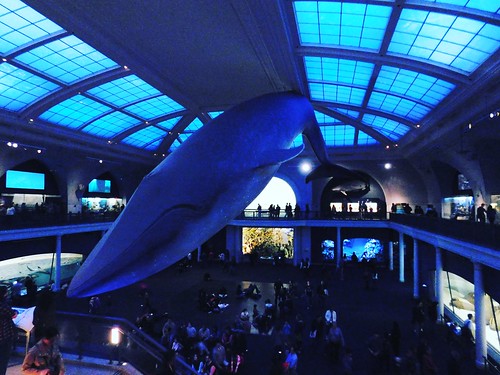
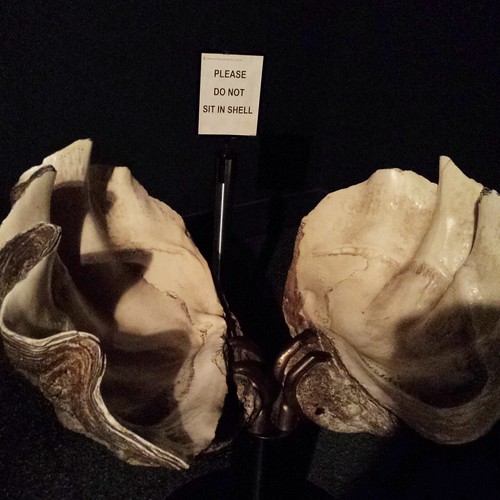
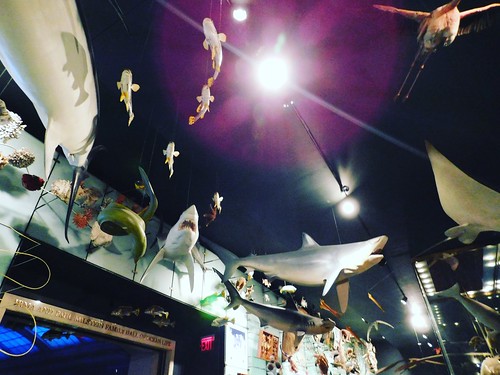
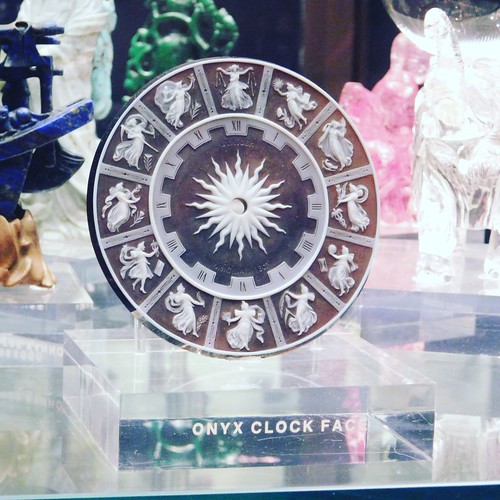


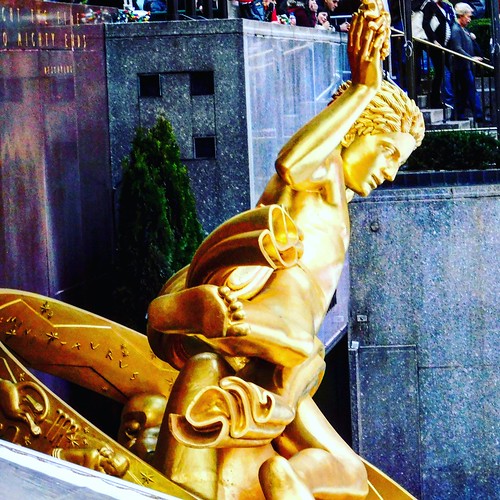
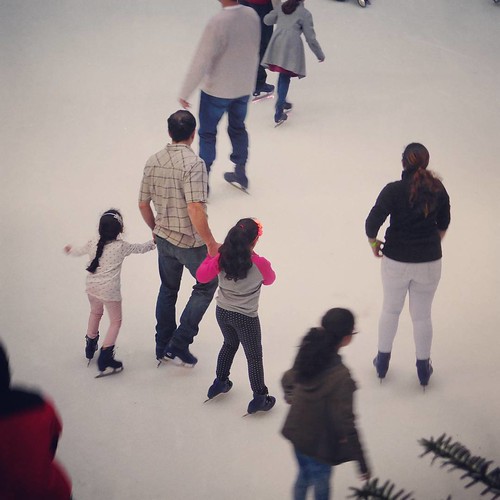
After the museum, it was time for another touristy stop: Rockefeller Center.
And that place is every bit as gorgeous as it looks on teevee and in the pictures.
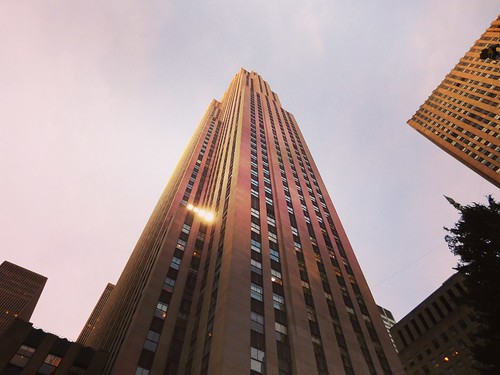
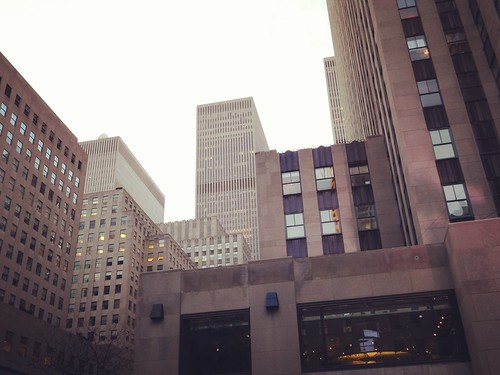

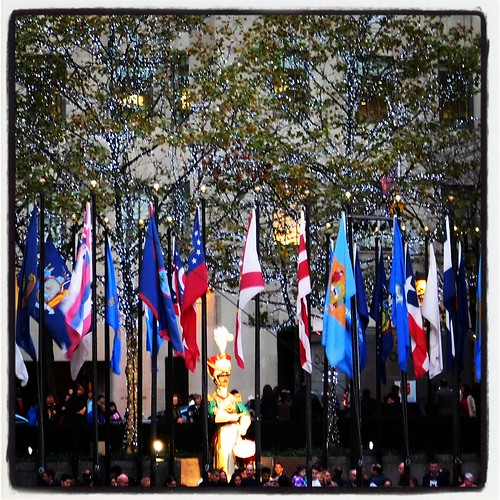




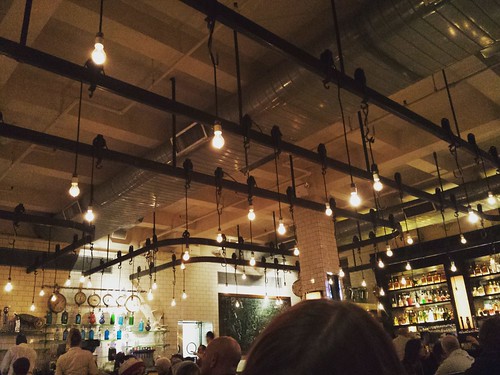
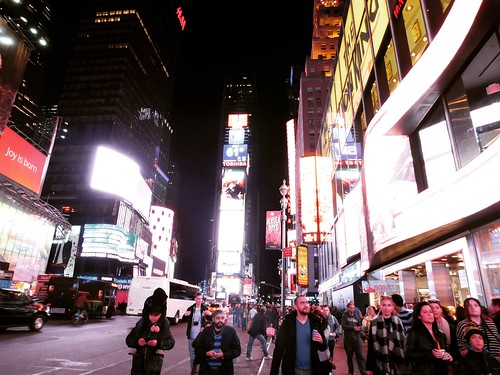
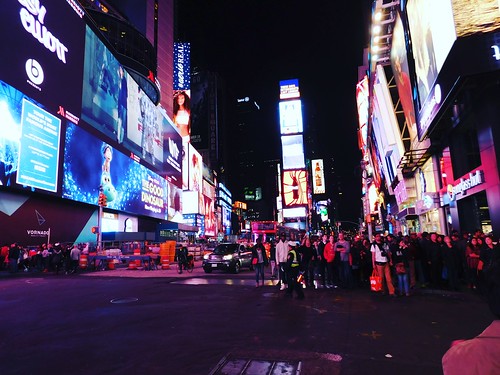
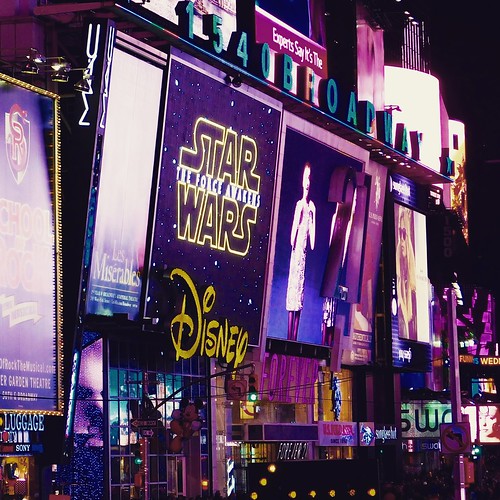

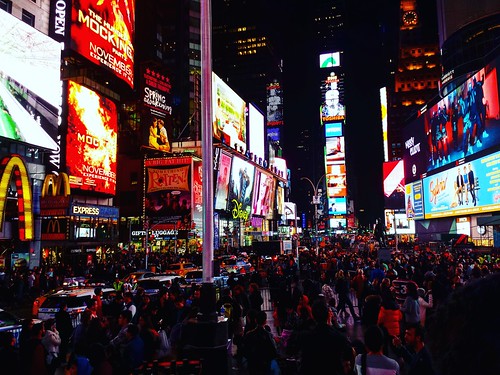
So ended our third night in New York City. Two nights remained….
The official site of Kelly Sedinger: Reader, writer, photographer, and dreamer
