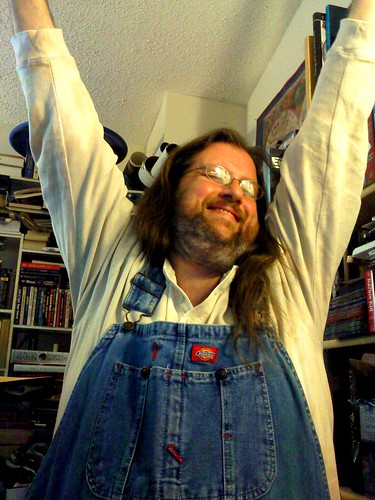
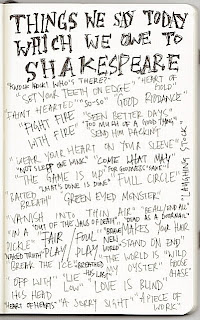
DONE!!!


DONE!!!, originally uploaded by Jaquandor.

Victory is mine! Let the streets flow with wine and song!

Yes, earlier today I finished the first draft of Princesses In SPACE!!! (not the actual title). And since a while back I figured on being done by Memorial Day Weekend, I’m actually a month and a half early. Future editors, take note. Deadlines are nothing to me! Ha!!!

By way of some stats: the final word count of this first draft is 178,575 words — under my target of 180,000, which makes me happy, especially since that word count is likely to plunge when I get to the editing. Since I started tracking my daily production, I’ve produced over 28,000 words, for an average of over 1500 words a day on the days that I’ve written. And in that time, I only missed three days — this past Thursday, Friday, and Saturday, which I’m fine with given that Thursday involved preparations for a trip and Friday and Saturday were, you know, the actual trip.

In truth, I must admit that over the last couple weeks, I’ve felt a subconscious applying of the brakes, as if I wasn’t really ready to leave this world yet. And in a way, I’m not…but it’s time. This tale is done, in its first telling, and now I need to just let the manuscript sit for three months. I won’t allow myself to even look at it again until July 16 at the earliest. I’m a firm believer in letting writing fade into memory a bit before moving onto the “Kill your darlings” phase.

So what now, then? No writing? Perish the thought! I’m going to move seamlessly right into the next project, “The Lighthouse Boy Who Ran Away” (not the actual title). Who knows — I may even start that one tonight. I can’t be stopped, man!

(By the way, how much of a dork am I? It was 80 degrees here today, which I deem ‘too hot for overalls’. So for this photo I put ’em on, took the photo, and went back to shorts. There’s a cautionary tale in that, but I’m not sure what it is.)

Share This Post

A to Z: North!

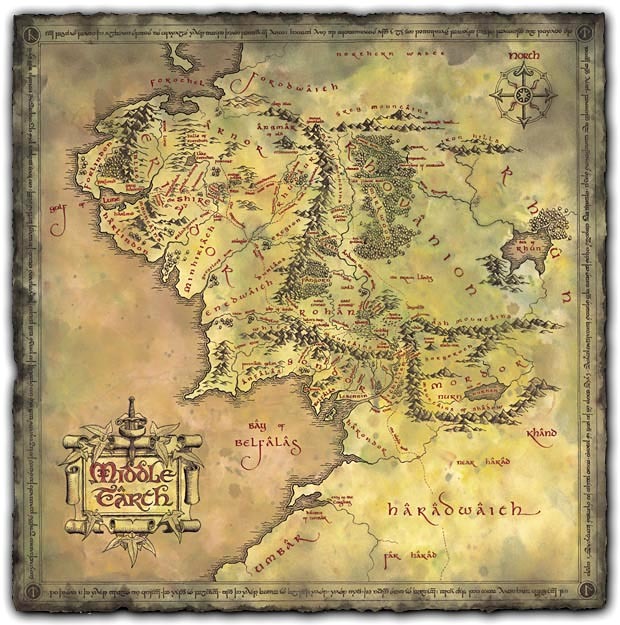
Direction is always important…and in a lot of fantasy, specific directions carry with them specific connotations. Such as North.

finding north

North is often portrayed as cold and desolate and lonely. Just about every fantasy that I know is set in the northern hemisphere of its particular planet, so north really does tend to be a land of cold and, sometimes, a land of unknown. In some cases, the North is where Evil lives: Guy Gavriel Kay’s The Fionavar Tapestry puts Rakoth Maugrim’s fortress up north, just below the “Ruk Barrens”, which are endless lands of ice. In Tigana, he flips things around – it’s the warm lands that are in the north, and to the south are the snowy mountains. But it’s easy to miss this geographic flipping.

George RR Martin uses the North as a source of cold grim things, as well; in fact, it could very well be that the main existential threat of his books is coming from the North, beyond the Wall that was built thousands of years ago to hold the North at bay.

I don’t recall what is in the far north in Stephen R. Donaldson’s “The Land”, the setting of his Thomas Covenant books, but he does invert things a bit by placing Revelstone, the chief fortress of his forces for Good, in the northern part of The Land, while Foul’s Creche – the stronghold of villain Lord Foul – is in the east.

For JRR Tolkien, the north seems to have been also a source of cold, of snows, and of dark things. In the north is the kingdom of Angmar, whose Witch King would later come to serve Sauron as Lord of the Nazgul. The North is never really visited in The Lord of the Rings; it is a location of legend more than action of the story. But it’s not only a source of grim things, for the Rangers of the North are also there, protecting the Shire and from their number comes Aragorn, heir to Isildur and rightful King of Gondor.

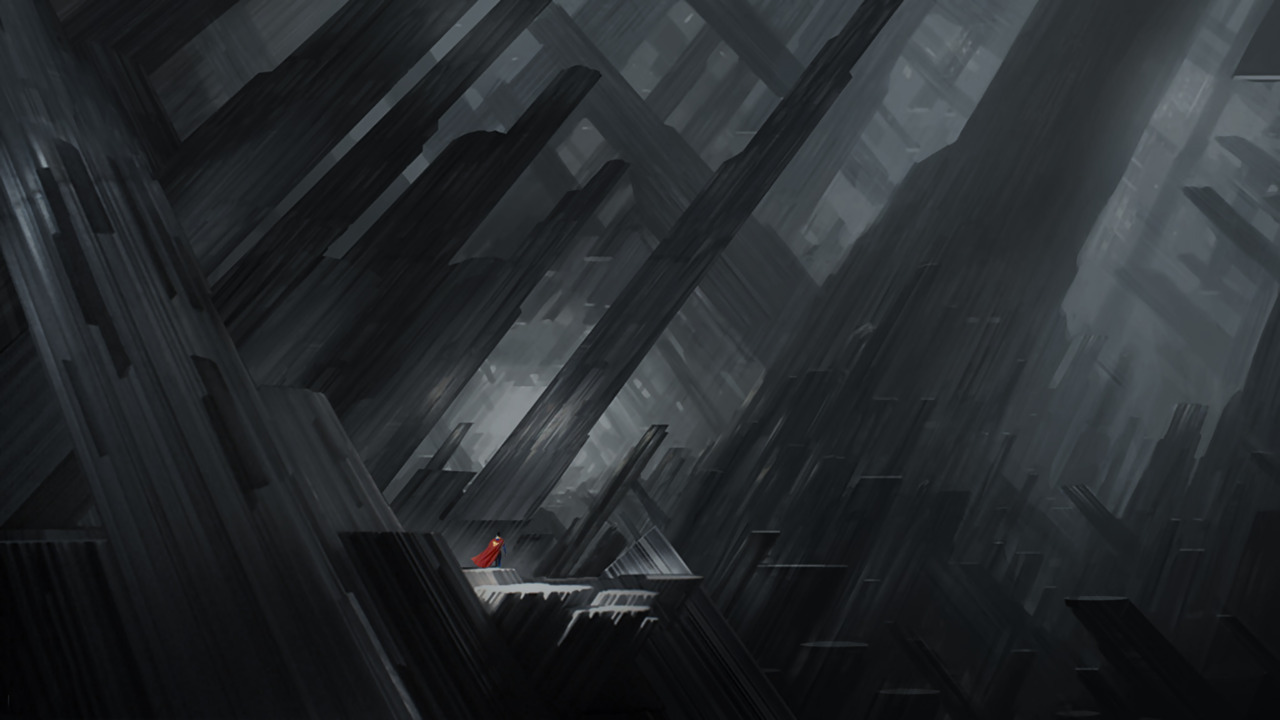
The North is not always a source of darkness, cold, villainy, or evil. For Superman, the North is a place of quiet and contemplation, where he goes to rest. It is in the North that he builds his Fortress of Solitude, his unearthly home on Earth.

How do you see the North? Cold and desolate and full of dark beings? Or stark and majestic and a place of enormous solace?

Share This Post

Another Very Public Service Message

OK folks, obviously we’re back from our brief trip to Toronto (too brief, it turns out…my long-simmering admiration for that city is swiftly turning to full-on lust), so blogging will begin again as regularly scheduled…sort of. I’ll be skipping this week for the Burst of Weirdness and Sentential Links, though. I do hope to get back to the Saturday Centus; I have an entry in mind for this week’s entry, but I’ve skipped several weeks due to focusing on Princesses In SPACE!!! (not the actual title), about which I may have a small announcement later on. (Very small. Not ‘Holy shit, I sold the book’. Smaller than that.)

Anyway, onward and upward!

Share This Post

A to Z: M5

Ah, the supercomputer that is benignly invented as a means of making life easier, but which ends up wanting to kill us all! What a nice, fun, reliable SF trope. All hail our digital overlord, the M5 computer from Star Trek! (And other supercomputers.)

The M5 (from the episode “The Ultimate Computer”) is built by a supergenius named Richard Daystrom, and it is installed on the Enterprise for a series of wargame-style tests that will put the M5-controlled Enterprise against several other starships. Everything is going swimmingly, until the wargames get intense enough that the M5 assumes that it is actually under attack, at which point it opens a computer-driven can of whoop-ass. It turns out that Daystrom used engrams from his own mind to program the M5, so it thinks the way he does – which is unfortunate, as Daystrom turns out to have some psychological issues. The computer is going all-out, which forces Starfleet to also go all out, planning to destroy the Enterprise, unless Captain Kirk can save the day. Which he does, of course, using his tried-and-true method of talking the computer into a logical contradiction that forces it to shut itself down.

Kirk would do this a few other times in the course of the series, and it became enough of a cliché that in the DC Comics Trek series in the late 80s, there was an issue where the Enterprise crew comes up against a supercomputer and the first thing Kirk does is say something like, “Well, I suppose I could try talking it into a logical contradiction. That usually works.” Needless to say, it doesn’t.

But supercomputers with a malevolent bent are certainly not unique to Star Trek. There was the computer in Wargames, the one designed to manage the entire nuclear defense of the United States. There was the Master Control Program in TRON, and, of course, the granddaddy of all malevolent supercomputers, the HAL-9000 in 2001: A Space Odyssey, whose insanity would later be explained in 2010: Odyssey Two, which ends on some tension as the entire crew’s survival depends on HAL, whose sanity is open to question. (To the extent that one can even talk about sanity in a computer.)

And let’s not forget about Skynet. That one turned out poorly, didn’t it? Beware the supercomputers! They’ll kill us all!!!

Share This Post

A Very Public Service Message

Greetings, Star Warriors!

I and the Family Unit will be generally away from the Interweb for most of today and almost all of tomorrow. I have a few posts that will appear via the magic of scheduling (hooray, scheduling!), but I won’t be able to approve comments as quickly as usual. So if you comment — and absolutely, feel free to do so! — don’t be dismayed if a largish number of hours elapse before I get ’round to sending it through.

Thank you, and buy war bonds!

Share This Post

A to Z: Lancelot

One thing I noticed in all my years of reading Arthurian fiction was that Lancelot is an awfully hard character to pull off.

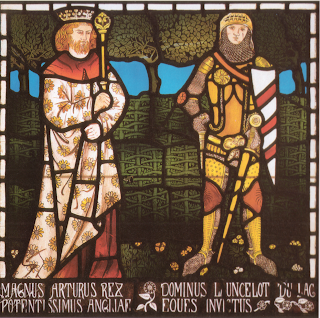
Lancelot, for those not ‘in the know’, is the magnificent knight from France who comes to Camelot to serve King Arthur and sit the Round Table. Lancelot is the greatest knight anywhere (well, until Galahad shows up); no one can best him in any test of skill, and what’s more, he’s morally pious to the point that being around him is a real downer. At least, he’s those things until he meets the Queen, Guinevere, and falls in love with her. This would be bad enough, but she falls in love with him, too. Lancelot and Guinevere carry on an affair that eventually becomes the moral crisis that causes the Knights of the Round Table to splinter, and in the end brings about the end of King Arthur’s reign.

Now, depending on which version of the tale you read or watch, it’s not all the fault of Lancelot and Guinevere. Many tellings of the story also include Arthur’s magical seduction by his witch sister, Morgause, who bears a son, a force for malevolence named Mordred. In these tellings, it’s Mordred who finds out about Lancelot and Guinevere and forces their affair into the open, in turn forcing King Arthur to choose between enforcing his morality or allowing his deepest friend and wife to go free.

The problem with Lancelot, then, is two-fold. First, you have to establish that he’s virtually perfect, which makes it nearly impossible to sympathize with him. Then you have to make him sleep with his best friend’s wife, which also makes it nearly impossible to sympathize with him. This is why, when I’ve read Arthurian fiction, it’s the Lancelot character who usually suffers the most, and in reality, this is why I can’t honestly even recall a book where Lancelot comes off very well at all. T.H. White’s The Once and Future King probably does it best of anybody, but even for him, Lancelot comes off feeling a bit unreal.

Lancelot’s origins are hazy, but that’s to be expected, as the origins of the entire Arthurian corpus are pretty hazy; the Arthurian legends – the “Matter of Britain” – were not so much created as they accrued over time, gathering bits and pieces from other, older legends and myths and folk tales. Back when I was studying Arthuriana a lot, I started to realize that I was finding that older material more and more compelling – tales such as the Welsh Mabinogion and other parallel stories.

Why has the definitive Lancelot not yet turned up? I think it’s probably part of the same reason that a definitive telling of the entire Arthur story hasn’t turned up. The story is not a story, but rather a collection of interrelated stories, a grab-bag of tales, told in many different styles over the centuries. As for poor Lancelot himself, he’s a tough nut to crack because he’s a jerk in two different ways and if there’s one thing we like, it’s to see a jerk get his comeuppance. But we also don’t like to see jerks take good people down at the same time, which is why the tale of King Arthur is such a tragedy.

As I note, Lancelot is a deeply troublesome character to pull off. Most authors, I have found, choose to make Lancelot less than perfect, and merely a likable guy and a very good knight. They also try to soften Guinevere’s appearance of fault by making her more sympathetic — possibly by making her marriage to Arthur an arranged marriage, so that while she honors him and may even love him after a fashion, he never has her heart. Making everyone sympathetic in a tragic story that involves moral failure is not an easy thing, and to my experience, no one has quite pulled it off.

Ultimately Lancelot seems to be a reminder that our greatest dreams for ourselves may well be unattainable, and that our hubris often contains the very seeds of its own downfall. King Arthur forms the Round Table out of a desire to have a peaceful realm where justice is served by all his knights, but along comes Lancelot, ostensibly the man most ideally suited to this lofty goal – and he’s the one who sets in motion the events that will eventually destroy the Round Table and cost Arthur himself his life (or, at the very least, see him carried off to Avalon).

Share This Post

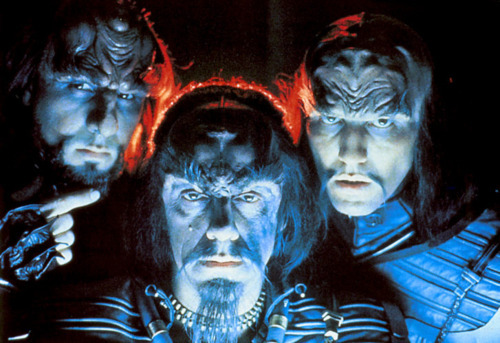
A to Z: Klingons

So, let’s talk for a few minutes about Klingons.

If one of the questions on Family Feud was ever “Name a fictional alien species”, I have to think that Klingons have a pretty solid shot to be the number one answer. (“Let me see…Gungans!” BZZZZZZZT “And the Laramie family with a chance to steal!”)

But why is this? Why are the Klingons so memorable?

The obvious first answer is in Star Trek‘s longevity. A thing doesn’t remain a pop-culture concern for as long as Trek has without having some of its terminology enter the pop-cultural lexicon, and the Klingons were the main bad guys of the Original Series, so there’s that. And more than that, a case could be made that the Klingons were the main alien species of the Original Series! More Klingons undoubtedly appeared on Star Trek TOS than Vulcans, and of the first ten Trek movies, there is exactly one in which no Klingons appear. (Wrath of Khan being the one – we see Klingon ships as part of the Kobayashi Maru test, but that’s it.)

I think it’s also easier to remember Klingons because they were often characterized as a group, more than as a race of specific individuals. Until Worf came along as a part of the Next Generation crew, we only saw a few Klingons at a time, and they never recurred (which was a shame – some of those early Klingons would have made great recurring characters, but recurring characters and stories just weren’t the style back then). Klingons were, basically, the ‘Indians’ in Gene Roddenberry’s space western that really wasn’t much of a space western at all. It amazes me to this day that one of Roddenberry’s concepts for pitching the show to the networks was “Wagon Train to the stars”, a concept that fits Battlestar Galactica better, orders of magnitude better, than Trek. But the Klingons were the disposable villains who would pop up, make life difficult for Kirk and company, and then disappear again.

This continued in the movies, too. The main villain of The Search for Spock was Klingon Commander Kruge, who was played very nicely by Christopher Lloyd, and who might have been a decently memorable villain if not for the fact that he was following up Ricardo Montalban as Khan. There’s another disposable Klingon bad guy in The Final Frontier — I don’t even remember his name, that’s how memorable he was – and then, in The Undiscovered Country, the TOS-era crew finally engages the Klingons as more than villains of the week, but as complex individuals. How did that happen?

Well, in between Treks V and VI came TNG, which decided to deepen the canvas a bit when it came to the Klingons. They weren’t boring villains of the week anymore; there was a weekly name attached to them. And with a spot in the regular cast, that meant installing a back story, which in turn meant finally delving into the nature of the Klingon society. TNG often did its best stuff in Klingon-culture related stories; instead of being the warlike goons of TOS, in TNG they were driven by honor more than drive for conquest. The Klingons of TNG came off as kind of a blend of Samurai and Vikings, if that makes sense. It was also interesting to me that as the Klingon Empire came to reach the limits it could reach without engaging in full-on war with other powers, their society turned its quest for honor in battle on itself, so for the rest of TNG and DS9, the Klingons were always engaged in a lot of violent interior politics and sometimes open warfare.

Of course, I can’t write about the Klingons without also mentioning the physical change they went through. In TOS, Klingons were just human-looking people with demonic-looking eyebrows and uniforms of gray and black. In the opening scene of Trek: The Motion Picture, though, the Klingons were well and truly alien, with enormous spiny ridges up their bald heads. This change was never explained, really; I assume that the original thought was to just go ahead and use the film’s large budget to re-do the Klingons in order to make them look a lot more alien, and that we were to just assume that the Klingons always did look like that and we were just supposed to accept the TOS Klingons as such.

But then, DS9 did its brilliant episode “Tribbles and Tribulations”, which had Worf – looking like very much the spiny-head Klingon – having to be in the same room with the ‘human’ looking Klingons. When someone asks him about it, he simply says, “We do not like to talk about it.” I’m sure this has been explained in some novel or some such, but I wouldn’t know. (Heck, they may have explained it in Enterprise, but again, I wouldn’t know.)

Anyway, long live the Klingons. Qapla’!

Share This Post

A to Z: James, Jerry, and John

The other day SamuraiFrog paid tribute to John Williams, which gave me the inspiration for this post. I grew up listening to film music, and at that time, my three favorite composers were John Williams, Jerry Goldsmith, and James Horner.

Williams was, of course, my favorite from the earliest, and he remains so to this day. His gift for melody, his orchestrations, his touch with a scene…he has an ability to get right to the heart of the emotions of a scene that has always been, for me, the key to film music.

Horner came along a few years later. I’m happy to say that I was on board with Horner very early on; his first major scoring assignment was the Corman B-movie space opera Battle Beyond the Stars, and Horner provided a nifty bit of space adventure scoring, even if I would realize in later years that it was pretty derivative of the work Jerry Goldsmith was doing at the time. Horner’s first major assignment was for Star Trek II: The Wrath of Khan, and what a score he turned in – exciting and adventurous, while at the same time elegiac and with a definite seafaring mood, as befitting the movie’s Moby Dick parallels. I’ve cooled on Horner in recent years, as I think that his compositional palette tends to be a bit limited. But I can’t deny his power in his best scores.

Goldsmith was the toughest nut for me to crack. I first experienced him via Star Trek: The Motion Picture, a score which I liked well enough but found harder to draw myself into, given long passages that were pretty free of bombast (remember, I was nine at the time, so bombast was my order of the day). I would come to love a great deal of Goldsmith’s music over the years, but my enthusiasm for him waned a bit during the last ten years or so of his career, when he seemed to eschew the wonderful complexity of his earlier work in favor of giving each film a single memorable melody or two and then leaning on those melodies, over and over and over again. But there’s no mistaking that Goldsmith composed a great deal of truly great film music.

Of course, I’d learn a great deal more over the years about other composers, some of whom could easily fit into this ‘J’ post (John Barry, Joe Hisaishi, Jan AP Kaczmarek….). But from my early days, those were the biggies for me.

Here are some musical selections. (I’ll provide links to YouTube rather than embed the videos, so as to keep this post uncluttered.)

John Williams:

1. Williams is often associated with bombast, but he can do churning suspense as well as anybody. Witness his main title to Dracula, with its haunting suggestions of lurking terror.

2. The Flying Sequence from Superman blends lyricism with magical wonder better than any music I can think of.

3. One of Williams’s most underrated scores is his music for Nixon, the Oliver Stone film about the 37th President. The 1960s: The Turbulent Years is a fascinating tone poem that suggests American idealism and paranoia in the same track, as well as Nixon’s often single-minded pursuit of his political goals. It’s Williams’s insight that allows him to musically portray these things in the same individual.

4. I don’t think I can write even a brief “What John Williams means to me” post and not include something from a Star Wars movie, so here is, for me, the musical emotional heart of the entire saga. This moment – when Luke attempts to raise his X-wing from the swamp and cannot – really drives home the mysticism of the story, and makes Luke’s failures more elemental in nature. The music is “Yoda and the Force”. (This cue, to me, also gives the lie to the notion that until a certain point, Williams was all about brassy bombast. His string writing in this cue is amazing.)

5. Well, one more from Star Wars, this time Return of the Jedi. Brother and Sister underscores the scene where Luke reveals to Leia who he is, who Vader is, and why he must confront his destiny. It’s gorgeous writing, and in three minutes, Williams employs three different themes to suggest what is going on.

Jerry Goldsmith:

1. I can’t talk in any emotionally true way about Goldsmith without talking about Star Trek, so here’s his amazing music for the Enterprise (in a live performance), from Star Trek: The Motion Picture. Lots of folks decry this long sequence of James T. Kirk undressing a starship with his eyes, but…I’m fine with it.

2. There’s another long sequence later in the same film, in which, just as we had earlier seen Kirk relating to the Enterprise, now we see the Enterprise relating to the massive ship called V’Ger. The first music was romantic and stirring; this is haunting and mysterious. It’s Vejur Flyover.

3. One of my very favorite Goldsmith scores is his stunning work for the Schwarzenegger skiffy action flick, Total Recall. Here’s the main theme. It’s just fantastic, the way Goldsmith keeps the musical momentum percussively driving forward, forward, forward, suggesting the story to come of a man on the run who can’t stop running, even though he has no real notion why he’s running.

4. Goldsmith did a lot of synthesizer work in the 1980s. Some of this stuff sounds awfully dated, but the scores still work, for the most part. He also scored one of the best sports movies ever, Hoosiers. Here’s the theme.

5. One of the greatest noir scores of all time is Goldsmith’s score to Chinatown, which he had to churn out in a very short time, which is part of what led him to compose a very minimalistic score for a very small ensemble. The main theme sets the stage for a weary, bleak story to come.

James Horner:

1. It’s been nearly thirty years since I saw the movie – and it wasn’t really all that memorable – but Horner’s score to Brainstorm is wonderful. I should probably watch it again, just to remind myself what’s going on during “Michael’s Gift to Karen.

2. Horner’s score to Titanic isn’t my favorite, but the gently simple solo piano arrangement of the love theme, heard when Jack is drawing the portrait of Rose, is a beautiful moment.

3. The finale to Legends of the Fall is a fitting conclusion to a big-skyed Western family epic melodrama. This is my favorite Horner score.

4. Re-entry and Splashdown from Apollo 13 is just a great bit of film scoring. Horner keeps the tension going, even during the parts of the scene where it seems that hope has been lost.

5. From Battle Beyond the Stars, here’s “Cowboy and the Jackers”. This bit of action music comes when our hero, a kid named Shad, encounters a guy named Cowboy whose ship is under attack. This is what Horner sounded like when he first came on the scene. He would mature a lot, and pretty quickly. (He’d also learn to orchestrate…at the end of the track, just listen to the long, slow execution of the trumpet section that Horner mounts. Ye Gods.)

Share This Post


ForgottenStars.net

The official site of Kelly Sedinger: Reader, writer, photographer, and dreamer

Skip to content ↓