

Beatles Song of the Week: “Something”

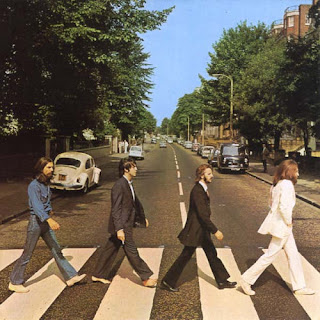
I was born forty years ago today…on the second anniversary of the release of Abbey Road, the last studio album recorded by the Beatles, and the one that has (thus far) captured my imagination more than any other. Songs like George Harrison’s “Something” are why.

This ballad immediately follows the bluesy grind of “Come Together”, and immediately precedes the bizarre paean to violent murder “Maxwell’s Silver Hammer”. The whole album is a study in contrasts and moods, and yet it feels so organic and well-considered — I mean, what song, other than “Here Comes the Sun”, could possibly follow “I Want You (She’s So Heavy)”?

But as for “Something”: this is clearly one of the more well-known Beatles songs, which means that it’s a song I never much liked until now. (I’m a Beatles late-bloomer, as I’ve noted before.) Listening to it now, with an ear that is more willing to go where the song wants to take me, I’m struck by several things.

First, the lyrics are constructed in such a way that a chorus is suggested, and yet, it never really seems to get expressed. The song begins with a drum lead-in followed by a guitar progression that turns out to be the key motif of the entire song, and then the lyrics begin:

Something in the way she moves Attracts me like no other lover, Something in the way she woos me. I don’t want to leave her now, You know I believe and how.

The way the song is structured, you expect Harrison to sing something more after “You know I believe and how”, and yet, he falls silent as the opening guitar lick plays again, leading to a resolved chord. This happens again in the second verse:

Somewhere in her smile she knows
That I don’t need no other lover. 
Something in her style that shows me.
I don’t want to leave her now,
You know I believe and how.
 

Again Harrison’s voice fades away, and the guitar leads us toward an expected resolution…but instead, the song surprised with a modulation and a mid-section that changes the rhythm from the original dreamy slowness to a more insistent pattern, and lyrics that highlight the uncertainty at the heart of the song’s poetry:

You’re asking me will my love grow,
I don’t know, I don’t know.
You stick around now it may show,
I don’t know, I don’t know.

And then, just as quickly, the original rhythm returns, and after one of the most calming guitar solos ever recorded for a rock song, we get the final verse:

Something in the way she knows And all I have to do is think of her, Something in the things she shows me. I don’t want to leave her now, You know I believe and how.

These lyrics fascinate me. Harrison is talking to someone — he addressed them outright in that bridge section — and we’re left to wonder who. Is he talking to us? And note what he’s doing in this entire song: he’s describing his lover to a third party. That’s dangerous territory, of course, but fascinatingly, he is very vague about her. He can only describe those properties he loves about her as “something”, and “somewhere in her smile”. On the one hand, he “needs no other lover”, but on the other, he seems to be reassuring himself all along that this is true at all. He doesn’t “want to leave her now”…but is he leaving open a possibility that he may, in the future? We don’t know…and neither does he.

Share This Post

Beatles Song of the Week: “Ob La Di, Ob La Da”

Here’s a song that I found enjoyable enough, just a harmless piece of bubble-gum pop music with a nicely infectious beat and the type of easy chorus you can sing under-your-breath to get yourself through the day. And the song certainly is that, but as it’s my current Beatles Song I’m Obsessing Over, let’s talk a little bit about “Ob La Di, Ob La Da”.

One thing I’m quickly learning about the Beatles is that they just don’t do a whole lot of standard openings to their songs. This one starts with a piano riff that sounds like a rag-time fanfare before settling downward into the actual key and rhythm of the song. I find that the effect almost makes it seem like what we’re hearing is the very end of one song that segues directly into this one. The song uses a lot of different influences (reggae-tinged lyrics and melody combined with a honky-tonk piano), and a lot of external sounds are employed to make the studio recording sound like a raucous live performance.

The lyrics are…well, they’re just happy. I can’t describe it any other way: “Ob La Di, Ob La Da” just drips happiness. It’s not ridiculously sappy happiness, either — it’s just the nice happiness of two people who meet and fall in love and run their barrow in the marketplace while the other sings at night in the band. I can think of few songs that are more devoid of cynicism than this one. I read somewhere that Lennon, Harrison, and Starr all hated this song because it was too light — a puff piece, really — but I think that McCartney was really onto something here, and that the song makes a small statement about finding happiness in the small moments of everyday life.

Desmond has a barrow in the marketplace
Molly is the singer in a band
Desmond say to Molly, girl I like you face
And Molly says this as she takes him by the hand

Ob-la-di, ob-la-da,
Life goes on, bra
La la how the life goes on
Ob-la-di, ob-la-da
Life goes on, bra
La la how the life goes on

Desmond take a trolley to the jewelers store
Buys a twenty carat golden ring, (rin-ring)
Takes it back to Molly waiting at the door
And as he gives it to her she begins to sing (sin-sing)

Ob-la-di, ob-la-da
Life goes on, bra
La la how the life goes on
Ob-la-di, ob-la-da
Life goes on, bra
La la how the life goes on

Yeah, In a couple of years they
have built a home sweet home
With a couple of kids running in the yard
of Desmond and Molly Jones

Happy ever after in the market place
Desmond lets the children lend a hand
Molly stays at home and does her pretty face
And in the evening she’s a singer with the band

Ob-la-di, ob-la-da
Life goes on, bra
La la how the life goes on
Ob-la-di, ob-la-da
Life goes on, bra
La la how the life goes on

Happy ever after in the market place
Molly lets the children lend a hand
Desmond stays at home and does his pretty face
And in the evening she’s a singer with the band

Ob-la-di, ob-la-da
Life goes on, bra
La la how the life goes on
Ob-la-di, ob-la-da
Life goes on, bra
La la how the life goes on
And if you want some fun
take Ob-la-di-bla-da

Share This Post

The Beatles Song of the Week: “Octopus’s Garden”

Well, I couldn’t have picked a worse title for this series of posts if I tried, huh? “Beatles Song of the Week”? Yeah, if we redefine “week” to mean “some indeterminate period of time that bears no relationship to a seven day span”. But anyway, about “Octopus’s Garden”. I can’t get enough of this song. It just tickles my hippie heart, in a big way.

At first hearing, “Octopus’s Garden” sounds like a harmless bit of bubblegum fluff, and at its most basic level, that’s pretty much what it is. Sandwiched on the Abbey Road album between the swelteringly sexy “Oh! Darling” and the grinding blues styling of “I Want You (She’s So Heavy)”, we find this happy song with its infectious beat, its guitar riffs that sound like pure fun, and its playful lyrics that are warm and colorful.

I’d like to be under the sea 
In an octopus’s garden in the shade 
He’d let us in, knows where we’ve been 
In his octopus’s garden in the shade 
I’d ask my friends to come and see 
In an octopus’s garden with me 
I’d like to be under the sea 
In an octopus’s garden in the shade 

We would be warm below the storm 
In our little hideaway beneath the waves 
Resting our head on the sea bed 
In an octopus’s garden near a cave 
We would sing and dance around 
because we know we can’t be found 
I’d like to be under the sea 
In an octopus’s garden in the shade 

We would shout and swim about 
The coral that lies beneath the waves 
Oh what joy for every girl and boy 
Knowing they’re happy and they’re safe 
We would be so happy you and me 
No one there to tell us what to do 
I’d like to be under the sea 
In an octopus’s garden with you 
in an octopus’s garden with you 
in an octopus’s garden with you

This is such a perfect little love song for its era, with its lyrical suggestions of an exotic realm that only the two lovers of the song can know about, a world of colors and warmth and safety. We would be warm below the storm / in our little hideaway beneath the waves makes clear that there is, in fact a storm that needs to be hidden from. And it seems to me a bit of wisdom to suggest that sometimes, in the face of a storm, the best thing to do is hole up in a little hideaway with someone you love. Someone with whom you can rest your head on the sea bed.

Musically, the song is interesting on its own. The guitar intro, punctuated twice by chords and drum hits, seems a bit mysterious at first, with a peppy sound but being played in such a way that the song’s meter and rhythm don’t become clear until the main body of the song begins. Also heard throughout the song is a tinny, saloon-style piano backing the main action, and the rest of the band (this one is sung by Ringo Starr, who also wrote it) provides appropriately cheerful backing vocals. The song’s final bars, with the final line repeated three times and the guitar answering each time before leading out in much the same way the song began, is a wonderful effect.

I mentioned above the contrast “Octopus’s Garden” makes with the two songs on either side of it on Abbey Road. This effect can’t be overstated, but then, Abbey Road is such a brilliantly assembled album of contrasts, with “Oh! Darling” leading into “Octopus’s Garden” leading into “I Want You (She’s So Heavy)” leading into “Here Comes the Sun”.

This song seems so silly, so goofy. And I can’t get enough of it.

And hey, this song was good enough to be covered by the Muppets.

Share This Post

The Beatles Song of the Week: “While My Guitar Gently Weeps”

Well, maybe I should rename this series of posts, since there’s an element of weekliness that is implied and which I am not achieving at all. Oh well…I guess we’ll just have to stipulate that I never claimed that there would be a Beatles song for every week, but rather that I’ll be posting about the song when there happens to be a Beatles Song of the Week.

I’m not sure that made any sense at all, but let’s plow on, shall we? “While My Guitar Gently Weeps”:

This song’s genesis, as related by Wikipedia, is fascinating. The key phrase “gently weeps” were apparently the result of Harrison choosing to write a song using the first words he saw upon opening a book at random. The song also came at the time when the Beatles were deeply involved in their explorations of Eastern sprituality.

I look at you all see the love there that’s sleeping
While my guitar gently weeps
I look at the floor and I see it need sweeping
Still my guitar gently weeps

I don’t know why nobody told you
how to unfold your love
I don’t know how someone controlled you
they bought and sold you

I look at the world and I notice it’s turning
While my guitar gently weeps
With every mistake we must surely be learning
Still my guitar gently weeps

I don’t know how you were diverted
you were perverted too
I don’t know how you were inverted
no one alerted you

I look at you all see the love there that’s sleeping
While my guitar gently weeps
I look at you all
Still my guitar gently weeps

Harrison’s lyrics suggest that in a universe of constant change (he was reading the I Ching, the Chinese Book of Changes, at the time), there is still on unending constant: the gentle weeping of his guitar. The guitar is eternal; it is unchanging, and all the world’s strife and flux is almost illusory in the face of the guitar and its tones. Even “you” are changing: the “you” of the song has been “diverted”, “perverted”, and “inverted”. “You” were “bought” and “sold” and “controlled”, and your love remains folded. Ouch. That sounds pretty dark, indeed.

It’s not just the guitar that’s eternal, though; it’s the singer himself, who casts himself as the player of the eternal guitar and the observer of our transient world. The singer is placed outside the world: he can see its turning, he can see the sleeping love, and in a particularly fascinating lyric, he can see the floor needing. That last strikes me: usually we’d say “The floor needs sweeping”, which we take to actually mean “You need to sweep the floor.” But the way Harrison frames it in his lyric, it’s the floor that is doing the needing here. How can a floor “need”? And yet, it does.

In terms of the song’s sound, the guitar’s solos suggest the very eternal nature of the weeping by finding a single note to stay around for long periods of time. You hear the guitar keep coming back to same note, over and over and over again, before it finally moves on and finds a different note to constantly return to. The song’s rhythm drives forward constantly, even in the ‘B’ sections where we briefly turn to a more lyrical tone. The guitar in the song isn’t really gently weeping — but it’s certainly constant, unchanging in the face of a world of change.

This is about as far from “She loves you, yeah yeah yeah!” as you can get. What a band.

Share This Post

The Beatles Song of the Week: “In My Life”

I’ve loved this song for years…many years. And I loved it years before I even knew that it was a Beatles song at all. The first time I remember hearing it was, of all places, at the end of an episode of Family Ties; Meredith Baxter-Birney sang it at the end of a clip show as her teevee family was gathered around. I heard it again a few years later, in a wonderful cover by Judy Collins, in an episode of The Wonder Years. I didn’t learn that “In My Life” was a Beatles song until four or five years after that. Wow.

In fact, for all the years I maintained that I just didn’t like The Beatles, it was “In My Life” that kept me from claiming that I hated them outright; I had to stick with the milder claim that I liked them as songwriters but not so much as performers.

As for the song itself, according to Wikipedia, the lyrics form a meditation on John Lennon’s childhood and were set to music by Paul McCartney. These lyrics are so poetic, managing to put so much meaning and emotion into just two stanzas! It’s really pretty amazing stuff.

There are places I’ll remember
All my life, though some have changed
Some forever, not for better
Some have gone and some remain
All this places have their moments
With lovers and friends I still can recall
Some are dead and some are living
In my life, I’ve loved them all

But of all these friends and lovers
There is no one compares with you
And these memories lose their meaning
When I think of love as something new
Though I know I’ll never lose affection
For people and things that went before
I know I’ll often stop and think about them
In my life, I love you more

Though I know I’ll never lose affection
For people and things that went before
I know I’ll often stop and think about them
In my life, I love you more
In my life– I love you more

There’s a lot going on here — memories of things that have gone before, elegies for things gone forever, regret for things that have changed, and an admission that the love of the present is so much more potent than the nostalgic feelings for things “that went before”. “In My Life” is a love song, and a memorial, all in one. I love this song dearly.

Share This Post

The Beatles Song of the Week: “Don’t Let Me Down”

I’ve written about my fairly new-found admiration for The Beatles a number of times over the last couple of years. The main thing that has captivated me in exploring their music — and I’ve only done this in a cursory way as of yet — is its sheer variety. The Beatles compose and perform in so many different styles, and they’re convincing in each one.

The idea for this new series of posts came to me last month, when I was answering a question on Ask Me Anything! August 2010 edition. Basically I’ll pick a Beatles song and write about it a bit.

Up first is “Don’t Let Me Down”.

Now, one thing to remember about me as a newly-minted Beatles fan is that I don’t know much about their music, or about their trajectory as a band, or about…well, much of anything at all. It’s all a learning process. So what did I learn about “Don’t Let Me Down”? Apparently it was originally intended for the Let It Be album, and then dropped; it existed as a single and then only appeared on Beatles compilation albums. I also learned that the song was written by John Lennon, and likely intended as a love song for Yoko Ono.

As for the song itself…it amazes me, actually.

It’s one of the more searing Beatles songs I’ve heard, with the emotion raw and on display in a way that isn’t always the case with this band. The song has a slow, bluesy sound, opening with a very brief guitar figure before we start right in with the chorus:

Don’t let me down
Don’t let me down
Don’t let me down
Don’t let me down

If this song is really intended for Yoko from John, then he is imploring her to, well, not let him down. His display of vulnerability here is front and center, not just in the simple repetition of the words but also in their delivery: Lennon sings them in a heartrending scream.

In the verses of the song, though, Lennon sets aside the imperative tone and instead seems to be commenting to a third party on the nature of his love for Yoko. First verse:

Nobody ever loved me like she does
Oh, oh she does, yes she does
And if somebody loved me like she do me
Oh, oh she do me, yes she does.

The song’s tone here switches to a quieter, more meditative sound, almost as if John is surprised at the intensity of his new love. And then back to the chorus, which leads to a second verse:

I’m in love for the first time
Don’t you know it’s gonna last?
It’s a love that lasts forever
It’s a love that had no past

This verse is, to me, the key to the entire song. The lyrics leave behind both the pleading of the chorus and the surprised meditation of the first verse, and instead become optimistic and downright idealistic about the nature of John’s love. We know he has been involved with women before, but now, with Yoko, John is claiming to be “in love for the first time”, and already claiming that it will “last forever” and even sounding a bit mystical in saying that their love “had no past”. This verse is sung to a different melody than the other two, a happier melody that leads John into his upper register again in the second half, but even then, he no longer sounds pleading but rather shouting his affirmation (literally from the rooftop, in this case!)

But what really establishes the optimistic sound of this verse of the song isn’t the lyrics or the new melody; it’s the rhythm, driven forward by the doubling of Ringo’s drum pattern, making the song sound as if it’s just shifted into double-time.

We hear the chorus again, which somehow sounds less pleading this time, after the optimistic tone struck by John in the second verse, and then we’re into the third verse, which brings us back to the bluesy sound of the first verse, and a more, shall we say, intimate tone to the lyrics:

And from the first time that she really done me,
Oh oh she done me, she done me good
I guess nobody ever really done me,
Oh oh she done me, she done me good.

John’s love for Yoko is transcendent in mystical ways, but also in the physical act as well. Or I suppose that’s how this verse should be interpreted. In John’s singing of this verse, I hear a certain bit of mischief in his voice, and maybe even a bit of male “locker room” pride. Yoko is able to inspire John Lennon to the highest degree of virility that he can attain.

The rest of the song — the chorus one last time, and a close-out with John singing wordless cries — is mainly the same as the opening, but after the verses, the sense of pleading is gone. By this time, the song sounds to me like an anthem of affirmation, and a pledge by John that he won’t let her down.

What a great song.

Share This Post