

All sixty-two (at this moment) of Stephen King’s books, ranked. I’ve read nowhere near all of his work, and I don’t plan to…King himself admits that he can be uneven. My first King book (in 1998, after an attempt to read him during high school and not finding him my cup of tea at the time) was Insomnia, which ranks toward the bottom of this list. I liked it enough to read more of him, but generally I try to stick to the things he’s written that are fairly well-regarded. The Stand, Salem’s Lot, and It are all astonishingly good, and of course, On Writing is utterly essential.
A to Z: Trains
There’s some part of me that thinks that no matter how far in the future we get, no matter how awesome the spaceships or starships we build, there’s a degree to which human transportation will never exceed railroads for romance, intrigue, and a just plain civilized feel. Trains rule…and judging by fiction out there, a lot of writers and creators agree.
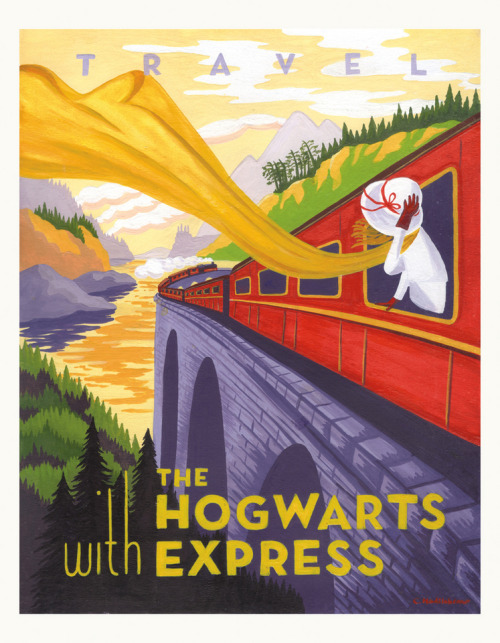
What is it about trains? Well, you have a confined setting, but it’s a setting on wheels, and therefore, the setting moves. So you get the best of both worlds: you can lock your characters in one place and watch them interact, or you can have the train stop and have some other stuff happen. Trains increase the intrigue by virtue of the fact that once on, you can’t get off until it stops. Trains lend themselves to tension in so many ways.
Trains are also a concept which can be modified to fit nearly any time frame. Trains figure in a lot of far-future stories, as far from their ‘wild west’ forebears as you can get…and yet, there they are, strings of metal cars, riding atop rails or suspended from cables or embedded in tubes. Arnold Schwarzenegger’s Quade boards a train once he gets to Mars in Total Recall. In the Commonwealth of Peter Hamilton’s space opera novels, one travels from one world to the next not via starship but via train, as it’s the trains that pass through the wormholes to other worlds.
Trains can be futuristic, but they don’t have to be. The most famous fictional train right now may well be the Hogwarts Express, which departs from Platform Nine and Three Quarters in London for the great school of wizardry. The Express isn’t one of the major locations in the Potterverse, but it appears in each tale, its importance quietly understated.
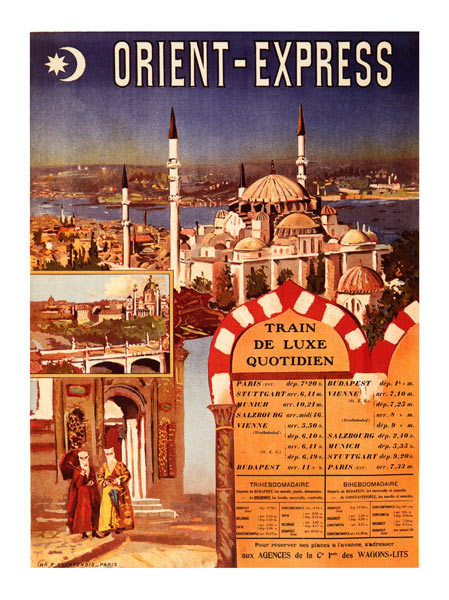
Of course, trains figure all the time in “real world” fiction. There’s the Agatha Christie novel Murder on the Orient Express (whose solution is one of the more elegant to be found in Christie), and the same train figures prominently in the James Bond book and film From Russia With Love. You can’t have Westerns without trains, and one of the most riveting action films of recent years, , dealt with a runaway train.
I wouldn’t want to live in a world without trains, and I deeply wish I lived in a country that took them more seriously than others.

Share This Post
A to Z: Old People of Wisdom
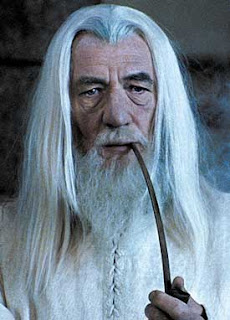

Gandalf. Loren Silvercloak. Mrs. Potts. Obi Wan Kenobi. Boothby the gardener. Sarek. T’Lar. Dumbledore and McGonagall. The Oracle. Jor-El. Maester Aemon. Mrs. Landingham. And, of course, Merlin.
What do all these folks have in common? They are Old People of Wisdom.
In the Campbellian Monomyth, the Old Person of Wisdom is the mentor-figure who provides the Hero with magical aid that he or she will need, going forward, to complete the adventure. It is also often the Old Person of Wisdom who provides the Hero with their initial ‘Call to Adventure’. So this figure is often the catalyst for the story.
“If you’re referring to the incident with the dragon, I was barely involved. All I did was give your Uncle a little nudge out the door.” –Gandalf the Grey, The Lord of the Rings: The Fellowship of the Ring (film)
Of course, those familiar with ‘the incident with the dragon’ know that Gandalf did a lot more than that. Yes, he showed up on Bilbo’s doorstep and introduced him to a bunch of dwarves who wanted to hire him to be their burglar, but how did it come to that? How did Gandalf settle on Bilbo, and not, say, some Bolger or Bracegirdle or Proudfoot? It’s often the role of the Old Person of Wisdom to see something in the hero that they don’t see in themselves. Gandalf sees in Bilbo a stalwart burglar. Obi Wan Kenobi sees in Luke Skywalker a future Jedi knight. (We’ll learn, of course, that he has a lot of reasons for seeing that.) Loren Silvercloak sees in five young University of Toronto students qualities that will prove essential in the final war with the darkness of Rakoth Maugrim.
One of the interesting things about the Harry Potter books is the way that multiple characters fulfill the function of the Old Person of Wisdom. Albus Dumbledore is the key of them all, but he doesn’t do it all. The Call to Adventure comes from Hagrid. Supernatural aid comes not just from Dumbledore but from McGonagall, Sirius Black, Remus Lupin…a whole host of people. Of course, JK Rowling didn’t blaze this trail on her own; in the James Bond movies, what are M and Q but Old People of Wisdom?
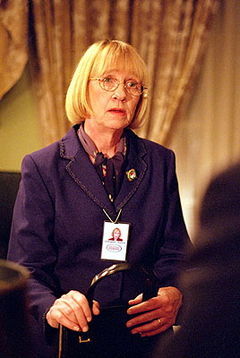
Why does this trope have so much power? It seems pretty obvious to me. Age implies experience and wisdom. We look to the mothers and fathers of our communities for wisdom. And we know that eventually they move on, into death, and that eventually the story will be ours and ours alone…until we have to serve as Old People of Wisdom ourselves.
I’m reminded of the wonderful closing speech that Sir Anthony Hopkins delivers in the movie Amistad:
The other night I was talking with my friend, Cinque. [The African man who was kidnapped into slavery and who is suing for his freedom in the film.] He was over at my place, and we were out in the greenhouse together. And he was explaining to me how when a member of the Mende — that’s his people — how when a member of the Mende encounters a situation where there appears no hope at all, he invokes his ancestors. It’s a tradition. See, the Mende believe that if one can summon the spirits of one’s ancestors, then they have never left, and the wisdom and strength they fathered and inspired will come to his aid.
James Madison, Alexander Hamilton, Benjamin Franklin, Thomas Jefferson, George Washington, John Adams: We’ve long resisted asking you for guidance. Perhaps we have feared in doing so we might acknowledge that our individuality which we so, so revere is not entirely our own. Perhaps we’ve feared an appeal to you might be taken for weakness. But, we’ve come to understand, finally, that this is not so. We understand now, we’ve been made to understand, and to embrace the understanding that who we are is who we were.
We desperately need your strength and wisdom to triumph over our fears, our prejudices, our-selves. Give us the courage to do what is right. And if it means civil war, then let it come. And when it does, may it be, finally, the last battle of the American Revolution.
What’s wonderful about this particular cinematic moment is that in the film, Hopkins’s John Quincy Adams is himself an Old Person of Wisdom…and yet here he is, citing the eternal need in our species for Old People of Wisdom. (You can watch the speech here.)
It’s almost impossible, I think, to avoid the trope of the Old Person of Wisdom. It’s not just ingrained in our storytelling. It’s ingrained in us.
Share This Post

“Who are you?” “No one.” “A lie.”

God, what a slog.
I was really hoping that my original impression of this novel, way back when, wouldn’t hold true this time around. When I first read Feast, it had been a few years since I’d read A Storm of Swords, so a lot of the finer points of the various plotlines were not at all fresh on my mind. I chalked up my impression partly to that…but now that I’ve read the entire series in the last few months, I still think this book is a giant slog. Parts of it are really good. Parts of it are duller than ditchwater. Too much of it is duller than ditchwater. My view of these books as a reasonably high-quality fantasy soap opera is more and more ingrained in my head. Here’s how I described that, in the afore-linked post:
When I was a kid, I actually became for a time a huge fan of General Hospital. This was back when each summer would have a long and sometimes “action-packed” tale involving spies and espionage and intrigue of such nature, usually featuring characters like Robert Scorpio and his former wife Anna, who were both also former agents of the WSB (World Security Bureau), when they’d square off against the nefarious agents of the enemy DVX. As these storylines wended their way through the summer months, lots of other characters would see their own lives intersect with the “main summer storyline”. This was all usually quite a bit of fun, but there were characters I didn’t really care about, and thus their bits in the storyline tended to slide beneath my radar. And not all of the show’s characters would be involved in the “main summer storyline”, so once a week — usually on a Tuesday or Wednesday — there’d be an episode of GH that served only to catch us up on the characters who had nothing to do with the fun stuff. These episodes were largely boring as hell; I was watching the show for Robert Scorpio’s heroics and whatnot, and I didn’t really care one whit about Steve Hardy’s son’s relationship problems or the various infighting of the Quartermaine clan or the trials-and-tribulations of hooker-turned-straight Bobbi Whatshername. But that was the price to pay for the good stuff.
So GRRM’s massive fantasy series is getting kind of like that. Each chapter is told from the viewpoint of a different character, with that character being named in BIG LETTERS at the top of each chapter, so as soon as one chapter ends, you know just by looking at the next page where you’re going next in the story. This is classic soap opera structure, and in the first two books it was extremely effective, but I’m finding that now as we’re into our fourth book here, it’s all starting to feel the same way it felt when I’d watch GH all those years ago. “Oh, cool! An Arya chapter! Her story’s interesting!…Oh, bugger, another chapter about Sansa. Snore.” If ASoIaF were to be filmed, I think it should be as a soap opera, titled Westeros!. And if they change actors, a voiceover guy could intone, “The part of Jaime Lannister will be played on this episode by….”
In Feast, George RR Martin found himself in a bit of a quandary. He was writing the fourth book in this series, with all the characters present, but it quickly became – surprise, surprise – too long. So he had to cut it in two. But that presented its own structural problem.
Consider, say, The Empire Strikes Back. Suppose, for whatever reason, that George Lucas and company had decided that the movie was too long and needed to be cut in half and released as two movies. Now, what you might suppose he would do is, well, pick a point halfway through and chop it in two right there: maybe just after Han and Leia and friends take up refuge in the asteroid and Luke meets Yoda.
But Martin didn’t want to do this. He felt, as he indicates in his afterword, that he found it preferable to “tell all the story for some of the characters, instead of some of the story for all of the characters”. So: imagine an Empire Strikes Back that follows Luke, and Luke exclusively, all the way to the end of the existing story…and then another one, a while later, that tells what Han and Leia and Chewie and C3PO were doing while Luke was doing all that other stuff. That’s what Martin does here. Does it work? Well…meh.
The problem is, as I note in my soap-opera metaphor, that telling part of the story is only partly satisfying. Of the four best characters in this series – Jon Snow, Tyrion Lannister, Arya Stark, and Daenerys Targaryen – only Arya appears in this one. Who is left to follow, then, over the course of almost 700 pages? Well, there’s Jaime Lannister, who continues to be interesting, although he suffers from blockheaditis. There’s Samwell Tarly, whose stock is rapidly rising in my estimation, although his story in this book largely consists of riding a boat and mooning over a girl. Cersei Lannister becomes a viewpoint character, but she does not become sympathetic at all, as Jaime did in the previous book. Sansa Stark is around, but her story doesn’t really go anywhere of great interest. Brienne of Tarth is here, but her story is really problematic.
And then there’s new stuff. Martin devotes a bunch of chapters to the royal succession of the Iron Islands, the seafaring, Viking-like society off the coast of Westeros. I remember this stuff being fairly interesting before, but this time it was just there. And there was a whole storyline involving Arianne, Princess of Dorne, that was…well, I guess I should just be blunt here. I didn’t care about it at all.
Of the stories presented in Feast, the only one that really works is Arya’s, and it suffers from feeling a bit shoe-horned in here. Martin’s apparent focus here is in depicting the events in Westeros basically south of The Neck (a narrow area of the continent between the North and the South, not quite narrow enough to be an actual isthmus), and yet, we have Arya, who is in Braavos, the city across the sea. And her story ends over a hundred pages before the book does.
I think that points up my increasing problem with this series: it’s becoming so big and epic that there is almost no sense of structure at this point. Aside from just a couple of points, there’s just not that much evidence to be had that we’re building toward anything. (Those two points? The fact that two of the factions in this book are apparently setting their eye on the dragons they’ve heard about in the East.) I don’t feel like I’m reading a story; I’m reading, well, a soap opera, with the feeling that I could leave off for a year or two and just start watching again and there everyone will be, give or take a character or two.
Random notes:
:: I have to admit that part of my distaste for large parts of this book have to do with the constant drumbeat of sex. Sex, sex, sex, sexity sexy sex. And none of it is, well, good sex, either. It’s all lust and rape and a bizarre fascination on Martin’s part with the word “nipple”. There’s constant probing of “the secret sweetness”, comment on how wet women are “down there”, and…I’m sorry, maybe I’m a bit of a prude, but this book is loaded with passages like this, and I felt my eyes rolling each and every time. Cersei dabbles with lesbianism, just out of curiosity (and decides that she’s grossed out by it, after). Samwell Tarly loses his virginity. Jaime constantly mopes over the fact that his sister hasn’t been faithful to him. Littlefinger seems to be coming on to Sansa, who points out numerous times that she’s a real maiden, flowered and all. Cersei sets a trap for a rival, which involves having the pious priests probe the girl’s privates to see if her ‘maidenhead’ is intact. And don’t get me started on Brienne, whose every interaction with another person must apparently begin with the other person telling her how ugly she is, and more than a few people telling her “What you need is a good raping!”. (I am not making that up.)
I haven’t much enjoyed the sexual parts of these books, but in Feast, it all becomes downright creepy. Maybe GRRM is exploring this all as a theme – how the lives of millions are affected by the sex lives of the few in power – and I believe firmly that depiction is not the same thing as approval. But, does there really have to be this much creepy sex? Really? None of it is even steamy sex – aside from Sam’s drunken lovemaking with Gilly, all the sex in this book, and most of it in the entire series, is violent sex that sounds more painful than anything else.
:: I like Brienne of Tarth a lot as a character. But her story sucks. It’s just her, wandering around, asking people if they’ve seen Sansa Stark, being told how ugly she is, and her pining for poor dead Renly Baratheon. Her final cliffhanger? That’s as purely a soap-opera moment as I can think of. You can practically see the show freeze-framing on that moment.
:: One of the rules of soap operas is that if you didn’t see the body, the person ain’t dead. Therefore, I do not believe that either of the Cleganes has died. (And in the case of Sandor, that would be a shame, as I was finding him a highly compelling character.) We’re also told that Davos Seaworth has been murdered, but I’m going to hold that in abeyance, as well.
:: Poor Theon Greyjoy. He was a viewpoint character in Book II, and now he hasn’t been seen at all in Books III or IV.
:: If you’ve ever watched any soap opera for any length of time, you’ve seen an instance of the producers introducing a new location – a new place in town, for instance – where all the characters claim to have been going for years but which we’ve never seen before. I kind of felt like that with Dorne. Yes, there have been a few characters from that region in the first few books, but now, suddenly, we had to spend a lot of time there, for reasons I’m not entirely sure of.
:: I’m being pretty hard on this book, but I really did find it a slog and at times a not terribly interesting read. I’ve read that at one point, GRRM was planning to execute a ‘time slip’ in between Books Three and Four, which means that he was going to skip over all the stuff that’s happening in this book (and in what has become the fifth book). Obviously, I won’t know until much later on – if ever, as I’m still unconvinced that this series will ever be finished – but maybe it’s the case that the conclusion of this saga makes the events in this book seem more important in retrospect. For now, it bothers me that for a great deal of A Feast for Crows…I found myself not caring.
Oh well. One book to go, and then I’m caught up. At least that one will be totally new to me.
Share This Post
A to Z: Incunabulum
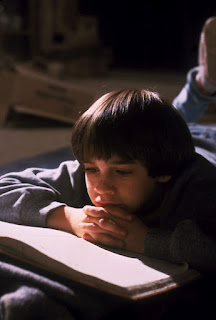
Books abound in fantasy and science fiction. The book is a central plot device or Maguffin or important element in so many stories that to catalog them all would be an exercise in utter futility. But let’s explore some anyway, in this entry. Behold the Incunablum!
Strictly speaking, an incunabulum (plural incunabula) is a book printed in Europe before 1501. According to Wikipedia, this is an arbitrary distinction, which is why I can get away with it here. But it’s a cool word, and it kind of connotatively suggests not just any old book, but rather the types you see a lot in fantasy: big, heavy tomes with lots of pages between leather covers. A locking clasp is also good; witness Indiana Jones’s Bible in Raiders of the Lost Ark.

Books are so often important objects within fantasy and SF stories that I can only offer a smattering here. The Neverending Story is a great example (even if I don’t like the movie all that much), in which the act of reading a story and the act of being in a story are melded into one. Books are a constant thing in the Gothic YA novels of John Bellairs; in one, the young hero’s adult friend is a literature professor, while in another, the adult companion is actually a librarian.
Books are the ultimate symbol, I suppose, of education and learnedness. Showing a person surrounded by stacks and stacks of books is almost a cliché for “This person is smart!” But it can also be shorthand for “This person is really eccentric!” — hence all the somewhat dotty wizards and witches in fantasy literature who are forever losing themselves in the pages of their tomes. And books can also establish one more facet of someone’s ass-kickingness:

Magic books? Those can be found, too. A magical book is at the center of Lloyd Alexander’s Prydain Chronicles, which begins with The Book of Three. Books are the magical gates between worlds in the computer game Myst. Books as central organizing principles of civilization? The original series Star Trek episode “A Piece of the Action” gives us a society that has organized itself around the rules of a civilization they read about in a book they recovered from a crashed starship. Unfortunately, the book was about mob men of Prohibition-era Chicago. This notion would later be repeated in the Next Generation episode “The Royale”, in which some well-meaning aliens construct a ‘world’ for the sole human survivor of a crashed spaceship on their world; they assume that the crappy novel he’s reading is an accurate depiction of human society, so they create that novel’s setting for him. (This is one of my favorite episodes of the series, although it doesn’t seem terribly popular.)
And books can be key moments of villainy, too. George RR Martin has well established King Joffrey’s colossal sociopathic status by the time we get to A Storm of Swords, but that doesn’t stop Martin from giving us a scene where Joffrey receives a very rare book as a wedding gift, and then uses another wedding gift – a sword of Valyrian steel – to chop the book in two. When someone points out that there were only four existing copies of that book in the world, Joffrey shrugs and says, “Now there are three.”
I could go on and on, but I’ll stop there. But remember: books rule!
Share This Post

A to Z: Florin
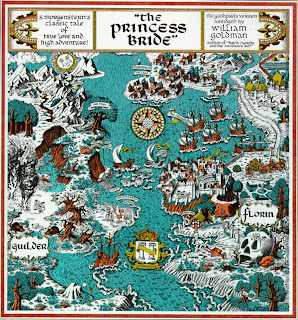
Stories have to take place somewhere, don’t they? In the best of tales, the someplace is almost as important as what goes on there. Heck, there are times like The Lord of the Rings when the setting is, or seems, more important than the tale. The rule of thumb holds: if the setting isn’t memorable, then the tale of the fantastic isn’t going to be, either. Conversely, if you have a really good tale, your setting’s going to be good. So, it stands to reason that one of the greatest of all tales – a tale featuring fencing, fighting, torture, revenge, giants, monsters, chases, escapes, true love, and miracles will take place in a very special realm indeed. Hence Florin, the land of The Princess Bride.

We don’t learn a whole lot about Florin as a country, really. What we know is that it is a monarchy, ruled currently by a very old King and Queen, with a nasty Prince waiting in the wings. Florin is the sworn enemy of Guilder, a nation that lies across the sea. Florin is largely agrarian, and yet it has a number of notable geographic features, such as the enormous Cliffs of Insanity and a horrible place called the Fireswamp. Florin is also the location of vicious sea creatures like the Screaming Eels, and the rumored ROUS’s that dwell in the Fireswamp.
The people of Florin don’t appear to be terribly wealthy, and the castle itself looks fairly spartan in its appointments, so it’s to be assumed that Florin doesn’t have much of a standing army. This likely explains why the elite of Florin seem to prefer schemes against Guilder to open wars of conquest. The latest such scheme, hatched by Prince Humperdinck, involved his murder of his own wife and framing Guilder for it. This plan turned out to be overly complicated, to the point where Humperdinck had to claim that it was a major reason for his being ‘swamped’, and in any case, Humperdinck failed to take into account the power of Twoo Wuv…er, True Love.
Florin’s greatest achievements as a nation may well end up being the fact that the Greatest Kiss of Them All took place there, and its placement of the phrase “As you wish” among the most powerfully romantic things one can say to one’s lover.
Huzzah for Florin!
Share This Post

Stop that, George.
OK. I’m about a quarter of the way through A Feast for Crows on the re-read, and of course, I’ll have more to say about it when I’m done. But I’ve just read the chapter featuring Asha Greyjoy, and got smacked in the face with this (A ‘maester’ is a man who has undergone a high degree of formal education, so an ‘archmaester’ is an extremely learned man, in service to a King or Lord.):
Archmaester Rigney once wrote that history is a wheel, for the nature of man is fundamentally unchanging.
Fantasy readers will be put in mind of The Wheel of Time, the long fantasy series mostly written by Robert Jordan…which is a pseudonym for a writer named James Oliver Rigney. Really, GRRM? A damned in-joke? GAHHHH!!!
(No, it’s not a big deal, but it did throw me right out of the story.)
Share This Post
Page One: A Princess of Mars

Here’s Page One of one of my copies of A Princess of Mars. This copy is part of something called the “Library of Wonder”. I bought it off the Bargain Books table at Barnes&Noble. Even though I already owned a copy (an omnibus I bought, in turn, back when I was a member of the SF Book of the Month Club), I couldn’t resist this one. I read A Princess of Mars a while back, and I was surprised at how well the writing holds up after 100 years; I expected a pulpy work that would be difficult to read for its prolix writing, but Burroughs crafts a nice, spiffy, readable tale that doesn’t have nearly as many anachronisms as one might expect. I haven’t yet read any farther into the series, but I intend to. This volume contains the first three of Edgar Rice Burroughs’s “Barsoom” novels, of which the first, A Princess of Mars, has just been adapted for the big-screen. Somewhat infamously, it turns out.
So, why did John Carter fail? I suspect for lots of reasons, not just one.
I’ve heard that there was a change in Disney management during the film’s production, and William Goldman has pointed out in his books that often an incoming exec’s first act of business is to make sure everything that the previous guy greenlit either gets ungreenlit or at least is just tossed out there without hype. I’m not sure about this; it’s one thing to just put the brakes on developing projects, but quite another to purposely scuttle a movie that’s already been made because the $200 million has already been spent. I’ve also heard that director Andrew Stanton was in charge of the marketing, and he made the decision to assume that audiences are more familiar with the John Carter character than they actually are. I’m not sure who was behind the decision to change the movie’s title to simply John Carter, when John Carter of Mars would have been more evocative, and hell, A Princess of Mars would have been in keeping with the book on which the movie was based in the first place.
For my part? I wonder if this isn’t the kind of movie that wouldn’t have failed had it come out, say, twenty years ago, when movies could be allowed to be in theaters for a couple of months, when they weren’t thrust into 18-screen multiplexes on as many screens as possible so as to guarantee massive opening weekends and then a couple more respectable weekends before the movie disappears from release entirely barely a month after its initial appearance. John Carter opened on a Friday, and I was reading about the movie’s box office failure on the subsequent Tuesday. Four days later. That is insane.
Now, I’m not convinced that word-of-mouth can always change a movie from failure to success – remember, The Shawshank Redemption was a box office failure and word-of-mouth didn’t elevate that movie to classic status that everyone’s seen until it came out on video. But still, in this day and age when there are a bunch of movies coming out all the time, and when most folks in my experience only tend to go to movies once or twice a month at most (and many less than that, as the cost of moviegoing is getting to the point where it might well rival the cost of a nosebleed-section admission to an NHL game soon), they tend to only go see whatever the BIG new release is. And that, sadly, tends to be the sequel to the tentpole franchise, or the adaptation of the current favorite book, or whatever. Not a movie like John Carter, which is in turn marketed with ads that really aren’t clear at all as to what the damn movie is about in the first place.
So anyway: I saw John Carter this past Saturday. For a reputed flop, there were a lot of people in the theater to see it. The place wasn’t packed, but the auditorium was probably almost half-full. That’s not bad, especially considering how packed the cinemas were for The Hunger Games. It’s just not the case that no one wants to see this movie. It’s just the case that, for whatever reason, this movie was set up to fail with unreasonable box office expectations that make the movies a sprinting horserace and an ad campaign that simply didn’t get the job done.
My particular screening didn’t start out so well. I attended a 2D showing, because I refuse to see 3D movies. I just can’t do it. I had a headache years ago after sitting through a couple of fifteen-minute 3D flicks at DisneyWorld. And I’m certainly not paying extra for the privilege of having a headache. So 2D it was. But after the previews ended, a title card appears on the screen, accompanied by voiceover: “Please put on your 3D glasses, now!”
Uh-oh….
And yup, they started the 3D version, with the telltale doubling-up of the image that had me in mind of the Monty Python sketch with the double-vision guy planning an expedition to climb “both peaks” of Mt. Kilimanjaro. I wondered if I’d screwed up or ended up in a 3D showing by mistake, but suddenly there were a bunch of folks behind me saying “Wait, what?” and getting up and heading out to the hallway. A Cinema employee stepped in, saw the 3D movie on the screen, and said, “Uh, I gotta go upstairs.” A minute or two later, the 3D version stopped, another minute or two passed, and the 2D version started. Huzzah! And they gave everyone there a free ticket to another movie, which was nice. So I get a free movie, for not that bad of an inconvenience.
(Oddly, when they restarted the movie, we had to sit through the previews again. Are they physically attached to the print of the movie you see?)
So anyway: about John Carter, the movie. Yeah, I loved it, and it depresses me that lost in all the discussion of the movie’s terrible marketing and undeserved fate (which, unless the movie develops surprising legs and then goes on to a remarkable life on DVD, will rule out sequels) is the fact that John Carter is a kind of movie you don’t see much anymore: a rollicking and entertaining adventure movie with high production values. The acting is good all the way around, especially the leads (Taylor Kitsch as John Carter, and Lynn Collins as Dejah Thoris). The visuals are all well-done, with none of the odd muddiness that I’ve noticed in movies shot for 3D. The film is full of wonderful spectacles and set-pieces, and for the most part, the plot isn’t hard to follow, once it gets going. There is a prologue that really doesn’t have much need to be there, and I did find the final battle scene slightly hard to follow as it ended. Also, there are a few pacing problems in the first act, as we cut away from John Carter for a bit too long to learn about Dejah Thoris and her dilemma; in my view, in these kinds of “Fish out of water” stories, it’s best to stay with the fish as long as possible. Those are fairly minor quibbles, though; once the movie settles into itself, about half an hour in, it’s as absorbing an escapist movie as I’ve seen in a long time. Michael Giacchino turns in a typically professional score, sounding a lot like his score to Star Trek 2009, and just as ear-wormy as the earlier score – I’ve had the main theme stuck in my head ever since.
John Carter, and the books that inspired it, aren’t really space opera, but its sister genre, planetary romance. There’s no space here whatsoever. Carter is teleported to Mars – Barsoom, they call it – and there’s an air of steampunk over the entire movie. It feels ‘retro’, and that retro feel is a large part of the movie’s charm.
No, John Carter is not a great movie. But it’s a very good one, well made, a fine addition to its genre. It deserves to be seen and enjoyed, not dissected in some kind of half-assed postmortem on what Hollywood does wrong these days.
Share This Post
Visual Surveillance of Extremities
That phrase will be familiar to anyone who has read Stephen R. Donaldson’s Chronicles of Thomas Covenant the Unbeliever, a series which was an absolute favorite of mine when I was younger but which I haven’t read in years. (I stared a re-read sometime in the early years of this blog, but never finished got beyond the first book, for no reason that I recall — I still liked the first book.) Donaldson is presently writing the third Covenant series, this one a tetralogy, which I intend to read at some point. SF Signal has an interesting interview with Donaldson, which includes this bit about process:
First, I’m a person who has to concentrate-and concentrate exclusively-in order to accomplish anything. And second, I’m not a “facile” writer: I write slowly, with much sturm-und-drang. So I knew from the start that I can’t afford to just grab time when I can, or to wait for inspiration to strike. I have to make steady progress every day, or I’m doomed. (A music critic named Newman said of Beethoven, “Great composers do not compose because they are inspired. They become inspired because they are composing.” I don’t claim to be a great writer-how would I know?-but that’s one of my mottos.) And soon after I got going on Lord Foul’s Bane, I learned another crucial lesson: I have to pace myself. If I write as much as humanly possible one day, I’ll probably find myself too stunned to write anything the next. So I developed an approach which has served me well ever since: I’m in my office 8 to noon and 1 to 5 five days a week; I always quit at quitting time, no matter how I’m writing; and I never (well, almost never) work in the evenings, or on the weekends, or on holidays, or on vacation. This enables me to keep going day in and day out, week after week, month after month, until the first draft is complete. (Revision presents a different set of challenges, but I approach it in the same way.)
For some reason I’m always interested to read about writers’ processes.
Share This Post
“You know nothing, Jon Snow.”
I have now completed A Storm of Swords, being the third book in George RR Martin’s A Song of Ice and Fire. Perhaps undertaking this re-read in so short a time frame was not wise, because as I feared (and as I remember from when I read this book the first time), the feeling of the book stops being immersion in a big and fascinating world, and starts being a feeling of being worn down under a tremendous weight. And if that’s what it’s like to read it, I can only imagine what it’s like for GRRM to write it. No wonder he’s been having trouble.
My reaction to Storm is almost schizophrenic, so much so that I can barely determine where to begin. There is an awful lot of good stuff in this book, and there’s some stuff that is indisputably great. There’s also some stuff that’s meh, and a bit of stuff that downright irritated me. But the overall impression is just unrelenting hugeness. Once again I am drawn to my soap opera metaphor for these books. Aside from a very few moments, I get almost no sense that there’s a story that’s being set up here. I get very little sense of forward momentum from the events of this book. What I get is just a series of events that affect all others, because everyone knows everyone else and lives have that pesky way of crossing. A good read? Absolutely. A fascinating world? Certainly. Interesting characters, both sympathetic and not? Indubitably. A story, though? Well…I’m just not sure.
Part of my problem with Storm is that it’s simply too long. I’m sorry, but it just is. I’m not sure what the remedy for that might be, since a strategy of cutting the book in two didn’t seem to work out as well as GRRM thought it might for the book immediately following. I’m not sure where the thing should have been cut, but there’s just so much that goes on. That sounds whiny, probably, but I can’t deny it. Over the course of nearly a thousand pages, most of the characters only manage to move no more than, say, fifty miles. Some go in circles. Some are captured, escape, and are recaptured again. Some make fairly improbable acquaintances along the way. Some characters from the last two books simply drop off the radar screen entirely. And yes, some die.
I am starting to conclude that GRRM is creating a story that is simply too big, if he’s even creating a story at all. At this point, it wouldn’t surprise me much to eventually learn that there is no ending to the series, no climax we’re building to, and that what GRRM simply intends is to just create a series of massive books set in a fantasy realm that just details some marches of some people’s lives. Maybe I’m wrong…and on balance, I suspect I am, because there are a few precious hints of a larger story to emerge in Storm…but it wouldn’t totally surprise me. If I’m correct, the actual main story is the threat that’s taking shape in the North while everyone else is fighting for thrones. But then, what part in that story for each and every one of these characters? I just don’t know.
I liked the book. Loved it, even. But I can’t deny that there were times when reading it felt like a slog, and not because of any deficiency with the prose – never that, because GRRM can damn well put the words together – but because it’s just so big. I’m trying to come up with a metaphor here…maybe trying to have a perfect vacation to Disney World when you know you’re only going to be there one day? Nah, that doesn’t work…I’m not sure, I guess. But I can’t get over the feeling with this series that it’s not unlike that third slice of cake, the one that’s just as good as the first two, technically speaking, but just isn’t satisfying because by now it’s just too much.
More random spoiler-iffic thoughts after the break….
:: After two books, I was of the opinion that GRRM’s best characters were Tyrion, Jon Snow, Arya Stark, and Daenerys Targeryen. I have not changed that opinion, but I do add to the list: what he did with Jaime Lannister in this book is amazing. I remember that before I read this book the first time, years ago, someone on a newsgroup said that Jaime is portrayed sympathetically here, and I scoffed at that, thinking that he was a loathsome character. What strikes me now is that Jaime actually isn’t in A Game of Thrones or A Clash of Kings much at all, so Storm is the first time we really get to know him. He’s arrogant, regal, incestuous, and he attempted to kill a child. He’s also torn in a number of directions, he is driven by a love of his sister that’s creepy but for which he refuses to apologize, and he knows that forever he will be tarnished by the fact that he killed the last Targaryen King. Jaime Lannister is a fascinating, fascinating character – and he was shaping up to be so even before he got his sword hand chopped off.
:: This was apparently the book where GRRM decided that it was time to drag Tyrion through the mud. Nothing good happens to him at all in this book, until the very end, when Varys shows him the way out of the Red Keep. Tyrion goes from acting Hand of the King in the previous book to an afterthought for everyone in this one; he doesn’t even get any credit at all for his efforts in the Battle of the Blackwater, in which his side defeated Stannis Baratheon. All the credit, it seems, goes to Lord Tywin Lannister, who arrived just in the nick of time. Eventually Tyrion is forced to marry Sansa Stark, who refuses his touch; it’s to his credit that he likewise refuses to force his touch upon her. The poor dwarf is even blamed for the death of King Joffrey, after he figures out that it was Joffrey who sent the brigand to try to finish the job of killing Bran Stark back in the first book.
Tyrion does get his moment in the sun, though – oh, does he ever. In his final confrontation with his father, Tyrion extracts the information he wants, and then he kills Lord Tywin Lannister by shooting him in the crotch with a crossbow while the Lord is having his morning constitutional. It’s one of the most memorable scenes in the book, and Tyrion’s last exchange with his father is terrific:
…”You shot me,” he [Tywin Lannister] said incredulously, his eyes glassy with shock.
“You always were quick to grasp a situation, my lord,” Tyrion said. “That must be why you’re the Hand of the King.”
“You…you are no…no son of mine.”
“Now that’s where you’re wrong, Father. Why, I believe I’m you writ small. Do me a kindness now, and die quickly. I have a ship to catch.”
That’s great stuff.
:: This book nails down some of the outstanding mysteries from the first couple of books. In addition to revealing that Joffrey is behind the brigand’s attack on Bran, we also finally learn who really killed Jon Arryn, where Robert was getting his information on Daenerys, and Tyrion learns some things about the woman he first loved.
:: GRRM sometimes writes dialogue that is so good it makes me want to cleave my laptop in two with a sword of Valyrian steel. Tyrion gets off the best insult, when he refers to Joffrey as “His Grace, the Royal pustule”.
:: I can’t figure out Sandor Clegane for the life of me. Am I supposed to hate him? Because I don’t. Am I supposed to like him? Because I don’t. And given the rest of the people in these books, that might well be what GRRM intended after all. It interests me that Arya Stark owes him her life. Will she realize it, one day?
:: Sansa Stark continues to impress me on this re-read. She’s still much more reactive than active, but there’s got to be a big moment coming for her, at some point. People around her come and go, people around her come to battle and live and die, and yet…Sansa just keeps on enduring.
:: Daenerys Targaryen’s story continues to be one of the best things about this series. In Storm she becomes a full-blown conqueror, securing an army of creepy eunuch warriors called the Unsullied, in a pretty amazing moment when she agrees to terms whereby she gets the warriors in exchange for one of her three dragons. She quickly turns the tables, though, and winds up keeping her dragon and the warriors. I like how she conquers city after city, but has increasing doubts about this activity, until she decides that she will be Queen to the city she’s just sacked, proving herself as a ruler instead of just leaving a series of wrecked cities behind her.
Her rejection of Ser Jorah Mormont at the end of the book is interesting, and there’s no way this doesn’t come back to haunt her in some way. Will Mormont try to prove himself to her? Or will he act in a way that’s more consistent with what he’s been before, and try to get revenge upon her? He’s a mildly interesting character, harboring doomed love for Daenerys, but also having sold information about her to the powers of Westeros for a time after escaping, way back in the first book.
:: Jon Snow’s tale was mostly intriguing, although it gets a little much, having this many characters in the book who have lost their first loves. As the book ends, though, he’s been voted Lord Commander of the Night’s Watch – just after Stannis Baratheon has offered him Winterfell. Hmmmm. Stannis isn’t a guy who likes to hear the word no. I really liked his relationship with Ygritte, and the way she kept saying “You know nothing, Jon Snow.” I suspect Jon will have a heavy emotional burden to bear in the future; I’m not sure he’s really realized what his feelings for her even were.
:: Bran is still wandering around the wilderness with his two saviors and he is still a shapechanger or something. Bran’s story is Exhibit A for this book not really going anywhere. As the book ends, he and his friends are now going north of the Wall.
:: Samwell Tarly’s continued insistence that he’s craven is starting to get a little old. He’s a bit like Sansa Stark, but with the lack of self-confidence dialed up to 11. The guy killed a zombie with an obsidian dagger, for God’s sake…and he still thinks he’s a coward!
:: By the way, who is ‘Coldhands’, the mysterious elk-riding figure who saves Sam and Gilly, and who takes Bran and friends north? I’m guessing that he’s what’s left of the long-missing Benjen Stark, but I suppose we’ll find out. Maybe. This is GRRM we’re talking about.
:: After lots of Theon Greyjoy in Clash, he doesn’t appear at all in Storm. Good. He’s a crappy character.
:: Lord Tywin Lannister is kind of an odd case. He’s a really good villain, and he’s fairly complex – the Lannister version of Stannis Baratheon, every bit as unbending – but GRRM tosses him aside when Tyrion kills him. And no, I wouldn’t trade that moment…but to paraphrase Captain Renault in Casablanca, “How extravagant you are, throwing villains away like that. Someday they may become scarce.” I like how Tywin dies thinking that his sons have both utterly failed him. That’s probably the ultimate punishment for a man like him.
:: It’s hard to read the Catelyn chapters with any degree of interest when one knows that the Red Wedding is to come. Still, I didn’t recall the hints about resurrection from the dead from my earlier re-read, although I certainly remembered Lady Catelyn being, well, only ‘mostly dead’, I suppose, at the end of the book. I confess that I didn’t pay a great deal of attention to those chapters, except to get the main gist of them. I still don’t understand why Robb Stark has bothered trying to be King in the North in the first place. Seems to me that he’d have been better served to throw his lot in with Stannis Baratheon in the first place; I suspect that’s what Ned Stark might have done, anyway, especially once the rumor got out that Joffrey isn’t Robert’s son in the first place. And marrying some other girl after he’s already pledged to marry the daughter of the notably temperamental Lord Frey? That’s just about as stupid a thing to do as Ned’s “Now Cersei, I think you should pack up and leave now” bit from Game. I suppose doing dumb stuff runs in the Stark blood?
:: Speaking of Starks, I wonder whatever became of Rickon? It would be funny if he doesn’t show up until the very last page of the very last book, wondering what he missed.
:: Of course, I remembered the Red Wedding; it’s one of the book’s major events. I also remembered the death of Balon Greyjoy and the sad passing of Joffrey. What I did not remember was that their deaths seem to have been magically caused by Stannis and his spiritual counselor, Melisandre. When I read that scene, my jaw dropped. Really. I read that in the middle of my break at work one day, and I said right out loud, “Oh my God!”
:: Brienne of Tarth is certainly interesting, but I just don’t have a whole lot to say about her yet. She hasn’t developed much, and I can’t tell if GRRM is trying to develop some kind of love-thing between her and Jaime.
:: I continue to hate the sex stuff in these books. Do we really need Jaime and Cersei making love on the altar of the church? Do we really need Daenerys figuring out how to masturbate? Do we really need continued scenes in which GRRM’s men probe the ‘secret sweetnesses’ of the women? I hate this stuff. Ugh.
:: Last thing: there’s really not a lot of comic relief in these books. Tyrion occasionally says something really funny, but other than that, the only real consistently funny individual in these books is Dolorous Edd of the Night’s Watch. Whenever he shows up, read closely, because he’ll say something fatalistic and very funny. Yup, I love me some Dolorous Edd! I hope he survives the series.
OK, that’s it for this one…but see what I mean? All that stuff I comment on…and I don’t even comment on a lot of stuff in the book. Anyway, only two books remain…next up, Michael Chabon’s Summerland, and then back to Ice and Fire with A Feast for Crows.