That’s the title of Guy Gavriel Kay’s next novel: River of Stars. As I noted before, it is set in the same fictional China as his last book, the amazing Under Heaven, albeit several hundred years later, so it’s not really a sequel at all.
And now we have the cover art:
I never finished re-reading my way through GGK’s output prior to Under Heaven‘s release, so this winter should be my chance….
I finished reading a new book, The Long Walk: A Story of War and the Life That Follows, by Brian Castner, the other day. Since then I’ve been thinking about one question: What good comes from war?
This is one of the great all-time questions, because like all such questions, it doesn’t yield any easy answers. There are many aspects of our world today which can be traced back to this war or that war, this conflict or that one. Some of those aspects are a net positive, while others are not. Our own country sprang into being as a result of a war, it put itself on solid footing as one of the world’s nations in a war, it nearly tore itself asunder and ultimately put itself together as a result of a war. Our country fought a war that led to our becoming an imperial power; our country joined a war that was raging an ocean and a continent away and brought it to a swift end, but was unable to prevent the seeds of the next war from being sown.
L. Fletcher Prouty once wrote, “The organizing principle of any society is for war. The basic authority of a modern state over its people resides in its war powers.” I wouldn’t put it that strongly, but there is something about the fact that so much of our human narrative is the story of war.
So, what good comes from war? One good, from my perspective – although not, perhaps, a good worth spilling rivers of blood to achieve – lies in literature. War inspires great writers to great thoughts and great works. It just does. No matter how sad a statement that may be on our species, it’s a simple fact. The Red Badge of Courage, All Quiet on the Western Front, A Farewell to Arms…there is a long history of great books from war. And not just novels: from World War II, we saw the brilliant work of Ernie Pyle and Bill Mauldin. From the Vietnam era, there were Born on the Fourth of July by Ron Kovic and We Were Soldiers Once…and Young by Harold G. Moore and Joseph Galloway.
What books will our most recent wars inspire? Castner’s is one. I don’t know where it will rank among the great war narratives, but it wouldn’t surprise me if it takes a place among them. This is a searing, brutal, sad, thrilling, visceral, and ultimately saddening memoir of one soldier’s time during the Iraq war.
Castner is a Buffalonian. I’ve never yet met him personally, but I have interacted with him online for a couple of years now, during which he has always struck me as an interesting and intelligent commenter on a lot of topics. He had a blog with WNYMedia.net in which he wrote a lot about the offerings Western New York provides for outdoor enthusiasts; now he blogs at briancastner.com. I didn’t know that he was military man at first, although his original headshot in his WNYM blog made me wonder, looking as it did like a standard military headshot. Over time I realized that he’d served, although he didn’t really discuss the details too much. Only gradually, in that way one does when one interacts in little bits here and there with someone online over a period of time, did I put some details together. Castner served as an EOD specialist. EOD: Explosive Ordnance Disposal.
The EOD is the ‘bomb squad’ of the military. Consisting of members of all four branches of the military, the EODs are the guys who show up to investigate explosions of bombs and to defuse or dispose of active ones. Castner indicates that in other wars, the EOD men are something of a ‘clean up’ crew for after the major combat operations are complete and the country (or some territory of it) has been secured; the EODs are charged with destroying the stockpiles of explosive weaponry left behind by the retreating enemy forces. In Iraq, however, this mission – dangerous enough, but manageable – became much more terrifying once the war shifted from ‘major combat operations’ to ‘counter-insurgency’. The job now requires coming to dispose of active IEDs (Improvised Explosive Device) that have been discovered roadside or in the cities, and also to investigate the ones that have been detonated. This involves sifting through debris, shrapnel, and shredded human remains. In one such episode, they smell the unmistakably strong scent of human excrement, and trace the source to an intact colon, lying in the middle of the street. I’m not sure how long I would have to stare at a colon before I realized what it even was.
This work is staggeringly dangerous, and death does loom over this book, as it must. Castner discusses at length some of the men with whom he serves who never returned. Not all of them are killed by IEDs; the stories of their deaths are heartbreaking tales of things that go wrong in war. Castner tells these tales with a keen sense that, in some cases, there were numerous times when it could have very well been him dying. Speculating on what it must be like to be in an overloaded helicopter that is going down, to know that the bird you’re in is about to crash and that with all your gear on it would take you minutes to get free to save yourself at the same time that you know you only have seconds…Castner’s visceral descriptions bring home as much of the horror of hot, dusty, explosive Iraq as it would be possible for someone who was never there to understand.
My rifle means it’s time to do a job. It’s time to focus, to observe, to stalk, to prepare, to react, to be ready for that constant song: incoming fire. If gunshots per IED call were a batting average, we’d win the Major League title every year. Potshots while driving through town ringing off the side of your truck. Zips and pings while crouched behind your Humvee, building an explosive charge with a cigarette hanging from your mouth and the robot ready to tear downrange. Single shots from a sniper in the center of Hawija. A sustained firefight while clearing a bridge. The soft breath of a stripper blowing on your neck, on the edge of your ear, a tingle across the very surface of your skin, then an answering shout from the .50-cal machine gun mounted on the security Humvee next to you. Gunfire in the distance. Gunfire in ambush. Gunfire to sing you to sleep.
…
Every moment you are being shot at you are blissfully, consciously, wonderfully, tangibly alive in the most basic visceral way imaginable.
Castner structures his book not as a straight-line narrative, but as a series of memories, which at first seem distinct and separate, but which gradually take on an appearance of mosaic. He writes in his Author’s Note:
Everything in this book feels true. It’s as correct as a story can be from someone with blast-induced memory lapses. Nothing was changed to create a moral or to ease discomfort. It’s as real as I can make it, though reality and objectivity sometimes have little to do with one another.
Castner juxtaposes his memories of the war and his service there with equally searing reflections on what his life was like when he returned from war to try and resume the life he had left on hold, only to realize at length that this would not be possible. The war is a constant companion for him, a constant presence that always stalks him. He calls it ‘the Crazy’:
The first thing you should know about me is that I’m Crazy.
…
The second thing you should know about me is that I don’t know how to fix it. Or control it. Or endure from one moment to the next. The Crazy is winning.
What increasingly scares me about war is that it’s only now that we’re really starting to get some kind of notion of the effect that war has on the people who fight it, and the effects that can have on society when we bring those soldiers home and expect them to live and contribute and do all the ‘normal’ things that one does. How much societal strife after past wars might have been traceable to shell shock, or PTSD, or Castner’s ‘the Crazy’? At one point, Castner describes the way a bomb blast physically jolts the brain, the pathology of how a bomb blast speeds up and slows down through whatever medium it traverses, be it air, followed by body armor, followed by flesh, followed by the air inside the body, followed by more flesh on the other side of that air. The mental is the physical, and the physical the mental. It can’t be separated, it can’t be pulled apart. There’s a reason that Brian Castner’s chosen method for beating back ‘the Crazy’ is to run.
The title The Long Walk refers to the walk a EOD man must make when there is no other choice, and it’s time to put on the extremely heavy armored suit and take on the bomb by himself. There is no either-or in this scenario. It’s the ultimate military version of Russian Roulette. It’s the real-life equivalent of all those somewhat clicheed scenes from movies and cop shows where the bomb squad guy has to decide which wire to cut, the red one or the green one. But Brian Castner is on another Long Walk, a longer one, one that doesn’t have a definite end of either an unexploded pile of bomb parts or a detonated IED that’s just taken a soldier with it. There’s a much larger metaphor here that Castner explores, and unfortunately, he can’t really give any definite conclusions, because he hasn’t reached them yet – and there really is no guarantee that he ever will.
I died in Iraq. The old me left for Iraq and never came home. The man my wife married never came home. The father of my oldest three children never came home. If I didn’t die, I don’t know what else to call it.
I liked the old me, the one who played guitar, and laughed at dumb movies, and loved to read for days on end. That me died from a thousand blasts. Died covered in children’s blood. Died staring down my rifle barrel, a helpless woman in the crosshairs and my finger on the trigger. That me is gone.
The new me is frantic and can’t sit still. The new me didn’t laugh for a year. The new me cries while reading bedtime stories to my children. The new me plans to die tomorrow. The new me runs almost every day, runs till knees buckle and fail. The new me takes his rifle everywhere. The new me is on fast-forward. The new me is Crazy.
The new me has a blown-up Swiss-cheese brain, and doesn’t remember all of the old me. But he remembers enough. Enough to be ashamed. Enough to miss the old me. Enough to resent the old me. Resent the way everyone mourns him, while I am standing right in front of them.
Do you remember when Daddy used to? That daddy is gone. He doesn’t do those things anymore. Do you remember when we used to be happy? Husband isn’t happy anymore.
Maybe my wife should pull out the letter I left for my sons and read it to them. Maybe it would explain why Daddy didn’t come home.
When you go to war, and die, and come home Crazy and with a ragged brain, you get to watch your family carry on without you.
Everyone longs for the old me. No one particularly wants to be with the new me. Especially me.
These scenes, in which Castner grapples with his inability to reconcile his new life with the fact of his old one, are deeply saddening, and deeply real. As sharply drawn and visceral as the war parts of the book are, it’s the story of his life at home that I found the most deeply emotional. There is grief in his writing, and his marriage is fraying and he sees one counselor and then another, one shrink and then another. The PTSD diagnosis is not a surprise…but it doesn’t stop there.
Through the book, Brian Castner reveals no easy answers, he doesn’t indicate any particular faith that he will make it through. The book is ultimately haunting because there’s something deeply affecting about seeing a skilled writer penning an elegy, not just to brothers in arms who went with him and never returned except in a box, but to himself.
The Long Walk is an engrossing and heartbreaking read. Castner’s story is not without its hopeful moments, but he’s clear that there really aren’t any answers; there is only life and its sad opposite. I honestly can’t recommend his book highly enough. I sometimes think it’s become something of a cliché in our country to remind others to ‘Thank the troops’. Brian Castner has written a deeply moving and powerful reminder of just part of what it is that we should be thanking those troops for.
(Incidentally, I read The Long Walk in its Kindle edition, via the Kindle app for my new seven inch Samsung Galaxy Tab. It’s the first e-book edition of a full-length book I’ve ever read, so in a way, Brian Castner has served as my inauguration into yet another facet of the twenty-first century.)
A few weeks ago, Kevin Drum had a post (yes, I am too lazy to track down the link) in which he indicated that he just doesn’t think the evolution-versus-creationism “debate” is that big a deal, and his reasons basically boiled down to the notion that the only place this ‘debate’ takes place is in elementary schools; nobody is challenging the teaching of evolution in colleges or in the use of evolutionary theory in medical research and so on. This strikes me as tragically wrong-headed, because in a society that is only going to become more and more scientifically dependent, the current American retreat from science can really only be counteracted on a generational basis. If we don’t make it a priority to teach our kids the right science, then we’re going into the future societally hobbled.
This is a point that comes up repeatedly in Neil DeGrasse Tyson’s new book, Space Chronicles: Facing the Ultimate Frontier. The book is a collection of many short pieces Tyson has written over the years, from magazine articles to op-eds to speeches and even a few poems. As such, the themes of the book can get a bit repetitive, but Tyson may well be the most engaging science writer since Carl Sagan (although Timothy Ferris is not to be discounted). As a collection, the book covers a fairly wide range of topics, almost all of which deal with science in general or space exploration in the particular. Tyson’s writing on these subjects is less poetic than Sagan’s, but Tyson makes up for it with infectious enthusiasm.
Here is an excerpt from an interview Tyson gave Calvin Sims:
CS: Some studies have shown that only about 20 to 25 percent of the adult population can be considered scientifically literate. And one study found that one American adult in five thinks that the Sun revolves around the Earth, a notion that was abandoned in the sixteenth century. Does that surprise you?
NDT: Didn’t you just ask me whether we’re in a crisis? Yes, we are. And yes, it concerns me deeply. There’s fundamental knowledge about the physical world that the general public is oblivious to. And by the way, science literacy is not simply how many chemical formulas you can recite, nor whether you know how your microwave oven works. Science literacy is being plugged into the forces that power the Universe. There is no excuse for thinking that the Sun, which is a million times the size of Earth, orbits Earth.
CS: This is particularly troubling because so much political debate has a basis in science: global warming, stem cell research. What do we do about this?
NDT: I can only tell you what I do about it. I hate to say this, but I’ve given up on adults. They’ve formed their ways; they’re the product of whatever happened in their lives; I can’t do anything for them. But I can have some influence on people who are still in school. That’s where I, as a scientist and an educator, can do something to help teach them how to think, how to evaluate a claim., how to judge what one person says versus what another says, how to establish a level of skepticism. Skepticism is healthy. It’s not a bad thing; it’s a good thing. So I’m working on the next generation as they come up. I don’t know what to do with the rest. That 80 percent of the adults, I can’t help you there.
This strikes me as terribly sad, but also terribly true. Throughout the book, Tyson repeatedly sounds the alarm about where we are headed as a nation. Here’s another excerpt, this from a speech:
Recently I gave a talk in St. Petersburg, Florida. The last question of the night – I don’t know if this person was particularly worried about the upcoming election – was, “What would you do if, a year from now, all the money for science and engineering research was cut to zero, yet Congress allowed you to pick one project you could do? What would that project be?” I promptly replied, “I would take that money, build a ship, and sail to some other country that values investment in science. And in my rearview mirror would be all of America moving back into the caves, because that’s what happens when you don’t invest in science and engineering.”
There was a day when Americans would construct the tallest buildings, the longest suspension bridges, the longest tunnels, the biggest dams. You might say, “Well, those are just bragging rights.” Yes, they were bragging rights. But more important, they embodied a mission statement about working on the frontier – the technological frontier, the engineering frontier, the intellectual frontier – about going places that had not been visited the day before. When that stops, your infrastructure crumbles.
There’s a lot of talk about China these days. So let’s talk more about it. We keep hearing about ancient Chinese remedies and ancient Chinese inventions. But when do you hear about modern Chinese inventions? Here are some of the things that the Chinese achieved between the late sixth and late fifteenth centuries AD: They discovered the solar wind and magnetic declination. They invented matches, chess, and playing cards. They figured out that you can diagnose diabetes by analyzing urine. They invented the first mechanical clock, movable type, paper money, and the segmented-arch bridge. They basically invented the compass and showed that magnetic north is not the same as geographic north – a good thing to know when you’re trying to navigate. They invented phosphorescent paint, gunpowder, flares, and fireworks. They even invented grenades. They were hugely active in international trade over that period, discovering new lands and new peoples.
And then, in the late 1400s, China turned insular. It stopped looking beyond its shores. It stopped exploring beyond its then-current state of knowledge. And the entire enterprise of creativity stopped. That’s why you don’t hear people saying, “Here’s a modern Chinese answer to that problem.” Instead they’re talking about ancient Chinese remedies. There’s a cost when you stop innovating and stop investing and stop exploring. That cost is severe. And it worries me deeply, because if you don’t explore, you recede into irrelevance as other nations figure out the value of exploration.
What else do we know about China? It has nearly 1.5 billion people – one-fifth of the world’s population. Do you know hoe big a billion is? In China it means that if you’re one in a million, there are 1,500 other people just like you.
Not only that, the upper quartile of China – the smartest 25 percent – outnumbers the entire population of the United States. Lose sleep over that one. You’ve seen the numbers: China graduates about half a million scientists and engineers a year; we graduate about seventy thousand – much less than the ratio of our populations would indicate. A talk-show host in Salt Lake City recently asked me about those numbers, and I said, “Well, we graduate half a million of something a year: lawyers.” So the guy asked me what that says about America, and I said, “It tells me we are going into the future fully prepared to litigate over the crumbling of our infrastructure.” That’s what the future of America will be.
Ouch. Really, truly, ouch. But the flip side of Tyson’s grim picture of the state of affairs in America as regards to science and engineering is that the fix is pretty obvious: reinvest in those things, reinvest in those things now, and reinvest in those things heavily. It’ll take a lot of investment and a lot of time – probably a couple of decades as new students come all the way through the educational systems and enter the workforce – but it’s the only thing that can guarantee our continued position as one of the leaders of the world. Nothing else is going to get it done: not deregulating every business sector known to exist, not squashing every labor union, not eliminating every tax, not scratching every libertarian itch. Humanity is going to need to depend more and more and more and more on science and engineering, and if we willingly abdicate our leadership and mortgage our futures therein, well, all the tax cuts and military expenditures in the world won’t be enough to keep America from becoming just one more name on the UN roster.
I don’t want to depict Tyson’s book as relentlessly pessimistic, because it’s not. Reading between his lines, I think that I can say that while Tyson is not terribly optimistic about America right now, he’s more optimistic about the human species. And his sense of wonder, still intact after years of being an astrophysicist, comes shining through. The passages I quote, though, are the ones that stick with me, because they’re issues that I continue to think about a lot and I frankly wish would come up once in a while over the course of our political campaigns. Anyway, Neil DeGrasse Tyson is emerging as one of our country’s most valuable voices.
(By the way, a neat feature of the book is that it includes a selection, scattered throughout, of Tyson’s postings to Twitter. For example: “First mammals to achieve orbit, in order: Dog, Guinea pig, Mouse, Russian Human, Chimpanzee, American Human”.)
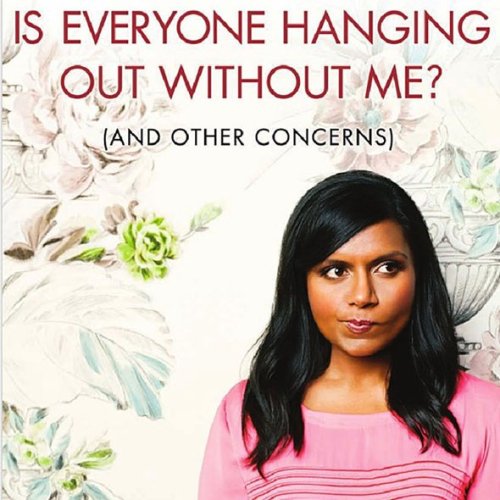
If you watch The Office without paying attention to the credits, you might assume that Mindy Kaling’s sole purpose on the show is to play Kelly Kapoor, the materialistic ‘office girl’ who is more interested in appearance and various superficialities than in professional accomplishment. But if you do pay attention to the credits, you quickly discover that Mindy Kaling is the complete opposite of Kelly Kapoor. As a writer, occasional director, and listed producer, Kaling is one of the main creative contributors to The Office. And now she has a new book, called Is Everyone Hanging Out Without Me? (And Other Concerns).
This delightful book is part autobiography, part musing on the current state of entertainment, part musings on romance and dating here in the 21st century, and…well, the book reads simply like the conversational thoughts of a person who leads an interesting life and has interesting things to say without having led so interesting a life as to be completely intimidating. Is Mindy Kaling the ‘girl next door’? Sure…if the girl next door is a hard-working, smart, and pretty woman who has a number of impressive talents.
Here is Kaling describing some of the types of characters you will find in a typical romantic comedy these days:
THE KLUTZ
When a beautiful actress is in a movie, executives wrack their brains to find some kind of flaw in her that still allows her to be palatable. She can’t be overweight or not perfect-looking, because who would want to see that? A not 100-percent-perfect-looking-in-every-way female? You might as well film a dead squid decaying on a beach somewhere for two hours.
So they make her a Klutz.
The 100-percent-perfect-in-every-way female is perfect in every way, except that she constantly falls down. She bonks her head on things. She trips and falls and spills soup on her affable date. (Josh Lucas. Is that his name? I know it’s two first names. Josh George? Brad Mike? Fred Tom? Yes, it’s Fred Tom.) Our Klutz clangs into Stop signs while riding a bike, and knocks over giant displays of expensive fine china. Despite being five foot nine and weighing 110 pounds, she is basically like a drunk buffalo who has never been a part of human society. But Fred Tom loves her anyway.
THE ETHEREAL WEIRDO
The smart and funny writer Nathan Rabin coined the term Manic Pixie Dream Girl to describe a version of this achetype after seeing Kirsten Dunst in the movie Elizabethtown. This girl can’t be pinned down and may or may not show up when you make concrete plans. She wears gauzy blouses and braids. She decides to dance in the rain and weeps uncontrollably if she sees a sign for a missing dog or cat. She spins a globe, places her finger on a random spot, and decides to move there. The ethereal weirdo abounds in movies, but nowhere else. If she were from real life, people would think she was a homeless woman and would cross the street to avoid her, but she is essential to the male fantasy that even if a guy is boring, he deserves a woman who will find him fascinating and pull him out of himself by forcing him to go skinny-dipping in a stranger’s pool.
And thanks to Mindy Kaling, I now desperately want to see the movie Darling, which has not been made yet, but would tell the story of Peter Pan from the viewpoint of the Darling family’s alcoholic father. That movie needs to happen, dammit!
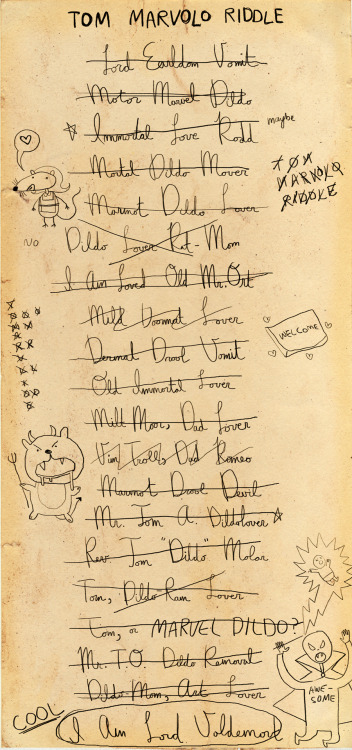
What if his given name had been Joey Jones? I doubt he would have turned to evil. On the other side of the coin, had his given name been Walter Quimby Zoroaster Xavier Isringhausen, he probably would never have done anything evil either, because he’d still be working through the permutations of his name!
I have zero intention of reading Fifty Shades of Grey, because…well, life’s just too short, and I already read Twilight. But Kerry read it and reports. A sampler of her opinions on this book:
2) Her catch phrase, the thing she utters in all and any circumstance, is “Holy crap.” For example, when she’s at the climax, if you will, of an erotic moment with her dominating hero, she will scream “Holy crap.” “Holy crap” is never a sexy thing to say.
3) The male character, in turn — god-like, well-educated, nuanced sex fiend that he is — often says things like, “You look mighty fine, Ms. Steele. Mighty fine.” WHO SAYS THAT? It makes him sound like a cross between Pa Ingalls and the lumberjack on Brawny paper towels. Not sexy. Not one bit, even if you lived in the Pacific NW in the 1800s.
Of course, the whole point of reading these books seems to be to read about Teh Sex, and my recent experiences with George RR Martin convince me that my tolerance level for badly written sex is very, very low. So I don’t think I’ll be reading this book, or sequels, or whatever.
(Huh…maybe it’s the title. Shades of Gray is the title to one of the most loathed episodes of Star Trek: The Next Generation, a crappy clip show that has them drilling holes in Riker’s head.)
Oh my good Lord. I tried, folks. I really tried. I’ve wanted so much to love A Song of Ice and Fire as much as everybody else does. And after the fairly soul-crushing experience that was slogging my way through A Feast for Crows, I thought that A Dance with Dragons was off to a fairly decent start. But I wasn’t even halfway through before that old familiar feeling started to settle in, and by the time I was two-thirds of the way through (with more than 300 pages left at that point), I had pretty firmly reached this point:
Will I finish reading the series? I suppose I will, if George RR Martin finishes writing it. But now it’s a certain pig-headedness that’s keeping me going, and not much else. It’s that sense of “Well, I’ve got this far”, and I have the added comforting thought that the sixth book is probably unlikely to appear any time before 2014. So I have a good, long recovery time ahead of me. Maybe reading the entire series in the space of six months or so was just too much, but rather than the wonderful immersive quality I was hoping for, I instead found myself thinking, “GAHHH get me out of here!”
After finishing Dance last week, I went and read some reviews that came out when the book did, and I’m wondering if those folks read a different book. One reviewer promised that with this book you start to see the signs of where GRRM is going with his story; others are enraptured by GRRM’s amazingly poetic prose. I evidently missed the boat on both counts, because I don’t yet see this overarching story that’s taking shape and aside from a few passages, GRRM’s prose does not thrill me nearly as much as, say, Guy Gavriel Kay’s. Aside from a few good moments, and one great one, that were all too few and far between, just about all I got from this book was frustration and, eventually, irritation.
The rest of this will be spoilerish, so I’ll stick it below the fold.
The good stuff? Jon Snow, Tyrion Lannister, and Daenerys Stormborn are back after not being seen at all in Feast. The bad stuff? Just about everything else…and Daenerys’s story is sadly a lot less interesting than it should have been. Every time a Daenerys chapter shows up, we would get another ten or fifteen pages of her being incredibly indecisive in the face of all manner of individuals who want nothing more than to control her and, through her, control the dragons. The story generally went a whole lot of nowhere, until toward the end of the book, when the book’s one indisputable moment of awesome transpired…and then, things became dull again. Drogon’s return and Dany’s long-awaited moment of flying on her dragon progeny’s back was just a wonderful moment, almost well-worth the price of a lot of the other stuff in this book that I didn’t care about. But instead of being a game-changing moment in which Dany uses her dragon destiny to begin to take utter control of all those around her, instead she just…flies away. Most people don’t even think she survived, and when we learn that she did, all she’s done is fly away into the Dothraki lands, where she meets some of them…and then her story ends. That’s it.
I think this is part of what bothers me so much about this series: moments that feel like climaxes are never actual climaxes. They are, instead, just moments of high action that end up not meaning much. And that means that we’re right back into soap opera land.
The book suffers structurally as well, owing to GRRM’s decision as to how to split the larger work into two books. Remember, he told ‘all the story’ for some of the characters in Feast, and then went back in Dance and told ‘all the story’ for the other ones. At first this might not be the worst thing, since we’re back with our favorite characters, but it quickly bogs down again. Worse, when the book reaches about 250 pages to go, the remaining characters from Feast start showing up again. Now, in an author’s note at the beginning of the book, GRRM indicates that this is going to happen, and it indicates that all the various threads have reached the same point in the story, and we’re moving forward. The effect, though, is incredibly disjointed. Out of the blue we get a Jaime Lannister chapter…and only one Jaime Lannister chapter that does almost nothing to advance his story. Cersei shows up again after seven hundred pages of absence. But not everyone returns: Samwell Tarly? Sansa Stark? They are both ‘Sir Not Appearing In This Film’. But then, after being absent for two whole books, Theon Greyjoy returns. But not so Rickon Stark…where the hell is he? Who knows? He’s not ever mentioned, even.
Theon’s story is pretty interesting, actually, and ultimately he’s revealed to be a pretty pathetic individual, a bully wannabe who just doesn’t have the stones for it, even though he’s got some skills. But a bit of resolution here would have helped. Instead, he’s just a cliffhanger. Who knows, maybe he doesn’t even appear in the next one.
And then there are the scads of new characters or returning ones just introduced in the last book. Try as I might I just cannot get emotionally involved in the struggles of Dorne, and I did not care at all about any of it, last book or this one. And yet more players are thrust onto the stage: Ramsay Bolton is apparently now a hugely important figure, after being just a vague “Who’s he? Gotta look him up in the appendix” guy for the last four books. (Bolton may be the most purely malevolent villain in the entire series thus far, which is certainly saying something, but as a character he’s nowhere as interesting as the already-disposed-of Tywin Lannister, or as Lord Peter Baelish, who never appears in this book at all.) Another character, a young boy, is revealed to be another lost Targaryen claimant to the throne of Westeros. Tyrion makes a friend of a dwarf actress, after he gets captured when, in a large city, he just happens to choose to do business at the same brothel where Ser Jorah Mormont has been soothing his savage breast. And that’s another problem I have with these books: the degree to which things just happen to take place.
Ultimately I got this very odd feeling, while reading this book, that GRRM had both lost control of his story but was still trying mightily to force things in a certain direction. What that direction might be, I couldn’t hazard a guess, but things like Tyrion’s chance encounter with Mormont and Daenerys’s unyielding cluelessness until it came time to ride the dragon made me constantly feel the hand of the author, moving his playpieces this way and that. Never did I feel this more than late in the book, the last hundred or so pages, when GRRM started leaving us with one cliffhanger after another. Is Ramsay Bolton’s letter telling the truth, and has he defeated Stannis Baratheon? Will Cersei’s new champion (gee, I wonder who he might be…more properly, I wonder if he’s still got all of his body parts, or if that great helmet of his that he never returns is actually empty) save her from her trial? Is Jon dead after being stabbed repeatedly by his brothers of the Night’s Watch? What the hell is going on with Bran Stark, anyway?And what is Arya trying to accomplish, anyway? Tune in next time!
About the only thing about the ending of the book that I liked was that Varys’s loyalties were finally revealed: he’s been working to reestablish the Targaryens to the throne the entire time. That was deeply effective, and a satisfying revelation. Everything else felt to me like a ratcheting up of the cliffhangers, the way the old soap operas used to do (and again, I end up thinking of these books as fantasy soap operas). Shooting JR Ewing was OK once, but you had to outdo yourself each time, right? So we’d shoot Bobby, too! Have a fire at Southfork with multiple people trapped inside! Or on Dynasty, have an entire wedding party riddled with bullets!
Finally, I know I keep harping on this each time out, but my God, the single facet of these books that I find the most tiresome is GRRM’s writing of sex scenes. Sex in this world is so unpleasant that one wonders how kids ever get born in the first place. Now, there’s not as much of it in this book, and thankfully we’re not subjected to Brienne of Tarth being told constantly how ugly she is and how she really needs to be raped (which did happen in Feast), but GRRM makes up for the scant quantity of the Awful Sexity Sex in Dance with what is, to my mind, the single most disgusting sex scene anywhere in the series to date. It’s so bad that I…well, hell, what’s Fair Use for if I can’t use it once in a while? Here, dear Readers, is Asha Greyjoy getting her groove on. (I’m going to Inviso-text this. This is solidly in NSFW territory, and let me be clear, this is verbatim from the book.)
Qarl followed her [Asha] up to Galbart Glover’s bedchamber. “Get out,” she told him. I want to be alone.”
“What you want is me.” He tried to kiss her.
Asha pushed him away. “Touch me again and I’ll–“
“What?” He drew his dagger. “Undress yourself, girl.”
“Fuck yourself, you beardless boy.”
“I’d sooner fuck you.” One quick slash unlaced her jerkin. Asha reached for her axe, but Qarl dropped his knife and caught her wrist, twisting back her arm until the weapon fell from her fingers. He pushed her back onto Glover’s bed, kissed her hard, and tore off her tunic to let her breasts spill out. When she tried to knee him in the groin, he twisted away and forced her legs apart with his knees. “I’ll have you now.”
“Do it,” she spat, “and I’ll kill you in your sleep.”
She was sopping wet when he entered her. “Damn you,” she said. “Damn you damn you damn you.” He sucked her nipples till she cried out half in pain and half in pleasure. Her cunt became the world. She forgot Moat Cailin and Ramsay Bolton and his little piece of skin, forgot the kingsmoot, forgot her failure, forgot her exile and her enemies and her husband. Only his hands mattered, only his mouth, only his arms around her, his cock inside her. He fucked her till she screamed, and then again until she wept, before he finally spent his seed inside her womb.
“I am a woman wed,” she reminded him, afterward. “You’ve despoiled me, you beardless boy. My lord husband will cut your balls off and put you in a dress.”
Qarl rolled off her. “If he can get out of his chair.”
The room was cold. Asha rose from Galbart Glover’s bed and took off her torn clothes. The jerkin would need fresh laces, but her tunic was ruined. I never liked it anyway. She tossed it on the flames. The rest she left in a puddle by the bed. Her breasts were sore, and Qarl’s seed was trickling down her thigh. She would need to brew some moon tea [a birth control potion] or risk bringing another kraken [the Greyjoy sigil is the kraken] into the world. What does it matter? My father’s dead, my mother’s dying, my brother’s being flayed, and there’s naught that I can do about any of it. And I’m married. Wedded and bedded…though not by the same man.
When she slipped back beneath the furs, Qarl was asleep. “Now your life is mine. Where did I put my dagger?” Asha pressed herself against his back and slid her arms about him…They called at Fair Isle and Lannisport and a score of smaller ports before reaching the Arbor, where the peaches were always huge and sweet. “You see,” she’d said, the first time she’d held one up against Qarl’s cheek. When she made him try a bite, the juice ran down his chin, and she had to kiss it clean.
That night they’d spent devouring peaches and each other, and by the time daylight returned Asha was sated and sticky and as happy as she’d ever been. Was that six years ago, or seven? Summer was a fading memory, and it had been three years since Asha last enjoyed a peach. She still enjoyed Qarl, though. The captains and the kings might not have wanted her, but he did.
Asha had known other lovers; some shared her bed for half a year, some for half a night. Qarl pleased her more than all the rest together. He might shave but once a fortnight, but a shaggy beard does not make a man. She liked the feel of his smooth, soft skin beneath her fingers. She liked the way his long, straight hair brushed against his shoulders. She liked the way he kissed. She liked how he grinned when she brushed her thumbs across his nipples. The hair between his legs was a darker shade of sand than the hair on his head, but fine as down compared to the coarse black bush around her own sex. She liked that too. He had a swimmer’s body, long and lean, with not a scar upon him.
A shy smile, strong arms, clever fingers, and two sure swords. What more could any woman want? She would have married Qarl, and gladly, but she was Lord Balon’s daughter and he was common-born, the grandson of a thrall. Too lowborn for me to wed, but not too low for me to suck his cock. Drunk, smiling, she crawled beneath the furs and took him in her mouth. Qarl stirred in his sleep, and after a moment he began to stiffen. By the time she had him hard again, he was awake and she was wet. Asha draped the furs across her bare shoulders and mounted him, drawing him so deep inside her that she could not tell who had the cock and who the cunt. This time the two of them reached their peak together.
“My sweet lady,” he murmured after, in a voice still thick with sleep. “My sweet queen.”
No, Asha thought, I am no queen, nor shall I ever be.
After I read that I felt like I needed to shower. And scrub myself with a pumice stone. And then put on a hair shirt afterwards. It’s kind of rape, but not really, because after a while she gives in and enjoys it, and then, just to show there’s no hard feelings, she instigates another round of the festivities. All of it described in gory detail. This may be a matter of taste, but scenes like that don’t just push me out of the story. They evict me from it, at gunpoint. I don’t know why exactly GRRM feels the need to make most of his sex scenes read like that, but I can’t worry about other readers; I can only worry about this reader, and scenes like that made me give serious thought to quitting the series right then and there.
Will I read the remaining volumes in the series, assuming they come out at some point? Sure. But I doubt I’ll be buying them; I’ll just get them from the library to see what happens. The reason why is simple: there’s just entirely too much of this saga that I just don’t care about. My hope for this book was that GRRM would start to bring things together a bit, start stitching all these threads of his into an actual tapestry. Unfortunately, he hasn’t done that, nor has he even begun to hint that he might soon start doing that.
Past all the scheming, the fighting, the warring, the whoring, the raping, the japing, the dragonflight, the ocean-going, the gods of old and the gods of new, just where the hell is the story here?
And with that, I’m thankfully done until the next book comes along, which I personally doubt that we’ll see any time before 2014. And I’m fine with that. I need a nice, long break from Westeros and its surrounding environs of unpleasantness.
Hey, I made it! It’s the end of the A-to-Z Challenge. Let’s look at some Zaniness, shall we?
According to this site, the word ‘zany’ was first used in English by none other than William Shakespeare, although its origins are apparently Italian:
Somebody zany is amusingly crazy or clownish. If you object to my definition, then you may be in the company of the compilers of several current dictionaries. It’s a hard word to pin down — we all think we know what we mean by it, but we may find describing it in plain English surprisingly hard.
That may have something to do with the way the word has evolved. It was first a noun, to describe a performer in the commedia dell’arte, an improvised Italian comic form of the sixteenth to eighteenth centuries. The zany was a foolish servant, a buffoon, who attempted to mimic the actions of his master, himself a clown. The servant was given the generic name Giovanni (the Italian equivalent of John), much as English servants of the same period were frequently called Andrew (indeed, one English equivalent to the zany was a merry-andrew), or as a Glaswegian might call someone Jimmy as an all-purpose name. In time Giovanni turned into zannie and we imported it in that form.
. We tend to think of zany as meaning a special kind of madcap comedy, one in which questions of sanity are best left at the door. Here’s Merriam Webster on the case:
1: being or having the characteristics of a zany
2: fantastically or absurdly ludicrous (a zany movie)
However, looking at definition number one under zany as adjective, I see that zany can also be a noun. This, I did not know! y interesting word, actually. Merriam-Webster defines it thusly (same link as above, toggle a link there to switch from noun to adjective):
1: a subordinate clown or acrobat in old comedies who mimics ludicrously the tricks of the principal
2: a slavish follower
3a : one who acts the buffoon to amuse others
The noun use of zany seems to have dropped out of usage, in favor of the adjective. I’ve never, to my knowledge, heard of someone refer to a ‘zany’, but I have heard, many times, someone or something described as ‘zany’. So how about some zaniness in fantasy and SF?
Well, there’s quite a lot of comedy to be found in both genres. Fantasy isn’t all long, wordy, and ponderous tales involving plucky rural heroes making their way across a vast continent to the very stronghold of evil; there’s plenty of funny stuff be found. But not everything that is funny is also zany. I’d definitely file the books of Christopher Moore in the ‘zany’ category, and they are cheerfully zany, full of wild leaps in logic and loaded with highly eccentric characters; his books are, in the words of Merriam-Webster, “fantastically or absurdly ludicrous”. That’s part of their charm. Moore writes the kinds of books where two women in a rubber raft at sea find themselves in between two whales who are about to engage in the physical act of whale-love, or where a six-year-old Jesus causes a stir in his hometown when he makes his own face appear in the Passover bread.
Interestingly, Moore has also written a book that fits the noun use of zany, the wonderful Foole, in which Moore tells the story of King Lear from the viewpoint of the Fool…the zany, you might call it.
Lois McMaster Bujold’s “Miles Vorkosigan” books aren’t really zany, per se, but they do have moments when the humor rises to a certain level that’s almost zany. Ditto Scott Lynch’s Gentleman Bastard Sequence (comprising The Lies of Locke Lamora and Red Seas Under Red Skies. I suspect that the Hitchhiker’s Guide to the Galaxy series is pretty zany…but I wouldn’t know. I haven’t read them. (I’ll hang my head in shame.)
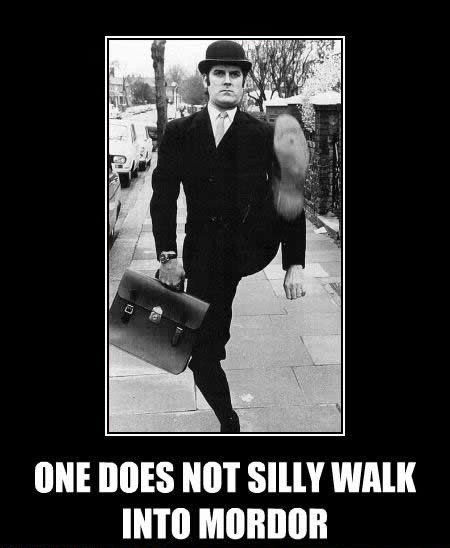
Fantasy and SF in the movies? There, it’s easier to find zaniness on display. Ghostbusters is pure zaniness, through and through. So is Back to the Future, Galaxy Quest, and most of Star Trek IV. Men in Black is zany, and amongst animated films, The Emperor’s New Groove is as zany a film as I can remember. And you have to include the films of Monty Python, which are as zany as it gets and which are often filled with fantastical content.
I’m sure it comes as no surprise that I’m a fan of zaniness, both in life and in fiction. Serious things are good, but zaniness is a part of life, is it not? Life should be a little bit zany…or a lot zany, if you can manage it. The trick is to find your preferred versions of it and incorporate them into your life. Don’t be afraid to, as Merriam-Webster defines it, “act the buffoon to amuse others”…even if it means the occasional pie in the face.
And with that, I come to a successful close of the A to Z Challenge for 2012, Huzzah! Maybe I’ll do this again next year….
Catching up on some notes about some stuff I’ve read over the last few months, in this case, comics….
:: I recently read in its entirety the comic book series Air, by G. Willow Wilson and M.K. Perker. It’s a very strange story, much in the vein of things like LOST, with weird mysteries compounding more mysteries and lots of strange goings-on, surprising revelations, plots that start small but end up huge, characters whose loyalties and status as heroes or villains isn’t immediately obvious. For the most part, Air is well done and intriguing, although it does suffer from the fact that it quite obviously ends too soon. The story slowly unfolds, and then it suddenly becomes clear that the book had been canceled by Vertigo Comics, so instead of building over time, the book quickly starts to wrap up and then it ends.
Our heroine is a flight attendant named Blythe, who has taken this particular job despite severe phobia of heights (to the point where she has to pop pills to deal with it all). She finds herself in the midst of a highjacking in which her plane is directed toward a country that doesn’t exist, and then she is living out her worst fear: tumbling through the sky without a parachute. Except she is rescued by a tall, handsome stranger named Zeyn. We learn of a shadowy government (or not) group that has goals all its own, and then, before long, the story plunges us into lost countries that appear on no maps, ancient Aztec artifacts, a new kind of engine that will revolutionize aviation, visions of a bird-snake named Quetzalcoatl, and a lot of ruminations on the nature of terrorism.
Air is an intriguing read that held my interest most of the way, even though, as I noted before, I could sense that the air (no pun intended) was let out of it toward the end. The comic’s art is good when dealing with people, but in the flight scenes the series could have used an artist more able to suggest a feeling of ‘soaring’ and the wonder that exists in the sky. Still, Air was, for the most part, an enjoyable read – and a reasonably generous one, at 28 issues collected into four trade paperbacks.
:: The movie The Rocketeer is an entertaining little adventure flick that I enjoyed back when it came out in the early 1990s. However, I did not realize that it was based on a comic book, by a man named Dave Stevens. An omnibus edition collects the complete adventures of the Rocketeer, which were apparently serialized in several publications before at last appearing in a one-shot issue that resolved a cliffhanger. Unfortunately, that’s all that exists of The Rocketeer; Stevens died of leukemia not long after finishing The Rocketeer. I was pleased to note the degree to which the film honored the retro homage tone of the comic. There’s a lot to be fond of here.
:: I have mixed feeling about Craig Thompson’s latest work, Habibi. I honestly don’t know what to make of it. This long, sprawling tale follows two youths in a fictional Arabic land, a young woman and a boy, whose grim turns in life bring them together. They run away into the desert and make a home, of sorts, in an abandoned boat, where the woman cares for the boy, who slowly grows up and starts to notice things about the woman he lives with.
I really don’t want to say more than that about the story, which is very long and meandering and full of developments that put the characters into positions of nearly abject horror. I found large parts of the book distasteful, with a relentless focus on sexual behavior that borders on depravity and the limits to which our two heroes must endure horrible things in order to survive and find their way back to one another. It’s to Thompson’s credit that when they finally do find each other again, there are no easy, happy endings; instead, the events leading to that point continue to haunt them in ways that they will probably never completely surmount.
Still, there’s just no getting around the fact that I found long stretches of Habibi downright unpleasant, and there are parts that are nearly impossible to fathom, such as the mad man who clings to a sunny disposition on life, which would be fine were he not convinced that the objects he pulls out of a sewage-choked river are treasures.
Habibi also confounds expectations in other ways. There are times when the nature of what’s going on in the story seem to convincingly place the story in some passed time, decades or centuries ago, but then we discover that the Arabic palace that is full of concubine-slaves and the beggar-society of eunuchs are both located in a city that is also the home of modern skyscrapers. I’m not sure what statement Thompson is trying to make about the Arab world here, but the juxtaposition of a society stuck in medieval times in its sexual mores while building for the current century is unsettling.
Thompson’s art is, as ever, absolutely stunning. There are pages upon pages in Habibi that beg to be reproduced and framed. Thompson’s major recurring theme is the nature of the Arabic written language, and many of the book’s finest pages clearly draw artistic inspiration from the traditional illumination of Arabic manuscripts.
I’m just not sure what I think of Habibi as a whole. I can’t say that I liked it, but it’s certain to stick in my mind for a good while.
A good adventure tale needs a lot of things: a hero or two or three or four, a problem for them to solve, long odds, improbably escapes from certain doom, high stakes if they fail…and a Villain. It’s often said that a tale of adventure succeeds as much on the strength of its villains as it does on the strength of its heroes. A great villain is fun to watch, and on some small level, we might even find ourselves rooting for him or her…maybe not for ultimate victory, but at least for keeping things tough and interesting for our hero.
The best villains are, obviously, people. Except for the ones that aren’t. How’s that for hedging your bets! But it’s really true. When I think of adventure movies or books that I love the most, those are the ones that often boast the best villains. And in adventure tales that fall short for me, it’s equally often because the villains just aren’t interesting, or fun, or they are so evil and despicable that it becomes depressing just to watch them in action.
A good example of the last kind are the Gary Oldman character in the Harrison Ford-as-President flick Air Force One. At first he’s OK, but as the film goes on, Oldman doesn’t play him as a person who is having the least amount of fun – a villain should seem to enjoy him or herself a little – and then there’s an awful scene where he threatens to kill a defenseless woman if the President doesn’t surrender. The President doesn’t surrender, so he kills the woman after counting down from ten with his gun pressed to her temple. The scene cast a huge pall over the rest of the movie. There was no particular thrill when President Indiana Jones defeated Oldman in the end; it was just, “OK, that monster’s gone now.”
Another such example is the Jeremy Brett character in The Patriot, the Mel Gibson Revolutionary War epic. Brett plays this guy as a lunatic who is perfectly happy to kill anyone he wants, and this culminates in a staggering scene of awfulness when he has his men round up an entire town’s people into a church…and then bars the doors and sets the church on fire. Ye Gods. (It doesn’t help that the Nazis would do just that, 180 years later.) Again, it’s so over-the-top and awful that for me, Brett’s final defeat in the movie had little feel of actual triumph.
So, who are the good villains, then? Well, they’re all going to kill…but they make choices about when to do it, and they only do it when they must. Kind of like heroes, right? Which is why it’s best if the hero and the villain can be shown to have some of the same kind of personality. I think of that wonderful scene in Raiders of the Lost Ark, when Belloq points out to Indy that they really aren’t terribly different. “It wouldn’t take much to make you like me,” Belloq says. “To push you out of the light.” And he’s right. Belloq is a big reason why Raiders is the best Indiana Jones film.
Villains have to be motivated, and they have to act in ways that are consistent with their motivation. But villains also should, if they are to be compelling and believable, clearly see themselves as the heroes and the hero as their personal villain. The best example of this I can think of is Hans Gruber from Die Hard; he gets nearly as much screen time as John McClane, and it’s not all just Hans killing hostages and saying evil-sounding things in his lair. Gruber’s got a plan and he’s got motivations, and the film lets us see his annoyance and irritation – as well as his intelligence – when things happen that derail the perfect execution of his plan. Alan Rickman lets us see Hans’s wheels turning. Hans Gruber is one of the best villains of all time.
Of course, there are outliers to the above. HAL-9000 of 2001: A Space Odyssey is a fascinating villain and deeply memorable, even though his motivations are inexplicable. We’re never told (in 2001, anyway) why the ship’s computer would become psychotic; it’s effective because of how odd a thing it is. And then there’s The Lord of the Rings, whose main villain is never directly interacted with, and whose physical embodiment is a giant flaming eyeball. Tolkien’s skill is such that he still manages to create with Sauron a palpable feeling of menace, and a sense that Sauron’s actions are driving everything that happens in our story.
And then there are the villains in comics. Each major superhero seems to have one or two iconic villains that they tend to be the ones to square off against: Spiderman has the Green Goblin and Dr. Octopus; Superman has Lex Luthor; Batman has the Riddler, and so forth. You don’t see very often things like the X-Men squaring off against the Lizard, or Batman having to deal with Brainiac (but you do see it from time to time). That’s always interested me…it always felt a little bit wrong when there would be ‘crossovers of villainy’. And sometimes it gets a bit hard to swallow, such as the issue of Spiderman that acknowledged that 9-11 had happened; in that issue we saw Doctor Doom shedding tears. That was just tough to believe.
Books, of course, can get even deeper with the villains. In Guy Gavriel Kay’s Tigana, Brandin is portrayed at first as an evil enough man to have erased an entire nation from memory, but it quickly becomes more complicated than that, and GGK allows us to see him as a man who deeply loves his wife. I have a friend who is watching the Games of Thrones teevee series, but he hasn’t read the books, so when he said, “Wow, I hope they kill Jaime this season. That guy’s a scum!” I had to laugh. Is Jaime a villain? He is in the first two books. In the next two…it gets complicated.
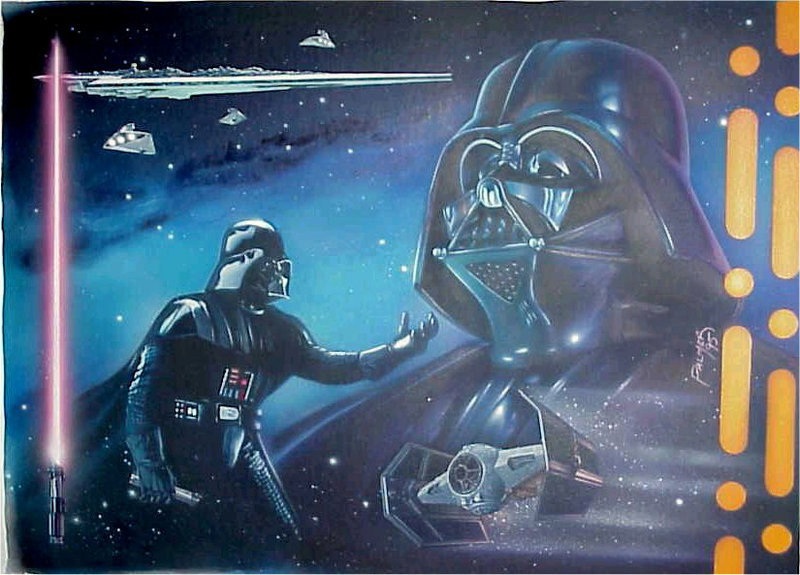
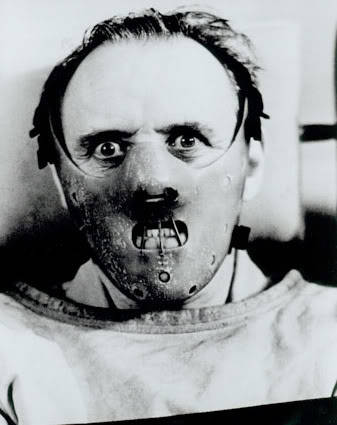
So: villains have to be motivated, and they have to seem that they are the protagonists in their story. And they should be the tiniest little bit sympathetic. You know, kind of like this guy: