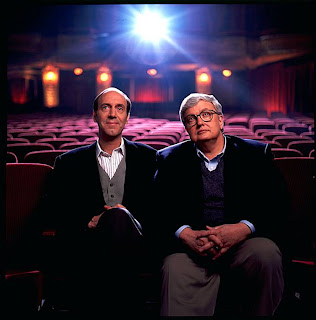
Whoa….

I’ll have more to say later at some point, but I’ve just read one of the earliest Star Trek novels, a 1974 book called Spock, Messiah!. And it is both super weird and not weird enough.

I need to think about this one.

That is all

Share This Post

A Small Haul

This year I have imposed a new rule: I will buy no books until our annual trip to Ithaca in the fall. I really really need to read up on my own library! I will make a couple of exceptions for special events, like Nickel City Con in June, where I’ll most likely want to buy some graphic novels. But other than that, I’m not buying books until October.

Unless, of course, something really unusual happens, like, say…the folks at Taschen offering a sale in which a bunch of their titles are 85% off.

Taschen makes gorgeous books. They are the creme de la creme of the “coffee table book”, just stunning volumes on many topics (mostly the arts) that are amazing objects in themselves, as well as just being high-quality all the way around. And the prices align with that quality: it’s not unusual for a Taschen book to cost hundreds of dollars (here’s a case in point). So when I got the email that Taschen was having a huge sale, I had to look. I consoled myself with the knowledge that they probably wouldn’t be marking down any titles that I actually wanted, but at least I could look, right?

Ahem.

Something like $150 later, the box containing these arrived. And that box was heavy. That James Bond book? That one alone probably weighs at least twenty pounds. The Audrey Hepburn book is also a weighty tome. I had to get the Star Wars book, obviously, especially since I already own the companion volume that chronicles the Original Trilogy. And what budding photographer doesn’t need a nice history of photography? Especially one that is produced under the auspices of the George Eastman House, a museum in Rochester that is devoted to photography (and a place I did not even know about)?

Another thing I’ve noticed about my book-selection tendencies nowadays is that I’m leaning more heavily toward books that are beautiful in themselves as well as selecting for content. More on that later sometime, though….

Share This Post

“Ho! Ho! Ho! To the bottle I go….”

Your Humble Narrator, decked out in Renfest-cottagecore regalia for an evening’s reading in Middle Earth. Note that I’m quaffing a beer, as rum isn’t a thing in Middle Earth, so far as I can tell!

Ho! Ho! Ho! to the bottle I go
To heal my heart and drown my woe.
Rain may fall and wind may blow,
And many miles be still to go,
But under a tall tree, I will lie,
And let the clouds go sailing by.

Drinking Song from The Fellowship of the Ring, JRR Tolkien.

A while back I embarked on a re-read of The Lord of the Rings. My progress has been slower than usual, because of reasons, but as ever I find myself loving this story deeply, and Tolkien’s luminous, lyrical writing continues to astonish and amaze me. I am as drawn in as ever, and this time I’m paying special attention to the poetry, of which JRRT writes many different kinds…including a drinking song or two.

The Peter Jackson movies did a decent job of incorporating Tolkien’s poetry, as much as they could for mass audiences, and here’s an artist who compiles some of the drinking songs from the films into one medley. The songs aren’t entirely Tolkien, but they contain enough of him that I don’t think he’d object to any of this.

Share This Post

A lovely haul

One thing I forgot to mention the other day (aside from citing a visit to a specific Barnes&Noble) is that a big part of our Ithaca vacation each year is a book binge. I save up for quite a while and then…well, here’s what happened this year. This is from three different bookstores: the afore-mentioned B&N in Pittsford, and Ithaca’s Odyssey Books and Autumn Leaves (the latter being a wonderful used bookstore).

And then what did I do on Monday? Why, I went to the library and checked out five books! Because, well, it’s what you do.

Time to do some reading before vacation ends….


Share This Post

“Can you love someone you don’t remember?” (A book review)

How can love persist in a world without memory? That’s the question posed by author Sarina Dahlan in her debut novel, Reset.

A while back I received an advance copy of a this novel, and I’m happy to report that it’s a very good book indeed, with a premise that is haunting and intriguing.

The setting is a human future, set an indeterminate number of years from now, in which humanity has been reduced to living in just four very large cities after a cataclysmic conflict leaves most of the world a scorched wasteland. In order to keep the seeds of such a conflict from sprouting and taking root again, a devilish new process has become the norm: every four years, everyone’s memory is wiped. Children are not raised by families but rather in institutions. All this was set in place by a single figure, in an attempt to quell the natural passions that are apparently the root causes of the conflict that nearly destroyed everything.

But there are some in this world who don’t want to forget, some who simply don’t forget at all. There are some who are tortured by their dreams and by a constant sense of deja vu, and some of these people are cursed to remember who they loved the last time around.

Reset asks questions like “What point is there in love if you’re going to be made to forget it all?” These are hard questions, and it leads to a memorable and haunting read that doesn’t offer a series of pat answers at its end. The novel explores ideas of memory and its permanence; it’s hard to separate the idea of Reset‘s “tabula rasa” (the process by which all memories are erased every four years), a science-fictional concept, and the very real-world problems posed by neurological conditions that rob people of their memories in a slow and inexorable process.

Dahlan is very focused here on love and the question of how it can endure when so much of our concept of love is bound up in memory. Are we simply going to move from one partner to another the next time around? Is what we feel actually love, if it’s so easily removed like a stone is removed from one’s shoe? Dahlan keeps the focus on the love story and the small cast of characters centrally involved within it, which is probably a wise choice. Some of the standard dystopia-story tropes are here, like the secret society of people who want to defeat the dystopian regime and restore something of the earlier world; at times the novel has chase scenes that put me in mind of Logan’s Run and THX-1138. But those aren’t the focus of the book; the main focus is, in fact, on lead character Aris and her confrontation of the idea that “tabula rasa”, which she has always supported because it’s simply what she knows, might have a dark underbelly to it.

Reset walks a fine line, in spinning a dystopian story in which the people are actually not slogging through grim lives of despair in wrecked cityscapes of bleak filth. The world of Reset is actually appealing in some ways, though I am not always clear on how everything works in this world. It seems to me that an essential part of a functioning society is continuity, and even if many of the underlying mechanistic jobs of society are handled in automated or robot fashion, the erasing of all memories every four years would damage that very continuity. I found the world-building of Reset not entirely convincing, but then…that’s not really the kind of tale Dahlan is trying to tell, in the first place. Her focus is on just a few characters and how they live and confront the issues posed by the very world they inhabit. If you’re looking for the kind of dystopia story in which the heroes lead a revolution against the powerful (or The Machine), this isn’t that book. If you’re looking for a solid love story set within the framework of a cold and rather heartless dystopia, Reset may well be your cup of tea.


Share This Post

“And there was evening, and there was morning—the fifth day”

Yeah, I’m pretty much back to normal this morning. I’m not planning on testing myself again until tomorrow, but it’s really looking like I’ve weathered my own personal COVID storm pretty well. I’m one of the lucky ones for whom it was “just a cold”. Since the worst of my cold passed on Monday, I’ve basically been enjoying what is turning out to be a lovely August week–albeit, a week when I can’t interact with anyone except my immediate family. It’s like house arrest, but without the ankle monitor. Oh well! Writing is also starting to go passingly well again, but more on that in another post.

Meanwhile, the open tabs are starting to pile up, so let’s clear out some stuff. That’s right, folks, it’s a GRAB-BAG POST! Yay!!!!

Pitter patter, let’s get at ‘er:

::  The value of owning more books than you can ever read.

I love articles like this, because they justify this book-buying lifestyle of mine. I make no apologies. None! Give me all the books! (I do need to do some weeding soon, though. That’s a project for my annual Autumn Vacation.) This article justifies large numbers of unread books in a way that I’d not thought of before in quite this way, however:

These selves of unexplored ideas propel us to continue reading, continue learning, and never be comfortable that we know enough. Jessica Stillman calls this realization intellectual humility.

People who lack this intellectual humility — those without a yearning to acquire new books or visit their local library — may enjoy a sense of pride at having conquered their personal collection, but such a library provides all the use of a wall-mounted trophy. It becomes an “ego-booting appendage” for decoration alone. Not a living, growing resource we can learn from until we are 80 — and, if we are lucky, a few years beyond.

A large personal library as an expression of acknowledgment of our own ignorance? I like that.

::  On lesbians and overalls. (“Dungarees” in the article; I believe the author is British and that’s the word they use over there.) I don’t have much of anything to add, but I did note during the 2000s and the 2010s–when overalls almost completely disappeared after a solid three decades of their being somewhat common, and downright ubiquitous in the 90s–that the only people really keeping them alive were the gays. I thank them for that! I couldn’t do all the heavy lifting myself, after all.

::  Loose lips sink ships. A typically superb essay by Jim Wright, a former Naval intelligence officer who now writes about politics and current events on his own.

What did Trump take?

I don’t know. But the very fact that he could walk out of the White House with classified material shows you that we as a nation need much better oversight and control of this process.

Trump’s own supporters often talk about “our way of life.”

And that’s ironic, because the very foundation of our way of life is that the president is not a king and he can’t just wave his hand and make it so.

This material does not belong to him, it belongs to us.

The president is not above the law.

Shortly after the 2016 election–and by “shortly”, I mean, minutes later–I started believing that that single election might well turn out to be the biggest self-inflicted wound in American history. The ripples from 2016 will be echoing through history long after I’ve joined the Choir Invisible, and I see to this day a reluctance on the part of Americans to admit that in a democracy, the blame always should go to us.

::  The real home run record is 73, not 61.

I’ve been paying more attention to baseball the last few years than I had basically from 2000 to, oh, 2015 or thereabouts. In the 90s I loved baseball and I almost always had a game on the teevee if there wasn’t something else we were watching (and it was baseball season, of course). While I’m not much for televised sport anymore, I’ve found it appealing to follow sport the way people probably back in the days before television: they read about it! You can do this, after all. I find that I can know just as much about what happens without spending three hours watching various sporting events by reading the work of all the fine people out there who write about sport. And then there are the box scores! I’ll let Fox Mulder explain:

 It’s like the Pythagorean Theorem for jocks. It distills all the chaos and action of any game in the history of all baseball games into one tiny, perfect, rectangular sequence of numbers. I can look at this box and I can recreate exactly what happened on some sunny summer day back in 1947.

Of course, no box score is perfect; sometimes you just have to see the weirdness that the box score can’t capture. Like this moment, which I just saw this morning: a minor league batter takes a swing at the ball, makes contact, and the ball goes…nowhere.

Well.

Back to the link above, this year there’s a player named Aaron Judge who plays right field for the Yankees. He’s already been known as a good power hitter, having hit 52 home runs in his rookie season in 2017. But this year he’s on an even more torrid (“torrider”?) pace. As of this writing he has 46 home runs already, which roughly translates to 64 home runs if he maintains that pace for the balance of the season. The famous single-season home run record for many years was Roger Maris’s 60 home runs in 1960, a record which stood until the late 1990s, when it was first broken by Mark McGwire and then also superseded by Sammy Sosa and Barry Bonds, who set the current record at 73.

But.

Those players were all implicated in the steroid scandals that swamped baseball in the early 2000s, and therefore, a whole lot of people view their accomplishments and records as being tainted. None of those players has been elected to the Hall of Fame, despite near-universal acceptance that Bonds was one of the very greatest players in the entire history of Major League Baseball. This has led many to simply set aside the numbers Bonds and the others put up, and re-establish Maris’s mark as the real record to beat.

The linked writer, Will Leitch, disagrees. Strenuously.

You could make a plausible argument that Judge is having the best home-run-hitting season of all time. McGwire, Sosa, and Bonds all accomplished their feats during an age of unprecedented home-run and scoring rates. And in 2022, nearly every pitcher in the game is throwing 95 mph cutters with late movement, and ultra-specialized relievers mean your final at-bat of the night is usually against some 23-year-old kid who throws 102. Pitching right now is as good as it has ever been. The leaguewide batting average this year is .243, the lowest since 1968, a.k.a. the “Year of the Pitcher” — making Judge’s mammoth blasts all the more impressive. If Bonds and company had to face the caliber of pitchers standard in today’s game, would they have broken Maris’s record? I doubt it.

The thing is, though: They did. The record is not 61: It is 73. Unlike in Maris’s case, there is no asterisk. There is no footnote in the record book reading, “Sure, Barry Bonds is technically the man to beat, but a lot of people didn’t like him and he probably took cow tranquilizers and had a huge head, so not really.” If Judge doesn’t get to 73, he doesn’t get the record. It’s pretty cut-and-dried.

I tend to agree with Leitch. I always found MLB’s tippy-tap dance around PEDs rather disingenuous–“There’s a thing we’d like you to not do, but we’re not going to actually make it a rule that you not do it, nor are we going to undergo any procedures to verify that you’re not doing it, and if you happen to enjoy spectacular success that brings good teevee ratings to us in a time when wow, we could really use some good teevee ratings, well, what’s the harm!”–and I find the resulting annual moralizing bullshit by Hall of Fame voters really cloying and ultimately nauseating. Every year we’re subjected to thinkpieces about “Why I’m not voting for the steroid guys again“, and every year–even moreso, really, with the passage of time–this crap reads more and more like the protest nonsense of self-appointed gatekeepers and guardians whose mission in life is to make sure that baseball’s history is always and forever whitewashed with just the right shade of sepia.

(I also have some suspicions as to the degree to which the public’s distaste for honoring Barry Bonds’s accomplishments stems from his being a black man who, let’s be honest, never put much effort at all into being what white people consider “pleasant”.)

(Oh, by the way, the X-Files episode I reference above, “The Un-natural”, is one of my favorite episodes of any teevee show, ever. If you can track down just that episode, watch it. It’s a stand-alone that requires zero knowledge of that show’s weighty mythology.)

::  OK, I gotta talk about this a little.

I’m not going to get into all the many ways this “I am TOO a man of the people!” Dr. Oz moment is a campaign gaffe for the ages (but seriously, it reminds me of the 2000 Senate NY senate race when that nitwit Rick Lazio thought that storming across the debate stage to force a pen into Hillary Clinton’s hand to sign his bullshit compaign-tone pledge was a great idea). You can read about his failure to even know what store he’s in (resulting in his mashing together the names of two real stores into one name of a store that doesn’t exist), and his absurd notions of what constitutes a veggie tray, and his goofy ideas about prices and how to shop, in lots of other places. You can also dig elsewhere into the current Republican trend of ignoring that inflation is a global trend because they want to blame whatever they can on Joe Biden.

I just want to focus on…Oz’s shirt.

Who the hell wears a Henley shirt with all the collar buttons done up?!

The whole point of a Henley is that the collar opens! It’s why you wear one! There is literally zero point to wearing a Henley shirt if you’re going to button up the collar. At that point you’re better served wearing a long-sleeve tee or a sweater. Just go with a friggin’ button-up shirt, you weirdo–or, if you must, a polo or a golf shirt. (My own personal suspicion of men increases directly with the number of golf shirts in their wardrobes, but that’s just me.) It’s just one more detail in a campaign video in which every detail screams out, “OK, guys, I gotta go where and do what, now? OK, how do I dress for that? Fine, is that my size? Does this look OK? It does? OK, let’s go!”

After this, Oz said something about his bungling of the store’s name along the lines of “Getting the names right doesn’t say anything about my ability to lead the Commonwealth.” This shows that he doesn’t even understand what he’s running for. Senators don’t lead their states, Doc. They represent them.

Seriously, at some point Oprah Winfrey has to account for giving this clown the public life he’s enjoying now.

::  Finally, here are two cats being jerks.

That’s Carla’s bed.

Share This Post

Roger

Sheila O’Malley re-shared her post on the anniversary of Roger Ebert’s passing today, and I thought, why not do the same? Here’s what I posted the day he died. I still miss his writing. There’s something about those Chicago newspaper men….

I was trying to figure out something to write on the passing today of Roger Ebert, but nothing was leaping to mind, so I figured I’d just repost my original thoughts, from January 2012, on his book, Life Itself. I have loved and admired Ebert since I was nine, and his output of thoughtful writing even in the face of debilitating disease the last few years has been truly astonishing. It’s something of the ultimate motivator: When I think “I don’t really wanna write today”, I then thing, “Roger Ebert’s writing today, and that guy’s got some hardcore difficulties. So get in the chair and write.”

When I saw the news today — my first report came via Sheila O’Malley on Facebook, and she is frankly the exact person I would have wanted to hear this from — I commented thusly:

Amazing how something you totally expect and don’t find a surprise can still hit you between the eyes and make the world a little less shiny

Farewell, Mr. Ebert. If there is some realm beyond this one…well, whatever. At least on this side we’ll have your years and years and years of writings. I’ve come to see you as being to film what Carl Sagan was to science, and I mourn and salute you in the same manner. Congratulations on a life well-lived!

I was nine years old, and I wandered into the living room to find my mother watching some show on PBS. It was a show about movies – there would be a clip of a new movie that was out, and these two guys would then talk a bit about whether the movie was any good or not. One of these guys was a thin, lanky guy. The other was a squat, fat guy. The thin guy was named Gene. The fat guy was named Roger.

“What’s this?” I asked.

“It’s called Sneak Previews,” my mother answered. “Those two men are film critics. They tell us if movies are good or not.”

“Oh.”

And I watched the thing. I didn’t know anything about movies, but these two guys were interesting to watch. Another year or two later, their show was off PBS, which struck me as a bummer…but they turned up again, in a syndicated show that was on, like many syndicated shows, at whatever time some station or other felt like putting it on. No matter, it was fun seeing these two guys, Gene and Roger – who worked for newspapers in Chicago – talk about movies.

So I watched Gene Siskel and Roger Ebert for years, off and on, right up until Siskel’s deeply saddening death in 1998. Then I watched Ebert and Richard Roeper (a good enough fellow, but no substitute for Siskel) for a few more years, until we no longer had cable and thus the show was beyond my grasp. And then, a few years after that, Ebert himself started to have health issues, which eventually resulted in unsuccessful surgeries that have famously left him unable to speak or eat (he takes meals through a G-tube, which is something I understand all too well, thanks to Little Quinn).

Siskel and Ebert were, in my view, one of the great duos in the history of anything. Those two had such astonishing chemistry together, that it was a joy to watch them agree positively on a movie, an even bigger joy to see them agree negatively on a movie (seriously, watching the two of them tag-team on a bad movie was always great), and the biggest joy of all when they disagreed. Then you could see some fireworks. I remember Ebert being astonished at Siskel’s thumbs-down review of Scorsese’s Casino; “Thumbs down?!” Ebert yelped. And there was another time – I can’t remember the movie – where Ebert liked it and Siskel did not, and Ebert said something like “I don’t think you wanted to like this movie”, a suggestion that seemed to physically hurt the usually more acerbic Siskel. “I love to like pictures!” he protested.

One time on Late Night with David Letterman, there was a segment that had Mujibur and Sirajul, the two Indian owners of a local store, reporting to Dave from somewhere in the country. And Dave says, “If you two are out there, who’s watching the store? Can we send a cameraman to see who’s in charge at the store?” So a cameraman goes into the store, to reveal a very stern-looking Siskel and Ebert. OK, I guess you had to be there.

Anyway, Ebert has been writing about the movies for decades now, and he is, by nearly any measure, the critic whose work I find the most illuminating and the most evocative. I’ve been reading him nearly almost as long as I’ve been watching him on teevee, and for a number of years, his annual review collections were required book purchasing of mine. Now he has produced a memoir, which he has titled Life Itself.

Ebert’s health struggles in recent years are well-known, and it’s been truly fascinating to watch him take to blogging in the wake of the loss of his physical voice, a medium he had initially viewed with suspicion but which allowed his authorial voice to finally blossom to its greatest strength. Ebert has always been a fine writer, but oddly, his disability-due-to-cancer has, for many, made him even better. Maybe it’s similar to that old saw about how when you lose one sense, the others somehow make substantial gains in acuity.

Reading his blog, I’ve mostly been struck by Ebert’s ongoing zest for life, even when there were occasional posts that took an especially elegiac tone that made me wonder if he was preparing for his own departure from this world. Ebert is still with us, though, and now we have Life Itself.

The book is more a series of vignettes than a straight telling of Ebert’s life. The vignettes are more or less in chronological order, but Ebert seems to be more exploring various themes in his life than the chronology of events. The book is something of a memory album that gives an impression of a life, which seems to me a good way to structure a biography. Sometimes when I read biographies, I get a sense of “plot” that couldn’t possibly be there. Ebert is well aware that life is plotless, and that many of the things that shape the paths of our lives for good or ill are often accidental, a function of our coming into the circle of this person instead of that person, or even something so prosaic as taking this flight instead of that one.

It’s telling that the book gives more of a sense of his development as a writer than as a critic; I suspect that Ebert believes that he would have been a writer no matter what, and it was just an accident of various circumstances that led to him writing about movies for the last forty years. There’s no “Through all my life the cinema has grounded my being” or anything like that; Ebert grew up as a talented kid who liked going to movies with his buddies on Saturdays. I love when he recounts his first reviews of avant garde films; finding himself in confusion as to what the films were about, he took the approach of simply recounting his experience in watching the film. This is an approach that has gone on to inform his entire approach to movie reviewing and film criticism.

Sometimes, in the course of his blogging over the last few years, a tone has crept into Ebert’s writing – that he seems to deny whenever it is pointed out, but it is there – that he is, in long form, saying goodbye to his life. I deeply hope that this is not the case. Ebert is, for me, to film as Carl Sagan is to science, and he’ll be missed by me in equal measure when he is gone.

Here are some excerpts from Life Itself.

On Mike Royko:

At about six p.m. On New Year’s Day of 1967, only two lights on the fourth floor were burning – mine and Mike Royko’s. It was too early for the graveyard shift to come in. Royko walked over to the Sun-Times to see who else was working. A historic snowstorm was beginning. He asked me how I was getting home. I said I’d take the train. He said he had his old man’s Checker car and would drop me at the L station. He had to make a stop at a twenty-four hour drug store right where the L crossed North Avenue.

Royko at thirty-five was already the city’s most famous newspaperman, known for compelx emoitons evoked with unadorned prose in short paragraphs. Growing up as the son of a saloon keeper, he knew how the city worked from the precinct level up, and had first attracted attention while covering city hall. He was ten years older than me and had started at the old City News Bureau, the copperative supported by all the dailies that provided front-line coverage of the police and fire departments. Underpaid and overworked kids worked under the hand of its editor, Arnold Dornfeld, who sat beneath a sign reading: If your mother says she loves you, check it out. When I met him he’d been writing his Daily News column for two years. It was his writing about Mayor Richard J. Daley that took the city hall word clout and made it national. He chainsmoked Pall Malls and spoke in a gravelly poker player’s voice. He drank too much, which to me was an accomplishment.

That snowy night the all-night drugstore was crowded. “Come on, kid,” he said. “Let’s have a drink at the eye-opener place.” He told me what an eye-opener was. “This place opens early. The working guys around here, they stop in for a quick shot on their way to the L.” It was a bar under the tracks so tiny that the bartender could serve everyone without leaving his stool. “Two blackberry brandies and short beers,” he said. He told me, “Blackberry brandy is good for hangovers. You never get charged for a beer chaser.” I sipped the brandy, and a warm glow filled my stomach. It may have been the first straight shot of anything I’d ever tasted. I’d been in Chicago four months and I was sitting under the L tracks with Mike Royko in the eye-opener place. I was a newspaperman. A blackhawks game was playing on WGN radio. The team scored, and again, and again. This at last was life.

“Jeez, they’re scoring like crazy!” I said, after the third goal in less than a minute.

“Where you from, kid?”

“Urbana,” I said.

“Ever seen a hockey game?”

“No.”

“That’s what I thought, you asshole. Those are the game highlights.”

On books:

Chaz [Ebert’s wife] and I have lived for twenty years in a commodious Chicago town house. This house is not empty. Chaz and I have added, I dunno, maybe three or four thousand books, untold numbers of movies and albums, lots of art, rows of photographs, rooms full of comfortable furniture, a Buddha from Thailand, exercise equipment, carved elephants from India, African chairs and statues, and who knows what else. Of course I cannot do without a single one of these possessions, including more or less every book I have owned since I was seven, starting with Huckleberry Finn. I still have all the Penrod books, and every time I look at them, I’m reminded of Tarkington’s inventory of Penrod’s pants pockets. After reading it a third time, as a boy, I jammed my pockets with a pocketknife, a Yo-Yo, marbles, a compass, a stapler, an oddly-shaped rock, a hardball, a ball of rubber bands, and three jawbreakers. These, in an ostensible search for a nickel, I emptied out on the counter of Henry Rusk’s grocery, so that Harry Rusk could see that I was a Real Boy.

My books are a subject of much discussion. They pour from shelves onto tables, chairs, and the floor, and Chaz observes that I haven’t read many of them and I never will. You just never know. One day I may nee to read Finnegans Wake, the Icelandic sagas, Churchill’s history of the Second World War, the complete Tintin in French, forty-seven novels by Simenon, and By Love Possessed. That 1957 bestseller by James Gould Cozzens was eviscerated in a famous essay by Dwight Macdonald, who read through that year’s list of fiction bestsellers and surface with a scowl. I remember reading the novel late into the night when I was fourteen, stirring restlessly with the desire to be possessed by love.

I cannot throw out these books. Some are enchanted because I have personally turned all their pages and read every word. They’re shrines to my past hours. Perhaps half were new when they came to my life, but most were used, and I remember where I found every one. The set of Kipling at the Book Nook on Green Street in Champaign. The scandalous The English Governess in a shady bookstore on the Left Bank in 1965 (two dollars, today ninety-one). The Shaw plays from Cranford’s on Long Street in Cape Twon, where Irving Freeman claimed he had half a million books. Like an alcoholic trying to walk past a bar, you should see me trying to walk past a used bookstore. Other books I can’t throw away because, well, they’re books, and you can’t throw away a book. Not even a cookbook from which we have prepared only a single recipe, for it is a meal preserved, in printed form. The very sight of Quick and Easy Chinese Cooking by Kenneth H.C. Lo quickens my pulse. Its pages are stained by broth, sherry, soy sauce, and chicken fat, and so thoroughly did I master it that I once sought out Ken Lo’s Memories of China on Ebury Street in London and laid eyes on the great man himself, dining alone in a little room near the entrance. A book like that, you’re not gonna throw away.

On his wife:

I sense from the first that Chaz was the woman I would marry, and I know after twenty years that my feelings were true. She had been with me in sickness and in health, certainly far more sickness than we could have anticipated. I will be with her, strengthened by her example. She continues to make my life possible, and her presence fills me with love and a deep security. That’s what a marriage is for. Now I know.

On Siskel:

One of the things I miss about Gene Siskel is that he’s not around to make jokes about my current condition. He would instinctively know that at this point I wouldn’t be sensitive, having accepted and grown comfortable with my maimed appearance. He wouldn’t have started joking too soon. His jokes would have the saving grace of being funny. Here’s one I’m pretty sure he would have come up with: “Well, there’s one good thing about Roger’s surgery. At least he no longer needs a bookmark to find his chin.”

On movies:

I have seen untold numbers of movies and forgotten most of them, I hope, but I remember those worth remembering, and they are all on the same shelf in my mind. There is no such thing as an old film. There is a sense in which old movies are cut free from time. I look at silent movies sometimes and do not feel I am looking at old films; I feel I am looking at a Now that has been captured. Time in a bottle. When I first looked at silent films, the performers seemed quaint and dated. Now they seem more contemporary. The main thing wrong with a movie that is ten years old is that it isn’t thirty years old. After the hairstyles and the costumes stop being dated and start being history, we can tell if the movie itself is timeless.

What kinds of movies do I like the best? If I had to make a generalization, I would say that many of my favorite movies are about Good People. It doesn’t matter if the ending is happy or sad. It doesn’t matter if the characters win or lose. The only true ending is death. Any other movie ending is arbitrary. If a movie ends with a kiss, we’re supposed to be happy. But then if a piano falls on the kissing couple, or a taxi mows them down, we’re supposed to be sad. What difference does it make? The best movies aren’t about what happens to the characters. They’re about the example that they set.

Casablanca is about people who do the right thing. The Third Man is about two people who do the right thing and can never speak to each other as a result. The secret of The Silence of the Lambs is buried so deeply that you may have to give this some thought, but its secret is that Hannibal Lecter is a Good Person. He is the helpless victim of his unspeakable depravities, yes, but to the limited degree that he can act independently of them, he tries to do the right thing.

What I miss, though, is the wonder. People my age can remember walking into a movie palace where the ceiling was far overhead, and balconies and mezzanines reached away into the shadows. We remember the sound of a thousand people laughing all at once. And screens the size of billboards, so every seat in the house was a good seat. “I lost it at the movies,” Pauline Kael said, and we all knew just what she meant.

When you go to the movies every day, it sometimes seems as if the movies are more mediocre than ever, more craven and cowardly, more skilfully manufactured to pander to the lowest tastes instead of educating them. Then you see something absolutely miraculous, and on your way out you look distracted, as if you had just experienced some kind of a vision.

May Ebert’s spot in the balcony remain reserved for years to come.


Share This Post

January Reading (From the Books)

I’m going to try, in 2022, to write a monthly recap of the books (and other things) I read each month. I had a good reading month and am well on my way to meeting my annual goal of 52 books! I track this on Goodreads, and I feel no qualms in including graphic novels in my reading; a good graphic novel is its own challenge and reward because the art demands attention as much as the words. I will also admit that I’m trying to get ahead of my Goodreads challenge a bit because I have some long “doorstop” kinds of books that I’d like to read this year, and those can really get time-consuming. (We’re talking Brandon Sanderson-sized epic fantasies and space operas later this year.)

So here’s what I read in January (or, a few items I started in December but only finished in January):

::  The God Equation: The Quest for a Theory of Everything, Michio Kaku. I’ve become a big fan of Kaku’s science writing over the last few years. As a science fiction writer (even one who tends to play at the George Lucas end of the pool, rather than the Arthur C. Clarke end), I feel it important to read some science every year, and Kaku’s work always keeps the “sensawunda” flowing. He writes big-scale, wide-eyed books about the Really Big Questions, and this one is no exception. If you want the kind of optimistic science writing that gives you the kind of feeling you might have had as a kid when you emerged wide-eyed from the planetarium show, Michio Kaku is your writer. (I confess that at times in his books I really can’t quite understand the more esoteric details of the things he writes about.)

::  Salt, Fat, Acid, Heat: Mastering the Elements of Good Cooking, by Samin Nosrat. This is the best kind of cookbook. Only about half of it is an actual collection of recipes; the rest is like a textbook in Cooking 101, in which Nosrat writes extensively about the how and why these four facets of cooking work the way they do to make food taste good. Reading this gave me much greater appreciation and insight into how to salt my food, why and when to add acid, what I can do with fat to enhance flavor, and the ways heat, applied in different ways, impacts flavor.

The book is richly illustrated, and it has fold-out charts that show how various ethnic cuisines around the world approach each individual element of cooking. Nosrat writes wonderfully, with a strong personal element in which she brings her personal experiences from working in the food world to bear. If you cook, you should check this book out.

::  For Small Creatures Such As We: Rituals for Finding Meaning in Our Unlikely World, by Sasha Sagan. Sagan is the daughter of Carl Sagan, who is one of my all-time heroes for many reasons: his scientific curiosity, his unyielding skepticism which was also bonded tightly to his unending ability to find wonder in what really is. Maybe some people were disappointed to learn that the surface of Mars is not segmented by great canals whisking water around the planet, but is instead rocky and thus far barren of liquid water and life; not Carl Sagan, who found the fact of the Martian surface even more wondrous than the dreamed-up version from the Edgar Rice Burroughs novels he read as a kid.

One common objection to atheism, especially the rigorously empirical version of atheism as endorsed by Carl Sagan, is the idea that absent any kind of spiritual force, our lives are directionless and meaningless. This is false for any number of reasons, but Sasha Sagan answers that objection in this book, and more than that, she endorses the embracing of rituals in our lives, even the ones that have religious origins, as a way of giving our lives meaning, direction, and purpose. Sasha Sagan is every bit as skeptical as her parents (her mother is Carl Sagan’s former wife, scientist and writer Ann Druyan) were as far as religion and spirituality go, but she writes refreshingly that skepticism need not mean a life devoid of ritual and the comfort that ritual provides.

Ms. Sagan writes with a lyricism that at times echoes Carl Sagan so strongly that it does feel, occasionally, like he is writing from “the beyond”. Of course, he isn’t…but his influence lives on, which is one of the points Ms. Sagan makes here.

A few quotes:

We all deserve holidays, celebrations, and traditions. We all need to mark time. We all need community. We all need to bid hello and goodbye to our loved ones. I do not believe that my lack of faith makes me immune to the desire to be part of the rhythm of life on this planet.

An old tradition is not intrinsically better than a new one. Especially when it is such a joy to make new ones up—ones that reflect exactly what you believe, ones that make sense of your life as you experience it, ones that bring the world a little closer to the way you wish it could be.

Gifts were exchanged, but the biggest gift was the idea that celebrations could be invented, that we could choose to honor what was most meaningful to us, that and the knowledge that spring was finally here.

On the scale of our human history, rituals like putting up Christmas trees, lighting menorahs, reading Hafiz, and baking rice dumplings are new. We humans have celebrated the earthly repercussions of our orbit longer than we’ve celebrated virtually anything. Before Christmas and Hanukkah, before monotheism or any other kind of theism, our ancestors were staring up at the stars, trying to gather clues about the changing of the seasons, the passing of time, and what the darkness might bring. The idea of marking the longest, coldest night with the knowledge that the warmth and light is not too far off, that is ancient. And no matter where we’re from, what religion we are, or to what ethnic group we belong, we can be sure that our ancestors, all of our ancestors, contemplated Earth’s place in the universe with awe. For them, it was sacred. And it still can be for us. Even more so because science has brought us a deeper understanding of the mystery and beauty of nature than our ancestors could have ever dreamed.

Sasha Sagan is not a scientist by trade, but she shows how you don’t have to be a scientist by trade to allow science and the rational approach to life govern you and guide you toward meaning that isn’t based on superstition or religion.

::  Eve’s Hollywood, by Eve Babitz. I read this on the strength of Sheila O’Malley’s paean to Babitz on the occasion of her passing last year. I really had no idea what I was getting into with this book, but after reading this by Sheila:

Let’s hear it for the outlaws of this world, particularly women outlaws. Let’s hear it for the swashbuckling romantics, the adventuresses dancing outside the perimeter of the picket fence, unprotected but free. Eve Babitz was their patron saint.

had to read something by Babitz.

I started this book, actually, on the plane to Hawaii, the last leg of that journey, which stared from LAX, so I think it fitting that I started Babitz’s memoir about growing up in LA while I was however-so-briefly in LA. My first hint that I was in for something very different was the dedication. There isn’t just one. Or two. Or three. Babitz dedicates her book to a cast of hundreds, in a dedication section that spans pages. Here is just one of her dedications:

And to the word, brouhaha.

Wow.

I wouldn’t dream of trying to sum up what Babitz writes about here. All of it is personal remembrance of a woman whose parents were friends with Igor Stravinsky, among others. (That’s the part that kept catching my eye. My entire life, Stravinsky is a genius composer who helped classical music kick Romanticism to the curb and embrace Modernism, the composer whose ballet The Rite of Spring cause a riot when it was premiered, but for Eve Babitz, he was a guy whom Dad knew and who showed up at parties.) Babitz’s Los Angeles isn’t a glitzy Beverly Hills experience, but it’s not the gritty place of Jake Gittes, either. It’s an interesting combination of the two, along with other incarnations of the same place. I’ve certainly never had the sense of LA that this book gives me. As the introduction (by Holly Brubach) states:

With a father who was a baroque musicologist and violinist under contract to Twentieth Century-Fox, a mother who was an artist, and a godfather who was Igor Stravinsky, Babitz grew up surrounded by a circle of illustrious family friends that included Edward James, Joseph Szigeti, Eugene Berman, Marilyn Horne, Kenneth Rexroth, and Kenneth Patchett, with poetry readings in the living room and premieres of works by Arnold Schoenberg under the palms.

A few quotes:

Studio musicians and musicians in general, men who have grown up practicing minute things their whole lives, are special. The general rules accepted by the players are that violin players are all lovers of women to an extravagant extent, oboe players are crazy and French horn players are sexy. Everyone else is square as square can be as far as I’m concerned, and if you go to an L.A. Philharmonic rehearsal you’ll see a bunch of accountants sitting around in plaid shirts and you’ll realize that musicians are the most innocent benders to Art there are. Imagine binding yourself into the confines of an orchestra, under the stick of a conductor, having to play what someone has written 200 years ago!

Stravinsky himself was Stravinsky. He was tiny and happy and brilliant and drank. He used to slip glasses of scotch to me underneath the coffee table when my mother wasn’t looking when I was 13. At my 16th birthday party, I wore white (very low necked white, of course) and he slipped rose petals down my top when my mother wasn’t looking.

Of course, gym teachers being what they are, they couldn’t just let us alone, they had to tell us what to do so they used to have “dance contests” with processes of elimination and envy and all that other stuff they have. The idea was to applaud who you thought was best—judgment by your peers, it’s called—and the ones who got the loudest applause won. Only the gym teachers decided which applause was loudest and it was never for the Pachuco couple no matter how obvious it was. Because how could kids who weren’t white and who’d been sent to Le Conte because they’d been expelled from other schools win? So the runner-up always won.

We were hot, the sea was one long wave to be ridden in, our skins were dark, and time even stopped now and then and let things shimmer since time, too, is affected by beauty and will stop sometimes for a moment. We didn’t know, as kids in other schools seemed to, what we were supposed to be, but we knew that somehow we were being taught something about life and that it couldn’t get much better. And when the sun began to set and we’d gather our things and walk silently back to the cars, we only wondered how the waves would be tomorrow in baked, half-conscious curiosity.

I remember reading something George Carlin wrote once, in which he talked about how much he loved and adored the New York City of his home; he closed by saying something like, “So why do I live in Los Angeles, then? Because the sun sets across the street from my house!” That’s the kind of sense I get of LA from Eve Babitz, only she’s kicking over rocks to see what’s underneath, and honestly, what’s underneath those rocks is utterly fascinating. I loved this book and I savored reading it.

::  The 13 Clocks, by James Thurber. I’m an old fan of Thurber’s, though I confess I’ve not read him in a very long time. I found this hardcover…someplace. I don’t honestly recall where: maybe a used bookstore in Ithaca, maybe one of the library book sales, I’m not sure. The story is a fantasy fable about a Princess whose father is an evil wicked Duke who promises her hand to the Prince who can complete the impossible quest set by the Duke. The book abounds with Thurber’s wordplay, so much so that it reads like a prose poem or actual formal verse, complete with rhyme schemes, set in type to look like verse. It’s frankly a delightful read, and it might be a good gateway for younger readers to Thurber’s kind of urbane wit that bites a little bit harder than you realize. I loved it.

If you can find a copy with the illustrations, please do so. The text is available in the Library of America’s Thurber volume, but without the illustrations, alas. (Thurber was also an artist who famously illustrated his own works, but apparently by the time he wrote this his eyesight had deteriorated too far for him to be able to do it himself.) Here’s an example of the illustration (by Marc Simont) in The 13 Clocks:

::  The Starship and the Canoe, by Kenneth Brower. Billed on the cover as “In the spirit of Zen and the Art of Motorcycle Maintenance, this is an exploration of the lives of two men, astrophysicist Freeman Dyson and his son, George. The elder Dyson is transfixed by the idea of the Orion Project, a proposal from the 70s for an interplanetary (or even interstellar) spacecraft that would use nuclear bomb detonations for propulsion. Basically the ship would have a very large shielding plate on its back end, and every once in a while a nuclear bomb would be chucked behind the ship to explode, giving the ship a kick forward. There’s something about that idea that sounds a bit absurd, but it would actually work and was seriously studied (Carl Sagan himself noted its potential in Cosmos) before international treaties banned the detonation of nuclear bombs in space.

Orion is the “Starship” of the title; the “Canoe” is a project of George Dyson’s. The Younger Dyson lives in the Pacific Northwest, as something of a quasi-hermit who builds a treehouse and uses paddle-boats (canoes, kayaks) to get around the hundreds of islands and island communities off the coasts of Alaska and British Columbia. As Brower gets to know him, Dyson the Younger is building a large sea-canoe that will accommodate six adults; Brower follows Dyson on various journeys up and down that coast as he meets people and acquires raw materials for his project.

The Dysons were somewhat estranged for many years, while Brower traces their lives in parallel, highlighting the ways their respective journeys mirror each other even while seeming wildly divergent. I found myself enjoying the chapters focusing on George more, mainly because of Brower’s nature writing, but Brower also does a good job of highlighting the ways these two men are very much alike.

There is very much a kind of 1970s “Search for oneself” vibe here, the kind of thing that makes me think of John Denver songs (not disparagingly, either, I love John Denver), but nevertheless, I was surprised at how much I liked this one.

Not a day passed without whales. The sound of their blowing was always around us, like the respiration of gods. We were trespassing, but with indulgence, I felt. We were like small boys who have sneaked into Neptune’s room and hear him breathing in his sleep.

::  The Sea of Trolls, by Nancy Farmer. I read this aloud to The Daughter years ago, and I remember enjoying it greatly. In fact, it might be the last book I ever read aloud to her, before she declared that she wanted to read herself at night–a wish I granted, though it made me sad to do so!–and we never finished reading the trilogy of which this is Book One. I found all three books on the Used Books section at Savers a while back (I always find something of value in the Used Books at Savers!), so I snapped up all three, and I’m reading the entire trilogy this year. It’s a Young Adult fantasy about a boy named Jack in Dark Ages Britain, who is learning from the local mystic when the Vikings come raiding. Jack and his little sister Lucy are abducted by the Vikings and proceed to have adventures and quests.

The Sea of Trolls is an exciting book, full of violence and magic and ghastly creatures and evil Queens and trolls and magic wells and enemies who become allies and allies who become enemies. It’s a complex tale full of memorable characters, and Farmer doesn’t sugarcoat things while also maintaining a sense of youthful fun. It reads like a more violent, slightly-more-adult Lloyd Alexander novel. I’m looking forward to the next two books.

::  Sergei Rachmaninov: An Essential Guide to His Life and Works, by Julian Haylock. I read this as part of my perparation for this coming April, during which I plan to do a bit of a “deep dive” into the music of Rachmaninov. This book is a short (under 100 pages) bio of the composer, well written but obviously not terribly deep. It’s a good starting point for exploring Rachmaninov’s life and world. (The book carries a label reading “Classic FM Lifelines”, so I assume there’s a whole series of these for various classical composers, to fill the need for bios longer than a single chapter in, say, The Lives of the Great Composers but shorter than long-form biographies.)

::  Firefly graphic novels: Watch How I Soar and The Unification War, vols 1 and 2. I love and adore the Firefly universe, and I’ve long had the sense that if further teevee or film tales from that universe are not forthcoming (and at this point, short of a straight reboot, the moment has probably passed), comics were the ideal medium for further storytelling in The ‘Verse. And lo, that’s exactly what’s happened! After some fits-and-starts, there has been a steady stream of Firefly comics tales over the last couple of years, which I’ve started exploring.

Watch How I Soar is a story, or rather a collection of vignettes, involving our beloved pilot Hoban Washburn (or “Wash”), as his life flashes before his eyes in the moments before…what happens to him toward the end of the movie Serenity takes place. This one might not be rewarding for anyone who isn’t already a fan of this universe.

The Unification War is the kind of tale Firefly did best: a story in which our heroes, who are just trying to keep on flying in the present, find their past deeds still coming back to haunt them. The story alternates between the present day and flashbacks to the “Unification War”, the big conflict that took place a decade or so before our “present day” in which the overbearing Alliance secured victory over the freedom-loving “Browncoats”. (I admit that as much as I love Firefly and its universe and characters, sometimes the whole thing feels like Star Trek for libertarians.)

Part of the delight of The Unification War is in the way the story keeps getting more and more complicated as things progress. Writer Greg Pak splits the crew up, sending each person into various perils that spin more and more out of control, until…well, there’s my problem. I thought that The Unification War was a two-part story. Turns out…it’s three. And I don’t have the third volume yet.

Sigh.

::  Alice in Sunderland by Bryan Talbot. I can barely describe this book. It’s billed on the cover as “An Entertainment”, and it certainly is that: a lone reveler wanders into a seemingly abandoned theater, whereupon he is present with a one-man show that incorporates a literary history of Alice in Wonderland, a biography of Lewis Carroll, a travelogue of Sunderland (a city in the UK), a meditation on stories and storytelling, and an exploration of history and meaning and the intersection of art and life. Alice in Sunderland is a staggering work where you never have any idea what’s around the next page turn: a tale about the ghosts that haunt old theaters? a tour of a tavern that’s a couple hundred years old? the life tale of an industrial robber-baron whose fingerprints are still on the landscape of this old city? a comics creator’s ruminations on the famous illustrations of John Tenniel? Who knows!

Talbot writes an immersive and dizzying work here, and the art–comprising traditional comics art, photographic collage, and other styles–is first-rate. I hold Alice in Sunderland as a masterpiece of the graphic novel form and a stunning example of the very best possibilities of the format.

Here is one spread from the book:

(Go here to embiggen.)

That’s all for January for me. What have you been reading?


Share This Post
Bridges

There are songs that come free from the blue-eyed grass, from the dust of a thousand country roads. This is one of them.

The Bridges of Madison County, Robert James Waller

In a real way, an era of my life can be defined by novels I read with the word “Bridge” in the title.

This period started in the back half of my senior year of high school, when I read Richard Bach’s The Bridge Across Forever, a book (and author) with which I have a long and mildly complicated history:

But back to that afternoon in the bookstore: the last Bach title on that shelf was The Bridge Across Forever: a lovestory. Like One, its back cover copy consisted of a single, brief item:

If you’ve ever felt alone in a world of strangers, missing someone you’ve never met, you’ll find a message from your love in The Bridge Across Forever.

As a Romantic at heart, that single blurb caught me. I bought the book and proceeded to read it pretty quickly. Without getting into too many details, my love life in high school was non-existent; I didn’t go on my first date until about a month before I graduated, and I didn’t have what I could by any reasonable definition a “girlfriend” until I was in college. (I always suspected my general high levels of geekiness and my general low levels of good looks as being prime causes of this, but I digress.) There was something about that bit on the back cover of that book that really captivated me: Missing someone you’ve never met.

As I recall, I read The Bridge Across Forever over the course of a week or so.

The Bridge Across Forever started an almost literary obsession during which I read everything Richard Bach wrote over the next year or two, and I ranked him among my very favorite authors for a while afterward. There is something to be said about hitting particular authors when you are most susceptible to their own unique magic, and maybe it’s a bit judgmental of me, but I do think you can tell something about a person by which author hits them between the eyes in those formative years between, say, 17 and 19 years of age. A person who gravitated to Richard Bach–weird mysticism and refusal to deal honestly with the details of his life aside–is more likely to be a person I can groove with than someone who discovered Ayn Rand at that same time.

Bach lasted for me through college, though my fascination with him did start to wane a bit as other fascinations came to the fore. (During summer between my freshman and sophomore years, I found an old copy of John Steinbeck’s The Acts of King Arthur and His Noble Knights in the basement that had belonged to my sister, and that single book launched me into a fascination with Arthurian legend that has also blown hot-and-cold, but never died, to this day.) But then in 1992–either toward the end of my junior year or at the beginning of my senior year, I don’t recall exactly–a new book with “Bridge” in the title hit the world. The author was a guy who actually lived and taught at another college, the University of Northern Iowa, just twenty miles away from my own school. His name was Robert James Waller, and the book was called The Bridges of Madison County.

This book was a colossus at the time, a hugely successful nationwide bestseller that catapulted Mr. Waller to enormous fame, giving his next few books instant best-seller status that eventually faded. Bridges was even bigger, though, in Iowa, for obvious reasons: a hometown writer hit it big with a story set in the backwaters of Iowa, a state no one ever thinks of as “exotic”, with a story of passion and forbidden love. A nature photographer comes to small-town Iowa to take pictures of some covered bridges for National Geographic, and while there he meets a farm wife whose husband and kids are off at a state fair someplace. In the space of about 48 hours, they have an affair and decide that they are the love of each others’ lives…and then, because she cannot bring herself to leave her family, their relationship ends and they never see each other again.

This story was huge in 1992, and as all such things do, it led to a movie, starring Clint Eastwood as our photographer and Meryl Streep as our farmwife. General consensus seems to have decided that the film is actually better than the book, and it probably is. Like lots of folks back then, I bought a copy of Bridges and read it in about a day. It’s a really short book, actually, and it was attractively published in a small-sized hardcover. The cover is a pleasant aged-paper color, with an inset sepia-toned and weathered photograph of a covered bridge, and the words “A Novel” present in a stylized postmark stamp.

Each chapter heading has a photograph from a covered bridge–the work of our hero photographer, Robert Kincaid–and the book itself is set in a typeface I honestly don’t recall seeing again anywhere else. It’s a nice bit of book design, in all honesty.

As for the writing, well…it’s complicated.

For all the love The Bridges of Madison County received back in 1992, in the years since Robert James Waller has sadly become something of a literary punchline. It’s not hard to see exactly why, though I do think it’s a little unfair. For one thing, when you read Waller’s descriptions of Robert Kincaid–a lanky fellow in an old denim shirt and omnipresent orange suspenders–and then you look at a photo of Robert James Waller from around the time he wrote Bridges, it’s honestly not hard to envision this as a “Mary Sue” story in which Waller is basically writing himself into an erotic tale. I don’t know if there’s any biographical genesis for the story Waller tells in this book that would make it a de facto confessional piece, but I rather doubt it, for the most part. Surely that would have become common knowledge afterwards, and he did have a long career after that. (Waller died in 2017.) Still, I wonder if Waller’s wife read the book and wondered if he was trying to say…something. The marriage ended five years after Bridges came out…probably right around the same time that Richard Bach and Leslie Parrish were deciding they weren’t soulmates after all.

I didn’t love The Bridges of Madison County when I first read it in 1992, but I did like it just fine. For a story set in as down-to-earth a place as you can find, there’s a kind of mysticism that underlies the story, and my impression as I read it was as if Robert James Waller was coming from the same kind of place as Richard Bach, albeit with less overt New Age mystical mumbo-jumbo. Waller’s world is still a place of magic, where lyrical spells are cast in the golden haze of the sinking Iowa sun, particularly if you’re on a covered bridge over a lazy Iowa river (all rivers in Iowa are lazy, and if you don’t believe me, go to Cedar Rapids and look for the rapids sometime). Waller’s magic turns erotic in a way that Bach’s does not, once he moves us from the bridge to the candle-lit kitchen of a lonely Iowa farm house whose wife’s family is out of town. Bridges reminded me of Bridge, with less astral projection and more removal of clothes.

Reading the book again, I’m struck much the same way.

Also, reading the book again, I’m struck by Robert James Waller’s writing style. It’s…well, look…he’s not a bad writer! There are some really good passages in here, and he sets a scene very, very well, often choosing details that matter (such as when Francesca works to dig out the coffee cups that don’t have chips in them). But he also does some really strange stuff, mostly in the form of words he puts in Robert Kincaid’s mouth. This very odd bit of self-description, for one example:

I am the highway and a peregrine and all the sails that ever went to sea.

I do not pretend to have the slightest idea what that means.

And Robert has other speeches about manhood and how he is one of the last of the real cowboys and such. This snippet comes in the middle of a long (several pages long) speech about the loss of the cowboy or some such thing:

Eventually, computers and robots will run things. Humans will manage those machines, but that doesn’t require courage or strength, or any characteristics like those. In fact, men are outliving their usefulness.

OK, I guess. I was discussing this stuff online with a friend of mine recently who suggested that this was part of the whole “Iron John”, Robert Bly movement about masculinity that took place in the years around this novel’s publication. I don’t know enough about the Bly movement to assess that claim, but Waller’s constant description of Kincaid as more force-of-nature than human being always strikes me as odd. Richard Bach doesn’t even go that far.

Waller writes poetically, and his scenes work from the standpoint of the descriptive stagecraft, but it’s hard to home in on either of these two characters. Francesca is a bit easier to sympathize with, since I suspect we all have our “Am I living the correct life?” moments, but it’s not easy to buy her insta-romance with Robert Kincaid because it’s just not easy to buy Robert Kincaid. He doesn’t feel like a character to me; he feels like a device. And when their romance ends, in a moment that I know we the readers are supposed to find deeply sad and moving, the person who gets my sympathy is Richard, Francesca’s husband, who gets home at the end to a wife who will never love him again, if she ever did. Richard can sense something is wrong, something is amiss, something has shifted in his beloved wife. He is riding around with her, running errands, and Robert Kincaid drives past her one last time, on his way out of town forever:

Richard took the truck across the intersection heading north. She looked for an instant past his face toward Harry’s [Robert Kincaid named his pickup truck “Harry”] red taillights moving off into the fog and rain. The old Chevy pickup looked small beside a huge semitrailer rig roaring into Winterset, spraying a wave of road water over the last cowboy.

“Good-bye, Robert Kincaid,” she whispered, and began to cry, openly.

Richard looked over at her. “What’s wrong, Frannie? Will you please tell me what’s wrong with you?”

“Richard, I just need some time to myself. I’ll be all right in a few minutes.”

Richard tuned in the noon livestock reports, looked over at her, and shook his head.

And then, later on in a letter that Francesca has left for her kids once she has died–a letter in which she explains to her son and daughter just why Mom seemed emotionally distant for the rest of her life–there’s this:

I think Richard knew there was something in me he could not reach, and I sometimes wonder if he found the manila envelope when I kept it at home in the bureau [containing a compromising photo that Robert Kincaid had taken of Francesca]. Just before he died, I was sitting by him in a Des Moines hospital, and he said this to me: “Francesca, I know you had your own dreams, too. I’m sorry I couldn’t give them to you.” That was the most touching moment of our lives together.

I can’t lie: I hate that. I hate that at no point does Waller give us any sense that Francesca anguished in the smallest measure over the fact that she denied her husband the emotional intimacy that is supposed to come with marriage. She let him carry the knowledge that he had lost her, somehow, some time, all the way to his death. I hate that.

Waller structures Bridges in flashbacks: Francesca has died and her two kids are seeing to the final dispensation of the estate, when they find the box of stuff Francesca left behind to explain her choices, which end with her request to have her ashes scattered where she herself scattered Robert’s, by the bridge where they first met. We don’t even get to delve very deeply at all into how this affects these two people, now adults, who are learning that their own mother had emotionally wed herself to someone else.

Ultimately The Bridges of Madison County is a story that tries to put a happy gloss on adultery, by assuring us that the affair really was true love, and that it ended quickly, and that everyone lived…well, ever after, anyway. I find it a hard book to love and a hard love story to be captivated by. But once upon a time, it captivated a lot of people.

Robert James Waller returned to Bridges some years later, with an “epilogue” titled A Thousand Country Roads. This is a really strange book that feels to me like a cash grab, an attempt by an author who had lightning in a bottle once to try and grab that market again, this time with a book that purports to tell “the rest of the story”. Problem is, Bridges already assured us that there is no “rest of the story”: Robert Kincaid and Francesca Johnson had their affair in one weekend, he left town, they never saw each other again, end of story.

A Thousand Country Roads revisits Robert Kincaid after the affair, and we see Francesca a little too, but they never meet. They can’t, after all. The only thing this book can do is give us a scene where Robert and Francesca visit one of their covered bridges, but an hour or two apart, so they don’t meet. There’s a manipulativeness to A Thousand Country Roads that rankles, and it’s odd to have this book that calls itself an “epilogue” to the original book when the “epilogue” book is actually longer than the original!

But anyway, the period of my life when I was open to “mystic love”, that began when I read The Bridge Across Forever, almost certainly drew to a close when I read The Bridges of Madison County. I came to see love as more of a practical thing between two people, and less of a union of two luminous spirit-beings, or the fate-driven intersection of a woman and “a peregrine and all the sailing ships” Last Cowboy. I suspect this transition was driven by another fictional entity, a sitcom that showed up a year later called Mad About You…but that’s a post for another time.


Share This Post

From the Books: “This Will All Be Over Soon” by Cecily Strong

Cover art, THIS WILL ALL BE OVER SOON, by Cecily Strong

Cecily Strong is one of my favorite performers on what is a very strong present cast on Saturday Night Live. In fact, this particular season she is getting featured a lot more than usual, possibly because Kate McKinnon has been on a leave from the show while she makes a movie. Strong is brilliantly versatile and funny, most notably for the shrill bombast she evinces when she is impersonating FOX News “personality” Jeanine Pirro. Strong also did a recent bit during an installment of SNL’s “Weekend Update” where, while dressed as a clown, she discussed the fact that she had an abortion in her early 20s. Strong is the kind of performer who is willing to leave however much of herself on the stage she needs to, and it’s often amazing to behold.

Like most of us, Cecily Strong had a very bad year in 2020. Unlike most of us, she wrote a book to document and process what happened to her and her family that year. For her it wasn’t just a year lost to COVID and the turmoil and uncertainty COVID brought; for Strong, 2020 was a year of profound loss and deep grief. Strong’s 2020 started with the death of her beloved cousin Owen from brain cancer. This was followed by the onset of the pandemic that for a time seemed to put the whole world on hiatus. It was during this time that Strong wrote this book.

Actress, comedian, and author Cecily Strong.

This Will All Be Over Soon is structured as a diary, chronicling Strong’s experiences and thoughts and feelings as the year unfolds, starting with her beloved cousin’s death and progressing into the pandemic. As such, she has to grieve not just his passing but others, and the loss of her home and her certainty. Strong meditates throughout the book about her relationships, her upbringing, and her previous struggles–if you want more insight into the abortion she recently discussed on SNL, it’s here–as she, like many of us, was forced to grapple with the uncertainty of life on an almost daily basis for an entire year…and more.

Cecily Strong is, it turns out, a gifted writer in addition to her skills as a performer. This book was on my To Read list as soon as I found out she was writing a book, and it stayed there even when I learned that it was not a comedy book but a memoir of grief and struggle. As such, I am even gladder to have read it. It’s not just a journal of a personal grief, but a primary document of a time that already feels somewhat distant. There’s a definite sense of Did it all really happen? Was it like that? Was all that fear real?

It was, and we need books like this to remember.

From This Will All Be Over Soon by Cecily Strong:

Maybe I can offer up one answer to my dad’s question: why Owen?

Owen fell madly in love after being diagnosed. He released two of my favorite songs with his band. One amazingly right before his last week in the hospital. He helped arrange the strings on that song, without even being able to play any of the strings. He went to basketball games. He covered scars with hats and became the fun guy who collected hats. He came to SNL. He danced. he smiled. He laughed. He read. He ate ice cream. He told my uncle he’d had the best year of his life.

The entire world will be affected in some way by coronavirus. We don’t know how. We don’t know if we will be sick or someone we love will be sick. Could the unthinkable happen and could we actually lose someone? And why can’t we control this fucking thing? I watch Cuomo speak to try to understand the science. We try to wrap out minds around the language of COVID-19 and Ebola drugs and malaria drugs and what it does to your body, and we can only watch, helpless.

I hear and feel the fear and pain and grief and sadness in people and how it manifests in lashing out and hoarding and turning on one another, and it’s dangerous and it’s sad and every day I have started to feel it more and more: the world needs Owen Strong.

This sound hyperbolic and, quite frankly, impossible, I realize. I don’t mind the hyperbole, since I still see him as a bit of a superhero figure. But I guess what I really mean is this: I was afraid to talk too much or share too much of this loss for many reasons. It would mean acknowledging something as real when I wasn’t ready to, I wasn’t sure it was my loss to share, and I was afraid of never being a good enough writer to properly honor him, just to list off a few.

Now I’m ready. Leda is ready. I want to write about him. I want to talk about him. I want you to know him. I want you to feel a little better after knowing a bit of his story. Maybe, just maybe, somebody will feel less afraid about the uncertainty that lies ahead. Maybe we can find moments during a very scary and difficult time to feel lucky.

Because who knows: as Owen proved, the worst year of your life could turn out to be the best year of your life.

Maybe that’s why, Dad.

And yes, there’s a reason why I’m posting about this book, this day. Grief isn’t a thing that ends, after all.

Sixteen years gone, today….

Share This Post