From the Books: “This Will All Be Over Soon” by Cecily Strong

Cover art, THIS WILL ALL BE OVER SOON, by Cecily Strong

Cecily Strong is one of my favorite performers on what is a very strong present cast on Saturday Night Live. In fact, this particular season she is getting featured a lot more than usual, possibly because Kate McKinnon has been on a leave from the show while she makes a movie. Strong is brilliantly versatile and funny, most notably for the shrill bombast she evinces when she is impersonating FOX News “personality” Jeanine Pirro. Strong also did a recent bit during an installment of SNL’s “Weekend Update” where, while dressed as a clown, she discussed the fact that she had an abortion in her early 20s. Strong is the kind of performer who is willing to leave however much of herself on the stage she needs to, and it’s often amazing to behold.

Like most of us, Cecily Strong had a very bad year in 2020. Unlike most of us, she wrote a book to document and process what happened to her and her family that year. For her it wasn’t just a year lost to COVID and the turmoil and uncertainty COVID brought; for Strong, 2020 was a year of profound loss and deep grief. Strong’s 2020 started with the death of her beloved cousin Owen from brain cancer. This was followed by the onset of the pandemic that for a time seemed to put the whole world on hiatus. It was during this time that Strong wrote this book.

Actress, comedian, and author Cecily Strong.

This Will All Be Over Soon is structured as a diary, chronicling Strong’s experiences and thoughts and feelings as the year unfolds, starting with her beloved cousin’s death and progressing into the pandemic. As such, she has to grieve not just his passing but others, and the loss of her home and her certainty. Strong meditates throughout the book about her relationships, her upbringing, and her previous struggles–if you want more insight into the abortion she recently discussed on SNL, it’s here–as she, like many of us, was forced to grapple with the uncertainty of life on an almost daily basis for an entire year…and more.

Cecily Strong is, it turns out, a gifted writer in addition to her skills as a performer. This book was on my To Read list as soon as I found out she was writing a book, and it stayed there even when I learned that it was not a comedy book but a memoir of grief and struggle. As such, I am even gladder to have read it. It’s not just a journal of a personal grief, but a primary document of a time that already feels somewhat distant. There’s a definite sense of Did it all really happen? Was it like that? Was all that fear real?

It was, and we need books like this to remember.

From This Will All Be Over Soon by Cecily Strong:

Maybe I can offer up one answer to my dad’s question: why Owen?

Owen fell madly in love after being diagnosed. He released two of my favorite songs with his band. One amazingly right before his last week in the hospital. He helped arrange the strings on that song, without even being able to play any of the strings. He went to basketball games. He covered scars with hats and became the fun guy who collected hats. He came to SNL. He danced. he smiled. He laughed. He read. He ate ice cream. He told my uncle he’d had the best year of his life.

The entire world will be affected in some way by coronavirus. We don’t know how. We don’t know if we will be sick or someone we love will be sick. Could the unthinkable happen and could we actually lose someone? And why can’t we control this fucking thing? I watch Cuomo speak to try to understand the science. We try to wrap out minds around the language of COVID-19 and Ebola drugs and malaria drugs and what it does to your body, and we can only watch, helpless.

I hear and feel the fear and pain and grief and sadness in people and how it manifests in lashing out and hoarding and turning on one another, and it’s dangerous and it’s sad and every day I have started to feel it more and more: the world needs Owen Strong.

This sound hyperbolic and, quite frankly, impossible, I realize. I don’t mind the hyperbole, since I still see him as a bit of a superhero figure. But I guess what I really mean is this: I was afraid to talk too much or share too much of this loss for many reasons. It would mean acknowledging something as real when I wasn’t ready to, I wasn’t sure it was my loss to share, and I was afraid of never being a good enough writer to properly honor him, just to list off a few.

Now I’m ready. Leda is ready. I want to write about him. I want to talk about him. I want you to know him. I want you to feel a little better after knowing a bit of his story. Maybe, just maybe, somebody will feel less afraid about the uncertainty that lies ahead. Maybe we can find moments during a very scary and difficult time to feel lucky.

Because who knows: as Owen proved, the worst year of your life could turn out to be the best year of your life.

Maybe that’s why, Dad.

And yes, there’s a reason why I’m posting about this book, this day. Grief isn’t a thing that ends, after all.

Sixteen years gone, today….

Share This Post

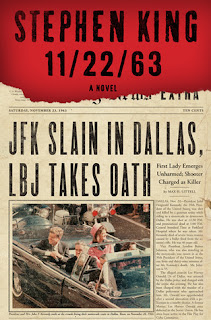
The Past harmonizes: 11/22/63, by Stephen King

(Re-upping this one after a discussion of Stephen King on Twitter, and specifically this book, made me remember this post!)


One odd bit of Star Trek lore that I didn’t know about until I read one of William Shatner’s Star Trek Memories books is that, during the 1980s when the Trek movie series was in “another sequel every two years” mode, Gene Roddenberry had a pet idea that he kept trying to get Paramount to adopt for whatever the next movie happened to be. This notion had the Klingons taking over the galaxy by going back in time to Earth in 1963, and preventing President Kennedy’s assassination. In order to fix things, Kirk and company have to go back as well and make sure that JFK dies like he’s supposed to; according to this site, Spock himself is the shooter behind the grassy knoll. I’m not sure how that would have gone over – frankly, it sounds a bit dour and depressing. That worked in the episode “The City on the Edge of Forever”, when Kirk had to stand by and allow a woman with whom he’d fallen in love to die in order to preserve history, but this story, if what Roddenberry truly had in mind, somehow crosses a line. Maybe it’s by having Spock actually kill JFK. I’m glad that movie never got made.

There’s always been something compelling about the JFK assassination to alternate history types and time-travel writers. I think there’s a definite sense to JFK’s murder as one of those singular events in history that neatly separates what came before it from what came after, and as with all such moments, there’s a definite feeling that if the event could be changed, what came after would change, too – mainly for the better, I think the argument goes. Certainly the general opinion seems to hold that had JFK not died in Dallas, but gone on to reelection and a second term, the 1960s might not have been as turbulent as they turned out, with Vietnam possibly not escalating as it did, with civil rights possibly having an easier road to passage, and so on. Obviously there is no way to evaluate such beliefs, but the closest we’re able to come to doing so lies in the power of fiction.

(I wonder if 9-11-01 is going to replace the JFK assassination in the public mind as the most recent ‘focal point in time’. After all, the events of 11-22-1963 happened almost 50 years ago, well before the lifetimes of most Americans living today. I wonder if there will be time travel stories involving time travelers showing up at Logan Airport to prevent the boarding of Mohammad Atta and friends….)

This brings me to Stephen King’s latest novel, 11-22-63. This is a time-travel story, in which a man from our time travels back with the intention of preventing the Kennedy assassination.

Jake Epping is a teacher whose marriage has just ended and who is apparently emotionally damaged in some way: he tells us up front that he simply does not cry, no matter what happens. Jake never cries, he tells us (the book is in first person, from Jake’s point-of-view), and he is haunted by the various injustices of history, such as the janitor who takes his adult education course and whose term essay smacks Jake between the eyes with a first sentence that refers to when the janitor’s dad ‘murdirt my mother and two brothers and hurt me bad’. This haunts Jake, and it’s all he can think of – even as his friend Al, who owns the local diner and who is going to die very soon of cancer, tells him of his own little secret.

In the basement of the diner is a gateway through time. Walk through it, and you emerge outside a factory in Lisbon Falls, Maine, on September 9, 1958. Walk back through, and you’re back in 2011 – exactly two minutes later than when you left. And if you go back in time again, no matter how long you’ve waited to do so, you go back to that exact same moment on September 9, 1958 – which means that any changes you have made to the past are now reset.

This limiting of the time travel possibilities is one of the masterstrokes of King’s novel. There’s no ‘setting a date and then hitting 88 mph’, no ‘slingshotting your starship around the sun’. You can only go back in time to a single place, to a single time, and you can only return to a single place, to a single time. And if you are ambitious enough – as Jake soon will be – to try and change history, if you want your changes to be permanent, you can never go back again. And if, like Jake, you decide that you’re going to try and keep JFK from being killed, that means that you can go back…and then you have to spend five years living there in the past until that fateful day. November 22, 1963.

King seems less interested in the various paradoxes of time travel stories, many of which have become clichees, than he seems to be in history as a force in itself. As he makes his life in the past, Jake – now going by the alias ‘George Amberson’ – frequently discovers ways that the past seems to be trying to right itself even as he messes with things. “The past harmonizes”, he tells us, again and again, and as the book goes on, the level of uncertainty involved in Jake’s self-appointed mission grows and grows and grows. Jake has to try and figure out if Lee Harvey Oswald was part of some kind of conspiracy, or if he acted alone; he has to try and decide if he should intercede earlier or later. He takes a ‘dry run’ early on, interceding on his janitor friend’s behalf when his father shows up to kill his family, and in such ways Jake discovers things about killing – even justified killing – that are troubling.

This is not a scary novel, but it is a haunting one. King masterfully keeps us aware of the onward march of time, so that the date of the title never really fades from memory, even as Jake is living out the five years he has to live out in the past, making a life for himself in a small town in Texas where he makes friends with local teachers and, in the ultimate complication, falls in love. Still, through all this there is a constant sense of growing doom, the constant ticking of King’s time bomb growing ever more and more insistent. Will he stop Oswald? If so, how? And will it matter in the end?

The time travel aspects of the story are, initially, pretty benign in nature, and we learn that Al is using the time portal to buy ground beef at 1958 prices, which enables him to sell his burgers in his diner for significantly cheaper than anyone else can manage. Jake discovers, though, that the past has ways of resisting change, and although King never really spells out much of the mechanism behind that sort of thing, it soon becomes clear that the bigger the change one is trying to make in history, the harsher the resistance one will meet.

11/22/63 is a thrilling King page-turner, loaded with emotional resonance, King’s keen eye for detail, and a bittersweet ending that is satisfying but not in an expected way. Parts of the book read as if Stephen King had written a mash-up of Back to the Future and Oliver Stone’s JFK. In other parts, though, the feel is pure King – especially in one section, taking place in Derry, Maine, where events bring Jake Epping into contact with two of the kids from IT. King is best at suggesting dark forces at work that we cannot understand – or perhaps I should say, forces that we cannot understand whose goals and priorities do not align with ours. Is history something we influence, or is it a force all to its own? 11/22/63 explores that question, even if it may not have a definitive answer.

(One final note: Throughout the book, Jake notes that ‘the past harmonizes’ – which means, history has a way of making things even out, of settling the books. A lot of times, what we call coincidence is this ‘harmonizing of the past’. Well, maybe fiction harmonizes, too; there’s a point in the book that actually features a pie fight. I read that just a day or two before my own pieing last week. How’s that for synchronicity!)

Share This Post

“I shall read you to the bitter end!” vowed the Reader….

An interesting discussion erupted over on Twitter the other day, occasioned by this tweet:

https://twitter.com/nakedvix/status/1448595705128529920

Almost exclusively the discussion hewed to one side of this argument: that it is, in fact, deeply silly to suggest that a reader is insulting an author by leaving a book unfinished, for whatever reason. One writer and book commenter and critic and reader after another came forth to insist that no, as a reader, you absolutely should stop reading books that for whatever reason aren’t clicking for you. You owe the author nothing, and there is utterly no insult to an author simply because one reader didn’t connect with a book.

In short, everyone piled on the writer of this tweet, and given the formulation of the position stated therein, that’s probably correct. I myself do not hesitate to leave books unfinished if I am not enjoying them.

However!

(There’s always a “however”, isn’t there?)

In this case, the writer behind the tweet above, Victoria Richards, is merely paraphrasing the headline above in the article she links in her tweet. Reading that piece, I found myself agreeing–at least a bit. The actual point the article’s author, Rupert Hawksley (a writer with whom I am unfamiliar), is a bit more nuanced.

bit.

Yes, the headline reads “It’s an insult to authors to not finish each and every book you start,” but when we dig in we find something else:

Earlier this week, the novelist Mark Billingham caused a minor stir when he suggested that readers should throw a book “across the room angrily” if it hasn’t gripped them in the first 20 pages. Speaking at the Cheltenham Literature Festival, Billingham said that he gives up on about half of the books he starts because “life’s too short … There are so many great books out there.”

Plenty of others agree with him. Hilary Rose, writing in The Times, explained that she “bitterly regret[s] not heeding Billingham’s life lesson sooner”. Crime writer Linwood Barclay added: “Think of it this way. If the first three bites of your meal taste terrible, you don’t need to keep on eating, expecting it will get better.” Well, no, though I’d point out that if the starter was disappointing, you might still stick around for the main. Plenty of iffy prawn cocktails have been followed by an excellent steak.

Reading is, for the most part, a private pursuit; it’s unlikely many of us would seriously change our habits based on the advice of others. Whatever works for you, I suppose. Still, I have found the discussion this week dispiriting and, dare I say it, a bit childish. The idea that we read simply to be entertained – as an easy form of escapism – seems to underpin all the arguments for giving up on a book: “I couldn’t get into it”, “it didn’t grip me”, “too slow”. But entertainment, surely, isn’t the only reason why people read – or indeed why authors write.

Reading should challenge and confound us; it should take us into the minds and lives of those we don’t like or find hard to understand. This may not always be gripping but it is often rewarding. We owe it to writers to give them a full hearing before passing judgement – and finishing a book is the only way to do this. To give an author just 20 pages of your time is insulting.

That last bit is key: We owe it to writers to give them a full hearing before passing judgement–and finishing a book is the only way to do this. To give an author just 20 pages of your time is insulting.

Also of note is the way Hawksley starts: he is responding to someone who has said that a reader should fling a book angrily aside if they’re not enjoying it just twenty pages in. Now, there’s no link there to substantiate the quote, so it seems to me that Hawksley is framing a stronger-than-necessary response to an argument that is, the way he depicts it, also a bit strange.

All I can do here is offer my testimony as a reader myself. I stop reading books (what the kids today call “DNFing”, with DNF standing for “Did Not Finish”) probably around a quarter of the time. That is to say, I suspect that I DNF around a quarter of the books that I start. Why? Well, there are many reasons! There’s the “It didn’t grab me” thing, which is a thing, I have to admit. There might be other factors involved: I’ve had to DNF books that came due at the library before I could get all the way through. (This may, in fact, be the main reason I DNF stuff. Sometimes I’ll make a note that I was liking the book and check it out again; other times I won’t bother.) And sometimes there are other reasons for DNFing a book. I’ve had a few instances of starting a book just in time for the author to, well, show their ass on the Internet by saying something awful. I don’t like to do that, but I can’t really enjoy a book knowing that the author has just exposed themselves as a big jerk.

Here’s what I don’t do, though: I never pass judgment on a book that I did not finish. A cursory glance at my Goodreads account makes it look like I like all the books I read, but that’s not quite it: I won’t review a book I didn’t finish (I have a DNF shelf on Goodreads for my own record-keeping, and it has only seven titles on it), and I don’t finish what I’m not enjoying. This seems fair to me.

I also very rarely conclude that a book isn’t good. When I DNF a book for a reason involving the book itself, it’s because of that dreaded “it didn’t grab me”…but even so, I don’t read too much into that at all. I’m more likely to say “This wasn’t doing it for me right now, but maybe it will some other time.” And that is always possible. Many of my favorite books of all time are books that I couldn’t finish the first time I tried reading them. I see a DNF for this reason as not being a statement of any kind about the book, or me, or me and the book. It’s just “Meh, this isn’t what I feel like reading right now.”

That original author’s statement about flinging the book aside angrily if you’re not grabbed in 20 pages? Isn’t that a little weird? How can 20 pages possibly be enough to know if a book has “grabbed” you? And why be angry at a book that simply hasn’t engaged your emotions on this particular day? In fact, the books that make me angry might be the ones I’m more inclined to finish, for whatever bizarre reason. It doesn’t happen often, but I will note that I wish, from the vantage point of experience and time, that I had chucked The Fountainhead and Atlas Shrugged against the nearest wall. But even in those cases, I doubt I’d have done so a mere twenty pages in.

Ultimately I think readers and authors put way too much stock in a book’s need to “grab your attention”. The advice is constant: “You have to grab your reader! You have to command their attention from the first line! If they have the slightest reason to put your book aside, you’re done!” Sometimes you hear this stuff from editors and agents, but those are special cases: their jobs involve reading more stories or novels than any human can reasonably process in a week, so of course they’re going to reject books within a few pages, if that. But what of that? What does that mean? Again: merely that the book didn’t click with that person at that time.

So, in the end, I think the only real insult to an author comes when you judge a book harshly without having finished it. You should come to a book with the most open mind possible, but it is simply unreasonable to expect that in every single case a reader will be prepared to go where the author wants to take them. You never know until you try, I guess…but don’t worry about insulting the author. Especially if you bought their book, because then, well, they’ve already got your money.

Share This Post

From the Books: Why We Swim

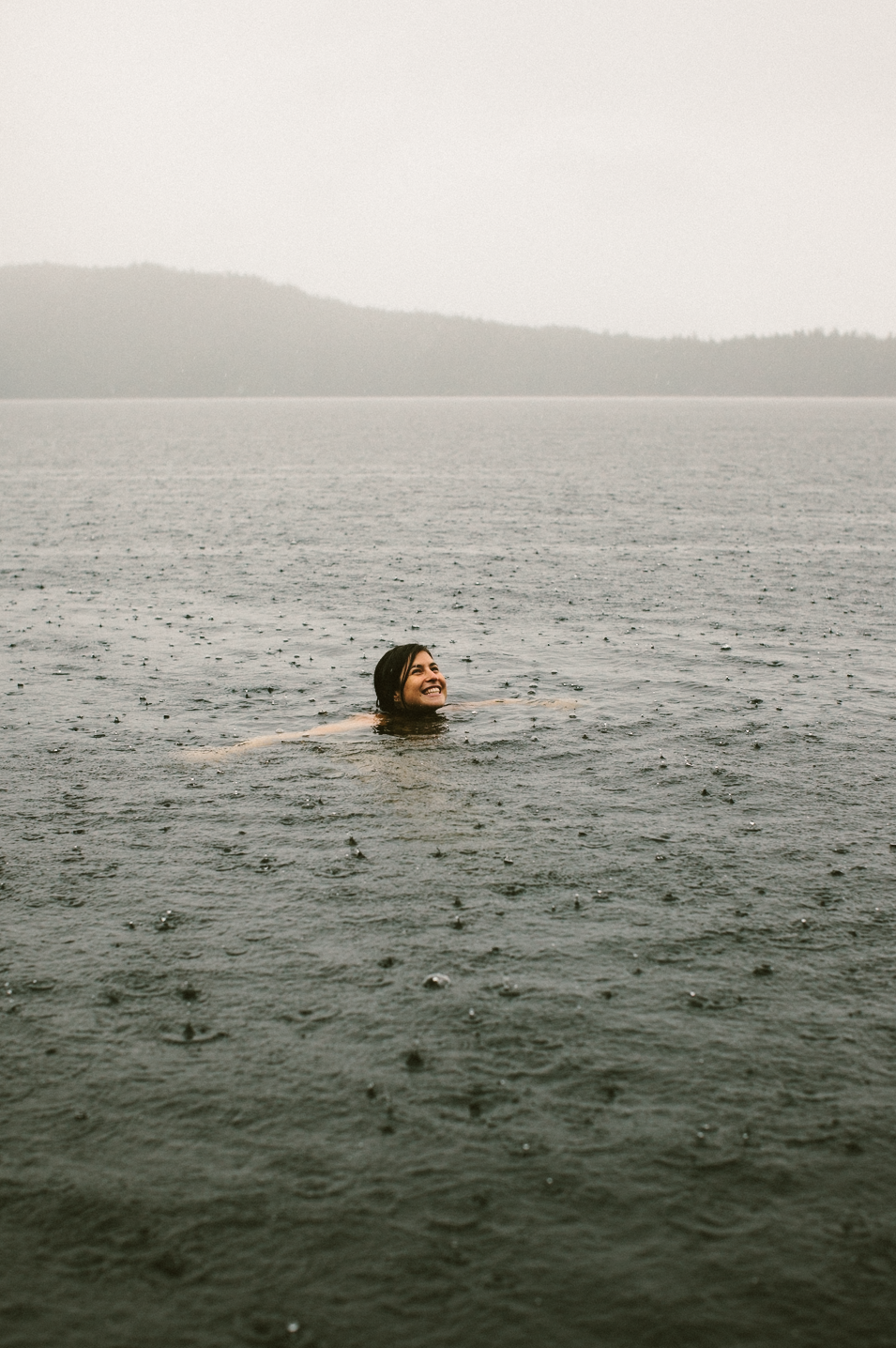
Swimming in the rain.
Swimming in the rain. Via benchandcompass.tumblr.com

Sometimes people cite the lack of browsing as a reason why it sucks that the independent bookstore has fallen on hard times in these, the Days of Amazon and other online retailers. And that’s true: one of the great joys for me, as a bookish person, is wandering through the shelves of this bookstore or that, seeing what random things I may find that I didn’t even know I wanted (while likely carrying around a stack of things I already knew I wanted). Well, indie bookstores seem to be rebounding of late, but there’s another place where you can get your Serendipitous Finds Whilst Lazily Browsing game on, and those places are libraries.

A couple weekends ago I had occasion to be in the Hamburg, NY public library. It’s a lovely place, recently renovated and a member branch of the Buffalo and Erie County Public Library, so my library card works there, too! I wasn’t planning to leave that day with six books under my arm, but that’s what happened. Among them was Why Se Swim by Bonnie Tsui.

Tsui is an Asian-American journalist who has written on issues of interest to that community, including a book called American Chinatown that was a bestseller and won an award for Asian-American journalism. (I have not read it, but on the strength of Why We Swim, I may.) Why We Swim is her second book, and it is quite simply exactly what its title suggests: a look at why human beings, evolutionarily descended from sea creatures but no longer of the sea, are so strongly compelled to the water. Swimming is one of the most common things we do as humans, despite the fact that this obsession with the water so often brings us to harm. We keep coming back. Why?

There are a number of basic reasons, Tsui argues, and she boils them down the sections of her book. We firstly swim for survival, and she opens here with an examination of an Icelandic fisherman who survived alone the capsizing of the fishing boat on which he worked. He swam three miles through icy seas after his mates either froze or drowned, and he lived to tell his tale and become a folk hero for the people of Iceland.

Next Tsui discusses how swimming heals us and how swimming regularly contributes to our overall fitness. She writes about the effects of regular swimming in cold water and how some competitive endurance swimmers turned to their activity after suffering illnesses or injuries.

We also swim for community, and Tsui describes impromptu swim clubs that formed after the fall of Baghdad in the Iraq war. She also discusses the sad history that racism played in the destruction and dismantling of public swimming pools in American cities, during the decades of white flight from urban centers for the suburbs. It’s another example of the fact that no matter how hard we try in America, we can never get far from our deplorable history of racism and the racist motivations behind some of our oldest public policy choices.

These are all practical reasons for swimming, but Tsui saves the most profound reasons for the latter portions of Why We Swim. Water is almost a psychological need for humans. She reports that hospital patients report better sensations of well-being when the decor of their rooms includes water imagery, and she notes that Henry David Thoreau included a great deal of swimming in his treks to Walden Pond and the woods where he went to live deliberately. The water calls to us and guides us, even if we are no longer a part of it; we recognize that some part of us comes from there.

In this passage, Tsui relates a bit of personal history in how swimming played a part in forging connections with her family-to-be. The book is full of beautiful passages like this.

Once upon a time, I fell in love with a family and a lake. In the ritual of swimming, the connection of one body to another, of one person to another, there is flow of a different sort to be found.

The first summer we were together, Matt took me to visit his grandparents at their cottage on the northern shores of Lake George, five hours north of New York City. Ted and Shirley met on a swimming raft on that lake, in 1939, and got married after the war. Their safe harbor was the tiny hamlet of Silver Bay and the grand old YMCA resort that had been there since 1899. Matt and I were young ourselves on that visit, just out of college, and would not be married for another eight years. But that liquid-mercury lake–framed by evergreens in the picture-postcard view from the screen-in back porch–would be a touchstone from the first.

Everyone in the family had a particular way of crossing the lake. Grandpa Ted had a special affection for tooling around in fishing boats. He owned three in his life: The Ultimate Folly III, and III, each larger and more elaborate than the last. No one could remember him having ever actually caught a fish.

Uncle Chris, all six feet five of him, folded himself into a kayak before paddling across. Matt’s mom, Robin, loved to float around in a rubber dinghy–she wasn’t a frequent lake crosser, but she was a spirited shore dabbler. Her husband, Jan, a marine surveyor, traversed the waters on a windsurfer and, later, on a stand-up paddleboard. Uncle George, a National Outdoor Leadership School instructor and all-around outdoorsman, like to sail; Matt’s little brother, Jesse, had just earned a license to pilot the thirteen-foot Boston Whaler.

One morning over breakfast and his daily crossword puzzle, Grandpa Ted casually mentioned that he and his friends used to swim the mile from Silver Bay across the lake to Diver’s Rock, for generations the spot where children have made a heart-stopping jump into the water. “That was the thing to do back then, like swimming the English Channel,” he said, his eyes sliding over to me before returning to the crossword, each completed square lettered in unwavering ink. “If you said you’d swum across the lake that day, that was something.”

My ears perked up. I smiled back at him. This was something I knew how to do, and he knew it. I loved the idea of joining the generations of lake crossers before me, in a way that was me. He was handing me a personal invitation.

That afternoon, we pushed off from Silver Bay, Matt swimming and me beside him, paddling Grandma Shirley’s old blue kayak, so he wouldn’t get run over by speedboats.

We made our way past the sailboats and motorboats bobbing in the harbor; past the raft at Bay Beach, where Ted and Shirley first set eyes on each other; past the tiny island of Scotch Bonnet, where Matt’s parents were married; past a man in a boat who yelled at us through a megaphone, “Swimming in the lake is hazardous to your health,” what with all the boats and Jet Skis racing about. Forty-five minutes later, we arrived at Diver’s Rock, the stone-faced cliff where each member of Matt’s family has made the jump. It was a veritable water tour of his family history at Lake George.

After we performed the solemn ceremony of jumping off the ledge, it was my turn to swim back across the lake. I tried not to think of the speedboats and trusted my man in the blue kayak to keep me safe. When I beached myself on the shores of Silver Bay, I felt initiated. I thought I finally understood something about what the place meant to Marr and to the company of lake crossers before us.

Eight years later, we continued our Lake George swim, the day after our wedding, with forty of our closest friends in the flotilla. Both sets of our maternal grandparents were there to witness it, and I suppose you could say that I swam from one family into another. We returned, year after year. Even after we moved across the country to San Francisco, we kept going back–sometimes in fall or winter, mostly in summer. There have been variations on the swim. One New Year’s Day, our bare feet stinging in the snow, Matt and I held the first and only meeting of the Silver Bay Polar Bear Swim Club (total members: two).

In the years since, Grandpa has gone. Jesse, too. When we go back now, it’s the fireflies and the stars that get me every time. Much of modern life is filtered out through the dense trees and mountains on the winding approach to the lake. Those winking lights, bobbing along the ground and filling up the night sky with their impossible density, send a signal. It’s a reminder to slow up and be awake to the real connections we have while we have them.

Pablo Neruda wrote Twenty Love Poems and a Song of Despair, published when he was just nineteen; he uses aquatic imagery to depict the intoxicating gorgeousness of being in love, the loss of control when we’re immersed in it. The ninth poem in the collection, “Drunk with Pines,” is my favorite, for its vivid conjuring of a pair of swimmers caught together in the outer waves; two passionate, parallel bodies, one yielding to the other, “like a fish infinitely fastened to my soul.”

What are these if not stories of love?

Why We Swim is a wonderful book that made me think, most of all, of the fact that I really do miss swimming. I could claim that there’s not much opportunity for swimming around these parts, but come on: I live in a city that’s near one of the Great Lakes. That notion doesn’t pass the smell test, does it? I don’t remember a time when I wasn’t aware of at least some way of how to swim, when I was uncomfortable in the water. I remember public pools like the one in Hillsboro, OR, where one summer I had diving lessons; I remember pools at the colleges where my father taught. I remember sandy-bottomed ocean beaches and rocky-bottomed lakes, lakes full of seaweed and other lakes where the water was warmer than the morning air, even in August. Lakes, two oceans, and rivers whose names I don’t remember. Small streams that don’t even have names. All of it, water.

I was good at swimming in grade school, sufficiently so that my school’s swim team coach would occasionally say to me, “Hey, goin’ out for swim team this year?” I always laughed and said no. I assume he was kidding around with me.

Thing is, that’s one decision I’d like back…because now, I’m not so sure he was joking. And what a thing that would have been….


Share This Post

From the Books: SO MANY WAYS TO LOSE

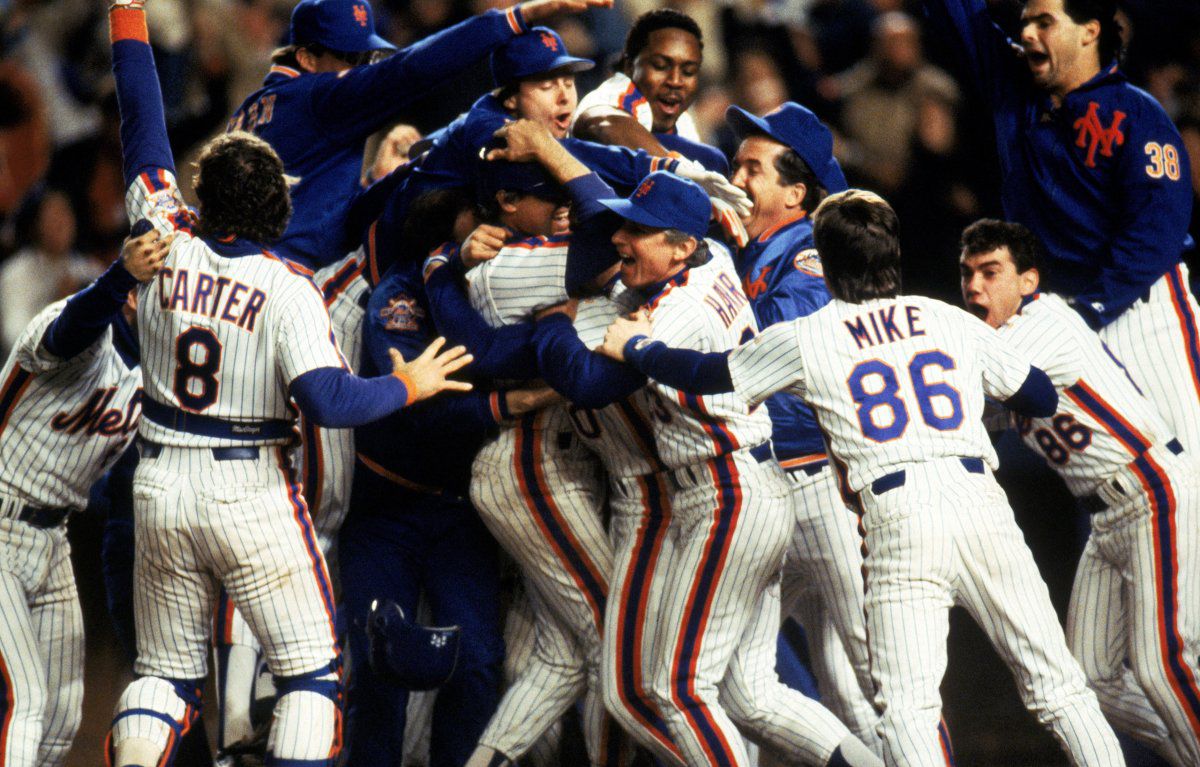
NY Mets win 1986 World Series
Image: NY Daily News

It’s been my experience that any baseball fan will hate at least one of New York City’s two teams, either the Yankees or the Mets. I’ve never really hated either, which makes me an outlier, I suppose. I just like New York City too much to hate on its teams (though that can’t be the only factor, as I adore Boston the city and yet I’d like to see all of its teams fired into the sun*). Back when there were only four divisions in Major League Baseball, the Mets were in the same division as my team, the Pirates, and for a couple years there, the Mets were a thorn in the side of the Pirates as they strove to win three division titles in 1990, 1991, and 1992. Since then they’re all in different divisions, though, so the Mets don’t figure too much. And the Pirates are usually terrible, so what’s to root against? Fifth place?

One of my best friends is a Mets fan, which might seem a bit odd living in Buffalo, where all baseball fandoms basically boil down to a whole lot of Yankee fans, some Red Sox fans, and then a fan or two of everybody else. My friend came by his Mets fandom honestly: he grew up in the days of 1980s cable television, when every local provider had a couple of indie stations from NYC (WOR and…another one), and on one of those stations resided the Mets. Since they were what my friend saw most often, that’s what he came to love, and to this day he roots as hard for the Mets as he ever has, though I’ve noted over the years a certain jaded amusement at the Mets fortunes (which are more often misfortunes) and a general feeling of “Hey, what did you expect” when the Mets flirt with something wonderful only to end up losing.

I’ve seen this same attitude from other Mets fans I’ve known: a certain even-keeled acceptance of their likely fate, which oddly allows them to have more fun in the face of their team losing than other fandoms out there. In all honesty, it’s my sense that a lot of sports fans could learn from Mets fans. They get as deliriously happy when their Mets win, obviously, but they avoid the soul-crushing despair and rage that comes of losing. (Mostly. I mean, it’s still sports, and when you lose the NLCS four games to two because your pitcher walks in the winning run in the bottom of the ninth in Game Six, well, no amount of baseball zen is going to keep you from wanting to take a chef’s knife to every teddy bear you can find.)

The Mets are that odd duck of a sports franchise: they haven’t won a ton (two World Series titles, and five total National League pennants), but still, they’ve won enough in their nearly 60 years of existence to make them rank just a bit above the “lovable losers” thing that the Cubs once managed to hold down for over a century. Mets fans aren’t long-time sufferers the way, say, Bills fans are. Because they’ve won, and because Mets fans seem to choose not to suffer in the first place.

When we traveled to New York City for Thanksgiving in 2015, I thought I’d grab my friend a Mets souvenir when we went into this big NYC gift store in Times Square. Place was huge, loaded with every NYC-related gewgaw and tchotchke you could want, including stuff for the Yankees, the Rangers, and the Knicks. And there wasn’t a single Mets-related item to be found anywhere in that store. Which was really weird, because the Mets are still a NYC team, they have some lore, and they had just won the NL pennant that year. Just six weeks before our visit, the Mets had hosted World Series games in New York City, and this gift shop didn’t have anything. Not a single pennant, shot glass, poster, snow-globe with Citi Field in it, nothing.

In America’s biggest and most important city, one of two resident Major League Baseball teams is a beloved institution of American sports history, and the other is a niche interest, like indie comic books. Weird.

Anyway, a new book came out earlier this year called So Many Ways to Lose: The Amazin’ True Story of the New York Mets, the Best Worst Team In Sports, by Devin Gordon. That’s a great title that sets up the tone of the book to follow: Gordon’s walk through Mets history is (mostly) warm and humorous. It’s Mets history not as a scholar would relate it, or a sportswriter striving for “objectivity”; this is the history of the Mets that you would hear from a Mets fan, and that’s what makes the book special.

Gordon, like my friend, adopted the Mets as his favorite team from an early age, and he’s been with them since their rise to late-80s powerhouse and beyond. Gordon is also an experienced writer, and not just about sports, so he knows his way around telling stories with flare and a good viewpoint. Gordon writes like what he is: an erudite fan who can spend a couple of pages breaking down just why Willie Mays’s “Catch” is as great a baseball play (for many, it’s the greatest baseball play) as it is, while at the same time using chapter titles like “Fuck the Yankees”.

Buffalo’s own sportswriting market is awash in talented writers and journalists who undermine their own work by beating everyone over the head with their heated insistences on their own “objectivism”, so it’s frankly a relief to find a book like this where fandom is admitted and embraced and allowed to shine.

I honestly had a great deal of trouble selecting a passage to quote from So Many Ways To Lose, because it’s packed with great passages. I thought about his lengthy breakdown of the Willie Mays catch, which he uses to prelude what he considers an even greater outfield catch (by Endy Chavez). I considered some of the passages in which Gordon speculates on why discussion of Darryl Strawberry and Doc Gooden tended to focus on drug use when the topic of other players’ drug use never seems to come up much (you don’t really need to think too long to figure that one out), and there’s a passage about the design and construction of Shea Stadium that is helpful because it’s frankly always helpful to remind ourselves what an asshole Robert Moses was.

Instead, I’ll go with this, from early in the book, when Gordon is making the case why the Mets are “the best worst team in sports”, even though they have done something at least twice that a lot of other perennially losing teams have not, i.e., actually win.

Now, there may be some fans of trash teams out there who have read this far and who think I’ve been too cavalier in dismissing their body of work. They’re wrong, but I suppose they deserve a fair hearing, so let’s go through the top contenders, if only to condemn them to yet another defeat.

The Detroit Lions might be the worst team in sports, which is to say: they’re not even good at being bad. They’ve never won a Super Bowl, never been to a Super Bowl. They’ve played (lost) in a conference title game once, and that was before we all had cell phones. I don’t have to consult the Internet to know that the Lions have never had a memorable postseason moment, because if they had, I’d remember it. It’s been nothing but decades of cold, slushy, uninterrupted losing. Even their uniforms, bluish-gray and grayish-blue, are colorless. Playing for the Lions is such a demoralizing experience that the two most gifted players in team history, running back Barry Sanders and wide receiver Calvin Johnson, both retired in their primes rather than spend another season with Detroit. They didn’t just quit the Lions, they quit football. They ghosted. After Johnson walked away in 2016, at age 30, the Lions’ front office demanded that he return a $3.2 million roster bonus, which is sort of petty for a team owned by the Ford family. It also means the Lions now have a frosty relationship with at least 50 percent of their franchise icons.

The Cleveland Browns have a better claim to the “best worst” throne, because unlike the Lions, they are easy to like, and unlike the Lions, their postseason defeats are so infamously excruciating that they have names like The Fumble and The Drive. The Browns have only made the playoffs once this century, despite starting 29 different quarterbacks over the course of 20 years. For three years in the 1990s, the Browns ceased to exist because their greedy, heartless owner, Art Modell, may he rest in peace, hated it so much in Cleveland that he tried to move the team to BaltimoreNest he fired his head coach, Bill Belichick. Now that’s some first-rate ineptitude. The problem with the Browns’ case may be Cleveland itself. It’s too grim. The 21st century hasn’t been good to the city, and every unlikely defeat, every clumsy failure is cut with rust and resignation. You can laugh at the Mets all you want. If you take pleasure in the Browns’ misfortune, you’re a dick.

Same goes for all of Minnesota’s crappy teams, the Vikings in particular, who have been waiting decades for the chance to lose another Super Bowl. In 2020, the Minneapolis-based sportswriter Steve Marsh compared the NBA Timerwolves’ Mets-ian flair for comic incompetence to a night of experimental dining–“Maitre d’, surprise us!”–but even he admits that in a city famous for its losers (the Vikes, Walter Mondale), the Wolves can’t get no respect. Their losing, while admirable, is just too small-time. Ditto for the Cincinnati Bengals, another small-batch loser, whose principal resume for “best worst” champion is the Icky Shuffle.* In order for the Bengals to be the Mets, Cincinnati would have to be New York. This is yet another case of small-market franchises getting overshadowed and disrespected, to which I can only say boo-hoo. To win at this level of losing, you need a big canvas.

Gordon goes on a bit, discussing why several other prominent never-winners in American sports can’t beat out the Mets for “best worst team ever” status, but curiously, he doesn’t mention a few other franchises known for their relentless losing. Surely the fact that the Chicago Cubs won a single World Series a few years ago doesn’t blot out their entire century of losing from our collective memory, does it? Or how about the Arizona Cardinals, a team that until its single Super Bowl appearance (which they lost in heartbreaking fashion despite a superhuman effort by their Hall of Fame quarterback and one of the greatest receivers ever in that very game) had to admit that its greatest moment in franchise history was a fictional moment that happened in the movie Jerry Maguire? And how about the Buffalo Bills, whose four consecutive Super Bowl losses from 1990 to 1993 still boggle the mind of sports fans to this day?

The Mets have done a lot of losing, sure–but they’ve done some winning, too. I’m not ready to grant the Mets the title of “best worst team” just yet, but Gordon does make a compelling case for his team, and that’s what it’s all about, anyway. And really, one of the great subgenres in sports writing is when gifted writers take on bad teams.

In the last year, I’ve read two great baseball books. First was Roger Angell’s iconic The Boys of Summer. Now I have So Many Ways to Lose.

I wonder if it’s time to start watching baseball again.

Endy Chavez makes amazing catch
Image: Metsmerizedonline.com

*This is a metaphor.

Share This Post

What is it with second grade teachers?

 Sheila O’Malley shares this wonderful post every year when the school year is about to start:

My friend is extremely intelligent. His parents did not value this in him. On the contrary, it threatened them. It implicated their ignorance. To add to this, my friend, from a very young age, knew he was “different” from other boys. Somehow. How many other boys enjoyed putting hot-rollers into their sister’s Cher-doll’s hair? How many other boys could recite Meet Me in St. Louis? How many lip-synched to Barbra Streisand albums? He couldn’t put a name to what was different because he was just a little boy. But he knew it was there.

The teasing he got was brutal. Teasing of this particular kind has one goal and one goal only: to crush what is different. The difference in him was like a scent and other kids could smell it. His father could smell it. To avoid the terror that school had become, he would stay home from school playing with his sister’s Barbies.

The little boy reached the second grade. He had already learned some very hard lessons. He had already experienced cruelty, betrayal, fear. All of the cards were stacked against this person, and the end of his story could have been a terrible one, were it not for his second grade teacher. Her name was Miss Scofield.

I did not meet the “little boy” until college when we became fast friends, and in my view, Miss Scofield was directly responsible for the fact that he actually went to college (the first one in his family to do so), that he broke the expected pattern of his life and got out, saying No to what seemed to be his logical fate.

What did Miss Scofield do to accomplish this? It’s very simple. She read E.B. White’s Stuart Little to the class.

And my friend, then seven years old, had what can only be described as a life-changing experience, listening to her read that book.

Stuart Little is a mouse, born to human parents. Everyone is confused by him. “Where the heck did he come from?” My friend, a little boy who was so “different” he might as well have been a mouse born to human parents, a little boy who was, indeed, smaller than everybody else in the class, listened to the story unfold, agog, his soul opening to its implications.

First of all, for the first time, he really got reading. By this I mean the importance, and the excitement, of language. Language can create new and better worlds in your head. Language is a way out. To this day, my friend is a voracious reader. I will never forget living with him while he was reading Magic Mountain. We lived in a one-room apartment, and so if I wanted to go to sleep and turn the lights off, my friend would take a pillow into the bathroom, shut the door, curl up on the bathmat, and read Magic Mountain long into the night. I believe that this voraciousness is a direct result of Miss Scofield reading Stuart Little to the class.

Please read the whole thing. The story doesn’t end there, and the postscript to the story is just wonderful.

I, too, had a second grade teacher who read Stuart Little to us. This was the year we lived in Elkins, WV. I can’t honestly say that I think that Mrs. Pnakovich was actually reading it to me, but I remember her reading it and I remember the whole class losing itself in the story for a bit, each day, until it was done. That book was the first time I can remember that a story doesn’t necessarily require resolution to satisfy; if you’ve read the book, you know that we never learn if Stuart Little ever found Margalo. I’ve never come down in my own heart as to whether he found Margalo or not. All I needed to know was that he was going in the right direction.

A sad footnote is that years ago I tried searching for Mrs. Pnakovich online, hoping maybe I could drop her a line on the off chance she remembered a student she had for a single year in 1978 and who moved away from Elkins when that year was done. Sadly, Mrs. Pnakovich died in 2002.

She played a part in my approach to story, which might be the most enduring thing of all.

Share This Post

Recent Reading!

 It’s been a while since I posted an update on books I’ve been reading, so here’s a bit of catch-up!

::  Edge of Sundown is a noir-mystery set in Chicago, by indie writer Jennifer Worrell. A writer who was once a fixture on the bestseller lists for his genre potboilers has spent the better part of a decade in the creative doldrums, until he starts writing what is a marked departure for him: a dystopian thriller in which alien beings are ridding the city streets of “undesirable” elements. But when real-world events start to mirror those in his novel, our hero starts to wonder where the boundary between fiction and reality lies…and that boundary blurs even more when the murders start.

I don’t often read this sort of thing, so I was surprised how compelling it was. There is a palpable sense of dread hanging over the story, even as the climax nears, and Worrell really creates a sense of dark place as she explores Chicago’s seedy underbelly. Highly enjoyable!

::  For my ongoing project of listening to (and writing about) the music of Jean Sibelius, I figured I should bone up on the composer’s life and times. I got a book out of the library, called Finlandia: The Story of Sibelius, by Elliott Arnold. This is an older book, published in 1941 while the composer was still very much alive (and, in fact, Sibelius himself appears to have had input into Arnold’s book). As such, the writing style is very much a throwback, and the tone of the book is one of somewhat relentless praise. If you are looking for a critical study of Sibelius and his music, you won’t find that here. But I just wanted a readable treatment of the composer’s life and times, and this is certainly that. In fact, I found the book valuable for its descriptions of the historical events in Sibelius’s homeland, Finland, a country which wasn’t even an independent nation when Sibelius was born. Sibelius was a highly nationalistic composer (even if he denied ever using actual Finnish folk material in his works), so this book gives a good sense of the events that shaped Sibelius’s attitudes and patriotic fervor.

::  Two rival sea-faring clans try to put their long feud behind them by marrying their two youngest nobles in Daughter of the Deep, a fantasy novel by Lina C. Amarego. The problem is that our heroine, Keira Branwen, is convinced that her new husband, Ronan Mathonwy, is the one who murdered her father. She is expected to push those feelings aside in the name of peace on the seas, but obviously that isn’t about to happen, and Ronan relentlessly insists on his own innocence. There’s no way that peace between the Branwens and the Mathonwys is going to be easily attained by any marriage, and so unfolds a novel full of character and conflict. I enjoyed this one immensely! Daughter of the Deep is the first volume of a duology called The Children of Lyr, and I absolutely intend to read the follow-up. Recommended!

::  For the Love of Music: Invitations to Listening by Michael Steinberg and Larry Rothe is a collection of essays that ran in the magazine of the San Francisco Symphony Orchestra, along with that magazine’s shorter program notes for specific concerts. As such, the book can be dipped into at will, which I recommend doing. There are chapters on Erich Wolfgang Korngold and on Sergei Rachmaninov and the great Chicago impresario Theodore Thomas, along with many more. The essays are often personal reflections on the part of Steinberg and Rothe, informed by many years of love of and listening to classical music. It’s an excellent collection of recent classical music writing.

::  A sadly necessary book, Under a White Sky: The Nature of the Future by Elizabeth Kolbert looks at the state of science today, in this time of climate change and the threats it poses to the natural world and to human civilization in general. This is not a general look at climate change, but rather an examination of a number of “case studies” in which scientists are working on very specific environmental issues, such as preserving a fish that only lives in tiny pools in caves in the Mojave Desert. In another example, Australian researchers are trying to engineer a coral that can thrive in the hotter oceans to come, hoping to somehow preserve the Great Barrier Reef. She ultimately arrives at the folks who are studying the possibilities of direct geoengineering to combat the ongoing warming of our planet, in such ways as dispersing huge quantities of reflective aeresols into the upper atmosphere, hopefully increasing the planet’s albedo in hopes of putting the brakes on continued absorption of solar heat. Who knows if that will work, but the fact that it’s being more seriously analyzed is itself an indictment of humanity’s utter failure to take any major steps to alleviate the problem. Under a White Sky isn’t an optimistic book, that’s for sure…but oddly, it’s not exactly pessimistic, either. My overwhelming feeling is that we’ll just keep not making things exactly better, but just continuing to make things different and figure out how to live with it down the road.

More reading notes to come!

Share This Post

Recent Book Notes!

 Here’s some recent reading I’ve done! I don’t have pictures of the covers, unfortunately. (Several of them I forgot to snapshot before I whisked them back to the library.)

::  Maybe you didn’t know that you needed a graphic novel about the Bronte sisters, their brother, and the imaginative life they lived in their youth, but you do need that graphic novel, and thankfully for you, it exists! It’s called Glass Town: The Imaginary World of the Brontes, by Isabel Greenberg. Apparently in their younger years, the Bronte sisters (Charlotte, Emily, and Anne) and their brother Branwell passed the time by creating a fantasy world called Glass Town, which they populated with all manner of interesting characters (no doubt providing the girls with valuable experience in character creation that would serve them well when they turned to their own literary works years later). As the siblings fight over the nature of their world, two break off and make their own world, and in Greenberg’s graphic novel–based on extensive research into the materials left behind by the Brontes themselves about this period of their lives–Charlotte Bronte becomes the focus. She seems to have the strongest relationship with the people of Glass Town, to the point where she actually speaks to them and finds herself drawn into their struggles.

Greenberg’s art is unusual; I’m not sure how to describe it. It took me some work to get used to, and even until the end I didn’t always find it easy to tell which character was which. But the narrative as a whole has some interesting things to say about stories, how we relate to them, and the difference between how adults relate to stories and how kids do. If you’ve never seen a couple of kids get in a fight over a fictional character or world, well…that can be some serious stuff. Good book.

:: I’ve read of the graphic novel series Monstress over the years, so I decided to give the book a try. It’s a highly regarded fantasy set in a steampunk Asia kind of world…and honestly, even though I read the whole first volume (collecting issues 1-6), it was long enough ago that I honestly remember very little of the story at all. I do remember the series’s incredible art–the book is worth looking at on that basis alone–but I also remember finding it very hard to care about the characters, and disliking the story’s tone. This is along the lines of SAGA and A Song of Ice and Fire: tons of violence and rape and murder and cruelty. Monstress isn’t remotely my cup of tea, but if you like your fantasy full of horrible people being awful, there it is.

::  More my speed was Elizabeth May’s The Falconer, the first book in a trilogy set in Edinburgh about a willful young lass named Aileana who has to contend with societal expectations, her father’s desire to see her wed, and the fact that she can see the magical beings who are obsessed with killing humans, so she has made it her mission to kill them first. Yup!

May (who I’ve been following for years on Twitter, she’s awesome) writes a really fun book here, with enough humor and “comedy of errors” kind of stuff, along with crackling dialogue, to offset the story’s occasionally grim tone. There are steampunk elements and cool magical doings, fairy beings whose loyalties aren’t entirely clear, and on our side of the magic-realism divide, people who want what’s best for Aileana and people who think what they want is best for Aileana and people who just want her married off so they don’t have to think about her anymore.

Aileana’s efforts to balance her “Magic hero” thing with her societal obligations put me in mind of the best Spider-Man stories, when Peter Parker was always this close to getting his high school or work or romance shit together, only to have to run off to fight Green Goblin when he was just on the cusp of getting a job or a date with Mary Jane or some such thing. May keeps that whole pot boiling nicely. I liked this book immensely and I look forward to the other two books in the trilogy. (They’re all out already; this series has been out for a few years.)

All for now! Keep reading, folks!

Share This Post

Recent reading: Space wizards, zombie apocalypses, reflections of Paris, universes ending, and a LOTR-but-not-LOTR fantasy

 A few more books I’ve read of late:

::  I can’t possibly keep up with the eternal flood of new books that is Star Wars publishing, but I do try to pick and choose the ones that sound good or come with good referrals. Last year, Lucasfilm announced a new project in their Star Wars publishing empire: a new series within the larger overall tale that focuses on life in our favorite galaxy far, far away two hundred years before the rise of the Sith, the fall of the Republic, and the arrival on the scene of a couple generations of Skywalkers. This series is called The High Republic, and it depicts the Republic at is height and the affairs of the Jedi as they act as the guardians of peace and justice and all that.

Light of the Jedi, Charles Soule

The High Republic is going to play out in books, comics, and who knows what else (no filmed entertainment set thusly has been announced yet, but who knows what the future may bring, as currently Star Wars is changing directions on an almost monthly basis). It all starts with Light of the Jedi by Charles Soule, and…well, it’s not bad, but it’s got a lot of room to get better.

Light of the Jedi has to do a lot of heavy lifting: it has to establish the time period we’re in, which means that it has to show all the ways this time period contrasts with the one with which we’re most familiar. It also has to establish the new threat that the Jedi are going to be facing through all this, which can’t be the traditional Sith because canon has already established that the Sith have been gone for centuries and they stay gone until Darth Sidious steps into the open around the time of The Phantom Menace. Light also gives us a lot of viewpoint characters, probably too many, all having adventures that play out over relatively short chapters.

The sad result is that Light of the Jedi ends up feeling overstuffed and underfocused, so that in its attempt to be really exciting it ends up under-engaging. I have to admit that I came close to DNFing this book halfway through, and ended up skimming a lot of the last act. It’s a shame, because there is interesting stuff here and it does set up some possibly exciting story possibilities to come. The book does the job of getting The High Republic out of the gate, but it’s not the galloping start it should have been.

::  I’m reading more indie books of late, which I should do because I’m an indie author myself, and which everybody should do because there’s a lot of great writing out there beyond the world of the standard publishers. I’ve been following author Anna Vera on social media for a while, and I finally got around to reading her book When Stars Burn Out, a dystopian science fiction novel about the zombie apocalypse and the human response to it.

When Stars Burn Out, Anne Vera

I freely admit that this genre is not generally my cup of tea, which is to say, it’s almost never my cup of tea. But I do enjoy it on a selective basis when it’s handled well, and Vera is one of the ones who handles it well. There is darkness and grim death here, because how could there not be, but for once it’s not wildly overdone with spectacular deaths just for the sake of deaths (like in, say, The Walking Dead). There are intriguing mysteries and an interesting society of people trying to live without becoming zombies themselves, and the character work is particularly good. Heroine Eos Europa is a fascinating person, and I hope to read more of her adventures soon.

::  I’ve had Paris to the Moon by Adam Gopnik on my shelf for years, and I finally got around to it. I have to admit to finding it slightly disappointing. I was expecting a travel book, but it’s really not that; it’s a collection of essays Gopnik wrote in the 1990s for The New Yorker about his and his family’s experiences in Paris when they packed up and moved there. It’s all well-written and all, but unlike the best travel writing, Paris to the Moon‘s essays feel distinctly rooted in a particular time and place, and from a particular vantage point. I felt an odd disconnect while reading it, like perusing the mundane dispatches from someone’s life decades ago.

Paris to the Moon, Adam Gopnik

It’s not bad, though! Not at all, and if life in Paris interests, there’s much here that’s interesting. I cite one passage, which I found particularly amusing:

Late last year the French government assembled a committee to choose a name for the vast new stadium that’s being built in a Paris suburb. The committee included an actor, and “artiste”, some functionaries, and even a few athletes. It took a long time deliberating over its choice. Names were submitted: Some people liked the idea of naming the stadium after Verlaine or Saint-Exupery, and lots of others liked the idea of calling it Le Stade Platini, after Michel Platini, the great French soccer player. At last, late in December, the committee announced that it had come to a decision, and the government decided to broadcast the verdict on television. The scene was a little like the end of the Simpson trial: the worried-looking jurors filing to their seats, the pause as the envelope was handed to the minister of youth and sports, the minister clearing his throat to read the decision to the nation. The stadium that would represent France to the world, he announced, would be called (long, dramatic pause) Le Stade de France. The French Stadium. “Banal and beautiful at the same time,” one journalist wrote. “Obvious and seductive. Timeless and unalterable.”

I suppose there is something oddly comforting, albeit in a kind of depressing way, in learning that the bureaucratic way of spending a lot of time and money coming to a perfectly boring decision isn’t something unique to the United States.

::  Katie Mack’s The End of Everything (Astrophysically Speaking) is a book about the end of our universe.

The End of Everything, by Katie Mack

Apparently the current state of science has a handful of scenarios by which our brightest minds think our universe will end, and Dr. Mack has written this helpful, clearly-written, and humorous (given the subject matter) book summing it all up. If you like a bit of science to help back up your low-level existential dread, The End of Everything is the book for you! Yes, there are passages that I didn’t entirely understand, but Mack does a very good job of explaining how we came to our current theories of how the universe began, and given our understanding thereof and of how the universe works now, how we might expect it to end. Her ultimate takes aren’t terribly optimistic (for ideas on what the end of the universe might look like from the standpoint of sentient starfaring civilizations, Michiu Kaku is the author to seek out), and there’s something particularly chilling about what’s called the “Heat Death” of the universe, as ultimately the unending expansion of space results in our skies growing ever, ever darker as the stars become too far from us for light to ever arrive. But, as Dr. Mack writes:

In fact, the one thing that all the universe-ending scenarios we’ve already discussed have in common is that they definitely aren’t coming around anytime soon. As far as we can tell from our best understanding of physics, we have at least tens of billions of years before even the most extreme version of a sudden Big Crunch reversal could occur, and no Big Rip could be less than a hundred billion years off. A Heat Death, considered by most to be even more likely, would be so far into the cosmic depths of the future that we hardly have terms to describe it.

So there’s that. Of course, she writes this just before sequeing into a chapter about a “Vacuum Decay”, in which a bubble of true vacuum forms someplace and expands at the speed of light, destroying everything it takes in as it expands. This, apparently, is a thing that can happen at any time, and since the horizon of the destructo-bubble’s edge moves at the speed of light, we’d never know it was coming. For all we know, there could be a universe-destroying bubble right now someplace, expanding toward us at the the speed of light…and depending on where it is, that’s how much time we’d have left. So…sleep tight, I guess!

::  Finally, a re-read of a book I liked a lot as a kid. Between 7th and, I think, 9th grades, I went on a huge epic fantasy reading kick. I read a lot of epic fantasy back then, between roughly 1982 and 1986. (After that I fell into spy and espionage fiction in a big way.) In those years, epic fantasy was far more dominated by the JRR Tolkien model than it is now, thankfully. I love JRRT, but wow, did the genre need some new thinking for a long time. Luckily that new thinking has long since arrived and the genre is healthier for it…but for years fantasy novels seemed really stuck in the same trope wonderland, and the biggest title in the post-JRRT swords-and-dwarves-and-elves type of fantasy was Terry Brooks’s The Sword of Shannara. I read Sword once, back in my junior-high days (along with its two immediate sequels, The Elfstones of Shannara and The Wishsong of Shannara), but I’ve never revisited them since…until now. A while back I was shopping at my local Savers store and I found the original three Shannara books in the Used Books section*, so I picked them all up. Last week I finally re-read Sword, and…well, it was like dipping my toes in Heraclitus’s river. It’s not the same river it was when I was thirteen.

The Sword of Shannara, by Terry Brooks

It’s close to forty years since I read Sword all the way through, so I don’t remember much of it at all from back then, except that I do remember finding it kind of padded back then. Nothing specific, but I definitely recall skimming through chapters I didn’t really care that much about. And lo and behold…that happened again.

In Sword you have the Tolkien model almost in its entirety: a malevolent Dark Lord is threatening the existence of everything, while the races of Man (it was the 70s, so yes, it’s called “Man”), Dwarves, and Elves don’t really get along terribly well. There’s a single magical weapon, though, that can prove the Dark Lord’s undoing, and it can only be wielded by a specific individual who happens to be a member of a peaceful, pastoral people who live about as far away from the Dark Lord’s palace as you can get. A wizard-like figure who is known all over the world for his strange comings and goings arrives to send our young hero on his quest, which after many dangers leads him to a single quest to find the magic weapon. On this quest he is joined by a…what should we call it? A “fellowship”?…helpful team comprising men, Elves, Dwarves, and our hero and his pastoral buddy.

Off they go to deal with the weapon and the Dark Lord, but eventually their “fellowship” is forced to break apart, and the others go off to deal with specific wars and stuff while Our Hero proceeds to his ultimate journey into the Dark Lord’s realm, which is a barren desolate wasteland of dust and sharp mountains.

I don’t want to sound dismissive, but Sword really really does read like a Tolkien clone for people who wanted more Tolkien but who didn’t want to re-read Tolkien for the 80th time. All the tropes are here, with just about all the story beats; what Sword seems most to accomplish is reducing the Lord of the Rings from its 576,000 words down to about 226,000. This isn’t always a good thing, as I found it very hard to care about some of the “side adventures” that Brooks takes us on in the back half of the book. We meet a guy named Balinor early on, but we get little of his backstory until much later, which we get right before the book diverts us to his struggles against his crazy jealous brother. I found it nearly impossible to care about any of that.

Ultimately I found Sword a slog to get through this time. Brooks overwrites and overdescribes to an amazing degree, and from a stylistic standpoint, his paragraphs are way too long, sometimes lasting entire pages. And look, I know he wrote this in the 1970s, but still: it’s a 726 page book, and our first (and only) female character doesn’t show up until we’re well past page 400.

I do plan to read the other two books in the trilogy at some point. I remember liking Wishsong most of all from these, and I’ve also heard that Brooks’s various explorations in the Shannara universe after these initial volumes perk up quite a bit. I don’t know if I’ll go any farther past Wishsong, but…you never know.

* I don’t know about anybody else’s Savers location, but the Used Books section at my local one almost always has something worth grabbing. I never leave that place without a book or two. Not huge hauls, but there’s always something!

Share This Post

Lately reading: Ken Jennings on Maps

 Time to catch up on some of my recent reading!

::  Maphead by Ken Jennings is about maps and the people who like maps. More than that, it’s about people who love maps. Some people love maps so much they end up seeming a bit odd, but that’s fine! And who better to write about such strange people, committed to esoteric knowledge, than Ken Jennings, trivia champion extraordinaire?

Maphead, Ken Jennings

It’s safe to say that Jennings’s authorial career would not have taken flight had he not put together that wonderful winning streak on Jeopardy! back in the Aughts, but now that he’s writing, I hope he keeps doing it for a long, long time. He seems to be a cheerier version of Bill Bryson, able to write engagingly about topics that don’t often get written about (I love Bryson, but his work often has something of a dark tinge to it), and in this book especially Jennings is able to write both about maps and the entire subculture that has sprung up about maps.

Along the way in Maphead, Jennings visits the London Map Fair, an event I never knew existed. I’ve read a lot about book collectors, though, and this little world intersects that of people who seek out First Folios very neatly. I also learned about things like road geeks, who learn about specific odd details you’ll find on America’s roadways if you look closely (like a traffic light in Syracuse where the green light is on top of the fixture!) and who nurse grudges against people like a Pennsylvania Congressman who used his power to insist that a new section of Interstate Highway in that state be numbered I-99, even though that number is in violation of federal highway numbering guidelines.

Jennings visits the map collection at the Library of Congress, relating stories of how international incidents have actually been settled by other countries referring to maps in the LoC’s collection, and he writes about the National Geography Bee, which is exactly what it sounds like: an event like a spelling bee, where the goal is not to answer questions like “How do you spell chiaroscurist?” but rather questions like “What is the local name given to the katabatic winds in southern France that can cause damage to crops in the Rhone Valley?” (The answer is “mistral”. No, I don’t know what any of that means, and I am taking Jennings at his word here.)

My favorite chapter, though, as a writer of fantastic tales myself, is the chapter on maps of places that don’t exist. Some people create elaborate maps of fictional locales as a hobby in themselves. but Jennings also discusses the role of maps in fantasy and science fiction novels, helpfully enlisting his former college roommate, bestselling fantasist Brandon Sanderson, to provide some comment. I personally get a bit antsy when I try to read an epic fantasy novel that has no map, and I’ve read a few advance copies of epic fantasies over the last few years that had blank pages where the eventual map would go. This always bugs me. Some readers are fine with no maps, but if you give me an imaginary world, I have to be able to see how its locales fit together. Jennings writes:

It’s the importance of place to the genre, not just slavish imitation of Tolkien, that explaisn why todays’ fantasy authors still make sure maps are front and center. David Eddings, one of epic fantasy’s most popular writers, went so far as to put maps on the covers of his books. (Eddings’s nation of Aloria was born the same way Stevenson created Treasure Islans: he doodled the map first, and the map inspired the adventure.) The maps are certainly functional too; many fantasy novels are episodic quests, and a map is an easy way to plot that course for a reader–it’s no accident that the word “plot” can refer to the contents of both a chart and a narrative. But Brandon’s tried hard to get away from the quest narrative in his own books, most of which take place in contained urban settings, yet he still makes sure his books have maps. His latest novel–the first volume in a projected ten-books series–is called The Way of Kings, and it includes no fewer than nine maps.

I haven’t read The Way of Kings yet (in a genre that tends to long books, Way is a doorstop of doorstops), but it does contain a lot of artistic ephemera, including maps. I never re-read Tolkien without constantly referring to his maps, and I’ve rejected owning several editions of The Lord of the Rings (primarily in mass paperback) because the maps are printed so badly as to be illegible. What I love most about Tolkien’s maps isn’t just how detailed they are (I admit to being frustrated by fantasy books that give me a giant world and yet the map is basically a blob with three or four place names on it), but also how much wider they are than the story! Just look at the map of Middle Earth as it appears in LOTR: most of the places depicted aren’t places the story ever goes! I love that. (And no, I don’t care that the geology makes no sense. It’s a world of dark lords, great wizards, elves, and magic rings. In the midst of all that, I think I can make room in my brain for the right angles formed by the mountains surrounding Mordor.)

Jennings also takes some time to explore the degree to which love of maps, and knowledge of geography itself, has been pushed out of the realm of things we expect everyone to know and into that of self-applied geekdom. We’ve all seen the results of quizzes and polls showing how few Americans can identify a given percentage of the states. Jennings writes:

There are obvious ways to explain an ongoing drop in geographic literacy. Geographers like to blame the curriculum revolution of the 1960s and 1970s, in which the clear-cut history and geography classes of grade schools were replaced by a wishy-washy amalgam called “social studies”. The adoption of social studies was the well-intentioned result of academics in a wide variety of social sciences hoping to expose kids to their pet fields: anthropology, economics, political science, and so on. But, as a side effect of the new curriculum, classes specifically devoted to geography virtually disappeared from the nation’s schools. The United States is now the only country in the developed world where a student can go from preschool to grad school without ever cracking a geography text.

I can attest to this. I remember my social studies classrooms, decorated with lots of maps…to which my teachers (and these were good teachers! I enjoyed just about all of those classes) almost never referred or made the basis of a lesson. This didn’t stop me, of course, from learning about them. In fact, the maps on the walls often became my refuge in the midst of the occasional boring lecture.

And it seems, from reading Maphead, that I am far from alone in this.

Share This Post