RIP, Pizza Hut

Every Pizza Hut restaurant in Western New York has permanently closed.

I’m not going to pretend that this is a loss, except in the sense that this is a few hundred jobs down the drain. I worked for Pizza Hut back in the 1990s, when we lived in Olean, NY, and I posted years ago what that was like. It wasn’t a horrible place to work back then, but it sure wasn’t great, either; pay was a joke, and for all the lip service paid to the idea that Pizza Hut was supposed to be a step above fast food, it was clear that even then the higher-ups had no idea what they were doing with respect to the shifting restaurant scene.
I have no idea how long it’s been since I’ve even eaten at a Pizza Hut, and it’s something of a long-running joke in this region that the number of buildings that used to be Pizza Huts far outnumbers those that house actual Pizza Huts.
Oh well. Support your local pizza joint, folks. Let the chains figure it out on their own.

Share This Post

On Masks

Mask!

So, among everything else, 2020 has become The Year We All Wear Masks.
Or it should be that, but an awful lot of people are proving wildly resistant to the idea, on various bases. There are the always-entertaining libertarian types who are loath to follow any governmental guideline, no matter how wise or just or sensible, because it’s from the government. There are the fact-challenged skeptics who refuse to believe that the COVID-19 pandemic is real, or they accept that it’s real but overblown, or they simply believe themselves to be relatively bullet-proof and take a “Let’s just roll the dice!” attitude, without considering that with a disease like this, you’re not just rolling your dice but the dice of people around you, some of whom are likely loved-ones.
As for me? Well, I’ve largely been fine with wearing the mask, though I honestly can’t say I would have adopted the mask as quickly and readily as I did had my job at The Store not made them a requirement (which they did, in turn, based on an executive order by Governor Cuomo). I like to think that I would have heeded the strong recommendations from the CDC and other officials, but I have my pig-headed moments too, so maybe I wouldn’t have been as wise on this as I would like to imagine. Luckily for me, I’m not going to find out.
I never liked Halloween costumes that involved masks when I was a kid, and the first day I had to wear one at work, I had similar difficulty. It took a couple of days for me to figure out the ins-and-outs of the masks, which started out as the disposable paper ones. My glasses were a problem, of course! I realized that if I kept moving, the force air circulation would keep my glasses from fogging up. As soon as I stopped, though, then I’d fog up instantly. This also happened with the washable and reusable masks my company soon provided. I started carrying my glasses case with me, because I could just take the glasses off when I was working on something close, like doing a repair on a piece of equipment or…writing.
The bigger problem I had with those masks was that the elastic cords and bands that went around my ears made them ache something awful. I could wear the mask for about an hour before I had to take it off to give my poor ears a break. There are workarounds for this, of course, but right about this time an online friend named Zace Myers, who is an artisanal clothing maker in Ohio who makes, among other things, really amazing bib overalls (and I am years overdue in blogging about his overalls!), decided to apply his skills to mask design. After a couple trials and refinements, he settled on the design I’m wearing in the photo above.
The elastic bands go around the head, and not the ears, which is the main thing! And the brass nose-piece is great because you can easily bend it to properly shape your particular nose. The upshot is that now my glasses never fog up! There is a small tradeoff here: the mask does push my glasses up on my face just slightly, so they’re a tiny bit north of where I usually position them. In most cases that wouldn’t be a problem, but my glasses are transition lenses, so the mask pushing them up results in the glasses not quite lining up with where I best look through them. This is not a big deal, just a tiny, minor thing. My poor ear cartilage not feeling like it’s on fire is the major thing. (Here’s where to buy them, if you’re so inclined!)
As for breathing, I find that after wearing masks for most of the day, every day I’m at work, I’m actually getting used to them. The extra heat inside them doesn’t faze me much (and I might even like that aspect come winter, if we’re still masking as I assume we will be), and I have zero difficulty breathing in them. The act of breathing feels slightly different, obviously, and I think that a lot of people are so used to completely unencumbered breathing that they assume difficulty where there is none. I know that my pulse-oxygen levels have not suffered one bit from wearing the mask, and in truth I am at the point where I even forget I have it on.
I see some snarking online here and there about masks, and one that especially irritates me is “You don’t have to wear one when you’re driving by yourself, Sheeple!” I’ve responded several times, with varying degrees of politeness (I was, I’ll admit, not at all polite in responding to some MAGA-Republican running for Congress someplace), that if I’m making multiple stops I don’t want to be putting on the mask, taking it off again, putting it on again, taking it off again, lather rinse repeat, everywhere I go. What I don’t get is people who rip the mask off the second they exit a place, whether it’s a store or whatever, and make this show of gasping for air. Come on, folks. Let’s get a grip.
Well, this has gone on long enough, I guess. Mainly my take on masks boils down to: I wasn’t thrilled to have to do it, but now that I do, well…could be worse. It’s an easy thing to do, it’s not at all a major imposition on my life, and it’s a perfectly valid means of helping to protect others. This last point is what gets me about all this: The resistance to mask-wearing has really provided a fascinatingly specific case study–not that we needed yet another one, but here we are–in the ever-depressingly American resistance to thinking in terms of collective benefit. Our centuries of mythology about “rugged individualism” is either going to be set aside and soon, or it’s going to lead us to erasing ourselves from the march of human history. I’ve believed this for years. I just never thought that something like “Wear masks for a while, or millions will die” would be the thing that would prove it.
Wear your masks, people.

Share This Post

4 July 2020

Of all Independence Days, this one is something else, isn’t it? I personally find it hard to celebrate this year, for oh so many reasons. About the most positive feeling I can muster this year is a grim resolve, the vow that no, this ain’t over, not by a damn longshot. I’m not giving up on my country forever, but it’s hard right now to see it ever becoming the land to which it aspires (and, for a certain population, believes it always was until something went awry, hint hint wink wink nudge nudge as to what that might be).
Anyway. Happy birthday, America. 

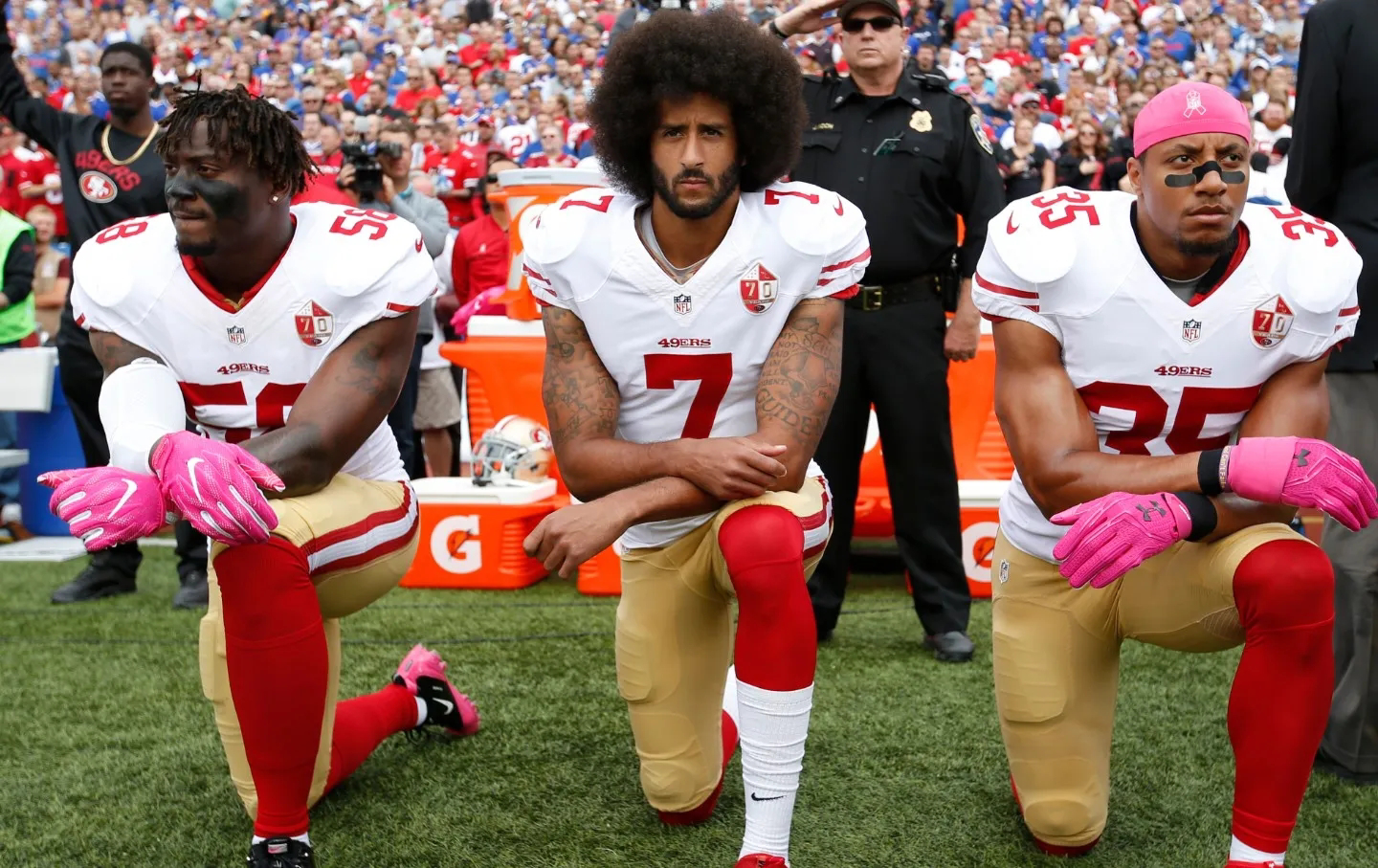
America isn’t easy. America is advanced citizenship. You’ve gotta want it bad, ’cause it’s gonna put up a fight. It’s gonna say, “You want free speech? Let’s see you acknowledge a man whose words make your blood boil, who’s standing center stage and advocating at the top of his lungs that which you would spend a lifetime opposing at the top of yours.” You want to claim this land as the land of the free? Then the symbol of your country cannot just be a flag. The symbol also has to be one of its citizens exercising his right to burn that flag in protest. Now show me that, defend that, celebrate that in your classrooms. Then you can stand up and sing about the land of the free.

The American President, written by Aaron Sorkin

Share This Post

Yes, #BlackLivesMatter

Well, you can’t escape what’s been going on. You can’t ignore it, short of completely disconnecting and retreating to the wilderness somewhere. And that’s the point, isn’t it? Anyone who has at least the possibility of escaping what’s going on, even in a momentary dream, is a person indulging the perk of privilege.

Random stuff. This is in no particular order.
::  I’ve never actually met Roger Green, but he and I have been mutual blog-friends for years, and with the recent ugliness I’ve been thinking a lot about Roger and his family. What a hell of a world it is we’ve made, where the Roger Greens of the world–a retired librarian from Albany, NY who likes getting around town on his bicycle–has to worry about raising his kid in a shitty racist world. That’s what gets me: entire generations of children who have to learn, in addition to everything else that’s a giant challenge in this world of ours, that large segments of the world will hate them on an a priori basis, and that–even worse, maybe–much of our societal infrastructure is specifically built to reflect that hate.

But I’m also rather annoyed with white liberals who are shocked, SHOCKED that police abuse still takes place. Haven’t you been paying attention? And they’re sending me solutions – “this is a chance for REAL dialogue!” I’ve been having “real dialogue” at least since my sister Leslie and I, as high schoolers, went to the nearly lily-white Vestal (NY) Junior High School to talk to the choir kids.

People Need to STOP Saying “All Lives Matter”. And they REALLY need to quit with, “That’s not what Martin Luther King, Jr. would do.” Remember, they killed him, too.

::  Another name for the list: Maurice Gordon, 28, of Poughkeepsie, NY. Apparently shot to death while waiting for a tow truck. He was unarmed, and he was not under arrest or being detained.

The transformation began after the 2012 homicide spike. The department wanted to put more officers on patrol but couldn’t afford to hire more, partly because of generous union contracts. So in 2013, the mayor and city council dissolved the local PD and signed an agreement for the county to provide shared services. The new county force is double the size of the old one, and officers almost exclusively patrol the city. (They were initially nonunion but have since unionized.) Increasing the head count was a trust-building tactic, says Thomson, who served as chief throughout the transition: Daily, noncrisis interactions between residents and cops went up. Police also got de-escalation training and body cameras, and more cameras and devices to detect gunfire were installed around the city.

::  Kevin Drum has numbers–here and here–that demonstrate part of our problem. We have more police officers by far than we probably need for our level of crime, especially violent crime, which has been plunging for three decades now. Drum is convinced that the big factor in the decrease in violent crime since 1990 has been the reduction in lead emissions from gasoline engines and from lead paint, and the evidence on this score is actually pretty convincing.
::  I could write more on this, but I think there are other voices to whom the world should be listening right now. I’ll close with this: if someone says “Black lives matter,” and your thought is to reply with some variant of “Don’t all lives matter?”, you might want to step back and consider why you find it uncomfortable to seriously engage with just why someone thinks that an entire segment of our society has been made to feel, over and over and over again, that it doesn’t.

Share This Post

“It wasn’t a miracle. We just decided to go.”

That may be my favorite quote from the movie Apollo 13. Jim Lovell says it to his wife as they relax in their backyard, after all of their guests have gone home from their watch party for the Apollo 11 moon landing. Lovell’s amazement at the feat of landing on the moon isn’t just at the fact of the location, but that all it took to get there was a decade-plus (well, with a lot of stuff coming before) of applied human ingenuity.

The human presence in space hasn’t quite gone according to the plan my six-year-old brain thought it would, way back when I first became aware that space wasn’t just some grand cosmic realm where the mysterious stars lay; it was just a gigantic place of which we were a part, and we humans could simply go there. When I was six, it was pretty much a foregone conclusion that within a short time–thirty years? forty? fifty, tops!–we’d have permanent space stations, the first moon bases, and maybe even the makings of a colony on another planet, maybe Mars. Of course, it didn’t go according to plan, did it? Nothing big ever does.
We humans lost a bit of focus on space, and we made some choices that weren’t obvious or perfect, and we have proceeded in fits and starts. As we lost the Cold War impetus that drove so much of that initial development, an impetus of which I was unaware when I was six, it seemed that we lost a lot of focus. The space shuttle was initially exciting but it became less and less so, until one of them exploded; then it settled back into routine until another one failed on re-entry. America had a small space station, that didn’t last long; the Soviets had one that lasted a bit longer. Then a bunch of countries got together to build the “International Space Station,” which is somehow both amazing and…well, it seems just a bit small to the part of me that still dreams in the same way that I did when I was six.
But it can still be exciting. We got a big reminder of that today, when NASA and SpaceX teamed up to finally succeed in launching a rocket carrying American astronauts into space. Ever since the shuttle was retired, Americans have been hitching rides with the Russians. That may be good from an international cooperation standpoint, but America still needs its own launch capability if it’s to maintain a presence in space, and the SpaceX rocket has seen increasingly promising results for the last few years. No longer are multi-stage rockets just dumping their spent stages to fall into the ocean; not only are the stages recoverable, but they actually land on their own power to live to fly another day.
Today, America returned to space under its own power. Maybe I’ll get to see those moon bases and Mars colonies yet!
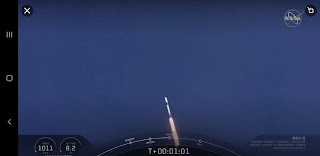
Here are a few screenshots I took from my phone as I watched live streaming coverage of the launch this afternoon (and really, how amazing a sentence is that?):
Just over a minute into flight.

At left, the second-stage engine firing; at right, the first stage’s re-entry rockets firing.
More than any aspect of this launch, this blew my mind.

They briefly lost the signal from the ship where the first stage was to land, alas!
But they got it back to show the first stage having successfully landed. At right,
our astronauts in their capsule.

Second stage separation.

The second stage falls farther and farther behind. Ahead, Earth orbit and ISS rendezvous!

Share This Post

On Memorial Day

An annual reposting of some things pertaining to Memorial Day. First, a remembrance of a soldier I never knew.

Fifteen years ago I wrote the following on Memorial Day, and I wanted to revisit it. It’s about the Vietnam Veteran whose name I remember, despite the fact that I had no relation to him and clearly never knew him, because he was killed four years before I was born.

Memorial Day, for all its solemnity, has for me always been something of a distant holiday, because no one close to me has ever fallen in war, and in fact I have to look pretty far for relatives who have even served in wartime. Both of my grandfathers fought in World War I, but both had been dead for years when I was born. I know that an uncle of mine served during World War II, but I also know that he saw no action (not to belittle his service, but Memorial Day is generally set aside to remember those who paid the “last full price of devotion”). My father-in-law served in Viet Nam, but my own father did not (he had college deferments for the first half of the war, and was above draft age during the second). So there is little in my family history to personalize Memorial Day; for me, it really is a day to remember “all the men and women who have died in service to the United States”.

One personal remembrance, though, does creep up for me each Memorial Day. It has nothing at all to do with my family; in fact, I have no connection with the young man in question.

When I was in grade school, during the fall and spring, when the weather was nice, we would have gym class outdoors, at the athletic field. On good days we’d play softball or flag football or soccer; on not-so-good days we’d run around the quarter-mile track. But the walk to the athletic field involved crossing the street in front of the school and walking a tenth of a mile or so down the street, past the town cemetery. I remember that at the corner of the cemetery we passed, behind the wrought-iron fence, the grave of a man named Larry Havers was visible. His stone was decorated with a photograph of him, in military uniform. I don’t recall what branch in which he served, nor do I recall his date-of-birth as given on the stone, but I do recall the year of his death: 1967. I even think the stone specified the specific battle in which he was killed in action, but I’m not sure about that, either.

That’s what I remember each Memorial Day: the grave of a man I never knew, who died four years before I was born in a place across the world to which I doubt I’ll ever go. And in the absence of anyone from my own family, Mr. Havers’s name will probably be the one I look for if I ever visit that memorial in Washington. I hope his family wouldn’t mind.

I looked online and found these images, first of Mr. Havers’s obituary and then of Mr. Havers himself. The things you remember. I wonder what kind of man he was. He has been gone for more than half a century. His name is not forgotten.

Mr. Havers’s service information can be found on the Virtual Vietnam Wall here. He was born 14 October 1946 and died 29 October 1967, in Thua Thien.

Next, my annual repost for Memorial Day.

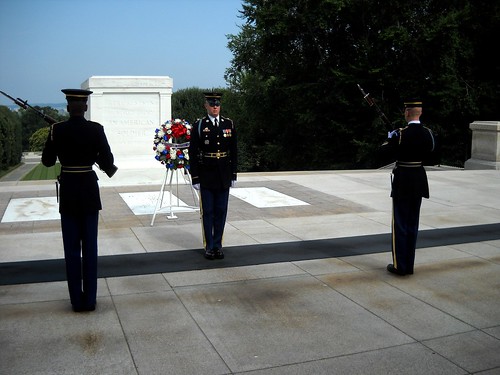
Tomb of Unknown Soldier


Know, all who see these lines,
That this man, by his appetite for honor,
By his steadfastness,
By his love for his country,
By his courage,
Was one of the miracles of the God.

— Guy Gavriel Kay

“The Green Field of France”, by Eric Bogle

Well, how do you do, young Willie McBride,
Do you mind if I sit down here by your graveside?
And rest for awhile ‘neath the warm summer sun,
I’ve been walking all day, and I’m nearly done.
I see by your gravestone you were only 19
When you joined the great fallen in 1916,
I hope you died quick and I hope you died clean
Or, Willie McBride, was it slow and obscene?

Did they Beat the drum slowly, did they play the fife lowly?
Did they sound the death-march as they lowered you down?
Did the band play The Last Post in chorus?
Did the pipes play the Flowers of the Forest?

Did you leave a wife or a sweetheart behind
In some faithful heart is your memory enshrined?
And, though you died back in 1916,
To that faithful heart are you forever 19?
Or are you a stranger without even a name,
Enshrined then, forever, behind a glass pane,
In an old photograph, torn and tattered and stained,
And faded to yellow in a brown leather frame?

Did they Beat the drum slowly, did they play the fife lowly?
Did they sound the death-march as they lowered you down?
Did the band play The Last Post in chorus?
Did the pipes play the Flowers of the Forest?

The sun’s shining down on these green fields of France;
The warm wind blows gently, and the red poppies dance.
The trenches have vanished long under the plow;
No gas and no barbed wire, no guns firing now.
But here in this graveyard that’s still No Man’s Land
The countless white crosses in stand mute in the sand
To man’s blind indifference to his fellow man,
And a whole generation who were butchered and damned.

Did they Beat the drum slowly, did they play the fife lowly?
Did they sound the death-march as they lowered you down?
Did the band play The Last Post in chorus?
Did the pipes play the Flowers of the Forest?

And I can’t help but wonder, no Willie McBride,
Do all those who lie here know why they died?
Did they really believe when they answered the call,
Did they really believe that this war would end wars?
Well the sorrow, the suffering, the glory, the pain
The killing and dying, was all done in vain,
For young Willie McBride, it all happened again,
And again, and again, and again, and again.

Did they Beat the drum slowly, did they play the fife lowly?
Did they sound the death-march as they lowered you down?
Did the band play The Last Post in chorus?
Did the pipes play the Flowers of the Forest?

Share This Post

“Vancouver! Vancouver! This is it!” Mt. St. Helens, 40 years later

The anniversary is something of a misnomer.

Mt. St. Helens, a mountain in the volcanic Cascade Range in southwestern Washington State, was always thought to be on the verge of significant volcanic activity, and one day when I was in school in March, 1980, my fourth-grade teacher wheeled a teevee cart into the classroom. She plugged it in and started tuning to one of the local stations, which was carrying the event live. An earthquake had jolted Mt. St. Helens, and the mountain was now venting steam from its summit.

If it seems odd that this was on local news, at the time my family and I were living in Hillsboro, OR. We were about sixty miles away from Mt. St. Helens. We had day-tripped there a few times. I don’t remember much of those day trips, but I remember the mountain being a lot less of a jagged peak than Mt. Hood, which so famously looms over the Portland skyline. Mt. St. Helens was more graceful, a rounded cone.


I remember watching that exciting footage from the summit of Mt. St. Helens with my classmates, although we were all thinking the same thing, having seen so many movies of volcano eruptions from places like Hawaii: “Where’s the lava?” Over the next few weeks we heard about more earthquakes and bulges and things called lava domes. Maybe there’d be lava eventually!
Scientists seemed more and more convinced that a major eruption was likely, and an unlikely local folk hero turned up in the news in the form of an old guy who owned a lodge on the very slopes of the mountain. His name was Harry R. Truman, and he refused to leave his beloved mountain. He was staying right where he was, with his cats. I honestly don’t recall if Truman genuinely believed that the mountain wouldn’t kill him, or if he couldn’t bear leaving it. Given what the mountain looked like for him and what it would look like very soon, I almost can’t blame him.
The big blast that everyone was awaiting finally came, forty years ago today, on May 18, 1980. There was no lava, just an enormous earthquake followed by a landslide that took away one entire side of the mountain. And then? Ash and steam and smoke, in a cloud miles high. More than fifty people were killed in that blast, including Harry R. Truman, whose lodge was buried under hundreds of feet of mud and ash and rock and debris.
The scale of destruction is astonishing for me to contemplate to this day. On May 18, the winds were out of the west, so we in the Portland area were spared large amounts of ash-fall. Not so later follow-up eruptions; I remember hosing an inch of ash off our driveway one morning. It was a fine, heavy, gray powder that covered everything. I also remember one day when some friends and I were playing outside and someone’s father told us that Mt. St. Helens was erupting again. We rushed to the best vantage point in the housing development, just beyond a stand of trees at the eastern end, and there we saw something that looked very much like this (in fact, it may well have been this):

Although from where we were, we couldn’t see the mountain itself. Just this gigantic tower of ash rising into the sky.

Mt. St. Helens continues to be somewhat active to this day, though nothing like what happened in 1980 has happened since.

I remember reading, years later, that as enormous as the devastation was–entire forests leveled, lakes literally sterilized, thousands upon thousands of animals dead–the region came back to life far faster than anyone ever expected. There are fish in Spirit Lake again, and forests are slowly coming back. The evidence of the eruptions still exists, though; Mt. St. Helens will never again be that graceful rounded cone, but a marred shell of a crater, and to this day the waters of Spirit Lake are partially covered by a solid carpet of destroyed trees, blasted from their roots.

Mt. St. Helens and its eruption rank among the most amazing things I’ve ever lived through (weird phrase, that, since it implies that it was somehow an ordeal in which I took part), and it is thus far the largest natural event I’ve ever witnessed. It was, quite simply, stunning. I’m glad I got to see it…from a distance. And upwind.

(Images from Wikipedia: here, here, and here. The title of this post quotes the radio transmission sent by geologist David A. Johnston, to his USGS colleagues. Johnston was encamped six miles away from Mt. St. Helens on May 18, and in this transmission he became the first person to report that the eruption was happening. Johnston was swept away and killed by a lateral blast seconds later, and his remains have never been found.)

Share This Post

From the Books: A MAN ON THE MOON (Apollo 13 at 50)

Fifty years ago today, a Saturn V rocket blasted off from Cape Kennedy Spaceport. The destination of the three-man crew–astronauts Jim Lovell, Fred Haise, and Jack Swigert–in the command module perched atop the rocket was the Fra Mauro Highlands on the moon. They never got there. A faulty wire in the service module’s oxygen tanks sparked during a routine stirring operation, and the resulting explosion forced the deactivate of the service module’s engines and the reliance on the lunar excursion module as a de facto lifeboat, as NASA shifted from a lunar landing to an earthbound rescue operation. Even though the mission’s stated purpose of landing on the moon was a failure, the space agency’s brilliant work in overcoming one obstacle after another in order to bring the three astronauts safely back to Earth was one of the great success stories of teamwork and technical know-how in history. The mission was Apollo 13. You may have heard of it.

Here’s an article from Space.com about the Apollo 13 mission, and here’s an excerpt, profiling mission commander Jim Lovell, from Andrew Chaikin’s wonderful book about the Apollo moon missions, A Man on the Moon:

At age forty-two, Jim Lovell was the most traveled man alive. With three spaceflights under his belt, he had racked up 572 hours and nearly 7 million miles, more than any other astronaut or cosmonaut. For many men that would have been enough, but not for Jim Lovell. From the day he joined the astronaut corps in 1962, his ultimate goal had been to command a lunar mission. Command was even more important to Jim Lovell than landing on the moon, and most veteran astronauts felt the same way. When [Frank] Borman turned down Deke Slayton’s tentative offer to fly the first lunar landing it had everything to do with the fact that he had been the commander of Apollo 8. If Lovell had any disappointment about his commander’s decision, it vanished when Slayton assigned him to lead Neil Armstrong’s backup crew. Within weeks after Armstrong’s team came back from the moon, Lovell and his crew were training for their own landing.

By the spring of 1970, most of Lovell’s colleagues from the second astronaut group had moved on to other things. Neil Armstrong had disappeared into the world of postflight P.R. that greeted him on his return from Apollo 11; it seemed unlikely that he would fly again. Jim McDivitt had traded the demands of flying Apollo missions for the equally demanding job of preparing for them, as manager of the Apollo Spaceflight Program Office in Houston. Tom Stafford, though, still on flight status, had replaced Al Shepard as chief of the Astronaut Office, and wasn’t scheduled for another mission. And Frank Borman had begun a new life as a vice president with Eastern Airlines. One day Borman came by for a visit while Lovell was in the simulator, and he seemed glad to be free of the training grind. “Jim,” he said, “aren’t you tired of this? I wouldn’t want to go through this again.”

Lovell couldn’t have felt more differently. This was his seventh time around, counting the stints on backup crews, and even now his appetite for spaceflight was undiminished. He himself described it as an addiction. He could have gone on until NASA said he was too old to fly ano more, but he know that when he came back from Apollo 13 he would face a long wait, perhaps several years, before he flew again. Well aware of the astronauts still waiting for their first flights, he decided he would not get back on line for a fifth. Apollo 13 would be a great finale to a long spaceflight career.

Like every commander, Lovell wanted his mission to stand out, but he couldn’t see why people would remember the third lunar landing. And that was fine with him. He wanted badly to land on the moon, and he was glad for the chance to make a contribution to science. The Apollo 13 mission patch read “Ex Lune, Scientia”–From the moon, knowledge–and Lovell thought of that when he christened his lunar module Aquarius, after the god of the ancient Egyptians who brought life to the Nile Valley (not to mention the popular song from the Broadway musical Hair). The command module Odyssey, meanwhile, took its name not only from Homer’s epic work but from Arthur C. Clarke’s science fiction vision of space travel. When Lovell was back on earth, he would find irony in odyssey’s dictionary definition: a long voyage with many changes of fortune.

Share This Post

The Era of the Virus, one month in

First off: thus far, everyone at Casa Jaquandor is fine.

So, as of this writing, we’re roughly one month or so (however you choose to measure such things) into Covid-19’s grip on American life. This is roughly about when, in March, I started to think that maybe this wasn’t going to simply be one of those diseases that comes and goes but doesn’t amount to a whole lot. But looking at the timeline, by the 5th of March, the World Health Organization hadn’t even classified Covid-19 as a pandemic yet. That wouldn’t happen for another six days. On March 12, Tom Hanks announced that he and his wife, Rita Wilson, had tested positive for the virus while filming a movie in Australia; right around the same time, American sports leagues began canceling events, flirting with the idea of playing in empty venues, and then eventually postponing seasons altogether. From my vantage point, it seems deeply strange that these events aren’t even four weeks behind me yet.

You may or may not remember that my day job is in facilities maintenance at a large grocery store. As the food business is considered “essential,” for obvious reasons, we are not threatened with closure, which means that unless I get sick or things in the world deteriorate to the point where we do have to close (and in that case, we’d probably be looking at some kind of apocalyptic horror kind of thing), I still have a job and am earning money. The Wife also still has her job, as she can work from home (and really, how fortunate are we right now that she ended her long career in restaurant management a year-and-a-half ago!), and The Daughter has her part-time job. We’re OK. In terms of a direct hit to our lifestyle, this crisis isn’t really that big of a blow to us. We’re all pretty introverted, and mostly we stay at home anyway, except for occasional treks out to stores or restaurants. We’ve bought some takeout food, and since I’m at The Store anyway, I do my shopping on my work days, thus making extra trips on the weekends unnecessary. When we are out and about (and when I am working), we’re observing every precaution regarding social distancing and constant handwashing that we can. It seems to me that we are very well positioned to get through this mess.

There are some unfortunate sides of this, obviously. At least one of our favorite restaurants has closed “temporarily,” and we fervently hope that they can reopen once the danger has passed. This is by no means a lock, however, and it would be especially tough for us because The Wife is celiac and finding restaurants that make good gluten-free food is always a challenge. Also, as it’s become clear that this pandemic is not going to be over before May, a number of events in that month–including two that we attend each year–will not be happening. Rochester’s Lilac Festival and Buffalo’s Nickel City Con, both in May, are now officially canceled. The Nickel City Con cancellation is especially hard for me, because that was where I was going to launch The Savior Worlds (The Song of Forgotten Stars, book 4). The next event on which we have our gaze focused is my brother-in-law’s wedding in Idaho, which is scheduled for the first week of June. We’re hoping, but not optimistic. Meantime, we stay home, we cook, we read and watch our teevee shows in streaming. And we still go on walks with the doggos; at least outside is not denied us! Cane and I still do our weekly nature walks at local parks. We’ve seen more people out and about in the parks lately, which is expected, and not only that, but more people are venturing off the main roads and paved areas for the trails in the woods. Maybe more people will find themselves back in nature as they can’t go anyplace else.

And at least this happened when (a) it’s spring after a mild winter, so being outside is an option, and (b) when we’re living in a house! That’s a huge blessing for us. I can’t imagine how this long period of social distancing bordering on (if not being actual) quarantine feels for people in apartments.

If you’re wondering what it was like working in The Store through all this…it’s been surreal. As the threat started to settle in and the panic buying set in, The Store’s sales doubled in a day. It was a Thursday and it was astonishing. The only thing I’ve ever seen that rivaled it was back in 2014 when The Store was closed for four days after that seven feet of lake effect snow buried Buffalo’s Southtowns, and then everybody dug out and The Store reopened. This was truly breathtaking as all the paper products and cleaning supplies and gigantic amounts of the actual food were cleaned out in a matter of hours. I worked an extra day that week to assist with restocking on a Saturday morning, when The Store had already changed its hours from 24-hours-open to opening at 6:00am and closing at 11:00pm just to give everyone a fighting chance to regroup. At 6:10am I pulled an entire pallet of toilet paper onto the sales floor. By the time I got the pallet to the aisle 17 where the TP goes, there was only a third of the pallet left. I just dropped the entire pallet right there and went back for the next one.

TP continues to be an issue, along with paper towels and facial tissue; cleaning supplies are also only starting to filter back onto the shelves. Hand soap and hand sanitizer are also very hard to come by (we have plenty of soap and we don’t use sanitizer at home). Those first days, the pasta and pasta sauce were obliterated, as were the dairy supplies. Fortunately, I had just bought three dozen eggs and half-and-half and what cheese we needed days before, and supplies are slowly coming back as we get to needing more of that kind of thing. Also, this is an area where The Wife’s celiac disease is a kind of weird pseudo-blessing: the regular pasta was completely gone, but the gluten-free pasta, in another part of the store? Untouched. We’ve never come close to running out. In fact, as I’ve been shopping of late, I’ve been buying heavy on certain staple items. (It also helps that as an employee, I can actually go in and do my shopping before The Store even opens. Hey, we have to eat too, and my management has been very understanding of the reality that in this environment, oftentimes employees are finding essential items long gone by the time they get to shop if they wait until the ends of their shifts.)

I’ve noticed that a lot of people have no real appreciated for how supply chains work in large retail. Our stores got hammered, with sales doubling in a time that can be meaningfully expressed in hours, so of course the orders went way up; within days the warehouses were emptied. Then the warehouses passed along huge orders to the suppliers and manufacturers, who don’t maintain huge back inventories because it’s just not cost effective to do so. Demand shot up so high that supply on some items is still likely to not rebound for another week or two. Most of the people I’ve talked to during this crisis have been understanding and not jerks at all, but still, there’s a frightening degree to which the average person is unaware of the gigantic infrastructure that exists to keep them able to get to a grocery store to buy milk and bread.

And that was just the first blast. As the “shelter in place” orders came down, and as the magnitude of what has been unfolding settled in, The Store has changed dramatically. Gone are many of the large displays that filter customers in one direction or another, forcing them to look at some nifty thing we want them to buy; the recommendations for social distancing demand us to open up as much space as we can. Self-serve food bars? We had more than a dozen of these. They are all shut down now. Too risky. Same thing with the bulk foods. The cash register area had to be reconfigured with stanchions and barrier-lines, to force customers into queues, in order to minimize the length of time a customer is standing near a cashier. Just this past week, we installed Plexiglas barriers for added protection. More and more customers are wearing masks and gloves as they shop. And more and more are showing awareness of other peoples’ personal spaces, which is a very welcome development.

That’s where we are right now. I do have some politically-natured thoughts on all this, but I’ll save those for another post. For now, April is upon us. It will likely be worse than March was…but as they sing at the end of Les Miserables:

For the wretched of the earth,
There is a flame that never dies;
Even the darkest nights will end and the sun will rise!

Come on, Spring! You can do it! #KnoxFarm #eastaurora #wny #spring #nature #hiking #trees

Share This Post